The rabbit hutch vs playpen question shows up in every rabbit group I read, and it is almost always phrased as a straight either/or. It is not one. A hutch is an enclosed den: a roof, walls, a latchable door, and a tray you pull out. A playpen is a fence you set on the floor and fold up again. One holds bedding and a litter tray, the other holds a rabbit and a few toys. Most setups need both, and the order you buy them in matters more than the brand.
For most indoor rabbits in 2026, the right answer is a hutch for the den plus a playpen for the run, and if you can only buy one, buy the hutch with the largest floor area and a pull-out tray, then add a playpen once the rabbit is litter trained. That is the short version of the rabbit hutch vs playpen answer. The longer version involves floor area, bar spacing, tray depth, and the fact that a two-story hutch does not double your rabbit's usable space the way the photos suggest.
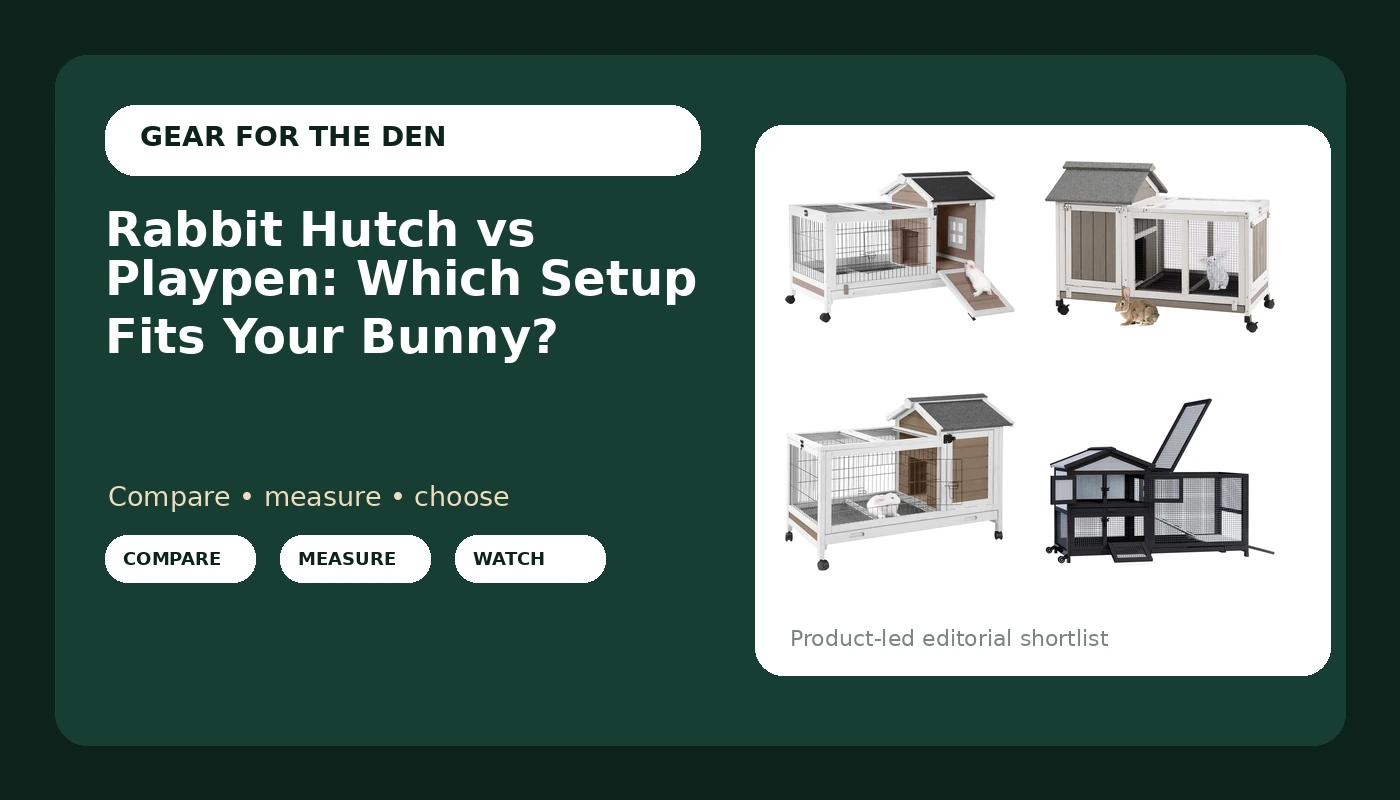
Below are four hutches sold as indoor and outdoor units. All of them are wooden, all of them include some version of a leak-proof tray, and all of them are marketed for one or two rabbits. They differ in footprint, roof material, tray count, and how they move. Use the table to see the trade-offs at a glance, then read the sections for the details that decide it.
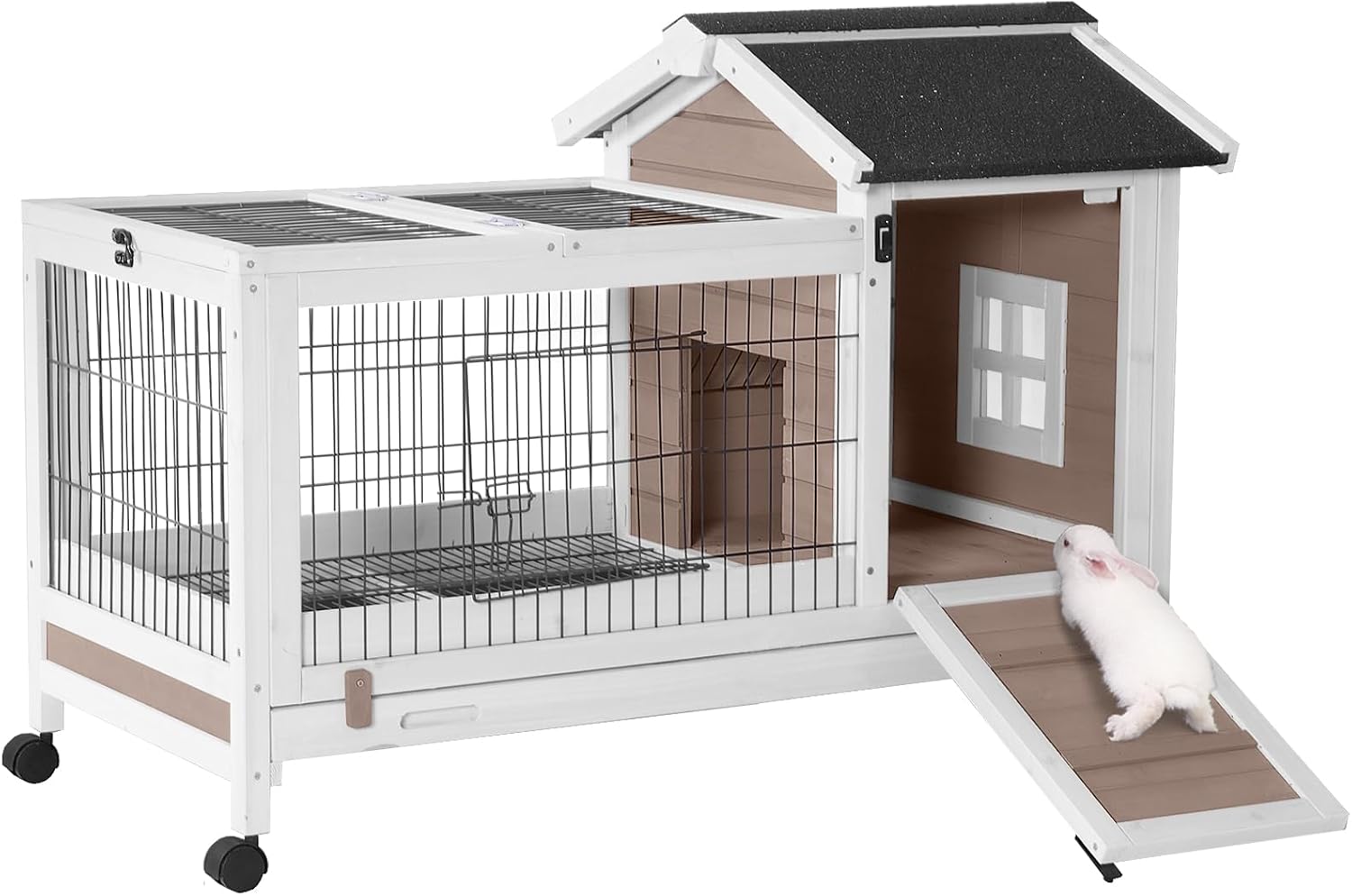
Aivituvin Rabbit Hutch Indoor Bunny Cage Outdoor Bunny House with Wire Floor Leakproof Plastic Tray, Brown
Indoor and outdoor use in one unit, a leak-proof plastic tray, and a wire floor that keeps the coat clear of droppings
The wire floor needs a resting mat, and a hutch this size is a den rather than a run
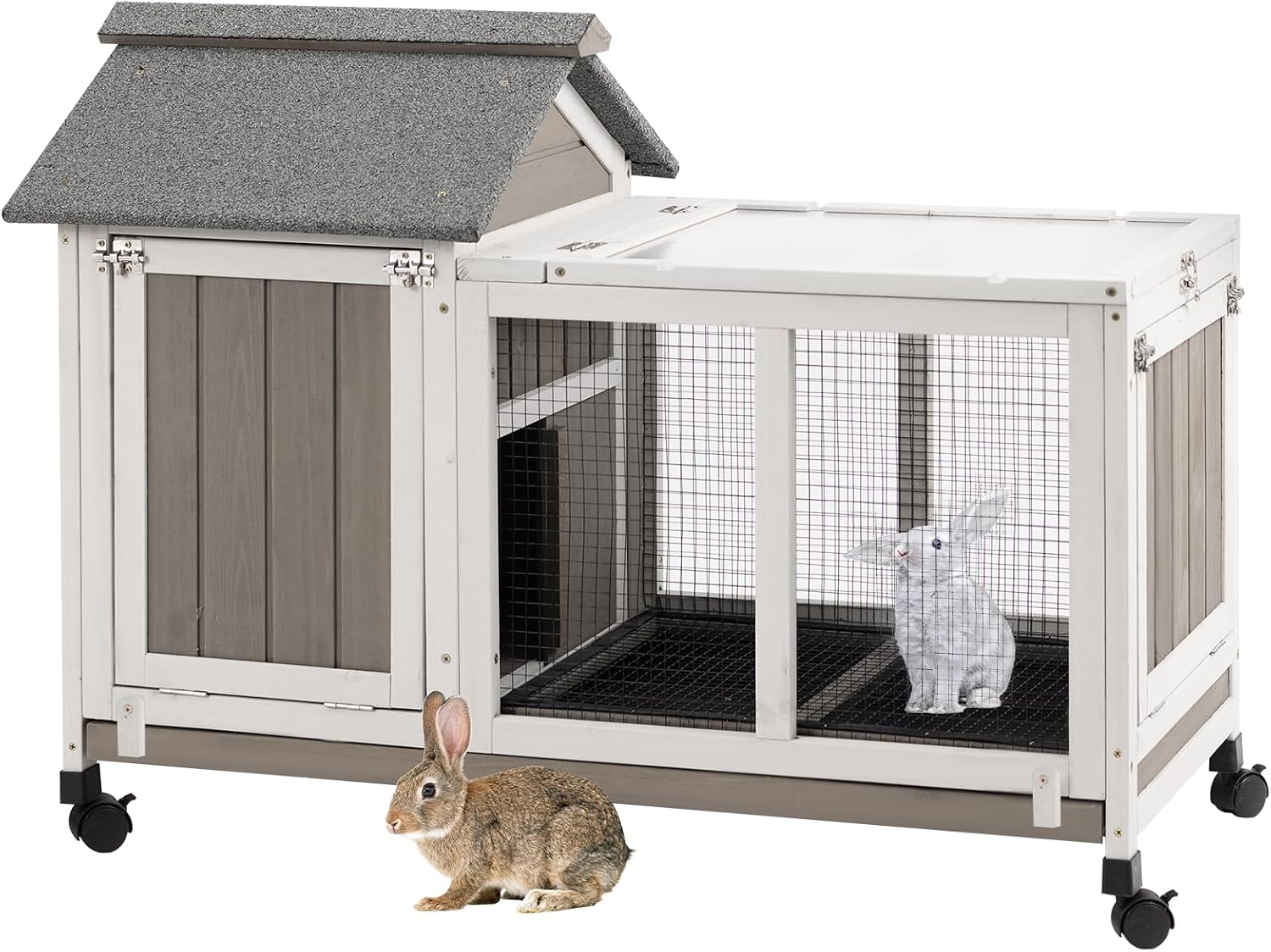
Gowoodhut 38.19"L Rabbit Hutch Indoor and Outdoor with 4 Wheels, Wooden Rabbit Cage with Pull Out Leak-Proof Tray for 1-2 Rabbits, Bunny Hutch with Asphalt Roof Suitable for Garden, Park, Living Room, Grey
Four wheels, an asphalt roof, and a pull-out leak-proof tray in a 38.19 inch footprint sized for one or two rabbits
Smallest floor area in this group, so it needs a playpen or run alongside it
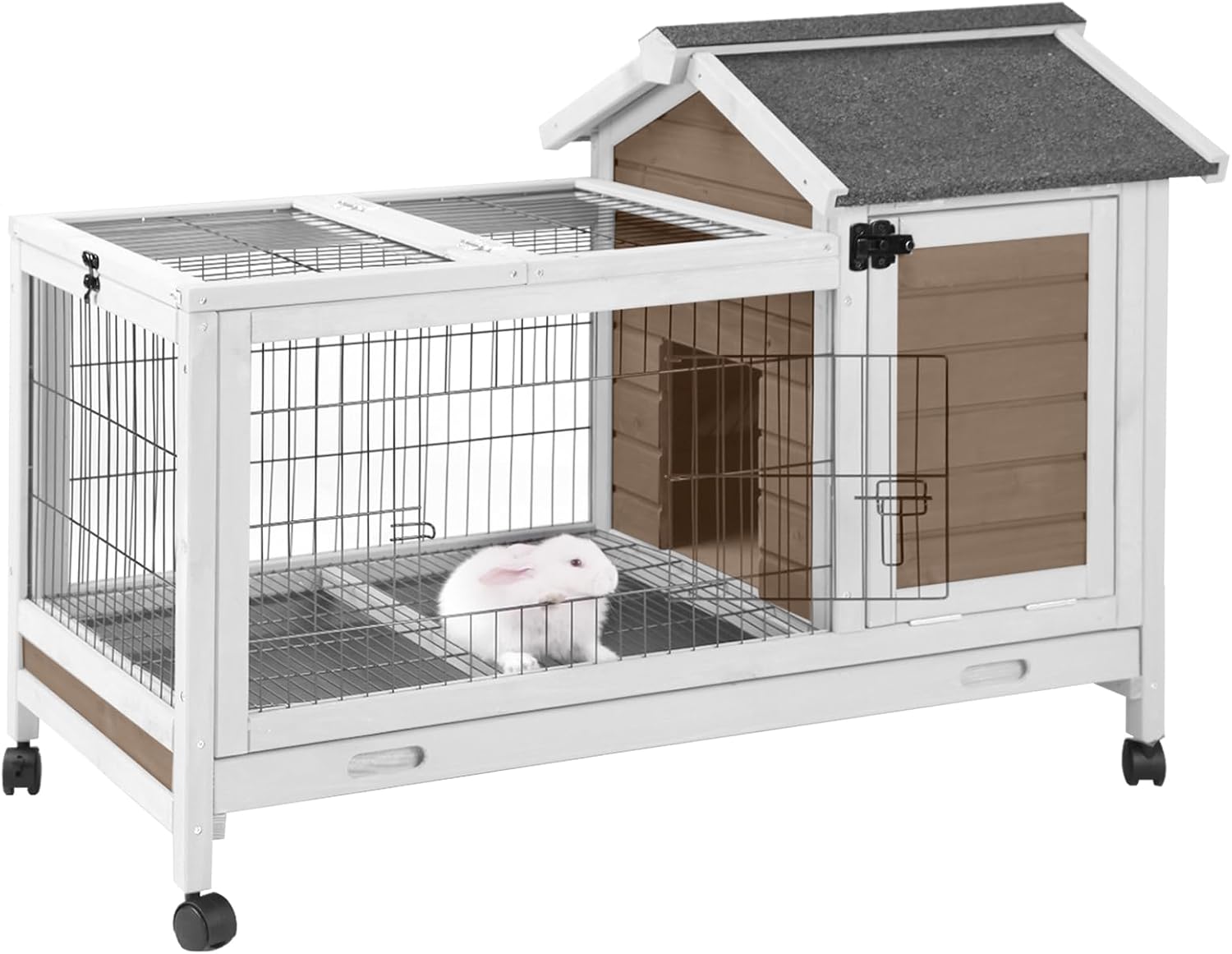
Wooden Rabbit Hutch Indoor and Outdoor, Rabbit Cage with Removable Wire Netting and Leak Proof Tray, Mobile Bunny Cage with Wheels (Brown)
Removable wire netting opens the top for access, and the wheels let you move it between rooms or out to a porch
Brown wood needs a cover in long rain, and the listing gives no length to compare against the others
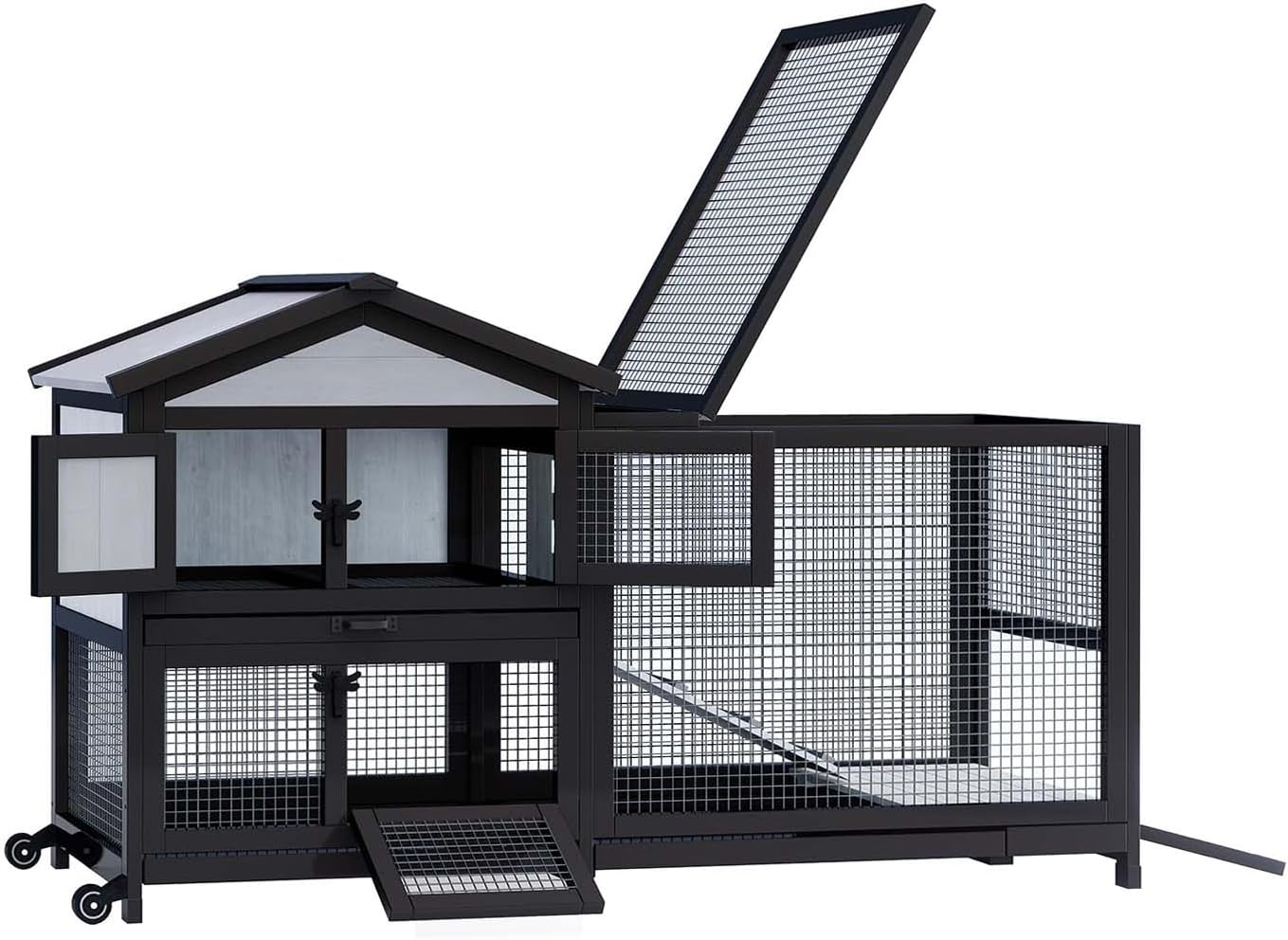
EZmilifey Rabbit Hutch 58" Rabbit Cage Outdoor&Indoor 2-Story Chicken Coop Guinea Pig Cage on Wheels Bunny Cage with 3 Deep No Leakage Pull Out Tray, Waterproof Roof (Black)
The largest unit here at 58 inches, with two stories, three deep pull-out trays, a waterproof roof, and wheels
Tall and bulky, and the chicken and guinea pig marketing means you should verify bar spacing yourself
Prices and availability may change.
The rabbit hutch vs playpen trade-off, in plain terms
The difference between rabbit hutch and playpen is mostly about enclosure and supervision. A hutch is containment: the rabbit stays where you put it, the tray catches waste, and the roof keeps rain and sun off. A playpen is freedom inside a boundary: more floor area, more room to sprint, but no roof, no tray, and no protection if a dog or a hawk has access to the yard. That is why the two are not really competitors. They cover different hours of the day.
The practical split most owners land on looks like this. The hutch is the bedroom, where the litter tray, the hay rack, and the water bottle live, and where the rabbit sleeps. The playpen is the daytime yard, set up on a wipeable floor indoors or on grass with shade cloth outdoors. If you search playpen vs rabbit hutch expecting a clear winner, the honest answer is that the hutch wins on safety and the playpen wins on exercise, and a rabbit needs both.
There is also a size trap. A playpen with eight panels gives you far more floor area than any hutch in this comparison, but it gives you zero containment at the top. A hutch gives you a lid and a latch, but the cage size inside is often smaller than the product photos imply once you subtract the ramp, the hideout, and the litter tray. Measure both before you buy, not after.
How I compare hutches
I do not score these on looks. I score them on the specs that decide whether a rabbit stays healthy and whether you keep using the hutch after week three. Every item on this list applies whether you are weighing a rabbit hutch vs playpen or two hutches against each other.
- Floor area, measured as length times depth of the interior, not the exterior footprint. A 58 inch hutch with a ramp through the middle has less usable floor area than the number suggests.
- Tray design. A deep pull-out tray with a lip contains more bedding and urine than a shallow one, and a tray that slides out from the front is easier to clean than one that needs the whole hutch lifted.
- Floor surface. A wire floor keeps the coat clean but needs a solid resting mat or a covered section, because a rabbit's hocks do not do well on wire all day.
- Bar spacing on any wire panel or playpen panel. If a young rabbit can push its head through, the panel is a hazard, not a feature.
- Roof and weatherproofing. An asphalt or waterproof roof sheds rain; bare wood does not.
- Movement. Wheels sound like a gimmick until you are moving a hutch from the lawn to the porch by yourself.
That is the checklist. The rest is fit for your space.
Indoor hutches: the apartment default
Indoors, a hutch is usually a den and a litter station rather than the whole habitat. The Aivituvin unit fits that job: it is sold for indoor and outdoor use, it has a wire floor over a leak-proof plastic tray, and the tray slides out for cleaning. The wire floor is the part to think about. It keeps droppings out of the coat, which matters in a small indoor space, but it also needs a resting mat or a covered corner so the rabbit is not standing on wire all day. Budget for that mat the same way you budget for a hay rack.
The brown wooden hutch in this group takes a different approach to the same job. Its wire netting is removable, so the top opens into an accessible pen area rather than staying a closed box, and it sits on wheels. For an apartment, that combination is genuinely useful: you can wheel it to the balcony on a sunny afternoon and back to the corner by evening. The trade-off is that a wooden hutch in a humid room needs air movement around it, and bedding dust settles into open wood grain, so plan on a mat underneath and a vacuum routine.
Neither of these replaces a playpen for an indoor rabbit. A hutch this size is where the rabbit eats, sleeps, and uses the litter tray. The running happens in the playpen, and that is where the extra floor area pays for itself.
Outdoor hutches: weather, trays, and floor area
Outdoors the rules change, because the hutch has to survive the weather and so does the rabbit.
The EZmilifey 58 inch hutch is the biggest unit in this comparison and the one built most obviously for a yard. It is a two-story design with three deep pull-out trays, a waterproof roof, and wheels. Three trays matter more than they sound: one per level means you are not dragging a full tray through the upper floor to clean the lower one. The waterproof roof means rain runs off instead of soaking into the wood. The catch is the size. A 58 inch two-story hutch is tall and heavy, and it is marketed for chickens and guinea pigs as well as rabbits, so check the bar spacing on the wire panels before you assume it suits a small or young rabbit.
The Gowoodhut hutch is the compact outdoor option. It measures 38.19 inches long, has an asphalt roof, four wheels, and a pull-out leak-proof tray, and it is sold for one or two rabbits. An asphalt roof is the right material for a hutch that lives outside year round. The trade-off is floor area: at 38.19 inches it is a den, not a run, so an outdoor rabbit in this hutch needs a run or a playpen attached or set up alongside it for most of the day.
One more outdoor detail that gets ignored: bedding dust. In a closed hutch, dust from shavings and hay hangs in the air, and a rabbit's respiratory system is not built for it. Shake hay outside the hutch, keep the hay rack away from the sleeping corner, and empty the tray before the dust builds up.
Mobile hutches on wheels: the hybrid
Three of the four hutches here roll: the Gowoodhut on four wheels, the EZmilifey on wheels, and the brown wooden hutch on wheels. Only the Aivituvin unit is a fixed hutch. If your rabbit splits time between a lawn and a living room, wheels are the feature you will use daily, and they change how you plan the space.
The reason is simple. A hutch that moves lets you give the rabbit grass access in the cool part of the morning and shade in the afternoon without building two setups. A hutch that does not move has to live where the rabbit lives, which usually means indoors, with outdoor time happening in a separate playpen or run. Both approaches work. The wheeled approach costs more effort in setup and less in daily routine; the fixed approach costs less upfront and more in daily carrying.
Wheels also change how you clean. With the hutch rolled out from the wall, you can reach the back panel, the tray, and the corners without kneeling in a tight space. That is a small thing that decides whether a hutch gets cleaned weekly or monthly, and monthly is not often enough for a rabbit.
Bar spacing and wire floors are not negotiable
Two specs decide whether a hutch or a playpen is safe, and both are easy to skip when you are looking at photos.
Bar spacing comes first. On a playpen panel or a wire hutch panel, the gap has to be narrow enough that the rabbit cannot push its head through and get stuck. Young rabbits and small breeds are the ones at risk. If a listing does not state the spacing, measure it in person or ask, and if the answer is vague, treat the panel as unsuitable for anything smaller than an adult rabbit. This is also where the multi-species hutches need a closer look: a panel sized for a chicken or a guinea pig is not automatically sized for a rabbit.
Wire floors come second. A wire floor over a tray is the most common design in this group, and it does what it promises: waste falls through, the coat stays cleaner, and the tray catches it. The problem is the rabbit's feet. Wire all day, every day, is hard on hocks. Every wire-floor hutch needs a resting mat, a solid shelf, or a covered section, and that is not optional equipment.
Two smaller specs belong on the same list. Hideout size, because a hide box the rabbit cannot turn around in is a decoration, not a den. And tunnel diameter, because a play tunnel that is too narrow is a stuck-rabbit hazard rather than a toy.
What the listed dimensions actually tell you
The numbers in these listings are exterior lengths, and that is the first thing to understand. A 58 inch hutch is 58 inches on the outside. Subtract wall thickness, the ramp, the hideout, and the litter tray, and the floor area the rabbit actually gets is smaller. The same is true of the 38.19 inch Gowoodhut unit. It is a real den for one or two rabbits, and it is not a run.
Cage size is the number to compare, not story count. A two-story hutch adds a ramp, a landing, and a second tray, which is great for enrichment and cleaning, but the rabbit still needs a horizontal stretch of floor long enough to hop a few paces. If the upper level is the only level with open floor, the lower level becomes a litter station and the upper level becomes the bedroom, and neither one is a run.
Bottle capacity and hay rack placement finish the picture. A larger bottle means fewer refills, which matters more in summer than in winter. A hay rack mounted above the litter tray keeps hay off the floor and out of the bedding, and it keeps the rabbit eating the way it should, which is constantly. Both are cheap to add and easy to overlook when you are comparing hutches on length alone.
Should you buy a playpen first?
If your rabbit lives indoors, yes, a playpen first is a reasonable order, provided you already have a litter tray, a hideout, and a safe room. If the rabbit lives outdoors or spends long days outside, the hutch comes first, because the playpen has no roof and no tray and cannot be the only structure.
If you are deciding between a rabbit hutch or playpen for a single indoor bunny and you can only buy one thing this month, buy the hutch. It is the piece that holds the litter tray, the hay rack, and the water bottle, and it is the piece that keeps the rabbit contained when you cannot watch it. Add the playpen next month, and set it up on a wipeable floor with the litter tray inside it, because a playpen with no litter tray turns into a laundry problem within a week.
The reverse order works too, and it is what a lot of owners actually do: playpen first for a young rabbit that is still being litter trained, hutch second once the habits settle. The one combination to avoid is an outdoor rabbit with a playpen and no hutch at all.
What I'm looking at next
The next comparison I want to run is trays against litter boxes, because the deep pull-out trays in these hutches are doing two jobs at once: waste collection and litter station. A hutch with a tray the rabbit can sit in may not need a separate litter box, and that changes the floor area math inside the hutch.
The other thing on the list is solid-floor hutches. Every unit in this comparison uses a wire floor over a tray, and the resting mat is the workaround. A hutch with a solid floor and a deep tray would solve the hock problem without the extra purchase, and if one shows up in the small-pet category at a sensible size, it goes straight into the next round.