A reptile substrate guide is never the glamorous part of terrarium building. The heat lamp, the thermostat, the hide your animal actually fits inside: those get the attention. But the layer on the floor sets your humidity range, buffers your basking temperature, and decides whether weekly cleanup takes two minutes or twenty. Get it wrong and you spend months fighting mold, stuck sheds, and a tank that smells no matter how often you scoop.
That is why this guide looks at four very different answers to the same question. Two are compressed coconut fiber products sold in different quantities, one is a larger bulk brick, and one is not loose bedding at all but a reusable floor liner. They suit different keepers, different species, and different cleaning routines, and the right pick depends far more on your setup than on brand loyalty.
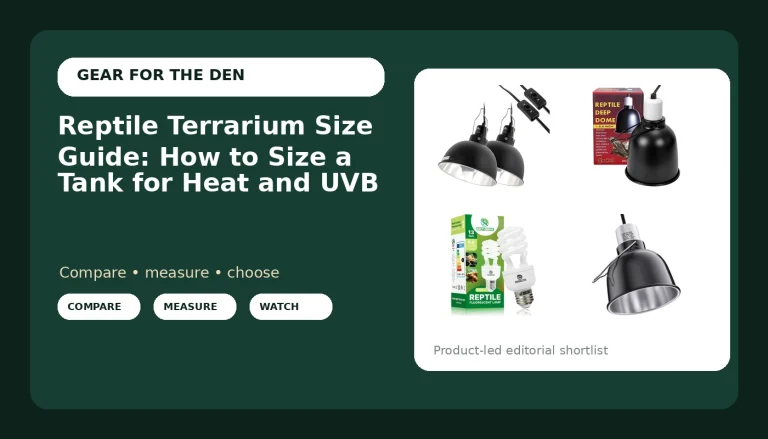
Best Overall: Riare 10 LB Natural Coconut Fiber Substrate, Coco Coir Reptile Bedding
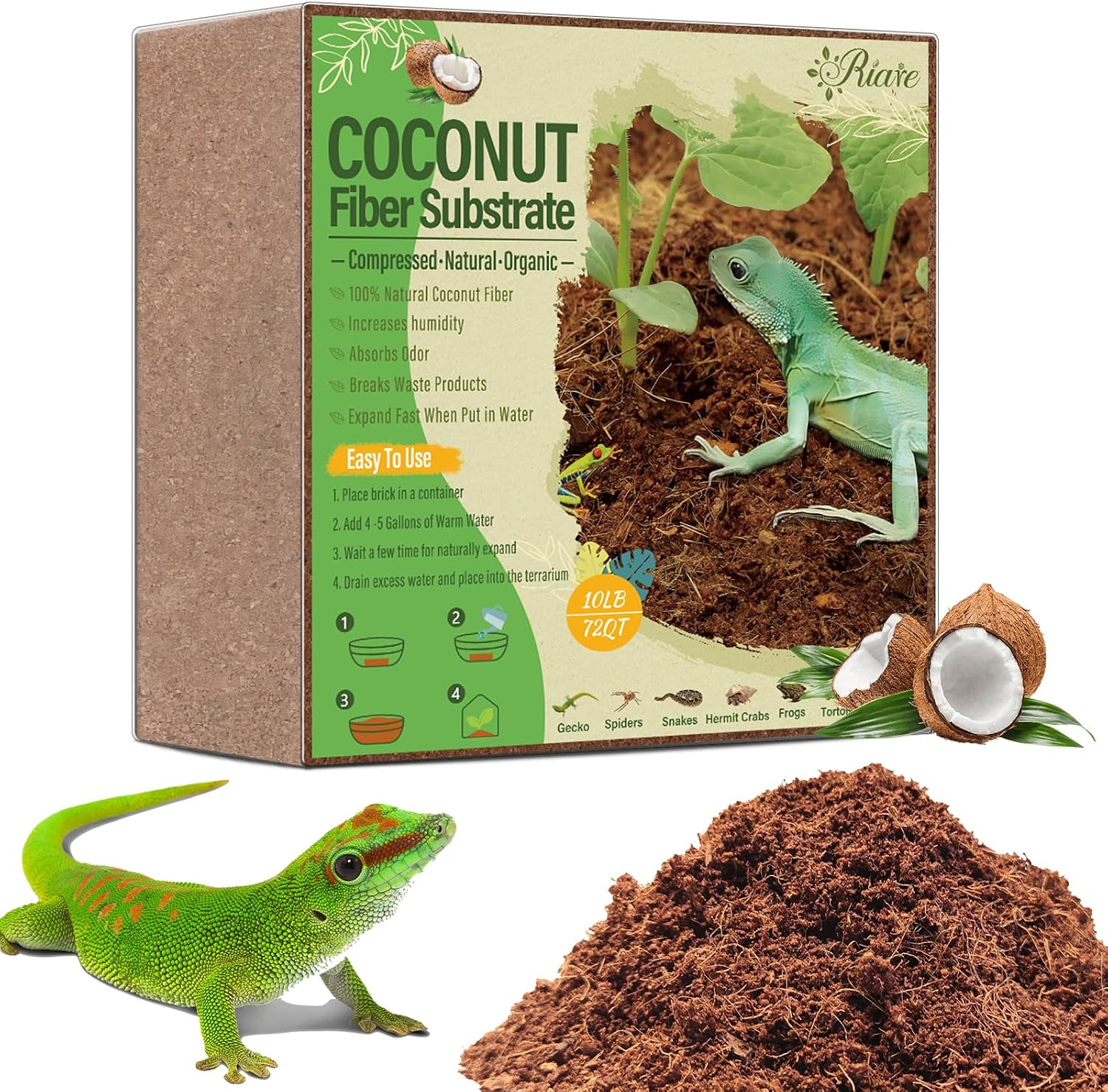
If you keep anything that needs real moisture in the air, this is the one to start with. It arrives as a compressed brick, you drop it in a bucket with warm water, and it breaks down into a loose, crumbly fiber that you can pack to whatever substrate depth your species wants. That flexibility is the whole point. You can build a deep, damp layer on the warm end for a burrowing animal and keep the rest of the floor shallower, which is much harder to do with a pre-formed mat or a bag of chips.
Coco coir holds water without turning into soup. It releases that moisture slowly under a heat lamp, which is exactly what you want when you are trying to hold a humidity range through the day rather than spiking it with a misting bottle every few hours. It also takes a tunnel well. Species that dig want bedding that holds a shape instead of collapsing behind them, and damp coir does that.
The downsides are honest ones. A ten pound brick is a commitment: you need a bucket, a floor you do not mind splashing, and somewhere to store the excess once it expands. Dry coir is dusty, so rehydrate it fully before it goes anywhere near an animal with sensitive lungs. And it is loose bedding, which means spot cleaning, not shaking out a mat. For most keepers that trade is worth it, because a floor that holds humidity is doing half the work of your misting routine.
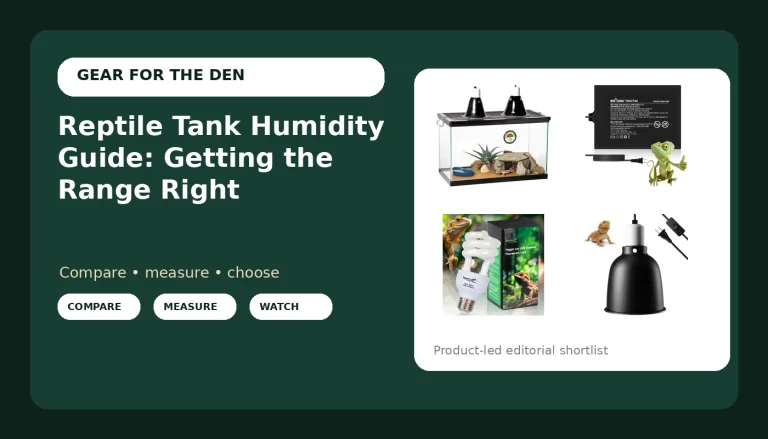
Best Value: ZeeDix 2 Pack Coconut Fiber Substrate, Premium Coco Coir Reptile Substrate
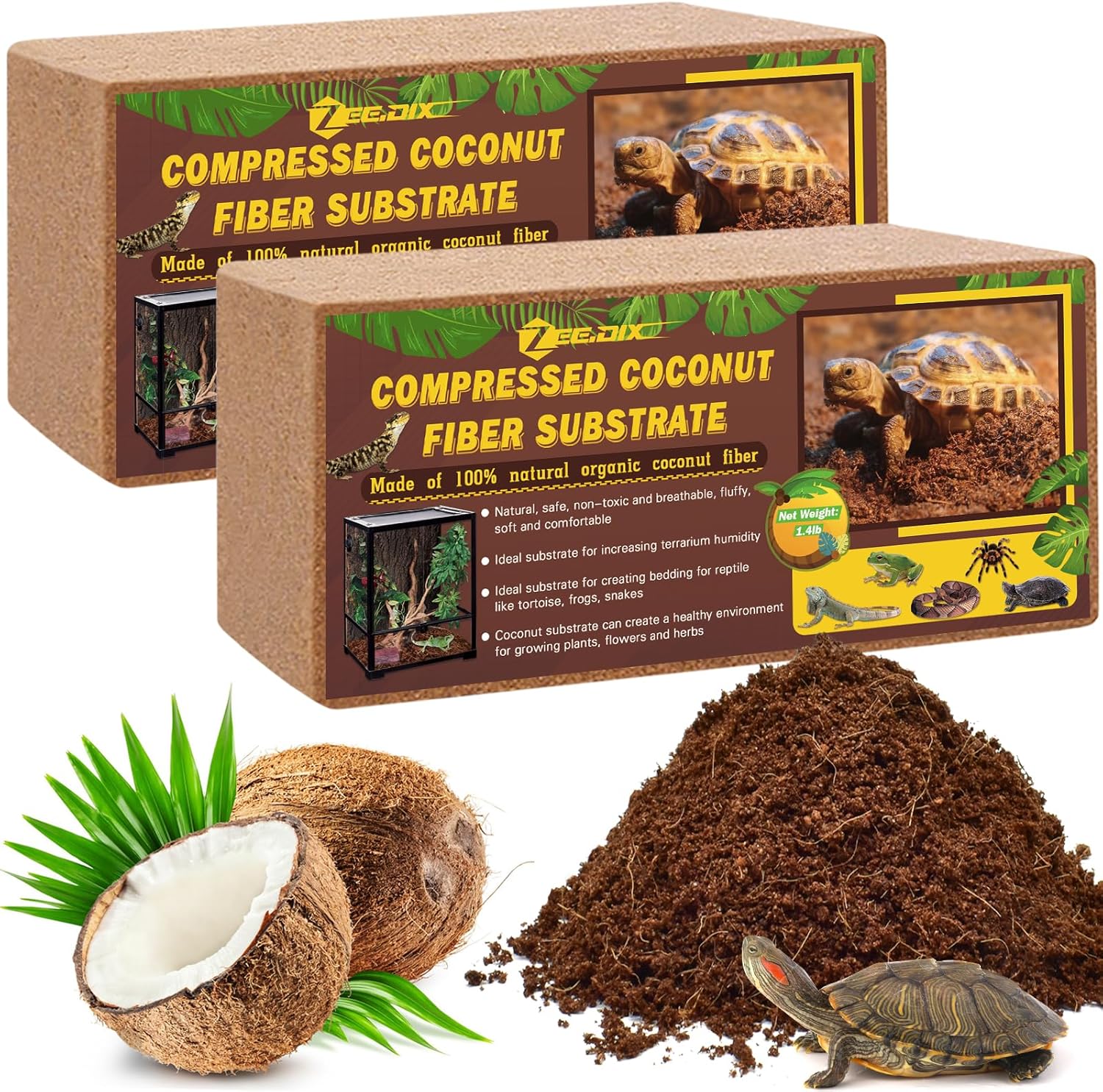
This is the same idea in a smaller package, and for a lot of people it is the smarter buy. Two modest bricks rehydrate in a normal bucket without turning your kitchen into a construction site, and the dry leftovers fit on a shelf. If you have one enclosure, or you are setting up a hospital tank and do not want a decade of coir in the closet, this is the size that makes sense.
Performance is what you would expect from coir: it expands, it holds moisture, it takes a tunnel. The difference is really about volume and storage. Because the bricks are smaller, you can rehydrate one at a time and keep the other sealed until you need it, which matters if you are topping up a floor rather than replacing it. If you are not sure whether your animal will take to loose bedding, this is the low-risk way to find out.
How I tested
The protocol is the same for anything I would put on a terrarium floor, and it starts with water. I rehydrate each product exactly as the instructions say, then watch how it behaves: does it break down evenly, or does it leave hard chunks that never soften? Uneven expansion is the first sign of a product that will be annoying for as long as you own it.
From there I look at how the material holds moisture under a heat source. A substrate that dries into a crust within a day is not doing anything for your humidity range, no matter what the bag claims. I check whether it takes and holds a tunnel, whether it stays put when an animal walks over it, and how much dust it throws when it is on the dry side. Dust matters more than most people think, especially in a tank with a screen top and a strong basking temperature pulling air through.
Cleanup is the last and least glamorous test. How easy is it to spot clean? Does it hold odor? Does it stick to the animal and end up dragged into the water bowl? And for the liner, the question is different: does it lay flat, does it wipe clean, and does it stay put when a heavy-bodied animal climbs on and off it all day.
I do not need a product to be perfect. I need to know what it is good at, so I can tell you where it belongs.
Analysis and test results
There is no single ideal reptile substrate for every enclosure, and anyone who tells you otherwise is selling something. What matters is the match between material, species, and the equipment around it. Your tank size, your heat mat wattage, your thermostat range, and the hide size on the floor all change what a bedding needs to do.
Loose coco coir is the better answer for humid setups. It holds moisture, it buffers swings in the humidity range, and it lets a burrowing animal dig. It also lets you vary substrate depth across the enclosure, which is useful when one end runs warmer and drier than the other. That is the arrangement most keepers end up building anyway: a deeper, damper layer under the hide, and a shallower, drier patch near the basking temperature zone.
A liner is the better answer for a different job. It is flat, it wipes clean in seconds, and there is nothing for a new animal to swallow while it is under observation. It does nothing for humidity, it does not let anything dig, and it shows every mess immediately. For quarantine, that is a feature. For a tropical species that needs damp bedding to shed properly, it is the wrong tool, and the correct reptile substrate for a ball python in a glass tank is not the same material that belongs under a leopard gecko in a dry setup.
The mistake I see most often is buying bedding to solve an equipment problem. If your humidity will not hold, a better substrate helps, but so does covering part of a screen top, adding a larger water bowl, or moving the enclosure away from a draft. The bedding is one part of the system, not the whole thing. Same with heat: a thick layer of coir over a heat mat insulates it, so check your thermostat range and probe placement after you change the floor, not before.
Textured surfaces matter for shedding too. A rough, slightly damp material gives a stuck animal something to push against, and a slick liner does not. If shedding has been a recurring problem, fix the humidity and shedding setup first before you blame the bedding.
The reptile substrate comparison table
Four products, four different jobs. The table below is the short version: what each one is, who it suits, and how deep it makes sense to run it. None of these are one-size-fits-all, so match the row to your animal rather than to the price tag.
| Product | Type | Best for | Notes |
|---|---|---|---|
Riare 10 LB Natural Coconut Fiber Substrate | Loose coco coir, one large brick | Humid tropical setups, burrowers, keepers with several tanks | Rehydrate in a bucket; build depth where the animal digs |
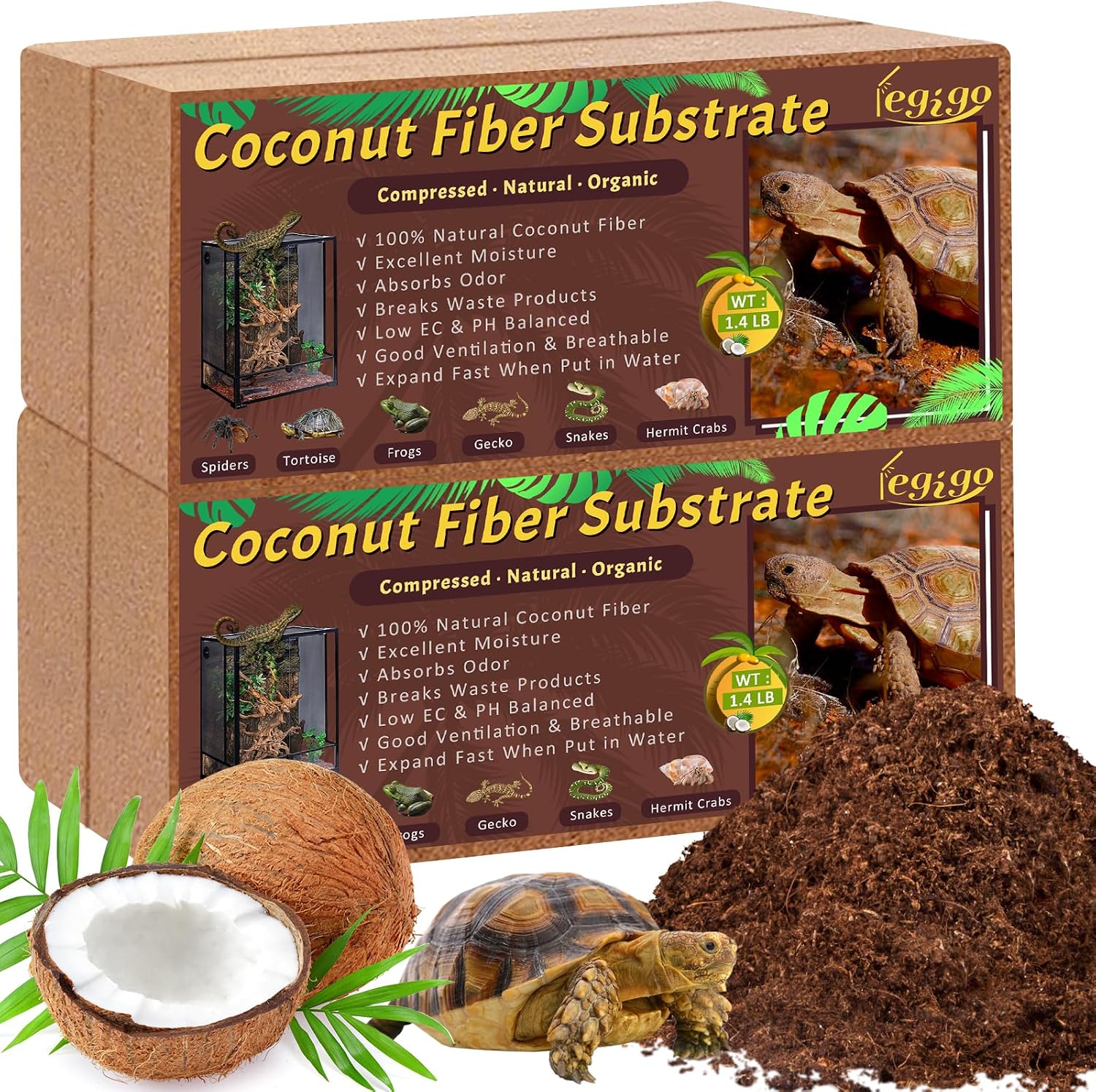 Legigo 4 Pack Coconut Fiber Substrate | Loose coco coir, four bricks | Multi-enclosure keepers, breeding racks, full tank rebuilds | Store dry; rehydrate one brick at a time |
ZeeDix 2 Pack Coconut Fiber Substrate | Loose coco coir, two bricks | A single tank, top-ups, first try with loose bedding | Easiest size to mix and store |
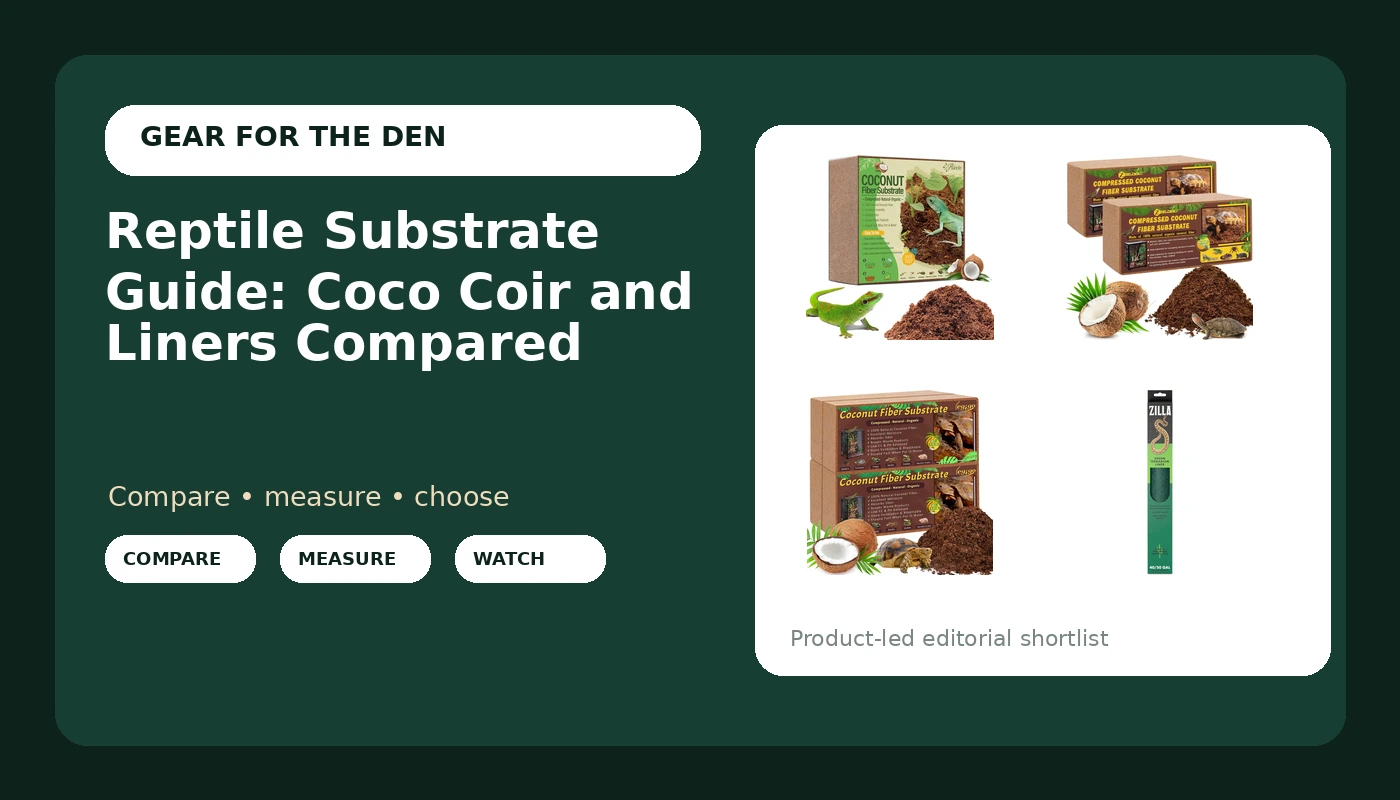
 Zilla Reptile Terrarium Bedding Substrate Floor Liner | Reusable green floor liner | Quarantine tanks, hospital setups, fast cleanup | Wipes clean; not for digging species |
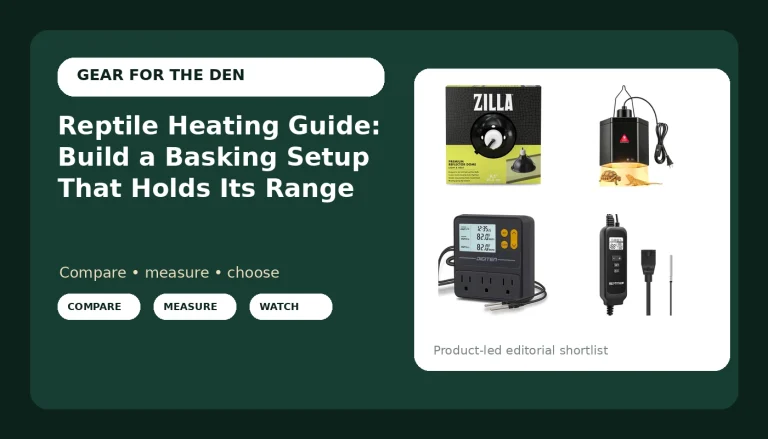
Legigo 4 Pack Coconut Fiber Substrate: bulk for keepers with more than one enclosure
Four bricks in one box is the right shape for anyone running more than one enclosure. If you rebuild a couple of tanks a month, a single brick at a time means you are always halfway through a rehydration when you need the next one. Having spares dry on the shelf takes the panic out of a full change.
The material behaves like the rest of the coir on this list, which is to say it takes water, holds it, and takes a tunnel. Where it earns its place is logistics. You can mix one brick in a bucket, fill a tank, and leave the other three sealed indefinitely. For a keeper with a rack, that is the difference between a chore and a five minute job.
When a floor liner is the right call
Not every enclosure should have loose bedding in it. A new arrival on observation, an animal recovering from a procedure, or a tank that has had a parasite problem all call for a surface you can see and sanitize completely. A green liner gives you that. You can spot a mess from across the room, wipe it, and put the animal back.
What it cannot do is hold humidity or let anything dig, and no amount of extra misting will change that. If your species needs damp bedding, run the liner short term and move back to coir when the reason for quarantine is over. Used that way, it is a genuinely useful piece of gear rather than a compromise.
Should you buy the Riare 10 LB Natural Coconut Fiber Substrate, Coco Coir Reptile Bedding?
Yes, if you want one product that covers the widest range of humid setups. It rehydrates into enough loose coir to build real depth under a hide, it holds moisture through the day instead of drying into a crust, and it takes a tunnel well enough for animals that dig. The brick format means you buy it once and store it dry until you need it.
The catch is commitment. You need a bucket and warm water to break it down, and you need somewhere to keep what you do not use. Dry coir is dusty, so hydrate it fully before it goes in the tank. If you can live with loose bedding and the spot cleaning that comes with it, this is the floor I would build a tropical setup around.
Should you buy the ZeeDix 2 Pack Coconut Fiber Substrate, Premium Coco Coir Reptile Substrate?
Yes, if you have one enclosure, or you want to test loose bedding without a storage problem. Two bricks mix in a normal bucket, store easily, and give you a spare for the next full change. It does everything the larger brick does in a smaller package, which for a single-tank keeper is the whole point.
Where it stops making sense is a room full of tanks. Once you are rebuilding more than one enclosure regularly, buying in fours costs you less time and less shelf space. For everyone else, start here, and move up only when you run out faster than you expected.