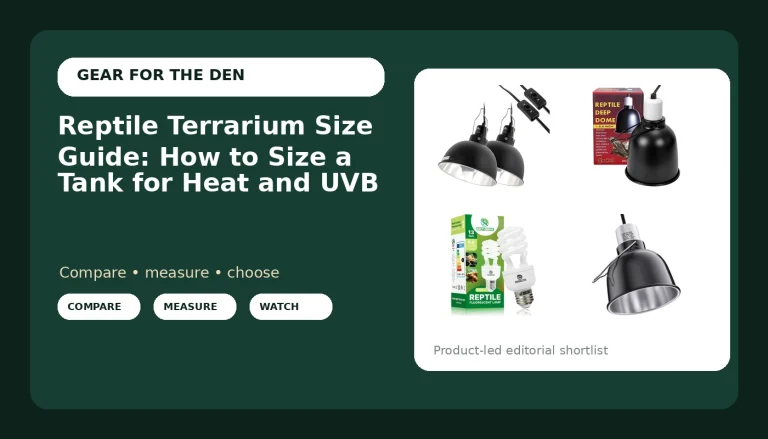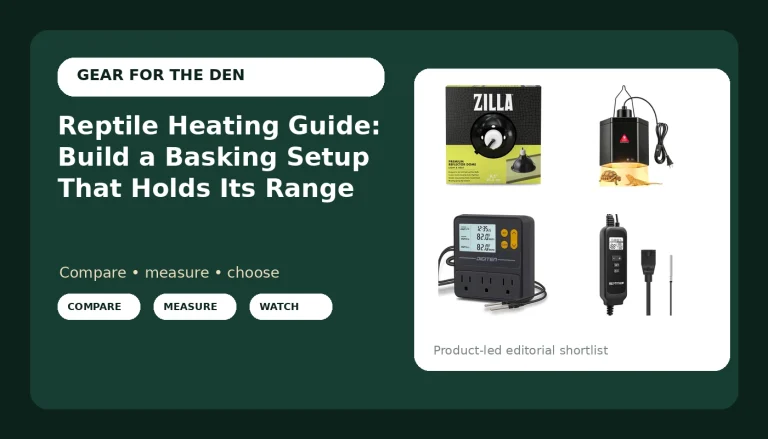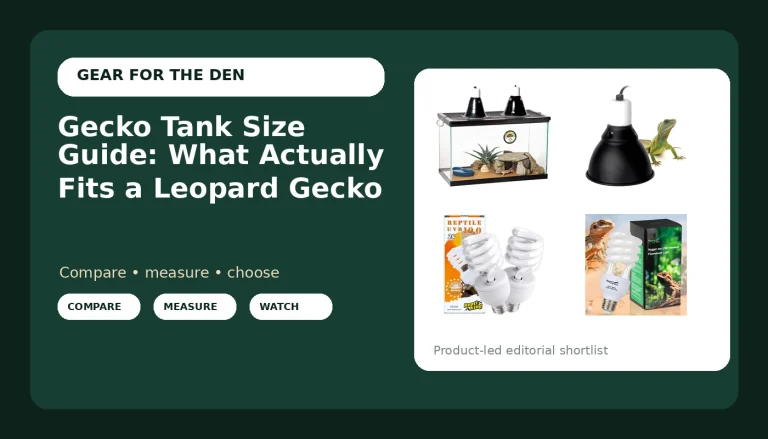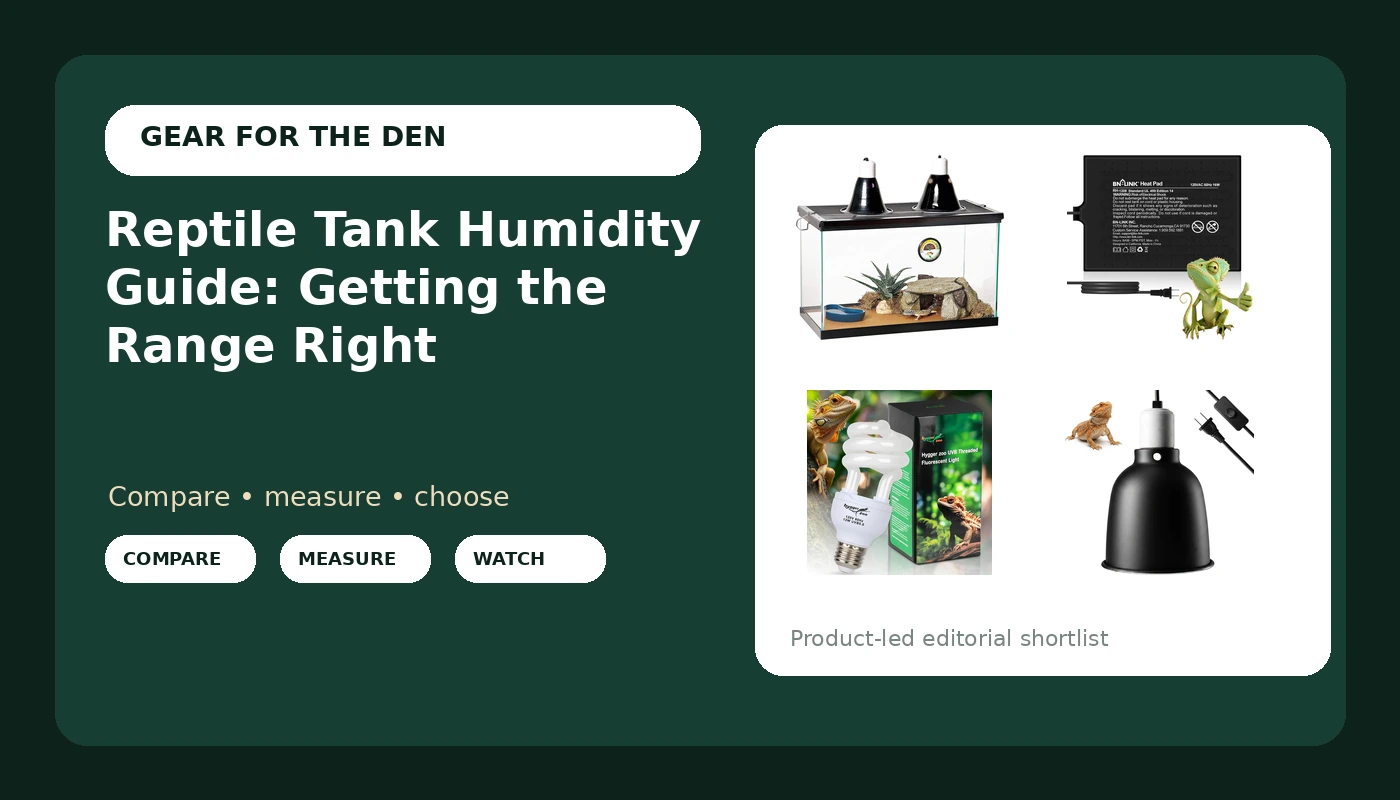
I started keeping reptiles the way most people do: a glass tank, a clamp lamp, a water bowl, and a lot of hoping. It took one bad shed and a gecko that stopped eating for me to admit that reptile tank humidity is not a background detail you check once something already looks wrong. It decides whether a shed comes off in one piece, whether a hide stays damp long enough to do anything, and whether the basking temperature you built actually holds where the animal sits.
Since then I have run four pieces of gear through the same routine: a starter habitat kit, an under tank heat pad, a UVB bulb, and a deep dome fixture. I log humidity morning and night, note the tank size, substrate depth, heat mat wattage, and thermostat range for each configuration, and let each one run for weeks rather than an afternoon. What follows is a reptile tank humidity guide built from those notes, not from a care sheet copied off another care sheet.
Best Overall: Zilla 10 Gallon Reptile Starter Habitat Kit, Leopard Gecko Tank
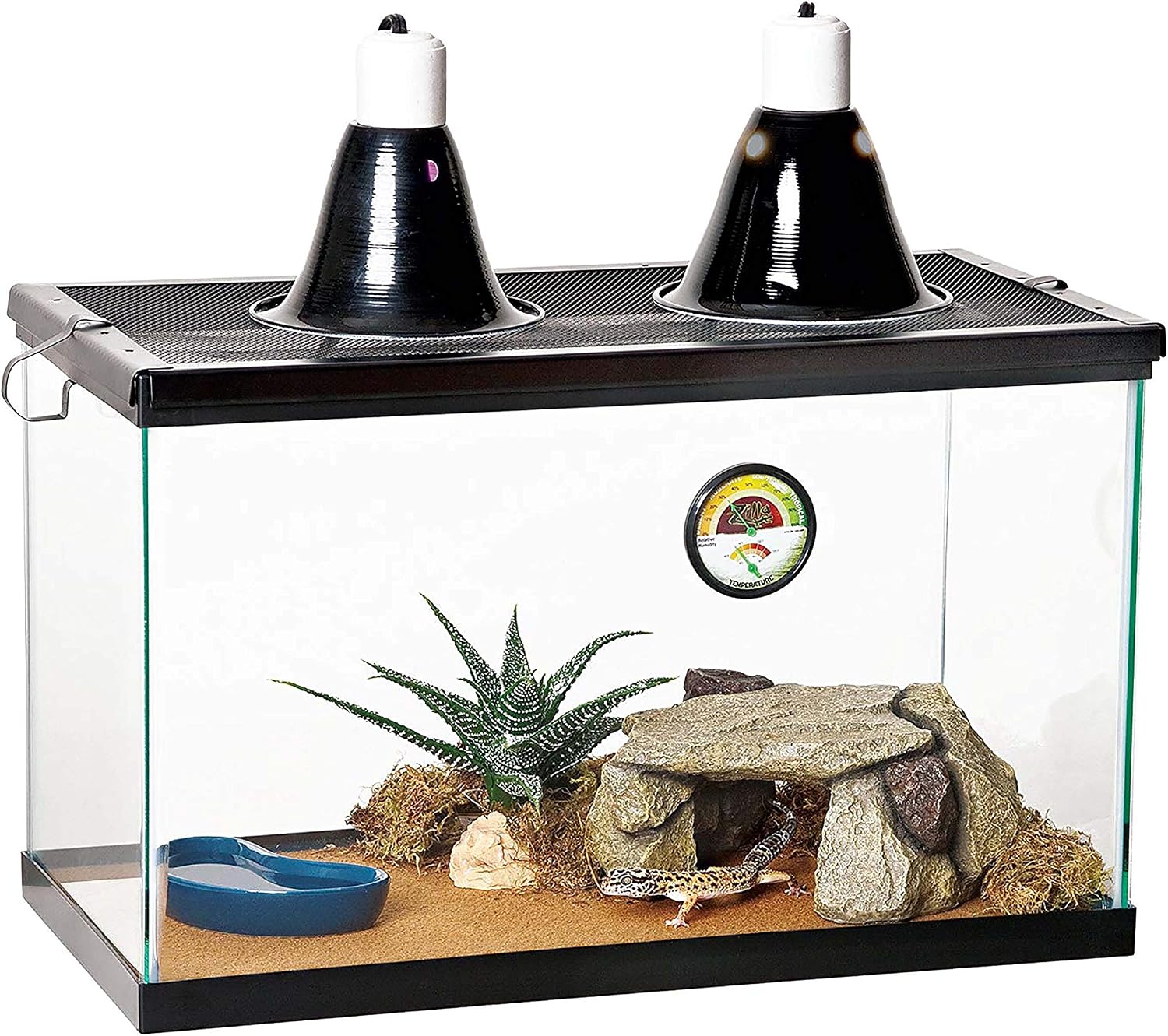
A ten gallon glass tank is the smallest enclosure I would hand a beginner who is keeping a leopard gecko, and the Zilla starter kit is the setup I point people toward when they ask where to begin. The advantage is not a feature list. It is that the enclosure and the accessories were chosen to work together, so you are not matching a lid from one listing to a lamp from another while your new animal waits in a plastic tub.
For humidity, tank size does more work than any single gadget. A small enclosure gains and loses moisture quickly, which sounds like a problem until you realize it also means one misting actually moves the number instead of vanishing into a wall of dry air. In a ten gallon tank, a spray of the substrate and one damp hide will hold a workable humidity range through a shed cycle.
Hide size matters as much as the tank itself. A hide that is too large gives the animal room to sit outside the damp zone, and you end up with a gecko sleeping on the dry side of a hide you misted an hour earlier. A small enclosure naturally pushes you toward a hide that actually fits the animal, which is exactly what you want.
What this kit is not is a permanent home for a large species. Ten gallons is a starter size for a juvenile leopard gecko or a similarly sized animal, not a bearded dragon, and not an adult ball python. If you are shopping for one of those, spend your money on a bigger enclosure first and add the gear below second. Check current Amazon price
Best Value: BN-LINK Reptile Heat Pad 8"X12" 16W for 30-40gal Under Tank Terrarium Heating Mat Waterproof for Turtle, Lizard, Frogs, Snake, Hermit Crab
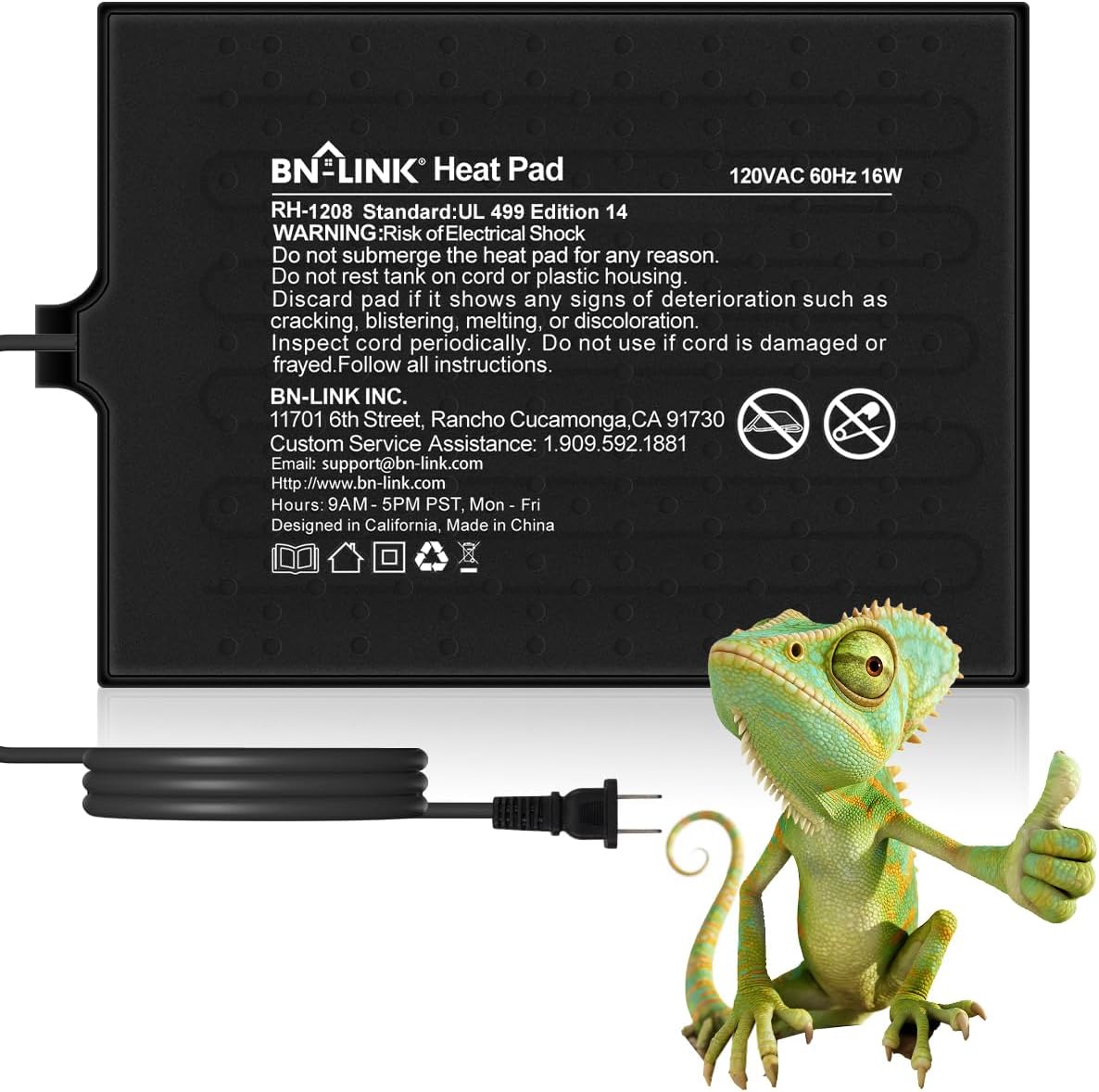
An under tank heat pad is the least expensive thing you can add that changes the humidity curve of a tank, and this BN-LINK pad is where I would start. It is rated for 30 to 40 gallon enclosures at 16 watts, so on a ten gallon starter tank it is more heater than the job needs. Run it through a thermostat with the thermostat range set low, or put it under a larger tank where the heat mat wattage actually fits.
Here is the part most people miss. A heat mat warms the substrate from below, and the moisture sitting in that substrate evaporates into the air above it. That is a slow, steady source of humidity rather than the spike you get from a spray bottle. In a screen topped tank, a mat plus a shallow water bowl will hold a tropical species far more consistently than misting alone, and it keeps working overnight while you are asleep.
The 8 by 12 inch footprint covers a good share of the floor of a 30 or 40 gallon tank, and the waterproof surface means an over-misted substrate or a spilled water bowl is not the end of the pad. If I could keep only one piece of gear from this list, it would be this one, because it does double duty: basking temperature from below and humidity from the substrate above it. Check current Amazon price
How I tested
I do not trust a humidity number I have not watched move. Every setup here was checked with a digital hygrometer at both ends of the tank, one under the basking spot and one on the cool side, because a single reading in the middle tells you almost nothing about the gradient the animal actually lives in.
The routine is the same for each configuration: set the tank up, let it run, then take readings morning and night for at least a week before changing anything. I note tank size, substrate depth, hide size, heat mat wattage, thermostat range, and basking temperature. Then I mist, wait, and read again to see how long the number holds before it falls back.
The gear gets the same treatment. I check whether a heat mat keeps the substrate warm enough to drive evaporation, whether the UVB output from a bulb is doing anything beyond lighting the tank, and whether a dome fixture is throwing heat down into the enclosure or sideways into the room. A fixture that aims heat sideways is a humidity problem disguised as a lighting problem, because it dries the air without warming the floor.
I also write down what the animal does. A gecko that parks in the damp hide all day is telling you the rest of the tank is too dry. A gecko that avoids the hide is telling you it is too wet. Behavior is data, and it is often faster than a hygrometer.
Analysis and test results
After running all four setups, the pattern is simple. Humidity is a function of heat, surface area, and airflow, and the gear you buy only moves those three levers.
Heat from below raises humidity. Heat from above lowers it. A heat mat warms the substrate and releases moisture slowly; a basking bulb warms the air and pushes moisture out through the screen. That is why a tank with a lamp and no mat reads dry ten minutes after you mist it, while a tank with a mat reads stable for hours.
Tank size is the multiplier. A ten gallon tank responds to everything quickly, which makes it easy to overcorrect. A 30 or 40 gallon tank moves slowly, which is more forgiving but harder to fix in a hurry. Match the pad to the tank: a mat that is right for a 30 to 40 gallon enclosure is too much for a ten gallon without a thermostat in the loop.
UVB output and humidity are not really connected, but the fixture you put the bulb in is. A deep dome throws light and heat downward, which concentrates the drying effect on one spot instead of across the whole tank. That is the trade you make for a proper basking temperature, and it is worth making.
There is no single ideal reptile tank humidity number, and anyone who hands you one is selling something. Most care references put leopard geckos in the 30 to 40 percent band with a humid hide, while tropical species want 60 to 80 percent. The correct reptile tank humidity for your animal is the range its species is kept at, held steady, with a damp retreat it can use when it needs more.
A stuck shed is the cheapest diagnostic you have. If toes and tail tips come off clean, the setup is working. If they do not, the fix is almost always more substrate depth and a better hide, not more misting.
The reptile tank humidity reference table
This is the table I keep with my notes. It maps each piece of gear to what it actually does to moisture in the tank, plus the rows that are not products at all but matter just as much.
| Piece | Role in the tank | Effect on moisture | Notes |
|---|---|---|---|
Zilla 10 Gallon Reptile Starter Habitat Kit, Leopard Gecko Tank | Enclosure and starter setup | Small volume, responds fast to misting | Match hide size to the animal |
BN-LINK Reptile Heat Pad 8"X12" 16W | Heat from below | Warms substrate, slow steady humidity | Rated for 30-40 gal, use a thermostat |
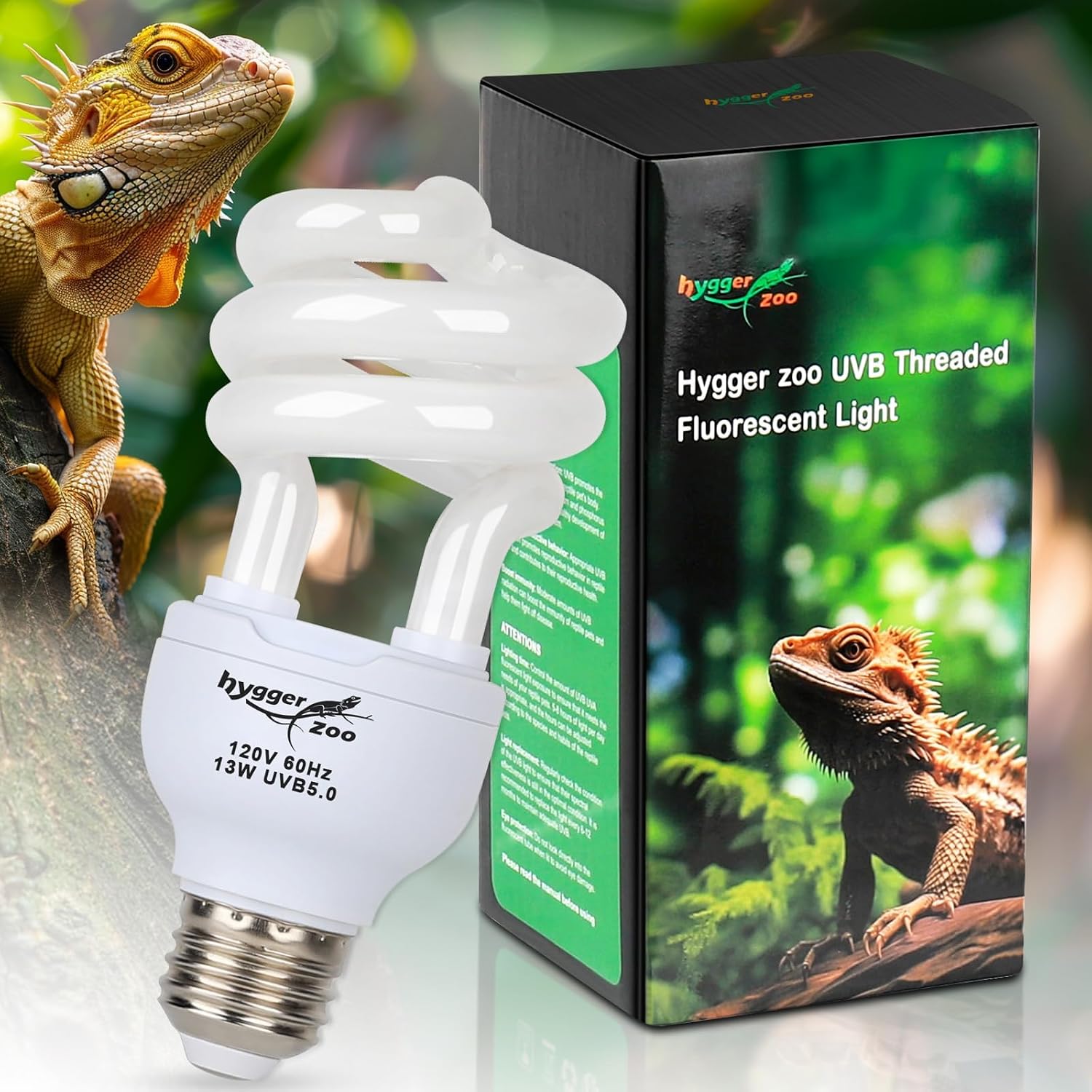 View on Amazon → Hygger zoo UVB Bulb 5.0, 13W | UVB and visible light | Dries the air slightly, sets the day cycle | Match UVB output to the species |
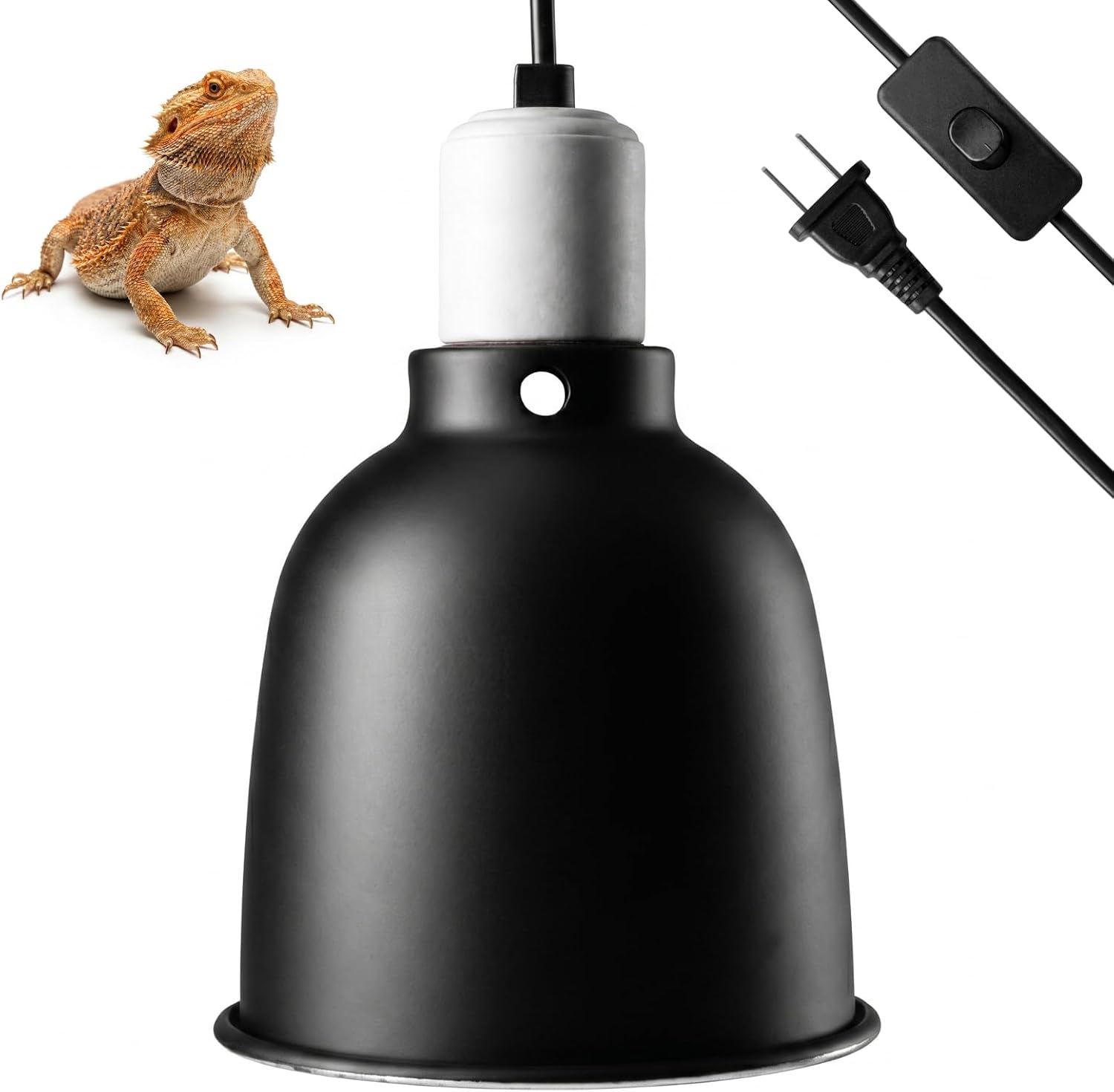 GofyReax Reptile Light Fixture, 5.5 Inch Deep Dome | Holds the heat bulb | Concentrates heat and drying on one spot | Deep dome keeps heat pointed down |
| Damp hide, no product needed | Local humidity refuge | Holds moisture where the animal sits | Size it so the animal nearly fills it |
| Substrate depth | Moisture reservoir | Deeper substrate holds more water | A few inches for burrowing species |
| Screen lid | Ventilation | Vents humidity fast | Cover part of it on tropical setups |
| Water bowl | Evaporation source | Raises ambient humidity slowly | A wide shallow bowl beats a deep one |
GofyReax deep dome fixture and UVB output
The GofyReax 5.5 inch deep dome is the piece that decides where your heat actually goes. A deep dome reflects heat down into the enclosure instead of letting it spill into the room, which is good for your basking temperature and bad for your humidity, because all that concentrated warmth dries one patch of substrate faster than anything else in the tank. Check current Amazon price
The Hygger zoo UVB bulb 5.0 is the bulb I would pair with it on a small tank. It is a 13 watt bulb, so it belongs in a fixture like this one rather than in a bare socket, and the UVB output is aimed at small species in shallow enclosures. Visit on Amazon
Put the water bowl on the cool side of the tank, away from the cone of heat under the dome. That single move keeps the drying zone and the evaporating zone from fighting each other.
Substrate depth and hide size
Substrate depth is your humidity battery. A thin layer of substrate dries out in a day and gives you nothing to work with, while a deeper layer holds water and releases it slowly under the heat mat. For burrowing species, depth is also part of the animal's comfort, not just a moisture trick.
Hide size is the other half. A hide the animal barely fits inside keeps the air around it humid, because the animal's own body and the damp moss or paper towel do the work. A hide that is too big lets all that moisture spread into the rest of the tank, and you get a pet that sleeps in the dry corner of a hide you just soaked.
Mist the substrate, not the animal and not the glass. Glass dries in minutes and teaches you nothing. When you check, check the substrate at the depth where the animal sits, not the air at the top of the tank.
Should you buy the Zilla 10 Gallon Reptile Starter Habitat Kit, Leopard Gecko Tank?
Yes, if you are starting out with a leopard gecko or a similar small species. A ten gallon tank is small enough that a single misting actually changes the humidity range, which makes it a forgiving place to learn how moisture behaves before you move up to a larger enclosure. The kit approach also saves you the beginner mistake of buying an enclosure that does not match the gear you already own.
The limits are real. Ten gallons is a starter size, not a forever home for a big lizard, and the small volume means a missed misting shows up faster than it would in a 40 gallon tank. If you want one animal in a simple setup and you want to spend your attention on the animal instead of on parts compatibility, this is the one I would start with. Check current Amazon price
Should you buy the BN-LINK Reptile Heat Pad 8"X12" 16W for 30-40gal Under Tank Terrarium Heating Mat Waterproof for Turtle, Lizard, Frogs, Snake, Hermit Crab?
Yes, with one condition: run it through a thermostat. It is rated for 30 to 40 gallon enclosures, so it fits most mid sized tanks without any fuss, and it is the cheapest way to add steady humidity to a screen topped setup. The waterproof surface matters more than it sounds, because the whole point is to keep damp substrate sitting right above the pad.
If you are running a ten gallon tank, this pad is more heater than you need, and a thermostat is not optional. If you are running a 30 or 40 gallon tank, this is the piece I would buy before any other upgrade, because it shapes both the basking temperature from below and the humidity in the air above the substrate. Check current Amazon price