A terrarium is a small, closed environment, and the light you hang over it does two jobs at once. It sets the day-night rhythm an animal reads for feeding and resting, and it drives the process that lets a reptile use the calcium in its food. Most of the confusion around reptile uvb lighting comes down to three variables that are sold separately: the bulb, the fixture that holds it, and the distance between the bulb and the animal. Change one and the other two change with it. Two keepers with the same species and the same bulb can end up with very different results.
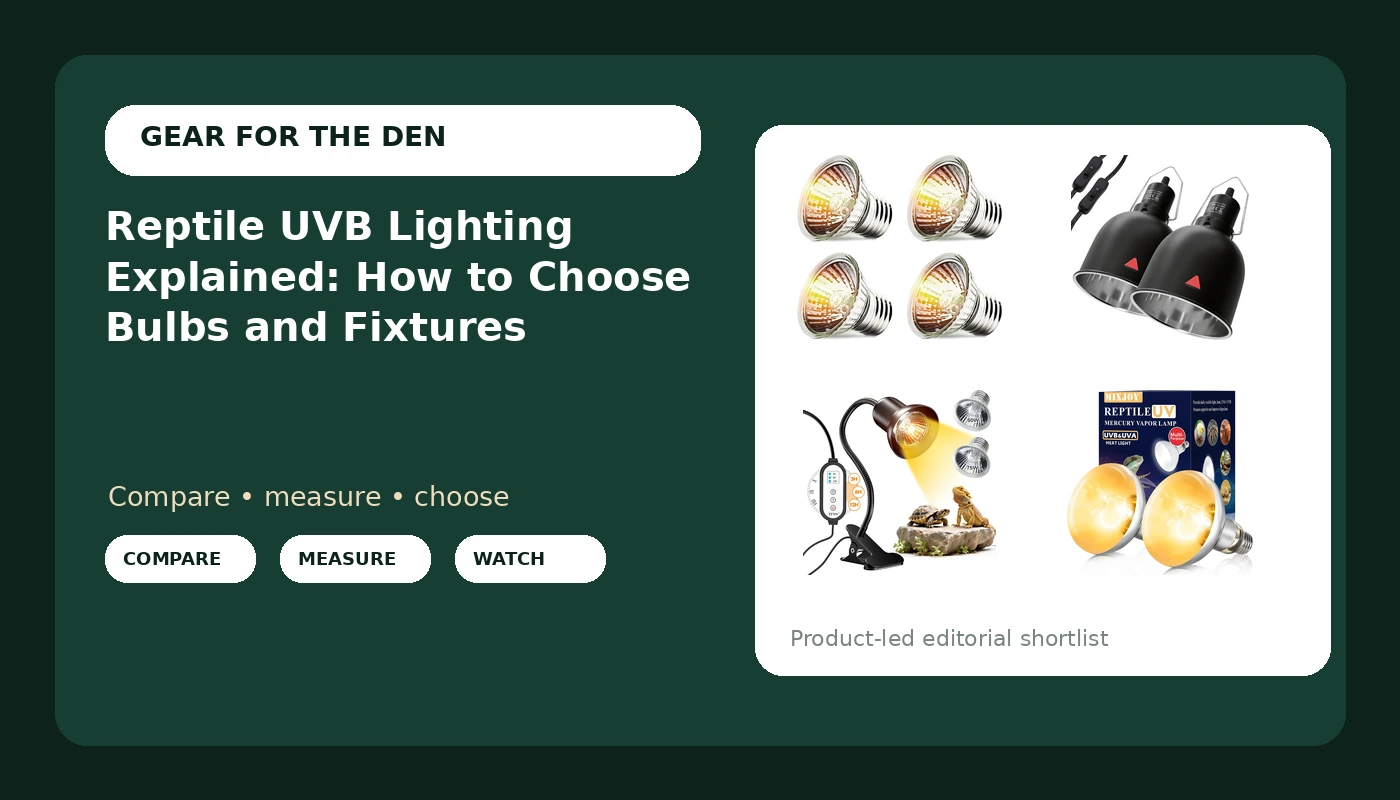
This page is a plain walk-through of the four products below: two bulb packs, a deep dome fixture, and a clamp lamp with a built-in timer. It covers what each one is, how bulbs and fixtures pair, and how to think about wattage, beam shape, timing, and distance without treating any single number as universal.
Quick answer
Buy the fixture and the bulb as a matched pair, aim the beam at the basking surface, and run the whole thing on a timer. Wattage alone does not decide how much UVB reaches your reptile, because distance, reflector shape, and anything sitting between the bulb and the animal change the result. For a multi-tank keeper, one good dome fixture plus a bulk pack of bulbs covers most setups. If you keep a species that needs warmth without a bright light, a heat mat and thermostat handle that job instead.
One practical point gets lost in the marketing: reptile uvb lighting is a system, not a single part. Moving to a higher wattage bulb without checking the fixture's maximum rating is the most common way people break that system.
Four useful options
These four products cover different jobs in the same enclosure, from the bulb itself to the reflector around it and the timer that runs it.
| Model | Best fit | What stands out |
|---|---|---|
| CALPALMY 4-Pack 50W UVA+UVB Bulbs | Keepers running several small tanks | Four 50W UVA+UVB bulbs per pack, described as fitting various lamp fixtures |
| FMATOZ 2-Pack Reptile Light Fixture 5.5in Deep Dome | Anyone who needs a reflector around a basking bulb | 5.5in deep dome with a 160W maximum, sold as a two-pack |
| TFNN Reptile Heat Lamp with Clamp | Setups that want timing built into the fixture | Clamp mount and an intelligent cycle timer, with 50W and 75W bulbs included |
| MIXJOY 2 Pack 100W Reptile Heat Lamp Bulb | Larger enclosures that need more output | 100W full-spectrum UVA/UVB bulbs, two per pack |
Stock-up bulbs: CALPALMY 4-Pack 50W UVA+UVB Bulbs
The trade-off with a multi-pack is that you commit to one wattage across four bulbs. That is a good deal if your enclosures are similar in tank size and you already know that a 50W bulb at your fixture height gives you the basking temperature you want. It is a poor deal if one enclosure is large and another is small, because you will end up ordering a second wattage anyway. A pack is also convenient for a replacement schedule: many keepers rotate UVB bulbs on a calendar rather than waiting for one to visibly fail, because uvb output can fall before the light looks any different. Check the fixture's maximum rating before loading a bulb into it.
Deep dome fixture: FMATOZ 2-Pack Reptile Light Fixture 5.5in Deep Dome
A fixture does not emit light, it shapes it. The deep dome design is the classic basking reflector: it narrows the beam into a cone so more of the heat and light lands in one spot, and it blocks some glare from the room. The 5.5in opening and the 160W ceiling tell you what it is built to handle, and that ceiling matters because exceeding a fixture's rating is a safety question, not a performance one. Think of a dome as reptile uvb task lighting for one basking zone rather than a lamp that fills the tank evenly. Coming as a two-pack means you can run two enclosures, or keep one as a spare for the day a socket or cord gives out.
Timer-ready clamp kit: TFNN Reptile Heat Lamp with Clamp
The clamp is the part that decides how useful this lamp is in your room, because it has to attach to something solid at the right height. A timer built into the fixture means the on and off times are handled without an external plug timer, which is convenient when outlet space is tight and less convenient if the preset schedule does not match the photoperiod you want. Two bulbs, one at 50W and one at 75W, let you compare two heat levels in the same fixture before committing to a replacement order. Keep the cord routed away from the animal and check the clamp holds under a light tug every few weeks.
Higher-wattage bulbs: MIXJOY 2 Pack 100W Reptile Heat Lamp Bulb
100W is a different class of bulb from 50W, and it belongs in a fixture that can take it. More wattage means more heat at a shorter distance, so the same dome that gave you a comfortable basking temperature with a 50W bulb can run too hot with a 100W bulb at the same height. That is the argument for a dimming thermostat, or at minimum a probe thermometer and a willingness to raise the fixture. A two-pack suits a keeper with one large enclosure who wants a spare, or two enclosures that both need serious heat. Several of the fixtures above list a maximum rating that should be checked against a bulb this size before it goes in.
Prices and availability may change. Product images, names, and retailer links are matched to verified listings. No current price, rating, stock status, or measured result is stated here without current evidence.
Choosing reptile uvb lighting: bulbs, fixtures, and the space between them
Three things get bundled together when you buy a bulb, and they behave differently. The first is heat: a basking bulb raises the temperature of a small patch of the enclosure, and how much it raises depends on wattage, the reflector around it, and the distance to the surface. The second is visible light, which sets the day-night cycle the animal uses. The third is UVB, the part of the spectrum that lets a reptile synthesize vitamin D3 and put calcium to work. A bulb sold as UVA+UVB claims both bands, but the label does not tell you how much output reaches the animal at your height.
The fixture is half the system. A deep dome concentrates the beam into a narrower cone, which usually means a hotter, brighter spot directly under it and less spill into the rest of the tank. An open clamp fixture spreads the beam wider but leaks more heat into the room. That is why the same bulb can behave like two different products in two different fixtures.
Screening matters as well. Mesh tops, glass lids, and plastic covers sit between the bulb and the animal, and different materials block different amounts. If your basking temperature reads correctly but the animal never sits under the lamp, the beam, the hide placement, or the screen above it is the place to look. If you take one thing from reptile uvb lighting explained, make it this: the fixture and the distance matter as much as the number printed on the bulb.
Matching wattage, fixture, and enclosure
Wattage is the easiest number to compare and the least informative on its own. A 100W bulb in a wide, open fixture hung higher up can put a similar amount of heat on a basking surface as a 50W bulb in a deep dome closer down. Treat the numbers as a starting point, then measure.
The enclosure decides the rest. A tall tank needs either a stronger bulb or a fixture you can lower, and the substrate depth you use changes the distance again. Hide size and placement decide where the animal can retreat when it has had enough heat, and the humidity range in the cool end is often the first thing to drift once a new lamp goes in.
- Measure the tank size and the distance from the bulb to the basking surface, not from the bulb to the floor of the enclosure.
- Set the basking temperature target for your species, and choose a thermostat range that holds it through the day.
- Check the fixture's maximum wattage before choosing a bulb, so you never exceed the rating on the label.
- Pick a bulb wattage and a pack size that match how many enclosures you actually run.
- Put the lamp on a timer, then recheck the basking temperature, the cool-end humidity range, and the hide placement after the first full day.
Practical guidance for the first week
- Clamp the fixture where it cannot be knocked loose, and keep the cord outside the enclosure.
- Measure the basking surface with a probe or infrared thermometer rather than judging by feel.
- Leave a cooler end so the animal can move in and out of the beam on its own.
- Treat the lamp as equipment rather than as a desk light for the room; point it down and keep the beam inside the enclosure.
- If the tank sits on a desk beside a window or a monitor, reptile uvb desk lighting still obeys the same distance rules, and a bright room does not replace the lamp.
- Rotate bulbs on a schedule instead of waiting for a visible failure, and note the date each one went in.
Which option should you choose?
Choose the CALPALMY 4-Pack 50W UVA+UVB Bulbs when you run several similar small enclosures and want spare bulbs on the shelf. Choose the FMATOZ 2-Pack Reptile Light Fixture 5.5in Deep Dome when you already own bulbs and need a reflector that narrows the beam and is rated well above the wattage you plan to run. Choose the TFNN Reptile Heat Lamp with Clamp when you want the timer integrated into the fixture and a 50W and 75W bulb to compare. Choose the MIXJOY 2 Pack 100W Reptile Heat Lamp Bulb when one large enclosure needs more heat than a 50W bulb delivers at your fixture height.
None of these listings states a measured UVB output at a given distance, and none of them is described in terms of one species' requirements. Treat wattage, dome size, and timer settings as a starting configuration, then verify temperature and behavior in your own enclosure. If your animal shows signs of illness, that is a veterinary question rather than a lighting question.
The bottom line
The useful way to think about a setup is in pairs: bulb with fixture, fixture with distance, distance with timer. A 50W bulb pack and a deep dome cover the small-enclosure case cheaply, a clamp lamp with a built-in cycle timer removes one piece of gear from the wall, and 100W bulbs exist for the keepers who need more heat in a taller tank. Whatever you choose, the fixture's maximum rating, the thermostat range, and the distance from bulb to basking surface decide the result, and all three are things you control after the box arrives.