Getting the uvb lighting schedule right matters more than the logo on the box. A mid-priced bulb on a timer will do more for a bearded dragon than a premium lamp that stays on from breakfast until bedtime, and this uvb lighting schedule guide is about the part most keepers skip: the hours, the distance between the lamp and the basking spot, and the fixture that actually fits the enclosure in your living room. Buy the wrong bulb and you can fix it on your next payday. Run the right bulb on the wrong schedule for a year and you end up with a reptile that eats, basks, and never quite thrives.
I have set up and torn down more enclosures than I care to admit, and I have made most of the mistakes on this list myself: the 10.0 bulb over a 20-gallon tank, the heat lamp left running all night, the compact fluorescent that had been dead for months without anyone noticing. What follows is the schedule and the four bulbs I would hand to a friend starting from scratch, along with the reference chart that lives taped inside the cabinet door so nobody in this house has to guess. If you want the heat side of the setup sorted first, the basking temperature guide covers that separately.
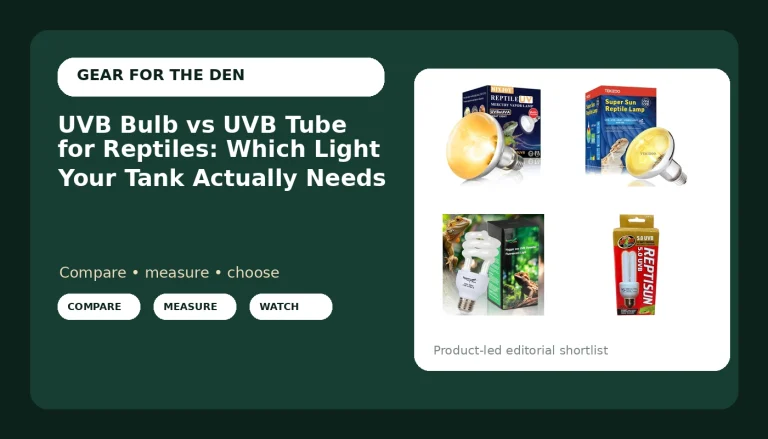
Best Overall: Reptisun 5.0 UVB Mini Compact Fluorescent (Pack of 2)
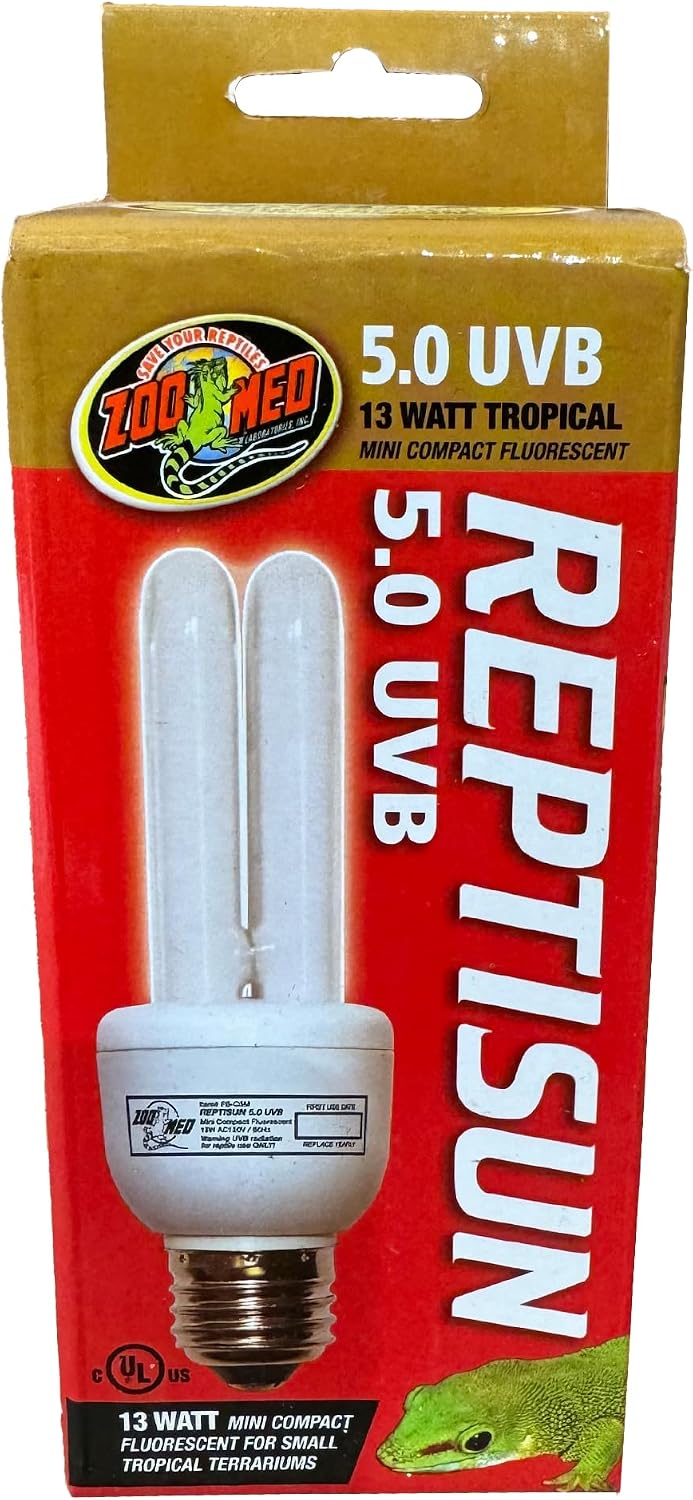
The 5.0 in the name is the uvb output, and 5.0 is the middle of the road, which is exactly where most indoor keepers live. It suits tropical and subtropical species: bearded dragons, water dragons, most skinks, and plenty of the snakes and turtles people actually keep in a living room. It screws into a standard dome or a compact fluorescent fixture, so you are not buying a new hood to go with it.
The two-pack is the reason this one wins for me. uvb output fades long before the bulb stops glowing, so a bulb that looks perfectly fine at month eight is often doing very little. Having a spare on the shelf means the swap actually happens instead of getting put off until the next supply run. Write the install date on the base with a marker when you put it in.
Two things to get right. First, this is a uvb bulb, not a heat bulb. It does not replace a basking lamp, and your basking temperature still has to come from somewhere else, whether that is a halogen, a deep heat projector, or a heat mat on a thermostat at the cool end. Second, distance and screen both eat uvb output. A mesh top between the bulb and the animal cuts a meaningful share of what the bulb produces, so a screened enclosure wants the lamp closer or a stronger bulb. In a 40-gallon breeder with a screen top, mount it in a dome at one end, leave the other end as the cool side, and put the hide under the cool end rather than directly under the lamp.
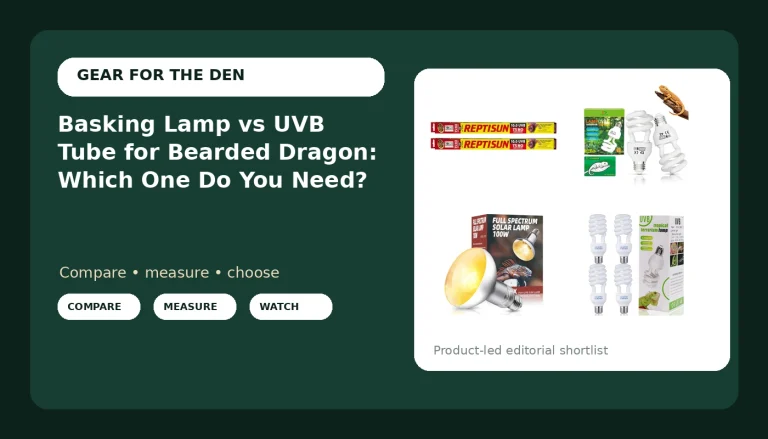
Best Value: CALPALMY 4-Pack 50W UVA+UVB Bulbs
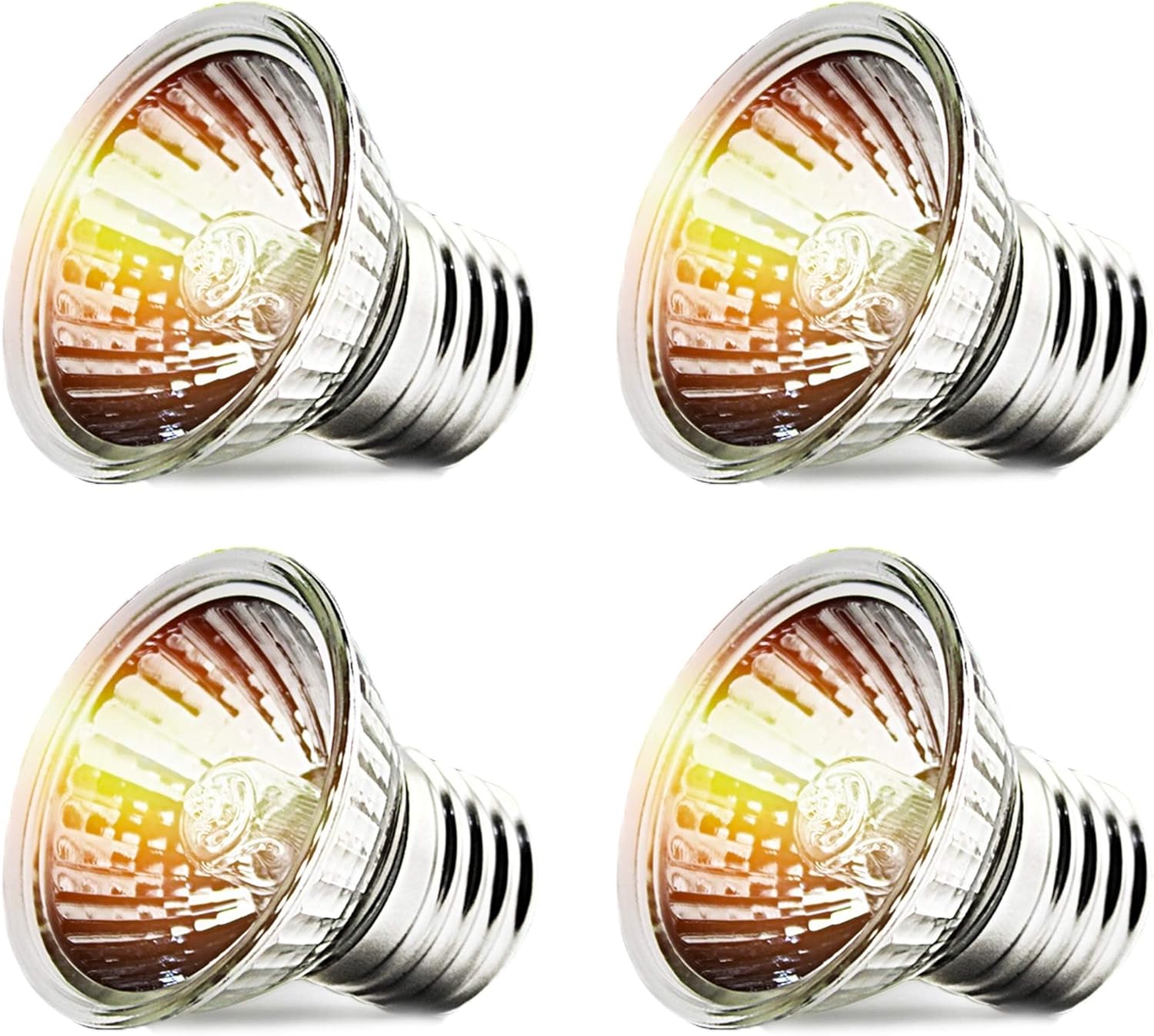
Four bulbs for less than the price of one brand-name compact fluorescent is the entire pitch, and for a lot of keepers it is the right call. These are 50W flood-style bulbs with a standard screw base, so they work in the domes and clamp fixtures most people already own. They put out heat and light together, which means one fixture can carry the basking job in a small to mid-size enclosure.
The trade-off is control. A fixed-wattage bulb gives you a fixed basking temperature at a given distance, so your only adjustment is raising or lowering the fixture or moving the basking rock. In a 40-gallon tank with a juvenile bearded dragon, a 50W bulb in a dome at the right height lands in a workable thermostat range. In a large adult enclosure, one 50W bulb will not get you there, and you will end up stacking fixtures.
They are also not the bulbs I would run for a chameleon or anything with tight humidity requirements, because they run hot and dry the air in a way that shows up on a hygrometer by the end of the week. For a rack of tanks, a stack of quarantine bins, or a first setup where you are still learning what your animal wants, a four-pack makes sense: cheap enough to replace on schedule, and spares in the drawer when one goes.
How I tested
Every bulb on this list gets the same treatment before it earns a fixture in this house. I start with the fixture question, because it kills more setups than anything else: does the bulb fit a standard dome without an adapter, does it fit a deep dome, and does the fixture have a ceramic base? A 125W bulb in a plastic clamp lamp is a fire waiting for a reason.
Then the setup itself. Tank size decides everything downstream. I set each bulb in a dome over a basking spot, measure the basking temperature at the surface of the rock rather than in the air, and adjust the fixture height until the spot holds steady through a full day. I want the basking temperature stable at four in the afternoon, not just correct at noon.
From there I check the parts people forget. Does the animal still have a hide of the right size to retreat into, and does the cool end stay inside the humidity range for the species? Is the substrate depth enough for a burrowing animal, and does the heat mat wattage make sense for the enclosure, or is it fighting the overhead lamp? None of that is a bulb problem, but a bulb that runs too hot or too weak makes all of it worse.
Finally, the schedule. Every bulb here runs on a timer, twelve hours on and twelve off for most species, ten and fourteen in winter if you are mimicking a season. I check the timer against a clock rather than against the wall switch, and I date every bulb when it goes in. The bulbs that fail this test are not the ones that burn out. They are the ones that fade quietly while the keeper keeps running them.
Analysis and test results
There are three kinds of bulb in this lineup, and the differences matter more than the wattage printed on the box.
Compact fluorescents like the Reptisun 5.0 are uvb only. They are the easiest to place, they fit standard fixtures, and they let you run uvb and heat as two separate decisions. That separation is worth a lot while you are dialing in a tank, because you can change the heat without touching the uvb, or move the uvb closer without cooking the animal.
Self-ballasted mercury vapor bulbs like the TEKIZOO 125W do both jobs from one fixture. One lamp, one dome, one timer, and enough punch for a big enclosure. The cost is that you lose the ability to tune heat and uvb separately, and the fixture and thermostat requirements are stricter.
The 50W flood bulbs like the CALPALMY four-pack sit in the middle. They give heat and a broad wash of uva and uvb, they are cheap, and they are predictable. They are also the least precise option, which is fine for a hardy species in a modest tank and less fine for anything delicate.
Distance is the variable nobody respects enough. uvb output drops fast with distance, and a mesh screen eats a chunk of what is left. A bulb that is right at ten inches is wrong at eighteen, and the same bulb over a screen top is weaker than the same bulb over an open top. When a keeper tells me their animal stopped basking, my first question is how far the lamp sits from the rock, not what wattage the bulb is.
The second variable is time. A bulb on a twelve-hour timer that is eight months old is not the same bulb that went into the fixture. The glow stays, the output does not, and there is no visual cue. Write the install date on the base and replace on schedule rather than on failure.
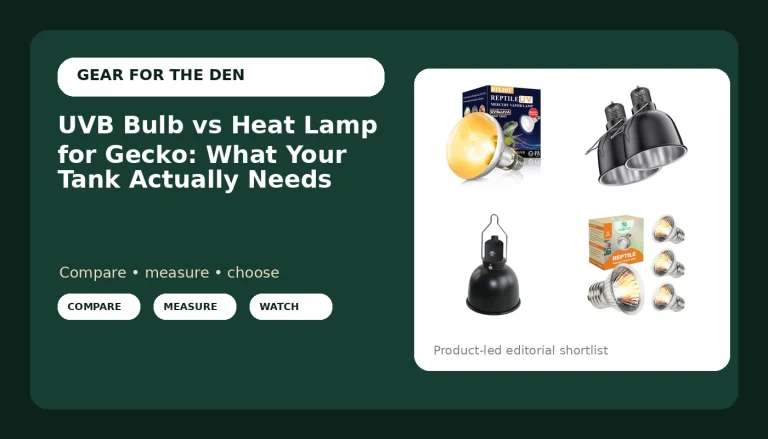
Two more products round out the group. The Hygger zoo 13W 5.0 is the small-tank option: low wattage, gentle output, and a good fit for nano enclosures, quarantine bins, and species like frogs and small snakes that do not want a blast of desert-strength light at close range. The TEKIZOO 125W is the opposite end of the scale, one fixture that heats and lights a large enclosure, provided it sits in a deep dome with a thermostat in the loop.
The uvb lighting schedule chart
This is the chart taped inside the cabinet. The hours are for a healthy adult animal on a normal day, with a timer doing the switching. Read the notes column before you buy, because the fixture is usually the limiting factor, not the bulb.
| Setup | Bulb | Hours per day | Notes |
|---|---|---|---|
Tropical and subtropical species in a screened enclosure | Reptisun 5.0 UVB Mini Compact Fluorescent (Pack of 2) | 10 to 12 | uvb only, so a separate lamp still handles the basking temperature |
Multi-tank racks and starter setups | CALPALMY 4-Pack 50W UVA+UVB Bulbs | 10 to 12 | Fixed wattage, so raise or lower the fixture instead of dimming it |
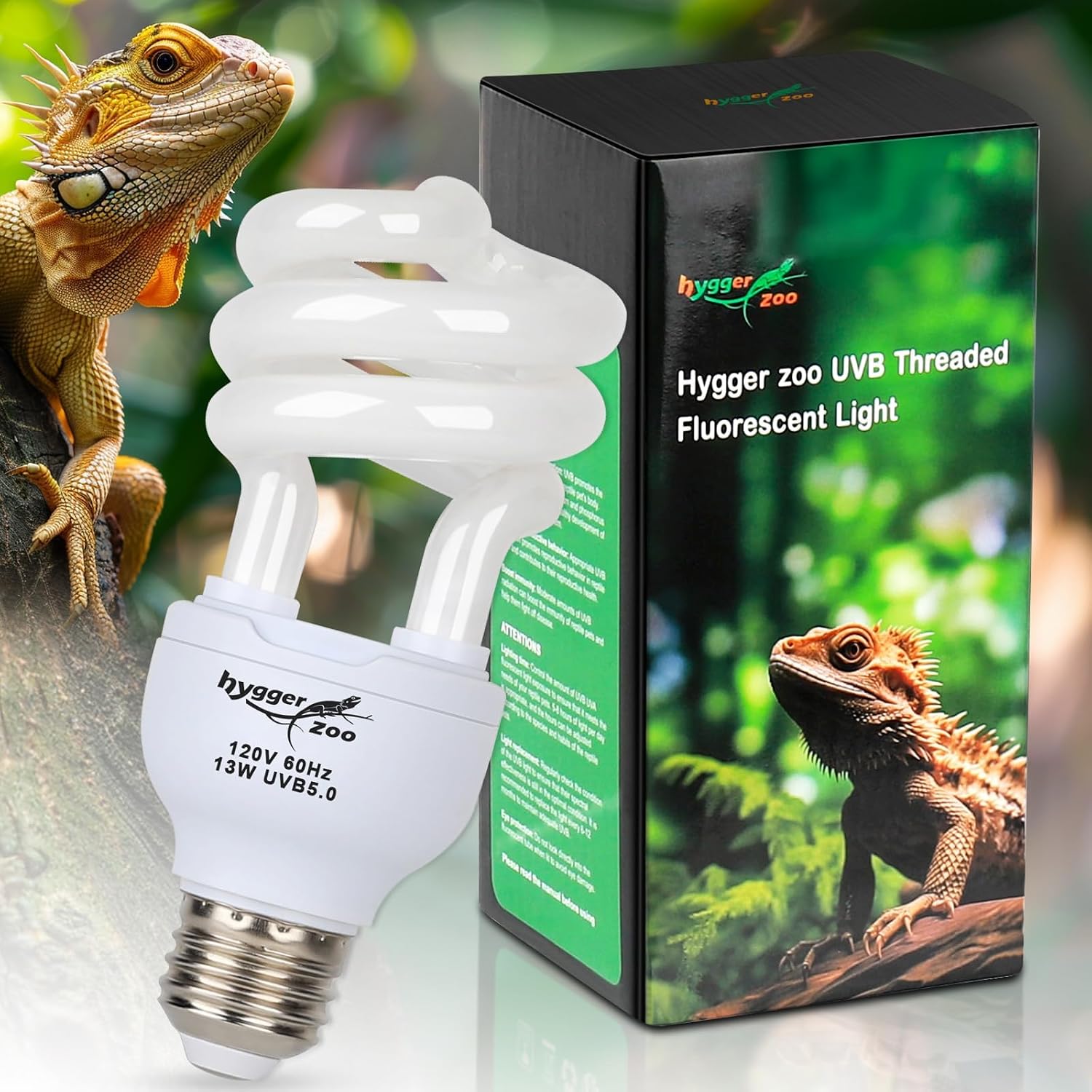 View on Amazon → Nano tanks, quarantine, and small species | Hygger zoo UVB Bulb 5.0, 13W | 8 to 10 | Gentle enough for frogs and small snakes at close range |
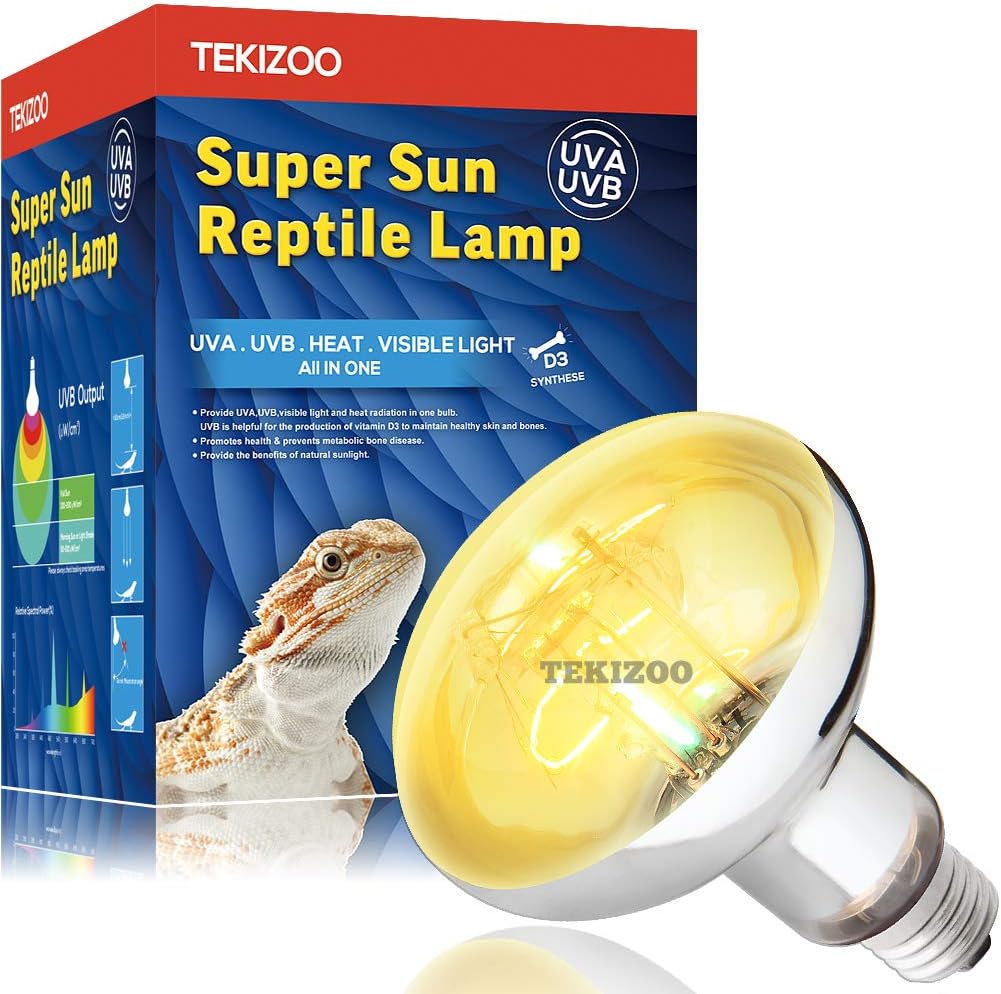 Large enclosures that need heat and uvb from one fixture | TEKIZOO 125W self-ballasted basking lamp | 10 to 12 | Deep dome and a thermostat, never a plastic clamp fixture |
| Any bulb, month ten | Replace the bulb or tube | Same schedule | uvb output fades long before the bulb goes dark |
The pattern is the same in every row: lights on in the morning, lights off at night, and a dark, cool stretch long enough for the animal to actually rest. If your enclosure sits in a room where people are up late, the timer still wins. Put the fixture on a cheap mechanical timer and stop thinking about it.
If your setup lives on a desk, a uvb desk lighting schedule is the same schedule with one extra rule. The desk light in a working room gets flipped by hand at eleven at night while you finish something, which is exactly why it belongs on a timer instead. Treat it as a uvb task lighting schedule with a single job: the lamp has one task, and it only has that task during the hours you set.
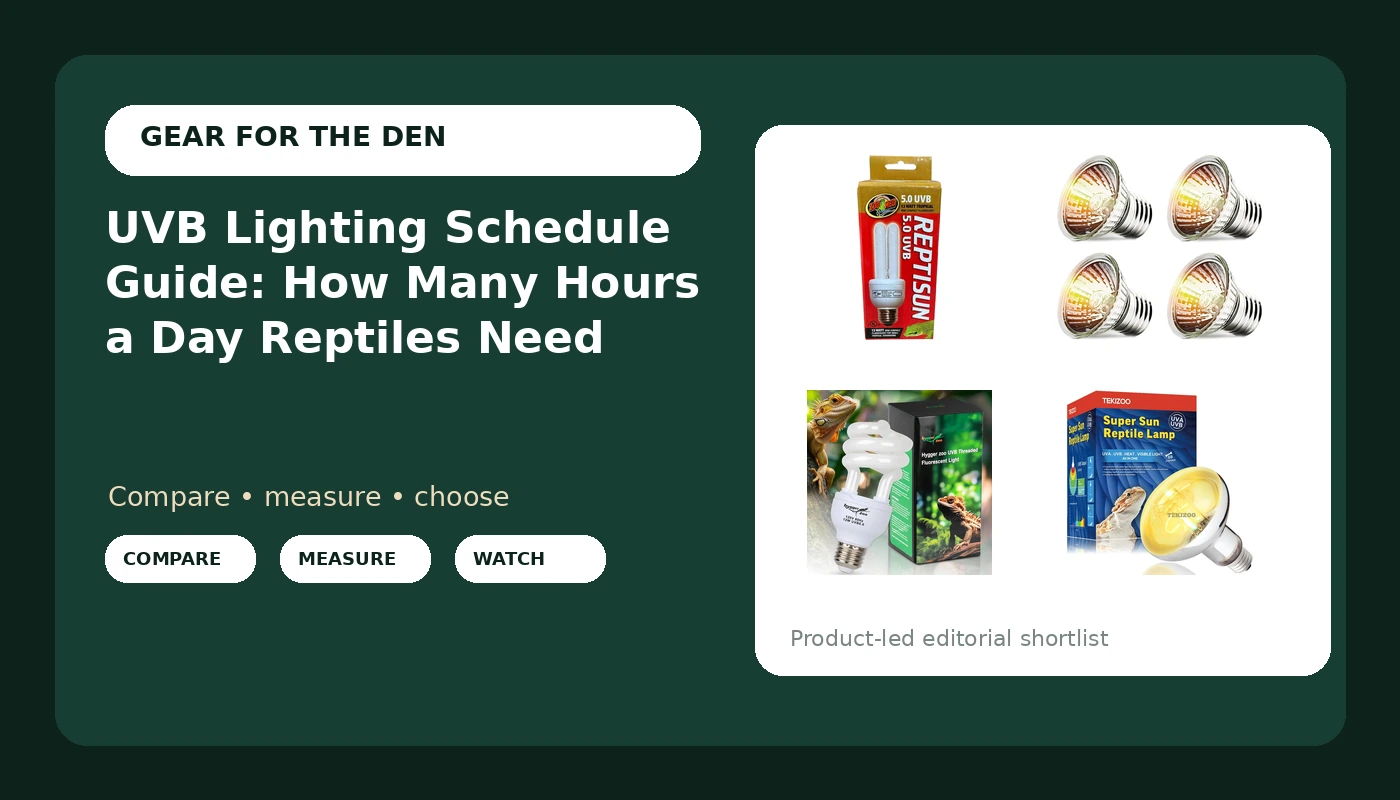
TEKIZOO 125W self-ballasted basking lamp
This is the bulb for the person who is tired of running two fixtures over one tank. A self-ballasted lamp puts heat and uvb out of a single dome, which cleans up the top of a large enclosure and simplifies the timer situation to one plug. It is high intensity, so it wants a deep dome with a ceramic base and it wants a thermostat or a dimmer in the circuit. In a big wooden enclosure it is the tidy answer. In a 20-gallon tank it is a hammer, and the animal pays for it with a basking spot it cannot escape.
Matching the bulb to the tank size, species, and screen
The bulb is the easy part. The match is the hard part. A forest species in a tall enclosure wants a gentler uvb bulb mounted closer to the basking spot, because the animal is never going to sit directly under a desert-strength lamp at the top of the glass. A desert species in a wide, low tank wants more intensity and a hotter basking rock, with the cool end far enough away that it actually reads cool. Screen tops, glass tops, and mesh lids all change the math, and so does the distance from the bulb to the animal's back rather than to the floor of the tank. Get the basking temperature right first, then place the uvb so the animal gets it while it basks, and leave the rest of the enclosure as a genuine retreat.
Should you buy the Reptisun 5.0 UVB Mini Compact Fluorescent (Pack of 2)?
Yes, if you keep tropical or subtropical species indoors and you want the uvb decision separate from the heat decision. It fits the fixture you already own, the 5.0 output suits the species most people actually keep, and the two-pack solves the replacement problem before it starts. The catch is that it is uvb only, so you are still buying and running a basking lamp, and you still have to check the basking temperature under that lamp with a thermometer rather than trusting the box.
If you have one screened enclosure and one animal, this is the least fussy way to run a uvb lighting schedule that actually holds up over a year. Date the bulb, keep the spare in a drawer, and replace it on schedule instead of waiting for it to look dim.
Should you buy the CALPALMY 4-Pack 50W UVA+UVB Bulbs?
Yes, with the right expectations. If you are running a rack of modest enclosures, keeping a couple of quarantine bins ready, or setting up a first tank for a hardy species, four bulbs for the price of one is a genuine bargain, and having spares means you replace on time instead of stretching a tired bulb another three months. They give heat and light from one fixture, which keeps the top of the tank simple.
What you give up is precision. There is no dimming, so the only dial you have is fixture height, and a 50W bulb is not going to carry a large adult enclosure on its own. Buy these for small and mid-size setups where a fixed basking temperature is good enough, and buy something with more control when the enclosure grows.