If your dog finishes dinner before you sit down, the slow feeder bowl vs dog food scoop question is not a minor gear debate. One tool changes how fast food disappears; the other changes how you measure and serve it. This comparison looks at four real options in the dog feeding gear category and explains which one solves which problem.
For most dogs who gulp, a slow feeder bowl is the more useful purchase. A dog food scoop is a portioning tool, not a pacing tool, and it cannot slow a fast eater on its own.
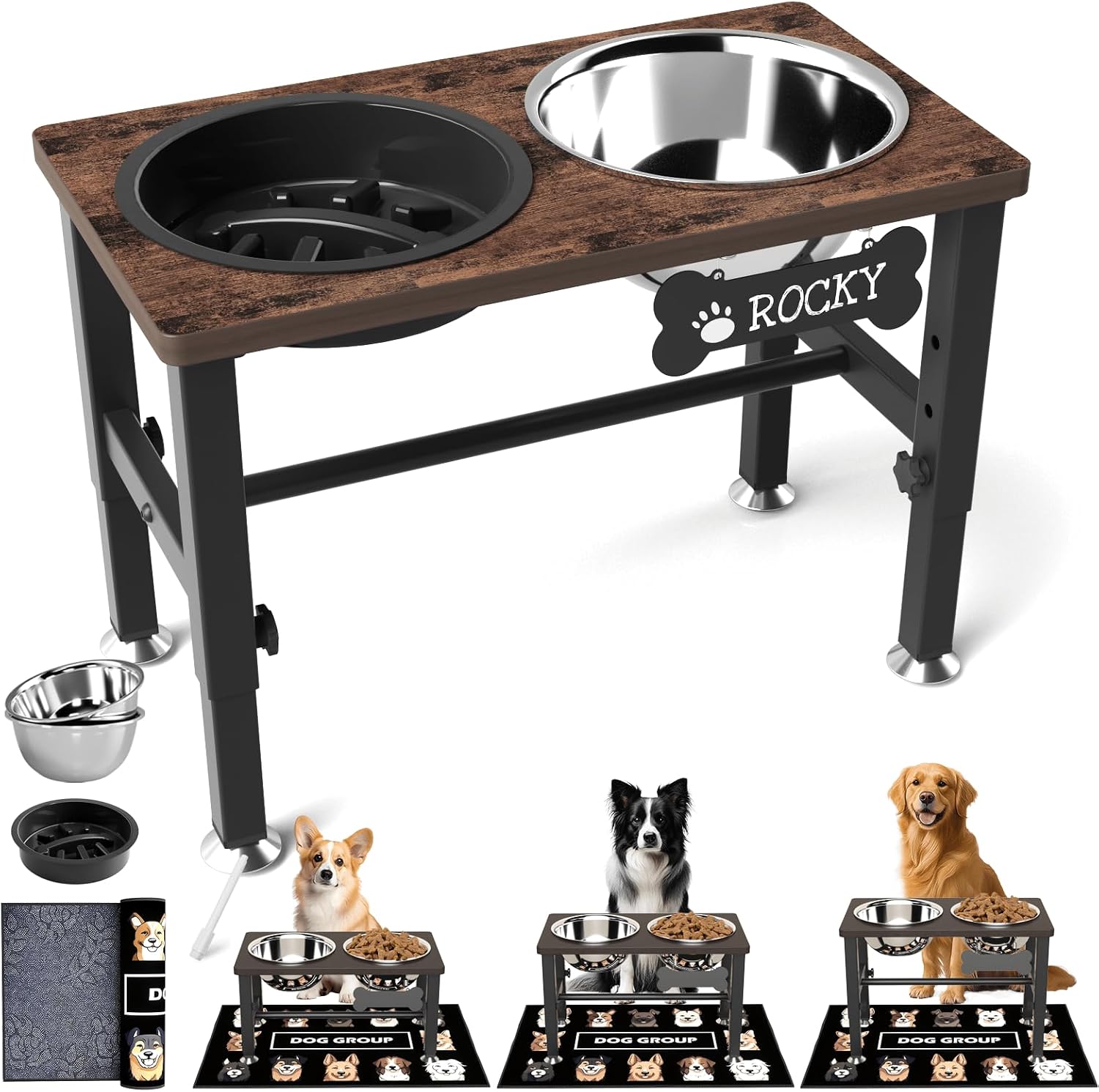
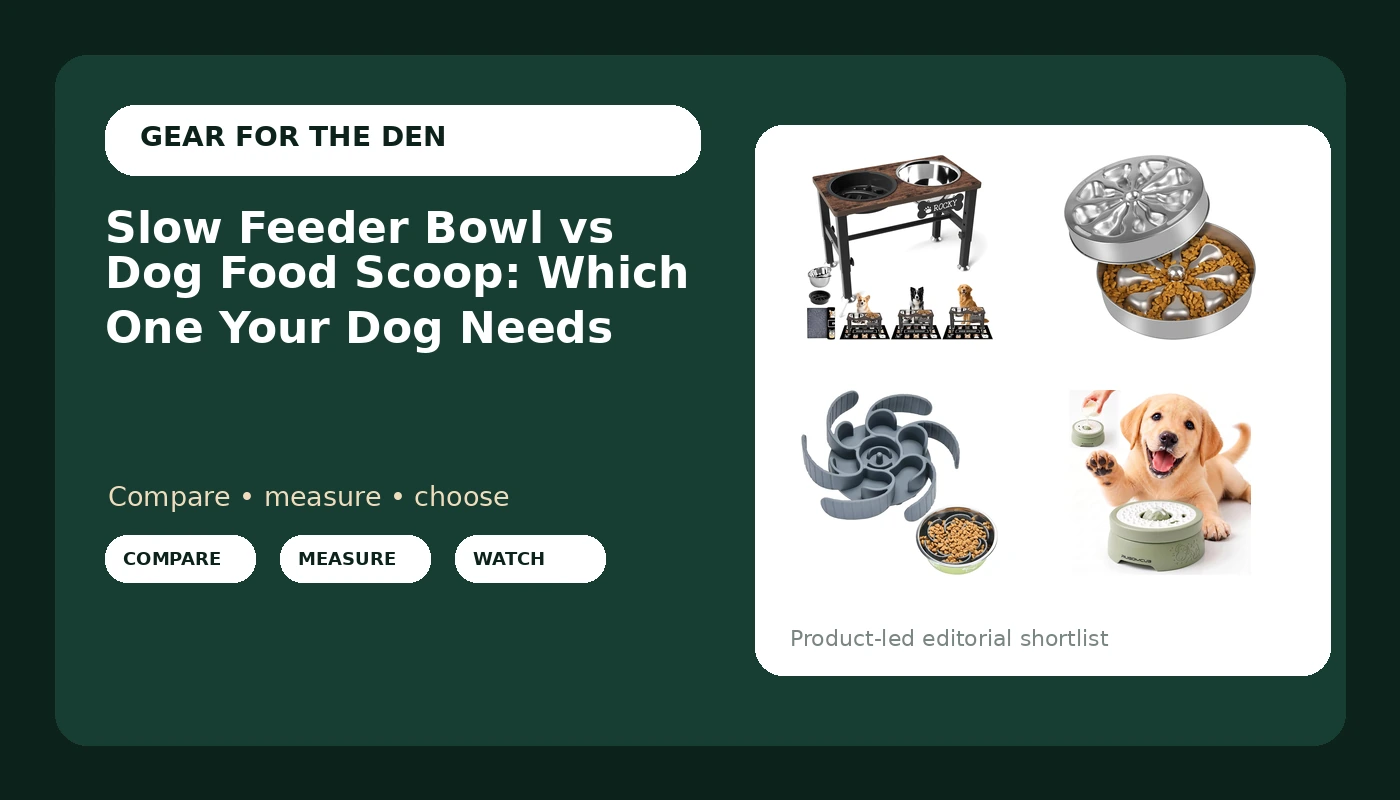
SHAINFUN Elevated Dog Bowls with Slow Feeder & Mat
Combines a raised stand, two 58oz stainless bowls, and a slow feeder for medium and large dogs
The whole stand takes up floor space, and the slow feeder is not a separate bowl you can move around
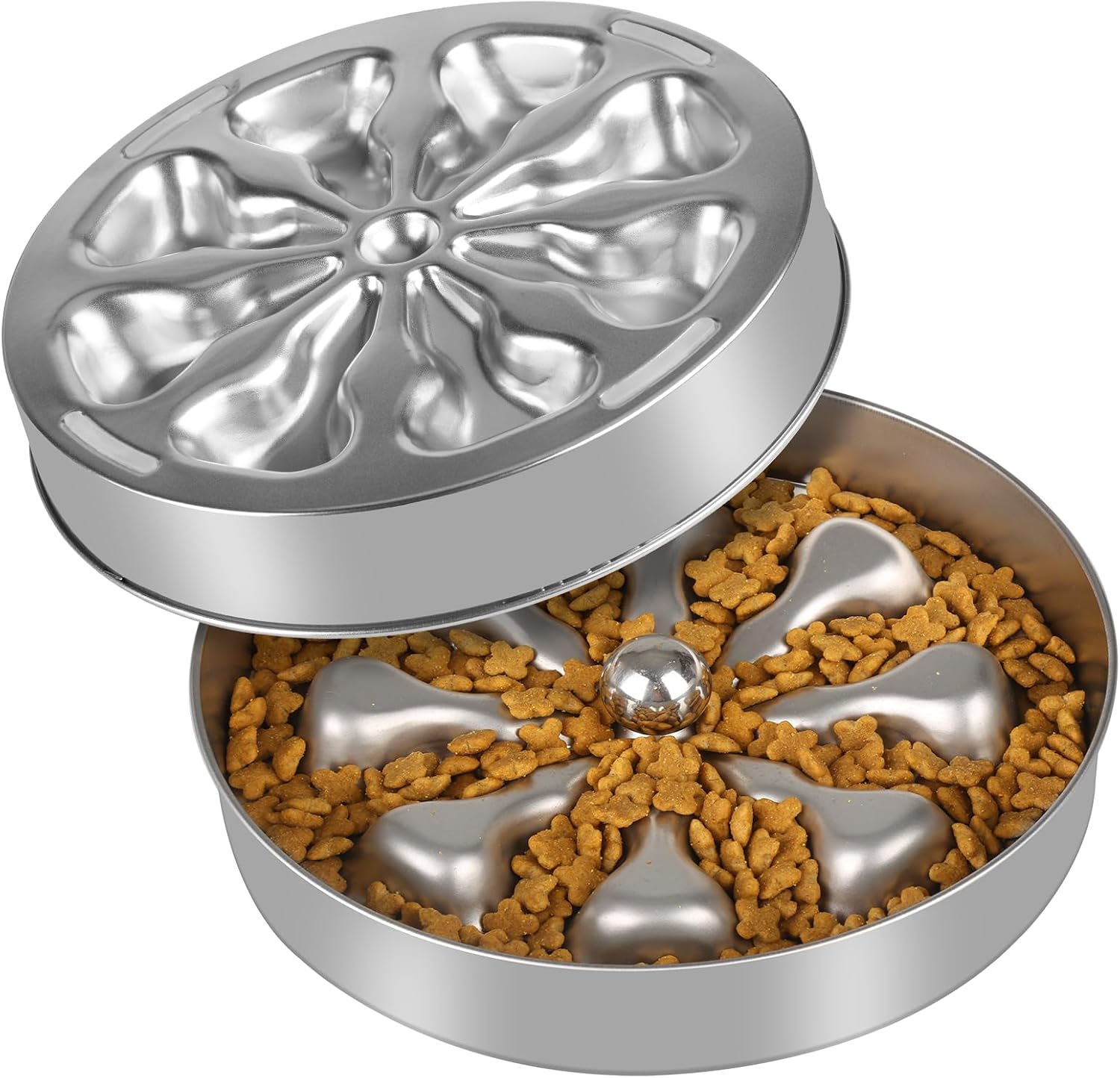
Oiwliur Slow Feeder Dog Bowl
Stainless steel body, 5-cup capacity, double-sided design, and a non slip base
It is a standalone bowl, so you still need to manage portioning yourself
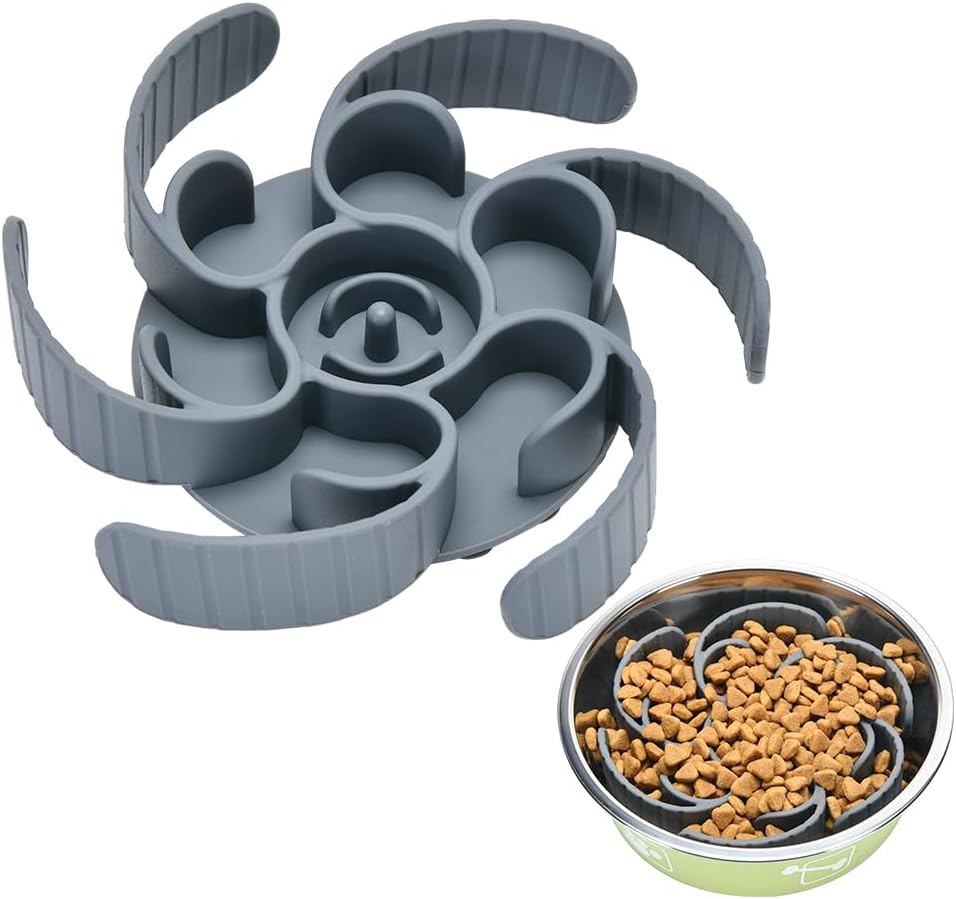
Slow Feeder Dog Bowl Insert
Adds slow feed ridges to a regular elevated metal or glass bowl, and it is cuttable for large breeds
It depends on a bowl you already own, and a cut-to-fit insert can be less stable if trimmed poorly
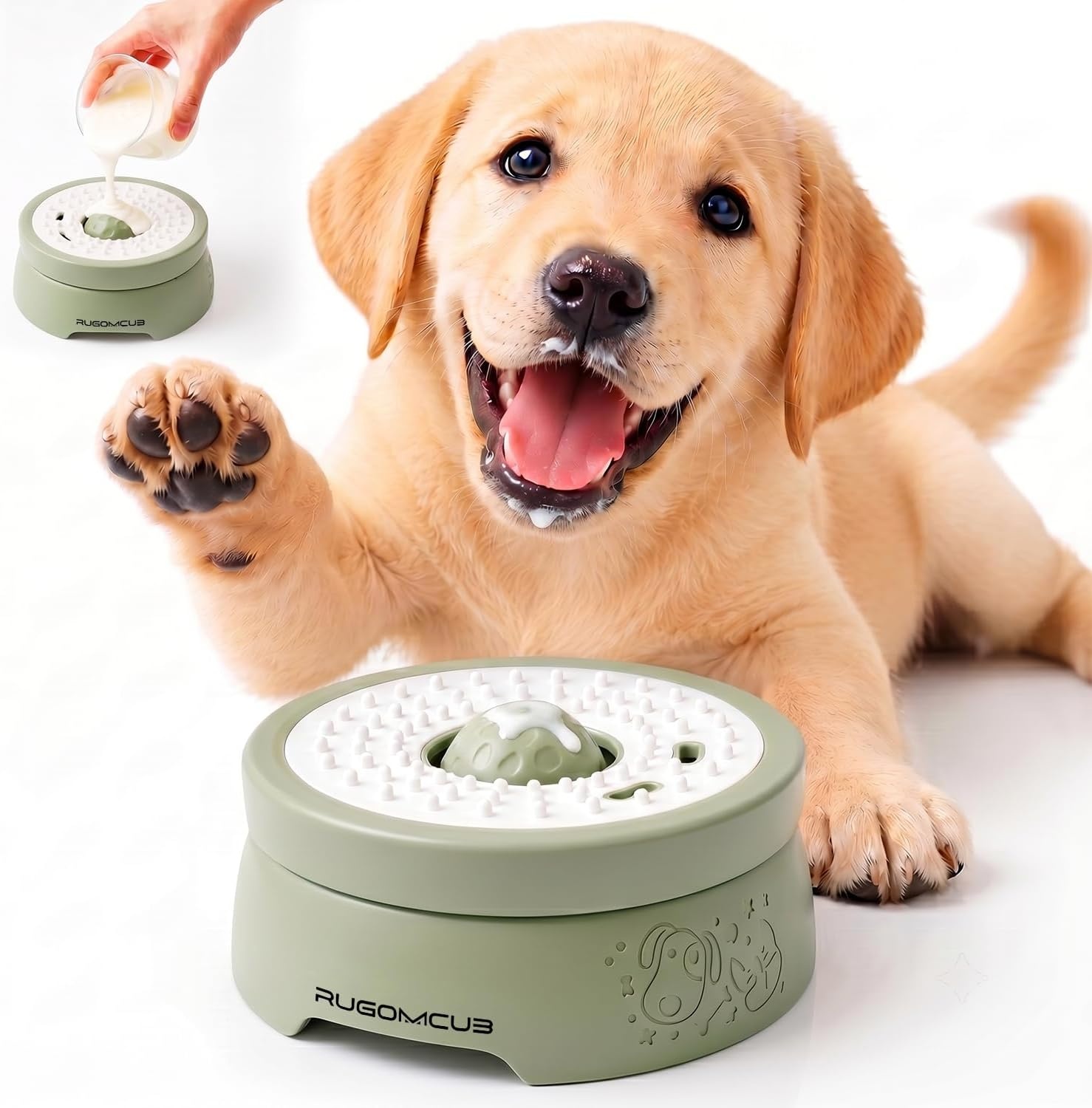
RUGOMCUB Slow Feeder Dog Bowl
2-in-1 design in grass green, a simple standalone slow feeder
Smaller and less configurable than an elevated stand, and the color may not suit every kitchen
Prices and availability may change.
The slow feeder bowl vs dog food scoop decision in plain terms
The difference between slow feeder bowl and dog food scoop is not about quality. It is about job description. A slow feeder bowl uses slow feed ridges, maze walls, or a textured insert to make a dog work for each mouthful. A dog food scoop measures kibble out of a bag and drops it into a bowl. One controls speed; the other controls quantity. If you search dog food scoop vs slow feeder bowl, you are probably trying to solve one of two problems: a dog who eats too fast, or a household where portions need to be consistent. The slow feeder bowl vs dog food scoop comparison gets confusing because both tools sit next to the food bin. The honest answer is that they are not competitors. They are complementary. A scoop helps you put the right amount in the bowl. A slow feeder helps the dog take longer to eat it. The only time they compete is budget or counter space, and even then, the slow feeder is usually the higher-impact buy for a gulper.
What a slow feeder bowl actually does
A slow feeder changes the geometry of dinner. Instead of a wide open dish, the dog faces ridges, channels, or a raised center that forces the muzzle to navigate around obstacles. That is the entire mechanism. The Oiwliur Slow Feeder Dog Bowl is a standalone example: a stainless steel body, a listed 5-cup bowl capacity, a double-sided design for dry, wet, or raw food, and a non slip base. The double-sided layout matters because it gives you two different obstacle patterns in one bowl, which can help if your dog learns the first pattern too well.
The RUGOMCUB Slow Feeder Dog Bowl takes a similar standalone approach with a 2-in-1 design in grass green. The 2-in-1 label usually means the bowl can be used as a slow feeder or as a standard bowl, which is useful for households with more than one dog. The Slow Feeder Dog Bowl Insert is a different category entirely. It is described as a third generation upgraded super firm eating bowl that is cuttable for large breeds and compatible with a regular elevated metal or glass dog bowl. In other words, it turns a bowl you already own into a slow feeder. That is the lowest-commitment way to test whether slow feeding works for your dog.
None of these products require a filter cartridge or an airtight seal. Those terms belong to water fountains and kibble storage containers, not to slow feeder bowls. What matters here is the shape of the obstacles, the bowl capacity, and whether the base stays put on your floor.
Standalone bowls, inserts, and elevated stands
The four products in this comparison fall into three form factors. The Oiwliur and RUGOMCUB are standalone slow feeder bowls. The insert is an accessory. The SHAINFUN Elevated Dog Bowls with Slow Feeder & Mat is a complete feeding station.
The SHAINFUN option is the most furniture-like of the group. The product name describes a 12 inch tall adjustable wooden and metal raised dog bowl stand with two stainless steel 58oz bowls for food and water, plus a slow feeder and a mat. That combination addresses feeding height and water capacity at the same time. A raised bowl can be easier on a large dog's neck and joints, and the second bowl gives you a dedicated water station. The trade-off is floor space. An elevated stand is not something you tuck into a corner the way you can with a single bowl.
The insert is the opposite approach. It assumes you already have a regular elevated metal or glass dog bowl and simply want to add slow feed ridges. Because it is cuttable, it can be trimmed to fit a large breed bowl. The risk is fit. A cut-to-size insert can shift if the trim is uneven, and it will never feel as solid as a purpose-built slow feeder. If you want a budget-friendly experiment, the insert is the logical first step. If you want a permanent solution, a standalone bowl or an elevated stand is more predictable.
The Oiwliur bowl sits in the middle. It is a complete standalone slow feeder with a stainless steel body and a non slip base, but it does not include a stand or a water bowl. The RUGOMCUB is similar, with a 2-in-1 design and a smaller footprint. Neither one solves feeding height. If your dog is tall or senior, you may still want a raised stand under the bowl.
Capacity, height, and cleaning: the specs that matter
Bowl capacity is the first number to check. The Oiwliur bowl lists a 5-cup capacity, which is a large meal for most medium dogs and a reasonable one for many large dogs. The SHAINFUN stand includes two 58oz bowls. Since 58oz is roughly 7 cups, that is a substantial water capacity and a generous food capacity. The RUGOMCUB and the insert do not list a capacity in the same way, so you would need to verify the fit against your dog's current bowl.
Feeding height is the second spec. A raised bowl can reduce the reach for a large or senior dog, but the stand has to be stable. The SHAINFUN stand is adjustable and built from wood and metal, which suggests a heavier base than a plastic travel stand. If you are comparing a slow feeder bowl or dog food scoop, height may not seem relevant, but it is part of the same feeding setup. A slow feeder on the floor is harder for a tall dog to use than a slow feeder in a raised stand.
Cleaning is the third spec. Slow feeders have more surface area than a plain bowl, and food can pack into the ridges. A dishwasher safe bowl saves time, but not every slow feeder is dishwasher safe. Check the listing before you commit. A non slip base is also worth confirming, because a bowl that slides across the floor defeats the purpose of a maze. The Oiwliur bowl explicitly lists a non slip base. For the others, look for rubber rings or weighted bases in the product details.
Trade-offs: what each design gives up
Every form factor gives something up. The standalone Oiwliur bowl gives up nothing in function, but it does not address feeding height or water capacity. You get a stainless steel slow feeder with a double-sided pattern, and that is it. The RUGOMCUB gives up size and configurability in exchange for a simple 2-in-1 design. The insert gives up stability and independence because it depends on a bowl you already own. The SHAINFUN stand gives up floor space and portability because it is a piece of furniture with two bowls, a mat, and a slow feeder.
There is also a training trade-off. A slow feeder can be frustrating for a dog that has never used one. The first few meals may involve pawing, whining, or flipping the bowl. That is normal. A shallow pattern or a 2-in-1 bowl set to standard mode can ease the transition. The insert is useful here because you can trim it to a gentler pattern, or remove it entirely if your dog needs a break.
The scoop side of the comparison has its own trade-off. A scoop is simple and easy to clean, but it does nothing to change eating speed. If your dog inhales food and then vomits or bloats, a scoop alone is not a solution. You need a bowl that changes the mechanics of the meal. That is why the slow feeder wins the primary recommendation for fast eaters, while the scoop remains the right tool for measuring and serving.
How to choose a slow feeder bowl or dog food scoop
Start with the dog, not the product. If your dog eats at a normal pace and maintains a healthy weight, a dog food scoop may be all you need. It helps you serve consistent portions and manage a multi-dog household. If your dog gulps, coughs, or vomits after meals, choose a slow feeder first. The slow feeder bowl or dog food scoop decision should follow the behavior you are trying to change.
Next, measure your current bowl and your dog's meal size. If you already have an elevated metal or glass bowl, the cuttable insert is the least expensive way to add slow feed ridges. If you want a dedicated slow feeder, the Oiwliur bowl offers a stainless steel body and a 5-cup capacity. If you want a 2-in-1 option, the RUGOMCUB is the simpler pick. If you need feeding height and a water bowl in the same setup, the SHAINFUN elevated stand covers more ground.
Finally, think about cleaning and stability. A dishwasher safe bowl is easier to live with, and a non slip base keeps the bowl where you put it. Neither feature is glamorous, but both affect how often you actually use the product. A slow feeder that is hard to clean will end up in the cabinet. A bowl that slides will end up against the wall.
What about dogs who need both?
Many households need both tools. A scoop portions the food, and a slow feeder paces the meal. That combination is especially useful for multi-dog homes where one dog needs a measured portion and another needs to slow down. You can scoop each dog's food, then place the fast eater's portion in a slow feeder. The other dog can eat from a standard bowl.
If you go this route, the elevated stand is the most complete setup. It holds two stainless steel bowls, so you can use one for food and one for water, and it includes a slow feeder and a mat. The standalone Oiwliur bowl can serve as the slow feeder on the floor, while a scoop handles portioning from the food bin. The insert works well if you already have a raised bowl and want to convert it without buying a whole new station.
One caution: do not use a slow feeder as a permanent water bowl. Slow feeders are designed for food, and the ridges can trap moisture and food particles. Use the second bowl in the elevated stand for water, and clean it regularly. That is where water capacity matters, not in the slow feeder itself.
The bottom line
The slow feeder bowl vs dog food scoop question has a clear answer for most fast eaters. Buy the slow feeder first. It changes the meal itself, and that is the behavior you are trying to fix. Add a scoop when you need consistent portions or you are feeding more than one dog.
Among the four options here, the SHAINFUN Elevated Dog Bowls with Slow Feeder & Mat is the most complete setup for medium and large dogs because it combines feeding height, two 58oz stainless bowls, a slow feeder, and a mat. The Oiwliur Slow Feeder Dog Bowl is the best standalone slow feeder for someone who wants stainless steel, a 5-cup capacity, and a double-sided design. The RUGOMCUB Slow Feeder Dog Bowl is the simplest 2-in-1 alternative. The Slow Feeder Dog Bowl Insert is the budget-friendly experiment for a dog who already has a raised bowl.
Whatever you choose, check the bowl capacity against your dog's meal size, confirm the feeding height works for your dog, and look for a non slip base and dishwasher safe materials. Those details decide whether the product gets used every day or sits in the pantry. For a fast eater, the slow feeder is the tool that earns its place.