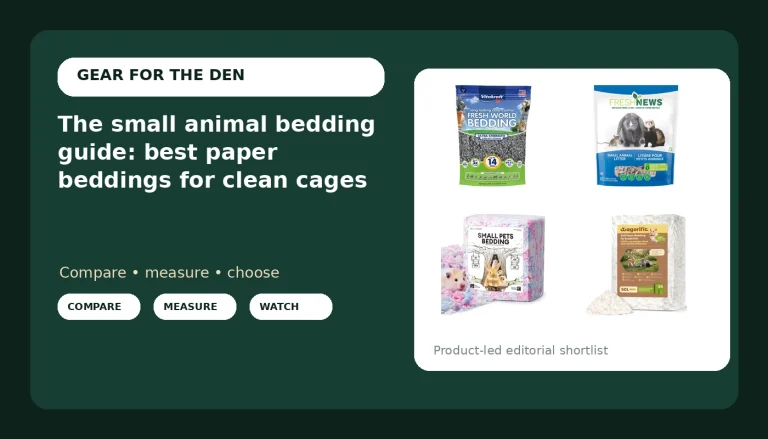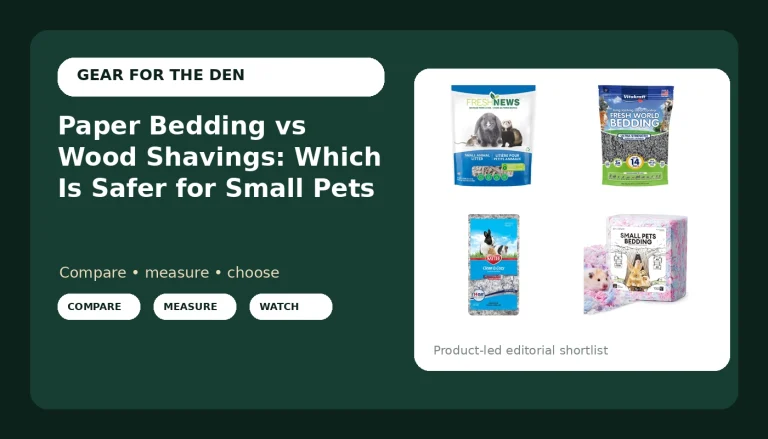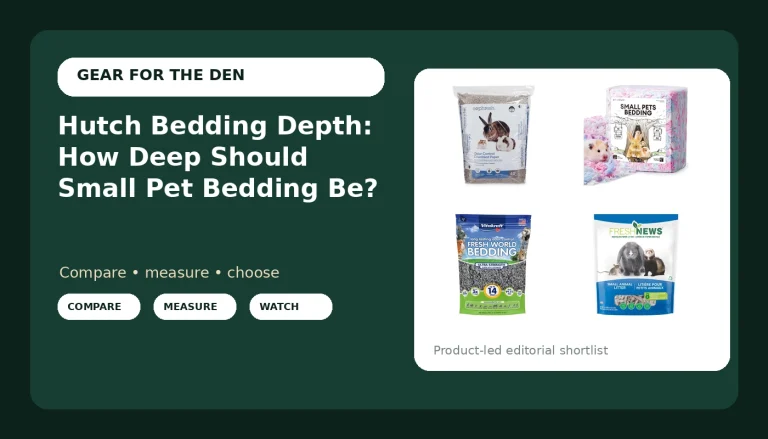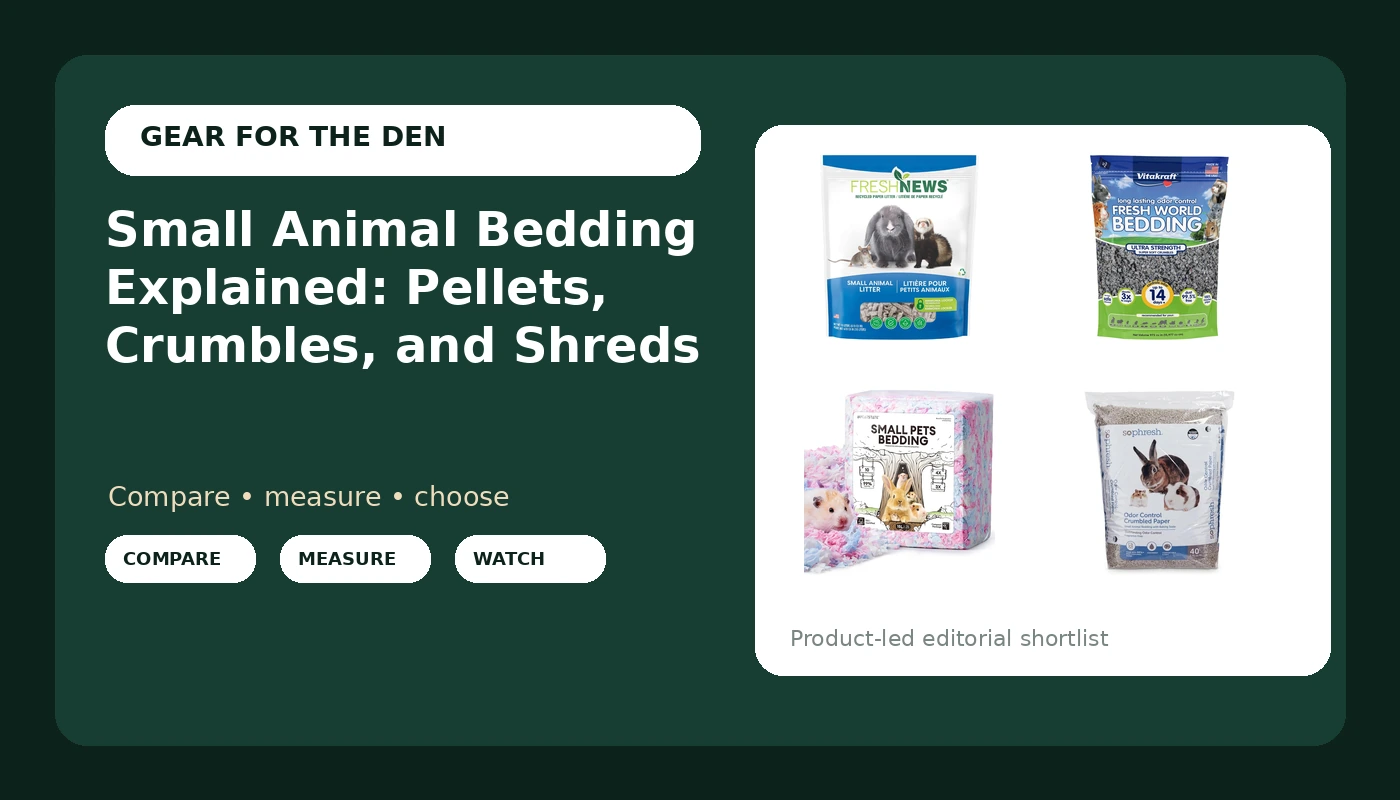
Walk down the small pet aisle and nearly every bag looks the same: pellets, crumbles, and loose shreds, each with a claim about odor or dust printed on the front. The differences matter more than the packaging suggests. Bedding is where a hamster, gerbil, rabbit, or guinea pig spends most of its day, and it drives how quickly a cage smells, how often you strip the whole thing down, and how much bedding dust ends up in the air an animal is breathing. This guide gets small animal bedding explained in plain terms, then sets four widely sold paper products against the cages and species they actually suit. There is no universal winner, only the right format for your floor area, cleaning routine, and budget.
Quick answer
Small animal bedding does three jobs at once. It absorbs urine and the ammonia that rises off it, it gives burrowing species something to tunnel through, and it cushions animals that spend most of their lives on the cage floor. Paper based products dominate the category because they are widely sold, easy to spot clean, and made in several physical formats. Pellets and crumbles drain and dry faster, which suits litter pans and cage corners. Loose shredded paper holds a shape better, which suits hamsters and gerbils digging a burrow. Choose the format first, then the bag size. None of the four options here is universally better; each fits a different cage and routine.
4 useful options
| Model | Best fit | What stands out |
|---|---|---|
| Fresh News Recycled Paper Small Animal Litter Bedding, 10 Liters | Litter pans and cage corners | Pellet format in a 10 liter bag |
| Vitakraft Fresh World Small Animal Bedding – Ultra Strength – Pet Bedding for Litter Boxes and Cages (16 L),Gray, 975 cu in | Litter boxes and cage floors across species | Mid size 16 liter bag described as ultra strength |
| Hamster Bedding 15L, Truly 99% Dust-Free Small Animal Paper Bedding Odor Control, Cozy Hamster Litter for Rabbit Rat Syrian Dwarf Hamsters Gerbils (Cotton Candy) | Burrowing hamsters, gerbils, and rats in smaller cages | 15 liter bag described as dust free with odor control |
| SO PHRESH by Petco Crumbled Paper Small Animal Bedding 40 Liter | Multi cage households and full cage changes | Bulk 40 liter crumbled paper bag |
Litter-grade paper pellets: Fresh News Recycled Paper Small Animal Litter Bedding, 10 Liters
A pellet behaves less like a burrowing substrate and more like a litter material. Because the pieces are dense and hold their shape, they shed liquid downward instead of saturating at the surface, which is why this format shows up in litter pans and under water bottles. That also makes spot cleaning quick: you lift the soiled pellets out with a scoop rather than hunting through loose paper. The trade off is texture. A hamster that wants to dig a tunnel will not get far in pellets, and a rabbit that rearranges its bedding will simply push them aside. Many owners run pellets in the pan and a loose paper elsewhere in the same cage, which is a sensible way to use a 10 liter bag without making it the whole floor.
Multi-species option: Vitakraft Fresh World Small Animal Bedding – Ultra Strength – Pet Bedding for Litter Boxes and Cages (16 L),Gray, 975 cu in
This one is positioned as a general purpose bedding rather than a single species product, and the listing describes it as ultra strength. At 16 liters it sits in the middle of the four options here: enough for a couple of full changes in a small cage, or repeated spot cleaning in a larger one. Because the name puts litter boxes first, it works as a crossover choice if you keep more than one species and want a single bag that can serve a pan and a cage floor. The practical question is texture. If your animal burrows deeply, a loose shredded paper may suit it better than a mid density product, so consider this one as the pan and corner layer rather than the only bedding you buy.
Low-dust option: Hamster Bedding 15L, Truly 99% Dust-Free Small Animal Paper Bedding Odor Control, Cozy Hamster Litter for Rabbit Rat Syrian Dwarf Hamsters Gerbils (Cotton Candy)
The packaging leans hard on dust and odor, and bedding dust claims are worth treating as a starting point for your own observation rather than a measured result: watch the air near the cage after a change and see what settles. The 15 liter size suits a smaller cage or a spot cleaning routine, and the cotton candy variant is one of several scent or color options in this line. A scented paper bedding is worth thinking about carefully for species with sensitive respiratory systems, since the scent is added on top of the waste rather than removing it, and unscented is often the safer default for rabbits and rodents kept indoors.
Bulk option: SO PHRESH by Petco Crumbled Paper Small Animal Bedding 40 Liter
This is the volume play. A 40 liter bag of crumbled paper is sized for people who clean whole cages at once or keep several small animals and go through bedding quickly. Crumbled paper sits between pellets and long shreds: it packs into a corner, holds a shape reasonably well, and still gives an animal something loose to move around. A larger bag usually means a lower cost per liter than small bags, though that depends on the listing at the time you buy, and it means fewer reorders. The trade off is storage. Forty liters takes real shelf space, and paper bedding needs to stay dry, so a sealed bin matters as much as the bag itself.
Prices and availability may change. Product images, names, and retailer links are matched to verified listings. No current price, rating, stock status, or measured result is stated here without current evidence.
What small animal bedding actually does in a cage
Bedding is the part of the setup that handles waste, so its physical form matters as much as its material. A dense pellet lets liquid pass down through the layer and keeps the surface drier, which is why pellets are common in litter pans and under water bottles where drips collect. A crumbled or shredded paper holds liquid in the fibre itself and stays softer underfoot, which matters for rabbits and guinea pigs that rest directly on the floor.
The second job is behavioural. Hamsters, gerbils, and many mice burrow, and a deep layer of loose paper gives them somewhere to dig, hoard, and sleep. A shallow layer of pellets does not. If the cage has a hideout, a tunnel, or a hay rack, bedding depth and texture decide whether the animal actually uses those items or ignores them.
The third job is air quality. Paper products vary in how much fine particulate they release when you pour them out, and a small animal's nose sits inches from the floor. Whatever the bag claims, the useful signal is what you see on opening: a cloud of fines that hangs in the air is worth managing with a slower pour, a ventilated room, and, for sensitive species, a bedding you have shaken out first.
Odour control is the fourth factor and the most heavily marketed. Absorbency, not scent, does most of the work. Scented bedding adds a smell on top of the ammonia rather than removing it, and for rabbits and rodents with sensitive respiratory systems, unscented is usually the safer default.
Matching bedding to species, cage size, and floor area
Bedding depth and format should follow the animal, not the bag. A Syrian hamster in a large cage with a solid base does well with a deep loose layer, because burrowing is a core behaviour and floor area allows a real tunnel system. Dwarf hamsters and gerbils use bedding the same way on a smaller scale. Rabbits and guinea pigs mostly need absorbent coverage and a soft surface, and they often do best with a litter pan of pellets or crumbles in one corner and a thinner layer across the rest of the floor.
Cage size changes how much you buy, not which format works. A wide floor area needs more volume per change, so a large bag makes sense; a small cage with a deep base may only need a 10 to 15 liter bag. Bar spacing and base height matter too, because loose paper escapes through wide bars and a shallow tray will not hold the depth a burrowing species wants.
The rest of the setup interacts with bedding more than most owners expect. Hideout size and tunnel diameter determine whether an animal can burrow up to and inside them. A hay rack keeps hay off the bedding so it stays dry, and bottle capacity affects how much water ends up in the bedding under the spout. Match the bedding to those items and the cage stops fighting itself. For a full walkthrough of those parts, the small pet cage setup checklist covers sizing and placement.
Practical guidance for bedding changes and cleanup
- Spot clean litter pans and wet corners daily, and pull soiled bedding before it breaks down into ammonia.
- Top up loose bedding rather than fully replacing it when you can, since a complete strip removes familiar scent and can unsettle burrowing species.
- Keep the bag sealed and dry, because paper bedding that takes on moisture loses absorbency and can grow mould.
- Pour bedding slowly and close to the cage floor to cut down on airborne fines, and ventilate the room while you work.
- Wash your hands and the cage base between species and between sick and healthy animals, since bedding carries scent and debris from one enclosure to the next.
Which option should you choose?
Choose the Fresh News Recycled Paper Small Animal Litter Bedding, 10 Liters when you want a pellet format for litter pans, cage corners, and the area under a water bottle. Choose the Vitakraft Fresh World Small Animal Bedding – Ultra Strength – Pet Bedding for Litter Boxes and Cages (16 L),Gray, 975 cu in when you want one mid size bag that can serve a litter box and a cage floor across more than one species. Choose the Hamster Bedding 15L, Truly 99% Dust-Free Small Animal Paper Bedding Odor Control, Cozy Hamster Litter for Rabbit Rat Syrian Dwarf Hamsters Gerbils (Cotton Candy) when the animal burrows in a smaller cage and bedding dust is your main concern. Choose the SO PHRESH by Petco Crumbled Paper Small Animal Bedding 40 Liter when you clean whole cages at once or keep several animals and want a bulk bag of crumbled paper.
A caveat on the evidence. The sizes, materials, and formats above come from the product listings. The dust and odour wording on the bags is manufacturer language, not a measured result from this site. There is no single ideal small animal bedding for every cage, and no product here is declared the best on the basis of testing. Performance depends on how deep you layer it, how often you clean, the species, and the ventilation in the room, so treat the labels as a starting point and judge each bag by how it behaves in your own setup.
The bottom line
The correct small animal bedding for your cage is a format decision before it is a brand decision. Pellets suit litter pans and wet spots, crumbles sit between pellet and shred and handle both jobs, and loose paper suits burrowing species that need depth. Bag size follows floor area and how often you do a full change, not the other way round. Of the four products here, the 10 liter pellet bag covers litter duty, the 16 liter bag is the general purpose middle option, the 15 liter bag is aimed at burrowing animals in smaller cages, and the 40 liter bag is the bulk choice for multi cage households. Pick the format your animal's behaviour asks for, keep the bedding dry, and check current Amazon price on the listing before you buy, since prices and availability move.