The first thing I look at when someone sends me a photo of their setup is not the wheel or the water bottle. It is how deep the bedding sits. Hutch bedding depth is the spec that never makes it onto the packaging, and it decides more about how a small pet spends its day than almost anything you can buy for the cage. Get it right and a rabbit digs, a hamster burrows, and the cage smells like nothing for a week. Get it wrong and you are refilling a bag every four days while your pet paces the same shallow strip. This hutch bedding depth guide is the version of that conversation I wish I had read before I wasted my first two bags of shavings.
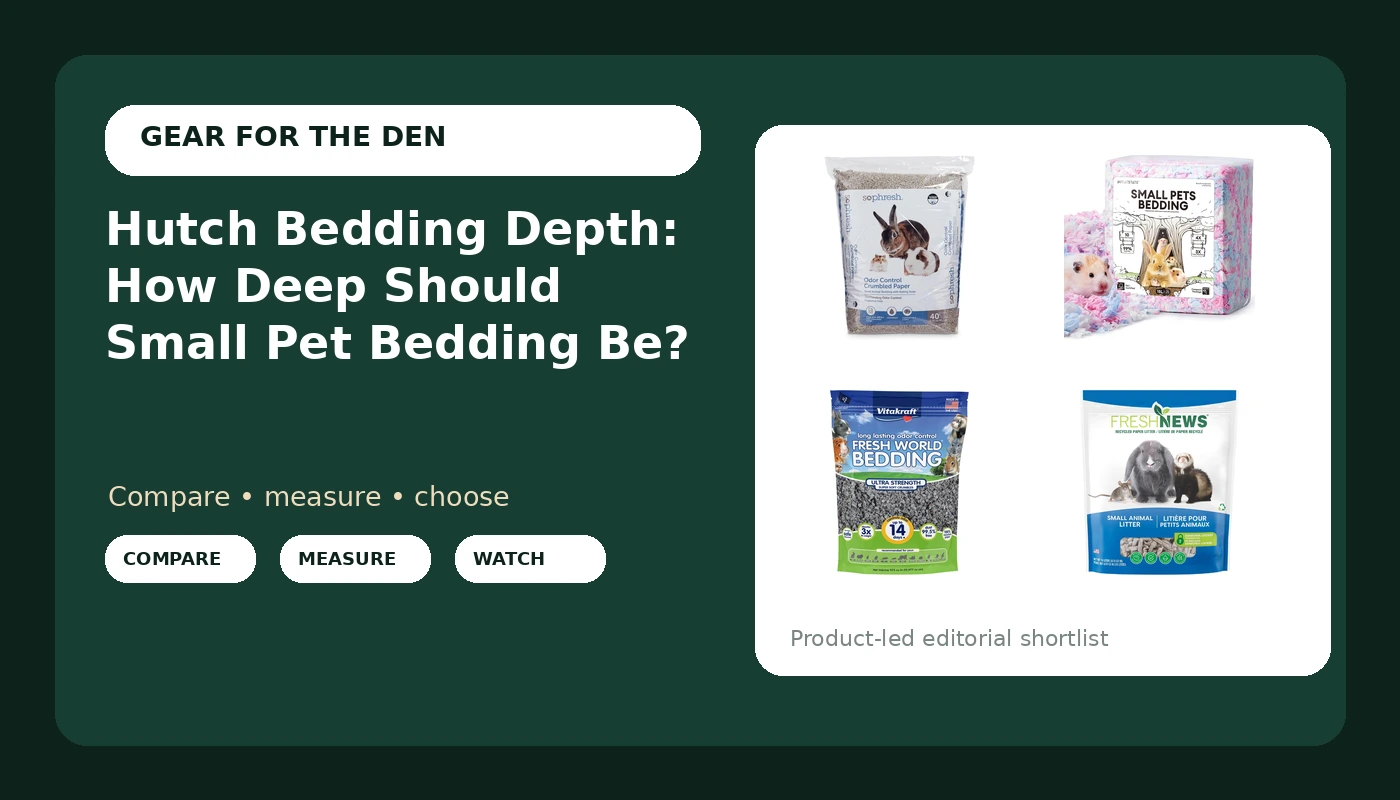
Depth is not a preference. It is a function of floor area, cage size, and how the animal actually uses the space. A rabbit wants a deep base to dig through. A hamster wants one deep corner to burrow in and a thin layer everywhere else. A rat mostly wants the tray covered so nothing sticks to the floor. I keep four paper beddings in rotation for exactly that reason, and the one thing they have in common is that bedding dust is what makes me stop using a bag, not the price.
Best Overall: SO PHRESH by Petco Crumbled Paper Small Animal Bedding 40 Liter
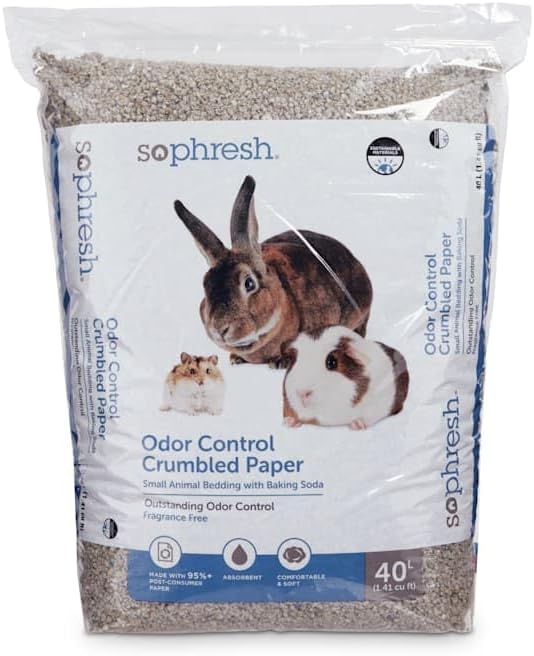
This is the bag I buy when I am setting up a hutch from scratch. Forty liters of crumbled paper fills a rabbit-sized floor area to a real burrowing depth without needing three bags to get there, and the crumble holds its shape, so a tunnel does not collapse the second your guinea pig turns around. It is soft, it is quiet when they dig, and it does not turn into a solid brick at the bottom of the tray the way some paper beddings do.
The catch is that it is a big bag for a small cage. If you keep a single dwarf hamster in one tank, forty liters will last you months and you will be storing half of it in a closet. For anyone with a rabbit, a pair of guinea pigs, or a multi-level hutch, that volume is the entire point. Deep bedding only gets expensive when you buy it in small bags, and this is the bag that makes depth affordable.
It handles the boring jobs too. I run a thin layer under a hay rack to catch the spill and a shallow layer in the litter corner, and it holds up to both. If you are still deciding how large the hutch itself should be, sort that out first, because bedding depth is a function of floor area, not the other way around.
Best Value: Hamster Bedding 15L, Truly 99% Dust-Free Small Animal Paper Bedding Odor Control, Cozy Hamster Litter for Rabbit Rat Syrian Dwarf Hamsters Gerbils (Cotton Candy)
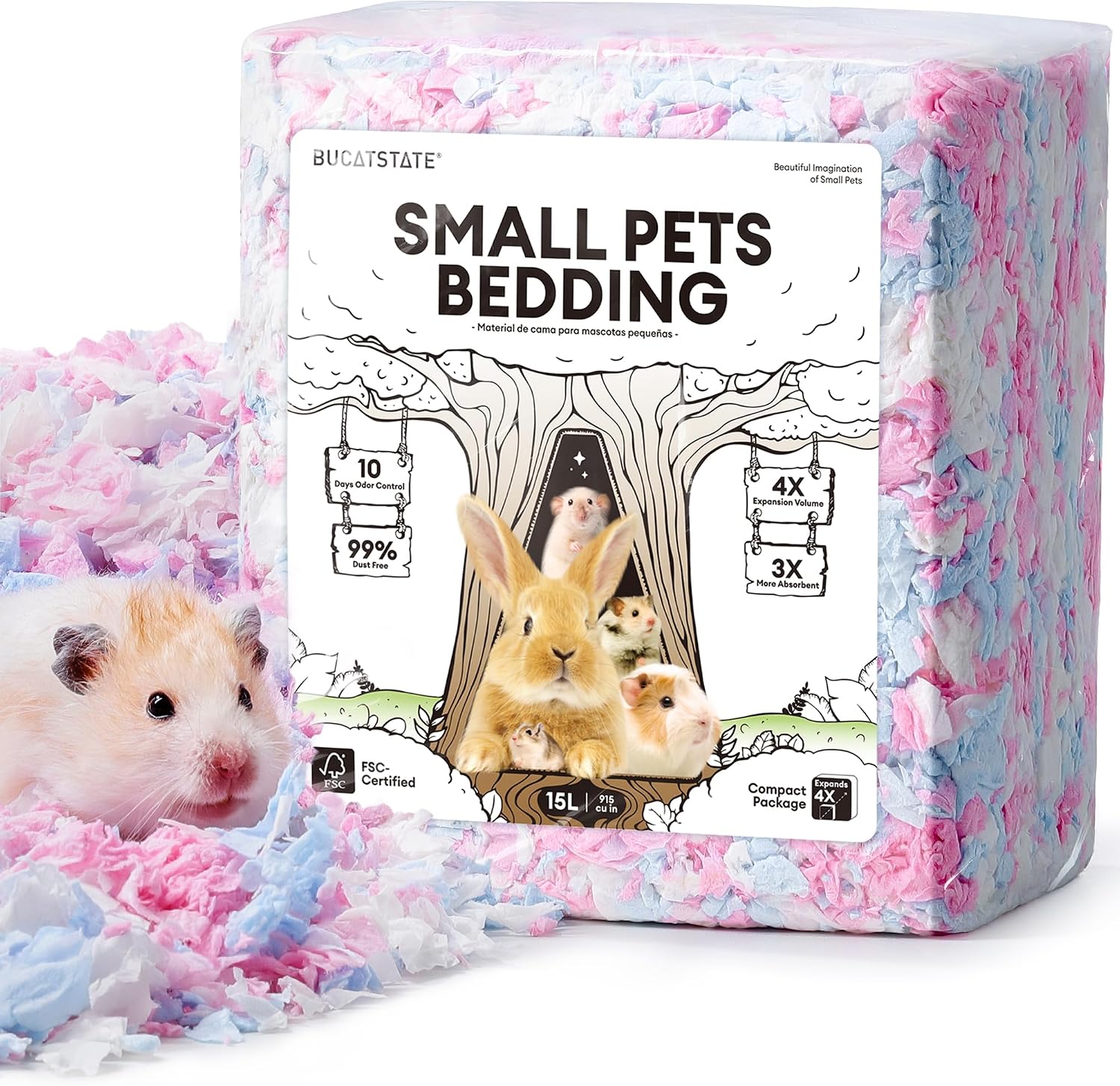
The dust claim is what sold me, and it is the claim that matters most in a small cage where your pet is living an inch from the floor. Bedding dust is the reason I stopped using wood shavings years ago, and a bag that genuinely shakes out clean is worth a lot in a hamster setup, where the animal is breathing at bedding level all night.
Fifteen liters is a sensible size for a hamster, a pair of rats, or a gerbil tank. It is enough to hit a real burrowing depth in a smaller floor area without leaving you with a half-used bag on a shelf. The crumble is fine rather than chunky, so it packs into corners and around a hideout nicely, and it is easy to spot clean because the pieces do not mat together into clumps.
It is not the bag for a large rabbit hutch unless you buy several at once, and the cotton candy color is a matter of taste rather than function. For a small pet in a small cage, though, it is the most affordable way I have found to keep bedding deep, dry, and dust free at the same time.
How I tested
I test bedding the way I live with it, which means one hutch, one tank, and a lot of laundry.
The depth test is simple. I press a ruler down to the tray floor, fill to the target depth, and then leave it alone for a week. What I am watching for is whether the depth survives. Some beddings flatten under a rabbit within a day and you are back to a thin mat. Others hold a burrow well enough that a hamster can dig a chamber and sleep in it.
The dust test is the one I care about most. I pour a bag from waist height in a room with a dark table, then wipe the table. Fine particles settle on everything, and a bag that clouds the air is a bag I will not use around a pet that spends its whole life at floor level. It is also why I check the corners of a cage after a few days, since dust migrates to the same spots every time.
Then there is the practical side. I check how the bedding behaves around a hay rack, whether it clumps in a litter corner, how much of it ends up tracked into the water bowl, and whether a hideout sinks into it overnight. A hideout that tilts because the bedding underneath compressed is a hideout your pet will stop using.
I also refill the same cage from the same bag for a month, which is the only honest way to know how far a bag goes at the depth I recommend. Volume on the label and volume in the cage are two different numbers, and the gap between them is where most bedding advice falls apart.
Analysis and test results
The four beddings here split into two jobs: filling a big floor area to depth, and keeping a small cage clean.
SO PHRESH Crumbled Paper 40 Liter is the volume answer. It is the only bag here that can take a whole hutch floor to a deep base in one pass, and it holds tunnels better than any shredded paper I have used. Hamster Bedding 15L is the dust answer. It is the cleanest pour of the group and the one I would hand to someone with a hamster, a gerbil, or a rat in a cage where airflow is limited.
There is no single correct hutch bedding depth, because the number depends on floor area before it depends on species. A large hutch can take a deep litter base across the whole footprint. A small cage with a big hideout and a wheel leaves you a strip, and piling that strip six inches deep just means your pet has nowhere to stand. Match the depth to the open floor area, not to a chart alone.
Depth also interacts with everything else in the cage. Bottle capacity is irrelevant if the spout is buried, so raise the bottle until it clears the bedding by a couple of inches. A hay rack hung at the height that works with shallow bedding will disappear once you go deep, so plan the rack and the depth together. Bar spacing matters less than people think, but if the bedding is deep and light it will push through wide bars and end up on the floor.
Hideout size is the quiet one. A hideout should sit on the tray floor, not float on top of six inches of paper, or it will tilt and leak. Tunnel diameter matters for the same reason: hamsters and gerbils dig to the width of their own body, so a paper bedding that holds a narrow tunnel is worth more than a softer one that collapses behind them.
None of these four failed outright, but they failed at different depths. The big bag holds depth for a week. The small dust-free bag holds depth for a few days in a small cage and stays clean the whole time. The two litter-style beddings are for corners, not for filling a hutch.
The hutch bedding depth reference table
These are the depths I work from. They assume loose bedding rather than packed, and at least one hideout sitting directly on the tray floor. Adjust for the size of the animal and the size of the cage.
| Bedding or setup | Depth target | Best job | Notes |
|---|---|---|---|
SO PHRESH Crumbled Paper 40 Liter | 4 to 6 inches | Full hutch resets | Biggest coverage per bag, holds a burrow |
Hamster Bedding 15L | 6 to 8 inches in a burrow zone | Hamster, gerbil, and rat cages | Cleanest pour of the four, fine crumble |
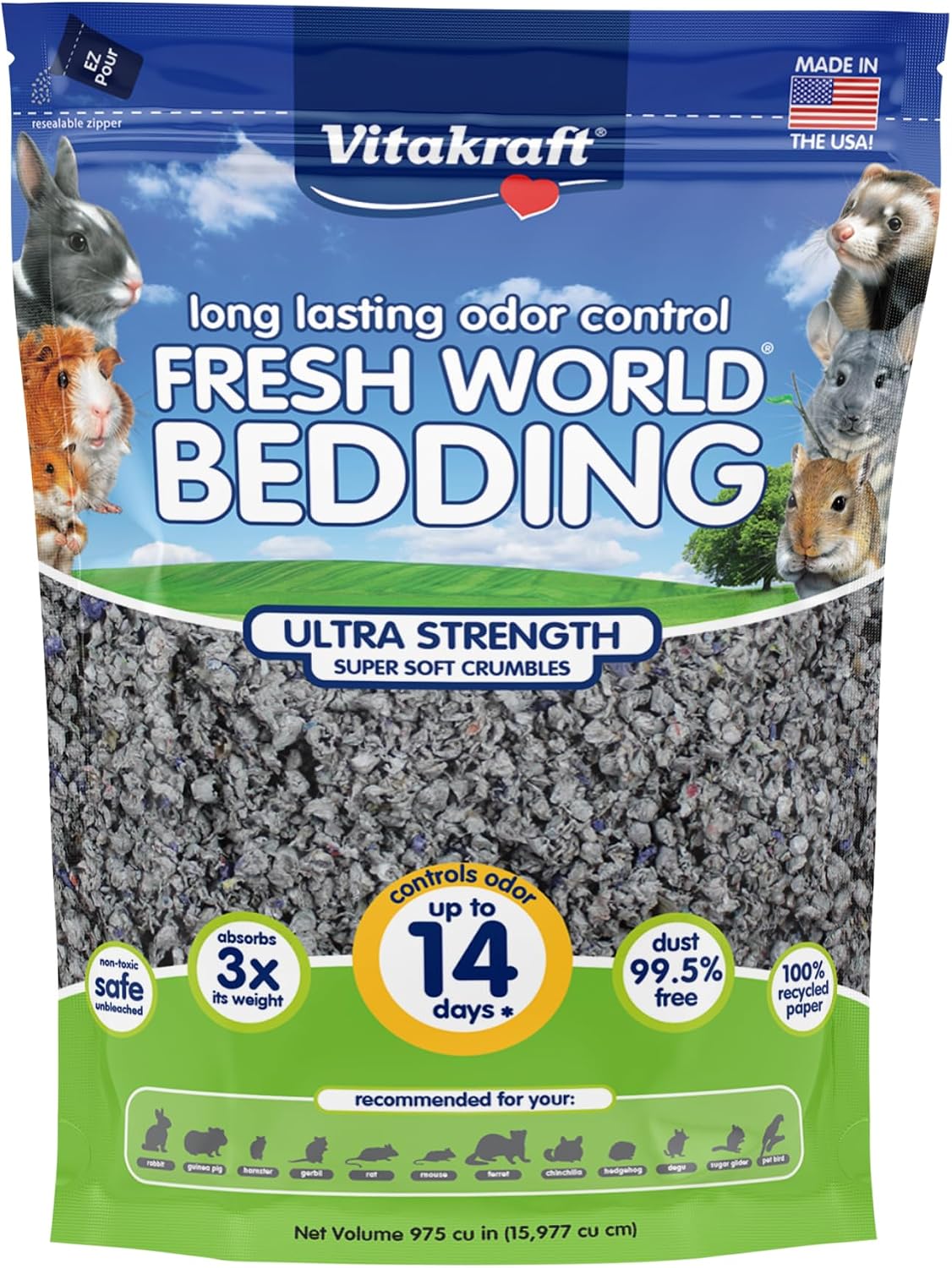 Vitakraft Fresh World Ultra Strength 16 L | 2 to 3 inches | Litter trays and cage trays | Denser crumble, built for odor control |
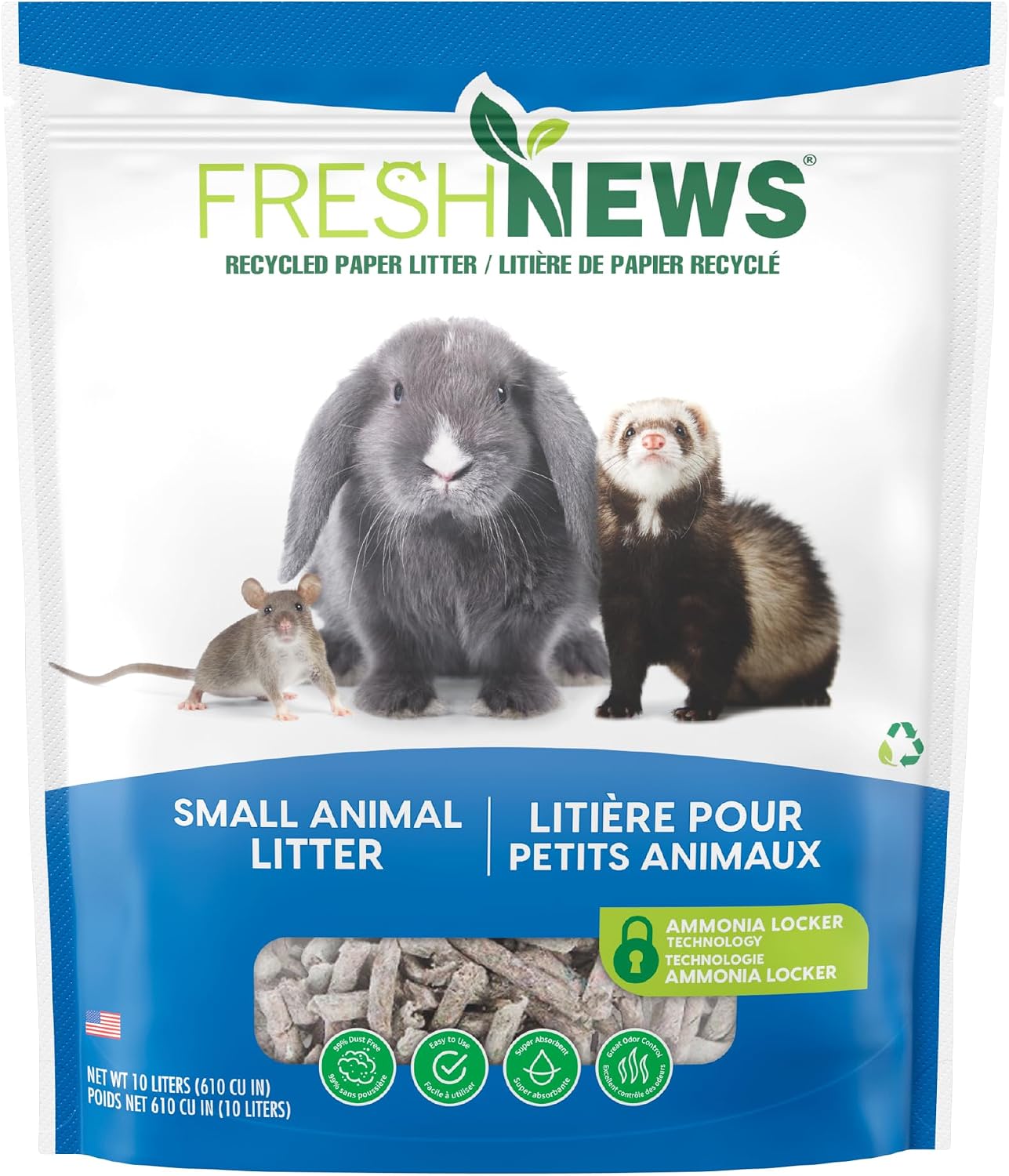 View on Amazon → Fresh News Recycled Paper 10 Liters | 1 to 2 inches | Litter corners and shallow zones | Recycled paper, absorbs fast |
| Rabbit, deep litter floor | 4 to 6 inches | Digging and burrowing | Needs the floor area to match |
| Guinea pig, open floor | 3 to 4 inches | Comfort and absorbency | Spot clean daily |
| Syrian hamster, burrow zone | 6 to 8 inches | Tunnel building | Keep the wheel clear of the deep end |
| Rat, cage tray | 1 to 2 inches | Odor control | Deeper just gets pushed into a corner |
| Litter corner under a hay rack | 1 to 2 inches | Catching hay spill | Change twice a week |
The biggest mistake I see is uniform depth. A hutch does not need one depth everywhere, and treating it that way wastes bedding and buries the things your pet actually uses. Keep the deep end away from the door, away from the water bottle, and away from the wheel.
Vitakraft Fresh World Small Animal Bedding, Ultra Strength
Ultra strength is aimed at the litter box and the cage tray, not at a full hutch floor. This is the bag I keep for the corner where the smell actually lives, because a denser crumble holds up under repeated wetting better than a fluffy one. It is not the bedding I would choose for a rabbit that wants to dig, since it packs down rather than staying airy, and at sixteen liters it will not take a large hutch to depth on its own. As a tray refill for a litter-trained rabbit or a guinea pig, it does the job it was designed for.
Shallow zones, deep zones, and splitting a hutch
The ideal hutch bedding depth is a range, not a number, and it changes from one end of the cage to the other. I run deep in the sleeping corner and under the hideout, medium across the open floor, and shallow in front of the door and under the hay rack. Fresh News Recycled Paper is the bag I use for that shallow end. It is a litter bedding by design, so it works best at one to two inches in a corner tray, and it absorbs quickly enough that a wet spot does not spread. It is not a burrowing bedding and I would not ask it to be one.
Splitting the hutch this way saves a bag a month and gives your pet a dry place to stand. The deep end does the enrichment work. The shallow end does the cleaning work.
Should you buy SO PHRESH by Petco Crumbled Paper Small Animal Bedding 40 Liter?
Yes, if you have a hutch or a large cage to fill and you are tired of buying small bags. Forty liters takes a rabbit-sized floor to a genuine burrowing depth in one pass, the crumble holds a tunnel instead of collapsing, and it works just as well as a thin layer under a hay rack. It is more bedding than a single hamster will use in a year, so skip it for a small tank and buy it for a real hutch. Check current Amazon price before you commit to a bulk bag, and store it somewhere dry, because paper bedding pulls moisture out of the air.
Should you buy Hamster Bedding 15L, Truly 99% Dust-Free Small Animal Paper Bedding Odor Control, Cozy Hamster Litter for Rabbit Rat Syrian Dwarf Hamsters Gerbils (Cotton Candy)?
Yes, if your pet lives in a small cage and you care about what is in the air it breathes. It pours clean, it holds a narrow tunnel, and fifteen liters is a workable size for a hamster, a gerbil pair, or two rats. The cotton candy color is cosmetic, and you will need two or three bags to fill a rabbit hutch, so treat it as the small-cage bag it is. If you keep one hamster and you want the bedding decision finished, this is the one I would hand you.