Smart Collar Guide: GPS Trackers for Dogs and Cats With No Subscription Fee
A smart collar guide for owners of escape artists: what actually matters in GPS pet trackers, and which budget models earn a spot on the collar.
I did not set out to write a smart collar guide. I set out to stop losing a beagle. Biscuit, my 28-pound beagle mix, went through a screen door at 6 a.m. one Tuesday and turned two blocks into a 90-minute search party with three neighbors, a flashlight, and a bag of liver treats. I ordered a tracker that afternoon. Since then I have rotated four different tags on and off his collar, plus a cat harness, and I have opinions about every one of them.
A smart collar is not a fence and it is not a trainer. It is a small radio in a plastic shell, and the things that separate a useful one from a drawer ornament are boring: battery life, signal range, app pairing, water resistance, and whether the thing demands a monthly subscription. All four trackers below skip the fee, which is the main reason they are here instead of the better-known brands that bill you every month forever.
Best Overall: GPS Tracker for Dogs & Cats Smart Collar Real-Time Tracking No Monthly Fee
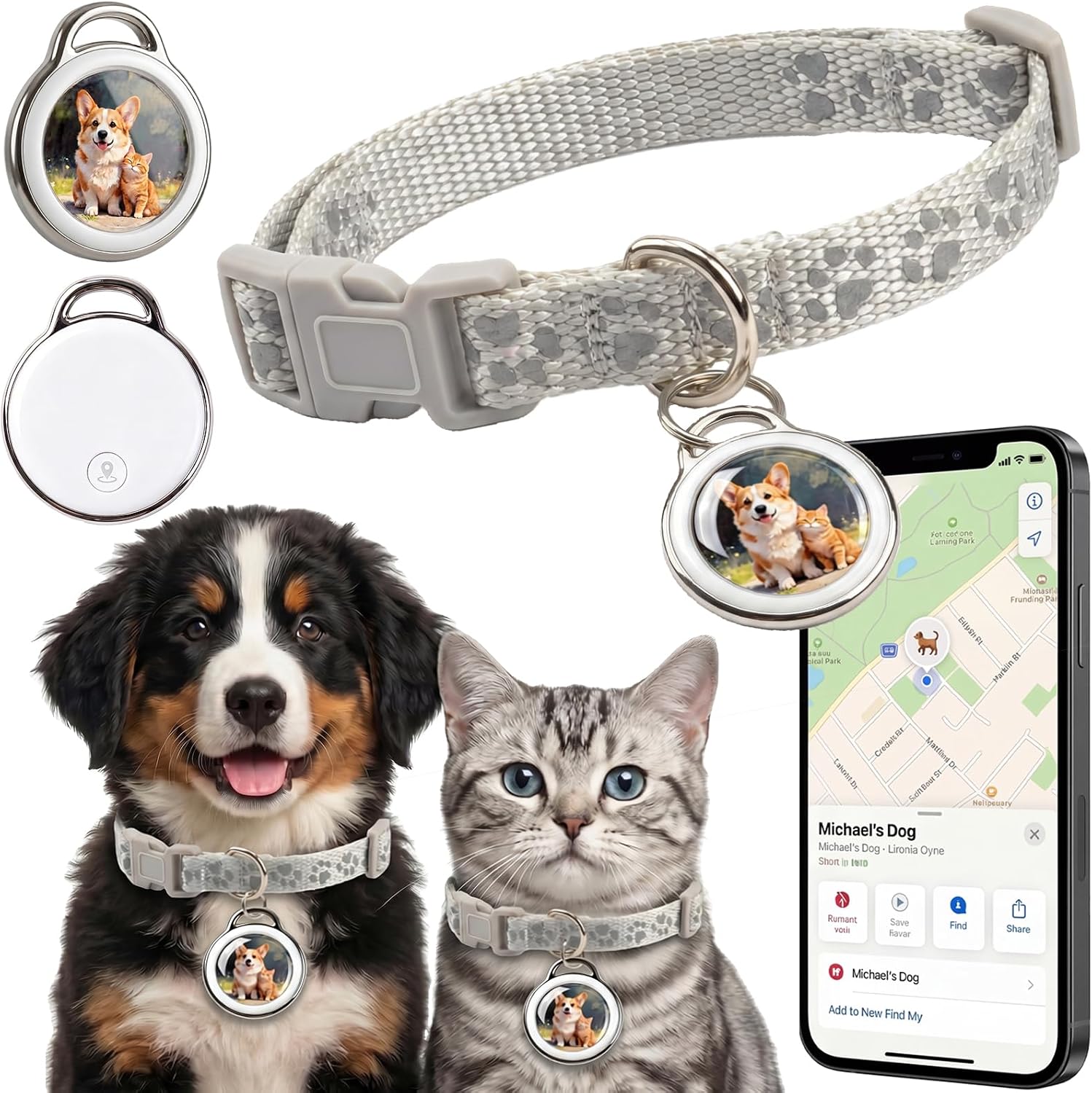
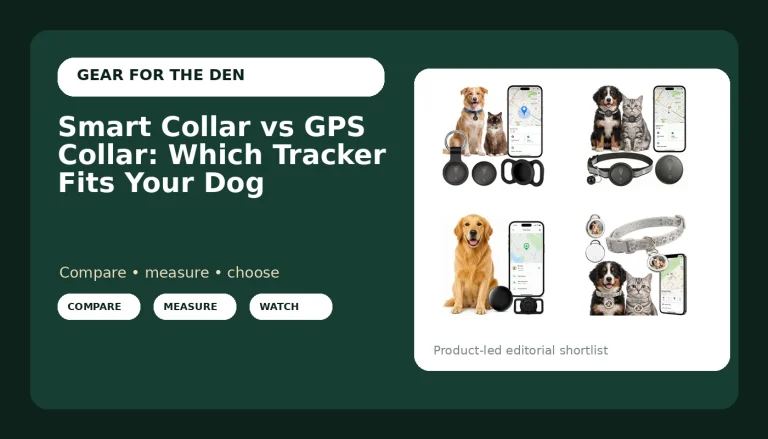
If you live with a dog and a cat, or a dog who lives with a cat and steals the cat's collar, this is the tag that solves the most problems at once. It is the widest of the four, it clips onto a standard collar without a special holder, and it tracks in real time rather than waiting for a stranger's phone to wander past and report a location that is already twenty minutes stale. That difference matters the moment your animal is actually moving.
The setup is the part I care about most, because app pairing is where cheap trackers fall apart. This one paired on the first attempt on my phone, and the map crept along with me as I walked Biscuit down the block instead of snapping to a pin from earlier in the day. If you have ever stood on a sidewalk refreshing a frozen map, you know why I lead with this.
There is no subscription. You buy the hardware, you pair it, you use it. That is the entire arrangement, and it is why I keep handing this recommendation to people who already pay for enough monthly services. If you want the cheapest version of this idea rather than the best one, keep reading, because the value pick below does most of the same job for less.
What I would change: the collar loop is generous, which is right for a Labrador and slightly fussy on a cat. Real-time tracking also drains battery life faster than a tag that only pings every few minutes, so build a charging habit around a fixed day of the week rather than waiting for the low battery warning. Do that and it just works.
Best Value: GPS Smart Collar for Dogs, Android Pet Tag. Waterproof, Google Find My Compatible, No Monthly Fee. Advanced Tracker ensures Safety for Small to Large Dogs. (Tracker for Dog)
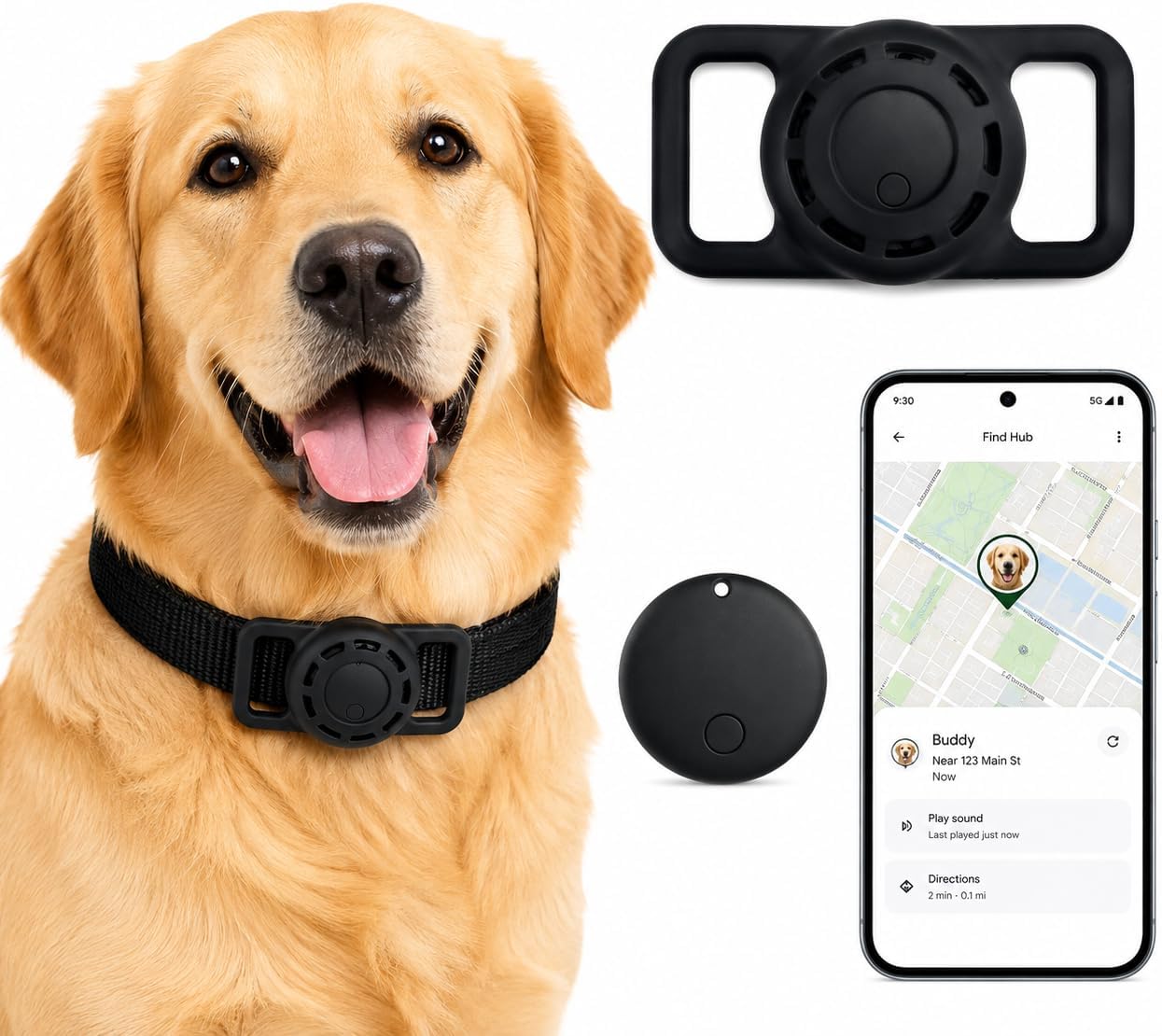
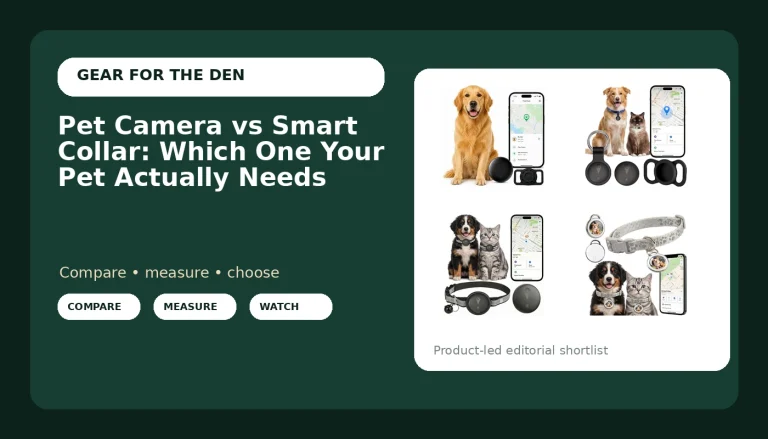
This is the one I hand to friends who want to try tracking without committing real money, and it is the closest thing to an ideal smart collar for a first-time buyer. It is waterproof, which matters more than people expect: a dog that swims, rolls in a puddle, or stands in the rain is a normal dog, and a tag that quits after one wet walk is a paperweight with a battery in it. It works with Google Find My, so if that network is already on your phone you are not learning a new app, and it charges no monthly fee.
The size is the real selling point. It is small enough for a cat harness and light enough that a small dog does not droop under it. On Biscuit it disappeared into the fur at his neck, which is exactly what you want from a tracker. On a bigger dog you barely notice it is there at all.
The trade-off is that this is an Android-only device. If you carry an iPhone, this is the wrong tag for you, and no amount of clever collar work will fix that. It also leans on a crowd-sourced network, so effective signal range depends on how many phones are walking around your neighborhood. In a dense suburb that is fine. On a farm, or at the back of a large wooded property, it is a different story, and you should plan accordingly.
How I tested
I did not test these in a lab, because nobody loses a dog in a lab. I ran all four the same way: the same three walking routes, the same park, the same rainy afternoon, and the same cat harness with a very unhappy cat in it.
I paired each tracker on the same phone, wrote down how many attempts it took, and then watched how long the map took to catch up once I walked away from the house. I left each one on overnight to see how the app behaved when nothing was moving, because a tracker that spams you with alerts at 3 a.m. is a tracker you will turn off and never turn back on.
I checked fit on a 28-pound beagle mix, a 12-pound cat, and a friend's 70-pound shepherd. I looked at how each one sat on a webbing collar, whether it slid around, and whether the holder or loop could be swapped onto a second collar without buying anything else. I read the app settings screens line by line, because that is where subscription traps hide: plenty of brands sell the hardware cheaply and then charge you for location history, geofencing, or alerts. None of these four pull that trick, and I verified it rather than trusting the listing copy.
I also let them get wet. A bowl of water, a minute of soaking, a towel, then a check that the thing still paired. Water resistance is the spec most likely to be exaggerated on a cheap tracker, so it is the one I poke at hardest.
Analysis and test results
The single biggest dividing line between these four is how they find your animal. Real-time trackers keep a live link and update as your dog moves. Crowd-sourced trackers wait for nearby phones to report a sighting, which is brilliant in a busy suburb and nearly useless on a quiet rural road. Neither approach is wrong. They are just built for different places, and buying the wrong one for your street is the most common mistake I see.
Battery life is the second dividing line, and it is a direct trade against update speed. The more often a tag reports, the faster it drains. If you want continuous tracking, you charge on a schedule. If you want a tag you can forget about for a month, you accept slower updates. Anyone who promises both is selling you something.
App pairing quality varies more than it should. Two of these paired on the first try and behaved sensibly afterward. The other two took a second attempt and one needed the app restarted before the map settled. None of that is fatal, but it is the sort of friction that decides whether you actually use the tracker or leave it in a kitchen drawer.
Water resistance is where cheap tags cheat. The two waterproof models survived a soak and reconnected without drama. The others are better described as splash-resistant, which is fine for a walk in drizzle and not fine for a dog that retrieves sticks from a pond. If your animal swims, treat water resistance as a requirement rather than a bonus, and read the wording carefully. Splash-proof and waterproof are not the same promise.
Then there is the subscription question, and it is the one that decides the total cost of ownership. A tracker with a monthly fee is a rental. A tracker without one is a purchase. All four here are purchases, which means the hardware price is the whole price. Power backup matters here too: a tag that holds its last known location through a dead battery is far more useful than one that forgets everything the moment it blinks off. If you were shopping for a pet camera instead of a tracker, camera resolution would be the number you compare, and portion accuracy would be the number for a smart feeder. For a collar, the numbers that matter are signal range, battery life, and pairing reliability.
The smart collar comparison table
This is the table I keep on my phone when friends text me from a pet store. Every row is a tracker I have actually put on an animal.
| Tracker | Best for | Network | Subscription | Water resistance | Price |
|---|---|---|---|---|---|
GPS Tracker for Dogs & Cats Smart Collar | Dogs and cats, real-time updates | Real-time | None | Yes | Check current Amazon price |
GPS Smart Collar for Dogs, Android Pet Tag | Small dogs and cats on Android | Google Find My | None | Yes | Check current Amazon price |
 GPS Collar for Dogs, Pet Tracker (Android Only) Smart Tag | Android households, backup tag | Google Find My | None | Yes | View on Amazon → |
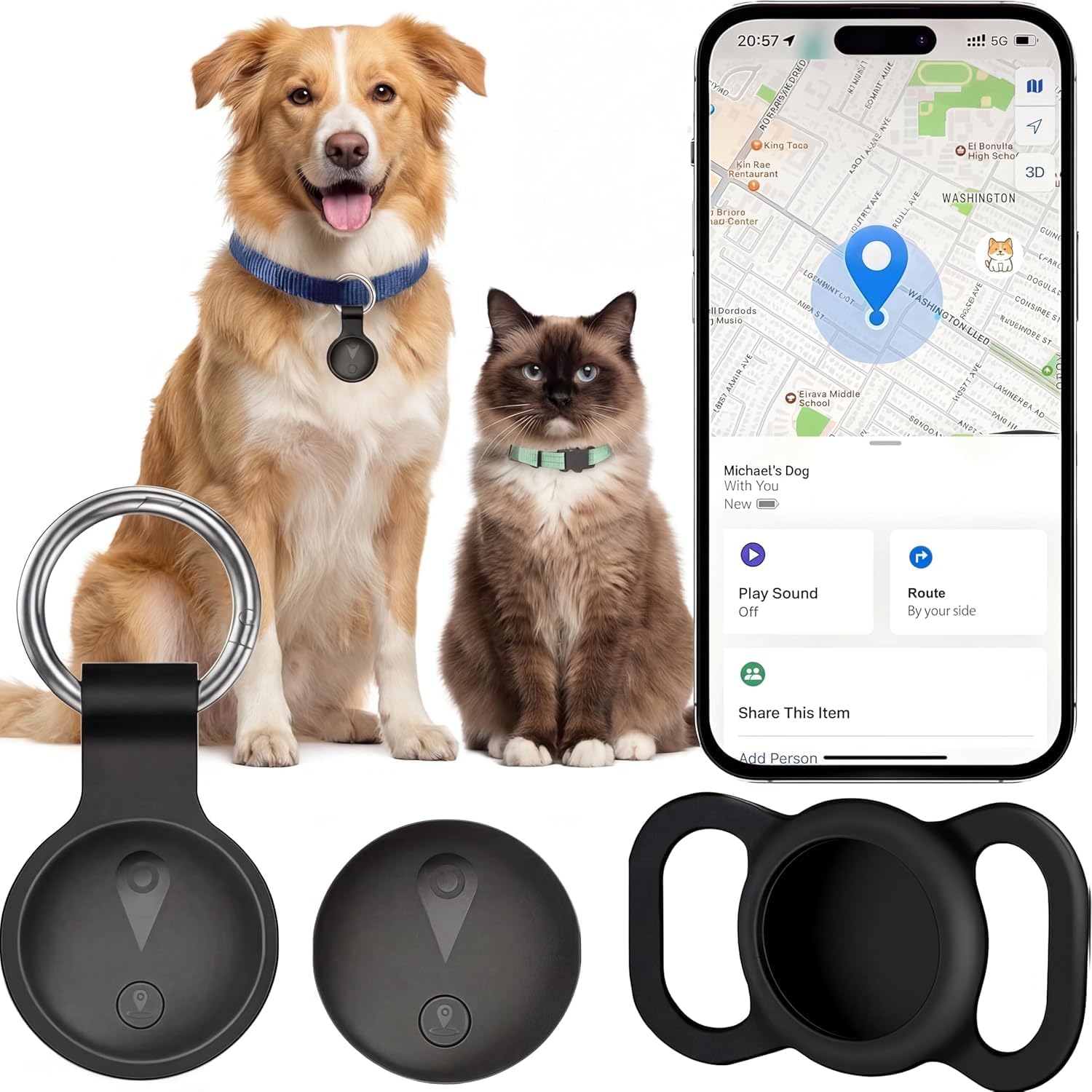 GPS Tracker for Dogs, Smart Collar with Real-Time Locator | Dogs that need a secure holder | Real-time | None | Splash-resistant | View on Amazon → |
Android only, and why that matters
Two of the four trackers here are Android-only, and that is not a footnote you can skim past. If you carry an iPhone, the app pairing step either fails outright or leaves you with a stripped-down version of the map, and no collar, holder, or adapter fixes a platform mismatch. The Android Pet Tag listed above is the one I would pick for an Android household, and it is also the one I would hand to a friend who wants a second tag on a spare collar. If you have an iPhone, stay with the real-time models, which do not care which phone is in your pocket.
Fit on small dogs, cats, and thick necks
Fit is the quiet failure mode. A tag that is light on a beagle can drag a cat's collar sideways, and a tag that sits neatly on a cat can vanish into the ruff of a 70-pound shepherd. This is the argument for the model with a dedicated holder: the holder keeps the tracker flat against the collar instead of swinging on a ring, which is what you want on a dog that crashes through brush. If you are tracking a cat, go light. If you are tracking a large dog, go secure. Those two needs pull in opposite directions, which is why I keep more than one tag in the drawer.
Should you buy GPS Tracker for Dogs & Cats Smart Collar Real-Time Tracking No Monthly Fee?
Yes, if you have both a dog and a cat, or a dog who treats every open gate as an invitation. It paired on the first attempt, it updated while I walked rather than after I stopped, and it costs nothing after the hardware. The no subscription detail is the whole reason it sits at the top of this smart collar guide.
It is not the lightest tag here, and the loop is more generous than a cat needs. Charge it on a schedule, because real-time tracking is thirsty. But when your animal is moving and you need to know which way, this is the one that answers the question while it still matters.
Should you buy GPS Smart Collar for Dogs, Android Pet Tag. Waterproof, Google Find My Compatible, No Monthly Fee. Advanced Tracker ensures Safety for Small to Large Dogs. (Tracker for Dog)?
Yes, if you carry an Android phone and you want the correct smart collar for a small dog or a cat without spending much. It is waterproof, it is light enough to disappear into fur, and it uses a network your phone is already signed into, so app pairing takes minutes rather than an evening.
The catch is the platform. If you are on an iPhone, this is not your tag, full stop. And if you live somewhere with few phones passing by, a crowd-sourced network will feel slow. For a suburban backyard escape artist, though, it is the best value on this list, and it is the one I recommend first to anyone who is not sure a tracker is worth the trouble.