Cat hair has a way of turning up on every surface in the house, and by the time you notice it, the couch, the carpet, and your favorite sweater are already covered. Brushing helps, but the tool matters as much as the routine. A cat deshedding tool that suits your cat's coat lifts loose fur and undercoat before it ends up in the air, while the wrong one either skates across the surface or pulls hard enough that your cat walks away mid-session.
This guide covers six tools that take different approaches to shedding: fine metal combs, wide deshedding edges, a two-piece glove kit, and a combination comb built for long coats. Because coat length, density, and your cat's tolerance for handling vary so much from one household to the next, the best cat deshedding tool for one home is not automatically right for another. The sections below explain what each tool is designed for, how to match one to your cat, and where the trade-offs sit.
Quick answer
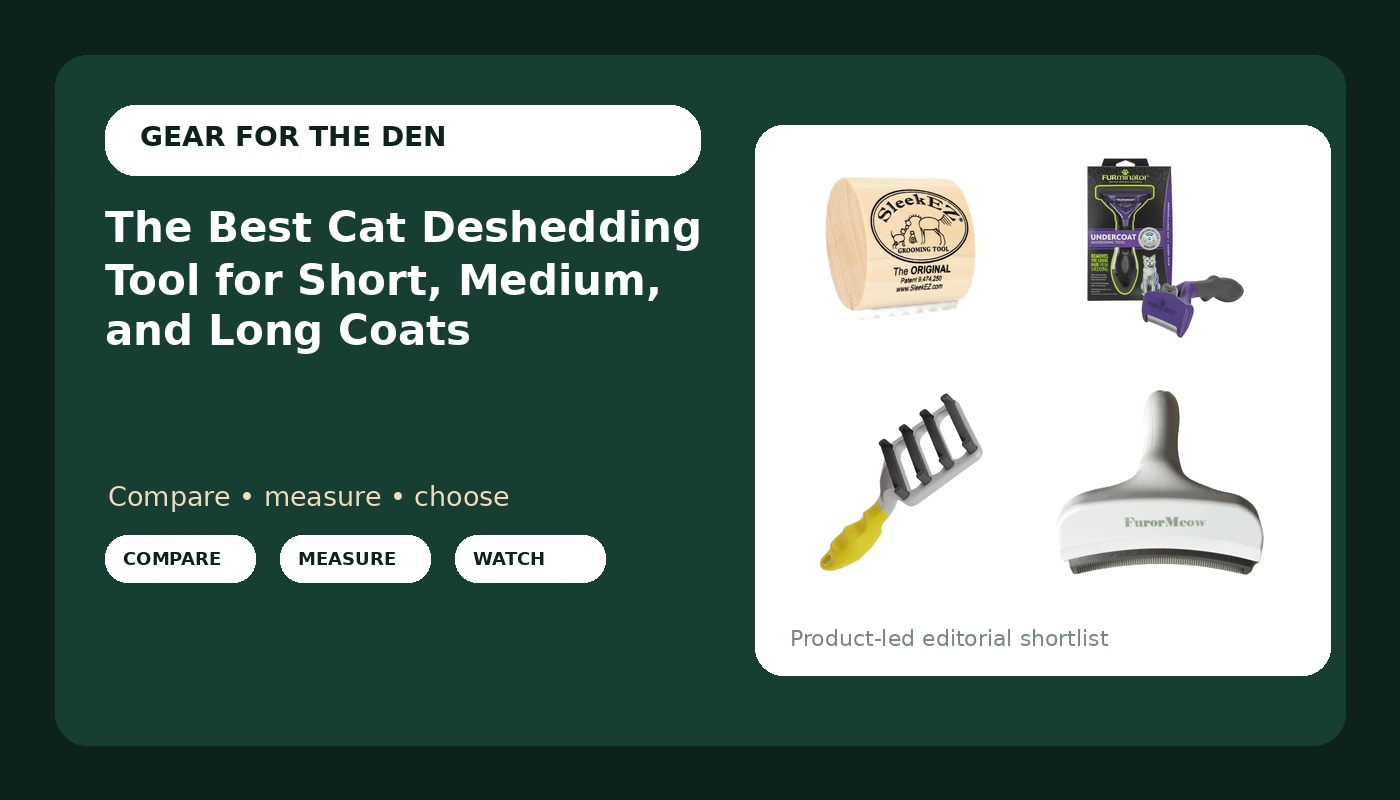
The SleekEZ Cat Brush for Shedding is the strongest fit for most households because it is described as working on short, medium, and long coats, so one tool can follow a cat through seasonal coat changes. Choose the FURminator Medium to Large Cat deShedding Tool for Short Hair instead when you have a medium to large cat with a short coat and want a tool built specifically for undercoat work.
Which cat deshedding tool features are worth comparing
The first thing to compare is the working surface. Tools in this category fall into a few families: fine metal combs, blade-style deshedding edges, and rubber or silicone nubs mounted on gloves. A metal comb with closely set teeth works through dense fur and catches loose hair near the skin, while a deshedding edge covers more area per stroke and tends to suit cats carrying a lot of undercoat. Glove-style tools trade precision for contact, which helps with cats that dislike the feel of a rigid tool against the skin.
Comb spacing and coat length go together. Tight spacing is useful on short, dense coats, where the goal is to reach the undercoat without scraping the skin. Wider spacing and rounded tips are safer on long coats, where closely set teeth can catch tangles and pull. If your cat's coat mats as well as sheds, a tool that only removes loose fur will not solve the problem on its own, and you may want a comb that pairs dematting teeth with a deshedding edge in one head.
Handle and hand fit matter more than most shoppers expect. A narrow head is easier to control around the chest, shoulders, and legs, while a wider head covers the back and flanks faster. Some combs include a nail guard or rounded tooth tips to reduce the chance of digging in, and gloves need a snug glove fit so the grooming surface stays in contact with the coat instead of sliding around your hand.
Another difference is how the tool is meant to be used. Combs and blades are drawn through the coat, so fur collects in the teeth or along the edge and you clear it as you go. Gloves and mitts work more like petting, with the fur sticking to the surface and then peeling away in a sheet. Neither approach is better in the abstract, but they ask different things of you and your cat, and that difference shows up in how often the tool actually comes off the shelf.
Finally, think about cleanup. Self-cleaning heads and removable combs cut down on how much time you spend pulling fur out of teeth, and a roller adhesive or lint roller kept near the couch is a sensible companion to any of these tools. There is no single ideal cat deshedding tool, because a tool that works beautifully on a dense short coat can tug on a long, silky one. Match the tool to the coat first, then to your own hand and patience.
Here is how the six tools in this guide line up, with the top pick first.
Top pick
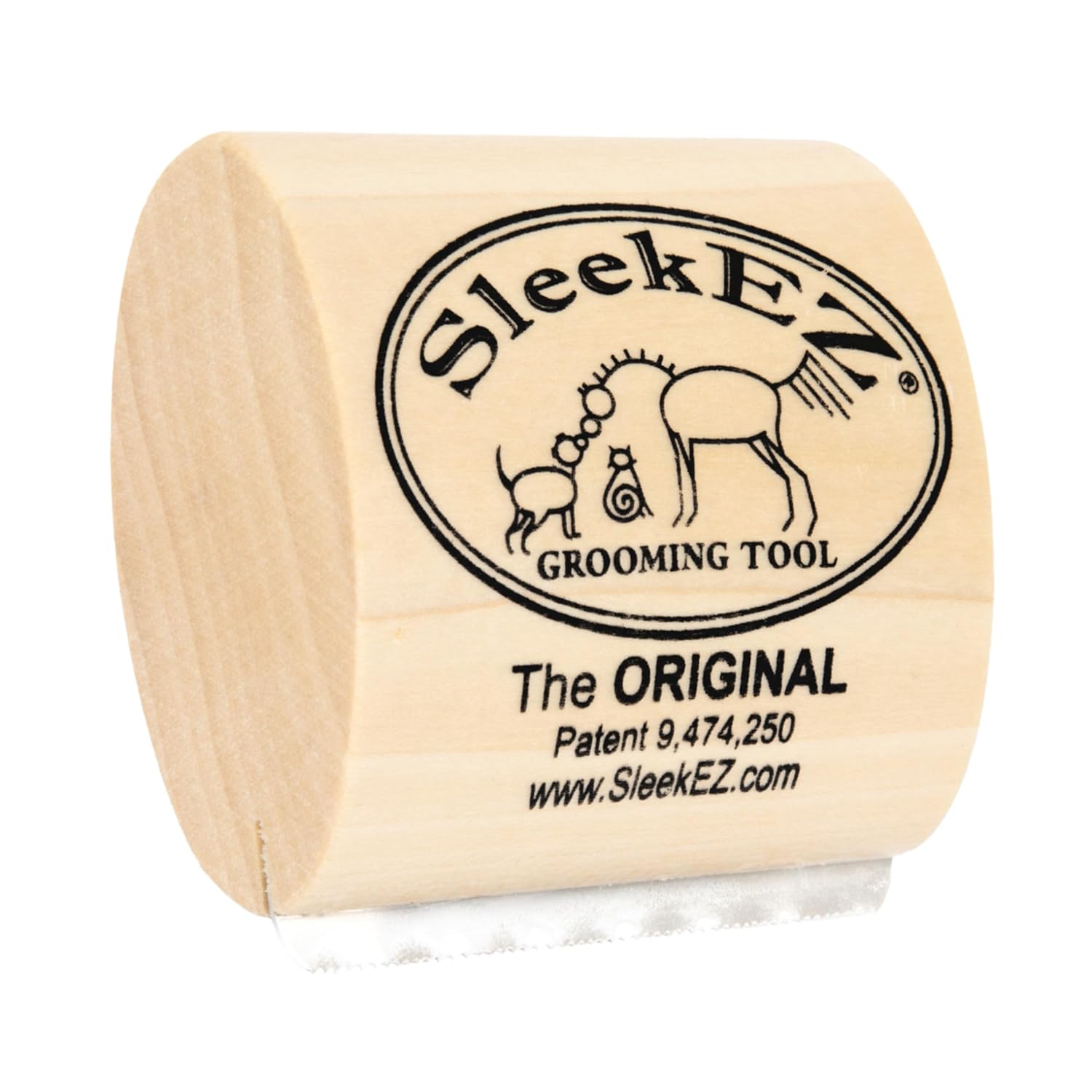
SleekEZ Cat Brush for Shedding – Deshedding Brush for Cats – Patented Grooming Tool for Removing Loose Fur, Undercoat & Hair – Made in USA – Works on Short, Medium & Long Coats
A patented grooming tool made in the USA that the maker lists for short, medium, and long coats, aimed at lifting loose fur, undercoat, and hair.
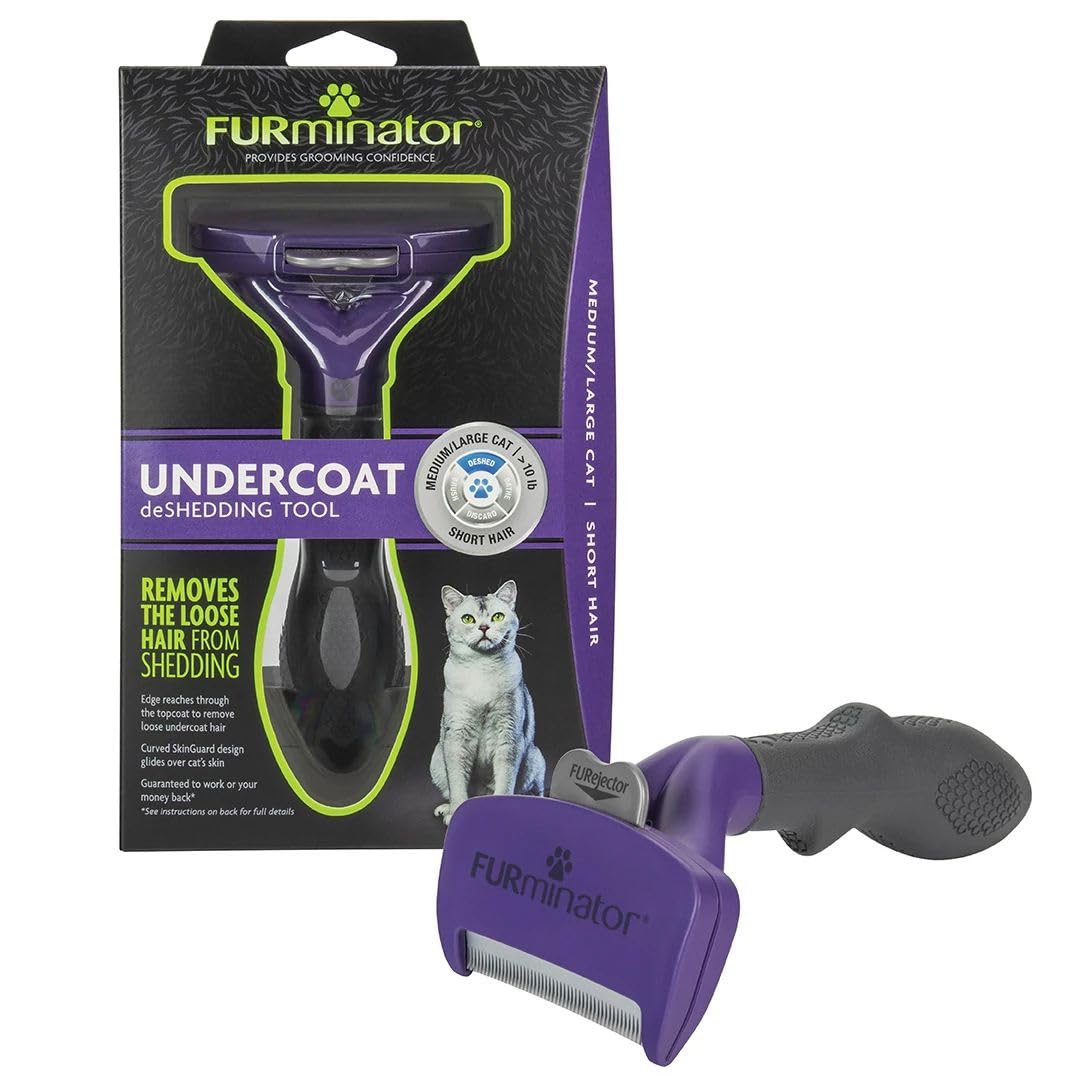
FURminator Medium to Large Cat deShedding Tool for Short Hair
A deShedding tool sized for medium to large cats with short hair, built around a narrow head for close work on the coat.
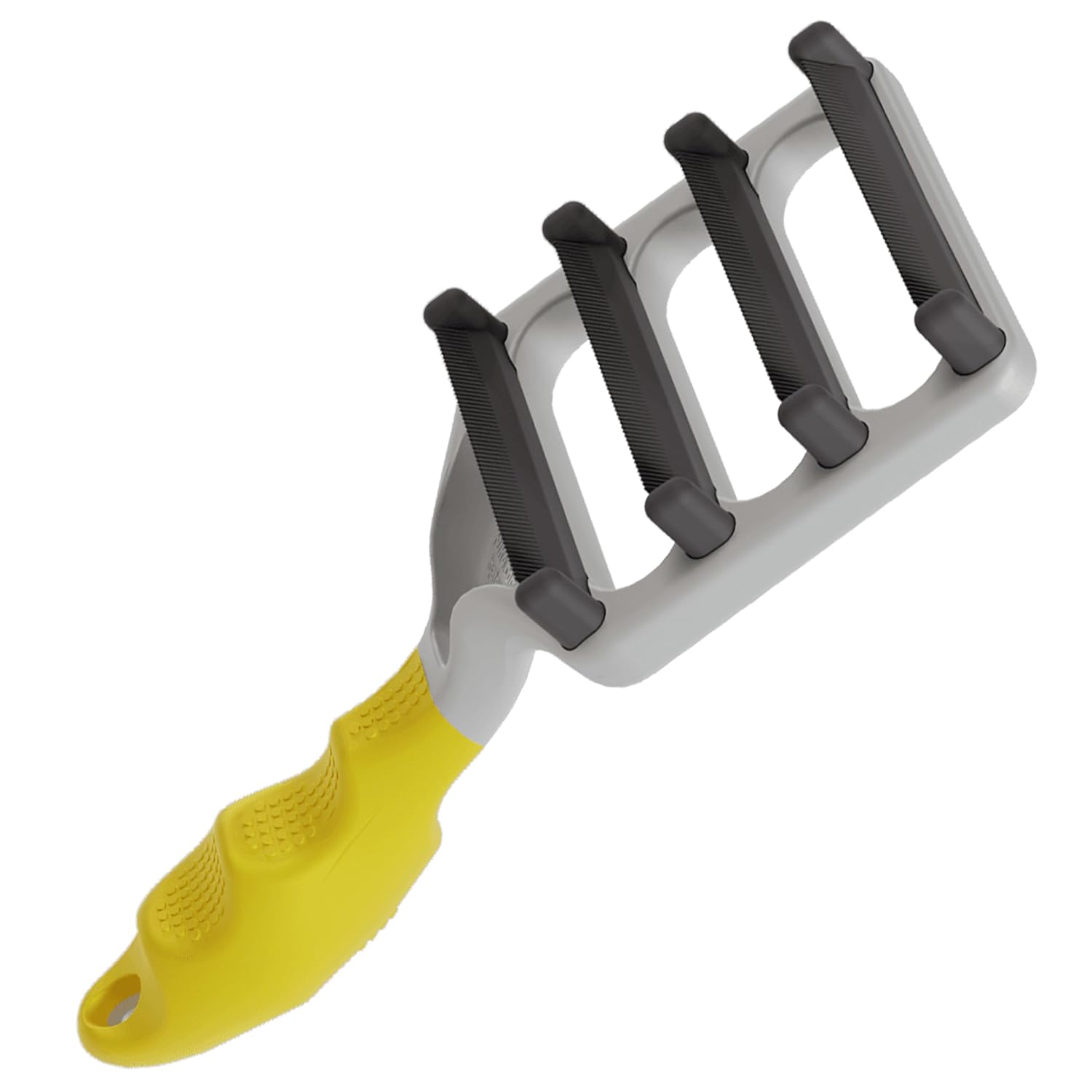
FUR4 deShedding Cat Brush for Short Hair Cats, Pet Hair Brush with 4 Carbon Fiber Edges, deShedding Tool Removes Loose Fur, Gentle & Effective Cat Grooming Brush for Shedding
A short-hair cat brush built around four carbon fiber edges and described as a gentle tool for removing loose fur.
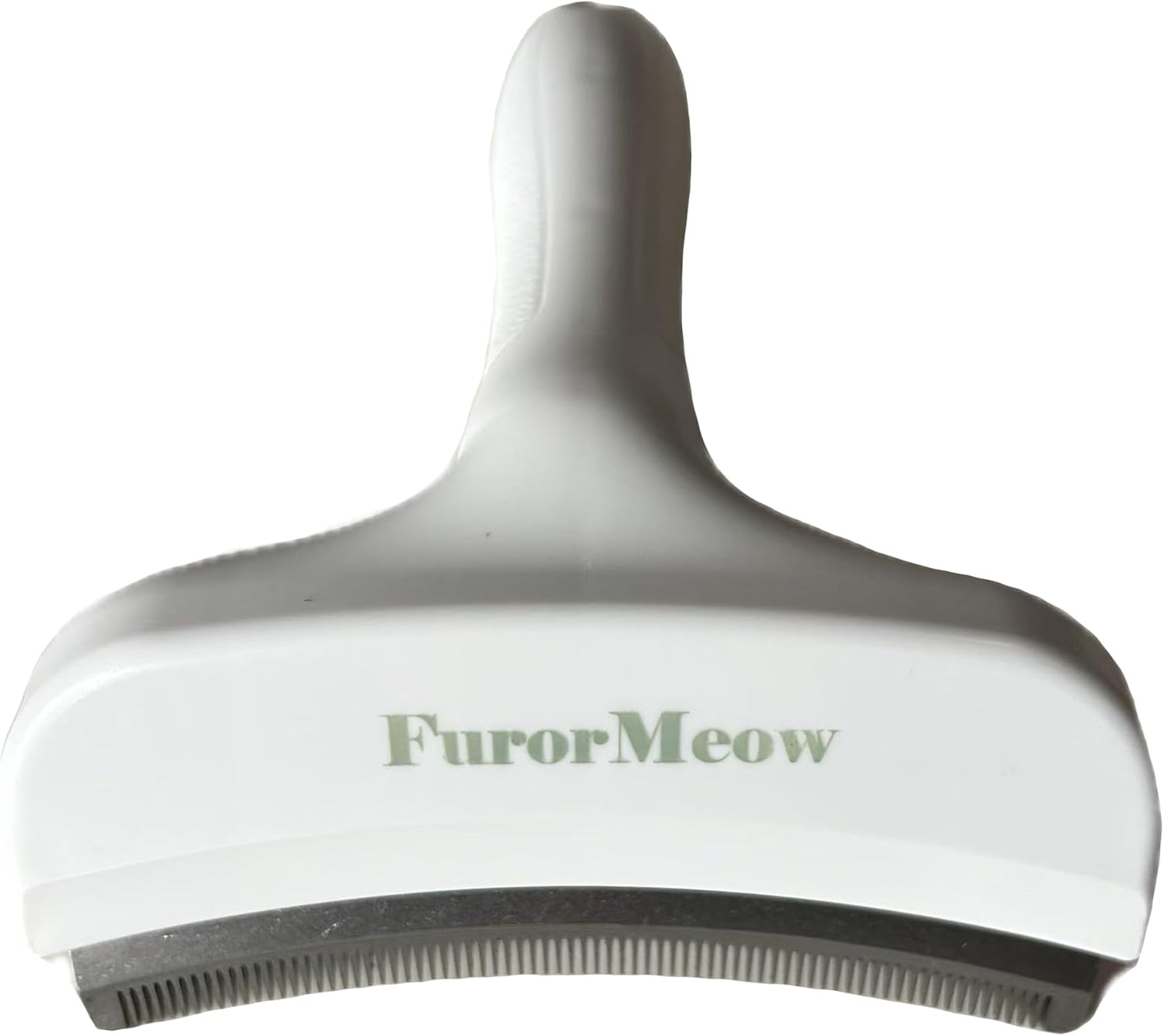
FurorMeow Pet Deshedding Tool with Curve Blade, Cat Grooming Brush, Tight V-shaped Teeth Shedding Comb for Cats and Dogs (White, Large)
A curve-blade deshedding tool with tight V-shaped teeth, offered in a large white version and listed for both cats and dogs.
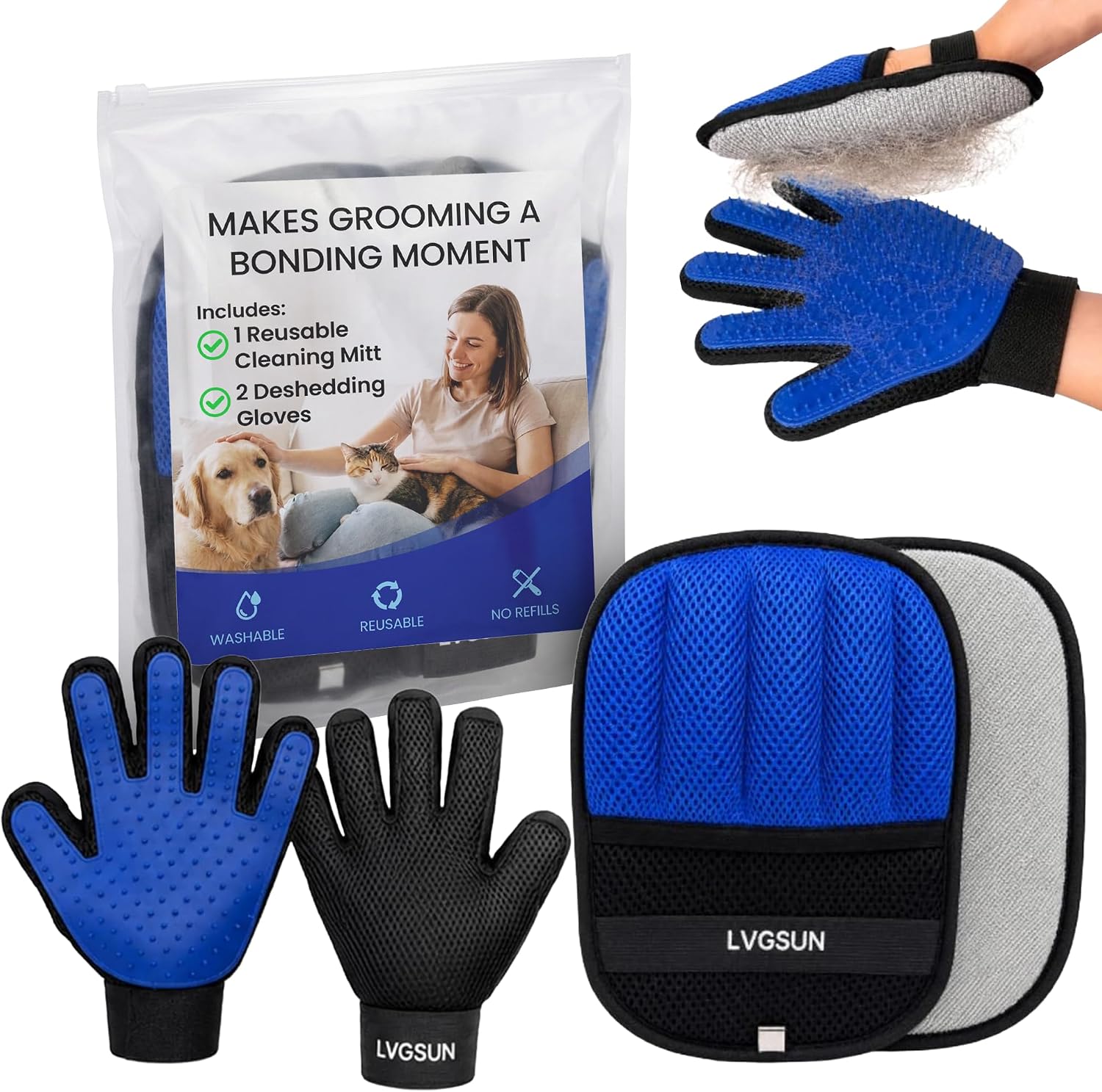
Cat Grooming Kit for Shedding, Deshedding Gloves + Self-Cleaning Mitt
A two-piece kit that pairs deshedding gloves with a self-cleaning mitt for hands-on grooming sessions.
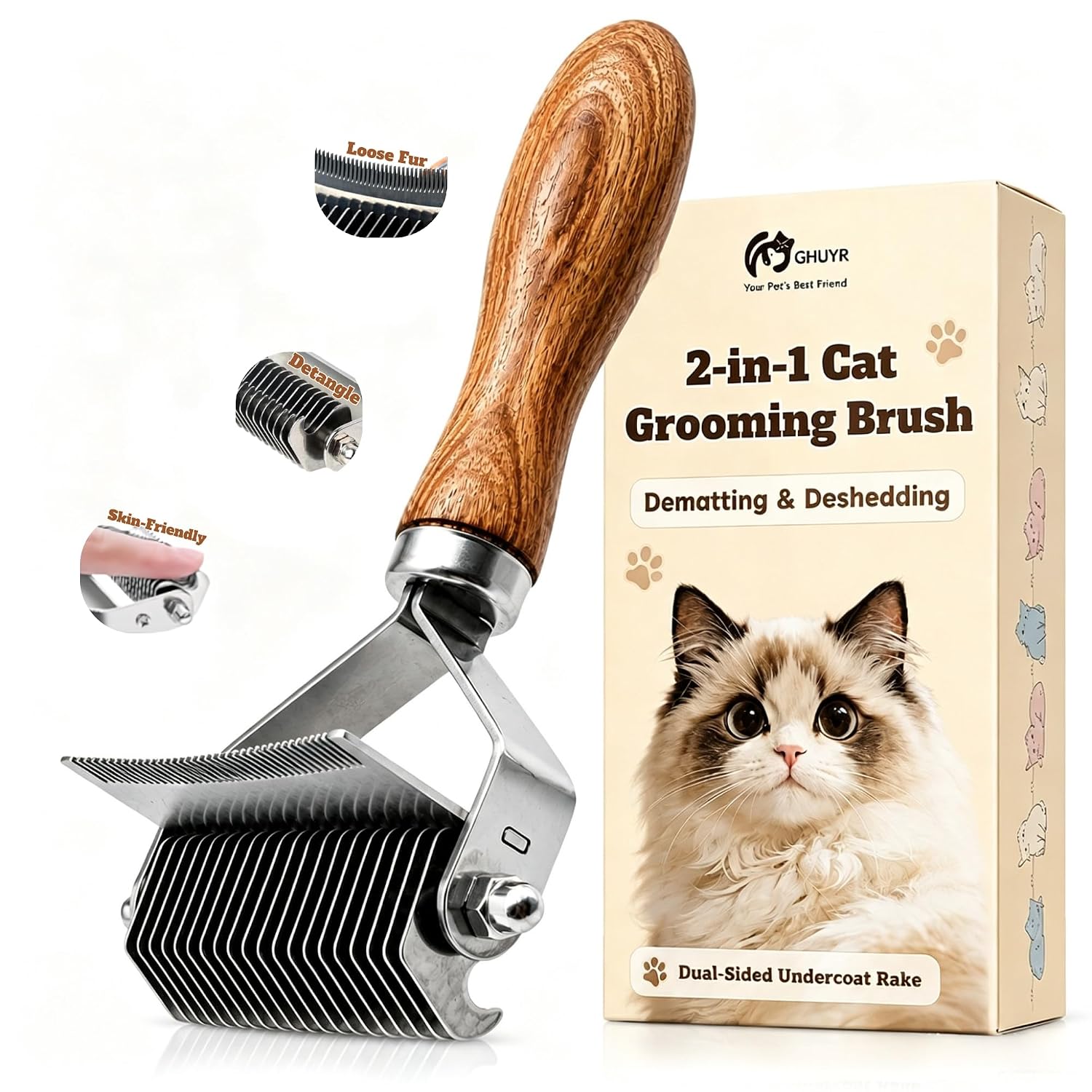
Cat Brush for Long Haired Cats, 2-in-1 Dematting & Deshedding Comb
A 2-in-1 dematting and deshedding comb intended for long haired cats, combining two jobs in one head.
How these products were compared
This guide compares coat length match, edge and tooth design, handle and glove fit, cleaning method, and the range of coats each tool is described as handling. Product names, images, and retailer links are matched to the same listing so that every card points to the product shown.
The comparison is based on published product details and manufacturer descriptions rather than hands-on testing, and no current prices are printed here. Use the retailer link on each card to confirm the current price, availability, and return terms before you buy.
How to choose the right cat deshedding tool
Start with the coat in front of you. A short, dense coat usually responds well to a deshedding edge or a comb with tight spacing, while a long coat needs wider spacing and gentler strokes to avoid pulling. If your cat has a double coat that blows out twice a year, a tool aimed at the undercoat will do more in a five-minute session than a soft bristle brush will. If the coat tangles, work the tangles out first and use the deshedding tool on the loose fur around them.
Then think about how long your cat will tolerate grooming. Cats that accept handling for a few minutes do well with a comb or blade tool used in short passes. Cats that dislike the feel of a rigid tool often tolerate a glove or mitt better, because the motion feels closer to petting. If your cat is nervous about grooming in general, it helps to read up on grooming tools for cats that hate being brushed before you buy anything with teeth. The goal is to pick the correct cat deshedding tool for your cat's coat and temperament rather than the one with the longest feature list.
It also helps to decide how much of the body you plan to cover. A full head-to-tail session on a large cat can take longer than the cat will allow, so many owners split the job: one session for the back and sides, another for the chest, belly, and legs, and a third for the tail and hindquarters. A tool with a narrow head is easier to steer in those smaller areas, while a wider head is faster across the flat stretches of the back. If you only ever groom one area, match the tool to that area rather than to the whole coat.
SleekEZ Cat Brush for Shedding
The SleekEZ Cat Brush for Shedding is a patented grooming tool made in the USA that the maker lists for short, medium, and long coats. Its blade-style edge is intended to lift loose fur and undercoat rather than cut it, which is why the same tool can stay in rotation as a cat's coat changes with the season. For a household with more than one cat, or a cat whose coat sits somewhere between short and medium, that flexibility is the main appeal, and it makes the tool a reasonable first purchase if you are not yet sure what your cat's coat will do across a full year.
The trade-off is that one blade does not cover every job. The listing describes it as a deshedding brush rather than a dematting tool, so a cat with existing mats may still need a comb with wider spacing for the tail, belly, and britches. It also rewards technique: short, light strokes in the direction the coat grows work better than long, heavy pulls, especially on cats that are new to grooming.
Alternatives to consider
The FURminator Medium to Large Cat deShedding Tool for Short Hair is better suited to medium and large cats with short coats, while the FUR4 deShedding Cat Brush for Short Hair Cats is a stronger fit when you want a short-hair brush built around four carbon fiber edges and described as gentle.
The FurorMeow Pet Deshedding Tool with Curve Blade, the Cat Grooming Kit for Shedding, and the Cat Brush for Long Haired Cats, 2-in-1 Dematting & Deshedding Comb cover the remaining cases. The FurorMeow tool uses tight V-shaped teeth for close work on cats and dogs. The grooming kit pairs deshedding gloves with a self-cleaning mitt for hands-on sessions. The 2-in-1 comb is aimed at long coats, where dematting and deshedding usually need to happen in the same pass.
Day-to-day use and maintenance
Short, frequent sessions beat one long one. Two or three minutes on the back and flanks, then a pass over the chest and legs, is usually enough to keep loose fur under control without testing your cat's patience. Work in the direction the coat grows, keep the strokes light, and stop if your cat starts twitching or trying to leave. Cats that have never been brushed often need a few sessions of simply holding the tool near them before any grooming happens.
Seasonal timing is worth noting too. Many cats shed heavily in spring and again in fall, and those are the weeks when a deshedding tool earns its place. In between, a lighter pass once or twice a week is usually enough to keep both the coat and the furniture in reasonable shape.
Clean the tool after every session. Fur packed between teeth or along a deshedding edge reduces how much the tool picks up the next time, so pull the hair out, rinse rubber surfaces if the maker allows it, and let everything dry before storage. A roller adhesive kept near the couch handles the fur that already landed on fabric, and a covered storage spot keeps tooth tips from bending.
Watch the skin as you work. If an area looks thin, red, or irritated, or if your cat flinches when you pass over a spot, stop and give that area a rest. Over-brushing one patch is the most common way a grooming session turns into a problem, and it is entirely avoidable.
Buying checklist
- Measure your cat's coat length and note the areas that shed or tangle most, such as the belly, tail, and britches.
- Choose a bristle type or deshedding edge based on normal use rather than an occasional edge case.
- Confirm that the exact model includes the features you need, such as tight comb spacing for short coats or wider spacing for long ones.
- Read the cleaning and maintenance instructions before the first session.
- Verify the current retailer price, availability, and return terms.
Final recommendation
Choose the SleekEZ Cat Brush for Shedding when you want one tool that covers short, medium, and long coats and can stay in use as the seasons change. Choose the FURminator Medium to Large Cat deShedding Tool for Short Hair when you have a medium to large short-haired cat and want a tool designed for that specific coat. For a long coat that tangles, start with the 2-in-1 dematting and deshedding comb. If your cat will not sit still for a rigid tool, the glove and mitt kit is the gentler first step, and it pairs well with any of the combs here once your cat settles into a routine.