Senior cats still shed, but rarely the way they did at three years old. The coat thins along the spine, thickens in patches, the skin loses some elasticity, and a grooming session that once took two minutes can turn into a negotiation. Choosing a cat deshedding tool for senior cats is really about matching the tool to the coat that is on the cat now, not the coat you remember. Below is what changes with age, what each type of deshedding edge actually does, and four tools that suit different coat lengths and temperaments.
Quick answer
No single product is the correct cat deshedding tool for senior cats, because the right pick depends on coat length, undercoat density, and how much handling your cat will accept. A brush with a fine deshedding edge suits short, dense coats. A comb with tight, closely spaced teeth reaches loose undercoat on medium and long coats. A glove or mitt lets you work by feel on cats that tense up around rigid tools. Keep sessions short, follow the direction of the coat, and stop before the skin looks pink.
Four useful options
| Model | Best fit | What stands out |
|---|---|---|
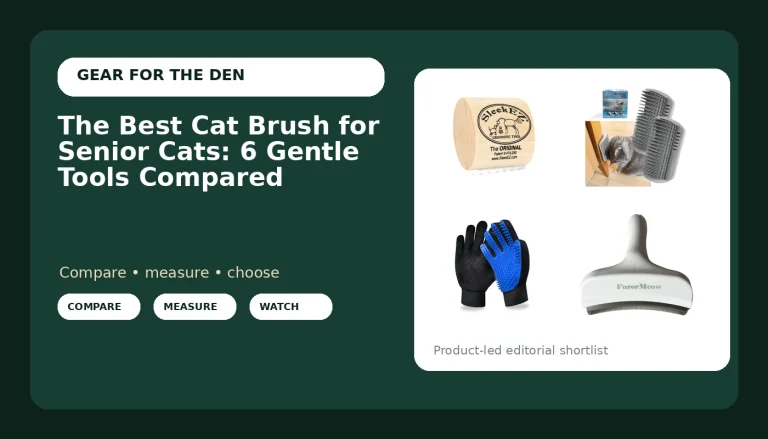
| SleekEZ Cat Brush for Shedding | Homes with more than one coat type | Stated to work on short, medium, and long coats |
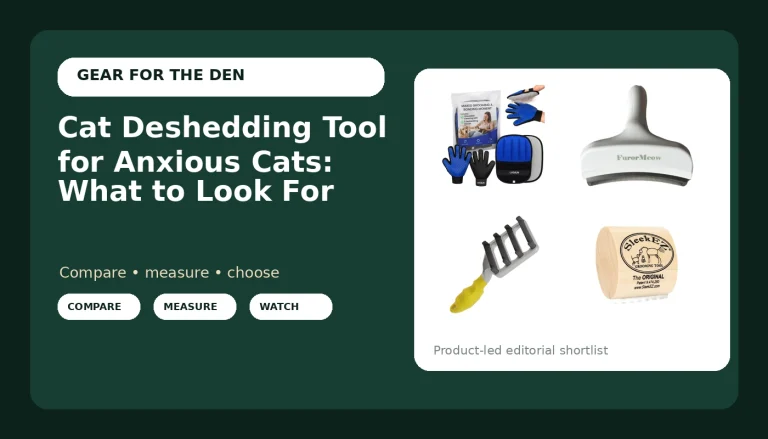
| FUR4 deShedding Cat Brush for Short Hair Cats | Short-haired seniors with dense coats | Four carbon fiber deshedding edges |
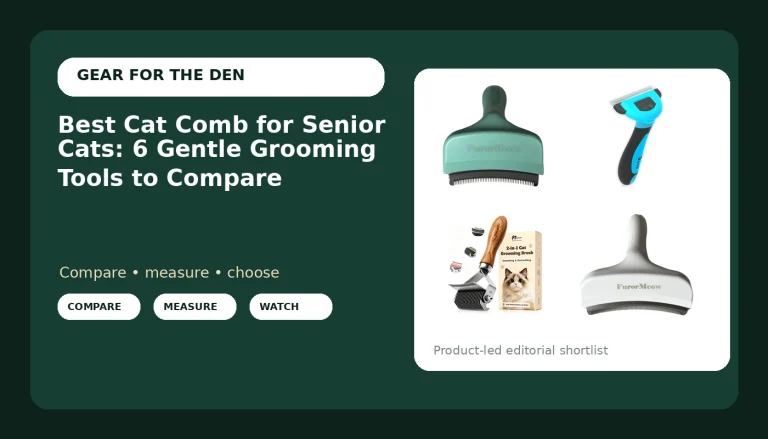
| FurorMeow Pet Deshedding Tool with Curve Blade (Green, Small) | Loose undercoat that sits close to the skin | Curved blade with tight V-shaped teeth |
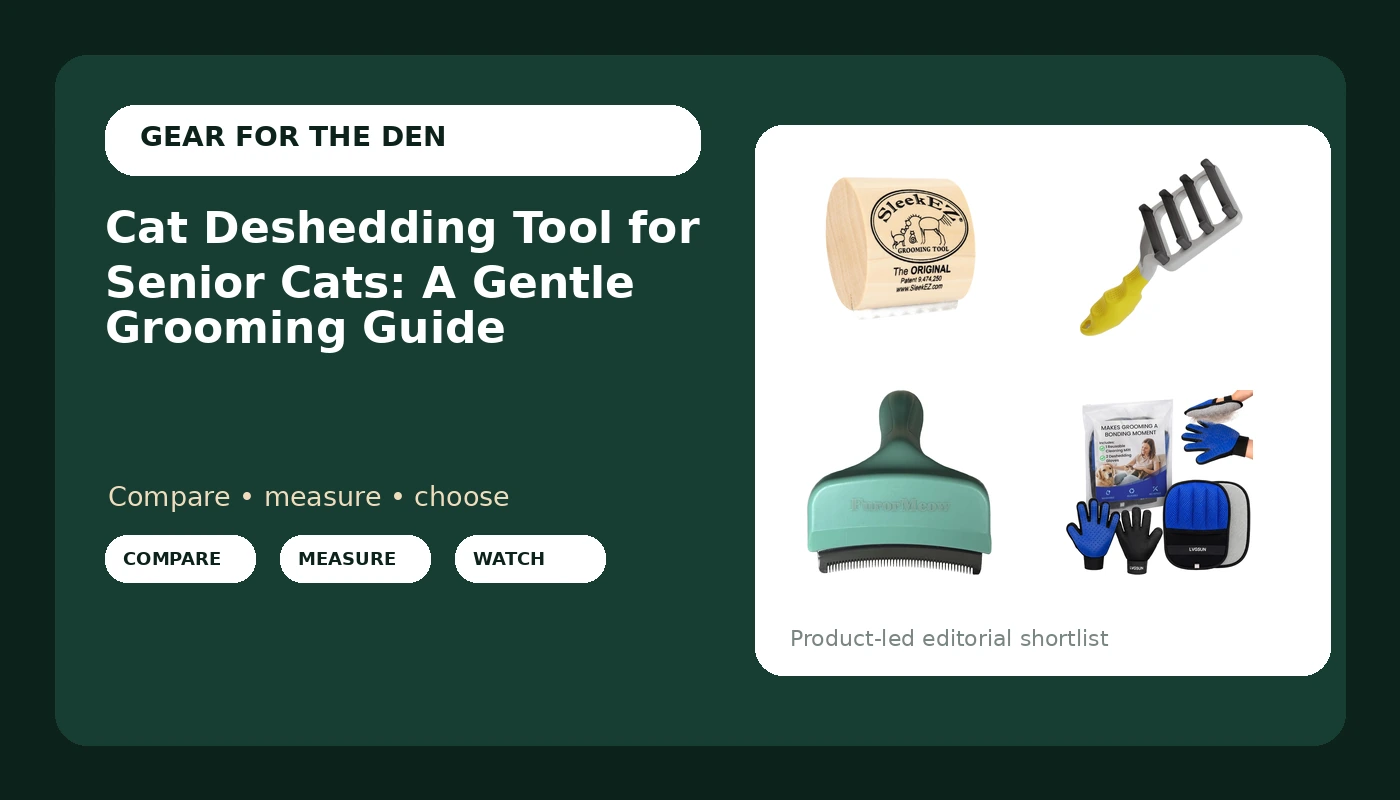
| Cat Grooming Kit for Shedding | Cats that dislike rigid tools | Glove and self-cleaning mitt in one kit |
Most coat-length flexibility: SleekEZ Cat Brush for Shedding
The appeal here is one tool for a multi-cat home. If a short-haired senior and a long-haired one share your sofa, a brush the maker states works across short, medium, and long coats saves shelf space and second-guessing. The trade-off is control. A wide deshedding edge covers ground quickly, so on a cat with thin, older skin you lighten your hand and use short strokes. Watch the brush, not the clock: when the edge loads with loose fur it starts dragging, and pressing harder removes nothing extra. A quick pass with your palm between strokes tells you whether the skin underneath is staying comfortable.
Built for short coats: FUR4 deShedding Cat Brush for Short Hair Cats
Short, dense coats hide the most loose undercoat, which is why they often look sleek while leaving fur on every cushion. The four carbon fiber edges are the design feature the listing leads with, and carbon fiber turns up in grooming tools because it stays stiff at low weight, which matters when you are making many short strokes in a row. The trade-off is scope: this one is aimed at short-haired cats, so it is not the tool to reach for on a long-haired senior. On an older cat, keep the pressure light and let the edges skim the surface of the coat rather than digging toward the skin.
Tight-tooth comb: FurorMeow Pet Deshedding Tool with Curve Blade
Comb spacing is the whole story with a tool like this. Tight, V-shaped teeth pick up the fine, loose undercoat that a brush glides over, and the curved blade lets the teeth follow the contour of a shoulder or hip instead of rocking on it. The same tight spacing is the trade-off: teeth that sit close together can catch on tangles, so on a senior cat with a thinning coat, work in short strokes and stop when the comb meets resistance rather than tugging through it. The small size suits controlled work along the back and flanks, where older cats often carry the loosest fur.
Hands-on option: Cat Grooming Kit for Shedding
For a cat that flinches the moment a rigid tool comes near, a glove changes the equation, because your hand already has permission to be there. Glove fit decides whether it works: too loose and the texture rolls instead of catching fur, and you lose the feel for the skin underneath. The self-cleaning mitt shortens the session, since you are not stopping to pick fur out of the surface between passes. The trade-off is reach into dense undercoat. Gloves and mitts lift surface fur well, but they are not the tool for compacted undercoat on a medium or long coat, where a comb with tight teeth does more of the work. If your cat only ever tolerates hands, a pair of cat grooming gloves for nervous cats is the version of this idea worth comparing.
Prices and availability may change. Product images, names, and retailer links are matched to verified listings. No current price, rating, stock status, or measured result is stated here without current evidence.
What makes a cat deshedding tool for senior cats different
Think of the rest of this guide as cat deshedding tool for senior cats explained in practical terms: what changes with age, what each edge does, and how to test a tool on a cat with opinions. Age changes the coat before it changes the cat's attitude. Many senior cats carry a thinner undercoat than they did at five, and the skin underneath is less elastic and quicker to redden. That combination rules out the firm, digging strokes that work on a young, dense coat. Coat length still sets the basics: short coats hold loose fur close to the body, medium and long coats trap it in layers, and a double coat releases undercoat in waves through the year. What changes with age is tolerance. Stiff joints make it harder for a cat to stand through a long session, and thin skin means a tool that was comfortable two years ago can now be too much. The practical answer is a lighter touch, a shorter session, and a tool whose deshedding edge does the work rather than your wrist.
How to judge a tool before you buy
Bristle type, deshedding edge, and comb spacing decide what a tool removes and how it feels on the cat. A rubber or silicone bristle brush lifts surface fur and is gentle, but it will not clear a compacted undercoat. A metal deshedding edge with fine teeth reaches undercoat, and its spacing sets how much it grabs in one pass. Glove fit works the same way: the tool is only as good as its contact with the coat, and a loose glove skates instead of catching. Run these five checks before you buy anything.
- Match the tool to coat length first. Short coats pair with fine, closely spaced edges, while long coats need wider spacing so the tool passes through without snagging.
- Check comb spacing by eye. Tight teeth grab more per stroke, which is efficient on a cooperative cat and harsh on a sensitive one.
- Look for a rounded or guarded edge. Sharp corners and exposed tips are the parts that scratch thin, older skin.
- Think about how your cat accepts handling. If hands are tolerated and tools are not, a glove or mitt will see more use than a comb with perfect specs.
- Test for two minutes, then check the skin. A short trial tells you more than any product description, and it keeps the first session from becoming a fight.
Practical guidance for older coats
- Start with a two-minute session and end on a good note, even if fur is still coming loose.
- Work in the direction the coat grows, and use your free hand to steady the skin instead of pulling it.
- Keep a lint roller or roller adhesive nearby for the fur that lands on the couch and your clothes rather than the cat.
- If nails need trimming before grooming, use clippers with a nail guard so a sudden movement does not become a nick.
- Skip the belly and the back legs on a cat that signals discomfort; those areas have thin skin and little padding.
Which option should you choose?
Choose the SleekEZ Cat Brush for Shedding when you want one brush for a home with more than one coat type and you are comfortable working with a light hand. Choose the FUR4 deShedding Cat Brush for Short Hair Cats when your senior has a short, dense coat that hides loose fur. Choose the FurorMeow Pet Deshedding Tool with Curve Blade when the loose undercoat sits close to the skin and you want tight teeth for controlled strokes. Choose the Cat Grooming Kit for Shedding when your cat will not sit still for a rigid tool and you would rather groom by feel.
The ideal cat deshedding tool for senior cats is the one your cat will allow you to use twice a week, not the one with the longest feature list. Note also that no grooming tool replaces a vet visit for sudden coat changes, bald patches, or skin that looks sore.
The bottom line
Senior coats need less force and more patience. Short, dense coats respond to a fine deshedding edge, medium and long coats to a comb with tight, closely spaced teeth, and cats that dislike rigid tools to a glove or mitt that lets you work by feel. Pick the tool that fits the coat in front of you, keep sessions to a couple of minutes, and stop while your cat is still willing. A cat deshedding tool for senior cats only helps if the cat stays in the room long enough to use it.