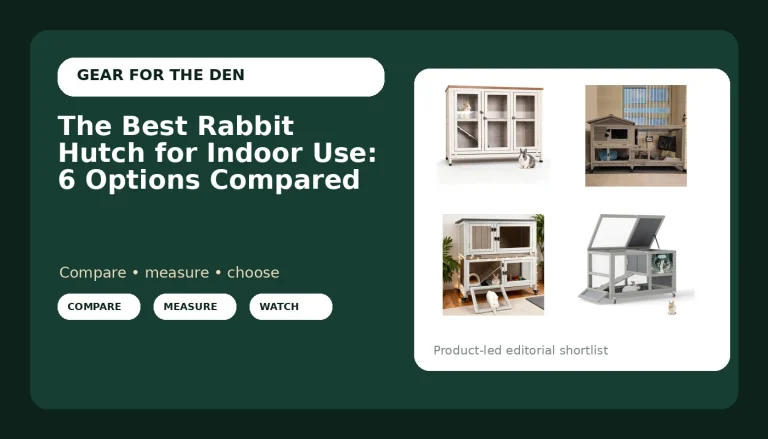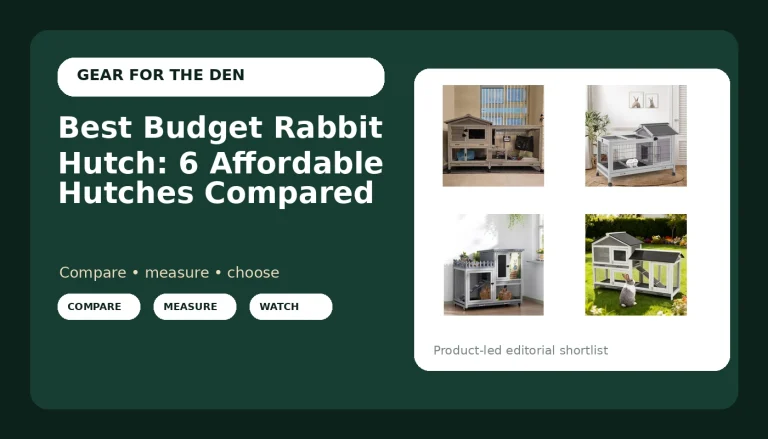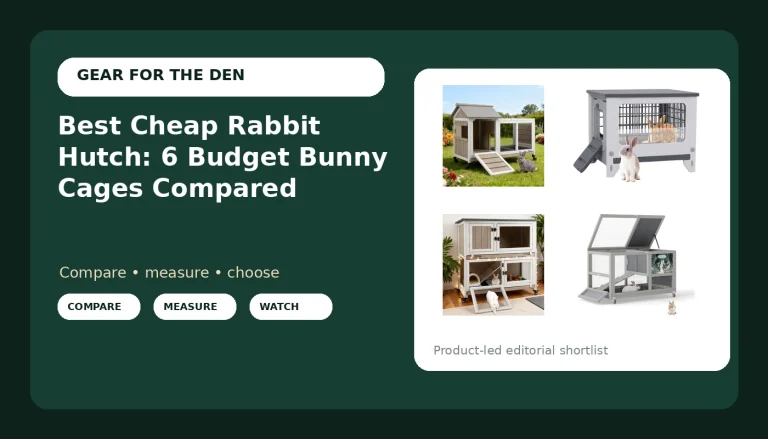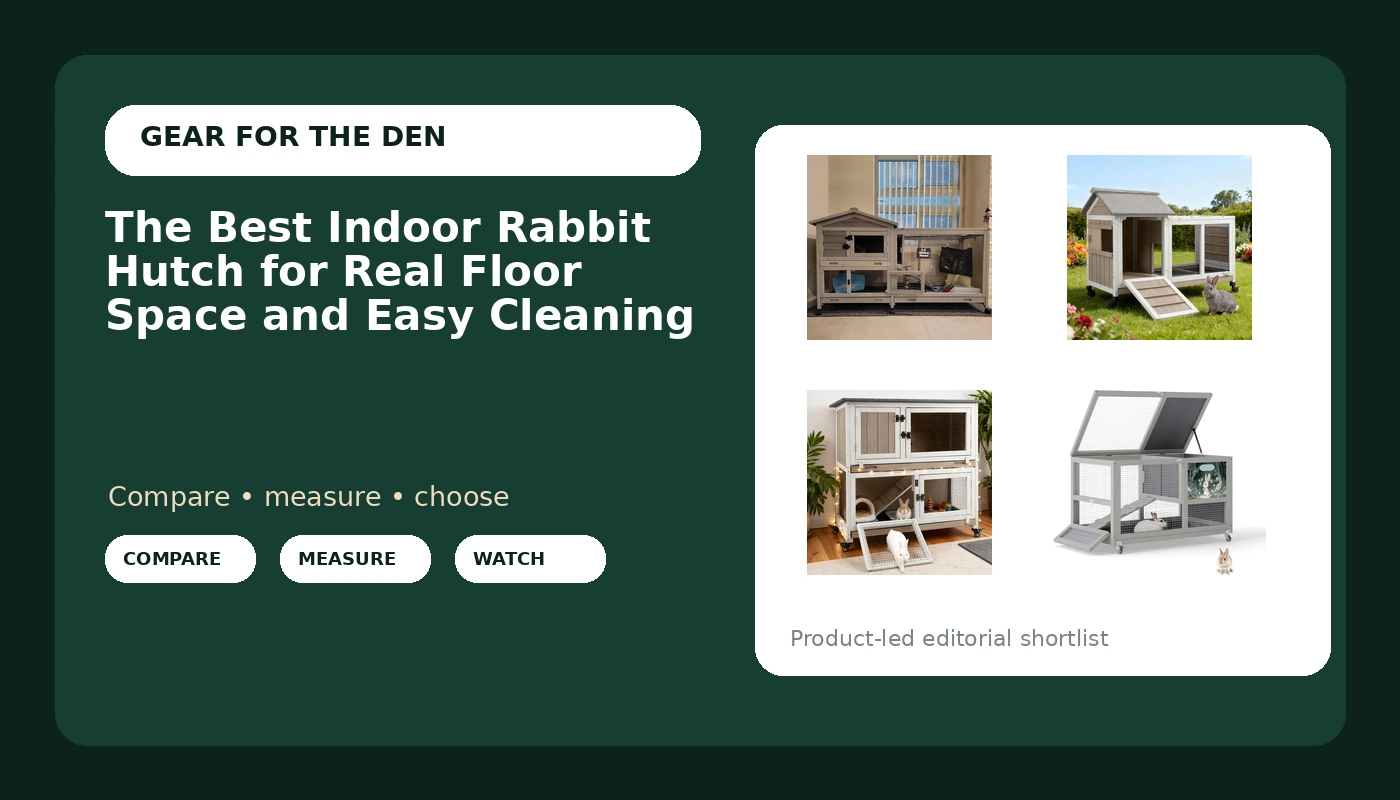
A rabbit that lives indoors spends most of its waking hours inside one piece of furniture, so the indoor rabbit hutch you pick shapes how much room your rabbit has to stretch, dig, and flop. This guide covers the best indoor rabbit hutch options in this batch of wheeled and two-story cages, comparing floor area, tray access, wheel setup, and how each one handles bedding, hay, and daily cleanup. Everything here comes from the manufacturer specifications and the product listings rather than from hands-on testing, so treat the measurements as the first thing to confirm before you order.
Quick answer
The Bunny Cage Indoor and Outdoor Rabbit Hutch with Casters Waterproof Roof, Pull Out Tray from Back and Front 61.2" L x 22.6" W x 33.5" H is the strongest fit for a full-size rabbit that needs genuine floor area because it is the longest and widest hutch in this group and its tray slides out from both the back and the front. Choose the 38" L Expandable Rabbit Hutch with Run, 2-Story Bunny Cage on Wheels instead when you want a smaller starting footprint that you can grow into a run later.
What matters in an indoor rabbit hutch
Floor area is the number that matters most, and it is not the same as the footprint of the cage. A two-story hutch can be tall and narrow while offering a small ground floor, and rabbits do most of their running, digging, and stretching on one level. Look at the base dimensions first, then treat the upper level as a bonus rather than a substitute. Cage size in a listing is usually given as length by width by height, so the first two numbers tell you what your rabbit actually gets.
Cleaning access comes second. A pull-out tray is only convenient if you can reach it from the side of the cage that faces into the room, which is why hutches with trays that slide out from both the front and the back are easier to live with in a corner. Casters and wheels matter for the same reason: a hutch you can roll away from the wall is a hutch you will actually clean on schedule.
Then there is the interior. Bar spacing matters most on the front panel, since wide gaps let determined rabbits push bedding through. Bedding dust collects in wood crevices, so sealed or plastic surfaces are easier to wipe down. Hideout size should be large enough for an adult rabbit to turn around inside. A hay rack keeps hay off the floor instead of matted into the tray, and bottle capacity decides how often you refill. If you plan to connect the hutch to a playpen with a tube, check the tunnel diameter before you buy the tube.
Indoor rabbit hutch features worth comparing
Top pick
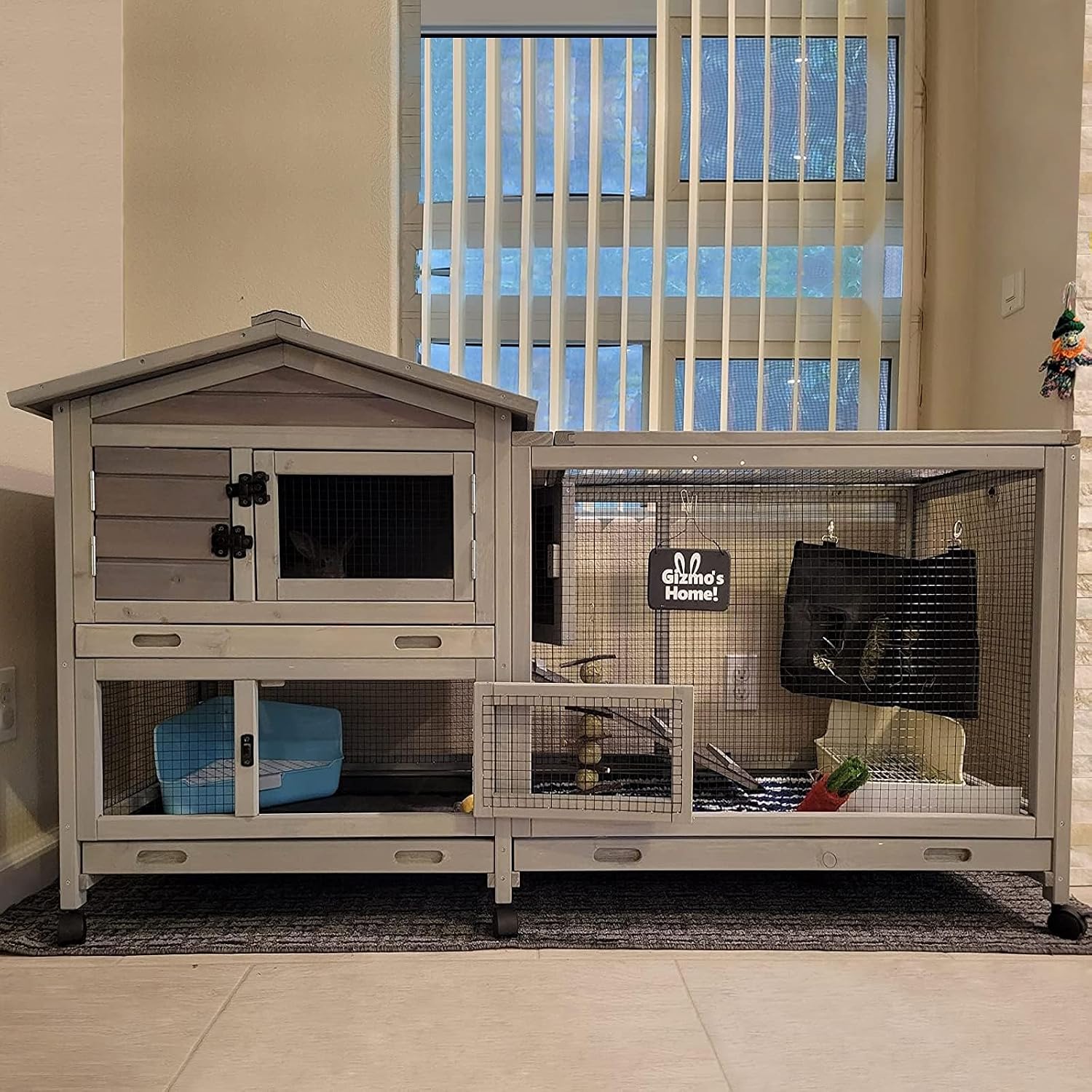
Bunny Cage Indoor and Outdoor Rabbit Hutch with Casters Waterproof Roof, Pull Out Tray from Back and Front 61.2" L x 22.6" W x 33.5" H
The largest hutch here at 61.2 by 22.6 by 33.5 inches, with casters, a waterproof roof, and a pull-out tray that slides out from both the back and the front. The extra length is what makes it the best fit for a rabbit that needs real floor area.
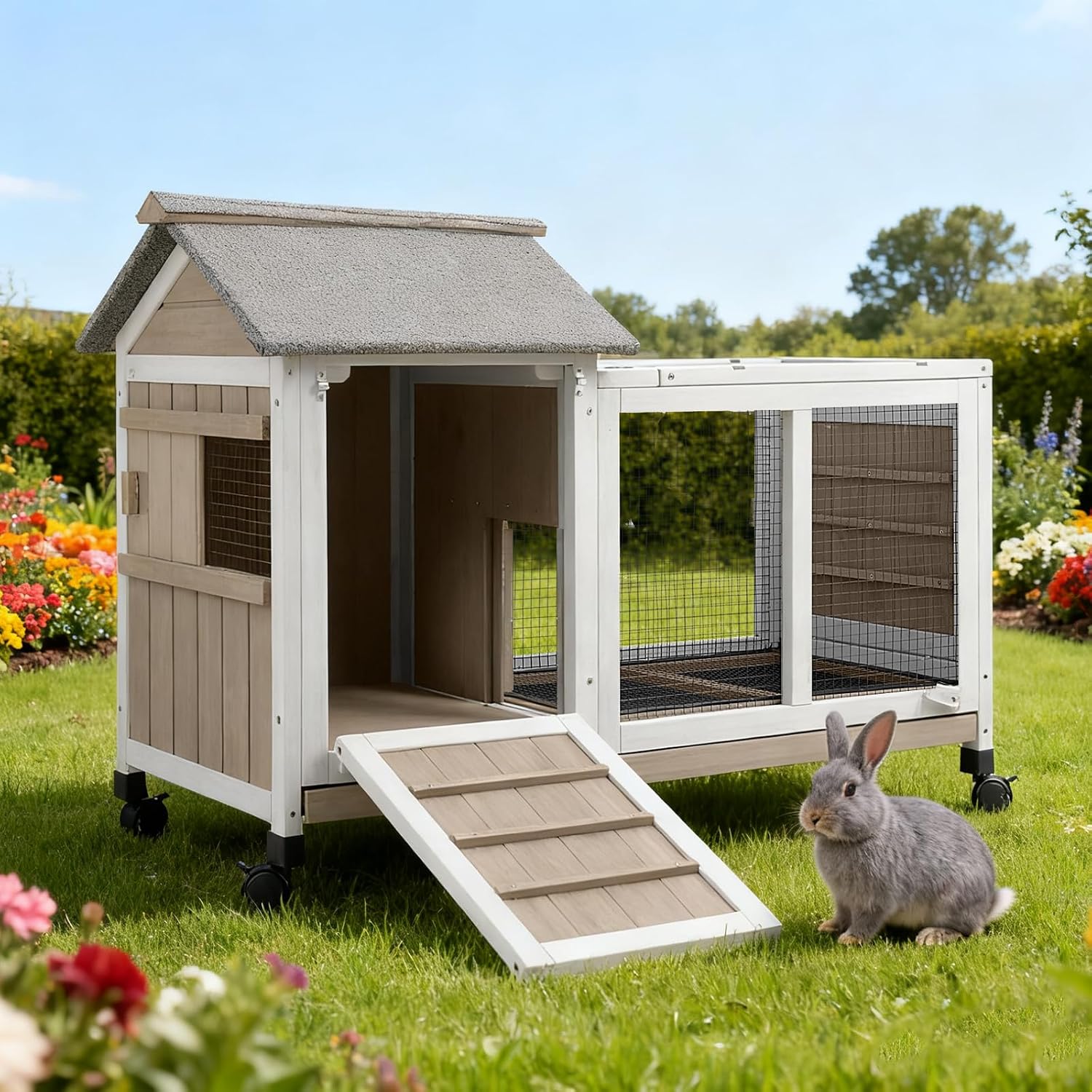
38" L Expandable Rabbit Hutch with Run, 2-Story Bunny Cage on Wheels
A 38-inch two-story cage on wheels that expands to add a run. Pick it when the starting footprint has to stay small and you want the option to grow the setup rather than replace it.
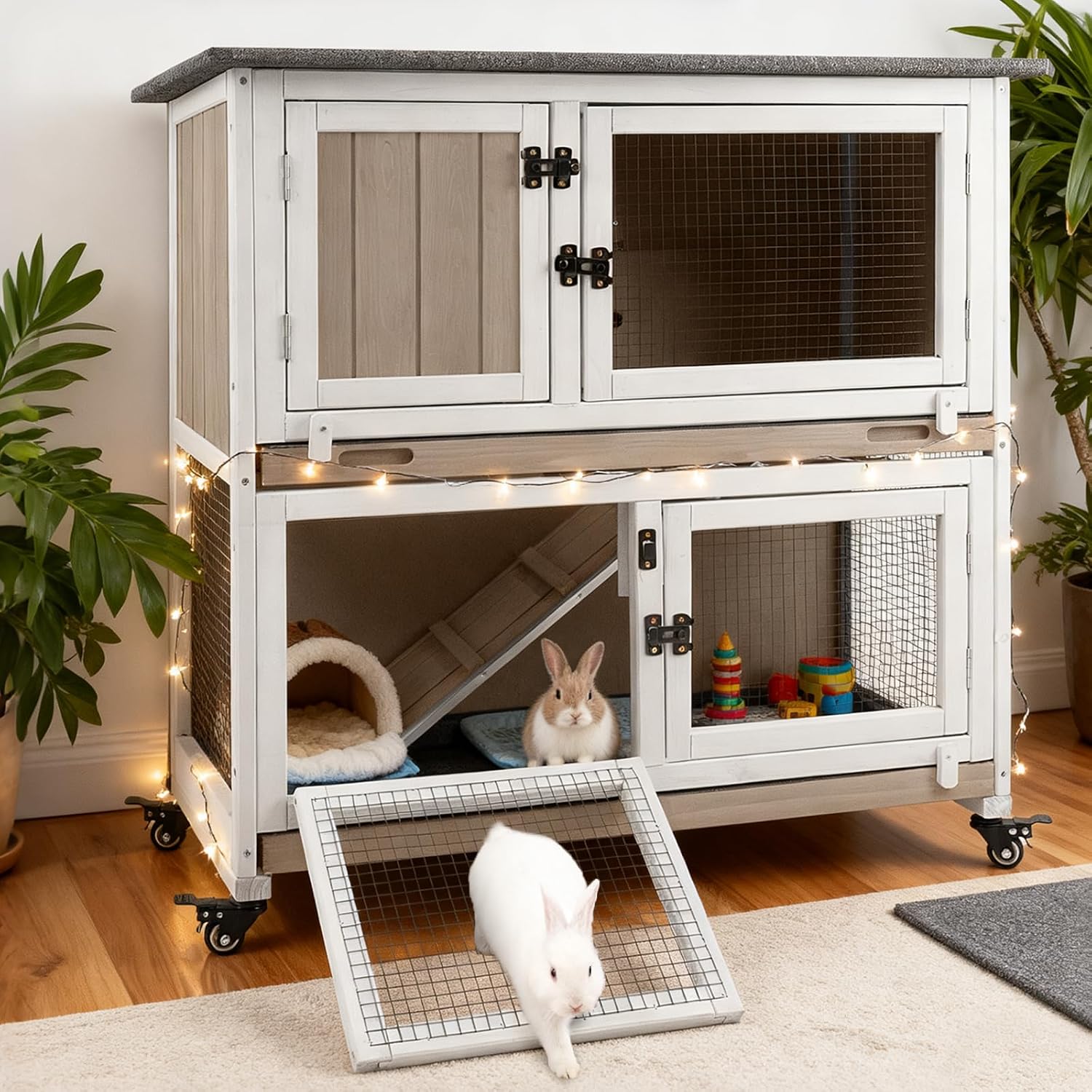
Gowoodhut 36" L Rabbit Hutch, 2-Story Bunny Cage on 4 Wheels
A 36-inch two-story cage on four wheels, so it rolls clear of the wall for cleaning. The second level adds usable space without adding to the floor footprint, which suits a room where length is limited.
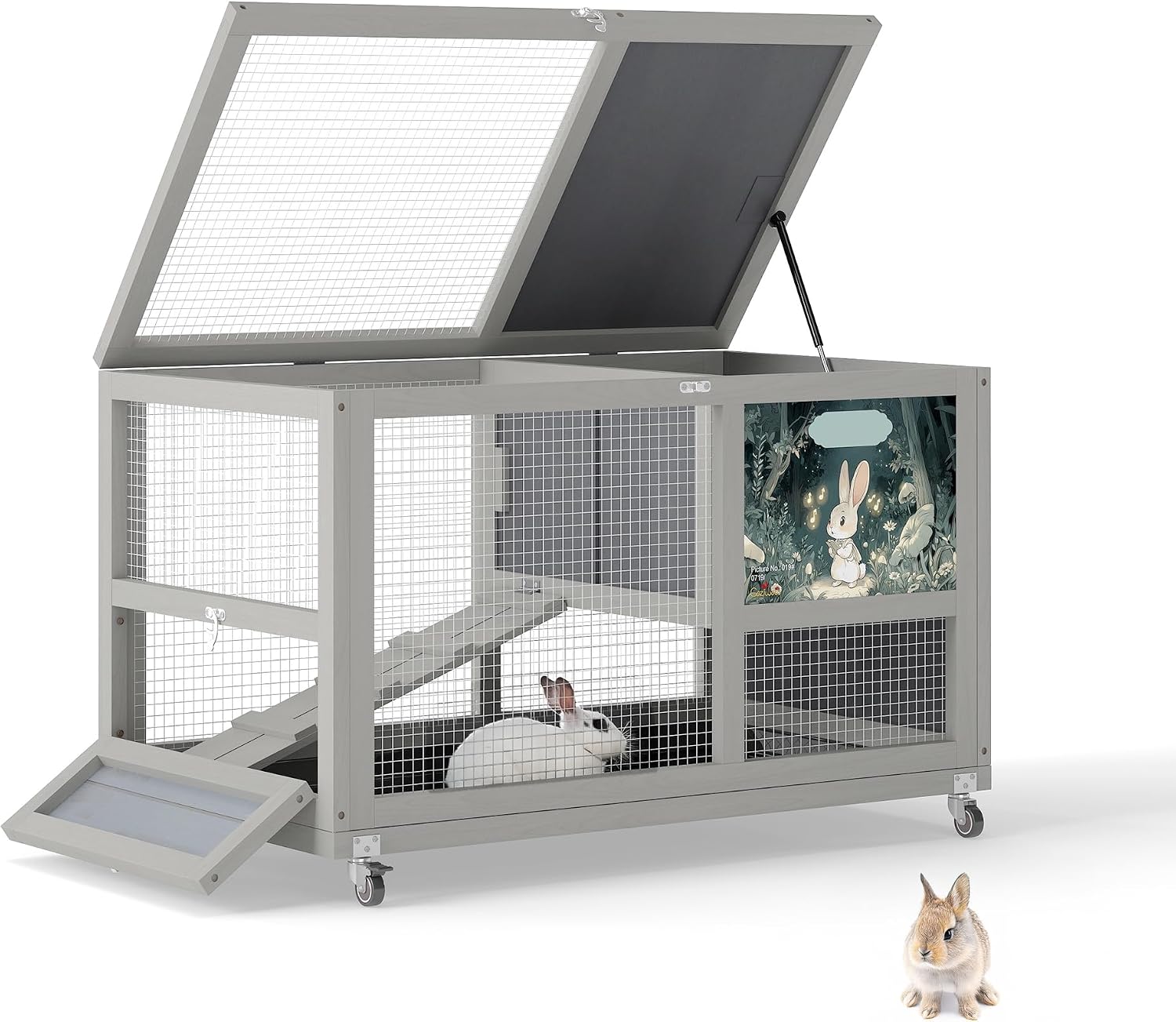
COZIWOW 36.5" Two-Level Wooden Rabbit Hutch with Casters & Ramp
A 36.5-inch two-level wooden hutch with casters and a ramp, so the rabbit moves between levels on its own. The wood build suits a den or living room better than molded plastic.
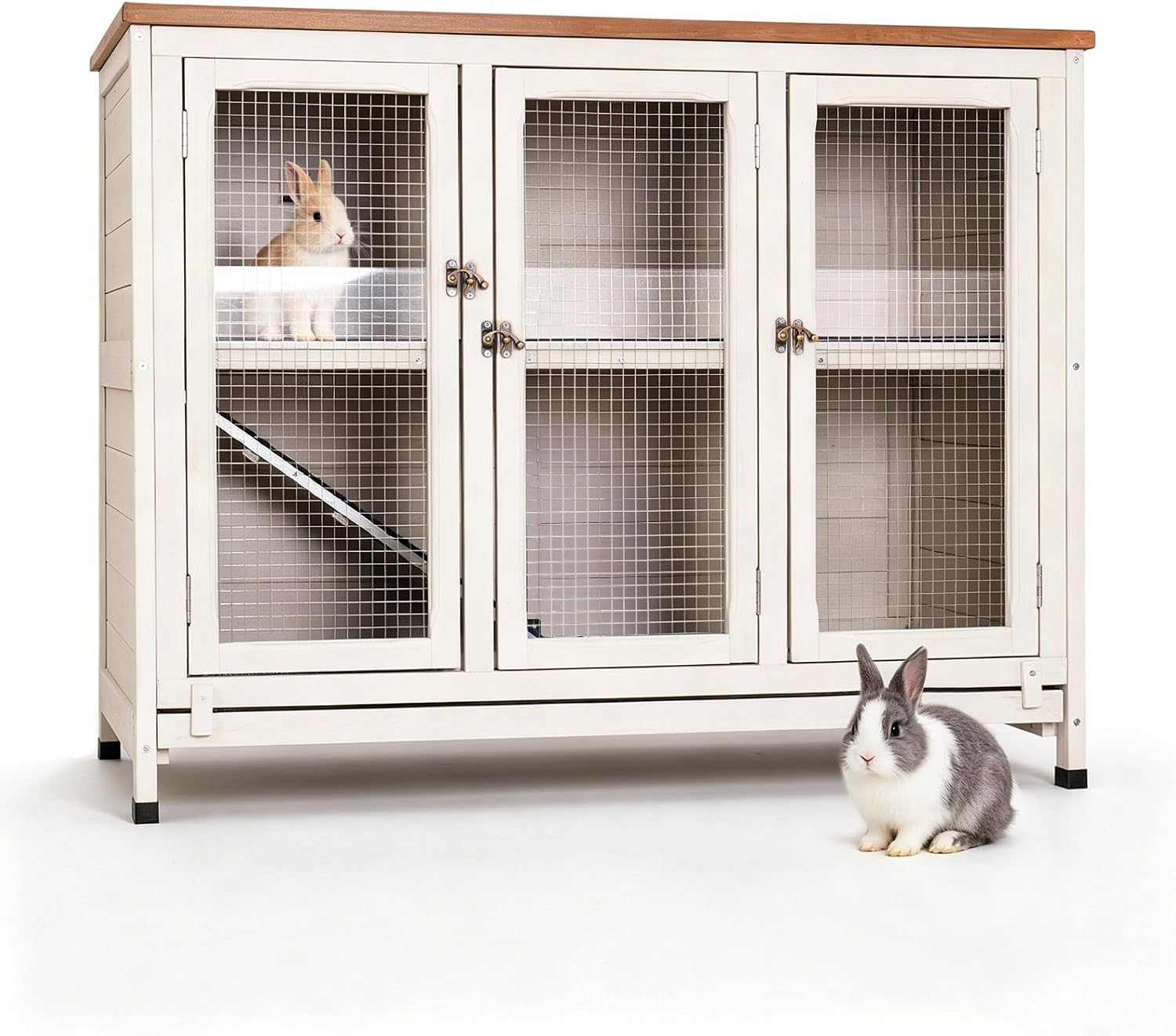
2-Story Indoor Rabbit Hutch with Pull-Out Tray & Clear Guard Panel
A two-story indoor hutch with a pull-out tray and a clear guard panel. The panel lets you check on the rabbit without opening the cage, and the tray is the feature that decides how easy daily cleaning is.
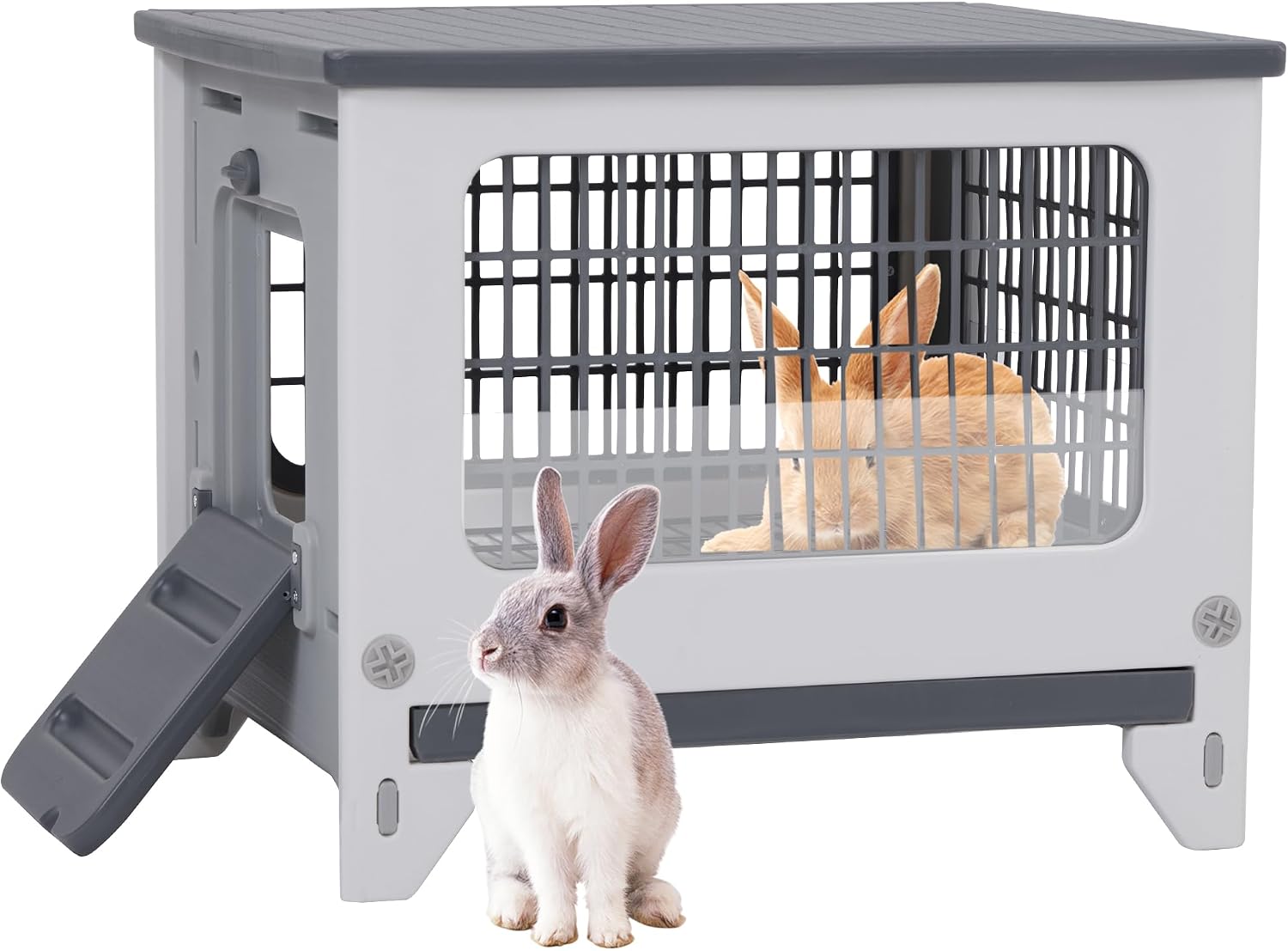
Plastic Rabbit Hutch for Indoor & Outdoor
A plastic hutch for indoor and outdoor use. Smooth surfaces are the appeal here: less crevice space for bedding dust to collect, and a hutch you can wipe down instead of scraping.
How these products were compared
This guide compares floor area and cage size, tray and cleaning access, mobility, construction material, and expandability. Product names, images, and retailer links are matched by listing so that every card points to the product shown.
Floor area and cage size set the baseline, because a hutch that is too small for an adult rabbit cannot be fixed with accessories. Tray and cleaning access decides how much work the hutch adds to your week. Mobility covers casters and wheels, which change whether you can move the cage on your own. Construction material separates wood from plastic and affects ventilation, bedding dust, and how the hutch looks in a room. Expandability covers two-story layouts and models that add a run, which matter if your rabbit's space needs are likely to grow.
No hutch in this group was tested in person. The differences below come from the dimensions and features the manufacturers list, so confirm any measurement your purchase depends on against the current listing.
How to choose the right indoor rabbit hutch
Start with the space you actually have and work backwards. Measure the wall where the hutch will sit, add a few inches of clearance for a tray that slides out, and then compare that number to the base dimensions of each cage rather than to its overall height. There is no single ideal indoor rabbit hutch for every room: a 61-inch hutch is the better choice on a wide living room wall or in a spare room, while a 36 to 38-inch cage is the practical choice in a bedroom or apartment corner where the hutch has to share space with furniture.
Once the size fits, decide how much cleaning work you want. A pull-out tray is easier than a full cage teardown, and casters make the difference between moving the hutch and lifting it. Getting the correct indoor rabbit hutch also means checking the small parts: bar spacing on the front panel, hideout size for an adult rabbit, hay rack placement, bottle capacity for your refill routine, and tunnel diameter if you plan to link the cage to a playpen. If you are still setting up the room, our guide to rabbit-proofing a room before you let your bunny loose covers the cables and baseboards that need attention first.
Bunny Cage Indoor and Outdoor Rabbit Hutch with Casters Waterproof Roof, Pull Out Tray from Back and Front 61.2" L x 22.6" W x 33.5" H
This is the longest and widest hutch in the group at 61.2 inches long, 22.6 inches wide, and 33.5 inches tall, and that length is the reason it takes the top spot. Floor area is the first thing a rabbit needs, and this hutch offers the most of it here. It sits on casters, so it rolls out for cleaning, and the waterproof roof means it can move to a covered porch without the wood swelling. The pull-out tray is reachable from both the back and the front, which matters in a corner where only one side is exposed.
The trade-off is footprint. A 61-inch hutch needs a wall long enough to hold it, and it will dominate a small bedroom in a way a 36-inch cage will not. It is also a single-level design rather than a two-story one, so all of that space sits on the ground floor, which is where rabbits use it anyway. If your room cannot give up that much wall, one of the smaller wheeled cages below will serve you better, and you can make up the difference with supervised floor time outside the cage.
Alternatives to consider
The 38" L Expandable Rabbit Hutch with Run, 2-Story Bunny Cage on Wheels is better suited to a small room where you want to start compact and add a run later, while the Gowoodhut 36" L Rabbit Hutch, 2-Story Bunny Cage on 4 Wheels is a stronger fit when you want two levels and a footprint that suits a narrow wall.
The COZIWOW 36.5" Two-Level Wooden Rabbit Hutch with Casters & Ramp, the 2-Story Indoor Rabbit Hutch with Pull-Out Tray & Clear Guard Panel, and the Plastic Rabbit Hutch for Indoor & Outdoor cover the remaining priorities: a wood-look two-level cage with a ramp, a two-story cage with a clear panel for watching the rabbit without opening the door, and a plastic hutch for anyone who wants wipe-clean surfaces and less bedding dust trapped in crevices.
Day-to-day use and maintenance
Daily upkeep is mostly tray work and hay. A pull-out tray takes a few minutes with a scoop and a wipe, and doing it before the bedding gets damp keeps odor down and keeps bedding dust from spreading through the room. Refill the hay rack at the same time and check the water bottle, since bottle capacity sets how often that refill happens. Wipe the bars and the front panel weekly, and check that the latches still close firmly.
Wheels need a little attention too: casters roll easily on hard floors and can catch on thick carpet or rugs, so put a thin mat or a board under the wheels if the hutch sits on carpet. If the hutch is used outdoors on a porch, confirm the roof is still watertight before the rainy season and check for chew marks on any exposed wood edges. Rabbits chew, so anything within reach inside the cage should be inspected regularly and replaced when it starts to splinter.
Buying checklist
- Measure the wall space and the clearance needed for the tray to slide out.
- Choose the base dimensions, or cage size, based on the floor area your rabbit gets every day rather than on an occasional edge case.
- Confirm that the exact model includes the features you are counting on, such as casters, a ramp, or a pull-out tray.
- Read the cleaning and maintenance instructions, especially for wood parts and wheels.
- Verify the current retailer price, availability, and return terms.
Final recommendation
Choose the Bunny Cage Indoor and Outdoor Rabbit Hutch with Casters Waterproof Roof, Pull Out Tray from Back and Front 61.2" L x 22.6" W x 33.5" H when you can give a full-size rabbit a long wall and want the largest floor area in this group. Choose the 38" L Expandable Rabbit Hutch with Run, 2-Story Bunny Cage on Wheels when the room is small and you would rather add a run later than buy a bigger cage up front. If neither size is right, the two-level wooden and plastic options cover the middle ground, but the honest answer is that the best choice is the one whose base dimensions fit your room and your rabbit.