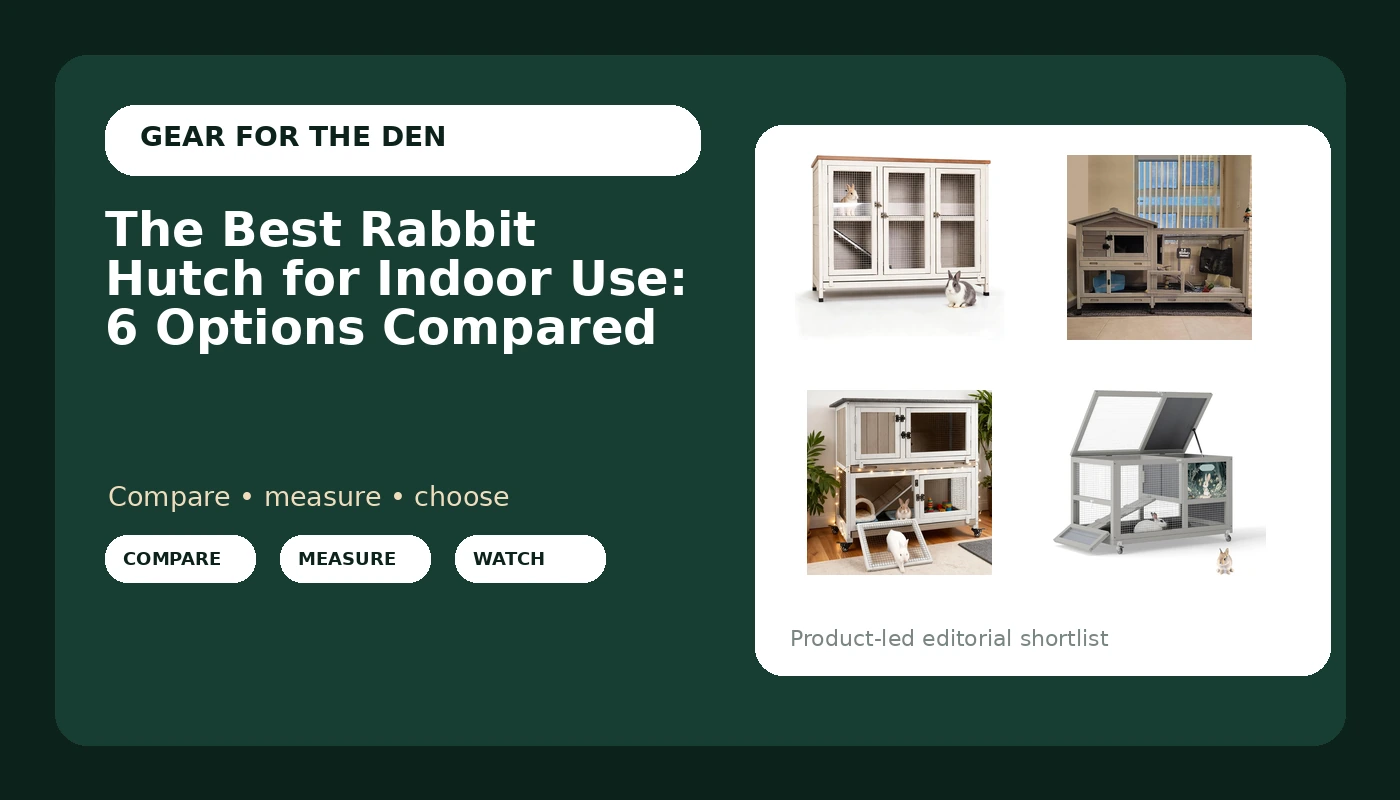
Bringing a rabbit indoors solves one problem and creates another. The animal gets company, climate control, and a safer floor to live on, but you now have to fit a hutch into a room where people also eat, sleep, and walk. That is why the search for the best rabbit hutch for indoor use comes down to a handful of practical questions rather than brand loyalty: how much floor area can you spare, how easily can you reach the tray, and does the frame let air move without turning the corner into a bedding-dust trap?
This guide compares six hutches sold for indoor or dual indoor and outdoor use. Every entry is a real listing, and each card below links to the exact product it describes. Nothing here is a lab test. The notes come from the specifications printed in each product name and from general rabbit housing practice. Where a hutch is the wrong shape for a room, we say so.
Quick answer
The 2-Story Indoor Rabbit Hutch with Pull-Out Tray & Clear Guard Panel is the strongest fit for most indoor rooms because it pairs two usable levels with a pull-out tray and a clear guard panel across the front, so it delivers more usable space in a shorter footprint than the single-level models here. Choose the Bunny Cage Indoor and Outdoor Rabbit Hutch with Casters Waterproof Roof instead when you have the wall length for a 61.2-inch hutch and would rather have one long floor with trays that open from both the back and the front.
Rabbit hutch for indoor use features worth comparing
Floor area is the first number to check, and it is the one most listings bury. A hutch's footprint, not its height, decides how much of the day a rabbit can move, stretch, and lie flat. The largest model here measures 61.2 inches long by 22.6 inches wide, while the compact two-story units sit around 36 inches long. If you have a corner that can take a long, low piece of furniture, extra length usually buys more usable room than a second level does.
Cage size and floor area are not the same as volume. A two-level hutch with a ramp adds usable space, but only if the upper floor is tall enough for the rabbit to sit up and the ramp angle is gentle enough to use without slipping. Hideout size matters for the same reason: a sleeping box a rabbit can barely turn around in gets ignored, and an oversized one eats floor area that would be better left open.
Cleaning access is the second filter. A pull-out tray is only convenient if you can reach it. Look at which side the tray slides out from, because a hutch with front access can sit closer to a wall than one that needs clearance behind it. Casters help here too. A wheeled hutch can be rolled out for a full clean instead of being wiped around in place.
Ventilation and bedding dust come next. Barred panels let air move and let you see the animal, but bar spacing should be narrow enough that a rabbit cannot push its head through. Solid panels hold warmth but trap ammonia. Whichever you choose, dust from loose bedding settles on every surface in the room, so a hay rack that keeps hay off the floor and a litter tray directly underneath it cut down on both mess and odor.
Finally, think about the accessories the hutch has to accommodate: a water bottle sized for a full day, a hay rack that does not double as a step, and a play tunnel if the rabbit gets floor time. Tunnel diameter should be wide enough that an adult rabbit passes through without scraping. The ideal rabbit hutch for indoor use is the one whose footprint, tray side, and ventilation match your room, not the one with the longest feature list.
Top pick
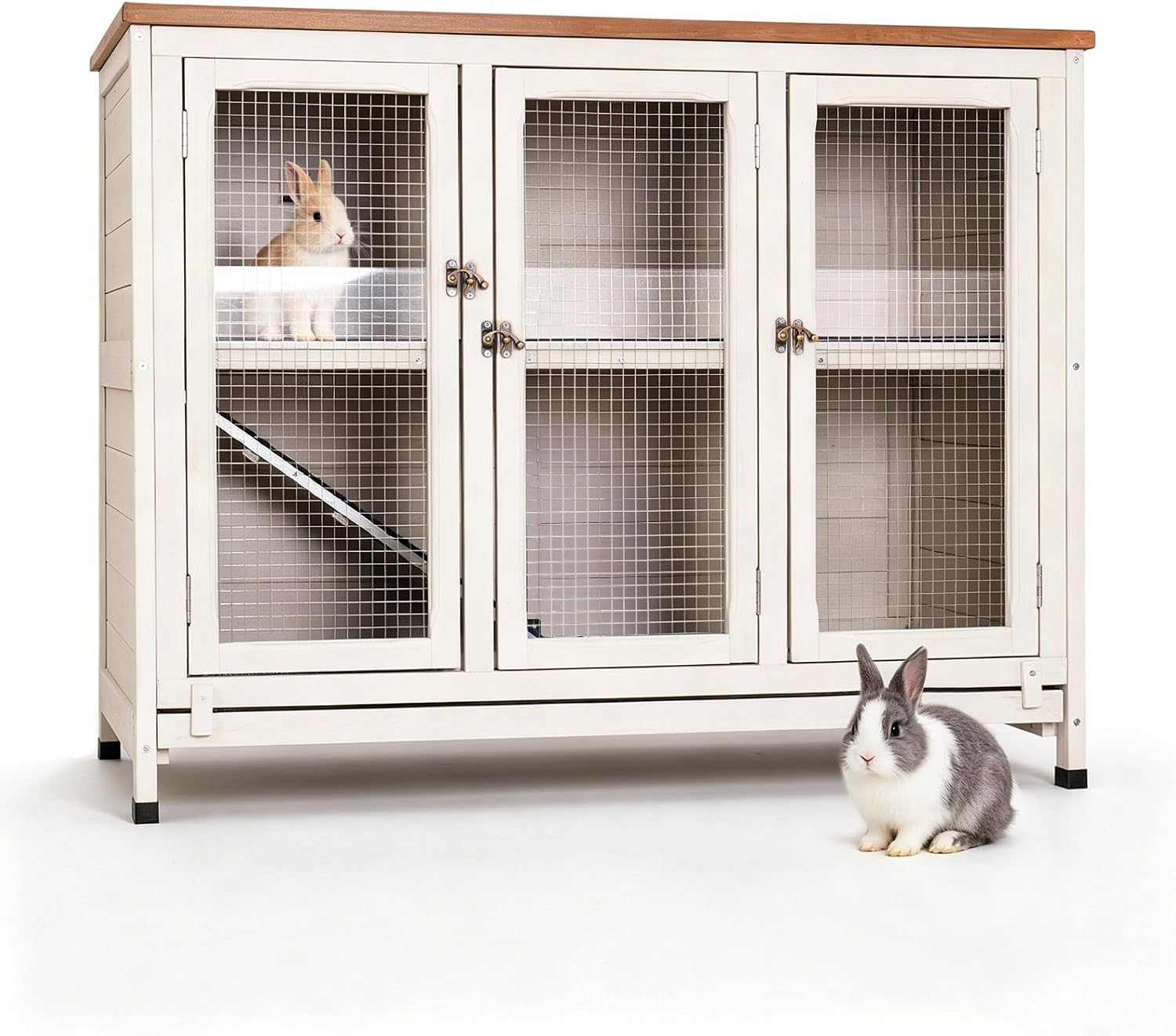
2-Story Indoor Rabbit Hutch with Pull-Out Tray & Clear Guard Panel
A two-level indoor hutch with a pull-out tray for cleaning and a clear guard panel across the front. The upper floor adds usable space without asking for a longer wall.
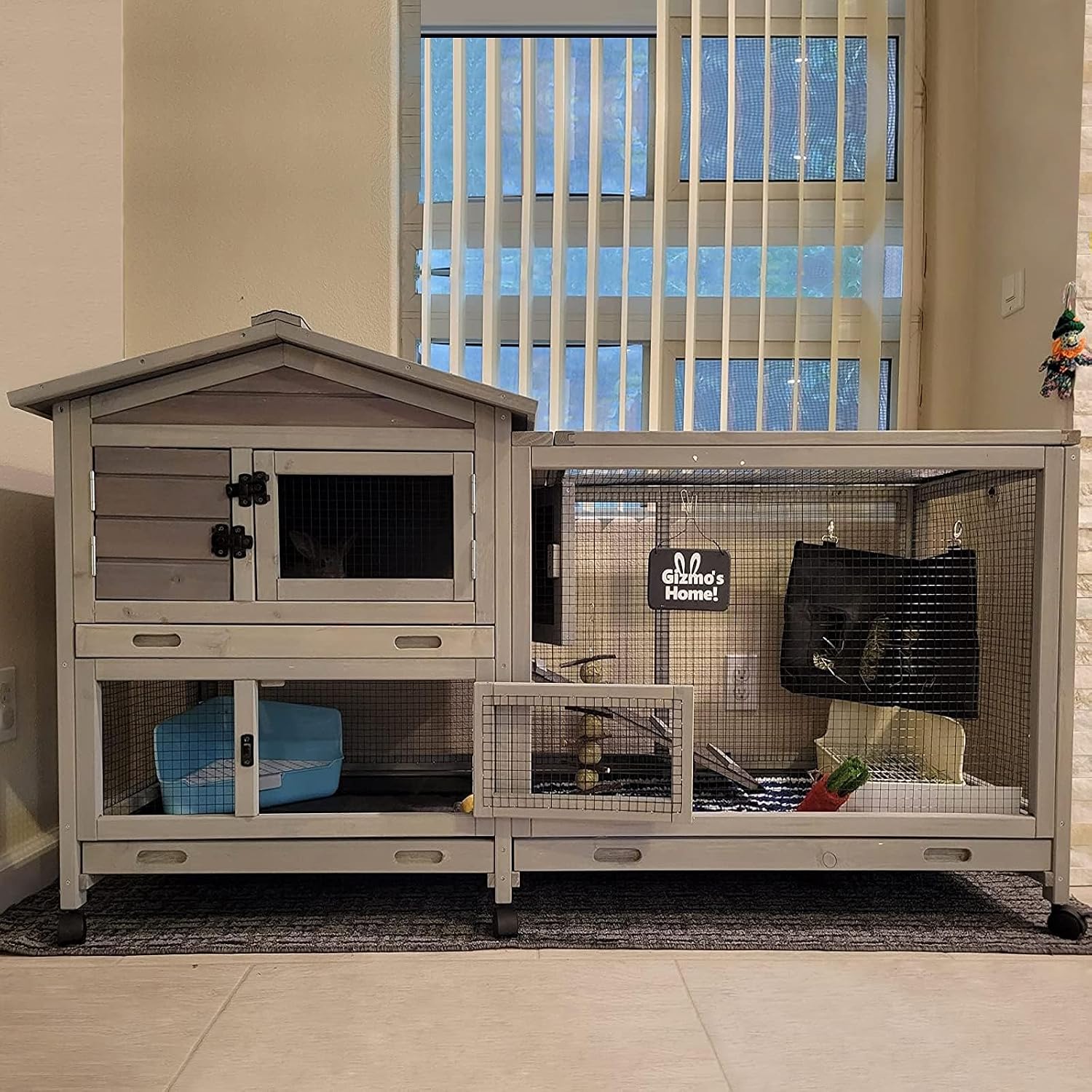
Bunny Cage Indoor and Outdoor Rabbit Hutch with Casters Waterproof Roof, Pull Out Tray from Back and Front 61.2" L x 22.6" W x 33.5" H
The longest hutch in this group at 61.2 inches, with casters, a waterproof roof, and pull-out trays that open from both the back and the front.
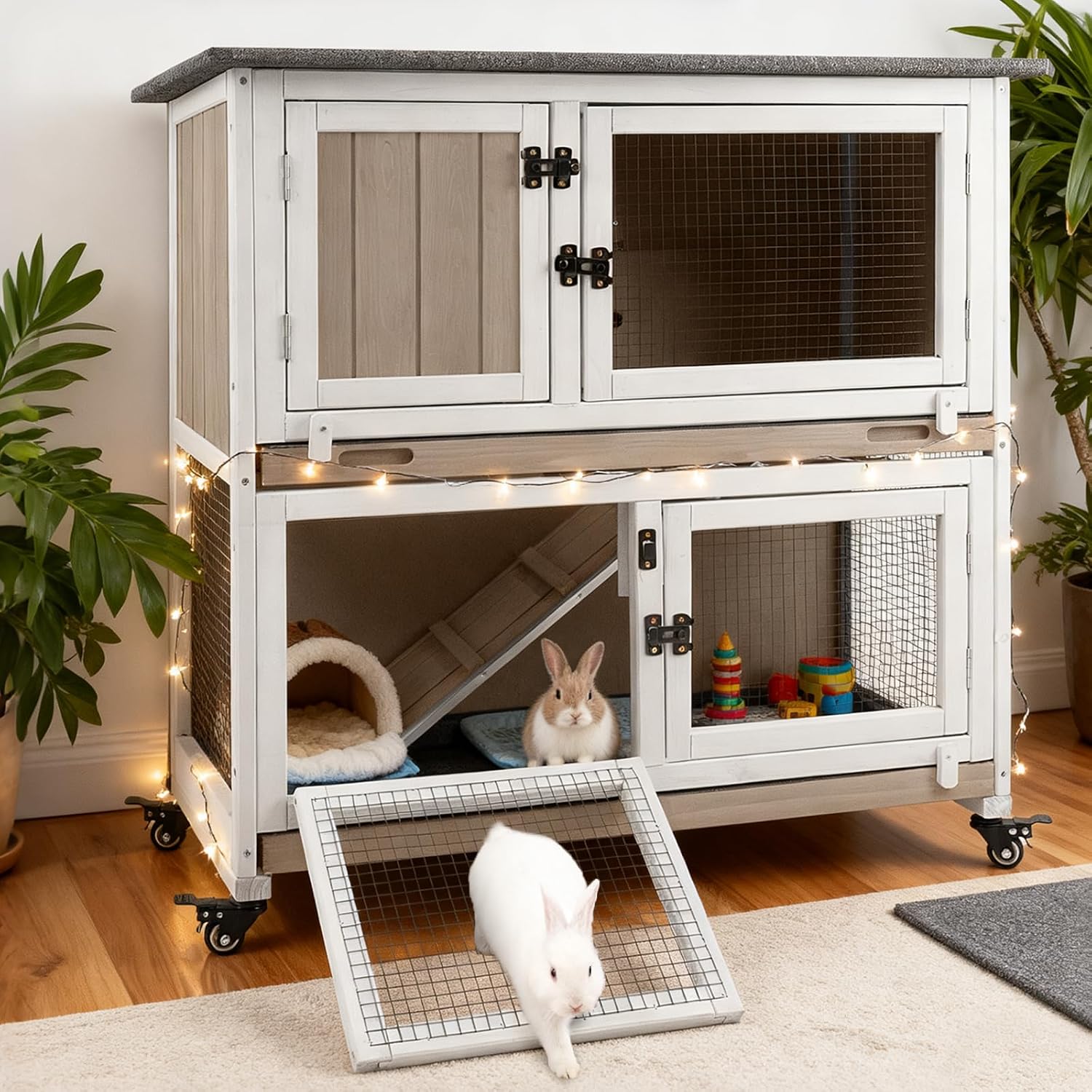
Gowoodhut 36" L Rabbit Hutch, 2-Story Bunny Cage on 4 Wheels
A wooden 36-inch hutch with two levels and four wheels, so the frame can be rolled aside when you clean the floor underneath.
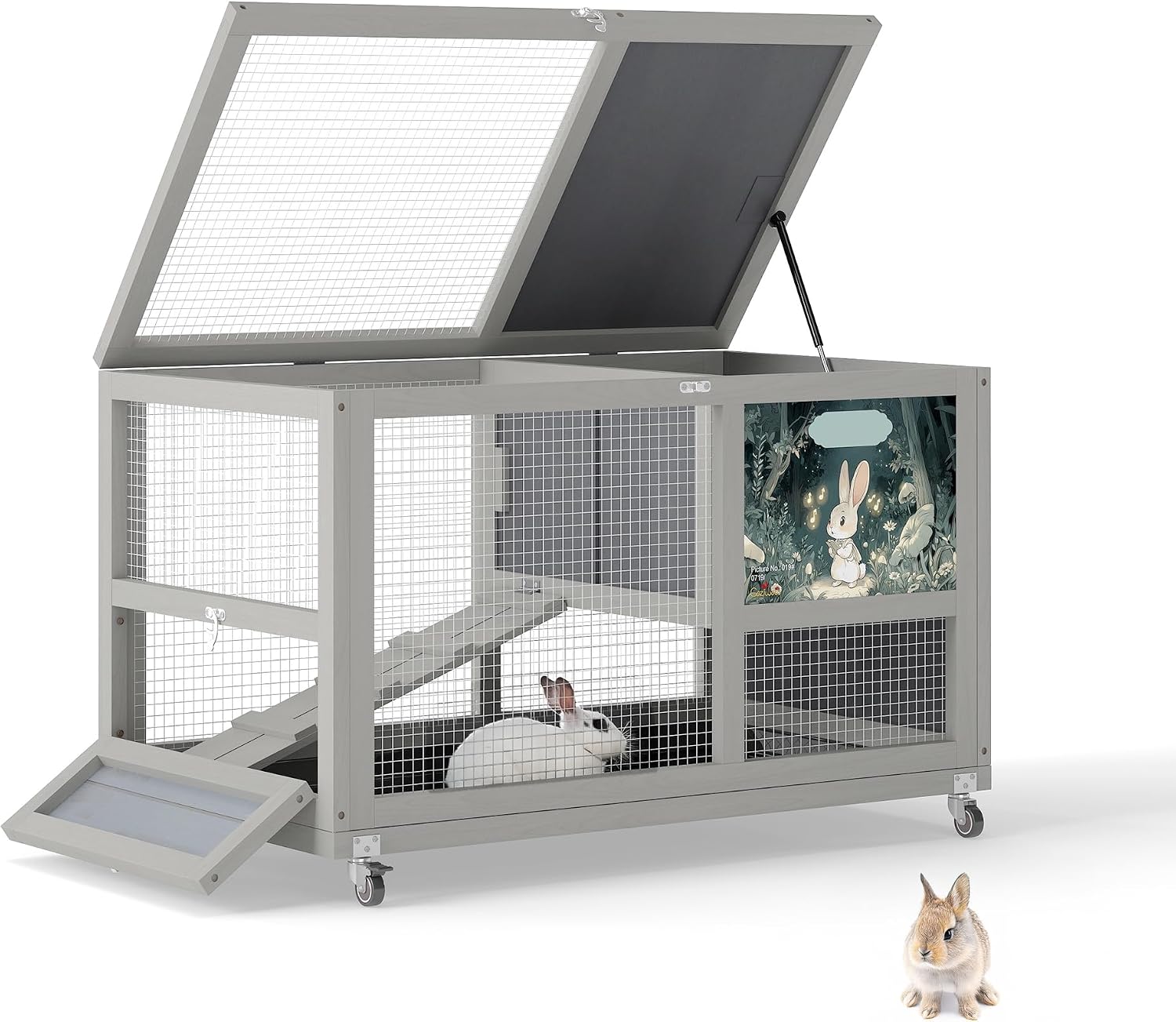
COZIWOW 36.5" Two‑Level Wooden Rabbit Hutch with Casters & Ramp
A 36.5-inch wooden hutch with two levels, casters, and a ramp between floors, which makes the upper level reachable rather than decorative.
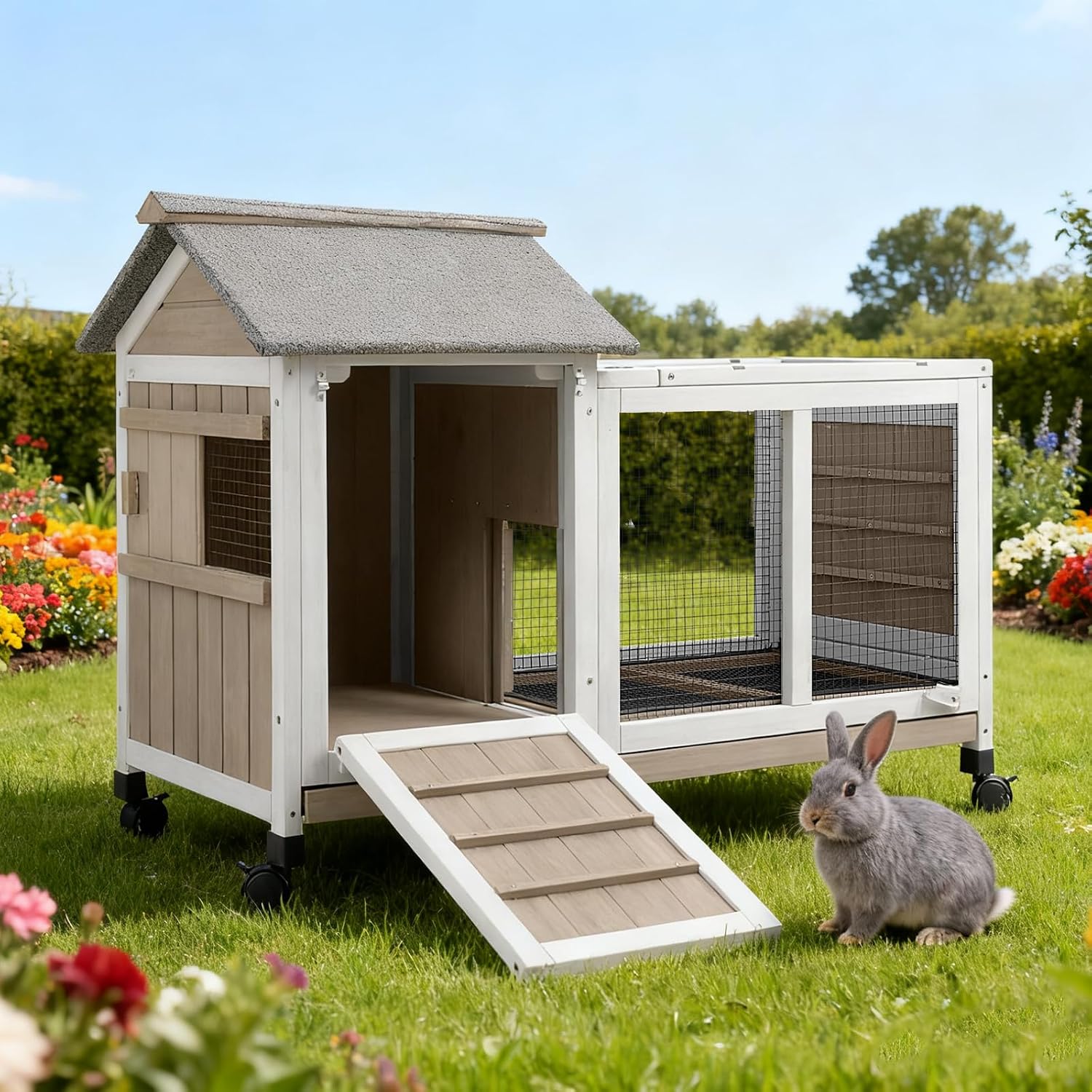
38" L Expandable Rabbit Hutch with Run, 2-Story Bunny Cage on Wheels
A two-story hutch on wheels with an expandable frame and an attached run, so floor area can grow when the room allows it.
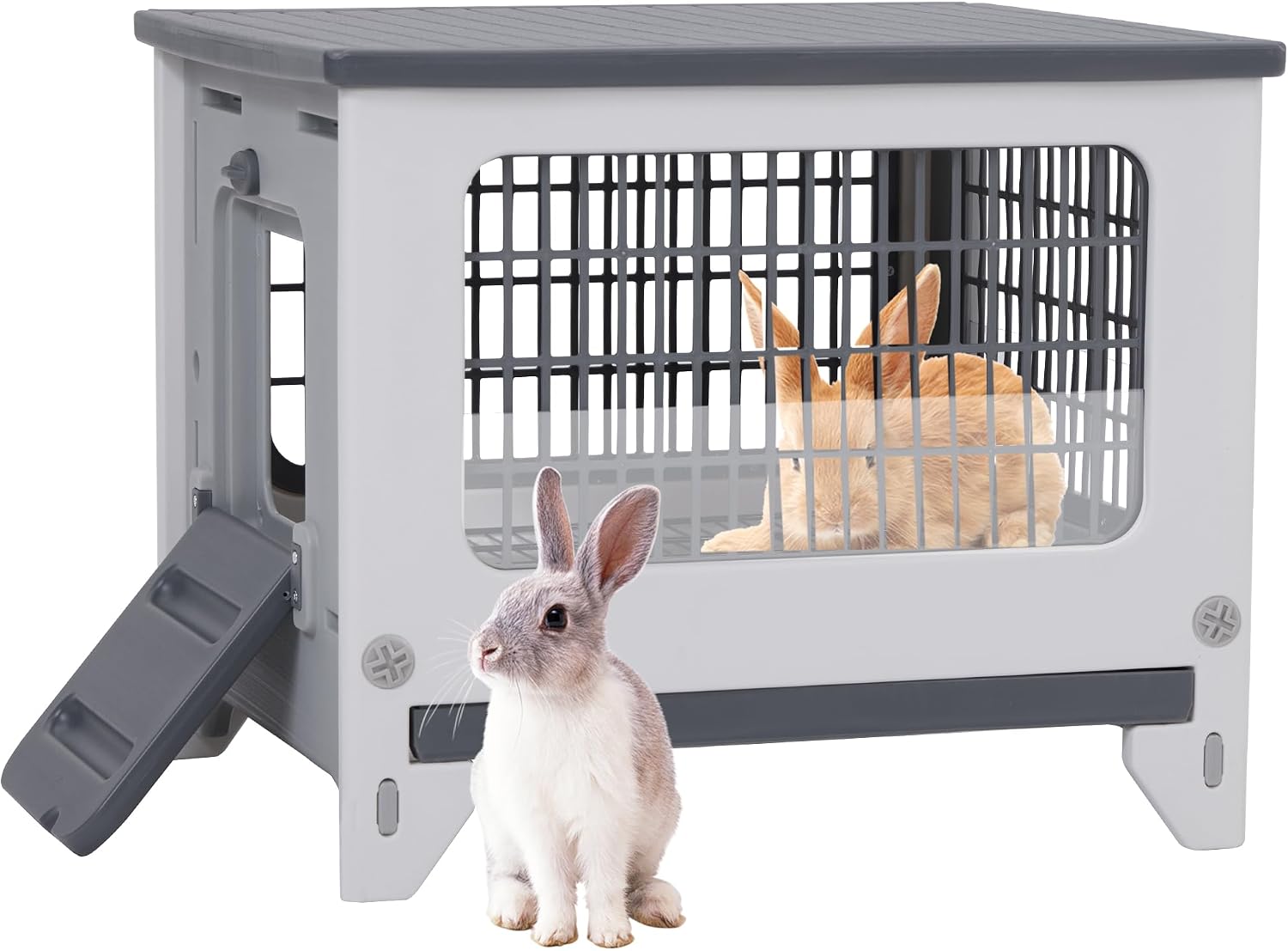
Plastic Rabbit Hutch for Indoor & Outdoor
A plastic hutch for indoor or outdoor use. Plastic panels wipe down instead of soaking up moisture the way bare wood can, which helps on carpet.
How these products were compared
This guide compares footprint and floor area, level layout and ramp design, cleaning access, mobility, and the indoor or dual indoor and outdoor use stated by each listing. It is a specification-based comparison, not a hands-on test. No hutch here was assembled, measured, or lived with for this article, and no ratings or review counts are quoted. The notes rely on the product names, the dimensions and features printed in those names, and general rabbit housing practice.
Product names, images, and retailer links are matched to the same listing so that every card points to the product shown. Prices and availability change, so each card links out rather than quoting a number.
How to choose the right rabbit hutch
A rabbit hutch for indoor use has to work inside a room that is already in use. Start by measuring the wall you have in mind and subtracting the clearance the tray needs. A model with trays that pull out from both the back and the front, like the 61.2-inch hutch here, is the most forgiving of a tight corner because you can choose which side to clean from. A single-side tray is fine as long as that side stays reachable after the hutch is in place.
Next, decide between one long floor and two shorter ones. A long, low hutch gives a rabbit room to move in a straight line. A two-story hutch fits a similar footprint with more usable area and a natural hideout upstairs, but it also means a ramp, and a ramp is a weak point that has to be checked for wobble and grip. Wooden models such as the Gowoodhut and COZIWOW hutches in this guide are built around that second level. A plastic hutch is usually a single-floor design.
There is no single correct rabbit hutch for indoor use, only one that matches your room and your rabbit. A large adult needs more floor area than a small breed, and a rabbit that spends most of the day loose in the room needs less space inside the hutch than one that is confined to it. Be honest about that split, because it decides more than any feature list does.
If you are still working out the routine, our rabbit litter box training guide covers the tray-and-hay setup that keeps an indoor hutch from smelling like one, and it is worth reading before you commit to a layout.
2-Story Indoor Rabbit Hutch with Pull-Out Tray & Clear Guard Panel
The 2-Story Indoor Rabbit Hutch with Pull-Out Tray & Clear Guard Panel is the top pick because it gives a rabbit two floors and a front panel that keeps the lower level more contained, all inside a footprint far shorter than the longest hutch in this roundup. For an apartment, a bedroom, or any room where the hutch has to sit along a shared wall, that trade of length for height is the one that usually decides the purchase.
The pull-out tray is the feature that matters most day to day. A tray you can slide out, empty, and rinse without dismantling anything turns a chore into a two-minute task, and a clean tray is the difference between a hutch that smells like an animal and one that does not. The clear guard panel across the front is a second practical detail: it keeps bedding and droppings from being kicked straight out into the room, which is exactly what happens with an open barred front at floor level.
The trade-off is height and access rather than size. A two-level hutch asks you to bend or reach for the upper floor, and it needs a ramp that stays secure, so the joints and the ramp surface are things to check as the rabbit uses them. It also cannot match the straight-line floor area of the 61.2-inch model. If your rabbit is a large adult or you want the longest possible run inside the hutch, the bigger single-level option below is the better answer.
Alternatives to consider
The Bunny Cage Indoor and Outdoor Rabbit Hutch with Casters Waterproof Roof is better suited to a room with the wall length for a 61.2-inch piece, where one long floor and trays that open from both the back and the front make cleaning easier from either side. The Gowoodhut 36" L Rabbit Hutch, 2-Story Bunny Cage on 4 Wheels is a stronger fit when you want a wooden two-story build that rolls aside on four wheels instead of staying put.
The COZIWOW 36.5" Two‑Level Wooden Rabbit Hutch with Casters & Ramp, the 38" L Expandable Rabbit Hutch with Run, 2-Story Bunny Cage on Wheels, and the Plastic Rabbit Hutch for Indoor & Outdoor cover the remaining cases. The COZIWOW adds a ramp between its two wooden levels, which turns the upper floor into usable space rather than storage. The 38-inch expandable hutch pairs a two-story frame with a run and wheels, so its floor area can grow with the room. The plastic hutch is the wipe-clean option, and plastic panels do not soak up moisture the way bare wood can, which is worth weighing if the hutch will sit on carpet or near fabric.
Day-to-day use and maintenance
An indoor hutch is a small habitat inside a bigger one, and the routine is mostly about the tray. Scoop the litter tray daily and top up the hay rack at the same time, since a rabbit that eats hay where it eliminates tends to use the tray more reliably. Check the water bottle every morning and refill it before it runs dry. Bottle capacity matters more in warm rooms, where a rabbit drinks noticeably more.
Once a week, pull the tray out fully, wash it with a pet-safe cleaner, and let it dry before it goes back. Wipe the bars or panels at the same time. Bedding dust is the part people underestimate: fine, dusty shavings coat the room, so a low-dust paper or pellet bedding in the tray keeps the air clearer, and a hay rack that holds hay off the floor keeps it from being trampled into the bedding.
Check the moving parts monthly. On wheeled hutches, confirm the casters still turn and that the frame locks in place. On two-story models, check the ramp for wobble and the joints for chew marks. Rabbits chew wood and plastic edges, so look for splinters and loose screws and tighten anything that has worked free.
A few safety points apply to any indoor hutch. Keep cords, houseplants, and anything painted or treated out of reach, because a rabbit will test whatever it can reach through the bars. Never use a hutch with a wire floor as the main living surface. And give the rabbit daily time outside the hutch, because no hutch in this guide replaces exercise.
Buying checklist
- Measure the wall length and the clearance the tray needs before you order.
- Choose cage size based on how many hours a day the rabbit is confined, not on how tall the hutch looks.
- Confirm that the exact model includes the tray access, ramp, or casters you want, since similar hutches differ.
- Check bar spacing and any gaps before the rabbit moves in.
- Read the cleaning and assembly instructions.
- Verify the current retailer price, availability, and return terms.
Final recommendation
Choose the 2-Story Indoor Rabbit Hutch with Pull-Out Tray & Clear Guard Panel when you want two levels in a compact footprint, with a tray that slides out for cleaning and a clear panel that keeps mess inside the hutch. Choose the Bunny Cage Indoor and Outdoor Rabbit Hutch with Casters Waterproof Roof when you have the wall length for a 61.2-inch hutch and want the largest single floor here, with tray access from both the back and the front.
If neither shape fits the room, the plastic hutch is the simplest option to wipe down, and the three wheeled wooden hutches sit in between, with the COZIWOW and the 38-inch expandable model covering two-level layouts on casters. Measure first, decide how the tray will come out, and pick the hutch that matches your room rather than the longest feature list.