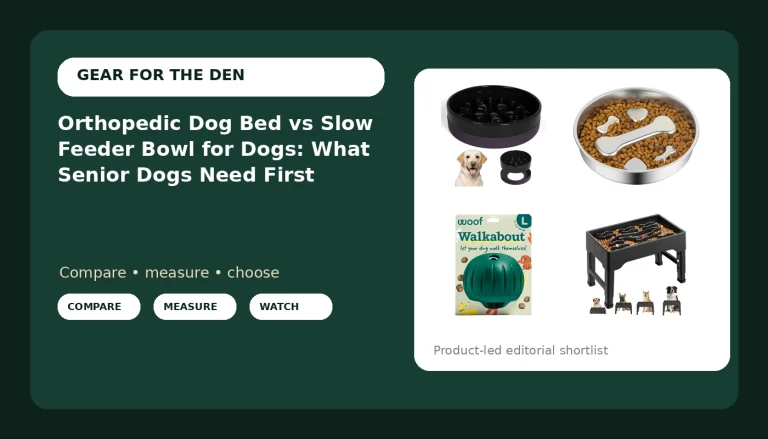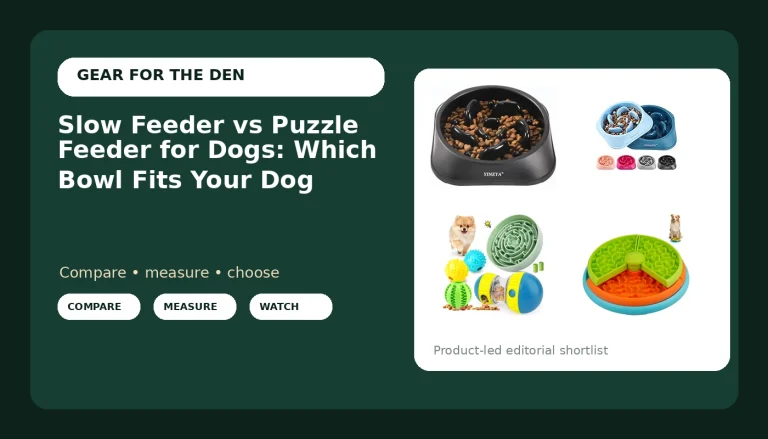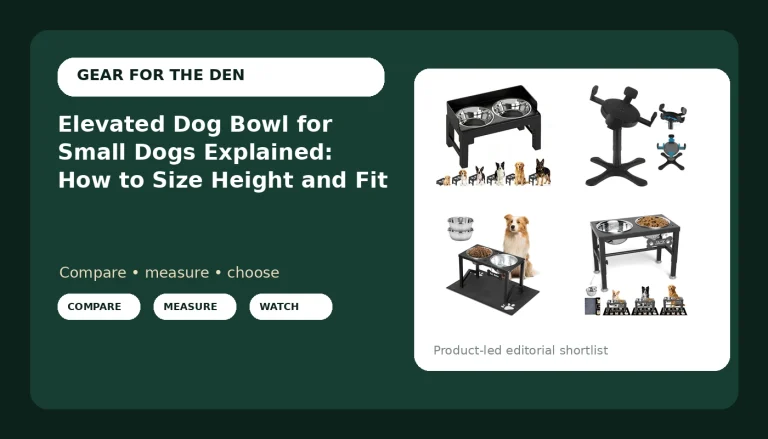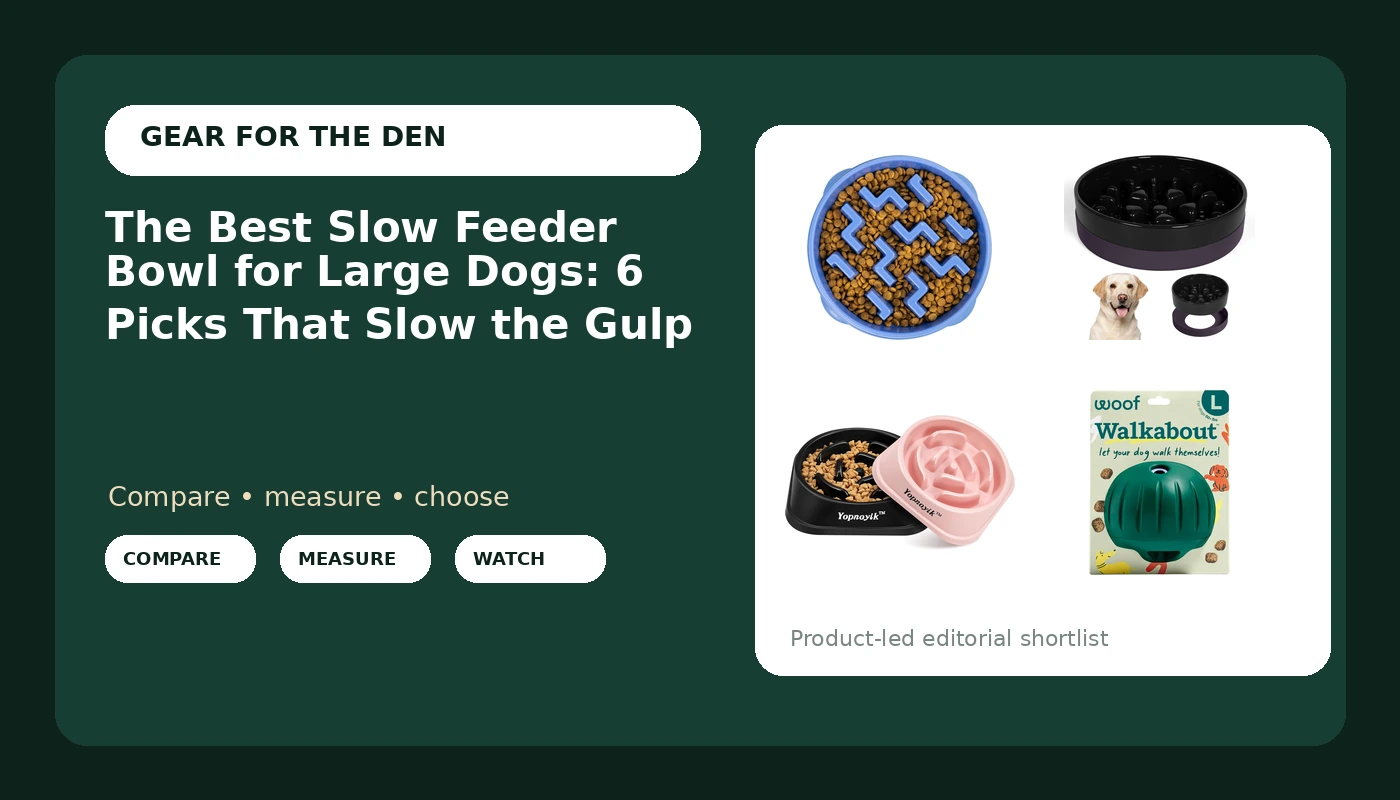
A large dog that clears a bowl of kibble in under a minute is not showing off. It is swallowing air along with dinner, and that is the habit most owners want to interrupt. A slow feeder bowl for large dogs changes the mechanics of the meal by putting ridges, waves, or a maze between the dog and the food, so each bite takes a few seconds longer and the whole bowl takes minutes instead of moments. The catch is sizing. Many slow feeders are built around small and medium breeds, and a maze that slows a beagle to a crawl can be little more than a speed bump under a Labrador's muzzle. A bowl that skids across tile is worse than no bowl at all, because the dog ends up chasing the bowl instead of eating from it.
That is the problem this guide solves. It compares six feeders that are genuinely sized for bigger dogs: a four-cup classic, a ceramic bowl with real heft, a two-pack for multi-dog homes, a stainless option for measured portions, a puzzle toy rated for dogs forty pounds and up, and a two-in-one bowl in grass green. The comparison looks at capacity, footprint, how each bowl grips the floor, how much work the pattern demands, and how much effort cleanup takes. Every product is matched to its retailer listing by its own product code, so the link on each card points to the exact bowl shown rather than a lookalike in another size.
Quick answer
The Outward Hound Fun Feeder Slo Bowl, Large 4‑Cup Capacity, Slow Feeding, Medium to Large Dogs, Non‑Slip, Blue, Notch Pattern is the strongest fit for most large dogs because it combines a four-cup capacity, a notch-pattern maze, and a non-slip base in one bowl, which is the mix that keeps a big meal in the bowl instead of on the floor. Choose the Sted Ceramic Slow Feeder Dog Bowls for Medium Large Breed instead when you prefer the weight and feel of ceramic to plastic and want a bowl that sits heavily where you set it down. In a two-dog house, the two-pack covers both bowls in a single purchase.
What to compare in a slow feeder bowl for large dogs
Top pick
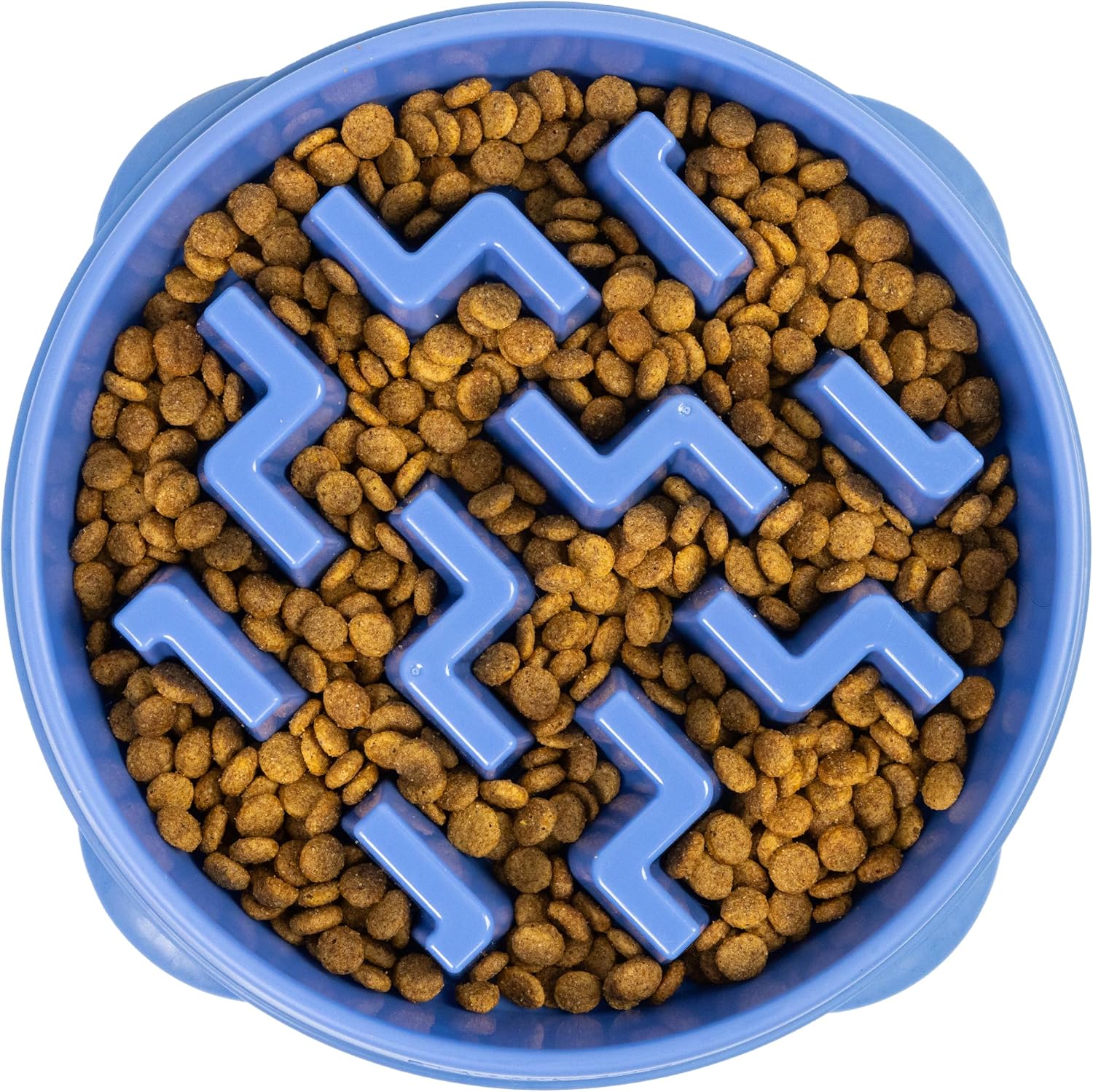
Outward Hound Fun Feeder Slo Bowl, Large 4‑Cup Capacity, Slow Feeding, Medium to Large Dogs, Non‑Slip, Blue, Notch Pattern
The large version of a long-running design, with a four-cup basin, a notch-pattern maze, and a non-slip base in a bowl the maker lists for medium to large dogs.
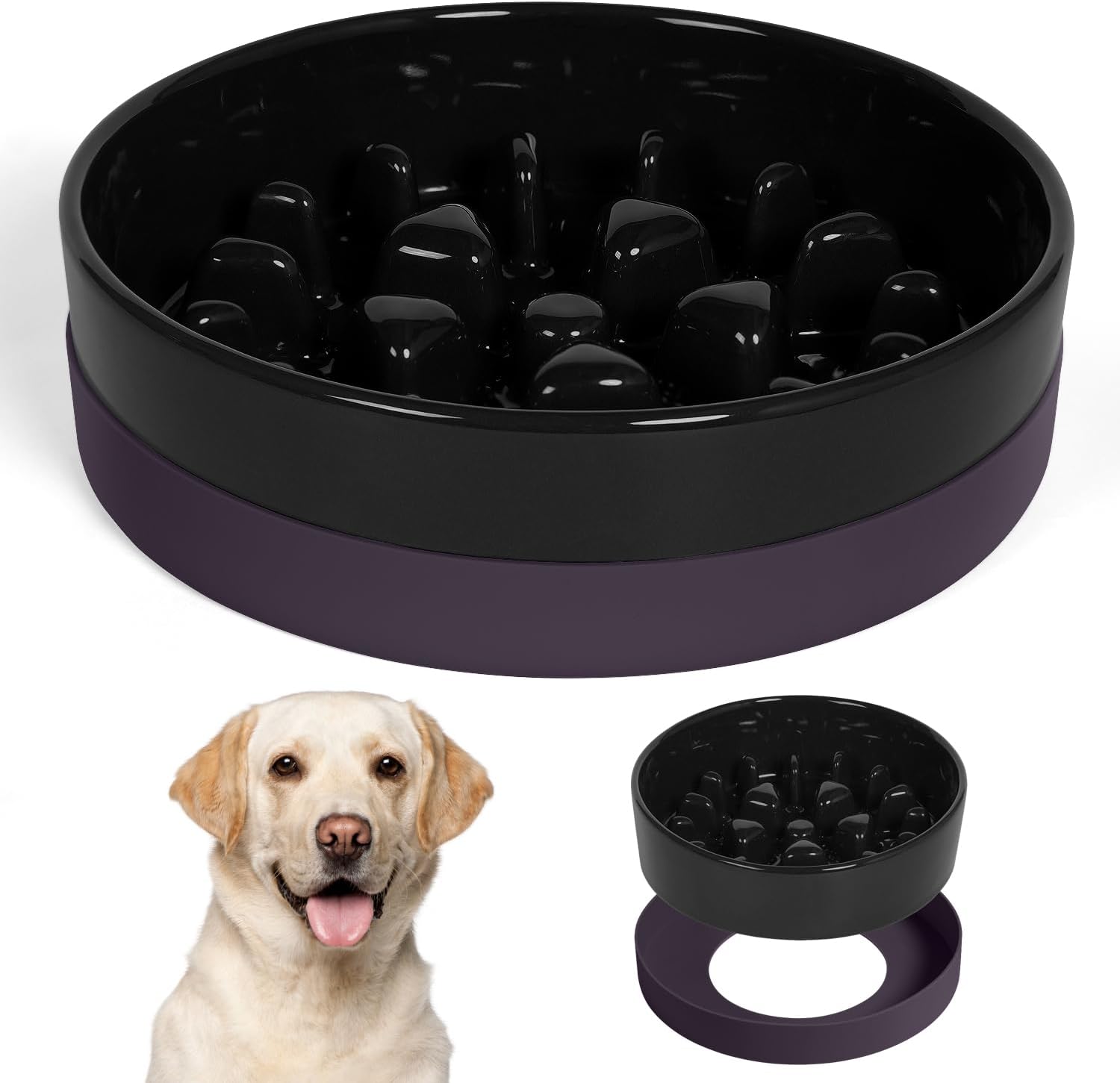
Sted Ceramic Slow Feeder Dog Bowls for Medium Large Breed
A ceramic slow feeder aimed at medium and large breeds, so the bowl itself carries the weight instead of depending on a rubber base to stay in place.
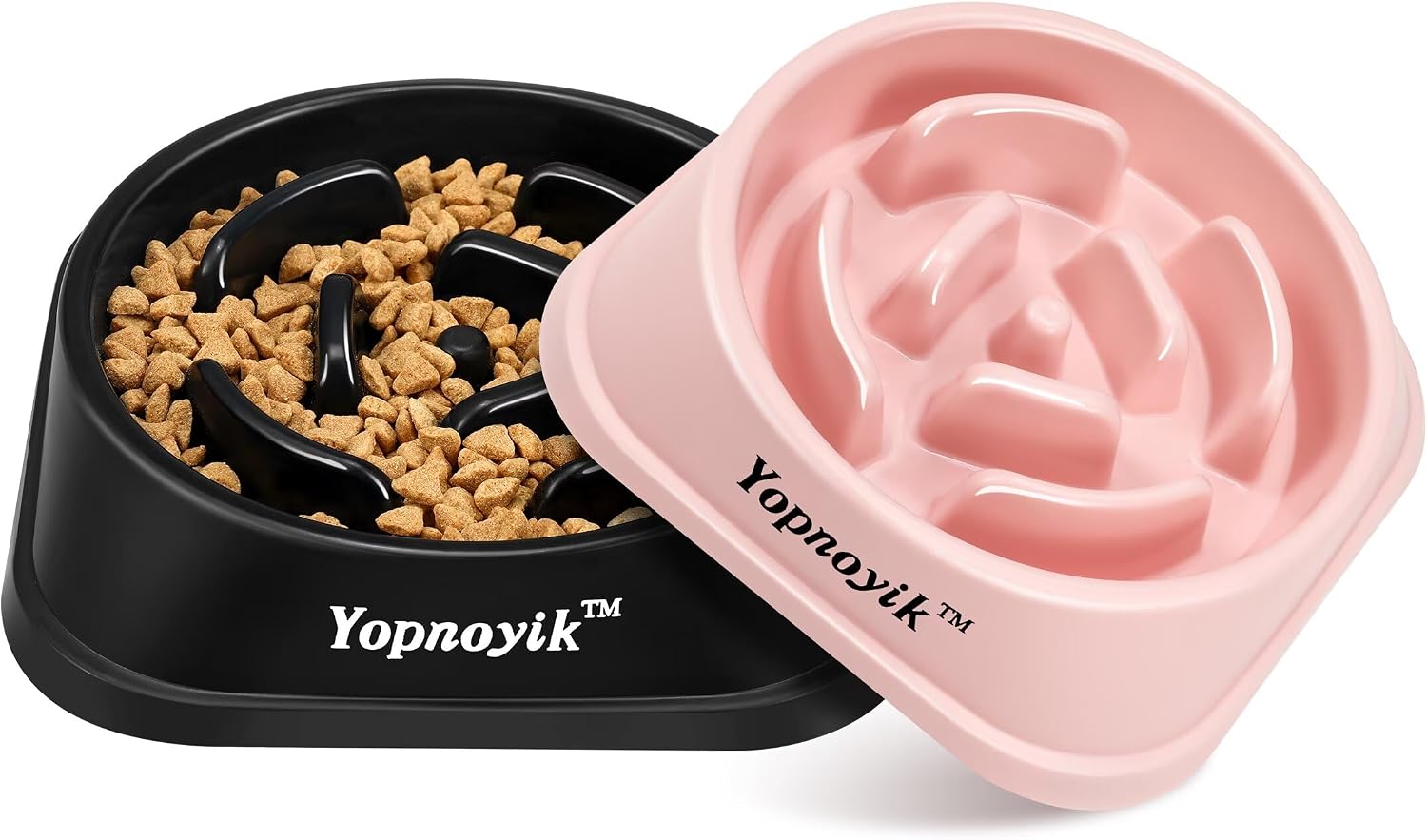
2 Pack Slow Feeder Dog Bowls for Large Dogs
Two large slow feeder bowls in one purchase, a practical setup for a two-dog household or for keeping one bowl in the kitchen and one in the crate.
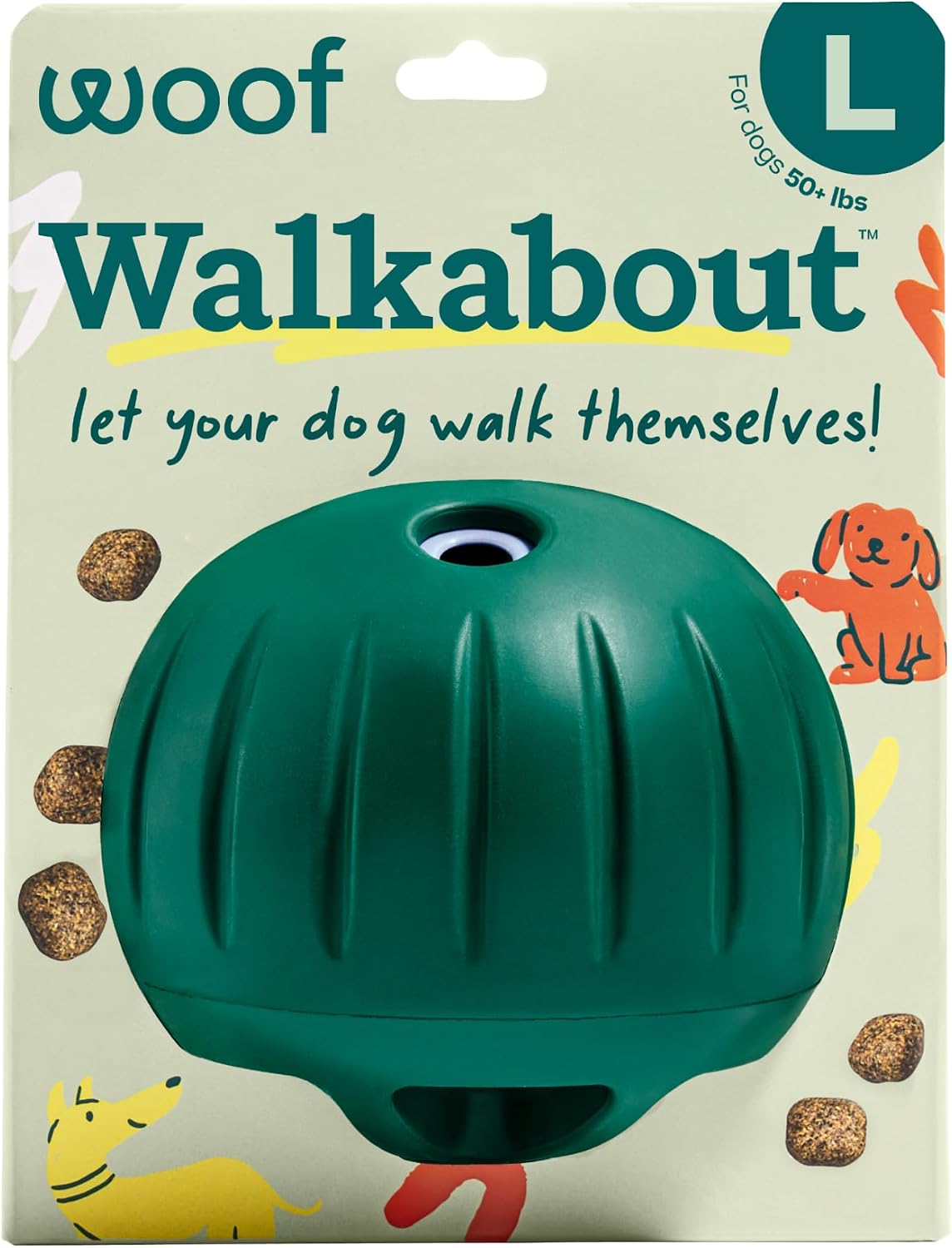
WOOF Walkabout Dog Puzzle Slow Feeder Toy for Dogs 40 lbs & Up
A puzzle-style slow feeder rated for dogs 40 pounds and up, turning the meal into a search for dogs that need mental work along with dinner.
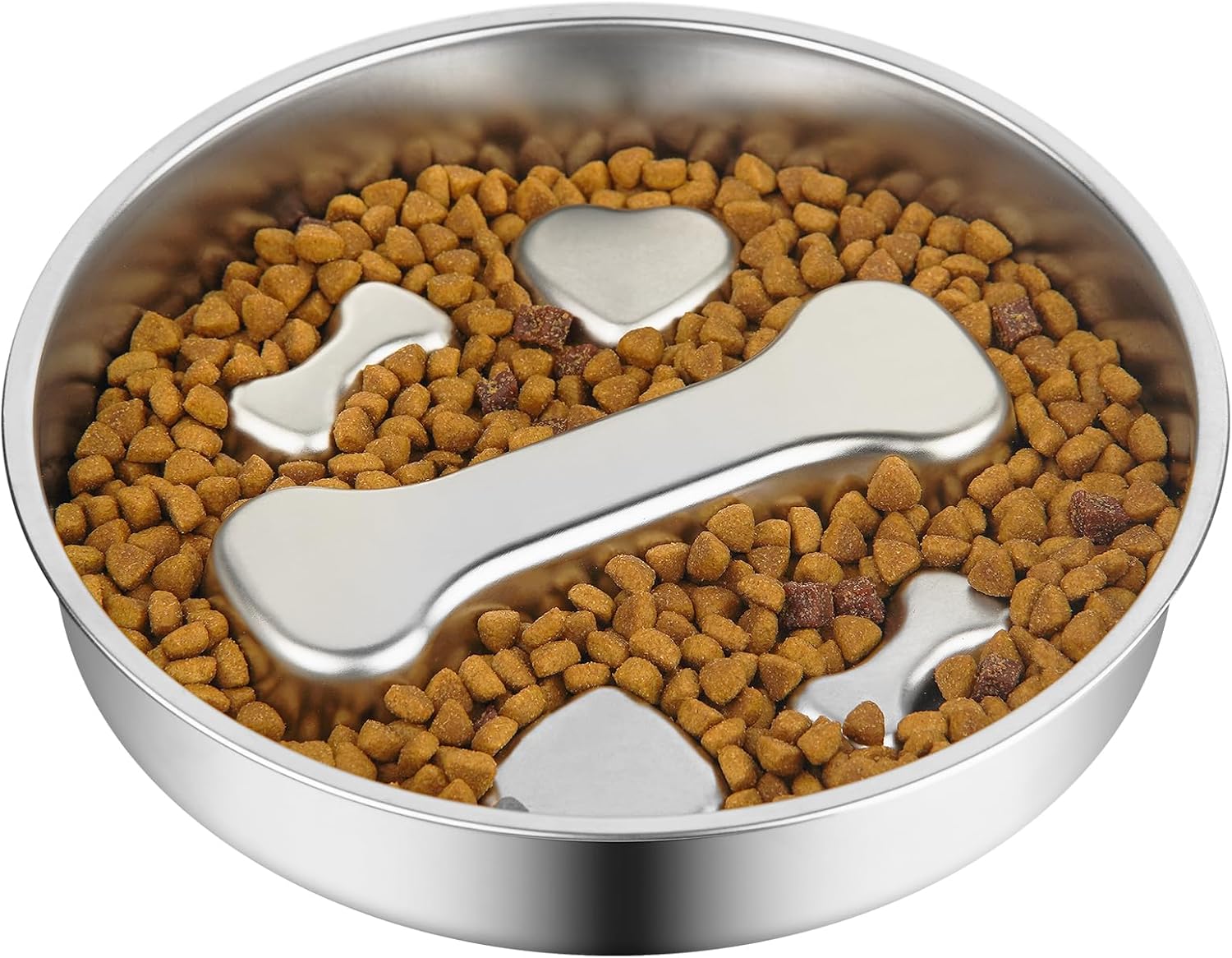
Novery Non-Slip Stainless Steel Slow Feeder Dog Bowl, 2-Cups
Stainless steel with a non-slip base and a two-cup capacity, a good match for a large dog eating a measured or weight-management portion.
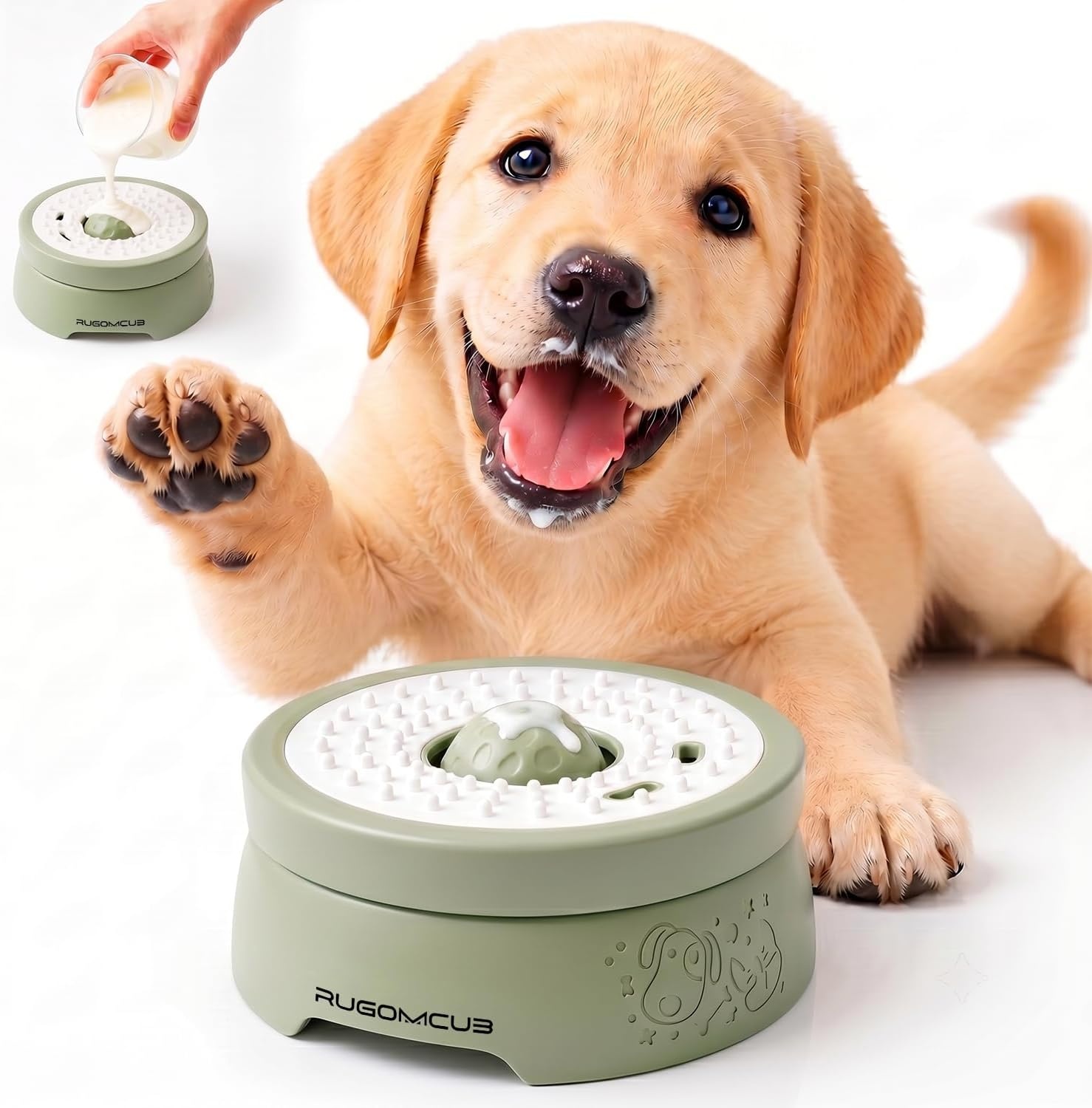
RUGOMCUB Slow Feeder Dog Bowl, 2-in-1, (Grass Green)
A two-in-one slow feeder in grass green, worth a look if you would rather have one bowl that covers two feeding jobs.
How these products were compared
This guide compares capacity, footprint and bowl width, how the base grips the floor, pattern difficulty, and material and cleaning. Product names, images, and retailer links are matched by product code so that every card points to the product shown.
Capacity comes first because it decides whether the bowl holds a full meal. The four-cup Outward Hound basin and the two-pack bowls are sized for a main meal, while the two-cup Novery bowl suits a smaller or measured portion. Footprint and width come next: a wide bowl with a workable pattern is easier for a big muzzle than a narrow, deep one, and a bowl that is too small invites tipping. Floor grip is the difference between a slow feeder and a sliding toy on tile or hardwood, which is why a non slip backing or a heavy material matters more in a large dog's bowl than in a small one. Pattern difficulty separates a bowl that stretches a meal to five minutes from one that stretches it to fifteen, and material decides how heavy the bowl is to move and how it should be cleaned. Nothing here is ranked on hands-on testing; the distinctions come from the maker's stated capacity, size, material, and design.
How to choose the right slow feeder bowl
Start with the meal, not the bowl. Weigh or measure what your dog actually eats in one sitting and match that to the stated capacity. A four-cup bowl that is only half full still works, but a two-cup bowl that overflows every evening does not, and an overflowing bowl defeats the purpose of a slow feeder. Next, measure your feeding spot. Large slow feeders take up real floor space, and a bowl that overlaps a wall or a crate door gets pushed around.
There is no single ideal slow feeder bowl for large dogs, because eating speed and muzzle shape vary so much. A dog that inhales food in thirty seconds needs a deeper, more winding pattern, while a dog that eats quickly but not frantically may do better with a simple ridge or wave design that it will actually finish. A bowl that is too narrow or too shallow for a large muzzle is the difference between the correct slow feeder bowl for large dogs and one that gets flipped across the kitchen. Size labels deserve a close read: a bowl listed at 5.8 inches across, such as the Outward Hound Fun Feeder Slo Bowl in the Wave pattern, is a very different proposition from the four-cup large version above.
Then think about your dog's age and joints. A senior large dog with limited joint mobility may find it easier to eat from a bowl that does not slide away, since a sliding bowl means extra steps and a wider stance. The same reasoning that applies to bed height, ramp angle, and hip support in a senior dog bed applies at the food bowl: keep the eating position stable and predictable. A non slip backing on a lighter bowl, or a heavier ceramic bowl, does that job. If your dog is near the top of its breed's weight capacity, check the stated sizing rather than assuming a bowl sold for large breeds will fit.
Material matters too. Plastic is light and inexpensive but can be moved by a determined dog. Ceramic is heavy and tends to stay put without help. Stainless steel rinses clean and does not hold onto odors the way a scratched plastic surface can. Puzzle-style feeders add a second layer, turning the meal into a search, which is useful for a dog that needs mental work as much as it needs to slow down.
Outward Hound Fun Feeder Slo Bowl, Large 4‑Cup Capacity, Slow Feeding, Medium to Large Dogs, Non‑Slip, Blue, Notch Pattern
This is the large version of a design that has been sold for years, and the name spells out why it suits big dogs: a four-cup capacity, a notch-pattern maze, a non-slip base, and a size the maker lists for medium to large dogs. The capacity is the headline. Four cups covers a full meal for most large breeds, so the bowl can do its job without being filled to the rim. The notch pattern is a middle-of-the-road maze: more resistance than a plain bowl or a simple wave, less than a deep puzzle, which makes it a reasonable starting point for a dog that has never used a slow feeder.
The trade-off is the material. Plastic keeps the bowl light and easy to carry between the kitchen and the crate, but it also means the bowl depends on its base to stay put rather than on its own weight. A dog that has already learned to defeat simple feeders may work through a notch pattern quickly, and an owner who wants maximum difficulty should look at the puzzle-style option instead. Cleanup takes a little patience because food collects in the channels; a soft brush handles that faster than a sponge.
Alternatives to consider
The 2 Pack Slow Feeder Dog Bowls for Large Dogs is better suited to a two-dog household or to keeping one bowl in the kitchen and one in the crate, since you get two large feeders in a single purchase. The Sted Ceramic Slow Feeder Dog Bowls for Medium Large Breed is a stronger fit when you want a bowl with the weight of ceramic behind it, so it resists nudging without relying on a rubber ring.
The Novery Non-Slip Stainless Steel Slow Feeder Dog Bowl, 2-Cups, the WOOF Walkabout Dog Puzzle Slow Feeder Toy for Dogs 40 lbs & Up, and the RUGOMCUB Slow Feeder Dog Bowl, 2-in-1, (Grass Green) cover the rest of the field. The Novery bowl is the one to consider when your large dog eats a measured or reduced portion, since its two-cup capacity matches a smaller serving better than a four-cup basin does. The WOOF Walkabout is rated for dogs forty pounds and up and turns dinner into a search, which suits a dog that needs mental work as much as slower eating. The RUGOMCUB is a two-in-one design, so it earns its place if you want one bowl that covers two jobs.
Day-to-day use and maintenance
Slow feeders collect food in every channel, so rinse the bowl soon after a meal rather than letting residue dry in the corners. A soft bottle brush or a small dish brush reaches into a maze far better than a sponge, and warm water with a mild dish soap is enough for routine cleaning. Before you assume a bowl is dishwasher safe, check the maker's instructions for the exact model, because the answer varies by material and by the thickness of the bowl.
Expect to inspect the base regularly. Non-slip rings and pads pick up hair, dust, and kibble crumbs, and a base that has stopped gripping is the most common reason a slow feeder starts sliding. Wipe the base when you wash the bowl, and retire the bowl if the base tears or peels away.
Supervision matters with any feeder that has removable parts, and puzzle-style bowls should be treated as feeding gear rather than chew toys. If your dog paws at the bowl, flips it, or walks away after a few seconds, the pattern is probably too hard for that dog; a simpler bowl will slow eating more than a bowl the dog refuses to use. If your dog guards the bowl, feed in a quiet spot and pick the bowl up between meals.
Buying checklist
- Measure the bowl's footprint against your feeding spot, and check its width against your dog's muzzle.
- Choose capacity based on your dog's normal meal size rather than the largest bowl available.
- Confirm that the exact model includes a non slip backing if you feed on tile or hardwood.
- Read the cleaning and maintenance instructions before you buy.
- Verify the current retailer price, availability, and return terms.
Final recommendation
Choose the Outward Hound Fun Feeder Slo Bowl, Large 4‑Cup Capacity, Slow Feeding, Medium to Large Dogs, Non‑Slip, Blue, Notch Pattern when you want one bowl that covers a full large-dog meal, uses a moderate maze, and stays put with a non-slip base. Choose the Sted Ceramic Slow Feeder Dog Bowls for Medium Large Breed when you would rather have weight in the bowl itself, or the 2 Pack Slow Feeder Dog Bowls for Large Dogs when two dogs eat at the same time. For a measured portion, the Novery bowl is the better match, and for a dog that needs a job with dinner, the WOOF Walkabout puzzle feeder is the one to try. Any of these will stretch a meal, but the best slow feeder bowl for large dogs is the one that matches your dog's capacity, muzzle, and floor, so measure before you order and let the first week tell you whether the pattern is right.