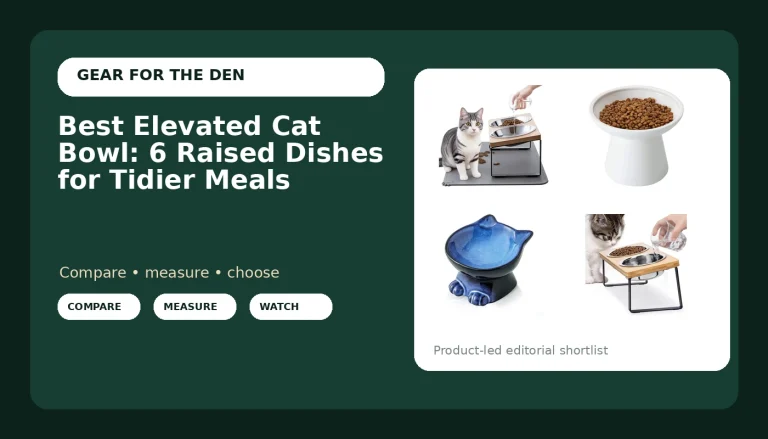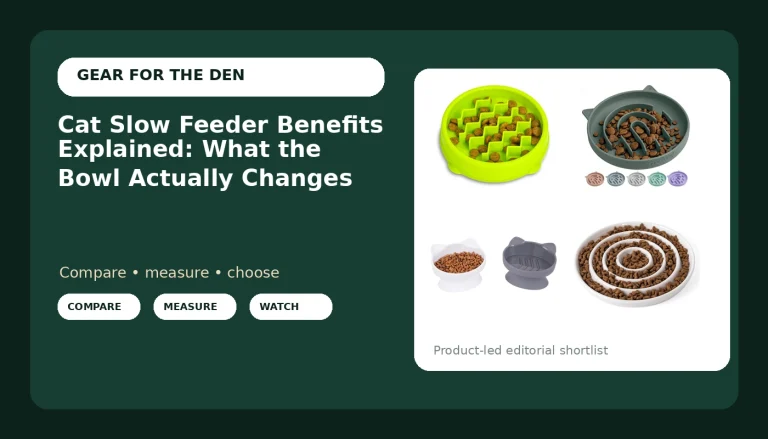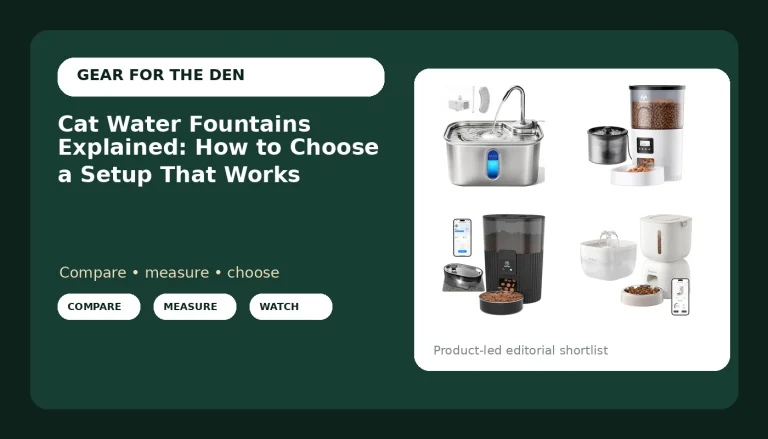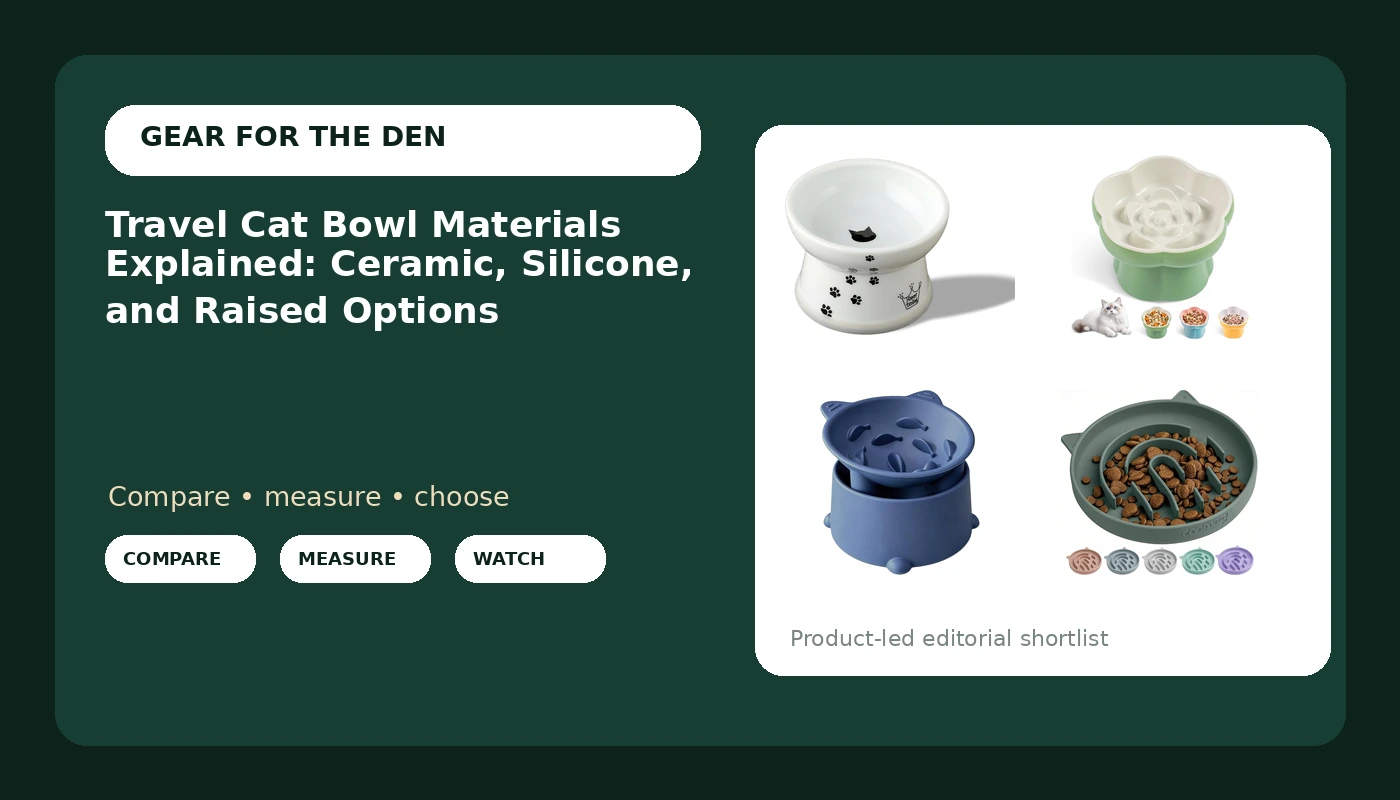
Travel bowls are rarely bought in isolation. You buy one because the bowl at home skids across a hotel bathroom floor, because your cat empties a portion in under a minute, or because the rim presses into their whiskers at every meal. The travel cat bowl materials you choose, porcelain, ceramic, silicone, or a silicone shell over a firmer base, decide most of what follows: how stable the bowl sits, how loudly it lands on a hard floor, how easy it is to rinse in a sink that is not yours, and how much work the interior asks of your cat. Material also sets the ceiling on everything else. You cannot add whisker clearance to a bowl with a narrow mouth, and you cannot make a heavy ceramic bowl pack flat in a carry-on.
Quick answer
Three variables matter more than the wording on the box: bowl width, elevation angle, and how much work the interior asks of your cat. Porcelain and ceramic are heavy and quiet but can chip inside a duffel. Food-grade silicone is light, packable, and easy to rinse, but it slides on smooth surfaces unless something under it provides grip. For most households, a whisker-friendly ceramic bowl covers meals at home and a silicone slow feeder covers meals away from home. That is travel cat bowl materials explained in a single paragraph, and the four options below show how the work splits.
Four useful options
| Model | Best fit | What stands out |
|---|---|---|
| Necoichi Porcelain Ceramic Elevated Cat Food Bowl, Whisker-Friendly (Cats, Regular) | Cats who eat at home and need room for their whiskers | Porcelain ceramic body with an elevated, whisker-friendly shape |
| Cat Slow Feeder Bowl Set,1 Pcs Pastel Series Cat Plate for Dry and Wet Food | Households feeding both dry and wet food | Plate-style slow feeder sold as a set and described for dry and wet food |
| Raised Slow Feeder Cat Bowl, Silicone Elevated Tilted Cat Slow Feeder Bowl | Cats who need a raised, angled eating surface | Silicone build with a raised and tilted profile |
| Coomazy Slow Feeder Cat Bowl Silicone Pet Puzzle Feeder for Slow Eating | Fast eaters and tight budgets | Silicone puzzle pattern built for slow eating |
The whisker-friendly ceramic pick: Necoichi Porcelain Ceramic Elevated Cat Food Bowl, Whisker-Friendly (Cats, Regular)
The case for this bowl is mass. A ceramic body is heavy enough that a cat cannot push it across a kitchen floor mid-meal, so it does not need suction feet or a rubber ring to stay put, and it lands quietly compared with thin metal or hollow plastic. The elevated base raises the eating surface a little, and the whisker-friendly mouth is the reason the listing leads with that phrase. The trade-off is travel. Ceramic is the material most likely to chip if a bag gets dropped, and it is the heaviest thing in your kit, so this is the bowl that stays home while a silicone feeder goes in the bag. Check the listing for dishwasher guidance rather than assuming it.
The dry and wet plate: Cat Slow Feeder Bowl Set,1 Pcs Pastel Series Cat Plate for Dry and Wet Food
Plate-style feeders solve a specific problem: a wide, shallow surface forces a cat to take smaller bites without the deep corners that trap kibble. Because the listing covers both dry and wet food, it suits a household that switches textures through the week, and the pastel finish is a cosmetic choice rather than a functional one. The trade-off is footprint. A plate needs more table or floor space than a bowl of the same capacity, and its width is also what makes it useful, so you cannot shrink it without losing the effect. If your cat eats wet food, expect to rinse it after every meal, because a thin layer of pate dries quickly on any surface.
The raised and tilted option: Raised Slow Feeder Cat Bowl, Silicone Elevated Tilted Cat Slow Feeder Bowl
Elevation angle is the reason this design exists. A raised surface changes the posture a cat uses while eating, and a tilt adds a slope that food slides down as it is eaten, which keeps the last bites reachable without the cat chasing them into a corner. Because the body is silicone, it is light and flexible, which is good for packing and bad for grip on a hard, smooth floor. Pair it with a mat or a towel if your cat eats on tile. Owners of cats that eat very fast often look at raised designs first, but frequent vomiting is a veterinary question rather than a shopping one, and no bowl settles it.
The budget silicone puzzle: Coomazy Slow Feeder Cat Bowl Silicone Pet Puzzle Feeder for Slow Eating
This is the entry point if you want to test whether slowing a meal changes your cat's behavior before spending much. The puzzle pattern asks for a little more effort per bite, and the silicone body can be squeezed into a bag pocket between trips. The limits are the same ones that come with any light bowl: it can slide on a smooth surface, and it holds less than a deep bowl of similar diameter. It is also the option least likely to double as a water bowl, since a puzzle interior is awkward to drink from. For water, keep a separate bowl or fountain.
Prices and availability may change. Product images, names, and retailer links are matched to verified listings. No current price, rating, stock status, or measured result is stated here without current evidence.
How travel cat bowl materials change the eating experience
Material shows up first as weight, and weight shows up as stability. A porcelain or ceramic bowl carries enough mass that a cat cannot shove it across a floor while eating, which is why these bowls often stay put without suction cups or rubber rings. The same mass makes them loud against tile and makes them a poor fit for a soft-sided bag, where a dropped duffel can chip a rim. Silicone goes the other way. It is light enough to fold into a pocket, quiet on contact, and unlikely to break, but on a smooth surface it can slide ahead of the cat unless something underneath provides grip. On tile or vinyl, travel cat bowl floor materials should favor grip and mass over a decorative finish. That is where a desk mat earns its place in a travel kit, and it is why travel cat bowl desk materials tend to be judged on weight and noise rather than looks.
Cleaning is the second difference. Glazed ceramic and porcelain wipe clean, and a hard, unbroken surface does not hold onto odors the way a scratched one can. Silicone flexes, so dried food pops out of a puzzle pattern with a thumb, and most silicone feeders are shaped so a sponge reaches the corners. Plastic sits between the two on weight and usually below both on scratch resistance, and a scratched surface is harder to keep clean over years of use.
The third difference is thermal. Ceramic holds the temperature of food and water longer, which is noticeable on a cold morning. Silicone equalizes quickly. Neither behavior is a health feature on its own; both are things you notice when a slow eater leaves the last bites sitting for twenty minutes.
Finally, material interacts with shape. A slow feeder needs walls a tongue has to work around, and silicone holds a puzzle pattern with softer edges than a rigid material would. A whisker-friendly bowl needs a wide, shallow mouth, and ceramic handles that well because the weight keeps a wide bowl from tipping. Choosing a material is really choosing which of those four behaviors you can live with.
Matching bowl width, elevation angle, and whisker clearance
Bowl width is the first number to think about, and it is measured at the mouth rather than the base. Whisker clearance is the reason. Cats use their whiskers to judge the space in front of their face, and a bowl narrow enough to press those whiskers flat against the rim is a common complaint among owners of cats that eat reluctantly or carry food out of the bowl to eat elsewhere. A wide, shallow mouth reduces that pressure.
Elevation angle is the second. A raised bowl shortens the distance a cat lowers their head, and a tilted surface changes the angle of the neck during swallowing. Owners of cats that eat quickly often look for a raised or tilted design for exactly that reason. If your cat vomits often or loses weight, that is a veterinary question rather than a shopping one.
Portion size is the third. Slow feeders work by making each bite smaller and harder to reach, so the depth and complexity of the interior has to match the meal you serve. A deep puzzle pattern with a small portion leaves food stuck in corners, and a shallow plate with a large portion barely slows a cat at all.
If you travel with a fountain as well as a bowl, water capacity, pump noise, and filter type will matter more to your trip than the bowl does, and a microchip feeder brings its own question of microchip range. This is travel cat bowl materials explained as a set of trade-offs rather than one right answer, which is why the choice section below is split by situation.
- Measure the mouth of the bowl your cat uses now and compare it with the width of their whiskers.
- Decide where the bowl will spend most of its life: a kitchen floor, a desk, a carrier, or a hotel bathroom.
- Match the material to the surface. Heavy ceramic for hard floors, silicone over a desk mat for desks and camp tables.
- Decide how much the bowl needs to slow your cat down, then pick the interior depth to match the portion you serve.
- Check how it packs and how it cleans before you commit, because a bowl that is awkward to rinse will not travel twice.
Practical guidance for travel and desk setups
- Keep a ceramic bowl at home and a silicone slow feeder in the travel bag, since the two jobs rarely overlap.
- Put a desk mat or a small towel under any lightweight bowl so it cannot skate across a smooth surface.
- Rinse silicone after wet food with warm water, and check the listing for dishwasher guidance before you assume it.
- If your cat eats from a raised bowl at home, look for a similar elevation angle in a travel bowl so the posture does not change.
- When you also pack a fountain, weigh water capacity, pump noise, and filter type first; the cat water fountain maintenance guide covers what to check before a trip.
Which option should you choose?
Choose the Necoichi Porcelain Ceramic Elevated Cat Food Bowl, Whisker-Friendly (Cats, Regular) when your cat eats at home on a hard floor and you want a heavy, quiet bowl with room for their whiskers. Choose the Cat Slow Feeder Bowl Set,1 Pcs Pastel Series Cat Plate for Dry and Wet Food when you feed dry and wet food and want a plate that spreads a portion across a wide surface. Choose the Raised Slow Feeder Cat Bowl, Silicone Elevated Tilted Cat Slow Feeder Bowl when you want the eating surface raised and angled and your cat needs to slow down. Choose the Coomazy Slow Feeder Cat Bowl Silicone Pet Puzzle Feeder for Slow Eating when you want the simplest, most packable way to stretch a meal.
None of the descriptions above should be read as a claim about durability, dishwasher safety, or how much a given bowl slows a specific cat. Those depend on listing details, on your cat, and on the portion you serve. What the records here support is material, shape, and intended use, and that is what the recommendations rest on.
The bottom line
Material is the decision you make before shape, because it fixes weight, noise, grip, and packability before you ever look at the interior. Ceramic and porcelain give you a stable, quiet bowl that suits a fixed spot at home. Silicone gives you something light and foldable that suits a bag and a hotel room, provided you put something grippy underneath it. Within silicone, the raised and tilted design adds height and slope, the pastel plate spreads food wide for mixed dry and wet feeding, and the puzzle feeder is the cheapest way to find out whether slowing a meal helps your cat. Pick the one that matches where the bowl will actually live, and check current Amazon price and availability on the listing before you buy.