Reptile keepers hit the same wall early on. Every bulb box leads with a wattage number, and it is tempting to read that number as a UVB rating. It is not one. Wattage describes how much electricity a lamp draws and, in an incandescent or halogen heat bulb, roughly how much heat it throws toward a basking spot. UVB output is a separate specification, set by the phosphor inside the lamp, by the lamp's shape and length, and by the distance between the lamp and the animal. Getting uvb bulb wattage right means treating watts as a heat decision and UVB as a light-quality decision, then tuning both to your species, your tank size, and your measured basking temperature.
Quick answer
Wattage on a reptile lamp describes power draw and heat output, not UVB strength. A 100W heat bulb and an 8W T5 tube can both be sold as UVB products, and the low-wattage tube is usually the one contributing meaningful UVB. Choose wattage to reach your basking temperature at the mounting height you actually have, and choose UVB separately, by lamp type, its UVB rating such as 5.0 or 10.0, tube length, and the distance from the lamp to the basking spot. There is no single ideal uvb bulb wattage that fits every enclosure.
4 useful options
| Model | Best fit | What stands out |
|---|---|---|
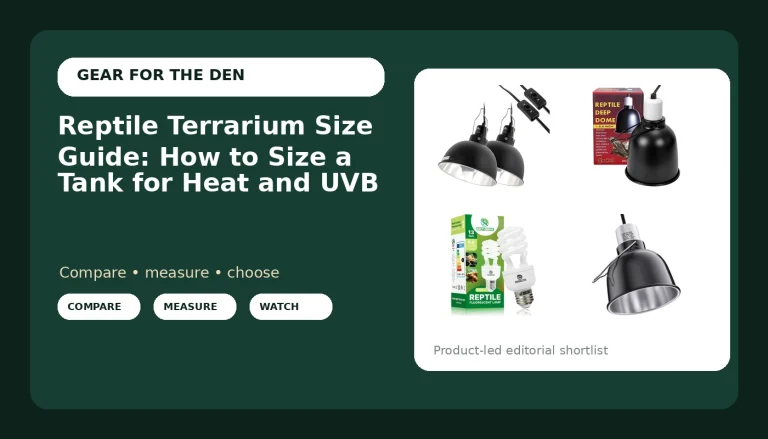
| TFNN Reptile Heat Lamp, Heat Lamp with Clamp, UVA UVB Reptile Light with Intelligent Cycle Timer for Turtle, Bearded Dragon, Lizard and More, 2 Bulbs 50W+75W | Keepers who want heat and a light schedule from one fixture | Clamp fixture with a built-in cycle timer and two bulbs at 50W and 75W |
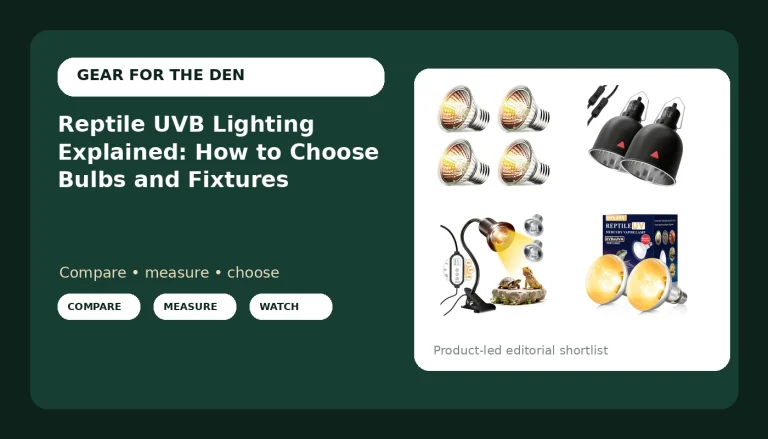
| GlowUp 12inch T5 8W 10.0 Reptile UVB Bulb T5 UVB Reptile Light Bulb UVA UVB Lamp Tube for Bearded Dragons Turtles Chameleon and Lizards Tropical Desert Reptiles- 2Pack | Desert and tropical setups that need a linear UVB source | T5 tube format with a 10.0 UVB designation, 12 inches long, two tubes per pack |
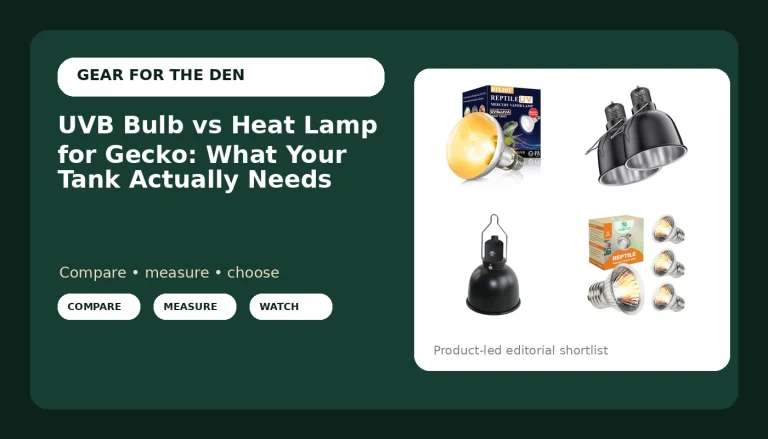
| REPTI MATE 2 Pack 100W Reptile Heat Lamp Bulbs, Full Spectrum UVA/UVB Reptile Light Bulb and Basking Spot Light, UVB Light for Reptiles and Bearded Dragon, Turtle, Lizard, Snake, Amphibians | Basking spots that need more heat than a 50W or 75W bulb delivers | 100W spot bulbs described as full spectrum UVA/UVB, two per pack |
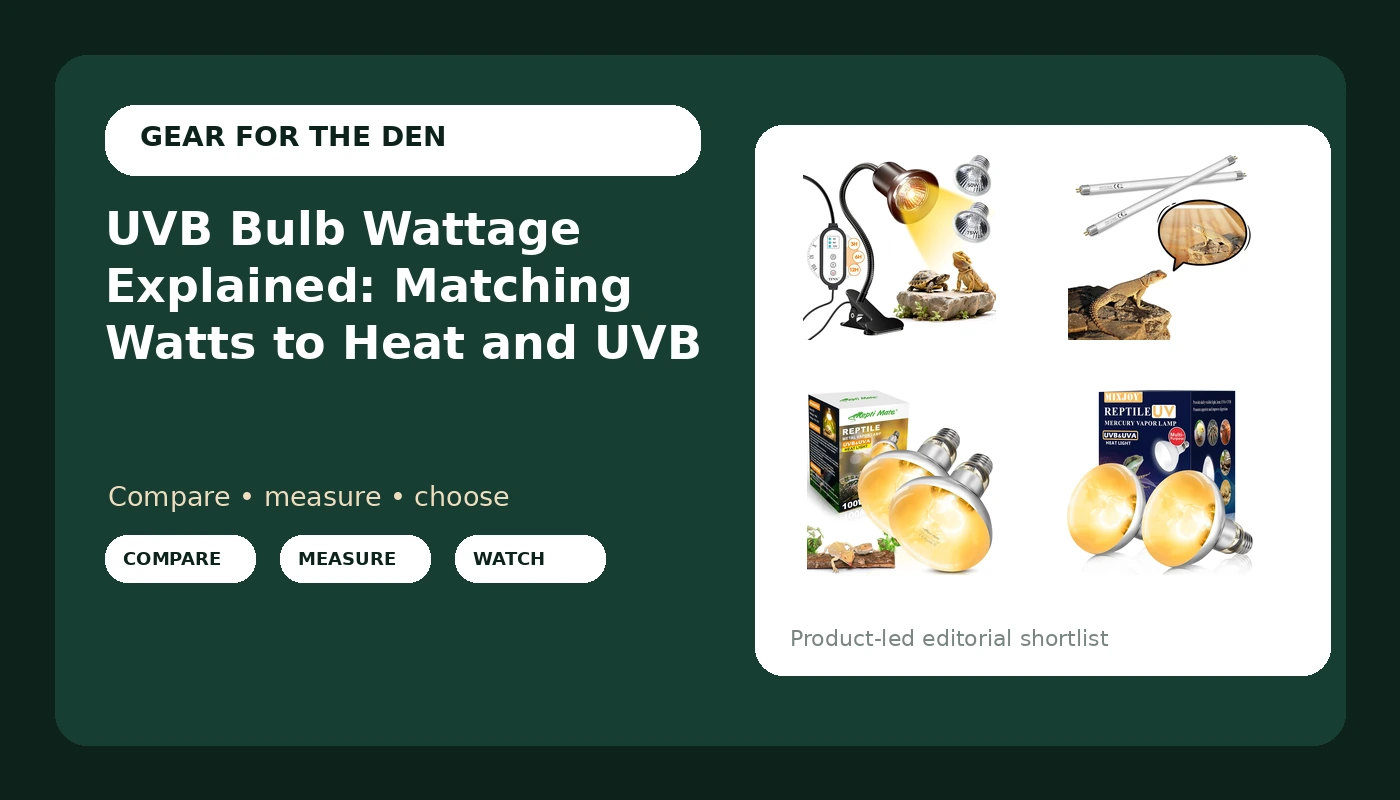
| MIXJOY 2 Pack 100W Reptile Heat Lamp Bulb Full Spectrum UVA UVB Sun Light for Reptile and Amphibian Use | Straightforward replacement in a 100W heat lamp fixture | 100W full spectrum UVA UVB bulbs sold as a two pack |
Heat fixture with a timer: TFNN Reptile Heat Lamp
The two bulb wattages are the practical selling point here, because 50W and 75W cover a wide band of small and mid-size enclosures. You still have to measure. Mount the fixture, let it run, and check the basking surface with a digital thermometer before you decide which bulb holds the right temperature. Keep the UVB expectation realistic as well. An incandescent heat bulb marketed as UVA UVB is a heat source first, and its UVB contribution is a fraction of what a dedicated fluorescent tube provides, which is why most desert setups pair a heat lamp with a linear UVB tube.
The linear UVB source: GlowUp 12inch T5 8W 10.0
Notice the wattage: 8W, sitting next to heat bulbs rated at 100W. That gap is the clearest illustration of why wattage is not a UVB specification. A fluorescent tube uses its power to excite a phosphor coating, and the phosphor, not the wattage, decides how much UVB comes out. Two tubes with identical wattage and different phosphor blends can differ substantially in uvb output. The 10.0 label points to the desert-intensity end of the range, while 5.0 tubes are aimed at tropical and forest species. A bare tube needs a matching T5 fixture to run, and the distance from the tube to the basking spot does as much work as the tube itself.
The high-wattage basking pair: REPTI MATE 100W bulbs
Higher wattage buys heat, not UVB, and it also buys risk. A 100W spot bulb mounted too close can push a basking surface well past the safe range for the species, so run it on a dimming thermostat or a dimmer and check the surface temperature rather than the air temperature. In a tall enclosure, the extra wattage is often the difference between reaching a proper basking temperature and not reaching it. In a shallow tank, the same bulb may be too much. Fixture height, not the bulb alone, sets the number you need.
The simple 100W replacement: MIXJOY bulbs
Two 100W pairs can look interchangeable on paper, and for heat purposes they often behave similarly. Treat the spectrum wording on a box as a description rather than a measurement. No output figures are stated here for either bulb, and the only way to know what a lamp is delivering at your basking spot is to measure the temperature and, for UVB, to use a UVB meter or follow a species-specific lighting guide. If you are choosing between the two 100W packs, start with fit: check the fixture's maximum rated wattage and the bulb's base and diameter before ordering.
Prices and availability may change. Product images, names, and retailer links are matched to verified listings. No current price, rating, stock status, or measured result is stated here without current evidence.
uvb bulb wattage: what the number actually measures
Wattage is a measure of electrical power, and in a heat lamp it translates mostly into heat and infrared radiation. A 100W incandescent or halogen bulb converts the large majority of that power into heat, which is exactly what you want from a basking light. The UVA and UVB such a bulb produces arrive as a side effect of running a filament hot, and the amount is small. So when a listing says 100W UVA UVB, the 100W is the heat spec and the UVA UVB is a description of the light's spectrum, not a statement about how much UVB reaches your animal.
Fluorescent UVB tubes work differently. A T5 tube uses its wattage to drive a gas discharge that excites a phosphor coating on the inside of the glass, and the phosphor blend determines the UVB output. That is why an 8W tube can be a more meaningful UVB source than a 100W heat bulb. The number on the tube that matters is the UVB rating, commonly written as 5.0 or 10.0, which describes the proportion of UVB in the lamp's output and, in practice, which species group the tube is built for.
Distance changes everything after that. UVB intensity falls off quickly as you move away from the lamp, and it falls off faster from a small point source, such as a heat bulb, than from a long tube. A basking spot six inches below a tube receives far more UVB than the same spot eighteen inches below it. Reflectors, screen mesh tops, and glass or acrylic covers cut the numbers further, and mesh in particular can remove a substantial share of the UVB before it reaches the animal.
That is why the useful numbers to write down are tank size, mounting distance, basking temperature, and the lamp's UVB rating. Wattage tells you how much heat the fixture can make and how much load it puts on the fixture's rating. It does not tell you whether your bearded dragon or chameleon is getting the UVB it needs.
Matching wattage and UVB to your enclosure
Work in a fixed order, because changing two things at once makes it impossible to tell which one moved the temperature. Start with the enclosure and the species, then set heat, then set UVB, then verify both.
- Note the tank size and the height at which you can realistically mount a fixture above the basking spot, since that distance drives both heat and UVB.
- Choose a starting bulb wattage for that distance, then measure the basking surface with a digital thermometer and step up or down until the surface holds the target basking temperature for the species.
- Put a dimming thermostat or dimmer in line with the heat bulb so the thermostat range stays steady through the day instead of swinging with room temperature.
- Add a UVB source sized to the enclosure, using a linear tube for wide tanks and a compact lamp only for small ones, and set its distance from the basking spot according to the lamp's rating and the species group.
- Recheck temperature and UVB output on a schedule, and replace fluorescent tubes at the interval the manufacturer recommends, because UVB output declines long before a tube looks dim to the eye.
Substrate depth, hide size, and humidity range are lighting-adjacent decisions, and our guide to reptile hide size and humidity range covers how they change the space your lamps have to cover.
Practical guidance for a new setup
- Buy the fixture before the bulb and check its maximum rated wattage, because a 100W bulb in a 60W fixture is a fire risk rather than a lighting upgrade.
- Run heat and UVB on a 12 hours on, 12 hours off schedule with a timer, which is the job the built-in cycle timer on the TFNN fixture handles.
- Measure the basking surface rather than the air, and recheck it after any change to distance, bulb, or room temperature.
- Keep the correct uvb bulb wattage in perspective: the right wattage is the one that holds your basking temperature at the height you can mount a fixture, so a 40-gallon tank and a tall wooden vivarium will not want the same bulb.
- Replace fluorescent UVB tubes at the manufacturer's interval even while they still light, and plan heat mat wattage for nighttime warmth on a thermostat rather than leaving a light on after dark.
Which option should you choose?
Choose the TFNN Reptile Heat Lamp when you want a clamp fixture, a built-in timer, and two heat levels in one purchase, and you plan to add a separate UVB tube. Choose the GlowUp 12inch T5 8W 10.0 Reptile UVB Bulb when your enclosure is wide enough that you want UVB spread along a tube and you already own or intend to buy a T5 fixture. Choose the REPTI MATE 2 Pack 100W Reptile Heat Lamp Bulbs when a 50W or 75W bulb cannot reach the basking temperature you need at your mounting height. Choose the MIXJOY 2 Pack 100W Reptile Heat Lamp Bulb when you want a straightforward two-pack replacement for a 100W heat lamp fixture and the beam shape suits your basking platform.
No output measurements are stated here for any of these lamps, and none of them should be treated as a guaranteed UVB dose for a particular species. The wattage and the UVB rating on the box are starting points. The numbers that matter are the ones you read from your own thermometer and, if you want certainty about UVB, from a UVB meter.
The bottom line
uvb bulb wattage explained in one line: watts set the heat, and the lamp type plus its UVB rating set the UVB. Buy wattage to hit your basking temperature at the height you can actually mount a fixture, and buy UVB as a separate decision based on the lamp's phosphor, its rating, its length, and the distance to the basking spot. A 100W heat bulb and an 8W T5 tube are not competitors. In most desert setups they are partners. Measure the basking surface, run the heat lamp on a thermostat, replace UVB tubes on schedule, and the wattage question stops being confusing.