If you have spent any time in a gecko keepers' forum, you have seen the argument play out: uvb bulb vs heat lamp for gecko enclosures, and which one actually belongs over the tank. The honest answer is that they do different jobs, and most setups end up needing at least one of them. A heat lamp raises the basking temperature and drives digestion. A UVB bulb supplies the ultraviolet B wavelengths a gecko uses to synthesize vitamin D3 and absorb calcium. Mixing up the two is the most common beginner mistake in this hobby, and an expensive one to fix after a gecko starts showing metabolic bone problems.
For most keepers the practical answer is both: a basking heat source plus a low-output UVB source, and the least expensive way to get there is one deep dome holding the basking bulb and one shallow dome or compact UVB bulb holding the ultraviolet. The balance depends on the species in the tank and the size of the enclosure, which is why this comparison walks through four products that cover both halves of the job.
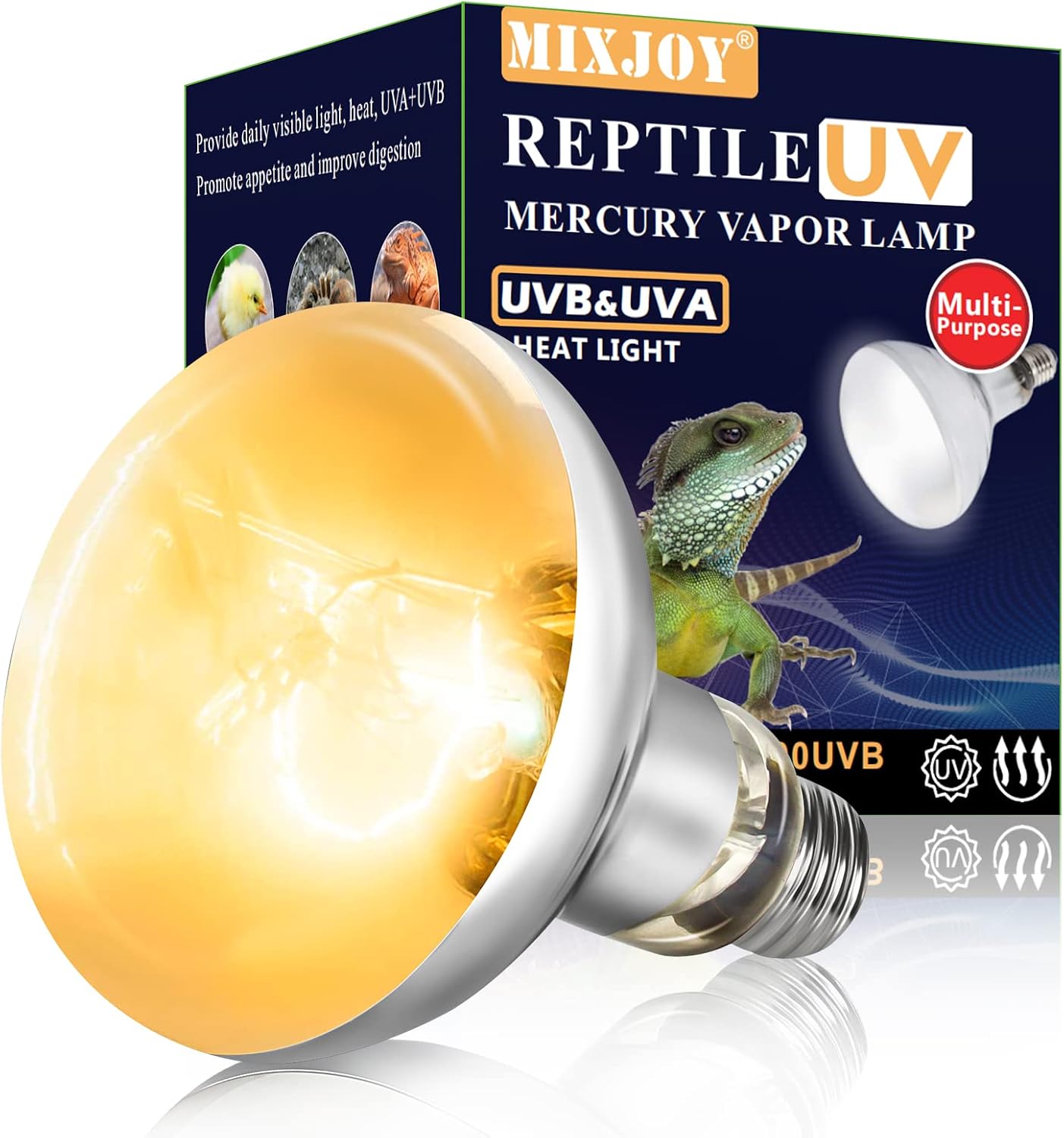
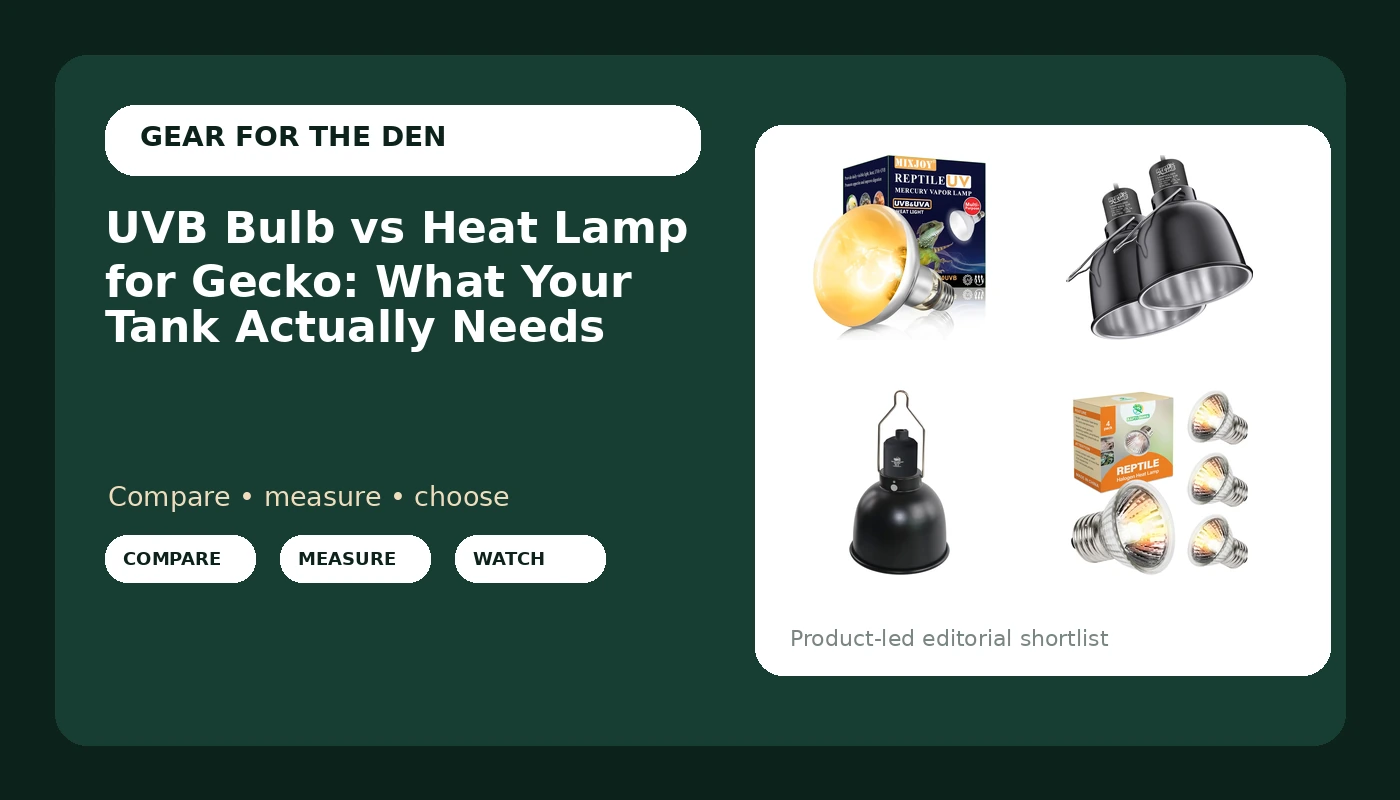
MIXJOY 100W Reptile Heat Lamp Bulb
One bulb covers light and heat for a tall or large enclosure, and the screw base fits any standard dome
100W is far too much for a small tank without a dimmer or thermostat, and the UVB claim is a bonus rather than a plan
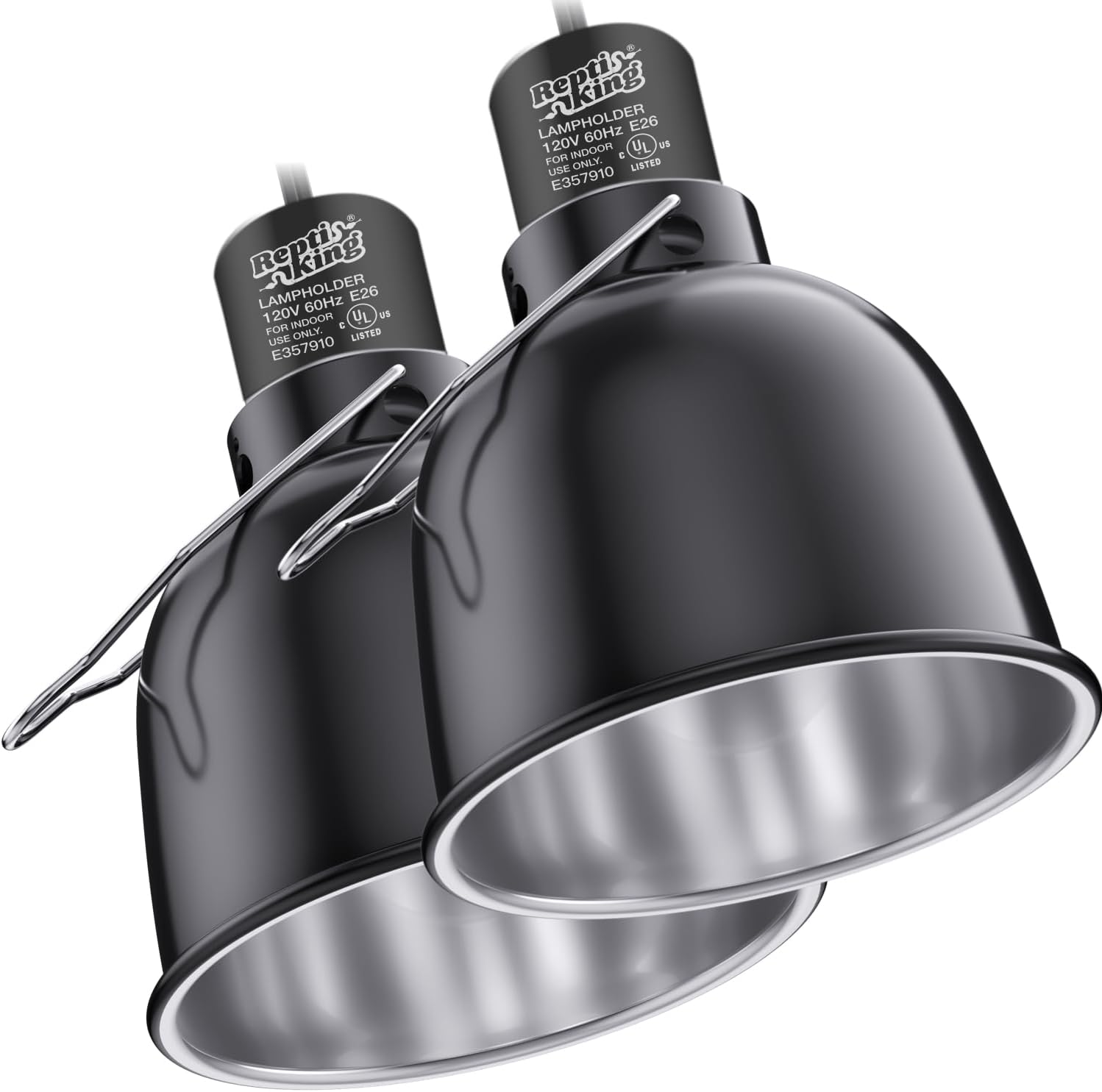
ReptiKing Reptile Light Fixture, 2-Pack 5.5'' Deep Dome
Two deep domes with ceramic sockets let you run heat and UVB side by side from one purchase
Deep domes are bulky, and you still need two clamps or stands plus two separate bulbs
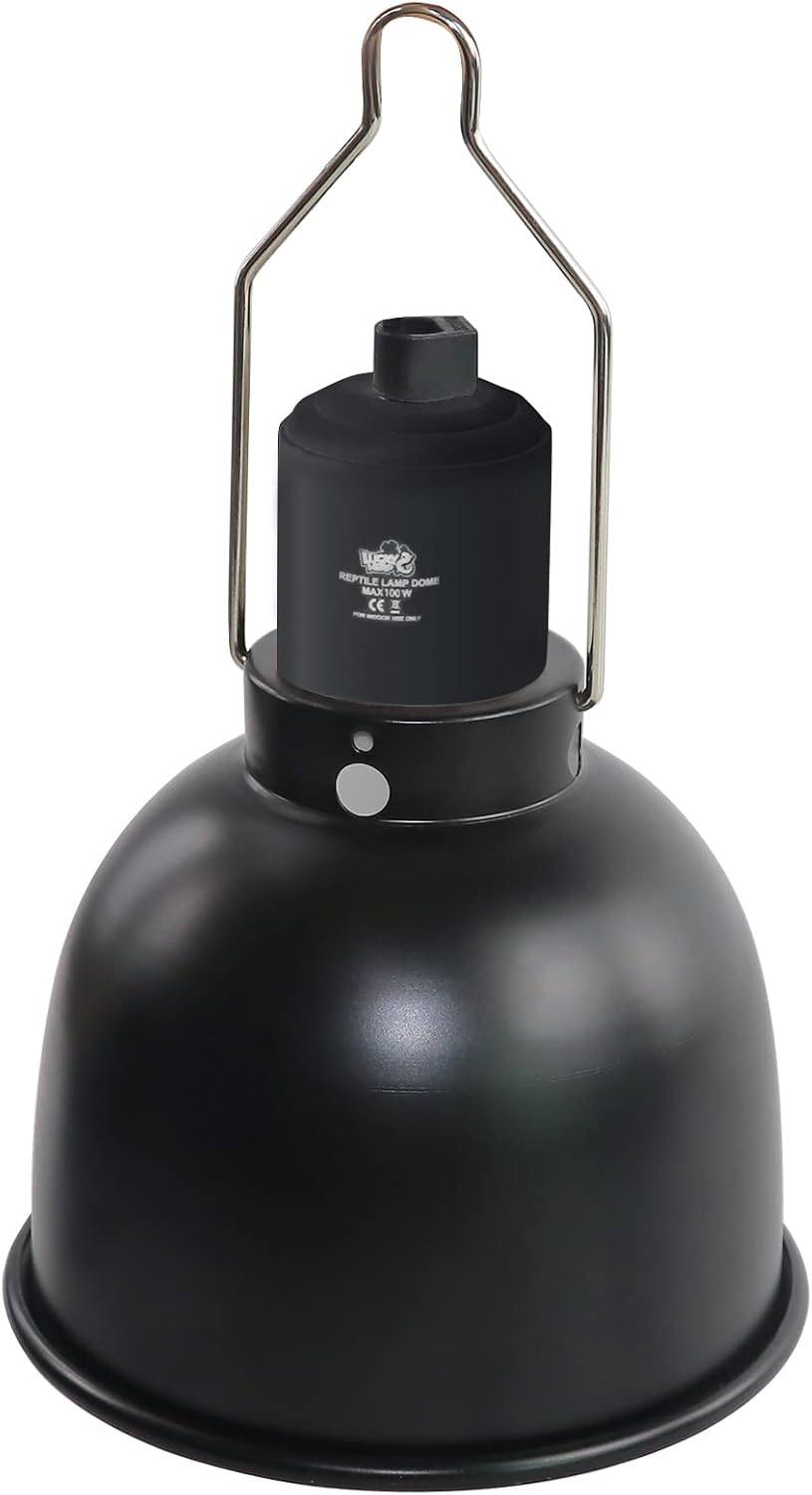
LUCKY HERP Aluminum 5.5inch Shallow Dome Reptile Light Fixture
Wider, softer light spread suits small or planted tanks, and the aluminum body stays light on a mesh top
The shallow bowl leaks heat sideways, so the same bulb reads cooler at the basking spot
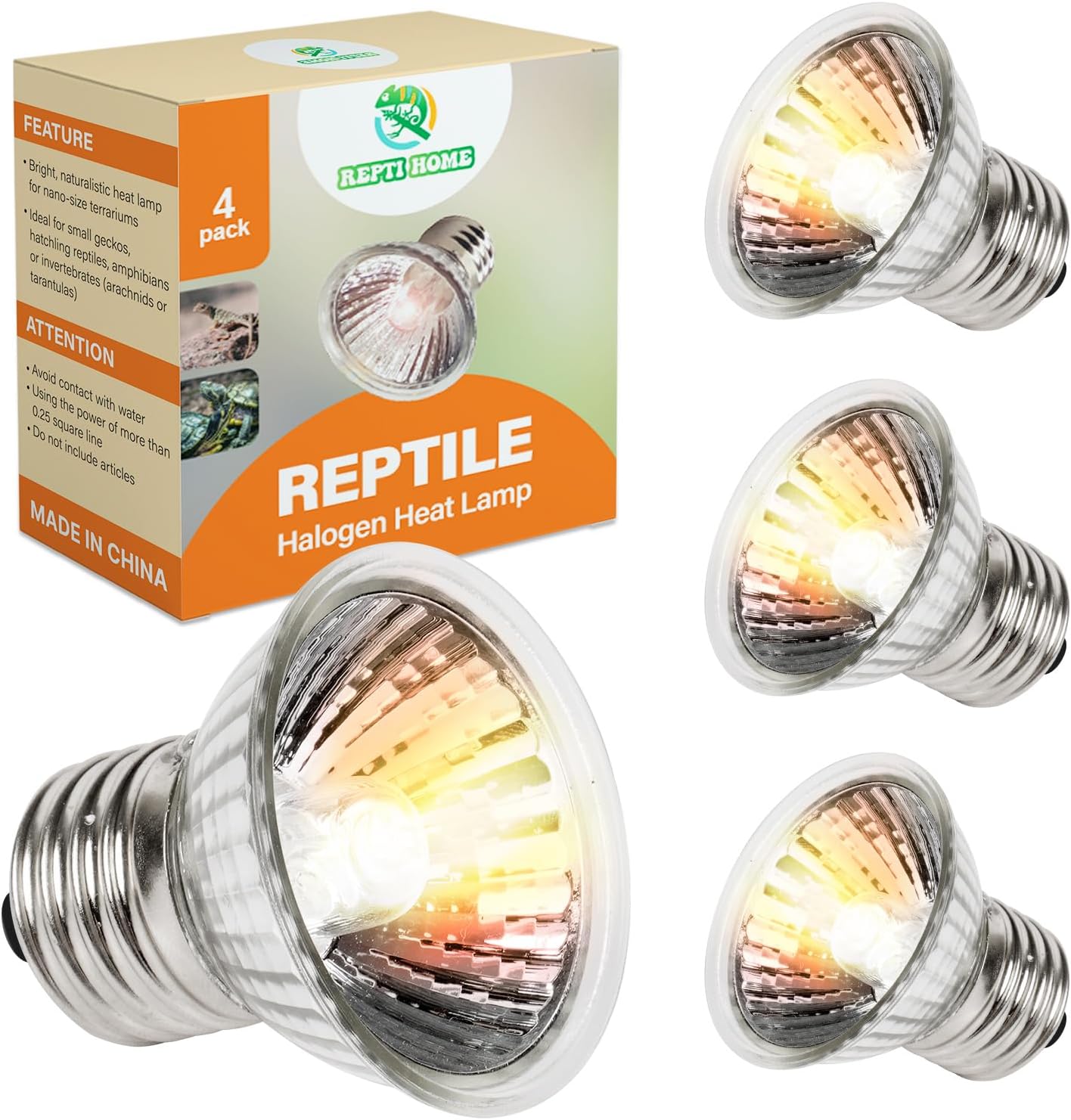
REPTI HOME Reptile Heat Lamp, UVA UVB Heat Lamp Bulbs, E26 50W 4Pack
Four 50W bulbs at a low cost per bulb, easy to swap the moment one burns out
50W cannot reach basking temperature in a tall enclosure or a cold room
Prices and availability may change.
uvb bulb vs heat lamp for gecko: what each one actually does
Heat and ultraviolet light are not the same thing, even when a single product claims to deliver both. A heat lamp, whether it is a plain incandescent, a halogen, or a full spectrum reptile bulb, produces infrared radiation. Infrared warms surfaces: a rock, a slate tile, the top of a hide. That surface warmth is what a gecko presses its belly against to raise its core temperature, and it is the number you are controlling when you set a thermostat range for the enclosure.
A UVB bulb produces ultraviolet B, an invisible band of light that triggers vitamin D3 synthesis in reptile skin. Without D3, calcium from the diet passes through the animal instead of being deposited in bone. That is how a gecko can sit under a warm lamp for months, eat well, and still develop soft jawbones: the heat half of the equation was solved and the ultraviolet half was never addressed.
There is a complication worth spelling out. Several bulbs sold as reptile heat lamps, including the ones in this comparison, advertise full spectrum UVA and UVB output. That claim is real but small. A 50W or 100W incandescent coated for ultraviolet output puts out a fraction of the UVB a dedicated linear fluorescent tube produces, and that output fades as the filament ages. Treat the UVB in a heat bulb as a bonus rather than your primary ultraviolet source, and treat the heat from a UVB tube as negligible.
So the working rule is simple. Heat lamps solve temperature. UVB tubes and compact UVB bulbs solve ultraviolet. A bulb that claims both is usually a heat lamp with a small ultraviolet side effect, and understanding the difference between uvb bulb and heat lamp for gecko care means planning for two jobs instead of one.
The bulbs: one 100W emitter versus a 50W four-pack
Two of the products here are bulbs, and the gap between them is mostly about wattage and quantity.
The MIXJOY 100W bulb is a single full spectrum UVA UVB emitter with a standard screw base. At 100 watts it is aimed at larger or taller enclosures where a lower-wattage bulb cannot push the basking temperature high enough. For a gecko, 100W is usually more than you need unless the tank is genuinely tall, and even then it belongs on a dimmer or a thermostat rather than a fixed schedule. MIXJOY 100W Reptile Heat Lamp Bulb is a reasonable pick for an adult bearded dragon or a large diurnal lizard, and a poor fit for a 20-gallon leopard gecko tank.
The REPTI HOME set goes the other way: four 50W bulbs with E26 bases in one bundle. REPTI HOME 50W Reptile Heat Lamp Bulbs is the friendlier starting point for a leopard gecko, a juvenile bearded dragon, or any mid-size enclosure, and having four on hand means a burned-out bulb is a two-minute swap instead of a new order. The trade-offs are that 50W will not reach basking temperature in a tall tank or a cold room, and a four-pack locks you into one wattage instead of letting you tune output to the season.
Neither bulb replaces a real UVB tube. Both claim UVA and UVB, and both put out some, but the keeper's rule of thumb is that if a species genuinely needs ultraviolet, you verify uvb output with a meter or use a tube with a published UV index rather than trusting a coating on a filament bulb.
The fixtures: deep dome versus shallow dome
Fixtures get ignored, and they should not be, because dome depth controls how heat spreads.
ReptiKing Reptile Light Fixture, 2-Pack 5.5'' Deep Dome gives you two deep domes with ceramic sockets. Deep domes are the right choice for a basking bulb: the polished interior reflects heat downward in a tighter cone, which means more warmth at the basking spot and less wasted into the room. Two of them let you run a heat bulb in one and a compact UVB bulb in the other without buying twice. The downside is bulk. Two deep domes need two clamp arms or two lamp stands, and on a small screen top that is a lot of hardware.
LUCKY HERP Aluminum 5.5inch Shallow Dome Reptile Light Fixture is the same footprint with a shallower bowl and an aluminum body. A shallow dome throws a wider, softer pool of light, which suits small tanks, planted enclosures, and setups where ambient light matters more than a tight hotspot. It is also lighter, which matters when you are clamping to a glass or mesh panel. The trade-off is focus: a shallow dome leaks more heat sideways, so a 50W bulb in a shallow dome reads cooler at the basking spot than the same bulb in a deep dome.
Both fixtures take standard screw-base bulbs, and both need a thermostat or dimmer rather than a fixed on/off timer. A fixture is a reflector, not a regulator, and no dome will keep a tank safe on its own.
heat lamp for gecko vs uvb bulb: the trade-offs that decide it
Three trade-offs separate these two purchases in practice: cost over time, control, and safety.
Cost over time favors the heat side. A heat bulb plus a dome is a one-time purchase that lasts until the filament fails, and the four-pack above spreads that cost across a year or more. UVB is a consumable. Fluorescent tubes lose useful output long before they visibly dim, so most keepers replace them on a schedule of roughly six to twelve months whether or not the tube still lights up.
Control favors the heat side too, for a different reason. Heat output is easy to regulate: a thermostat range or a dimmer smooths out a bulb that runs hot, and you can raise the fixture to drop the basking temperature. UVB cannot be dimmed. Its intensity is set by distance, reflector design, and whatever screen mesh sits between the bulb and the animal, and a fine mesh top can cut a large share of the ultraviolet before it reaches the gecko.
Safety cuts both ways. An unregulated heat lamp is the classic cause of thermal burns, which is why a thermostat belongs in every setup. An overpowered UVB source with no shade is the classic cause of eye irritation, which is why every enclosure needs a hide and a gradient rather than a single bright zone.
If you can only buy one thing this month, buy heat. A gecko with a correct temperature gradient and a good diet will usually manage; a gecko with no way to thermoregulate gets sick quickly. But for diurnal species the uvb bulb vs heat lamp for gecko question is not either/or, and skipping ultraviolet forever is not a plan.
Tank size, basking temperature, and uvb output
Matching gear to an enclosure comes down to a handful of numbers, and it is worth writing them down before you buy anything.
Start with tank size. A 20-gallon long tank loses heat quickly and rarely needs more than a 50W bulb in a deep dome. A 4x2x2 enclosure has enough air volume that a 100W bulb on a dimmer is the more sensible starting point. A screen top versus a solid top changes this again, because mesh vents a surprising amount of warmth.
Then set your basking temperature target for the species and measure it at the surface with an infrared thermometer, not in the air. A thermostat range keeps a hot bulb from overshooting on a warm afternoon. Pair that with a cool-end hide and a warm-end hide so the gecko can choose, and size each hide so the animal fits with a little room to turn around.
Ultraviolet follows distance, not wattage. Check the uvb output guidance for your bulb and reflector, mount it so the basking zone sits inside the recommended band, and replace it on schedule.
Finally, think about the rest of the enclosure. Substrate depth matters for burrowing species and for holding a humidity range, and an overhead lamp dries the air faster than a heat mat does. If you keep a tropical species, a heat mat wattage matched to the tank footprint plus a thermostat is often a better primary heat source than a bulb, with the lamp used for a small basking area instead of the whole enclosure.
uvb bulb or heat lamp for gecko: species decides
The species in the tank answers this faster than any general rule.
Leopard geckos are crepuscular and take most of their warmth from surfaces. A low-wattage basking bulb or a thermostat-controlled heat mat handles their heat, and a low-output UVB source is optional but generally considered a mild benefit. Their keepers care more about substrate depth and hide size than about ultraviolet strength.
Crested geckos are the opposite case. They are arboreal, they do not bask, and a heat lamp over the tank is more likely to cause overheating and humidity problems than to help. Room temperature with a low-output UVB tube and a steady misting schedule fits them far better than any basking bulb.
Day geckos and other diurnal species sit at the other end. They bask openly, they need a real basking temperature, and they need meaningful uvb output, which usually means a linear tube rather than a coated heat bulb. Bearded dragons, which many keepers lump in with geckos because they share shelf space, need both halves at full strength.
What to buy first
For a leopard gecko or a similar crepuscular species, the low-cost path is the REPTI HOME 50W four-pack in the LUCKY HERP shallow dome, with a thermostat in line and a heat mat as backup for cold nights.
For a taller enclosure or a diurnal species that basks hard, start with the ReptiKing deep dome 2-pack so you have one socket for heat and one for ultraviolet, then add the MIXJOY 100W bulb on a dimmer for the hot end.
Whichever route you take, the answer to uvb bulb vs heat lamp for gecko setups is rarely one product. Buy the heat source first, regulate it, and add ultraviolet as a second, separately planned purchase.