UVB lighting is the part of a gecko setup that is easiest to get wrong and easiest to overspend on. If you keep a leopard gecko, an African fat-tailed gecko, or another arid or semi-arid species, you do not need a laboratory-grade rig. You need a lamp that delivers a sensible level of UVB at the distance your animal actually sits, in a fixture you already own. This guide looks at what a budget uvb bulb for gecko enclosures should deliver, how to read the numbers on the box, and which of the six lamps below suits the way you keep your animal. The aim is to find the best budget uvb bulb for gecko keepers who want a workable lamp rather than the most expensive one on the shelf.
Quick answer
The GREENPAW Reptile UVB Bulb 5.0 15W, Compact Fluorescent Light E26 Base, 2PCS is the strongest fit for a first gecko setup on a tight budget because its 5.0 UVB output matches the moderate, low-level exposure that suits most common pet geckos in a normal tank, and the two-bulb pack means a spare is already on the shelf. Choose the REPTI ZOO UVB Light 26W, 10.0 UVB Bulb, Reptile Basking Light for Desert instead when you want the lowest outlay on a single bulb and a stronger 10.0 output for an arid, open-basking setup.
UVB bulb specs worth comparing
Not every number on a reptile lamp box carries the same weight. The ones that matter most when you are shopping for a budget uvb bulb for gecko enclosures are the UVB output rating, the wattage, the base type, and how many bulbs come in the pack.
The output rating, usually written as 5.0 or 10.0, describes the strength of the UVB band the lamp is built to produce. A 5.0 lamp is the gentler of the two and is the more common match for geckos that spend their time under cover or come out around dusk. A 10.0 lamp is built for desert and basking species that sit in the open. Neither is better in the abstract; what matters is the distance between the lamp and the animal, because uvb output falls off quickly with height.
Wattage and base type decide whether the lamp fits what you already own. Compact fluorescent reptile bulbs generally run 15W to 26W and use a standard E26 screw base, so they drop into an ordinary dome or clamp fixture. Linear T5 HO lamps are a different format entirely: they need a dedicated hood or reflector fixture and are usually sold in pairs.
The pack count is the quiet budget lever. A single bulb at a low price and a two-pack at a slightly higher price can work out very differently once you price in a spare, and an affordable uvb bulb for gecko keepers is often the one that spreads the cost across more than one bulb rather than the one with the smallest number on the card.
How these products were compared
This guide compares UVB output rating, wattage and base type, bulb count per pack, fixture format, and how each product is described by its maker. It does not repeat a price, because prices move; use the link on each card to confirm the current figure and availability.
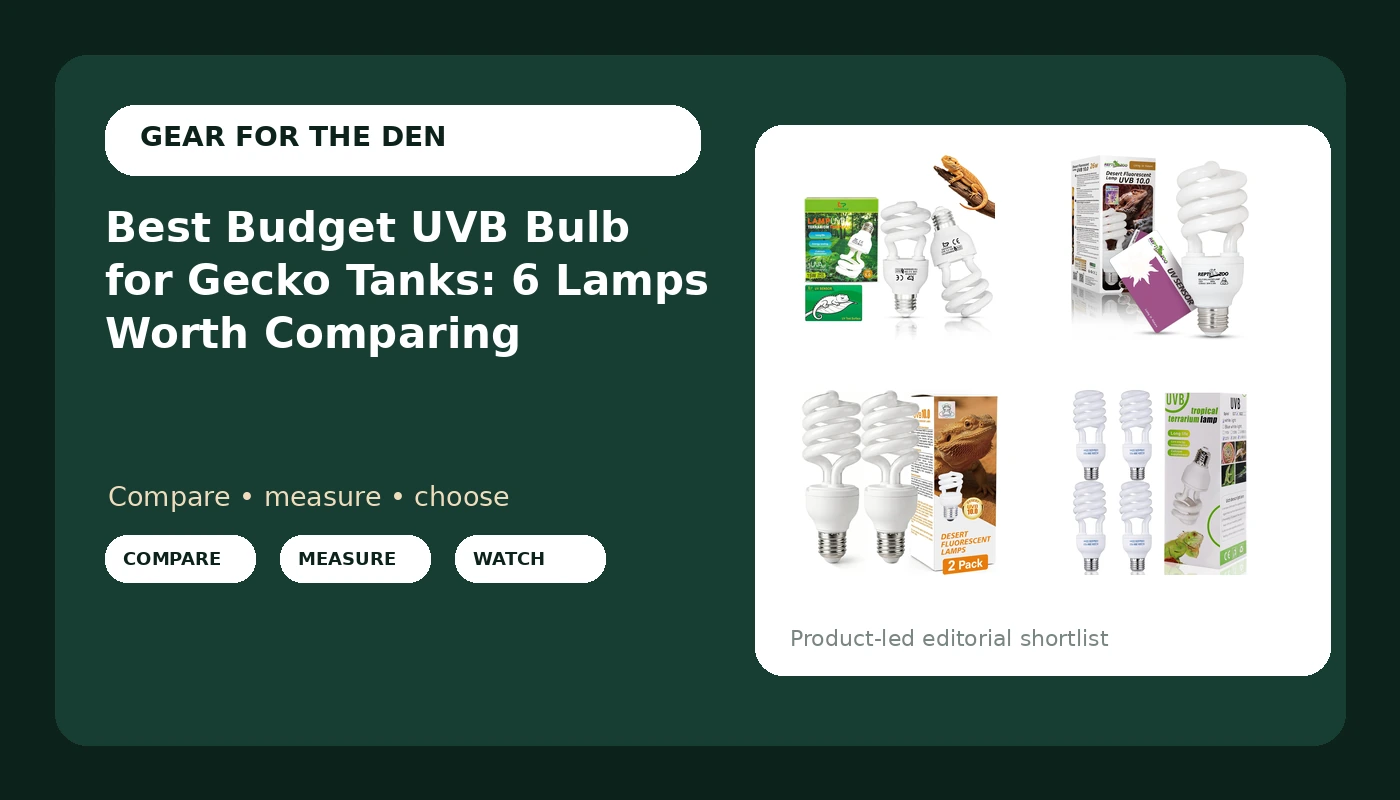
The six lamps fall into three rough groups. Compact screw-base bulbs run from 15W to 26W with either a 5.0 or a 10.0 output rating. One entry is a 100W heat lamp that adds UVA and UVB to a broad-spectrum output rather than serving as a precision UVB source. One entry is a linear T5 HO lamp that needs its own fixture. Every lamp here is a candidate budget uvb bulb for gecko keepers rather than a piece of laboratory equipment, and reading the label this way is how you tell a low cost uvb bulb for gecko setups from one that is simply under-specified. Product names, images, and retailer links are matched by listing so that each card points to the product shown, and nothing here is presented as hands-on testing.
How to choose the right budget uvb bulb for gecko
Start with the species and the distance, not the price. A gecko that spends most of its time in a hide, or that comes out after the lights have been on for hours, does not need the strongest lamp on the page. Putting a 10.0 bulb over a shallow tank can push exposure higher than the animal would ever meet in the wild. A 5.0 compact bulb at a sensible height is a reasonable starting point for those setups, and a 10.0 is the better match when you keep a desert species that basks in the open under a hot spot.
Tank size sets how much of the enclosure one bulb can light. A single compact bulb covers a modest footprint well. A long, low tank usually ends up with one bright end and one dim end, which is not a problem as long as the bright end is where the animal chooses to sit. Screen mesh tops cut the UVB that reaches the animal, so a lamp sitting on mesh behaves differently from one mounted inside the tank. Give the gecko somewhere to retreat: a correctly sized hide, enough substrate depth to dig if the species digs, and a humidity range that suits the species all matter more to day-to-day health than a few extra points of output.
Then think about how the lamp works with your heat. UVB and warmth are separate jobs, and mixing them up is the most common mistake in a first setup. A compact UVB bulb produces very little heat, so it will not hold a basking temperature on its own; a heat mat, a deep heat projector, or a basking lamp does that work. Whichever you choose, run it through a thermostat so the basking temperature stays inside the thermostat range you set instead of drifting with the room, and check that the heat mat wattage suits the footprint of the tank rather than the size of the animal. If you are still assembling the warm side of the enclosure, our reptile heat mat and thermostat guide walks through the pairing.
GREENPAW Reptile UVB Bulb 5.0 15W, Compact Fluorescent Light E26 Base, 2PCS
The GREENPAW Reptile UVB Bulb 5.0 15W is a compact fluorescent lamp with a 5.0 UVB output rating and a standard E26 screw base, sold as a two-pack. It is the pick here for a first gecko setup because the 5.0 rating lines up with the moderate, low-level exposure that suits the majority of common pet geckos, and because the screw base means it drops into an ordinary dome or clamp fixture that most keepers already own.
Fifteen watts is modest, and that is the point. A 15W compact bulb does not flood a large enclosure, so it works best over a small footprint where the gecko has a clear exposure zone and plenty of shaded space to move away from it. Two bulbs in the pack is the practical part: UVB output from any fluorescent lamp declines over months of use, so having a replacement on hand means you can swap the lamp on schedule instead of running a tired one while you wait for a delivery.
The trade-offs are worth stating plainly. At 5.0 and 15W this is not a lamp for a large desert setup or a deep tank where the animal sits well below the screen, and it will do nothing for your basking temperature. It is also a fixed-output lamp rather than a dimmable one, so any adjustment happens by changing the distance between the lamp and the animal. Treat it as a UVB source that pairs with separate heat, and measure that distance once the fixture is mounted rather than guessing at it.
Top pick
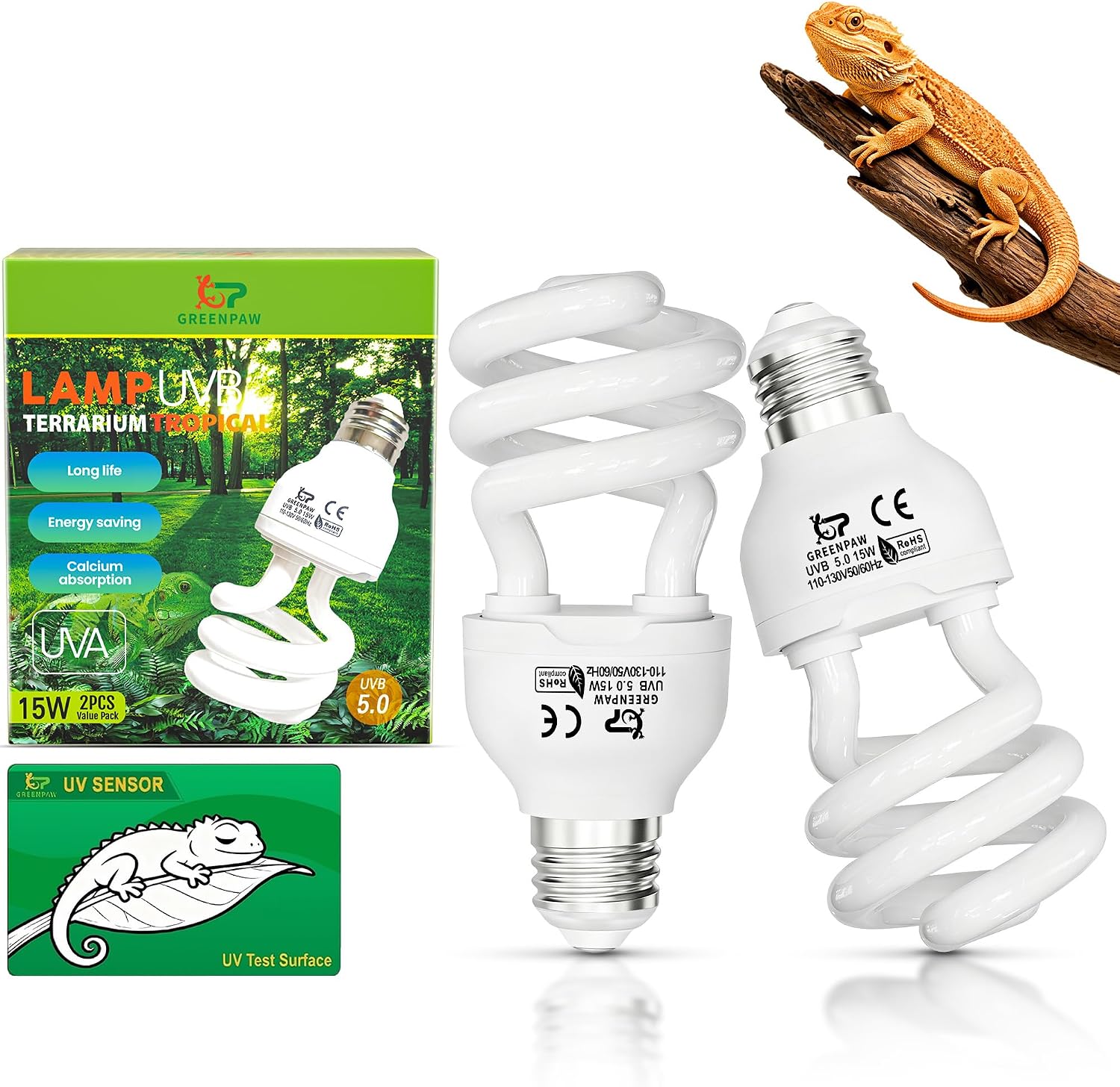
GREENPAW Reptile UVB Bulb 5.0 15W, Compact Fluorescent Light E26 Base, 2PCS
A 5.0 UVB compact fluorescent with a standard E26 screw base, sold as a two-pack for low-demand gecko setups.
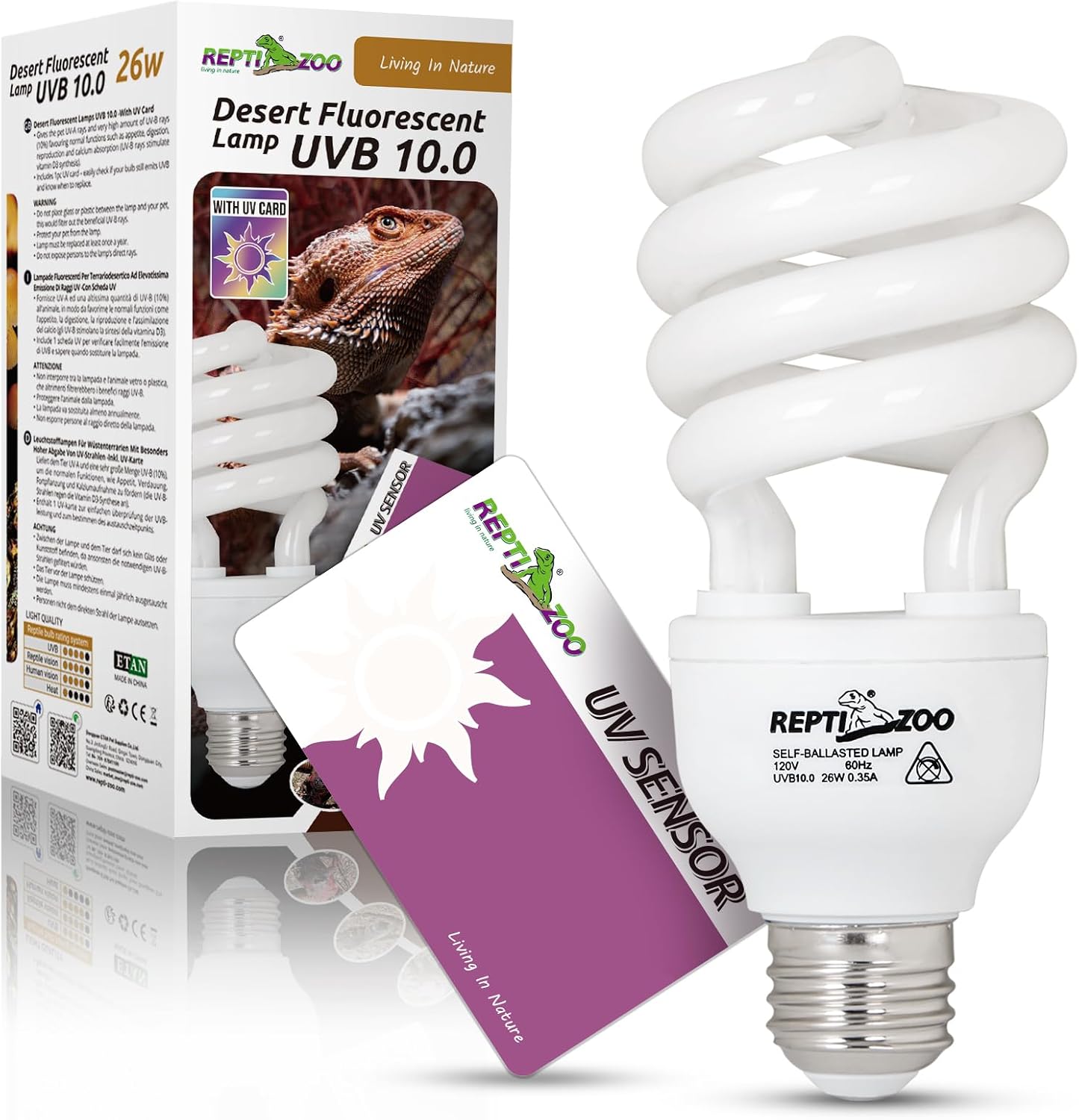
REPTI ZOO UVB Light 26W, 10.0 UVB Bulb, Reptile Basking Light for Desert
A 26W screw-base bulb with a 10.0 UVB rating, described by the maker as a basking light for desert setups.
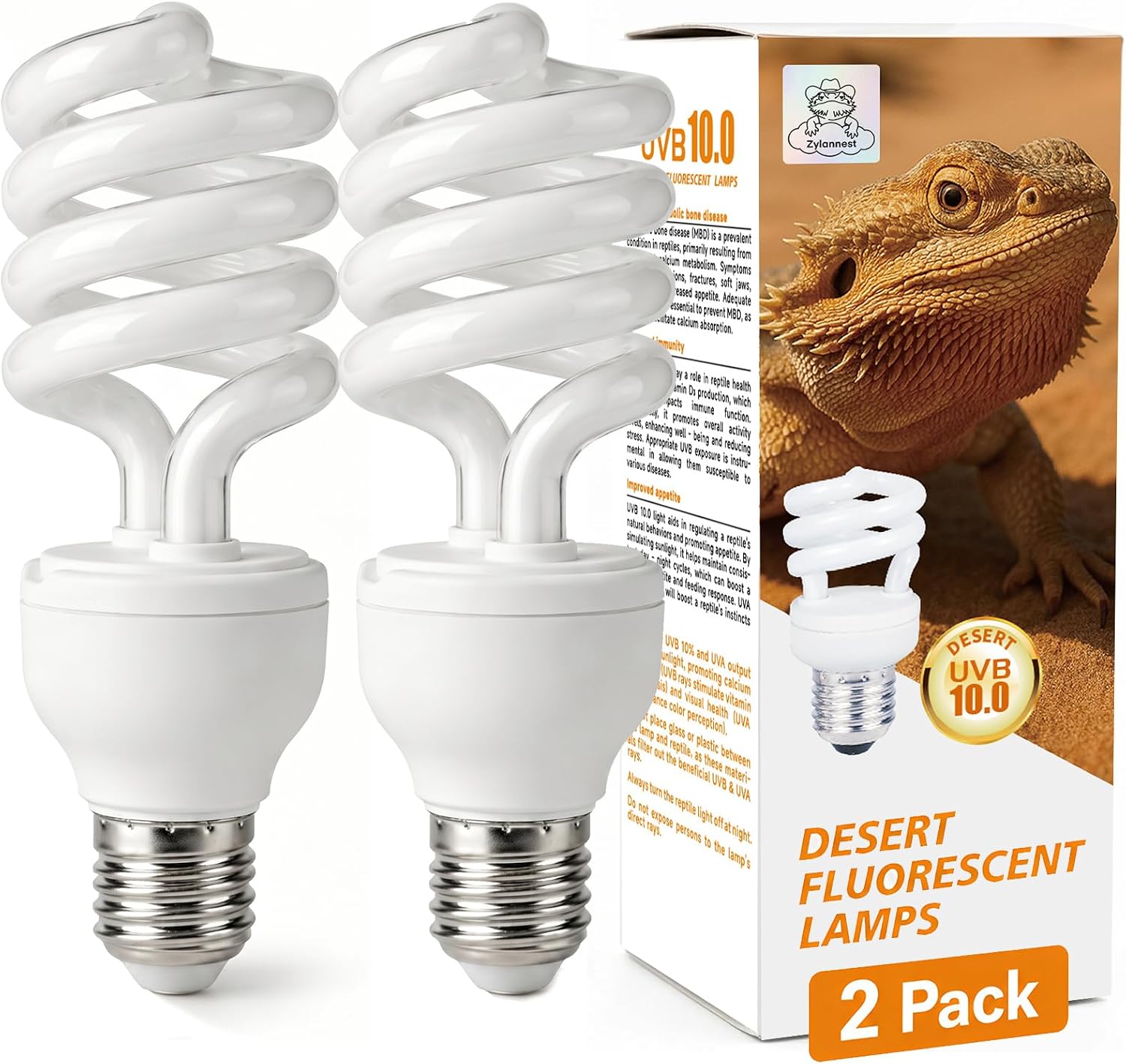
Reptile UVB Bulbs, 26W 10.0 UVA UVB Light Lamp for Terrarium, 2 Pack
A two-pack of 26W 10.0 UVA and UVB screw-base lamps intended for terrarium use.
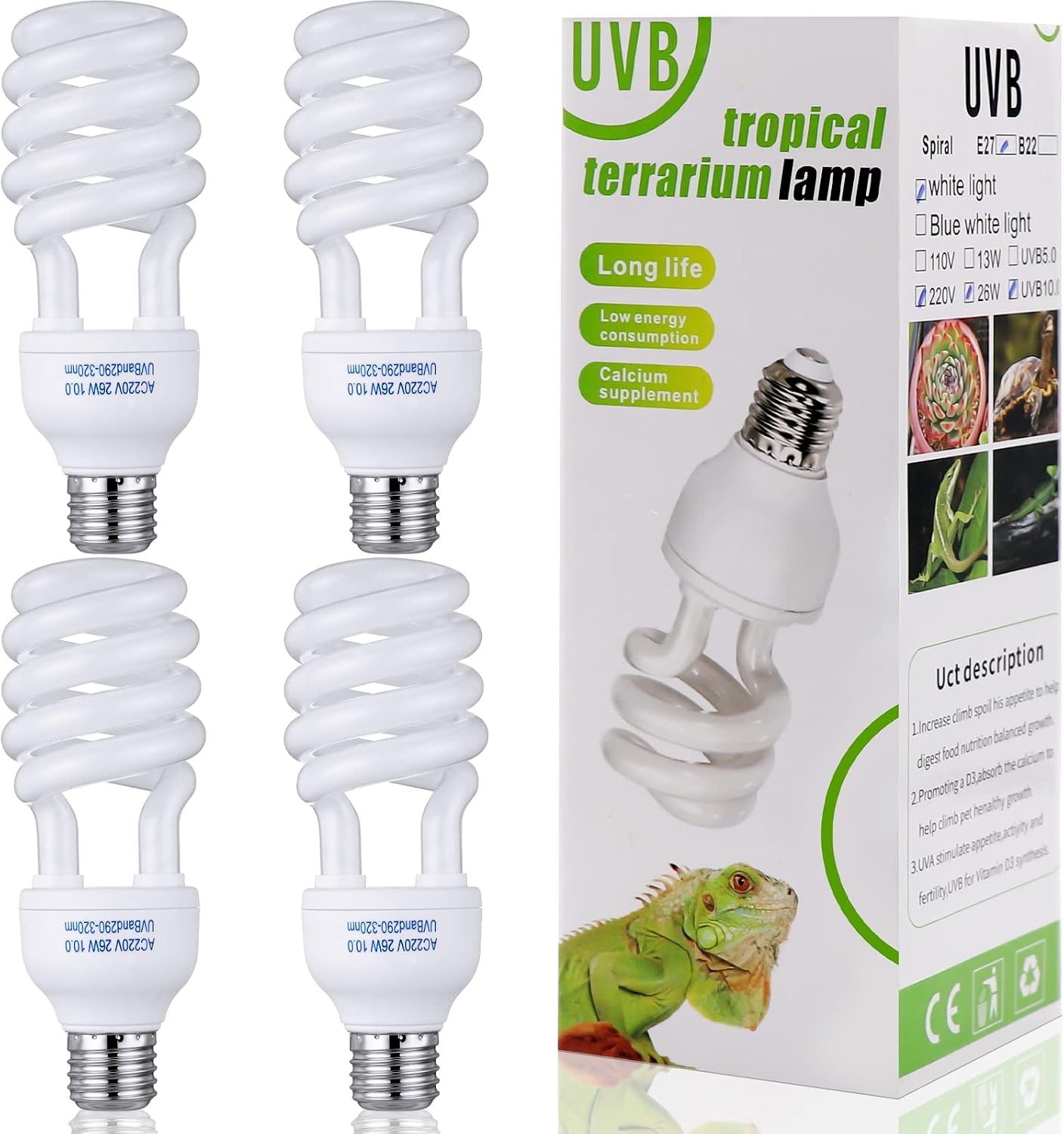
Reginary 4 Pcs Reptile Uvb Bulb 10.0 26w, Uvb Light for Bearded Dragon
A four-pack of 26W 10.0 UVB bulbs, aimed at keepers replacing lamps across more than one enclosure.
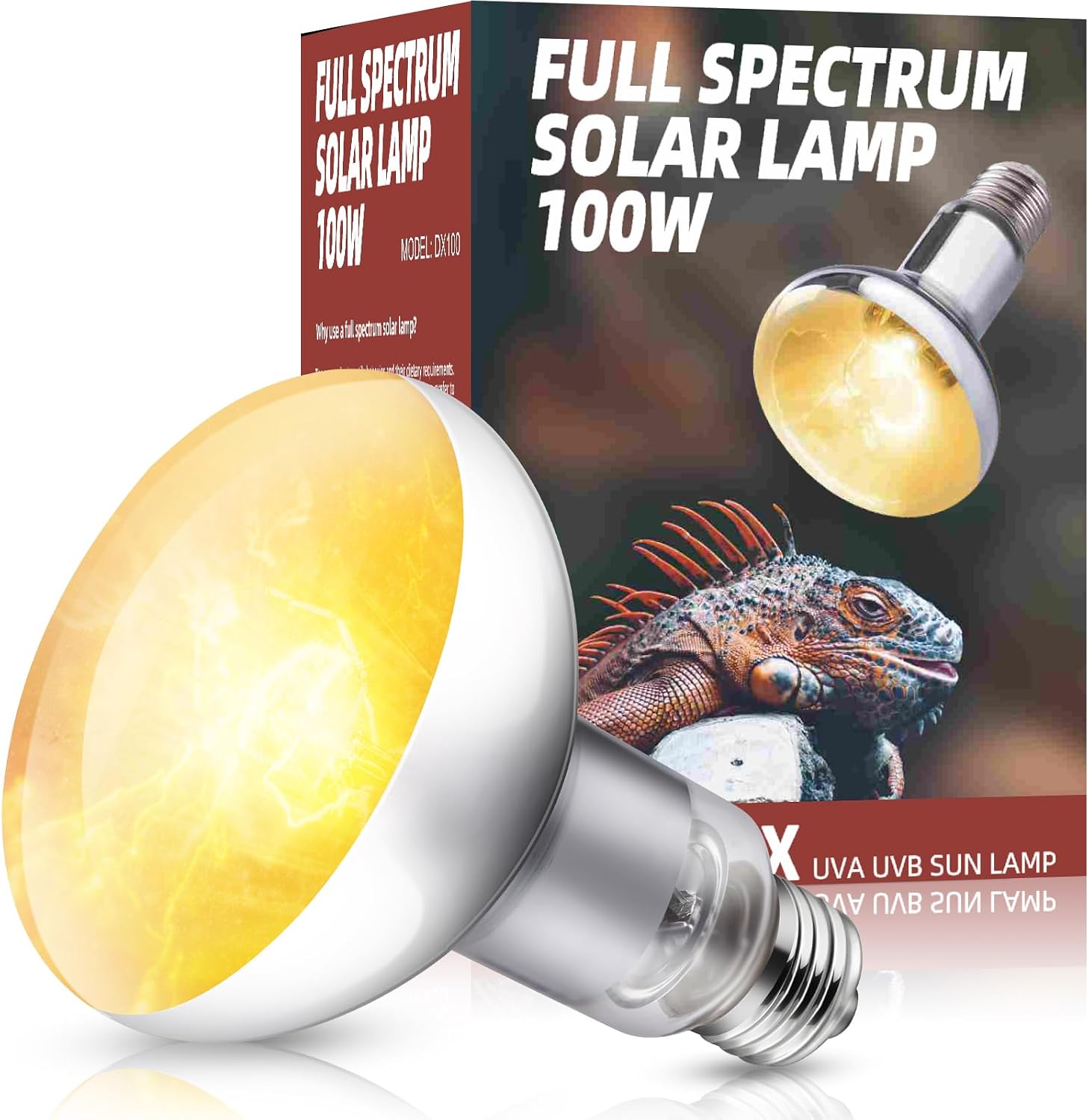
DXOPHIEX 100W Reptile Heat Lamp Bulb Full Spectrum UVA UVB Sun Lamp
A 100W full-spectrum heat lamp bulb with UVA and UVB output, meant for the warm side rather than as a UVB source alone.
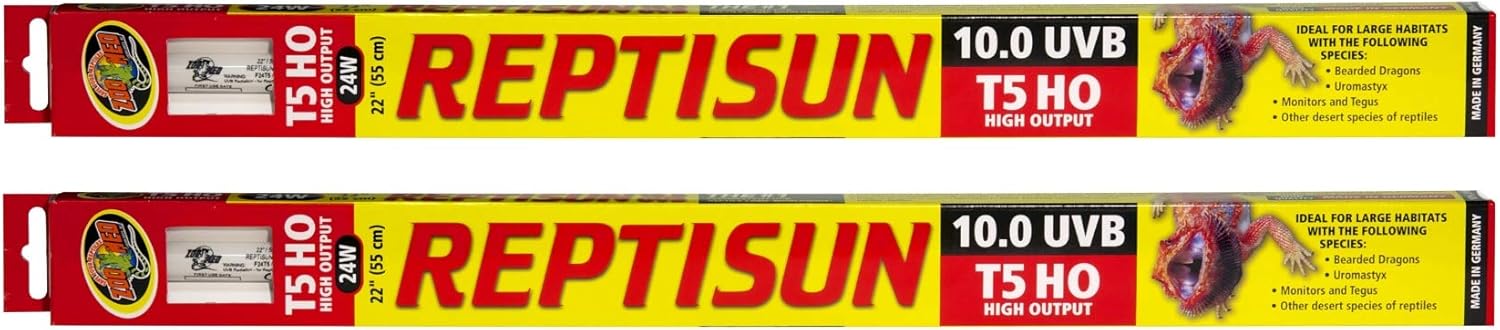
Zoo Med 24 Watt T5 HO ReptiSun 10.0 UVB Lamp, 2pk
A 24W T5 HO ReptiSun 10.0 linear lamp in a two-pack, for a compatible T5 hood or reflector fixture.
Alternatives to consider
The REPTI ZOO UVB Light 26W, 10.0 UVB Bulb, Reptile Basking Light for Desert is better suited to a keeper who wants the lowest outlay on a single bulb and a stronger 10.0 output, which is the more common choice for arid, open-basking setups. It uses the same screw-base format, so it fits the same fixtures, but the higher output means distance matters more and a shallow tank needs the lamp mounted further away. The Reptile UVB Bulbs, 26W 10.0 UVA UVB Light Lamp for Terrarium, 2 Pack is a stronger fit when you want a 10.0 lamp and a spare in one purchase, which is a sensible way to buy if you plan to replace on a schedule.
The Reginary 4 Pcs Reptile Uvb Bulb 10.0 26w, Uvb Light for Bearded Dragon covers the stocking-up case: four 26W 10.0 bulbs in one pack, aimed at keepers running more than one enclosure or replacing often. The DXOPHIEX 100W Reptile Heat Lamp Bulb Full Spectrum UVA UVB Sun Lamp covers a different job entirely. At 100W it is a heat lamp first, with a broad-spectrum output that includes UVA and UVB, so it is the option to look at when the warm side of the tank is the problem rather than the UVB line. The Zoo Med 24 Watt T5 HO ReptiSun 10.0 UVB Lamp, 2pk covers the linear case: a 24W T5 HO lamp in a two-pack that needs a compatible T5 hood or reflector fixture, which is a different purchase from a screw-base dome. It carries the highest outlay of the six and is the one to choose when you have already committed to a linear fixture.
Day-to-day use and maintenance
Fluorescent UVB lamps lose output long before they stop glowing, so replace on the interval the maker specifies rather than waiting for a visible change. Note the install date on the fixture or in your phone. Keeping a spare on hand, which is one reason the two-packs here are worth considering, means you can swap on schedule instead of running a tired lamp while a replacement ships.
Distance is the setting you will adjust most. Measure from the lamp face to the highest point the gecko can reach, and check that the animal has a shaded retreat at the other end of the tank. If the enclosure has a screen top, remember that the mesh reduces what reaches the animal, so a lamp that would be too strong in the open may be about right above mesh.
Handle bulbs only when they are cool, wipe them with a dry cloth rather than a wet one, and avoid touching a heat lamp with bare fingers. Check the fixture rating before you fit any lamp, and keep the UVB and heat circuits separate so a failed heat source does not take the lighting with it. Clean the fixture and reflector when you clean the tank, since dust on a reflector quietly reduces output. Keep a thermometer and hygrometer in the tank, review the humidity range for your species, and revisit the substrate depth and hide size as the animal grows; a hide that fit a juvenile can be too tight a year later, and a substrate that is too shallow stops a digging species from doing what it does naturally.
Buying checklist
- Measure the distance from the planned fixture to the highest point in the tank, and match uvb output to that distance rather than to the size of the number on the box.
- Check the base and format before ordering: an E26 screw base for a dome, a T5 HO lamp for a linear hood.
- Choose the bulb count based on how often you replace, not on the lowest single-bulb outlay.
- Confirm the wattage sits within your fixture's rating.
- Plan heat separately, run it through a thermostat, and keep the basking temperature in range.
- Verify the current retailer price, availability, and return terms.
Final recommendation
Choose the GREENPAW Reptile UVB Bulb 5.0 15W, Compact Fluorescent Light E26 Base, 2PCS when you keep a gecko with moderate UVB needs in a modest enclosure, you want a screw-base lamp that fits a fixture you already own, and you would rather have a spare on the shelf than the cheapest single bulb on the page. Choose the REPTI ZOO UVB Light 26W, 10.0 UVB Bulb, Reptile Basking Light for Desert when you want the lowest outlay on one bulb and a 10.0 output for an arid, basking-heavy setup, and step up to the Zoo Med T5 HO pair if you already run a linear fixture and want the format to match. Whichever you pick, buy the heat source and the thermostat as part of the same plan, because the lamp is only one half of the light-and-warmth equation.