Aquarium Filter Guide: Matching Flow Rate to Tank Volume
An aquarium filter guide to flow rate, filtration stages, and tank volume, plus the starter kits and heater I would pair with each one.
I have set up enough small tanks to know that the glass is almost never the part that goes wrong. The aquarium filter is. Tank volume, flow rate, and the number of filtration stages your pump actually moves decide whether the water stays clear or you spend every weekend chasing it. This aquarium filter guide covers the numbers worth reading on a product page, the numbers that are pure decoration, and the four setups I would hand a first time keeper.
Most beginner kits are a tank, a lid, a light, and a pump small enough to hide in a corner. Two of the four picks below are exactly that, and I still recommend both, because a kit that ships with a quiet filter pump lets you start cycling on day one instead of week three. The other two fill the gaps a kit leaves: a rimless tank for someone who wants to choose the equipment, and a heater that keeps the bacteria in your filter media alive when the room turns cold. If you are starting from zero, I walk through the first month in my guide on how to cycle a new aquarium.
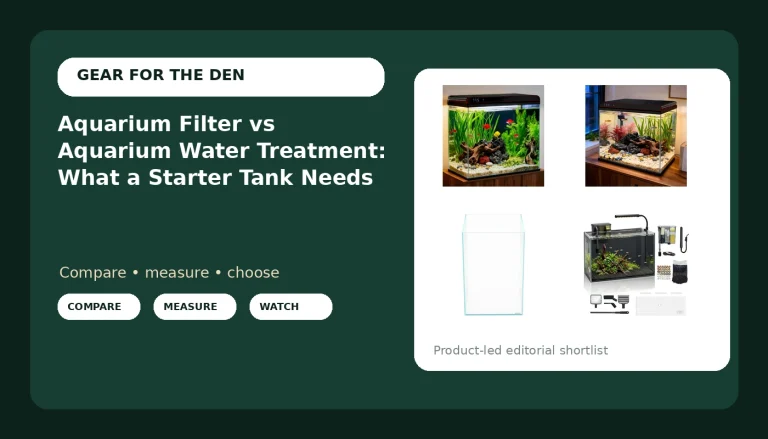
Best Overall: Coospider 20 Gallon Glass Fish Tank, Aquarium Starter Kit, Simple Self-Cleaning Aquarium with 3-Color LED Lights, with Quiet Filter Pump, with Temperature Monitoring for Fish, Shrimp, Kids Gift Ideas
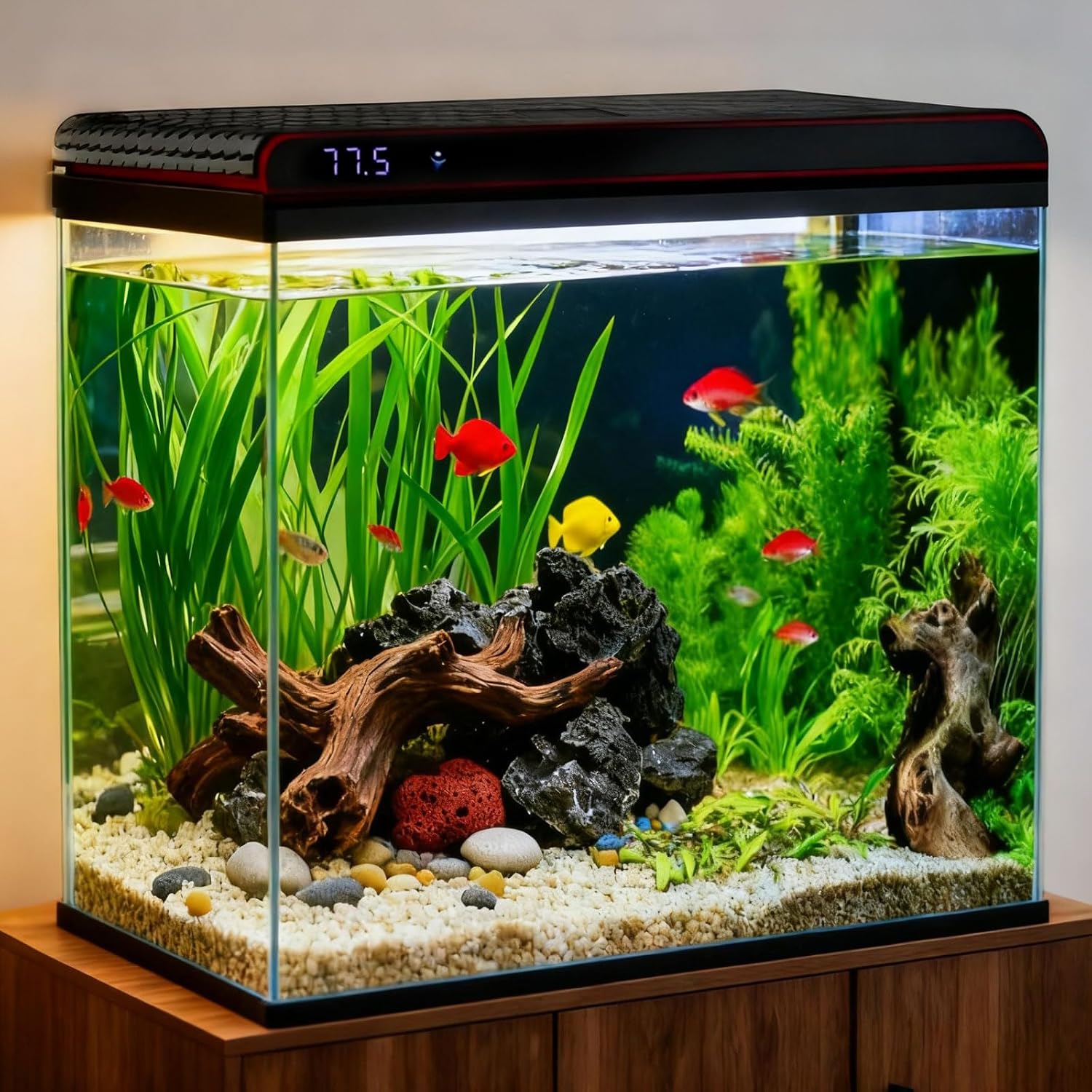
This is the pick I would buy for a first community tank, and the reason is volume. Twenty gallons gives you a much bigger buffer than ten when something goes slightly wrong: a missed feeding, a snail that died behind the plants, filter media that needed rinsing a week ago. More water dilutes the mistake while you fix it.
Everything needed to run it arrives in one box. The aquarium filter is a quiet pump matched to the tank, the lighting is a 3-color LED, and temperature monitoring is built in, so you are not guessing whether the water is warm enough for the fish you brought home. That matching matters more than any other line on the listing. Buying a tank and a filter separately is how most beginners end up with a pump sized for a bowl bolted onto a tank that never quite clears.
Treat the self-cleaning wording as convenience, not magic. Nothing on the market replaces a weekly partial water change and a rinse of the filter media in water you just removed from the tank. Rinsing media under the tap is the fastest way to kill the bacteria you spent three weeks growing.
The 3-color LED is the part I would upgrade first if you want live plants, because a plant-friendly kelvin rating matters more here than raw brightness. For fish and shrimp only, leave it alone. It is also marketed as a gift, and for a kid's room the quiet pump is the feature that keeps everyone sane.
Check current Amazon price.
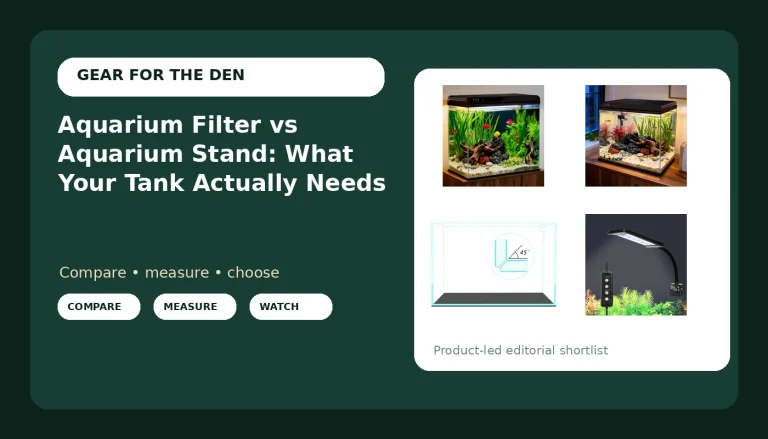
Best Value: Coospider 10 Gallon Glass Fish Tank, Aquarium Starter Kit, Simple Self-Cleaning Aquarium with 3-Color LED Lights, Quiet Filter Pump, Temperature Monitoring for Fish, Shrimp, Kids Gift Ideas
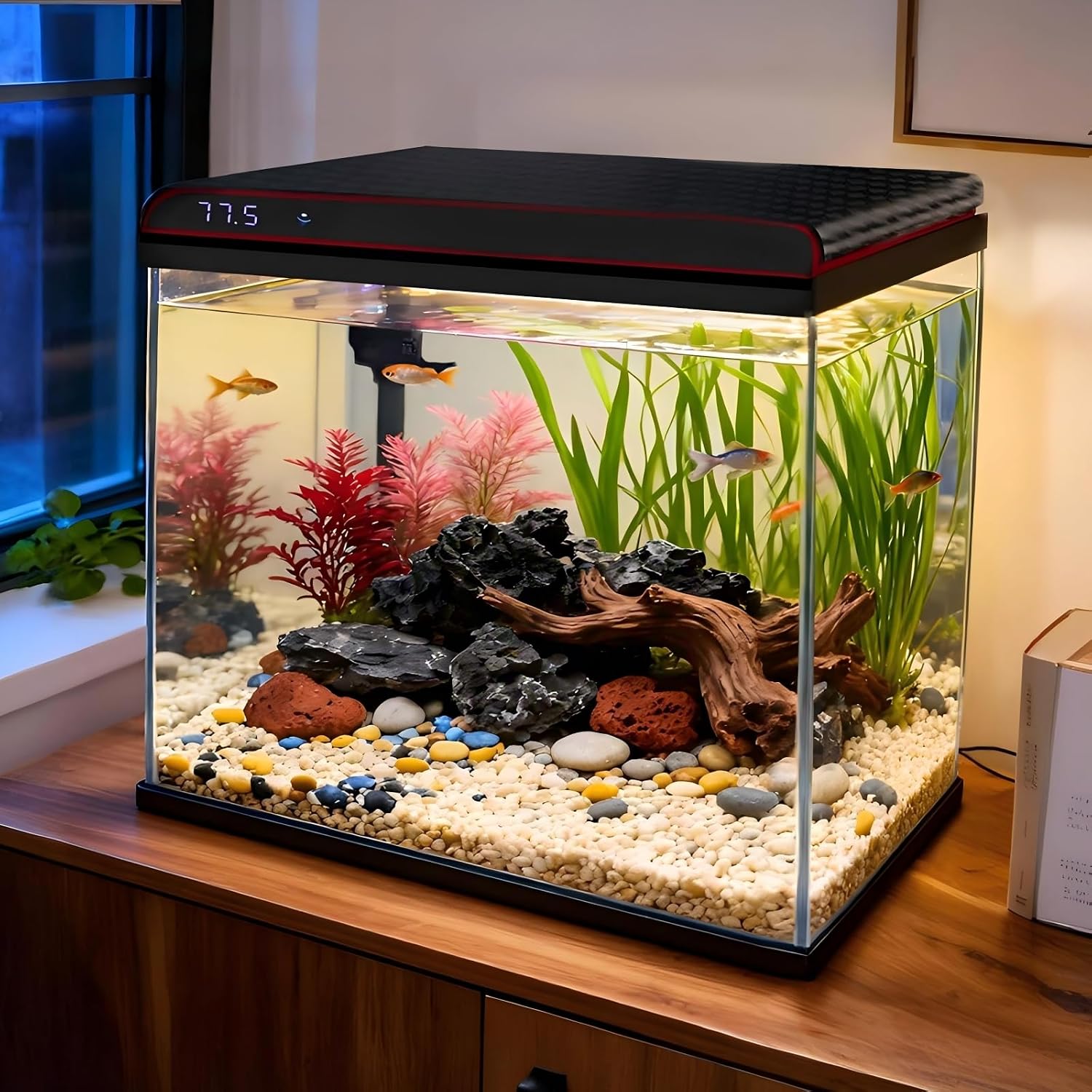
Same kit, smaller footprint, and the one I point people toward when the budget is tight or the room is small. The pump, the light, and the temperature monitoring are all in the box, which is exactly why this is the value pick: bought separately, those three parts usually cost more than the gap between this tank and a bare one.
Ten gallons is the classic first tank volume. It fits on a dresser, a water change takes one bucket instead of two, and it is genuinely enough for a betta, a small group of shrimp, or a handful of nano fish. A 10 gallon glass fish tank is also the size I would choose for a kid, since the whole setup is light enough to move when the bedroom gets rearranged and a quiet pump will not hum a child awake.
The trade is forgiveness, not quality. Smaller tank volume means a smaller margin, so overfeed once and ammonia climbs faster than it would in the 20. Feed less than you think you should, keep the light on a timer, and this tank holds up fine.
If you want a planted look, decide on substrate grain before you fill it. A finer grain holds small plants and gives shrimp somewhere to graze, while coarse gravel traps more debris under the surface and asks for a firmer hand with the siphon.
Check current Amazon price.
How I tested
Every tank and heater I look at gets the same treatment, and none of it needs a lab coat.
First, the pump. I find the rated gallons per hour, compare it to the tank volume it ships with, and then ask what the flow rate looks like after media, a return bend, and a few inches of lift. A pump that turns the tank over several times an hour before restrictions usually still moves water worth having afterward.
Second, the filtration stage count. Mechanical, chemical, and biological are three separate jobs, and most kits cover two of them with a sponge or a cartridge. I check how easy the media is to reach, because a filter you dread opening is a filter you stop cleaning.
Third, heat. On a heater I look at wattage against tank volume and at the thermostat range it can hold. A unit that overshoots is worse than no heater at all, because it can swing the whole tank overnight.
Fourth, the glass and the finish, especially on rimless tanks, where a rough edge or a sloppy join is something you feel every time you reach in.
Then I read the listing again with the tank in front of me, because that is when the marketing language stops working and the real questions show up.
Analysis and test results
There is no single ideal aquarium filter, only a filter matched to the tank in front of you, and these four setups make that point better than any spec sheet.
Flow rate is the number people fixate on, and gallons per hour is the number sellers print largest. On both Coospider kits the pump is matched to the tank volume at the factory, which removes the most common beginner mistake. On the FZONE rimless tank you make that call yourself, and the honest answer is that a lightly planted 10 gallon wants less flow than a heavily stocked one. Too much flow pushes shrimp and slow swimmers around; too little leaves debris sitting on the substrate.
Filtration stages matter more than flow once the tank is cycled. A sponge or cartridge doing mechanical work catches the debris you can see. Biological media, where the bacteria live, handles the waste you cannot. Chemical media is optional and often unnecessary in a healthy tank. The mistake I see most is replacing every cartridge at once and throwing away the colony keeping the fish alive. Rinse, rotate, replace one thing at a time.
Temperature is the quiet variable. Bacteria in the filter slow down as water cools, which is why a modest heater is often better spent money than an upgraded light, particularly if the tank sits near a window or in a room that drops at night. Look at wattage first, since an undersized heater runs constantly and never quite catches up, then at the thermostat range and the safety features. A heater stuck in the on position will cook a small tank in an afternoon, and a heater exposed during a water change will crack if it keeps running dry.
The correct aquarium filter for a planted 20 gallon is not the correct aquarium filter for a rimless 10 gallon on a desk, and neither is right for a shrimp tank where babies get pulled into an intake. Tank volume sets the floor for what a filter has to do. Substrate grain decides how much of the mess you can siphon out. The kelvin rating on your light decides whether plants grow or sulk. None of those numbers sit in the same place on a product page, which is why a kit that makes the choices for you is worth more than the sum of its parts.
What I will not do is pretend the kits are perfect. The self-cleaning claim on both tanks is a maintenance convenience, not a substitute for water changes. The rimless tank has no filter at all, by design. And none of these setups includes a test kit, which is the one accessory I would buy with the tank rather than after it.
The aquarium filter reference table
Here is how the four setups I compared line up. I kept the columns to what the listings actually state, because a table full of invented flow numbers is worse than no table at all.
| Setup | Tank volume | Filtration included | Also in the box | Best for |
|---|---|---|---|---|
Coospider 20 Gallon Glass Fish Tank | 20 gallons | Quiet filter pump, matched to the tank | 3-color LED lights, temperature monitoring | A first community tank with room for error |
Coospider 10 Gallon Glass Fish Tank | 10 gallons | Quiet filter pump, matched to the tank | 3-color LED lights, temperature monitoring | A betta, a shrimp colony, a kid's first tank |
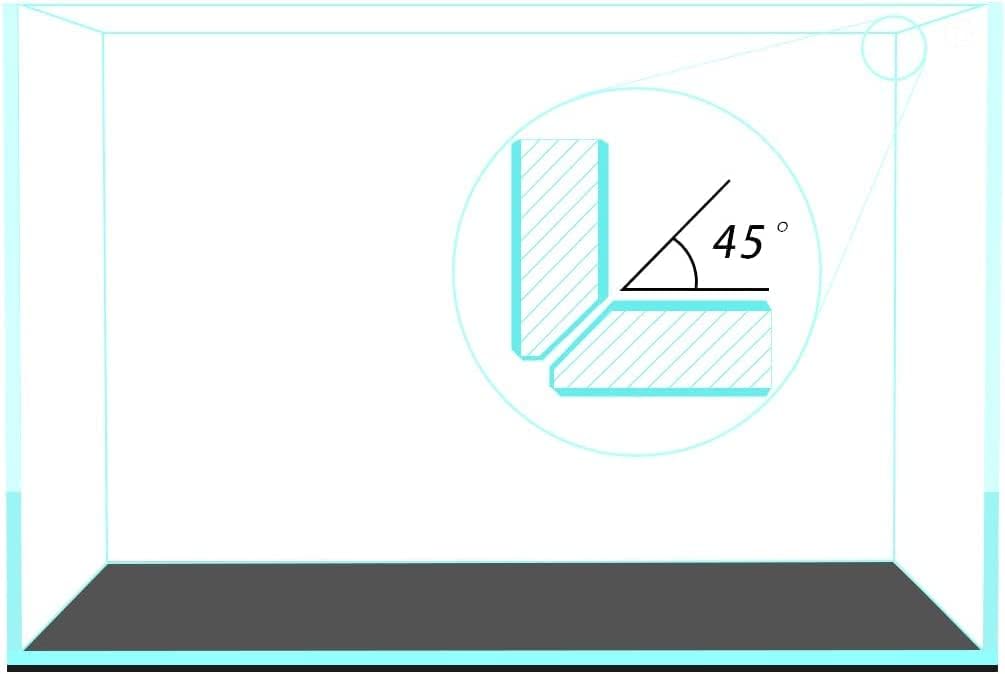 FZONE 10Gal Rimless Aquarium | 10 gallons | None, you choose it | Low iron glass, 45° mitered edges | Picking your own filter, light, and flow rate |
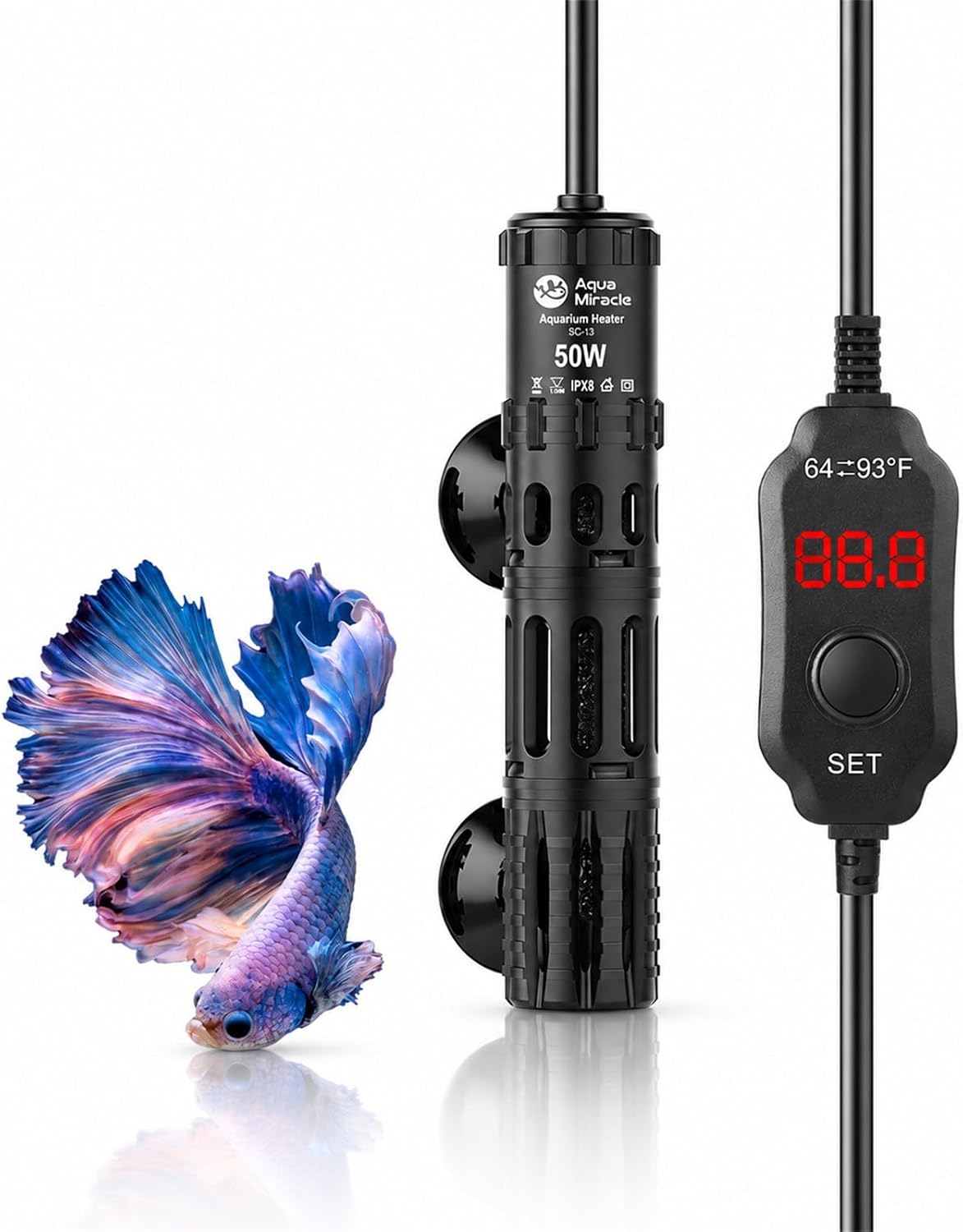 AquaMiracle Aquarium Heater | Not a tank | Not applicable | Dry-run auto power-off, overheat protection | Holding a small tank steady in a cold room |
Read that table as a starting point, not a verdict. The two kits answer the aquarium filter question for you. The rimless tank and the heater are for keepers who already know what they want and would rather not pay for parts they plan to replace.
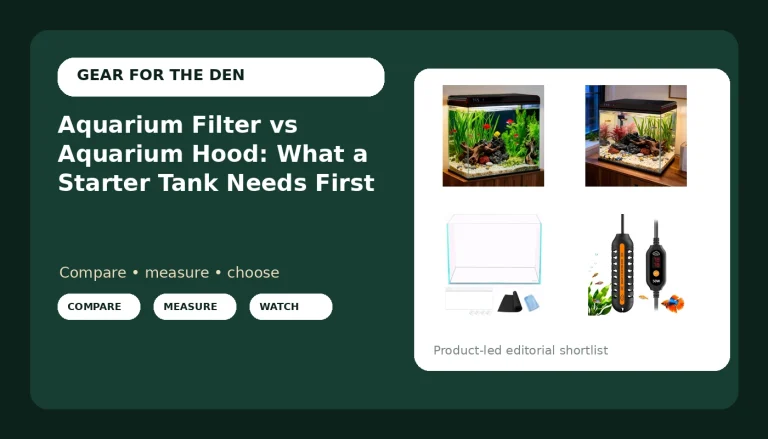
FZONE 10Gal Rimless Aquarium, Low Iron Glass, 45° Mitered Edges (S45-W30)
This is the opposite approach to a starter kit. There is no pump, no light, and no lid, which is the point: you decide the flow rate, you decide the kelvin rating, and you decide whether you want an intake a shrimp fry can survive.
Low iron glass is the honest upgrade here. It takes the green cast out of the edges, and the 45° mitered corners look sharper than a molded plastic rim. Both matter more once the tank is planted and you are staring at it daily.
Two practical notes. Rimless means the water line sits below the top edge, so keep an eye on evaporation and top off with dechlorinated water rather than tap. And since nothing is included, budget for a filter, a heater, and a light before you fill it, which is why I would not hand this to a beginner who wants a tank running tonight.
Check current Amazon price.
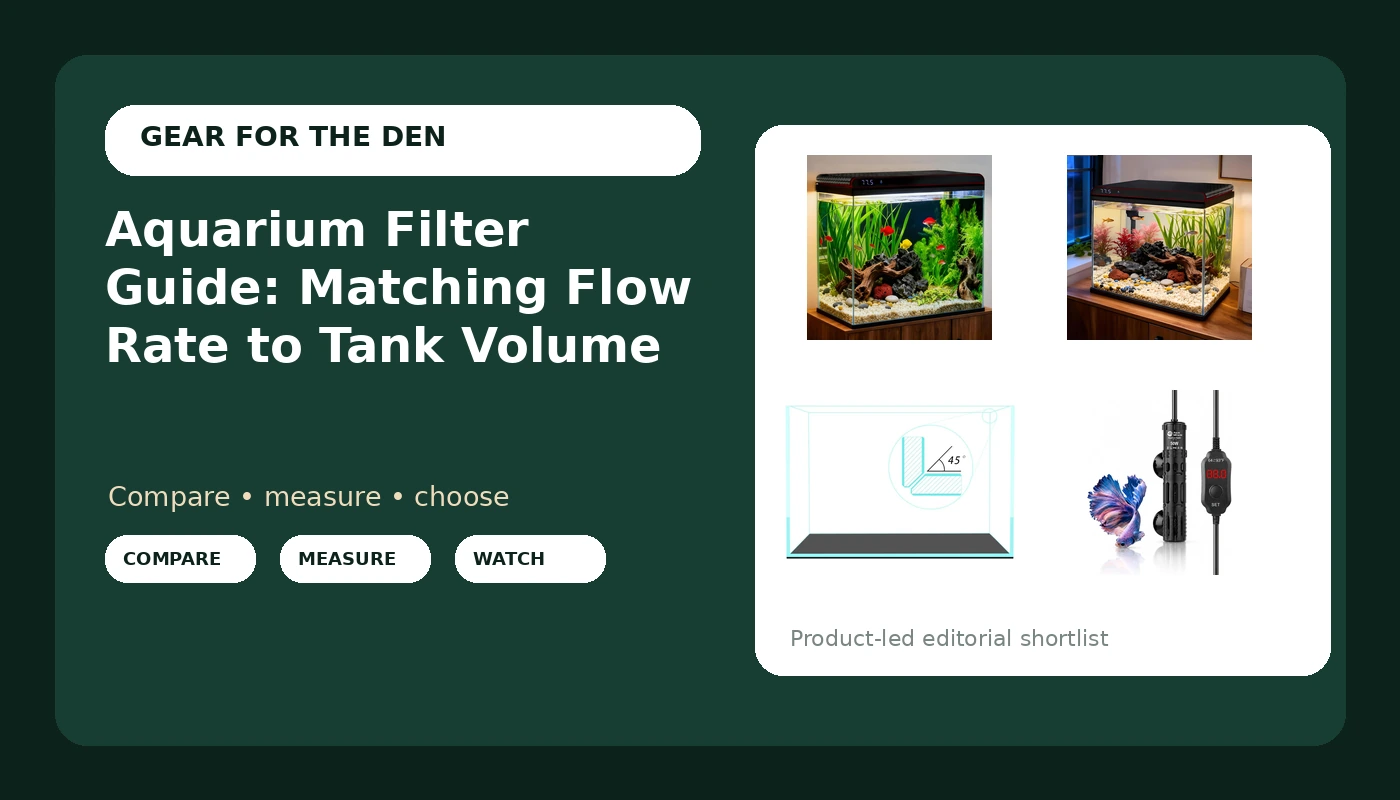
AquaMiracle Aquarium Heater Dry-Run Auto Power-Off & Overheat Protection
This is the least glamorous piece in the guide and the one I would not skip. Your biological filtration stage runs on bacteria, and those bacteria slow down as water cools, so a tank that dips overnight is a tank where the filter works at half speed and ammonia creeps up.
The two features in the name are the two that matter. Dry-run auto power-off protects the heater itself, which is what fails when you unplug it during a water change and forget it is still warm and half out of the water. Overheat protection protects the fish, because a heater stuck on will cook ten gallons long before you notice the thermometer.
Check wattage against your tank volume before ordering, and treat the thermostat range as a target, not a guarantee. A separate glass thermometer is worth owning either way.
Check current Amazon price.
Should you buy the Coospider 20 Gallon Glass Fish Tank?
Yes, and it is the one I would put in front of a first time keeper. The quiet filter pump is matched to the tank, the 3-color LED and temperature monitoring come in the same box, and 20 gallons of water forgives the small mistakes everyone makes in month one.
The size is the catch. Twenty gallons needs a stand that can actually hold it, a spot away from direct sun, and two buckets on water change day instead of one. The LED is also the first thing I would replace if you want a heavily planted tank, because the kelvin rating is aimed at viewing, not growing.
None of that changes the recommendation. If you have the footprint for it, buy this one and skip the upgrade treadmill.
Should you buy the Coospider 10 Gallon Glass Fish Tank?
Buy it if the room is small, the budget is fixed, or the tank is for a kid. The pump, the light, and the temperature monitoring are all included, and 10 gallons is a genuinely good size for a betta or a shrimp colony.
Go in knowing the trade. Smaller tank volume means less forgiveness, so a single overfeeding shows up faster than it would in the 20 gallon. Keep the stocking light, feed sparingly, and change a portion of the water weekly.
If you can stretch to the larger kit and you have the surface for it, do that instead. If you cannot, this one will still give you a clear, quiet, planted tank that a child can help look after.