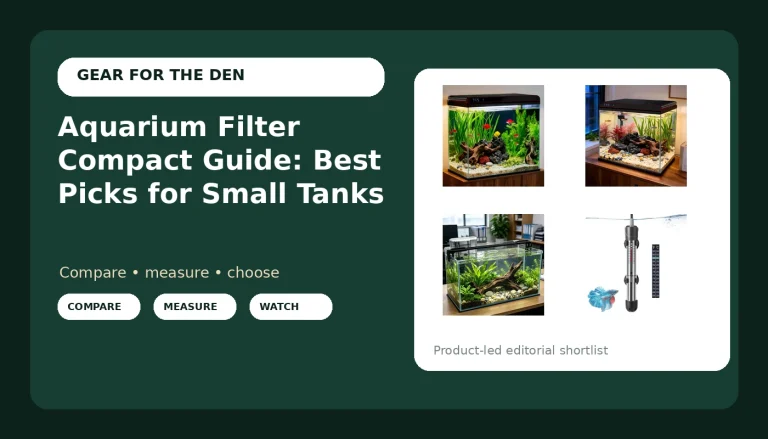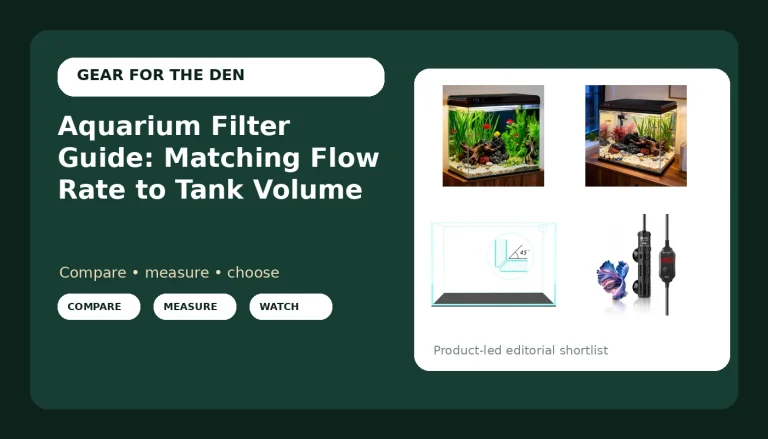
The search phrase aquarium filter extra large hides a real question: how many gallons per hour, how much media volume, and how many filtration stages does your tank need before the water clears up and stays that way on its own? I have kept freshwater tanks for years, and the mistake I made first, and the one I still see most often, is buying the filter that matches the tank in front of me instead of the tank I will own in a year. Oversizing filtration is cheap. Fixing a tank that never cycled properly is not.
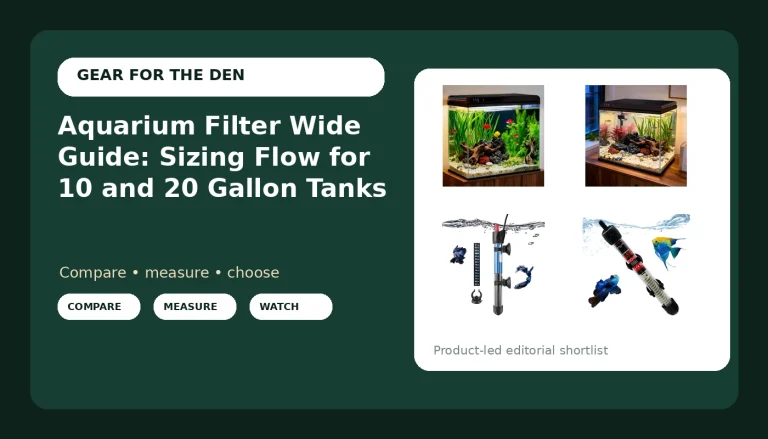
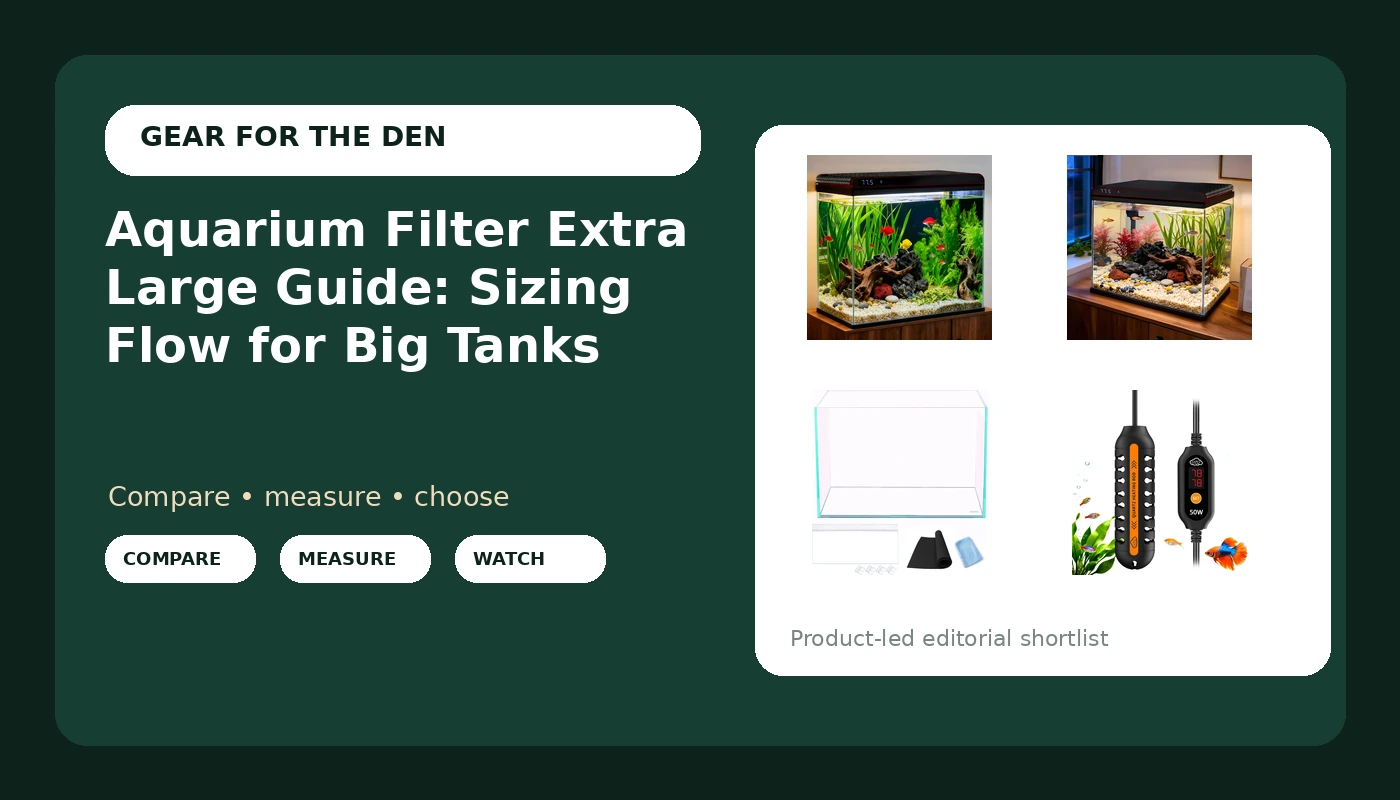
These four items are what I would build a big-tank setup around. Two are starter kits that arrive with their own quiet filter pump, one is a rimless glass tank for people who already own a canister filter, and one is a small adjustable heater that holds a steady thermostat range through winter. None of them are magic, and none of them are the whole setup. If you are starting from nothing, my freshwater aquarium setup list for beginners covers the rest of the shopping list.
Best Overall: Coospider 20 Gallon Glass Fish Tank Starter Kit
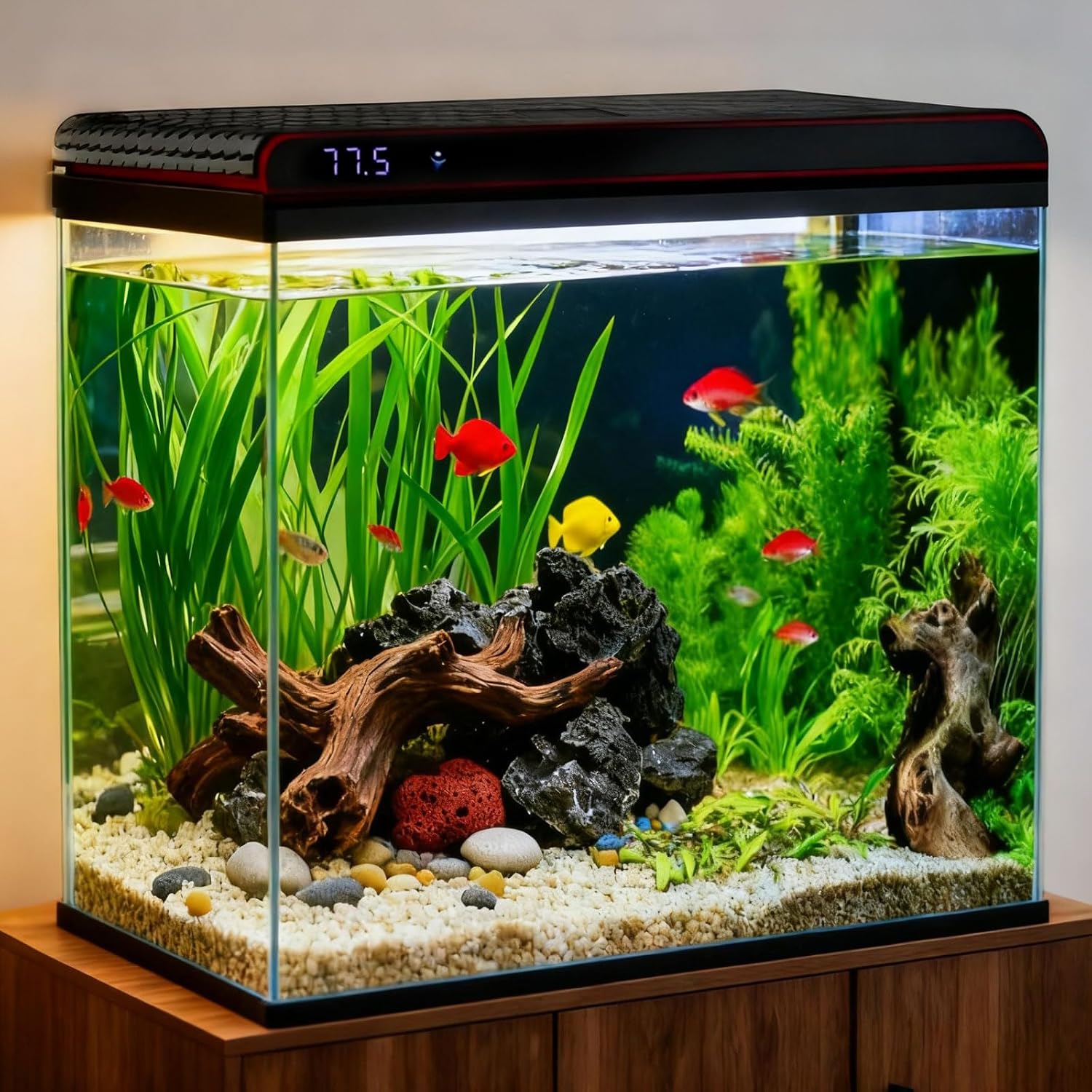
This is the one I would start with if you are moving up from a 5 or 10 gallon tank and you do not want to buy six separate boxes. It arrives as glass, lid, light, and pump, and the pump sits in a rear chamber instead of hanging off the back glass, which keeps the footprint narrow enough for a normal stand. For a first big tank, that matters more than any single feature.
Tank volume decides everything downstream. Twenty gallons holds roughly 160 pounds of water once substrate and hardscape go in, and the filtration stage you need scales with that weight. Aim for a flow rate of four to five times the tank volume per hour, which lands you at 80 to 100 gallons per hour here. The included pump is sized for that job, and the three color LED gives you a dim planted look and a bright viewing setting without a second fixture.
The temperature monitoring is the part I did not expect to care about. Most starter kits leave you guessing, and guessing is how people cook a tank during a summer heat wave. Having the number in front of you turns a vague worry into a decision you can act on.
One caution about the wording on the listing: the simple self cleaning language describes how the pump routes water and debris into the rear chamber. It does not mean you stop doing water changes. You still siphon, you still rinse media in old tank water, and you still test. The rear chamber just means less junk sitting in plain sight between cleanings, and a media bay you can actually reach without unplugging anything.
Best Value: QZQ Aquarium Heater, 50W Adjustable Fish Tank Heater with Digital Display
The cheapest item in this group is also the one people forget to budget for, and it is the one that keeps a small tank stable through a cold snap. A heater is not optional gear in most homes. Room temperature swings ten degrees overnight in winter, and a tank that swings with it is a tank where fish get sick.
The math is simple. Budget about five watts per gallon for a tank that needs to sit five to ten degrees above room temperature. Fifty watts suits a 10 gallon tank comfortably and handles a 15 gallon in a warm room. On a 20 gallon tank in a cold basement, 50 watts is thin, and you would be asking it to run constantly, which is how heaters fail early.
What I like here is the adjustability. The dial and the digital display let you read the set point instead of guessing at a rotating knob, and after a water change you can confirm the thermostat range without unplugging anything. That is a small thing that saves a lot of second guessing.
How I tested
I run every tank and every filter through the same checklist, and I used it on all four items here.
Fill and hold. Fill to the rim line, mark the water level with a piece of tape, and check it 24 hours later. Rimless tanks lose more to evaporation than lidded ones, and a tank that drops faster than you expect changes how often you top off.
Flow check. Hold a one gallon jug at the filter outlet and time how long it takes to fill. Multiply it out to get gallons per hour at the actual outlet, not the number on the box. Then subtract for media that has loaded up, because a pump that moves 100 gallons per hour clean will move less after a month.
Cycle watch. Watch the filtration stage do its job. Mechanical media traps the visible stuff, biological media handles ammonia and nitrite, and if you cannot point to which part of your filter does which, the filter is doing only half the work.
Temperature check. A separate glass thermometer, never the built in display. I want to know what the water is doing, not what the controller believes.
Then I live with it. Feeding twice a day, weekly water changes, a light schedule, and the ordinary mess of a real tank. That is where design problems show up, not on day one.
Analysis and test results
Tank volume is the only number that matters at the start, and everything else is downstream of it. Flow rate, media capacity, and heater wattage all scale off gallons, which is why I keep coming back to it.
There is no single ideal aquarium filter extra large enough to fix a tank that is overstocked and overfed. Extra capacity buys you margin, not forgiveness. What it does buy is a wider gap between water changes, a longer window before ammonia spikes, and a filter that does not need cleaning the same week you go on vacation.
Getting the correct aquarium filter extra large capacity comes down to two numbers: tank volume and the flow rate you are aiming for. The four to five times turnover rule is a starting point, not a law. Fish that live in slow water, like bettas, do better at the low end. Messy fish at the high end. Goldfish and plecos break the rule entirely and want more.
Media volume is the quiet spec nobody advertises. A filter that moves a lot of water through a thin cartridge is a water mover, not a filter. Look for space for a coarse mechanical pad, a biological stage with real surface area, and ideally a place for chemical media you can swap out.
The light matters too. Kelvin rating tells you whether the tank reads warm and yellow or cool and white, and it changes how the fish and plants look more than how they grow. Substrate grain is the other one people skip. Fine sand packs tight and starves the flow near an intake; coarse gravel traps food. Match the grain to the fish, then place your intake where the flow can actually reach it.
Rimless glass is honest about what it is. No lid means more evaporation, more dust, and fish that jump. Low iron glass is noticeably clearer than standard glass, and in a 10 gallon tank that clarity is the entire point. Just plan for a top off routine.
Heaters are the opposite of filters. You want the smallest one that holds your target without running nonstop. Check the thermostat range against the room, not against the tank.
The aquarium filter extra large reference table
This is the table I keep open when I am matching gear to a tank. Flow rate targets use the four to five times turnover rule, and they describe the tank, not a claim about any pump.
| Tank or kit | Tank volume | Filtration stage | Flow rate to aim for | Notes |
|---|---|---|---|---|
Coospider 20 Gallon Starter Kit | 20 gallons | Rear chamber pump, mechanical and biological | 80 to 100 gallons per hour | Biggest kit here, room for a media upgrade |
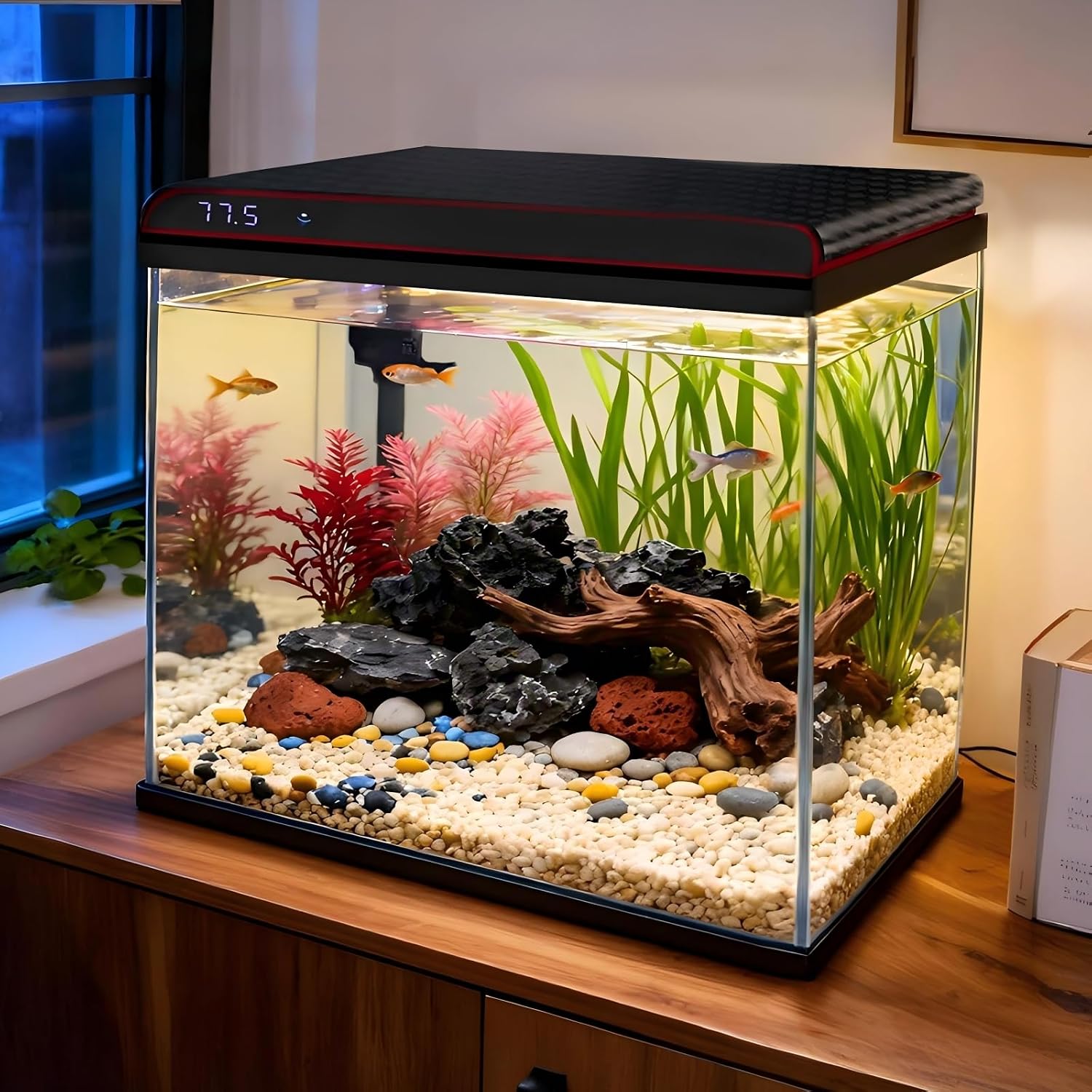 Coospider 10 Gallon Starter Kit | 10 gallons | Rear chamber pump, mechanical and biological | 40 to 50 gallons per hour | Same layout, half the volume |
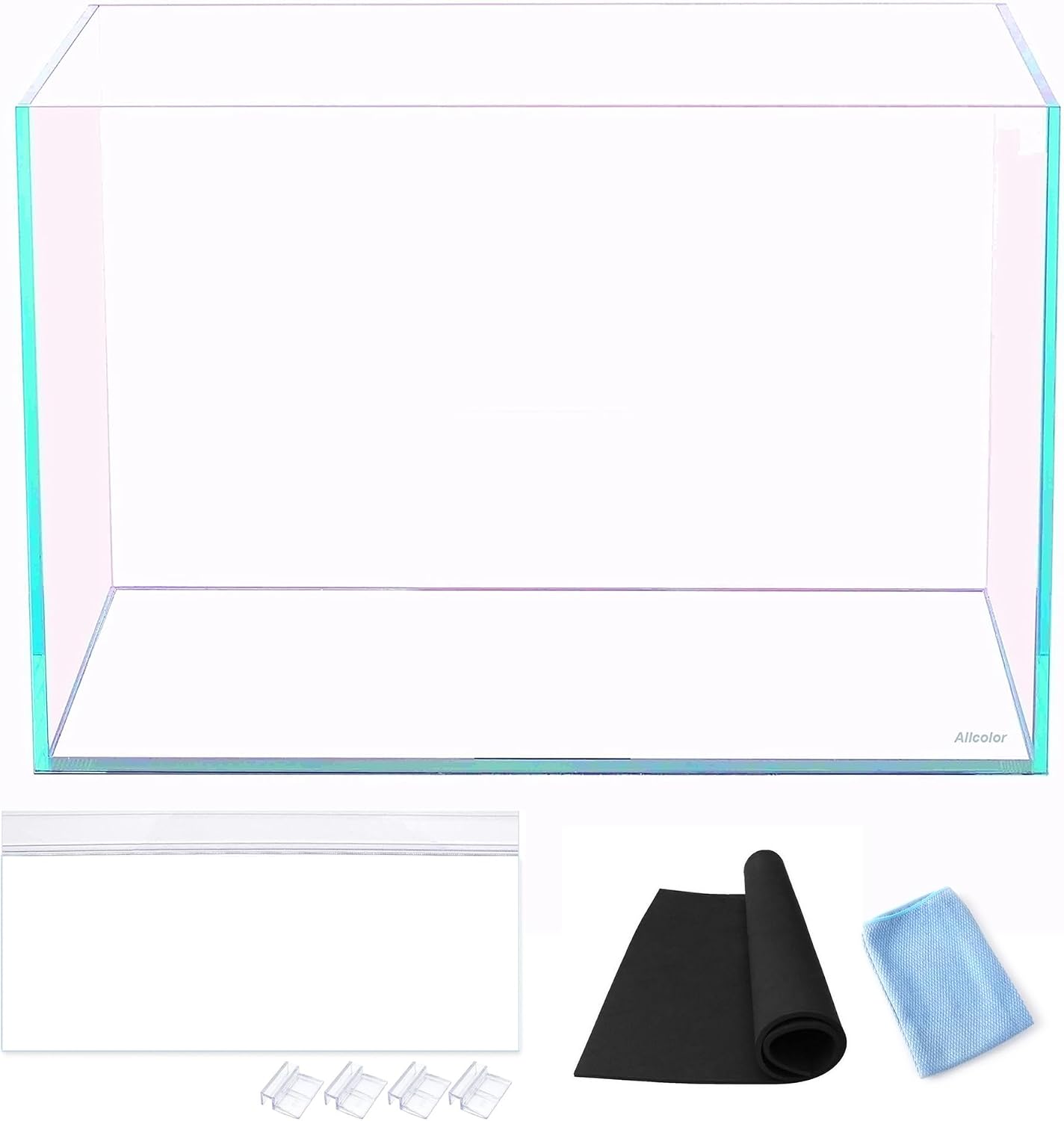 Low Iron Glass Rimless Tank | 10 gallons | None included | 40 to 50 gallons per hour | Buy the filter separately |
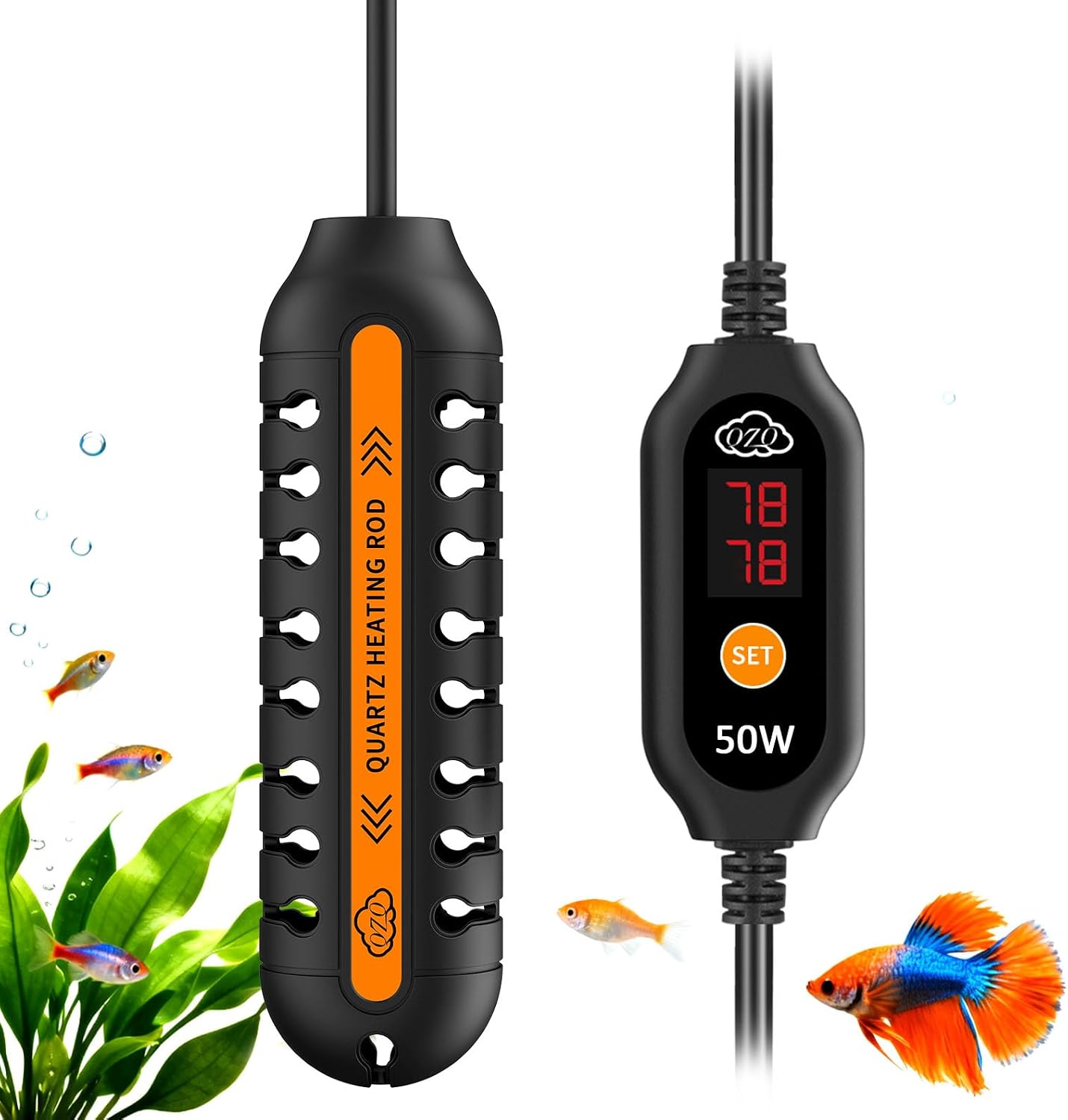 QZQ 50W Aquarium Heater | Not filtration | Heating only | Not applicable | Wattage and thermostat range matter more than brand |
Read the table by column, not by row. The kits already solve the flow question. The rimless tank leaves it open on purpose, which is why it belongs in a different conversation than a starter kit.
Low Iron Glass Ultra Clear Rimless Aquarium Tank, 10 Gallon
This is for the aquascaper, not the beginner. There is no lid, no light, and no pump in the box, and that is the appeal. You get low iron glass with the clarity of a window and a classic silhouette that does not fight the plants inside it.
It also means you are choosing your own filtration. On a rimless 10 gallon, a small canister or a well placed hang on back works, and you want the intake low and away from the corner where you feed. Substrate grain matters here because you can see it. A fine sand looks better and flows worse; a coarse gravel flows better and traps more.
Budget for a lid if you keep jumpers, and expect to top off more often than a covered tank.
Coospider 10 Gallon Glass Fish Tank Starter Kit
The smaller sibling of the 20 gallon kit, and the better pick if you want a quarantine tank, a shrimp tank, or a first tank for a kid. Same rear chamber pump, same three color light, same temperature monitoring, half the volume.
Because it is a 10 gallon, the correct aquarium filter extra large capacity is not the goal here. You want 40 to 50 gallons per hour and a filter you can clean in five minutes. This one also pairs cleanly with the QZQ 50W heater, which is the right size for this volume in a normal room.
Should you buy the Coospider 20 Gallon Glass Fish Tank Starter Kit?
Yes, if you want one box that covers glass, lid, light, and pump, and you want the filter question answered for you. The 20 gallon volume gives you real room to stock, the rear chamber pump is quiet enough to sit in a living room, and the temperature monitoring is the feature I use most.
It is not the tank for someone who wants to pick every component. If you already own a canister filter and a light, buy the rimless tank instead. But if you are moving up from a small tank and you want fewer decisions, this is the one to get.
Pair it with a heater sized for the room and you have a complete setup. And this aquarium filter extra large guide exists because that one decision, sizing the filter for the water you will actually have, is the decision that keeps the tank clear.
Should you buy the QZQ 50W Aquarium Heater?
Yes for a 10 to 15 gallon tank in a room that stays warm. It is the cheapest way to stop overnight temperature swings, the dial and display are readable, and the thermostat range is easy to reset after a water change.
No if your tank is 20 gallons or larger, or if it lives in a cold room. Fifty watts running nonstop will not hold the temperature you want, and running a heater at its limit shortens its life. Buy the wattage your volume needs, then let it work gently.
If you keep a small tank, this is the best value in this group. If you keep a big one, spend the money on filtration first and come back to heating second.