The aquarium led light vs fluorescent light decision is the first piece of gear most new keepers research, and it is also the one where old forum advice ages fastest. Walk into a shop today and the fluorescent strips have mostly left the shelves. Open a thread from 2012 and everyone is still telling you to buy a T5HO fixture and replace the tubes every year. I keep freshwater tanks, from a five-gallon shrimp cube on the desk to a 40-gallon breeder in the basement, and I have bought both kinds of fixture with my own money. The honest summary is that this was never really a brightness contest. It comes down to spectrum control, heat, and how much of the daily schedule you want a timer to handle.
For most freshwater tanks in 2026 the LED fixture wins, and the best all-round pick in this group is the hygger 24W plant light, because it pairs a plant-leaning spectrum with 24/7 and DIY modes in a single bar. If your tank is a nano cube, the Pawfly clip-on is the cheap way in, and if you want the most adjustable color mix of the four, the AQQA is the one to shortlist.
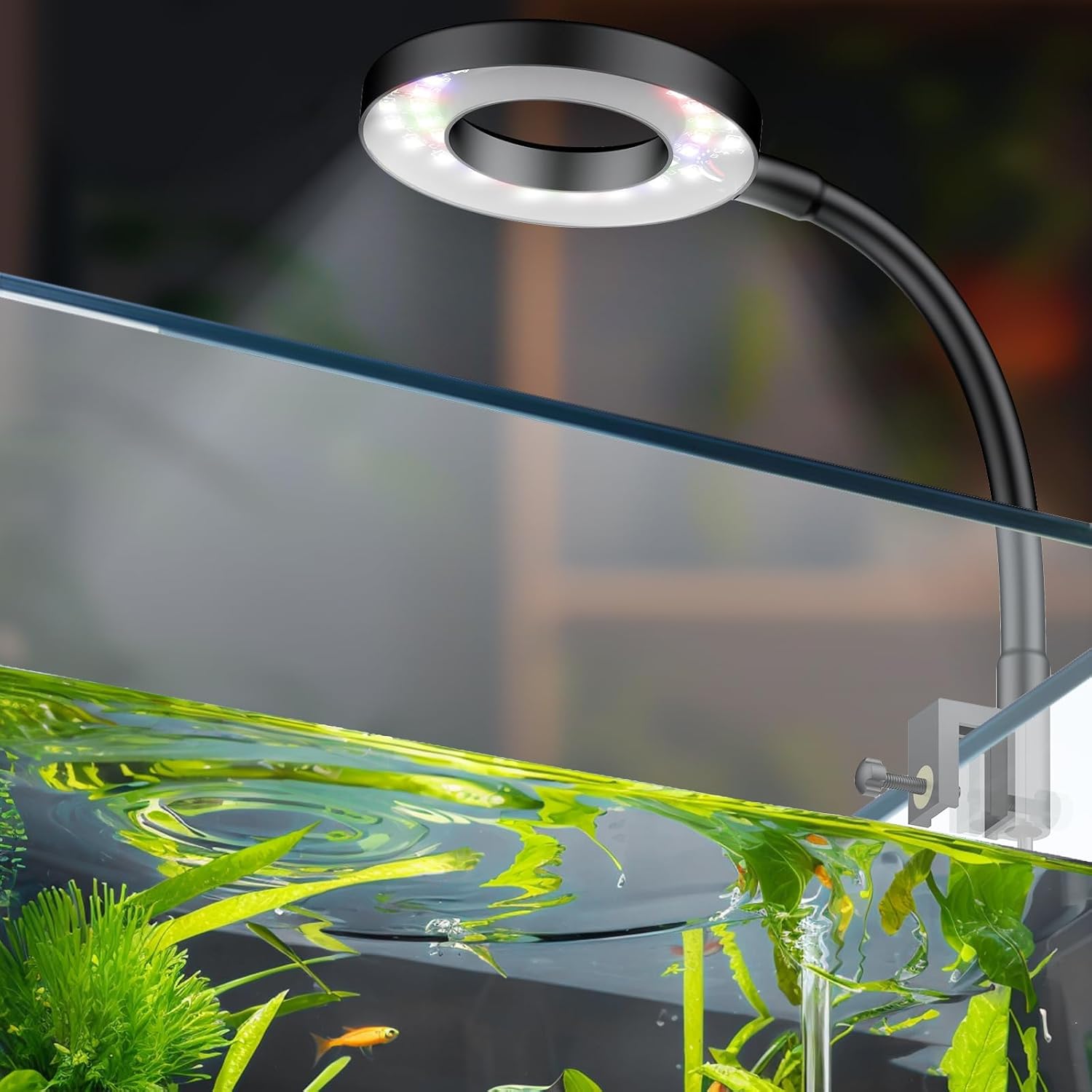
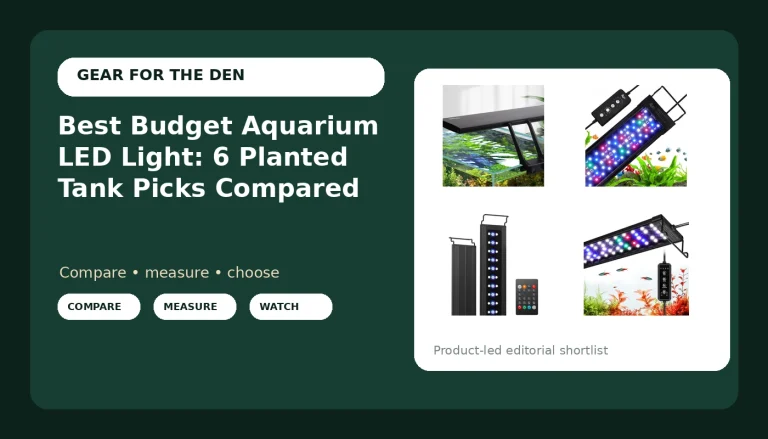
Pawfly 6 W LED Aquarium Light for 1 to 5 Gallon Fish Tanks Clip On Fish Tank Light USB Moving Aquarium Lamp with Full Spectrum Dimmable White Blue Red Green Lights with Timer (Adapter Not Included)
Full spectrum dimming, four color channels, and a timer in a clip-on body that fits a nano tank rim
The adapter is not included, and the 1 to 5 gallon range means it will not scale up with your next tank
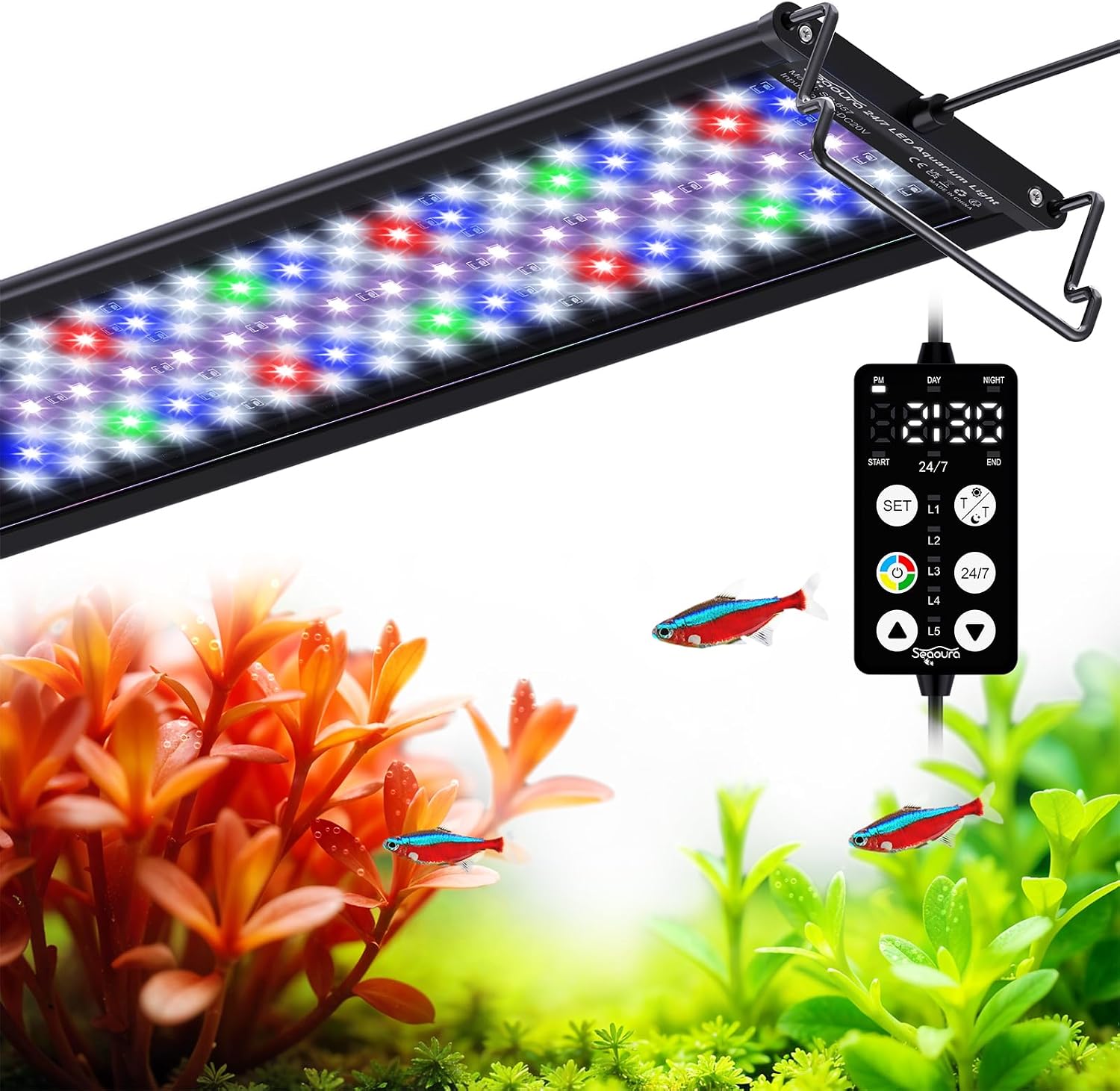
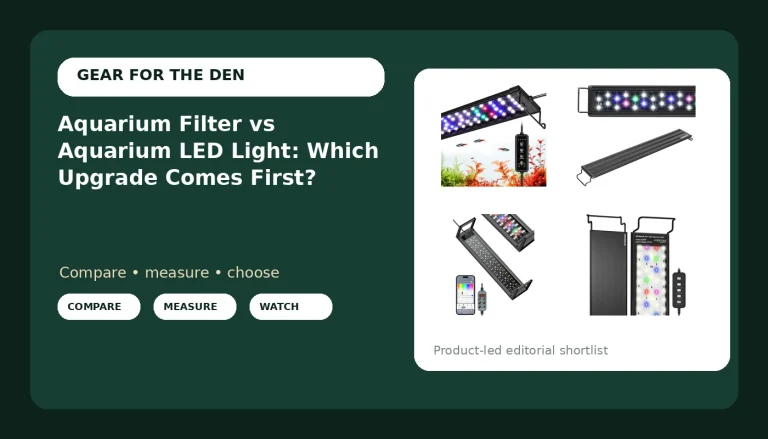
SEAOURA LED Aquarium Light with 24/7 Timer for 18-24in Fish Tank
The 24/7 timer runs the photo period for you, and the 18 to 24 inch span covers the most common small tank footprints
Fixed length, so it is tied to that tank class, and there is no clip option for a rimless cube
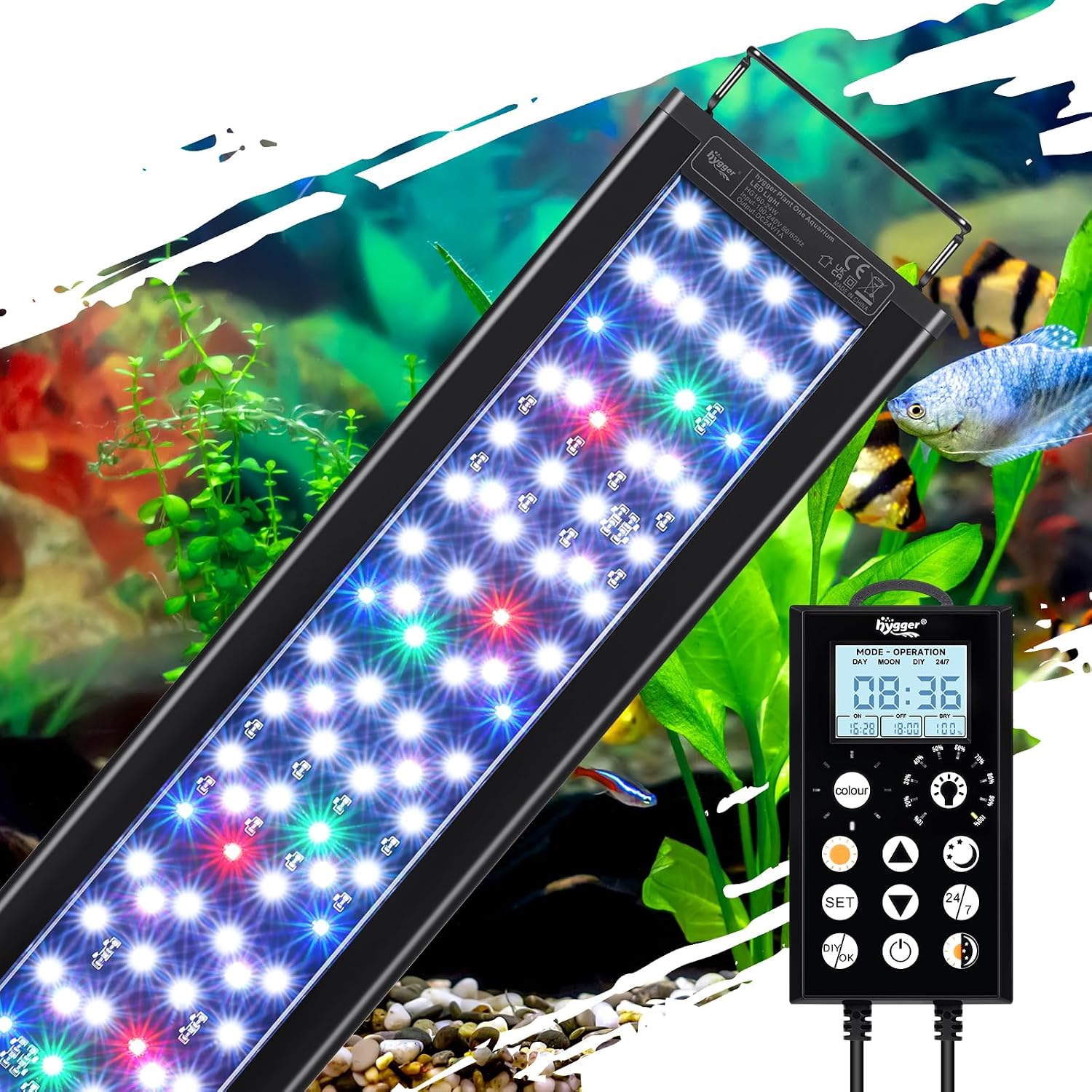
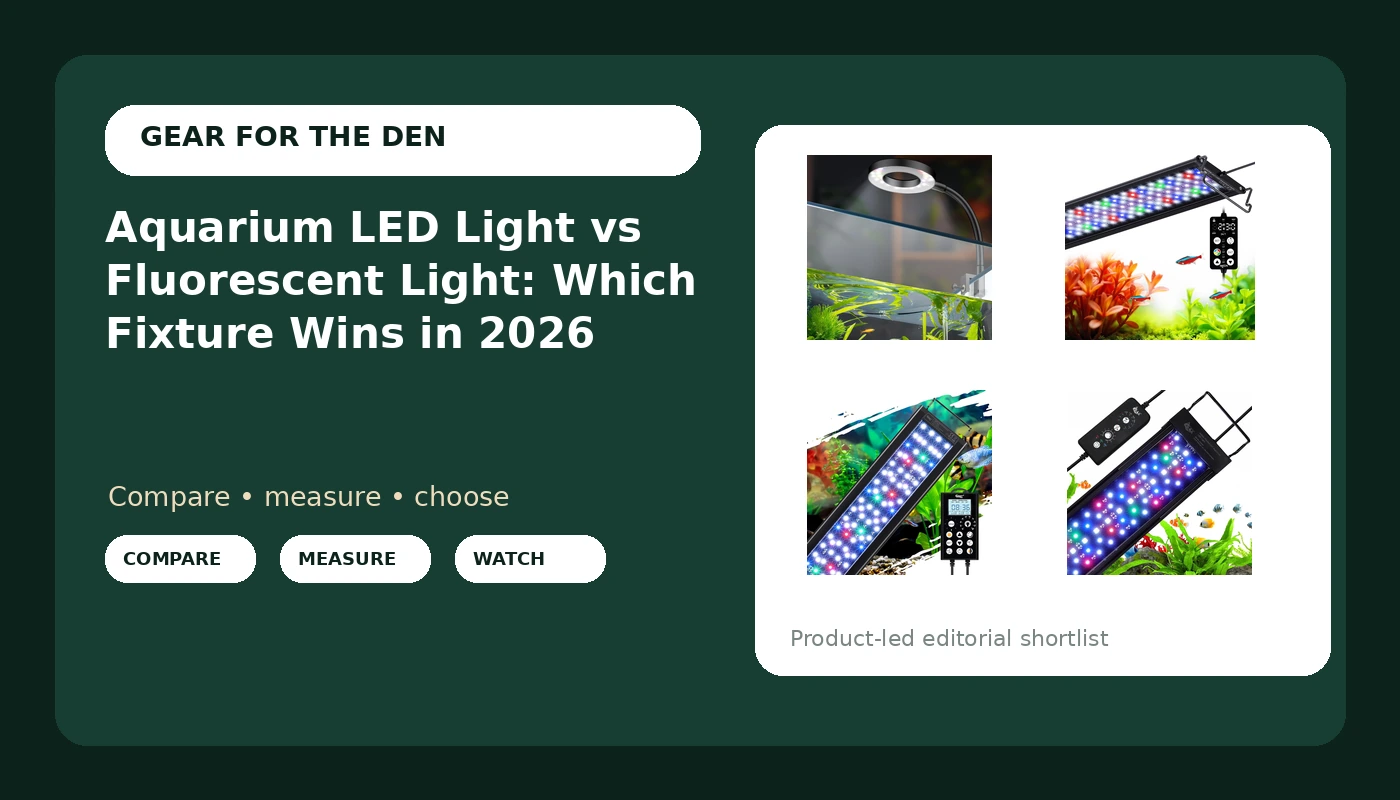
hygger LED Aquarium Light for Plants, 24/7 & DIY Mode Fish Tank Light, 24W
A plant-oriented spectrum with 24/7 and DIY modes, in a 24W bar sized for a mid-size planted tank
Too much fixture for a nano cube, and it needs a tank long enough to mount properly
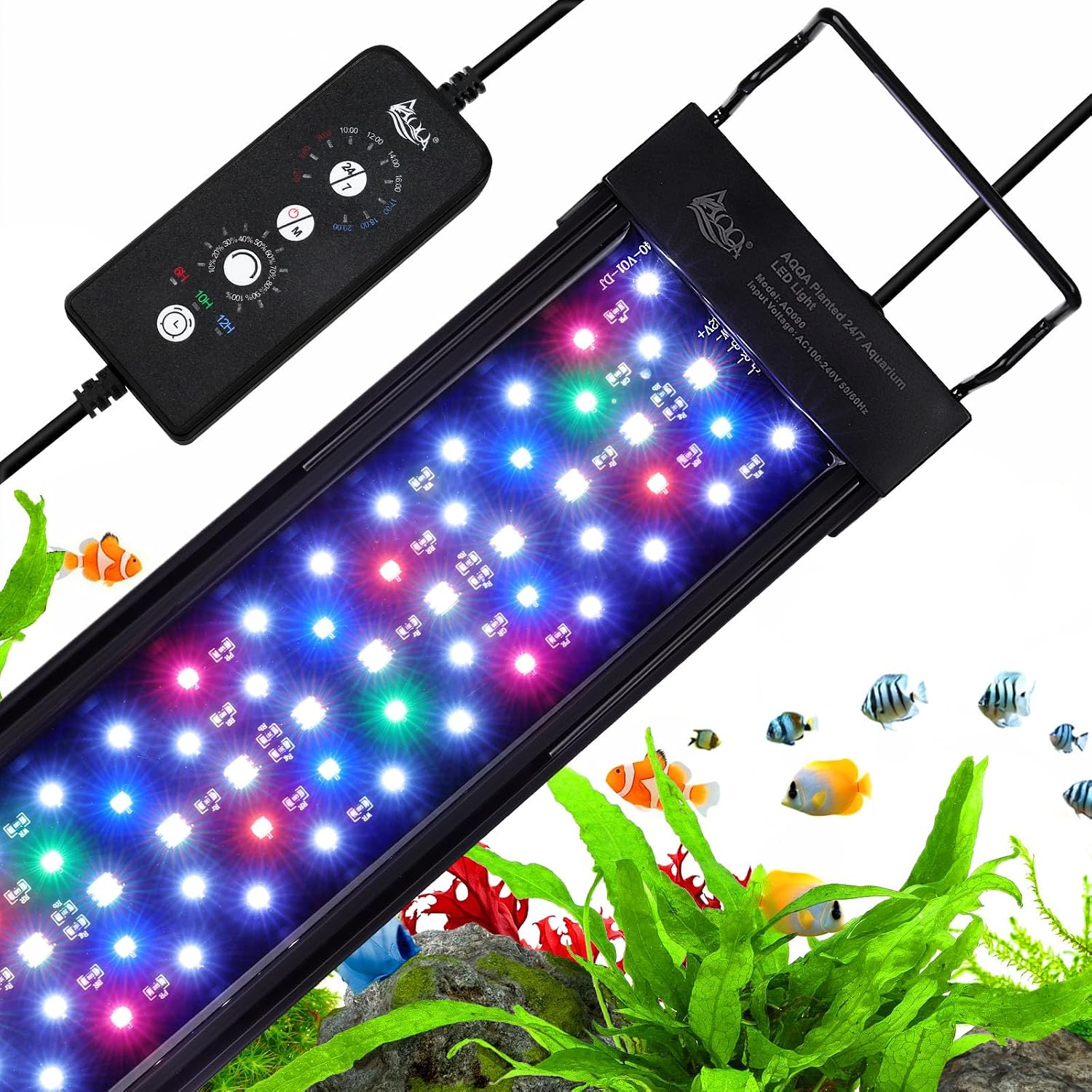
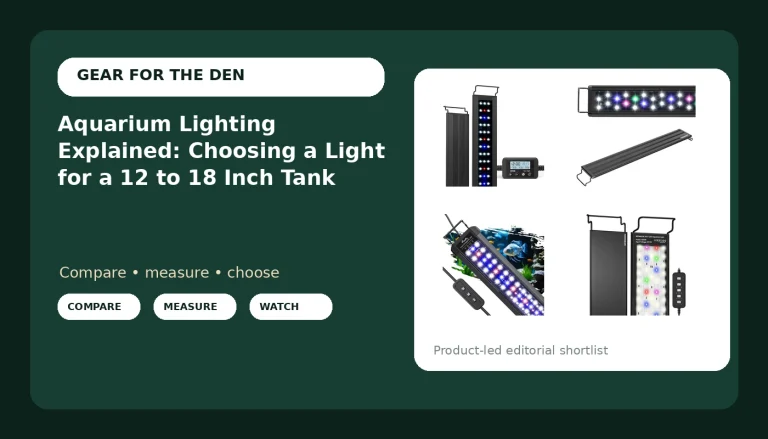
AQQA LED Aquarium Light, 24/7 & DIY Mode Full Spectrum Fish Tank Light
Full spectrum array with 24/7 and DIY modes, the most flexible color control in this group
The priciest of the four, and the DIY menu is more than a beginner needs
Prices and availability may change.
How I compare aquarium lights
Every fixture that comes through my house gets judged on the same five things, and none of them are the words printed on the box.
Spectrum comes first. A kelvin rating around 6,500K to 7,500K reads as daylight, which is why most freshwater LEDs sit there, but for a planted tank the number that matters more is whether the array carries red and blue diodes alongside the whites. A fixture that only throws white light can still grow easy plants, it just gives you less room to push growth.
Control is second. A fixture with a 24/7 mode and dimming lets you set a photo period and walk away, while a plain on/off strip means you are the timer. This is the feature that separates two fixtures with similar output, and it is the one you will interact with every day.
Mounting is third, because a light that clips to a rim and a light that spans a tank on brackets are not interchangeable, and a bar that is the wrong length for your tank is a return waiting to happen. Check the length against the tank you own today, not the one in the product photo.
Heat is fourth. It matters more than people expect, because a glass lid traps whatever the fixture gives off, and a light that runs hot under a sealed hood will push water temperature around.
Service life is fifth. LEDs rarely fail at the diode, they fail at the driver, so a fixture with a warrantied driver is worth more than one with a prettier housing and no support channel.
I also read the wattage claim next to the tank volume it is aimed at. A 24W bar over a 20-gallon long is a different proposition from 24W over a 55. Watts per gallon was always a rough rule, and it is rougher with LEDs because efficiency varies, but it still tells you whether the maker is aiming at a low-light fish-only setup or at plants.
Why the aquarium led light vs fluorescent light switch happened
If you have spent an evening typing fluorescent light vs aquarium led light into a search bar, the short version is that the change was driven by heat, control, and tube replacement, not by a sudden jump in brightness.
A fluorescent fixture needs a ballast, a starter, and a tube, and it does one thing: on or off. The tube fades long before it stops glowing, so the light you bought is not the light you have after a year, and the spectrum drifts as the phosphors age. Most of the electricity ends up as heat, and under a glass lid that heat goes straight into the water, which is how a tank that sits comfortably inside its thermostat range in January ends up running warm in July.
An LED bar skips the ballast, runs cooler, dims without a separate dimmer, and can hold a schedule in firmware. There is no mercury to dispose of, no tube to buy every year, and no flicker as a tired ballast warms up.
The practical difference between aquarium led light and fluorescent light shows up in three places: how much heat reaches the water, how precisely you can set the color, and whether the schedule runs itself. On heat and color, LED wins clearly. On scheduling, a fluorescent fixture with a plug-in timer still works, it just looks clumsy next to a built-in 24/7 mode.
What LED did not do is make good light cheap by default. A cheap bar with weak diodes and a hot driver can look worse than a healthy fluorescent tube, and it will fail sooner. The technology changed; the rule that you get what you pay for did not.
The four LED fixtures and who each one fits
Pawfly 6 W clip-on. This is the nano-tank answer. It clamps onto the rim of a 1 to 5 gallon tank, runs off USB, and gives you dimmable white, blue, red, and green channels with a built-in timer. The caveat is in the product name: the adapter is not included, so you need a USB power block you already trust, and the clip-on arm is not going to light a 20-gallon. For a betta cube or a shrimp jar, it is the least expensive way to get full spectrum dimming and a schedule. Visit on Amazon
SEAOURA 24/7. Sized for 18 to 24 inch tanks, which covers the 10, 15, and 20-gallon high footprints that most beginners end up with. The headline feature is the 24/7 timer: you pick a mode and the fixture runs its own sunrise, daylight, and moonlight cycle. It is a fixed-length bar, so it will not follow you to a bigger tank, and there is no clip for a rimless cube. Visit on Amazon
hygger 24W plant light. The plant-focused pick. A 24W bar with a spectrum aimed at photosynthesis, plus the same 24/7 and DIY modes as the others, which means you can accept the preset cycle or build your own. It is the fixture I would put over a mid-size planted tank, and it is more light than a five-gallon cube needs. Visit on Amazon
AQQA full spectrum. The most adjustable of the four. A full spectrum array with 24/7 and DIY modes, and a price that reflects the extra control. If you like tuning color temperature and intensity channel by channel, this is the one that rewards that habit. If you want to plug in a light and forget it, you are paying for a menu you will never open. Visit on Amazon
Wattage, kelvin rating, and tank volume: reading a light spec sheet
Once you stop treating the aquarium led light vs fluorescent light choice as a brightness contest, the spec sheet gets much easier to read.
Wattage is the number shoppers fixate on and the one that means least on its own. Two 24W fixtures can put very different amounts of usable light into a tank depending on diode efficiency and how the array is aimed. Treat wattage as a class indicator: a 6W clip-on is a nano fixture, a 24W bar is a mid-size fixture, and anything larger is for a deep tank.
The kelvin rating describes color, not power. 6,500K is the daylight look most freshwater keepers prefer because it renders fish color honestly. A warmer tube in the 3,000K to 4,000K range pushes yellow and can make a planted tank look muddy, while a very blue rating belongs over a reef, not a community tank.
Tank volume and depth decide whether a fixture can reach the substrate. Light falls off with distance, so a bar that is plenty over a 12-inch-deep 20-gallon long will struggle at the bottom of a tall tank. Dark substrate grain absorbs more light than pale sand and makes the same fixture look dimmer, which is one reason two keepers with identical lights describe them differently.
And if you are reading a full equipment list, do not let the lighting numbers blend into the rest. Flow rate, gallons per hour, filtration stage, and thermostat range describe the filter and the heater, and no light choice changes any of them.
The trade-offs nobody puts on the box
The first trade-off is heat, and it cuts both ways. LEDs run cooler than fluorescents, but they are not cold, and a hood that seals the top of the tank will hold that warmth in. If your tank already runs near the top of its thermostat range in summer, a closed lid plus any light is a problem worth solving before you buy.
The second is repairability. A fluorescent fixture was three parts you could replace. A slim LED bar is often one sealed unit, and when the driver dies the whole fixture goes with it. That is the real argument for buying from a brand with a support channel rather than the cheapest listing using the same stock photos.
The third is scheduling. A 24/7 mode is genuinely useful, but it is also a commitment: if you set a long photo period you will grow algae, and the fixture will do exactly what you told it to. Start shorter than you think you need and extend it once the plants settle.
The fourth is that none of these four fixtures will fix a tank with a nutrient problem. Light drives plant growth only if the rest of the setup can keep up, which is why the lighting decision belongs after you have sorted the filter and the water changes.
Should you buy fluorescent at all in 2026?
Mostly no, with two exceptions. If you already own a working fluorescent hood, a fresh tube is a smaller decision than a whole new fixture, and a fish-only tank with no plants does not need a programmable spectrum. Beyond that, whether you choose an aquarium led light or fluorescent light, you are picking between a fixture that will still be relevant in five years and one that is already leaving the hobby.
The other exception is a shop-light style tube over a big, shallow, low-demand tank, where the entry cost is low and the heat is not a problem in an open-top setup. That is a narrow case, and it shrinks every year.
What I am watching next
Two things. First, the budget end of the LED market keeps improving: the Pawfly at the nano end and the hygger at the 24W end both do things that cost noticeably more a few years ago. Second, app control is spreading down from reef gear into freshwater fixtures, and I am not convinced it is an upgrade. A physical button and a 24/7 preset will outlive an app that stops getting updates.
If the aquarium led light vs fluorescent light question is still open for you, the safest path is to match the fixture to the tank you own today rather than the tank you might buy in two years, and to treat the timer as the feature you will use every single day.