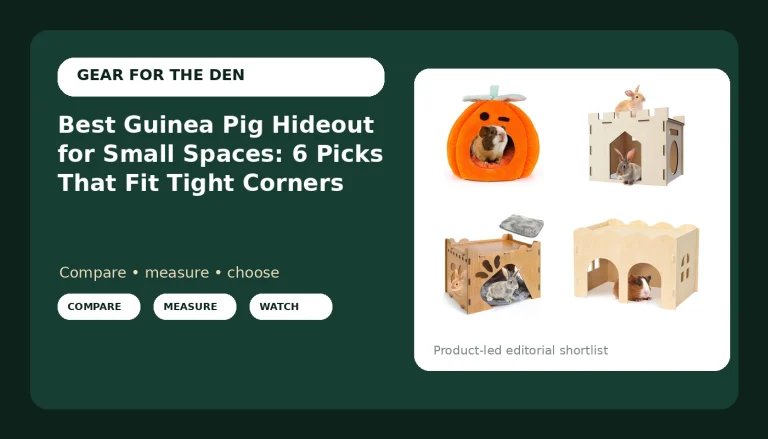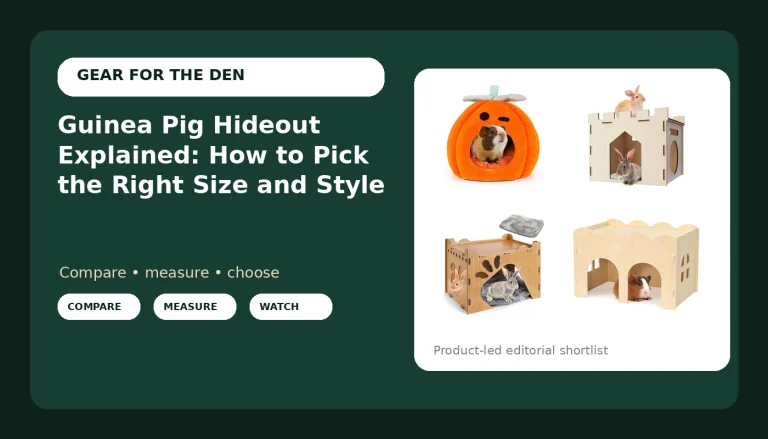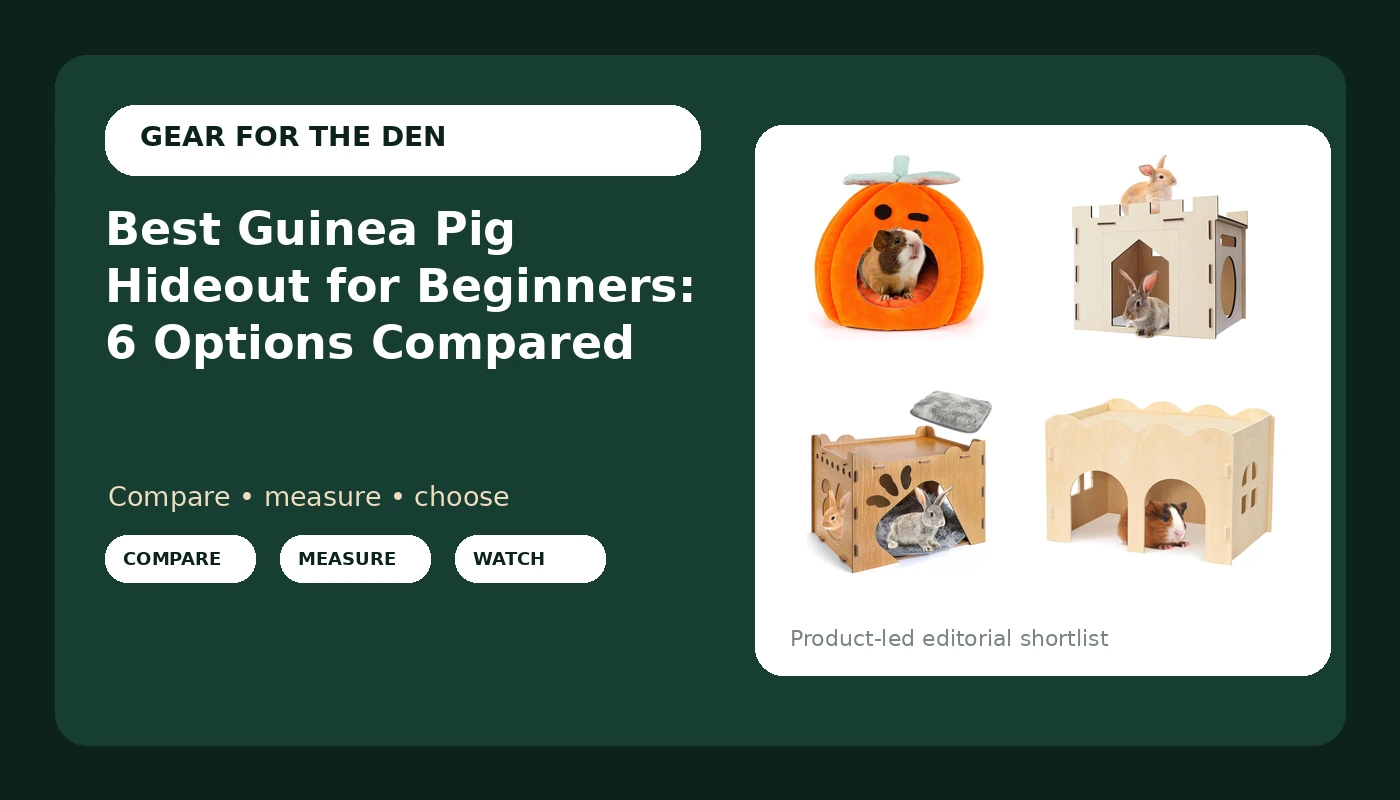
Setting up a first cage is mostly about the unglamorous details: cage size, floor area, bar spacing, and how much bedding dust you are willing to live with. The purchase that changes how a guinea pig actually uses that space, though, is a place to hide. A guinea pig hideout for beginners does not need to be complicated, but it does need to fit the cage you already own, suit the material you are willing to clean, and match the size of the animal that will squeeze inside it. This guide compares six options, from a soft fleece bed to a wooden castle and two complete two-tier cages, so you can see which shape and material suits the setup you actually have.
Quick answer
The YUEPET Guinea Pig Bed, Warm Fleece Pumpkin Hideout is the strongest fit for a first hideout because it is a soft fleece bed rather than a built structure, so it can be placed inside whatever cage or playpen you already own. Choose the Bifeaw Natural Wooden Chew-Proof Guinea Pig Hideout instead when you want a rigid wooden shelter that a persistent chewer cannot work through as easily as fabric.
Guinea pig hideout for beginners: what is worth comparing
The six options below range from a soft bed to complete cages, and each one solves a slightly different problem.
Top pick
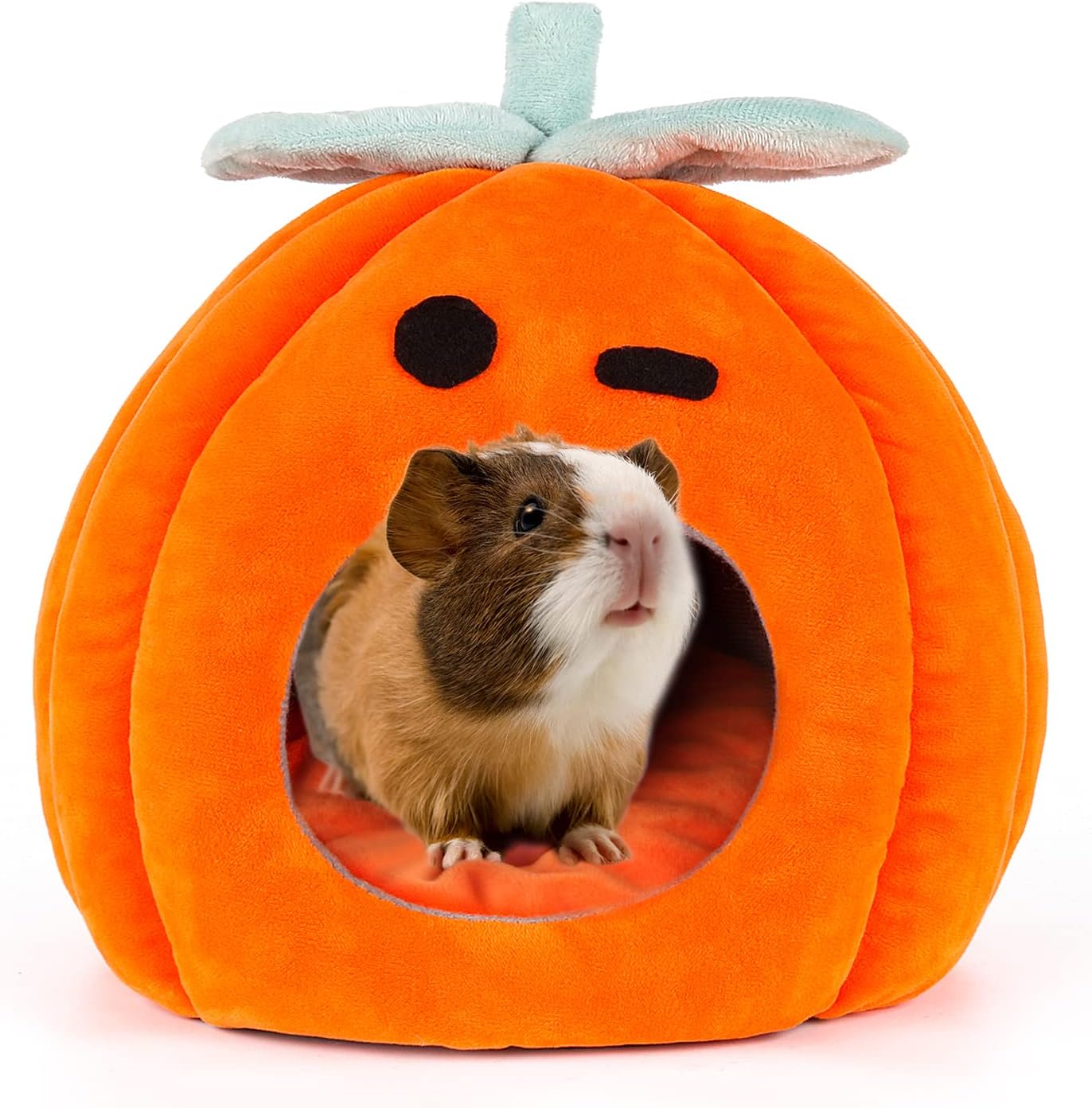
YUEPET Guinea Pig Bed, Warm Fleece Pumpkin Hideout
A pumpkin-shaped fleece bed and hideout that gives a guinea pig a soft place to curl up inside an existing cage.
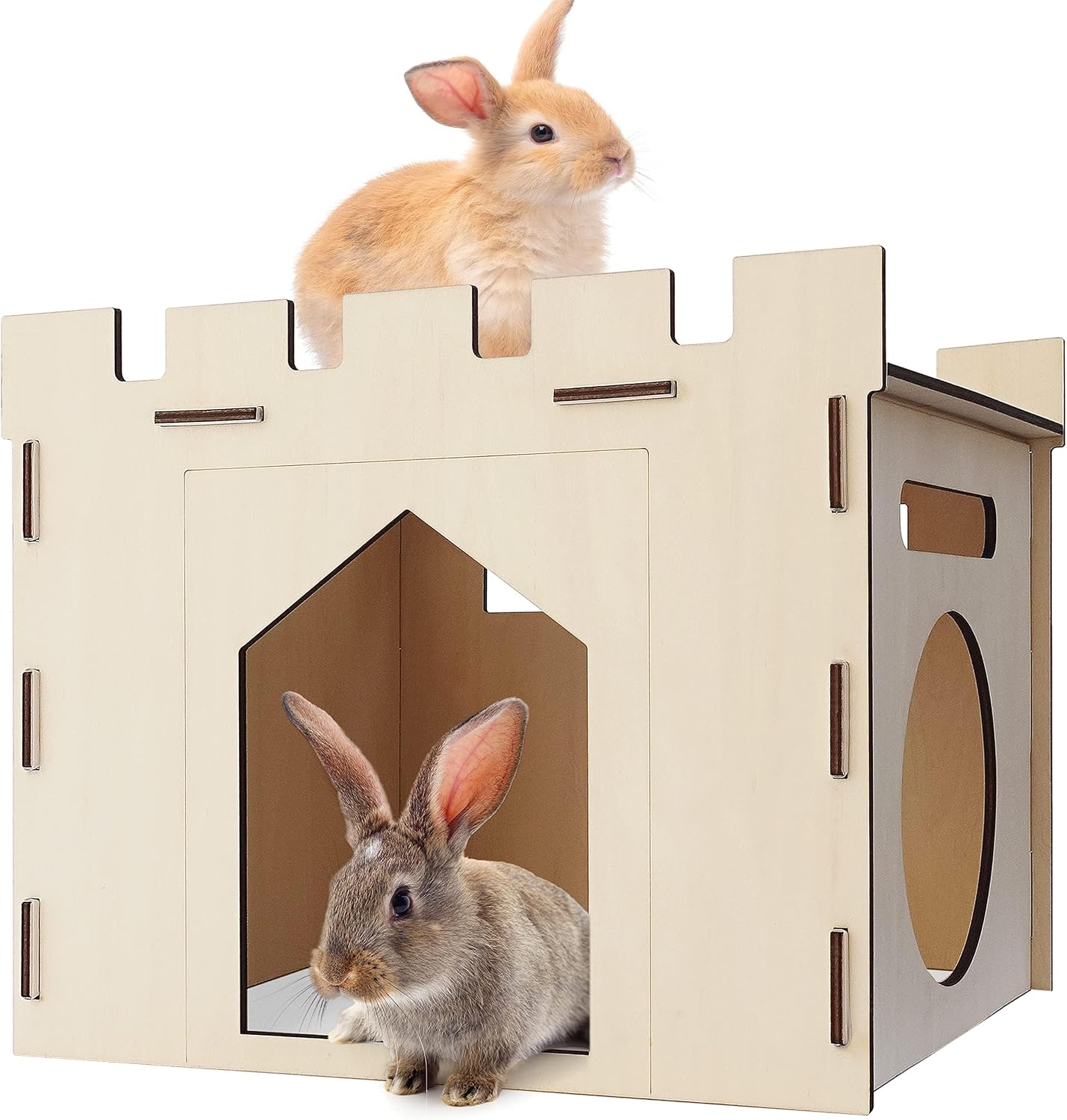
HIIMALEX Large Sturdy Bunny House with Spacious Balcony Hidey Detachable Playhouse for Rabbit Hideout Castle Tower Toys for Indoor Bunnies Guinea Pig Hamster Chinchilla Gerbil
A large house with a spacious balcony, a detachable playhouse section, and a hidey area, listed for rabbits and small pets such as guinea pigs.
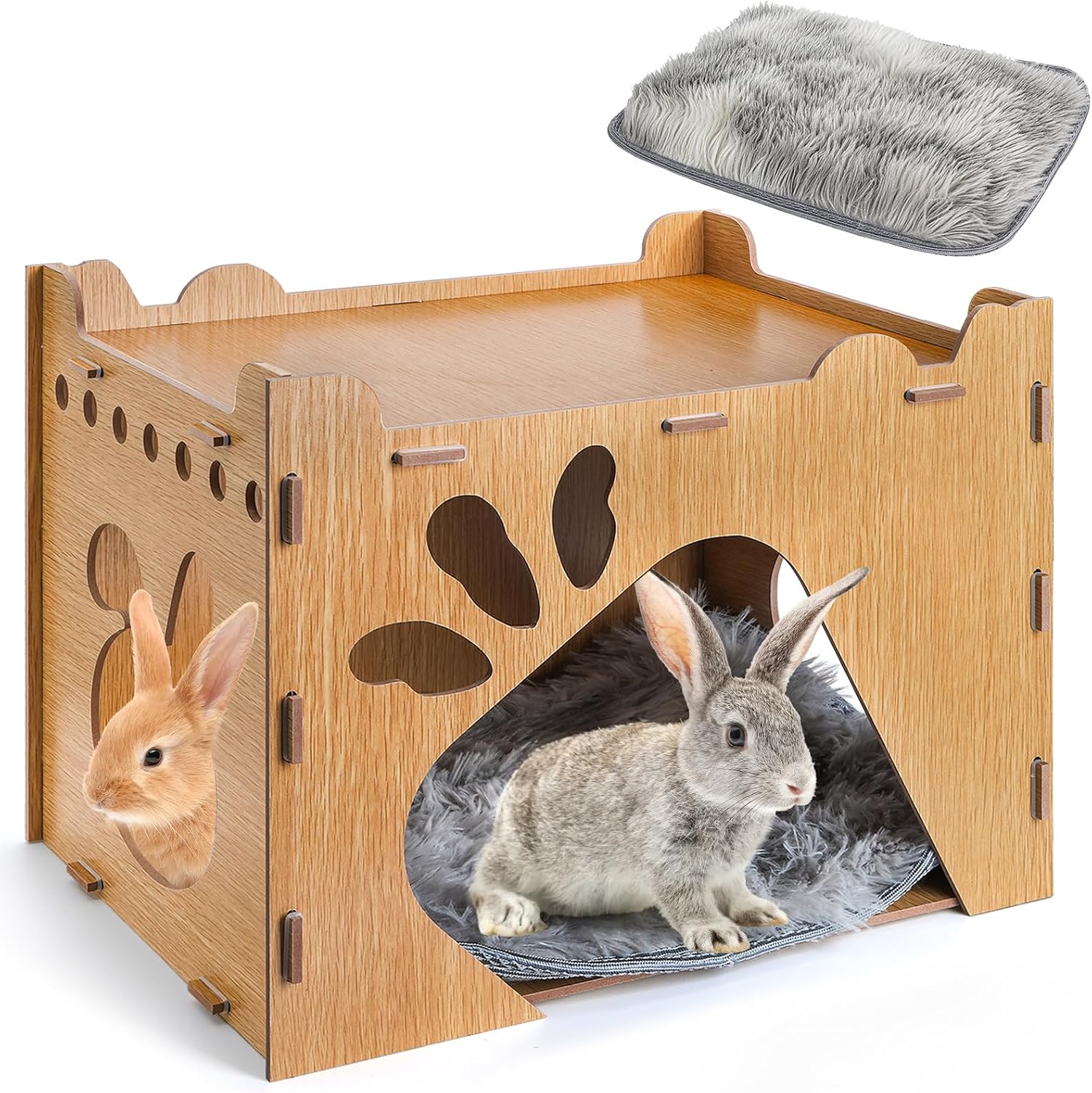
Yesland Rabbit Hideout Castle, Large Wooden Bunny Houses and Hideouts with Pet Pad, Detachable Small Animal Play Hideaway Hut and Playhouse for Indoor Bunnies Guinea Pig Hamster Chinchilla Gerbi
A large wooden castle-style hideout that includes a pet pad and detaches into a hideaway hut and a playhouse.
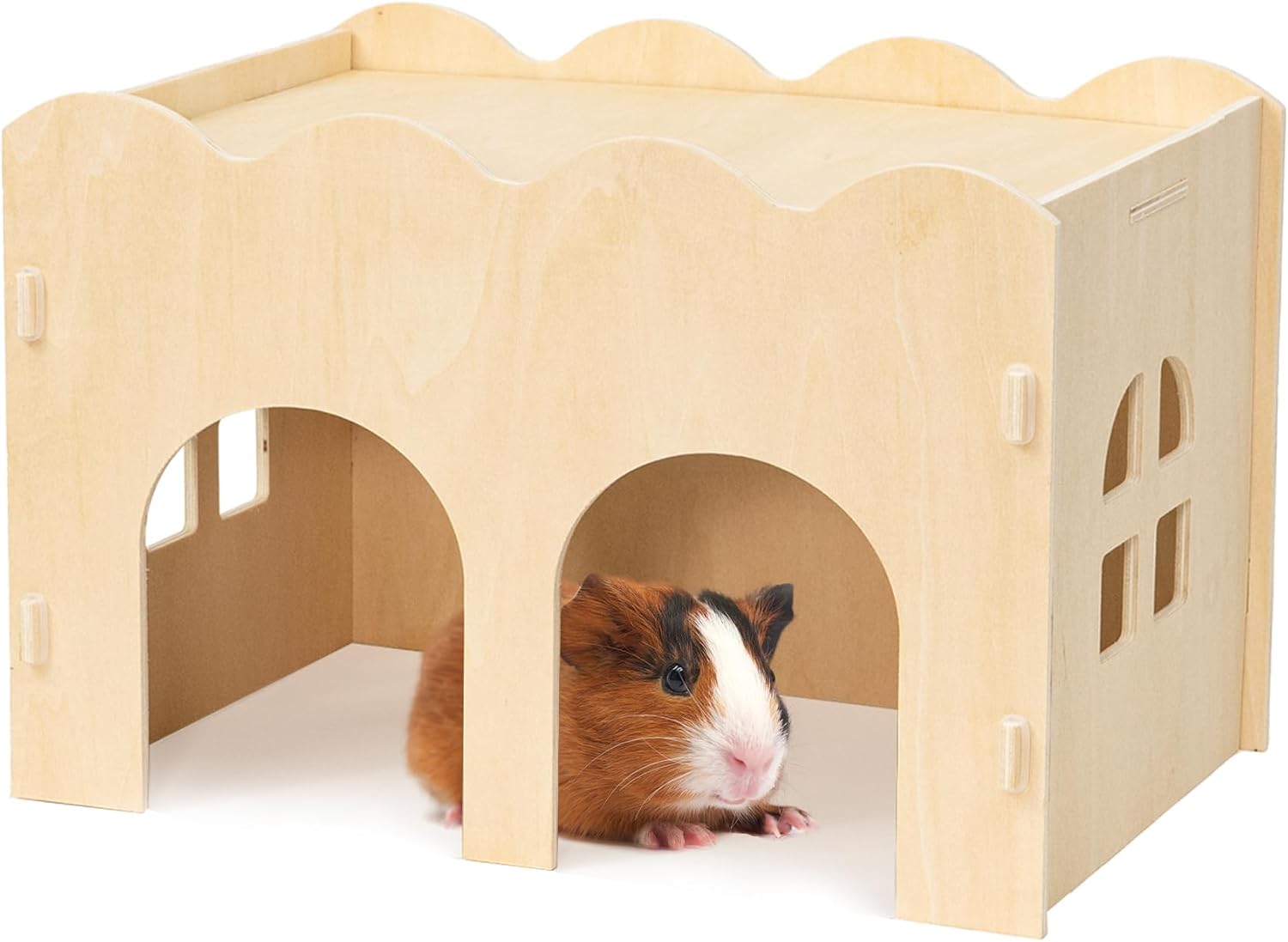
Bifeaw Natural Wooden Chew-Proof Guinea Pig Hideout
A natural wooden hideout described as chew-proof, aimed at guinea pigs that gnaw on soft furnishings.
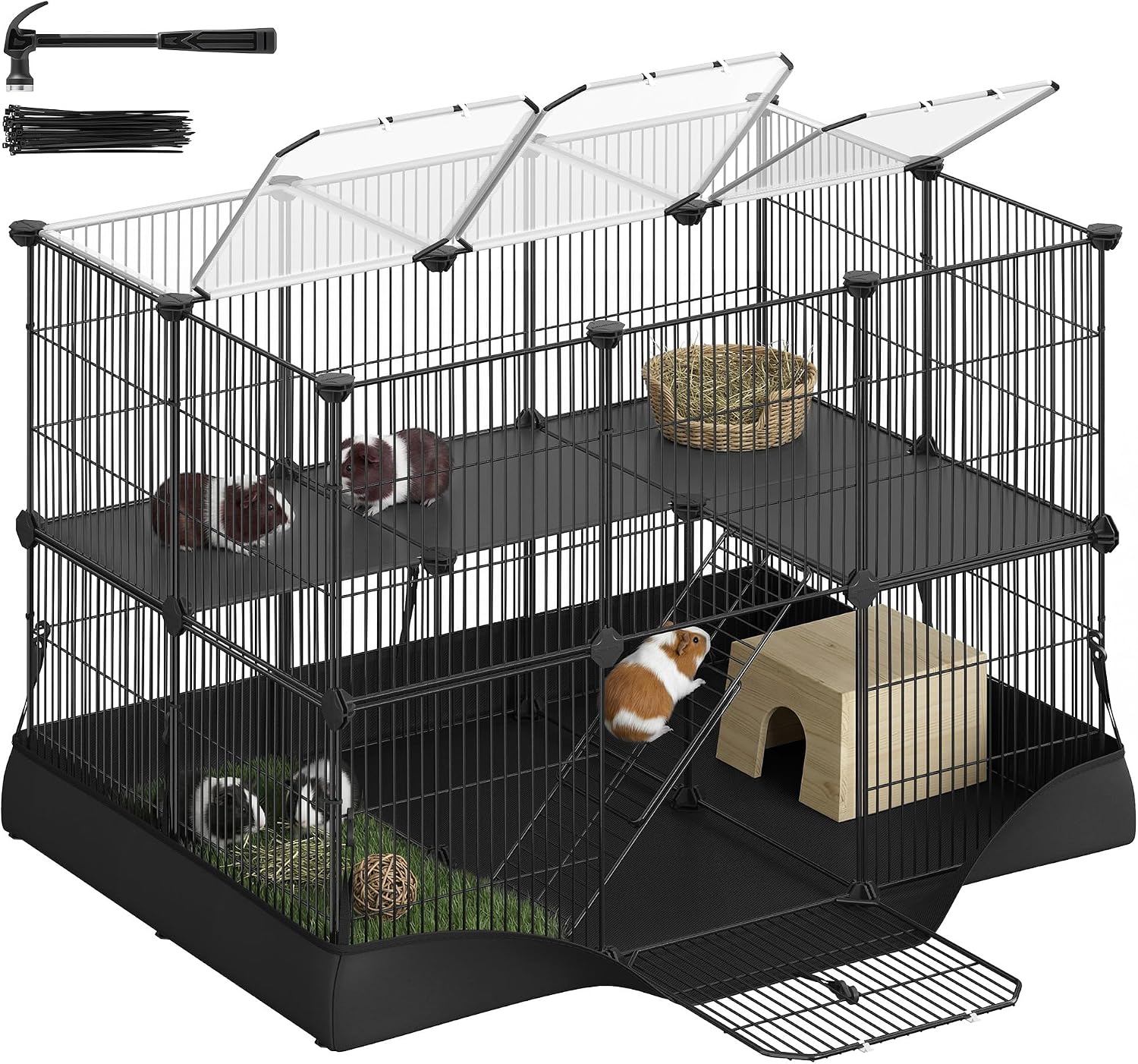
SONGMICS Guinea Pig Cages, 2-Tier Small Animal Cage
A two-tier small animal cage that adds an enclosed upper level to a guinea pig setup.
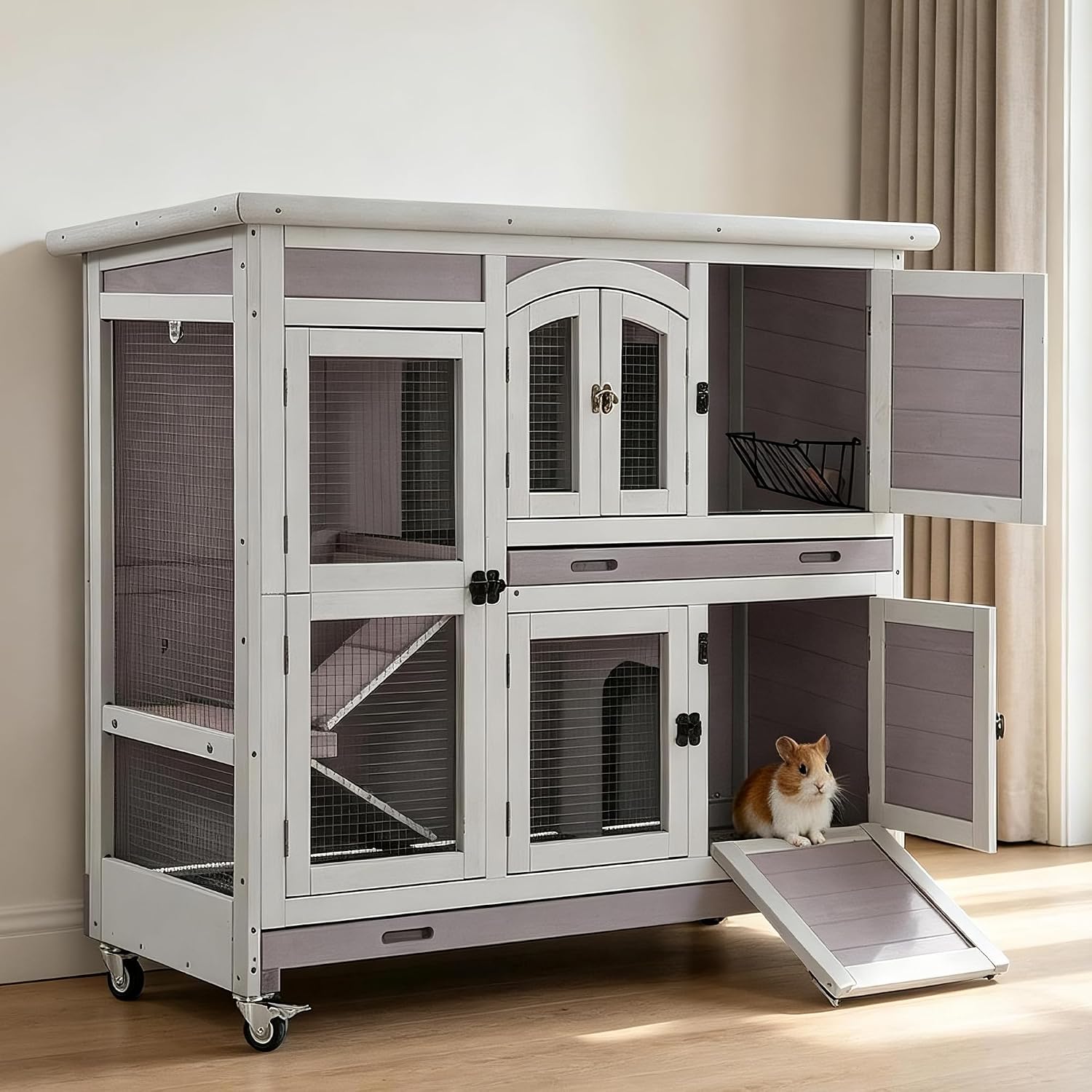
MEDEHOO 44" L Large Two-Tier Guinea Pig Cages with Anti-Chew Ramp
A large 44-inch two-tier guinea pig cage with an anti-chew ramp connecting the levels.
How these products were compared
This guide compares hideout size and shape, the material each option is made from, how each one stands up to chewing, whether it works inside an existing cage or replaces one, and how much cleaning it adds to a normal week. Nothing here is presented as hands-on testing: the descriptions stick to what each listing states, and the six picks are grouped by the job they do rather than ranked by a score. Names, images, and retailer links are matched to the same listing so that every card points to the product shown.
There is no single best guinea pig hideout for beginners, because the right choice depends on the cage you already have, the material you are willing to maintain, and how much your pet chews. Treat the range below as a set of shapes to choose between rather than a ranking, and use the CTA on each card to confirm the current price and availability before you order.
How to choose the right guinea pig hideout for beginners
Start with the space you can give up. If you already own a cage, a hideout has to sit inside it without eating into the floor area your guinea pig needs to move around, so measure the footprint you can spare before you shop. Hideout size is the most common reason a hideout ends up unused: a shelter that looks generous in a photo can crowd a small cage, and one that is too small gives a guinea pig nowhere to turn around. Bar spacing matters for the cage itself rather than the hideout, but it is worth checking at the same time, since a hideout pushed against wide bars can leave a gap a small guinea pig will try to use.
Then think about material and mess. A soft fleece bed holds warmth and gives a guinea pig something to burrow into, while a wooden structure wipes down and gives a persistent chewer something appropriate to gnaw. Bedding dust, hair, and hay collect in different places depending on which one you pick, so the correct guinea pig hideout for beginners is usually the one whose cleaning routine you will actually keep up with. If you are still assembling the cage itself, the first small pet cage setup guide covers cage size, floor area, and where to place a hay rack and water bottle before you add accessories.
For a cage with spare floor area, a structure with a balcony or a second level is closer to the ideal guinea pig hideout for beginners than a single small bed, because the pet can choose between hiding and climbing instead of using one flat space. Keep the total footprint in mind, though: two shelters crammed into a small cage are worse than one that fits properly and leaves a clear run along the front.
If you are buying a cage rather than an accessory, check how the bottle mounts and whether the model includes a hay rack, because those two details decide where a hideout can go. Bottle capacity matters for how often you refill, but placement matters more: a hideout directly under the bottle will stay damp and need cleaning constantly. Entrance size is the other thing to look at, and it is worth more attention than tunnel diameter, which only applies if you are adding separate tubes. A wide, low opening is easier for a guinea pig to use than a narrow round one.
YUEPET Guinea Pig Bed, Warm Fleece Pumpkin Hideout
The YUEPET Guinea Pig Bed is a pumpkin-shaped fleece hideout sold as a warm bed for guinea pigs. It is the simplest item in this group. There is no structure to assemble and no upper level to work around, so it can go into a corner of an existing cage, a playpen, or a floor time setup, and the soft material gives a guinea pig somewhere to curl up rather than something to climb. It also takes up less vertical space than a castle, which helps in a cage where a water bottle and a hay rack are already competing for room.
That simplicity is the reason it works as a first hideout. Beginners are usually still learning whether their guinea pig prefers to burrow into fabric or sit inside a solid box, and a soft bed is a low-cost way to find out before committing to a larger structure. It also pairs easily with a second hideout later, since it can be moved to a different corner without rearranging the cage.
The trade-off is upkeep and durability. Fleece collects hair, hay, and bedding dust, so it needs a more frequent cleaning routine than a wooden hideout, and a guinea pig that chews fabric can eventually work at the seams in a way it cannot with solid wood. If your pet is a determined chewer, or if you would rather not keep a soft item in the regular cleaning rotation, a wooden hideout is the better first purchase.
Alternatives to consider
The HIIMALEX Large Sturdy Bunny House with Spacious Balcony Hidey Detachable Playhouse for Rabbit Hideout Castle Tower Toys for Indoor Bunnies Guinea Pig Hamster Chinchilla Gerbil is better suited to a household that wants a larger, more structured hideaway with a balcony and a playhouse section that detaches, while the Yesland Rabbit Hideout Castle, Large Wooden Bunny Houses and Hideouts with Pet Pad, Detachable Small Animal Play Hideaway Hut and Playhouse for Indoor Bunnies Guinea Pig Hamster Chinchilla Gerbi is a stronger fit when you want a wooden castle that includes a pet pad and splits into separate hideaway and playhouse pieces.
The Bifeaw Natural Wooden Chew-Proof Guinea Pig Hideout, the SONGMICS Guinea Pig Cages, 2-Tier Small Animal Cage, and the MEDEHOO 44" L Large Two-Tier Guinea Pig Cages with Anti-Chew Ramp cover the rest of the range. The Bifeaw hideout is the smallest and simplest wooden option here and is aimed squarely at guinea pigs that gnaw. The SONGMICS cage is a two-tier small animal cage that provides an enclosed upper level rather than an accessory to drop into an existing setup. The MEDEHOO cage is the largest item in this guide at 44 inches, and it pairs its two levels with an anti-chew ramp, which is the detail that matters most if you are buying a cage for a guinea pig rather than for a smaller rodent.
Day-to-day use and maintenance
Hideouts get dirty faster than the cage around them, because they sit at floor level where droppings, hay, and bedding collect. A soft fleece item needs to be shaken out regularly and cleaned more often than a wooden one, and a wooden hideout should be checked for softened edges and corners where a guinea pig has been chewing. Bedding dust is worth planning for as well: a hideout placed next to a loose bedding pile will pick up dust at the entrance and need cleaning sooner than one sitting on a mat or a solid floor.
Two placement habits make a hideout last longer. Keep it away from the water bottle and the food bowl, so the entrance does not become the dampest, messiest spot in the cage, and leave a clear route past it so your guinea pig can move between the hideout, the hay rack, and the open floor without squeezing through a gap. If you keep more than one guinea pig, provide more than one hiding place, since a single hideout in a shared cage can become a contested spot.
Check the structure for sharp edges, loose fixings, or chewed-through sections each time you clean, and replace anything that has stopped holding its shape. A hideout that wobbles or has a splintered edge is not worth repairing when a replacement costs about the same as a bag of treats.
Buying checklist
- Measure the floor area you can spare, then compare it against the hideout size you are considering.
- Choose soft fleece for a warm resting spot or natural wood for a chewer, based on how your guinea pig normally behaves rather than on an occasional edge case.
- Confirm that the exact model includes the feature you need, such as a detachable section, a pet pad, or an anti-chew ramp, and check that the entrance is wide enough for your guinea pig to turn around.
- Read the cleaning and maintenance instructions for the material before you commit.
- Verify the current retailer price, availability, and return terms.
Final recommendation
Choose the YUEPET Guinea Pig Bed, Warm Fleece Pumpkin Hideout when you want a low-commitment hideout that drops into a cage you already own and gives your guinea pig a warm, soft place to rest. Choose the Bifeaw Natural Wooden Chew-Proof Guinea Pig Hideout when chewing is the main concern and you would rather have a rigid wooden shelter than fabric. If you are starting from nothing, one of the two-tier cages is the larger purchase to make first, and the beds and castles here are the accessories that go inside it. Whichever route you take, confirm the current price and availability at the retailer, and buy the hideout that fits the cage you actually have.