A guinea pig with nowhere to hide spends its day pressed into a corner, and a hideout that is too big turns a small cage into a maze with no floor left to walk on. That tension is the whole problem with a guinea pig hideout for small spaces: the piece has to be large enough for a full-grown pig to turn around inside, and small enough that it does not block the hay rack, crowd the bottle, or cut the usable floor area down to a narrow strip. This guide compares six pieces that answer that brief in different ways. Four are hideouts or beds that drop into a cage you already own. Two are complete two-tier cages for anyone setting up from scratch in a bedroom, a studio, or a rented room where the enclosure itself has to stay compact. Every card below is matched to its own listing, and the notes stick to what the listings describe.
Quick answer
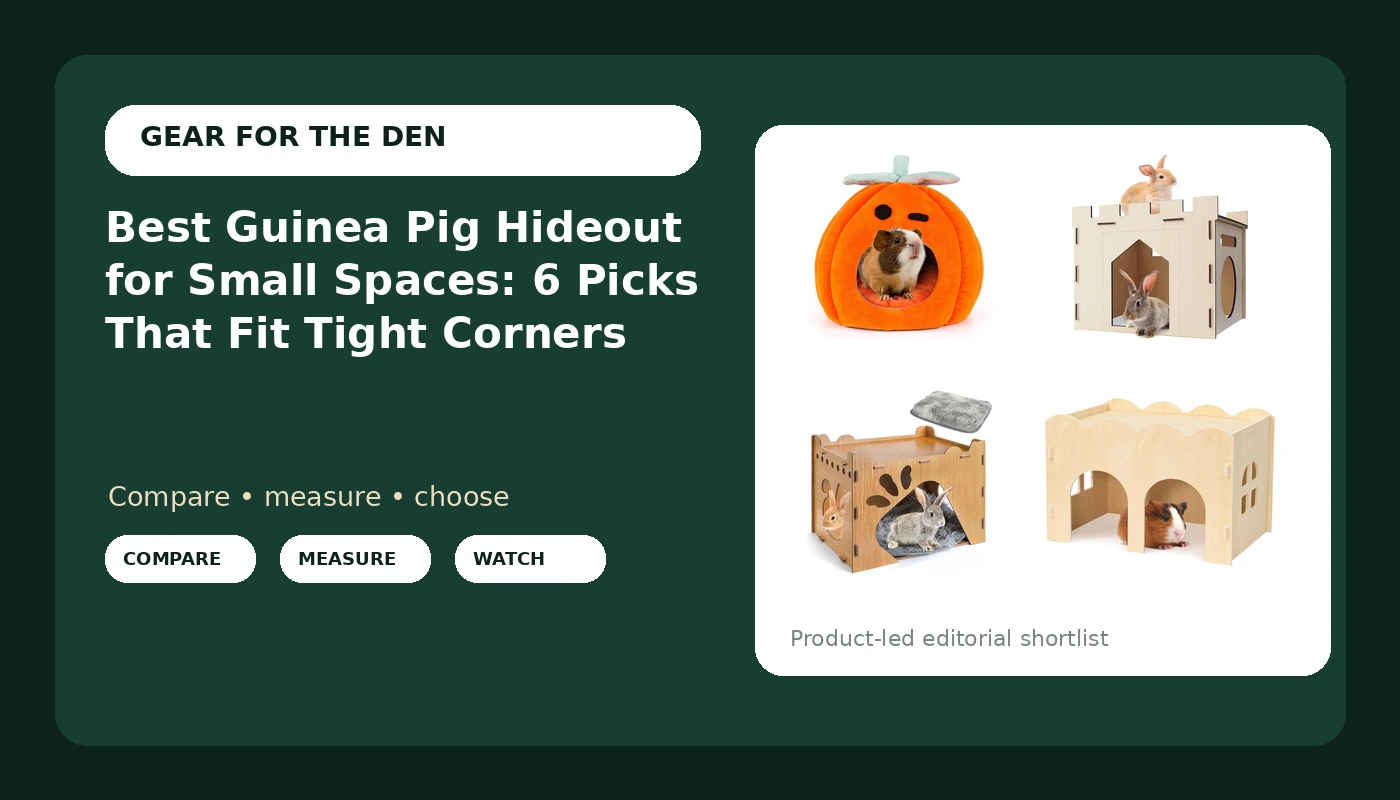
The YUEPET Guinea Pig Bed, Warm Fleece Pumpkin Hideout is the strongest fit for cramped cages because it is a soft fleece hideout with a low profile, so it sits in a corner or under a shelf without claiming a whole level. Choose the Bifeaw Natural Wooden Chew-Proof Guinea Pig Hideout instead when your guinea pig chews through fabric and you want a rigid wooden structure that keeps its shape.
What makes a guinea pig hideout for small spaces worth comparing
The first thing to compare is hideout size against the floor area you actually have. A hideout is only useful if the pig can enter, turn, and exit without stepping over a cage mate, and in a compact cage that means measuring the footprint before you buy rather than after. If you are shopping for a guinea pig hideout for small rooms, the number that matters most is the free floor space left once the bottle, the bowl, and the hay rack are already placed. Cage size and shape decide most of the rest.
Material matters just as much. Fleece beds like the pumpkin style are soft, collapse flat for storage, and are usually machine washable, which suits a pig that likes to burrow. Wooden hideouts are rigid, hold their shape, and give a pig something to gnaw, but they take up the same footprint whether the pig is inside or not. Neither is automatically better; they fail in different ways.
Then there is the question of what else has to share the space. A hideout that covers the corner where the hay rack hangs forces you to move the rack, and a rack that ends up over the sleeping area turns the whole cage into a mess. Bottle capacity matters too: a small cage usually means a small bottle, and if the hideout blocks the mounting point you end up refilling more often than you want.
Finally, decide whether the piece is meant to be the whole home or an accessory. A bed or a single hideout is an accessory. A two-tier cage is a complete system, with a ramp, a second level, and a footprint that has to fit your room before it fits your guinea pig.
Top pick
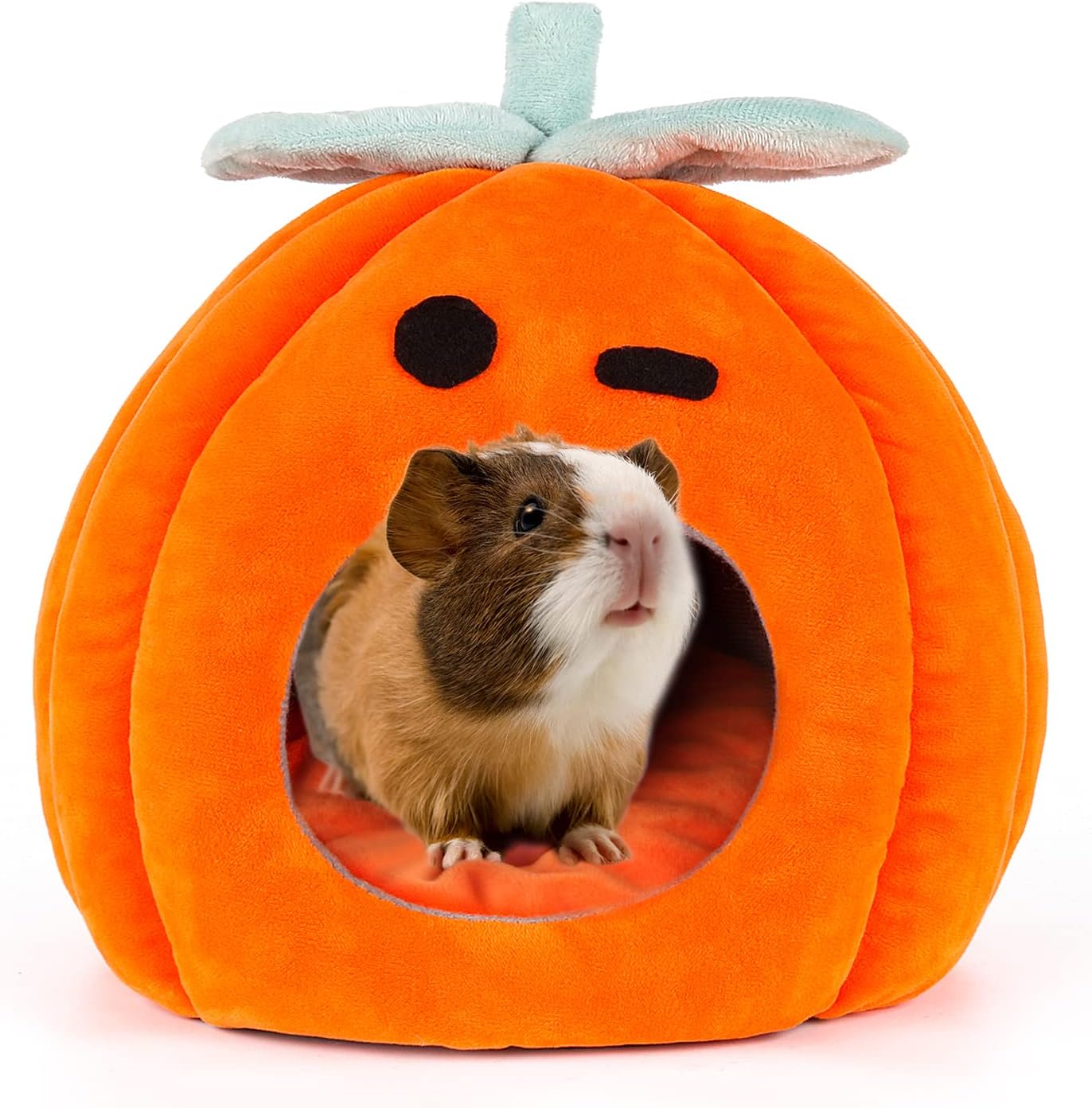
YUEPET Guinea Pig Bed, Warm Fleece Pumpkin Hideout
A soft fleece pumpkin-shaped bed that gives a guinea pig an enclosed sleeping pocket without claiming a whole cage level. It folds down for storage and suits a corner where a rigid hideout would not fit.
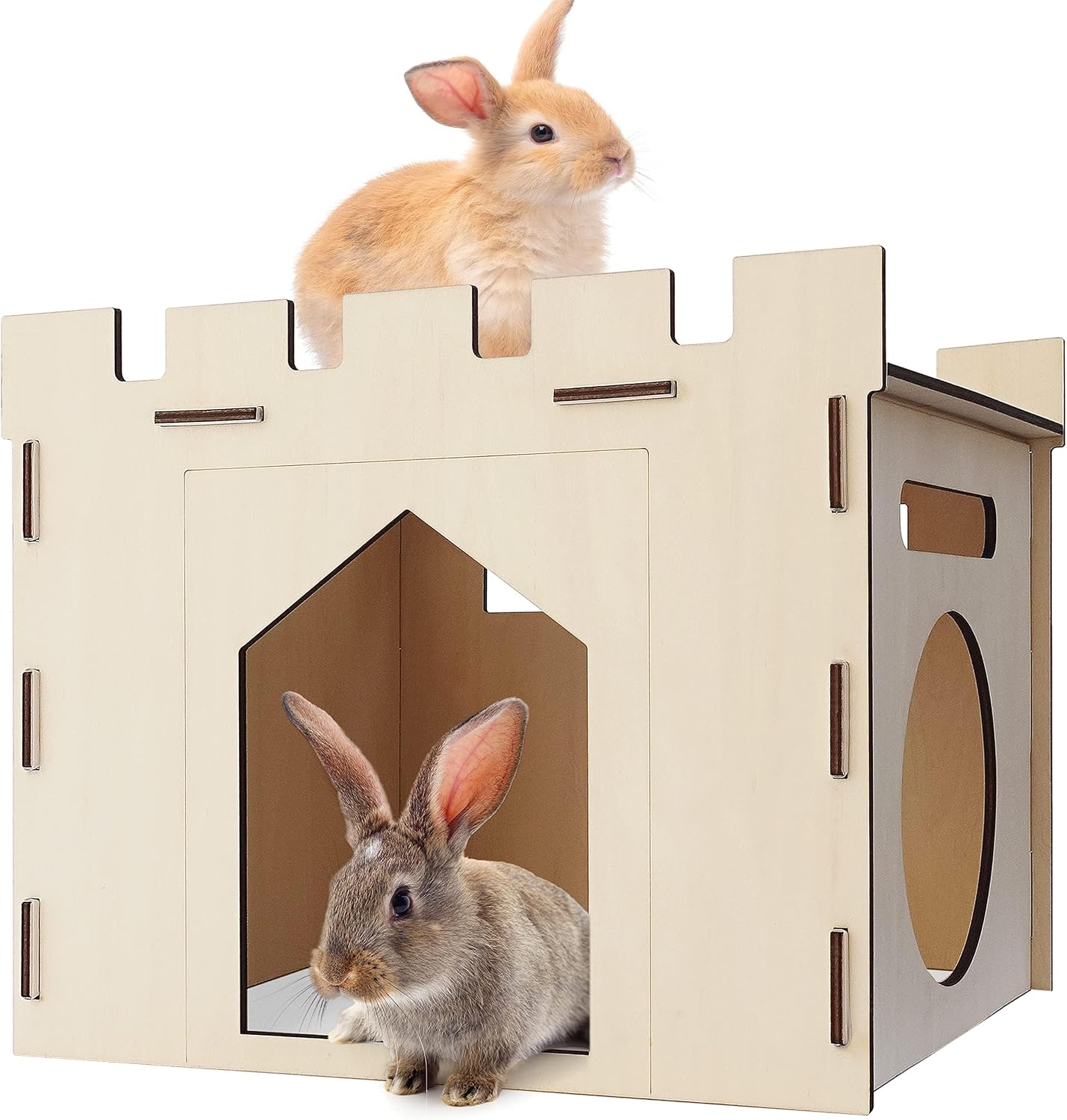
HIIMALEX Large Sturdy Bunny House with Spacious Balcony Hidey Detachable Playhouse for Rabbit Hideout Castle Tower Toys for Indoor Bunnies Guinea Pig Hamster Chinchilla Gerbil
A house with a balcony and a detachable playhouse section, so it can be used as one structure or split into parts. Best for readers who want levels and can give it the footprint.
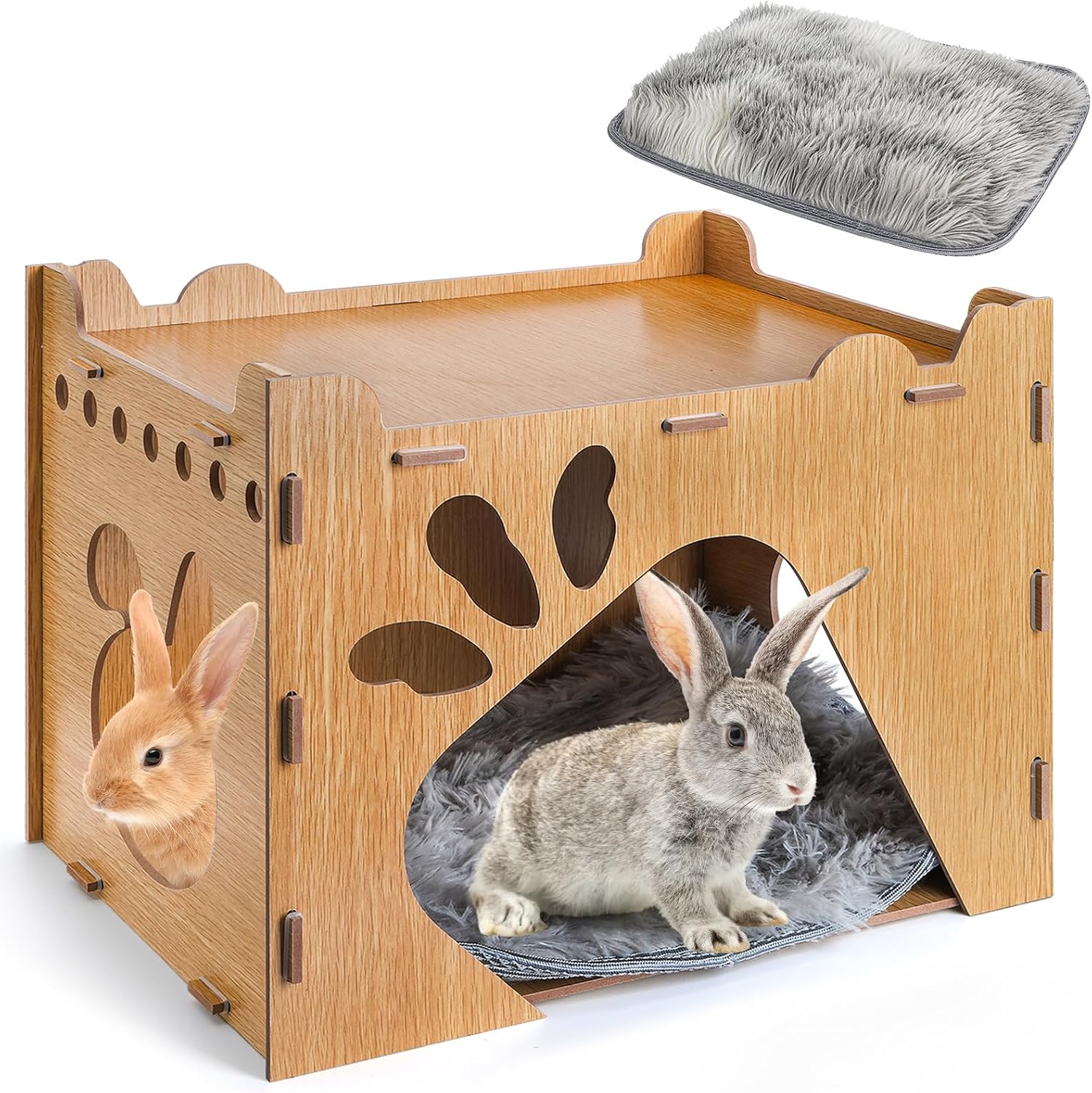
Yesland Rabbit Hideout Castle, Large Wooden Bunny Houses and Hideouts with Pet Pad, Detachable Small Animal Play Hideaway Hut and Playhouse for Indoor Bunnies Guinea Pig Hamster Chinchilla Gerbi
A wooden castle-style hideaway with a pet pad and a detachable design. It gives a guinea pig a rigid structure to hide in and to gnaw, and it breaks down when you need the floor back.
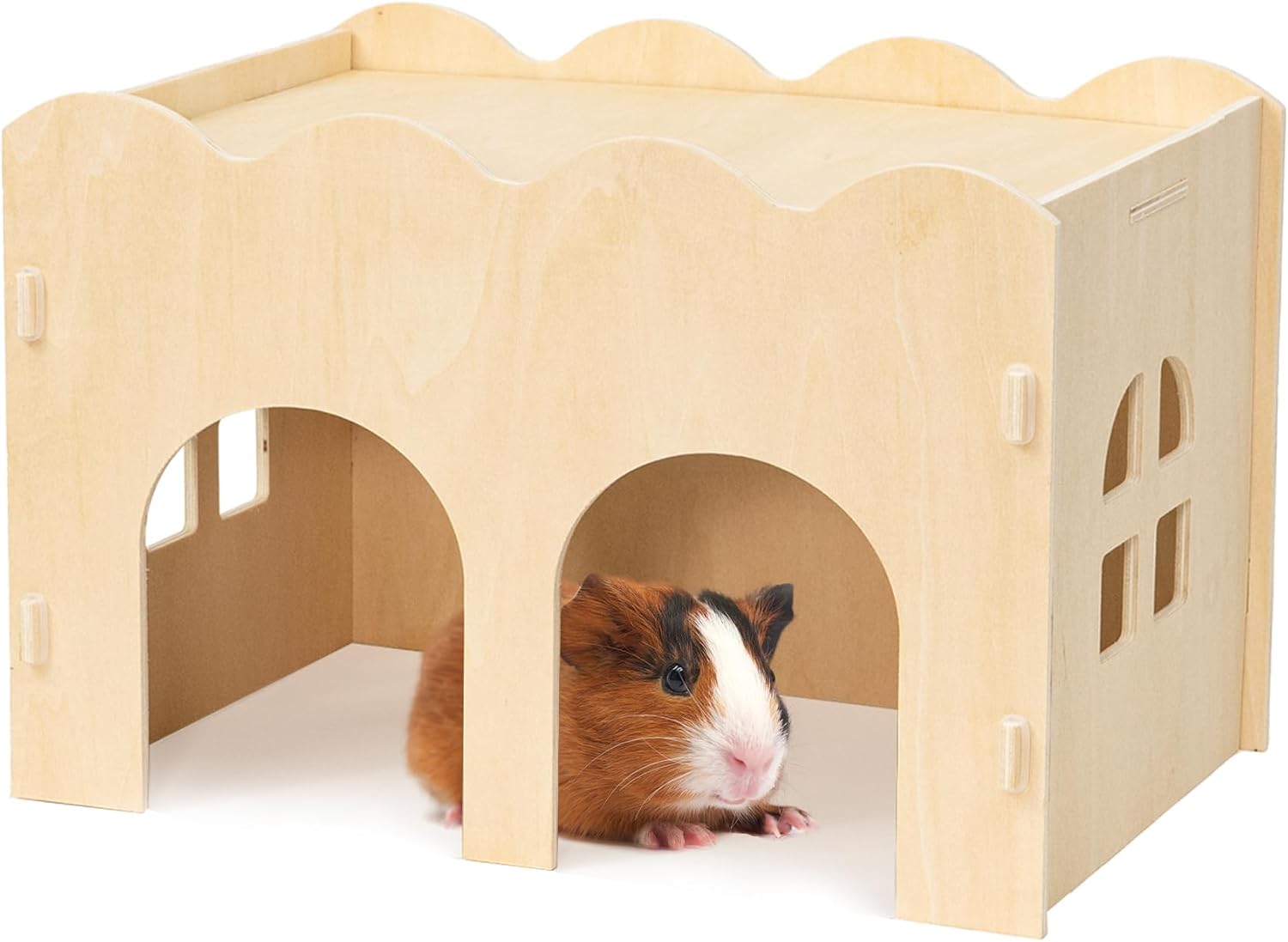
Bifeaw Natural Wooden Chew-Proof Guinea Pig Hideout
A compact natural wood hideout built to survive chewing. It is the simplest piece in this roundup, and a sensible second hideout or a first choice for a pig that destroys fabric.
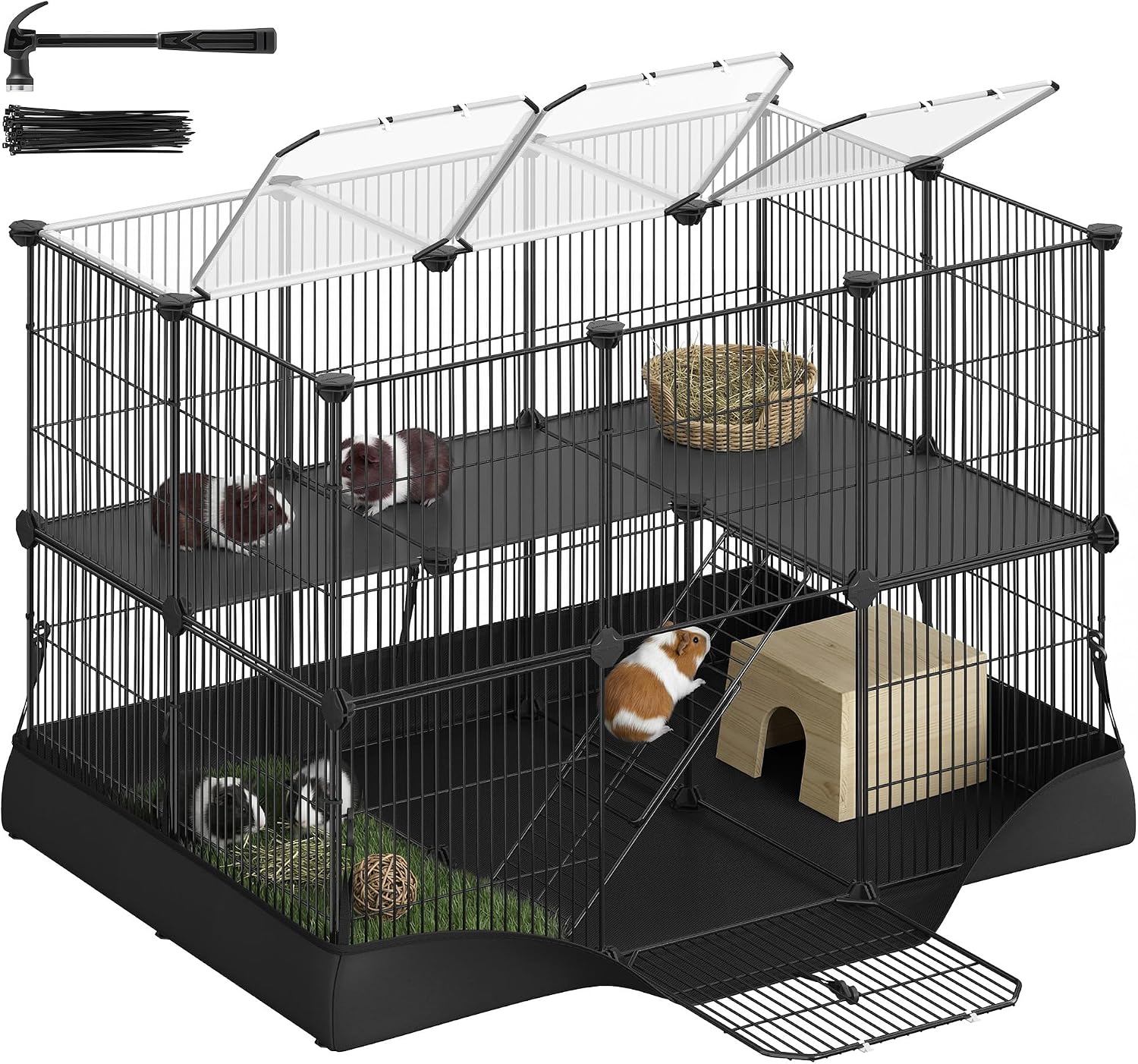
SONGMICS Guinea Pig Cages, 2-Tier Small Animal Cage
A two-tier small animal cage for readers starting from scratch. Check bar spacing and ramp clearance against the pet you keep before you commit to a cage rather than an accessory.
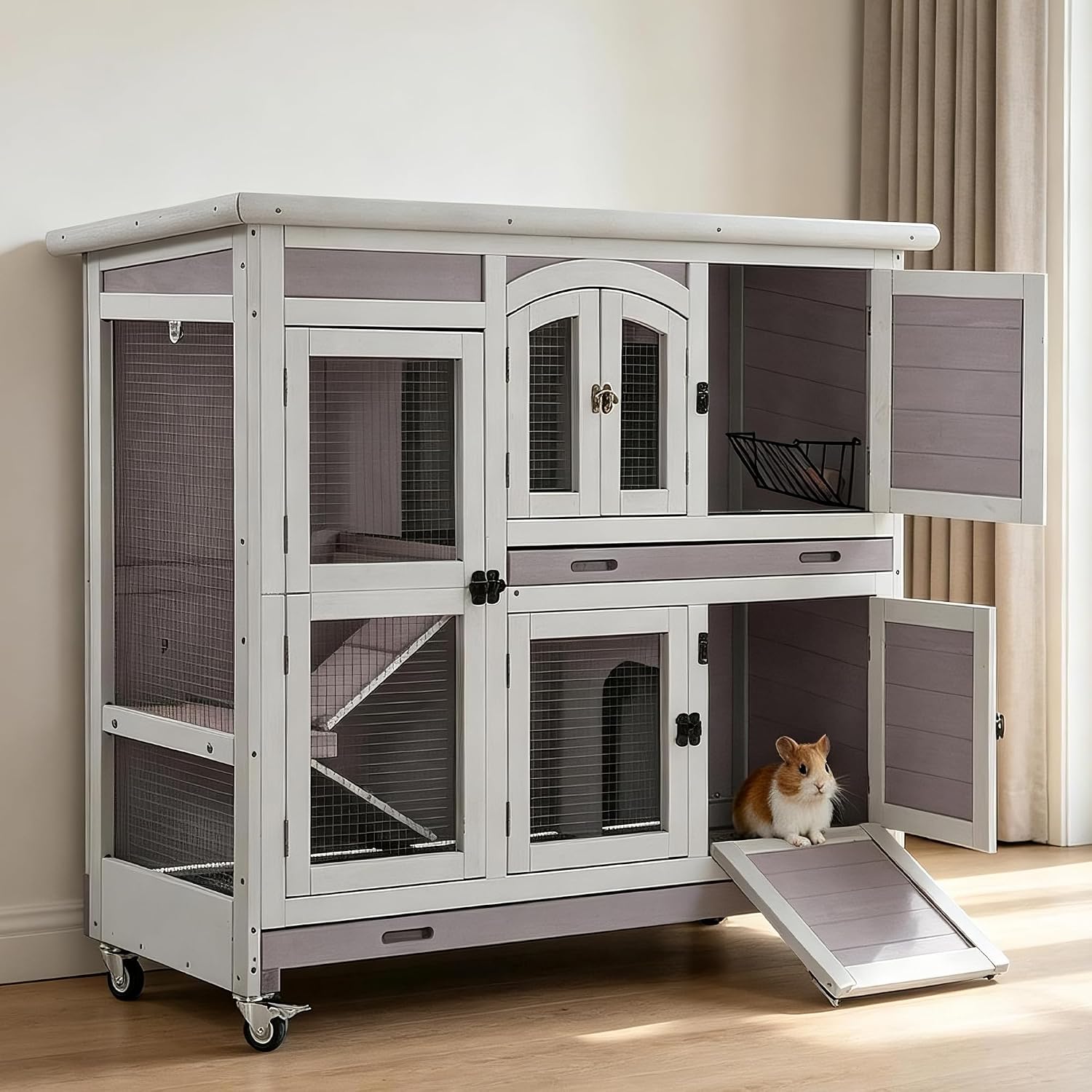
MEDEHOO 44" L Large Two-Tier Guinea Pig Cages with Anti-Chew Ramp
A large two-tier cage with an anti-chew ramp, aimed at a permanent setup. The bigger footprint suits a room where the cage can stay put rather than be moved around.
How these products were compared
This guide compares hideout size and footprint, material and chew resistance, how easily each piece comes apart for cleaning, how much of the cage floor it leaves free, and how it interacts with the rest of a small setup, including bottle capacity, hay rack placement, and bar spacing on the cages.
Nothing here is presented as hands-on testing. The notes come from the product data supplied with each listing, and the comparison is about structure and fit rather than measured performance. Prices are not printed in this guide because they move; each card links to the retailer so you can confirm the current price and availability before you buy.
How to choose the right guinea pig hideout
Start with the space, not the product. Sketch the cage floor on paper and mark where the bottle, the food bowl, and the hay rack already sit. Whatever is left is your budget for a hideout, and it is usually smaller than people expect in a compact cage. A guinea pig hideout for small spaces has to earn its footprint twice: once as a hiding place, and once as something you can live with when you are cleaning the cage every few days.
Match the material to the pig. If your guinea pig burrows into bedding and naps in a heap, a fleece bed is the easier choice: it washes, it flattens, and it does not have to be reassembled. If your guinea pig chews wood, rope, and cardboard with equal enthusiasm, a wooden hideout gives it something legitimate to work on and holds its shape while it does. Wooden pieces are also easy to brush clean when bedding dust settles on them, though fabric traps less dust in the first place.
Then check the details that decide whether the piece works day to day. A hideout with a single small opening is harder for a nervous pig to use than one with a wide entry, and a tunnel that is too narrow becomes a squeeze for a growing pig. If you are buying a cage rather than an accessory, bar spacing is the number to check first, because a spacing that suits a guinea pig is wrong for a hamster and the other way round. Cages bring their own questions too: ramp angle, clearance on the second level, and whether the ramp is protected against chewing.
If you are still working out how the enclosure itself should be arranged, our guinea pig cage setup basics cover the floor plan side in more detail.
YUEPET Guinea Pig Bed, Warm Fleece Pumpkin Hideout
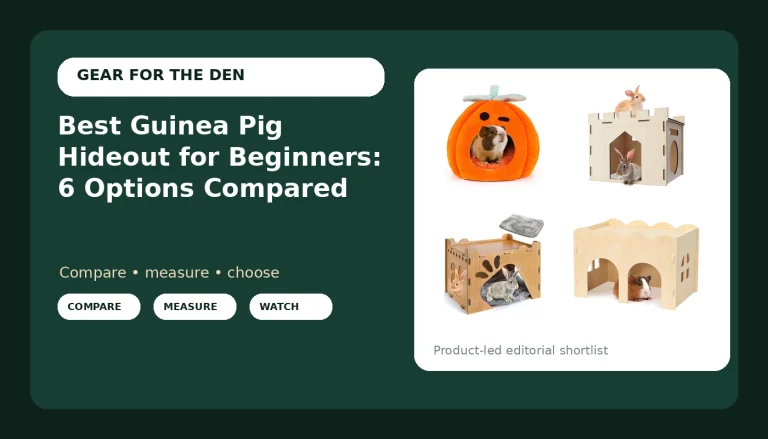
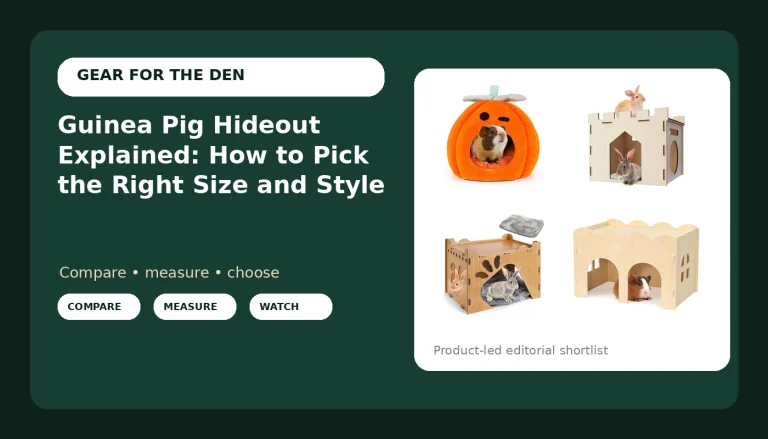
The top pick is the piece that solves the small-space problem with the least disruption. The YUEPET Guinea Pig Bed is a fleece hideout shaped like a pumpkin, which means it is soft rather than structural: it gives a guinea pig a warm, enclosed pocket to sleep in, and it takes up a footprint that suits a corner rather than a full level. For a cage where every inch of floor area is spoken for, that is the difference between a hideout that fits and a hideout that forces you to rearrange the bottle and the hay rack.
Fleece has practical advantages in a tight cage. It does not shed bedding dust the way loose substrate does, it can be shaken out and washed, and it folds down when you need to move it. It also does not hold its shape on its own, so a pig that likes to push and dig will rearrange it, and a pig that chews fabric may eventually work a hole into it. That is the trade-off, and it is worth naming: this is a bed, not a chew toy, and it will not outlast a wooden hideout in a cage with a determined chewer.
For a guinea pig hideout for tight spaces, the soft shape is the feature rather than a compromise. An enclosed bed with a single opening gives a nervous guinea pig a proper retreat, and because the whole piece is soft, it can be squashed into an awkward corner that a rigid box would not fit. Pair it with a wooden hideout if you want both a sleeping spot and something to gnaw, or use it alone in a cage that has no room for a second structure.
Alternatives to consider
The Bifeaw Natural Wooden Chew-Proof Guinea Pig Hideout is better suited to a guinea pig that destroys fabric, because it is a rigid wooden structure that gives the animal something to chew while it hides. It is the simplest piece in this roundup, which makes it a good second hideout in a cage that already has a bed, or a first hideout for a pig that has chewed its way through softer options.
The HIIMALEX Large Sturdy Bunny House with Spacious Balcony Hidey Detachable Playhouse for Rabbit Hideout Castle Tower Toys for Indoor Bunnies Guinea Pig Hamster Chinchilla Gerbil is a stronger fit when you want vertical interest rather than a single sleeping pocket. It is a house with a balcony and a detachable playhouse section, so it can be arranged as one structure or split into parts, which helps when you are not yet sure how much room the final layout will leave. It is designed with rabbits in mind, so check that the entry size and internal clearance suit a guinea pig before committing.
The Yesland Rabbit Hideout Castle, Large Wooden Bunny Houses and Hideouts with Pet Pad, Detachable Small Animal Play Hideaway Hut and Playhouse for Indoor Bunnies Guinea Pig Hamster Chinchilla Gerbi takes the same idea in wood and adds a pet pad, and its detachable design means the castle can be broken down when you need the floor back.
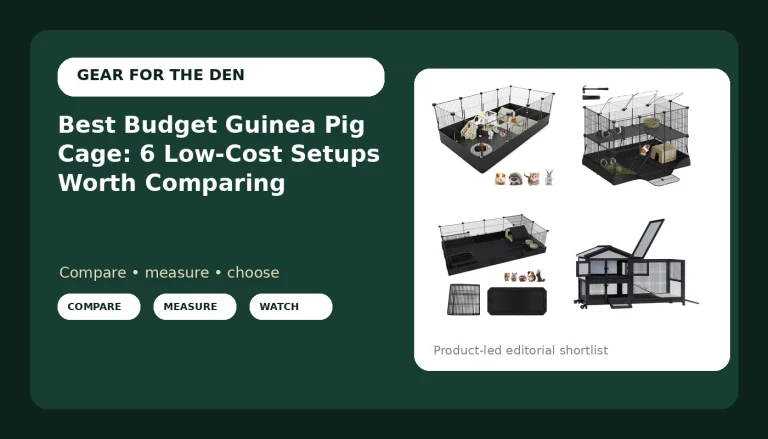
The SONGMICS Guinea Pig Cages, 2-Tier Small Animal Cage and the MEDEHOO 44 inch L Large Two-Tier Guinea Pig Cages with Anti-Chew Ramp cover a different need entirely: they are complete enclosures for readers who do not yet have a cage. The SONGMICS is the more compact starting point, while the MEDEHOO is the larger, more permanent setup, and its anti-chew ramp addresses one of the most common failure points in a two-tier cage.
Day-to-day use and maintenance
A hideout only earns its floor space if it stays clean and usable. Fleece beds collect hair and bedding dust, so plan on shaking them out daily and washing them on a schedule that matches how many pigs you keep. Wooden hideouts need brushing rather than washing, and they should be checked for chewed edges that could splinter.
The cage-level details matter as much as the hideout itself. Keep the hay rack positioned so hay falls into a tray or a corner rather than across the whole floor, and keep the bottle mounted where you can see the level without lifting the hideout out of the way. Bottle capacity is easy to overestimate in a small cage; a pig that drinks steadily will empty a small bottle faster than expected, and a hideout that blocks the mounting point turns refilling into a chore.
If you use loose bedding, choose one with low dust and spot-clean daily rather than waiting for a full change. In a compact cage, bedding dust builds up quickly because there is less air movement around the base of the hideout. A hideout with a flat base sits better on loose bedding than one with thin legs, which tend to sink.
Finally, watch how your guinea pigs share the space. Two pigs and one hideout means one pig gets displaced, so either add a second hideout or choose a piece with enough internal room for both. The same rule applies to tunnel diameter on any tube-style hideout: if a pig has to squeeze, it will stop using it.
Buying checklist
- Measure the free floor area left after the bottle, bowl, and hay rack are placed, and treat that number as your hideout size limit.
- Choose the material for your pig: fleece for a burrower, wood for a chewer.
- Confirm the opening is wide enough for a full-grown guinea pig to enter and turn.
- Check bar spacing and ramp clearance if you are buying a cage rather than an accessory.
- Read the cleaning and maintenance instructions, then verify the current retailer price, availability, and return terms.
Final recommendation
Choose the YUEPET Guinea Pig Bed, Warm Fleece Pumpkin Hideout when you need a soft, low-profile sleeping spot that fits an awkward corner without taking the cage over. Choose the Bifeaw Natural Wooden Chew-Proof Guinea Pig Hideout when chewing is the problem and you want a rigid piece that survives it.
If you want a structure with levels and a detachable play section, the HIIMALEX house and the Yesland castle cover that ground, with the castle adding a pet pad and the house adding a balcony. If you are starting from nothing, the SONGMICS two-tier cage is the compact route and the MEDEHOO two-tier cage is the larger one, with an anti-chew ramp that suits a pig that chews everything in reach.
Where the listings do not support a clear difference, this guide does not invent one. Match the piece to your measured floor area, your pig's chewing habits, and how much cleaning you are willing to do, and the best guinea pig hideout for small spaces stops being a guess.