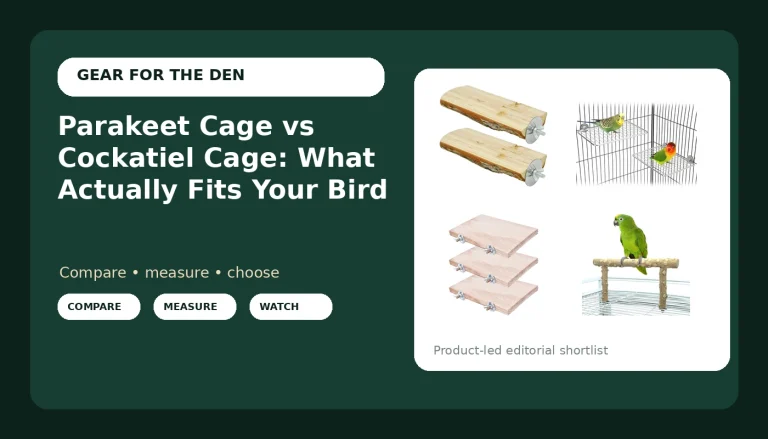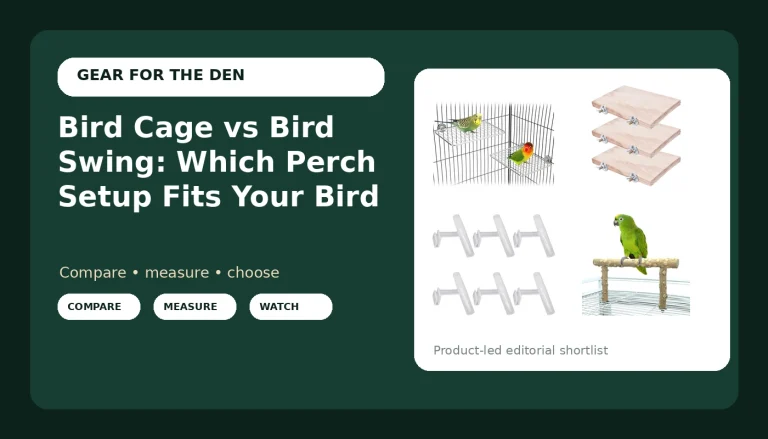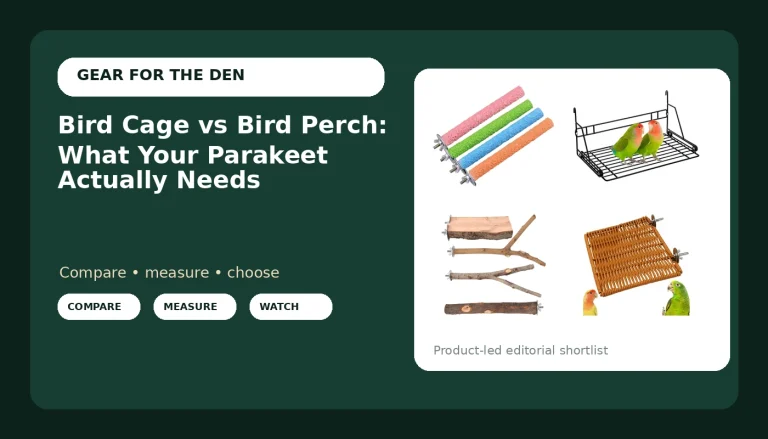
The bird cage vs bird carrier question gets asked like it is a fork in the road: pick one, skip the other, save the money. That framing is why so many first-time parrot owners end up with a carrier too small for anything except a vet trip and a cage with nowhere comfortable for the bird to sit. A cage and a carrier are not rivals. One is the room a bird lives in; the other is the seatbelt you use to move the bird between rooms. This guide is about getting the cage half right, because that is where a bird spends twenty-plus hours a day and where the perch platform you choose actually changes something.
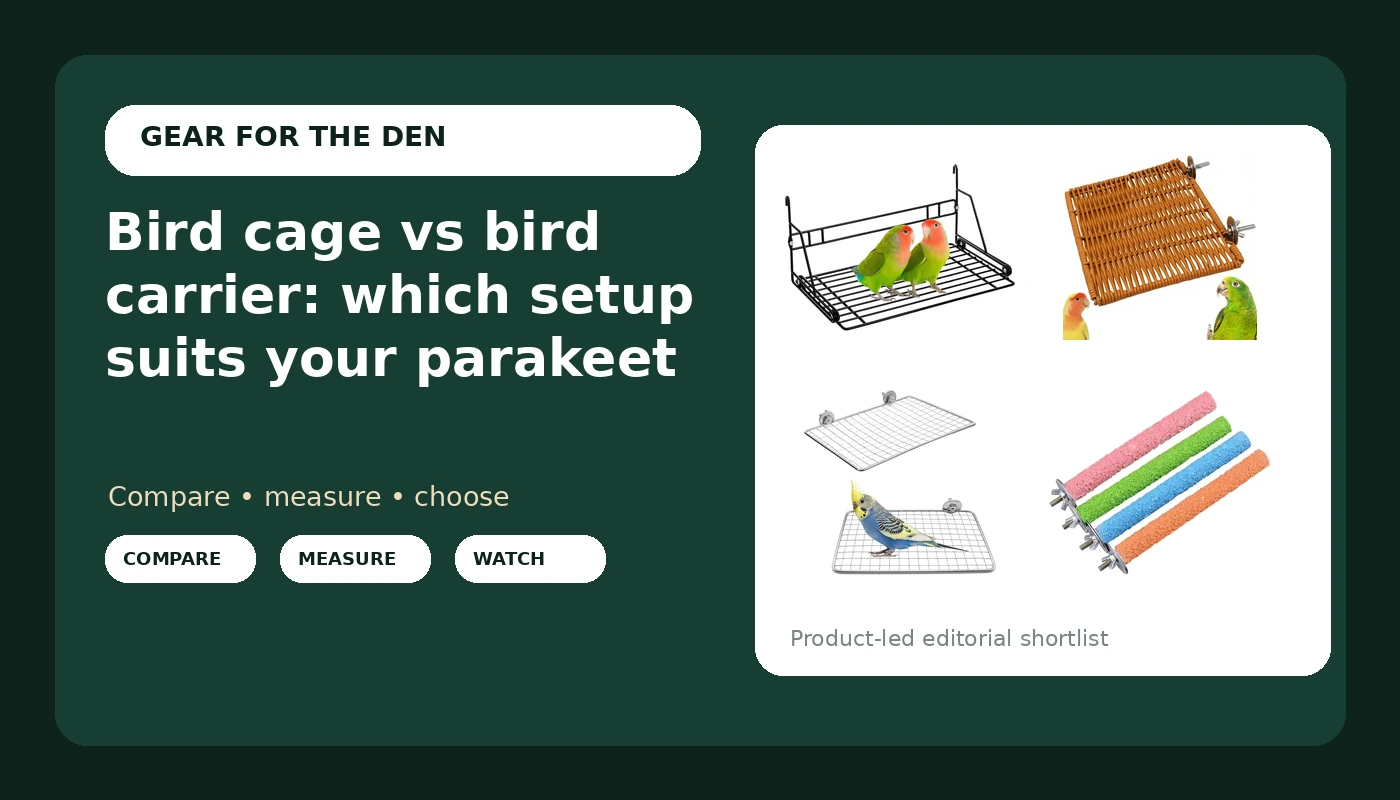
The best perch platform for most parakeets and cockatiels here is the Okllen Bird Perch Stand, because twelve by eight inches of wire sundeck gives a small bird enough flat space to land, turn, and eat without hanging off a dowel, and that footprint is the one thing the smaller options cannot fake.
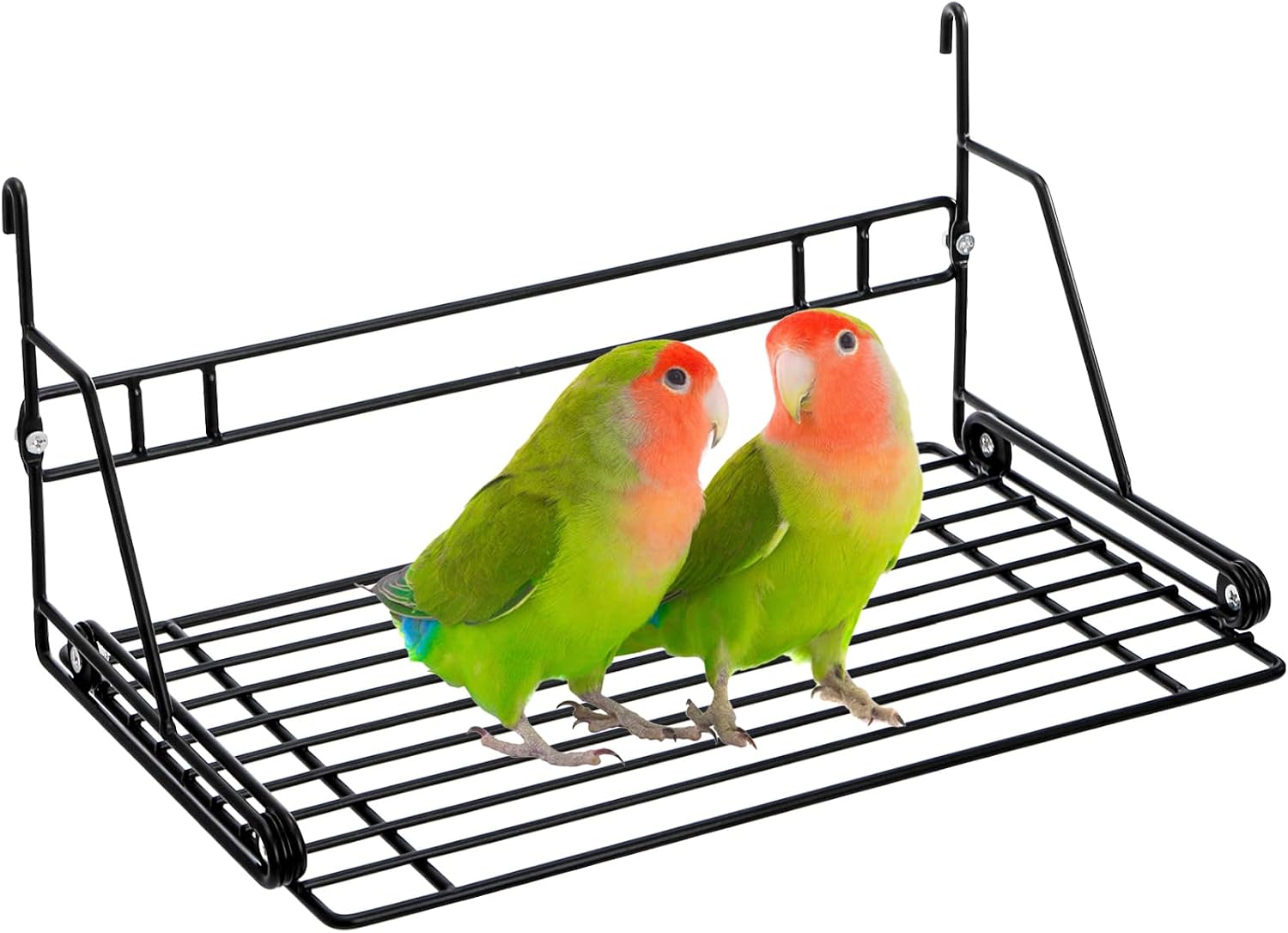
Okllen Bird Perch Stand
Largest flat landing zone of the group at 12 by 8 inches, with room for a cockatiel to turn and eat off a platform
Takes a big share of the interior in a small cage, and the wire floor is less forgiving than wood for long sits
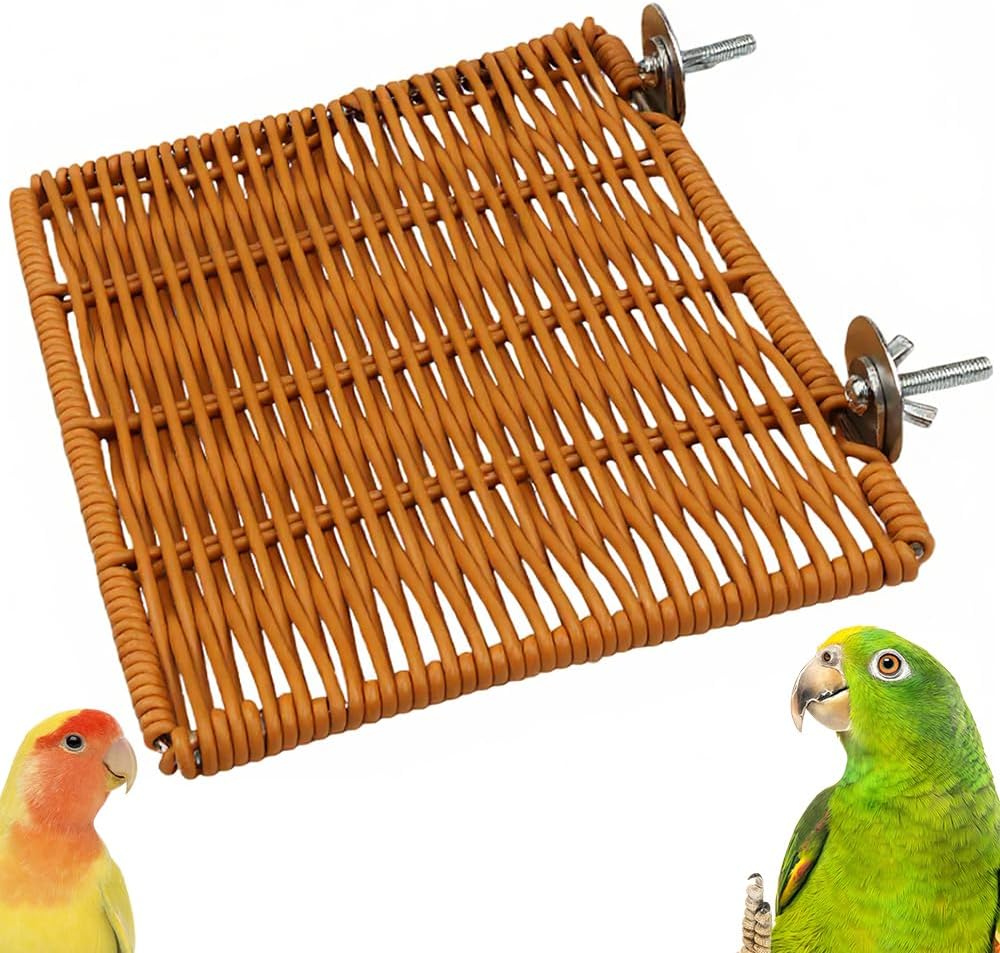
Bird Perch Platform Small Animals Perch Stand Rectangle Cage Accessory for Cockatiel Parrot (Brown)
Solid rectangular surface that mounts flat and gives a cockatiel a stable resting or feeding spot
One unit only, so a bird that likes to move between perches still needs more furniture
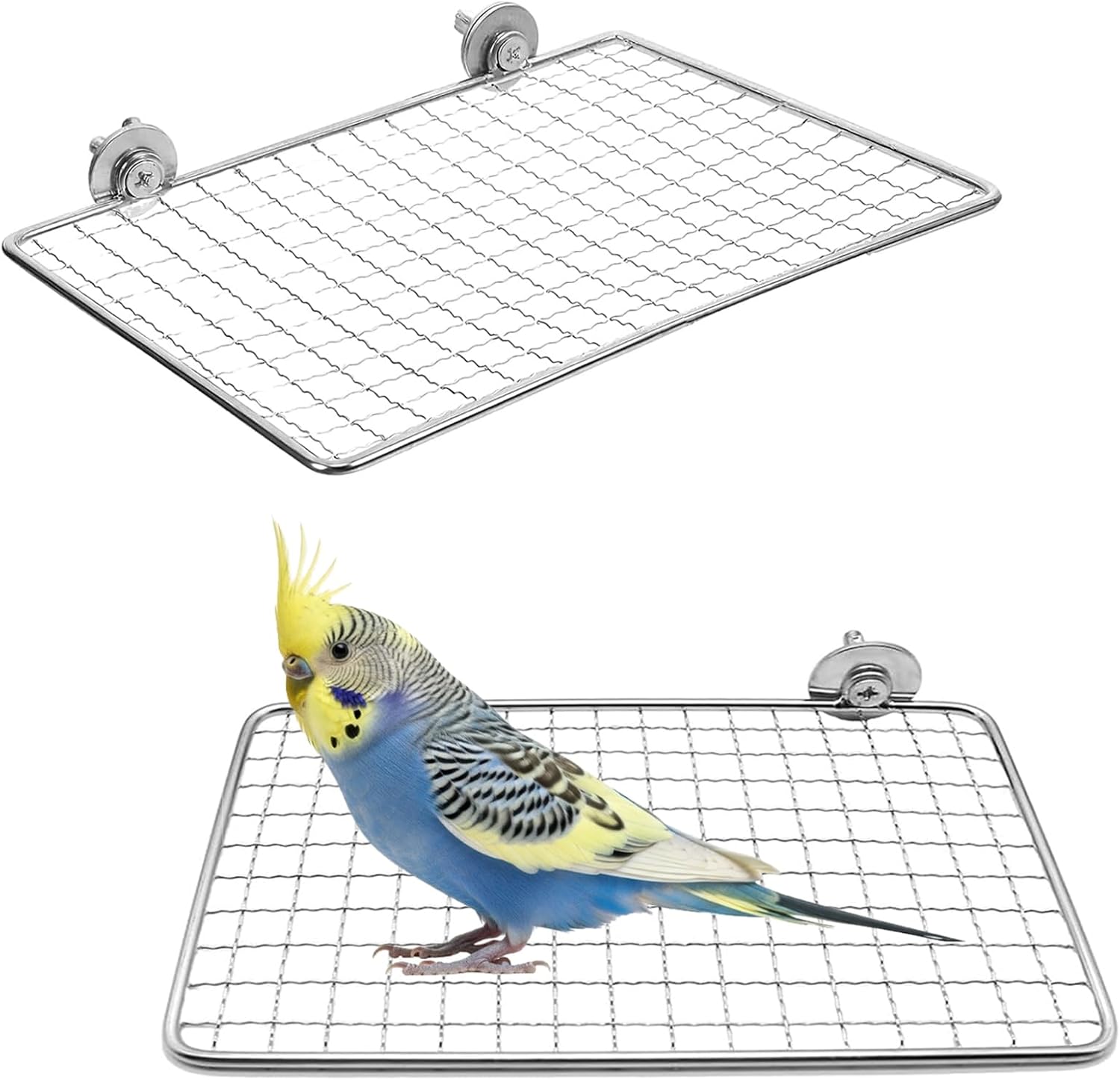
2 Pack Stainless Steel Bird Perch Platform for Cage, 6.3 x 4 in Wire Mesh Resting Stand
Two stainless platforms in one box, the easiest surface to wipe down, and the simplest way to add two rest stops
6.3 by 4 inches is tight for anything larger than a lovebird to turn around on
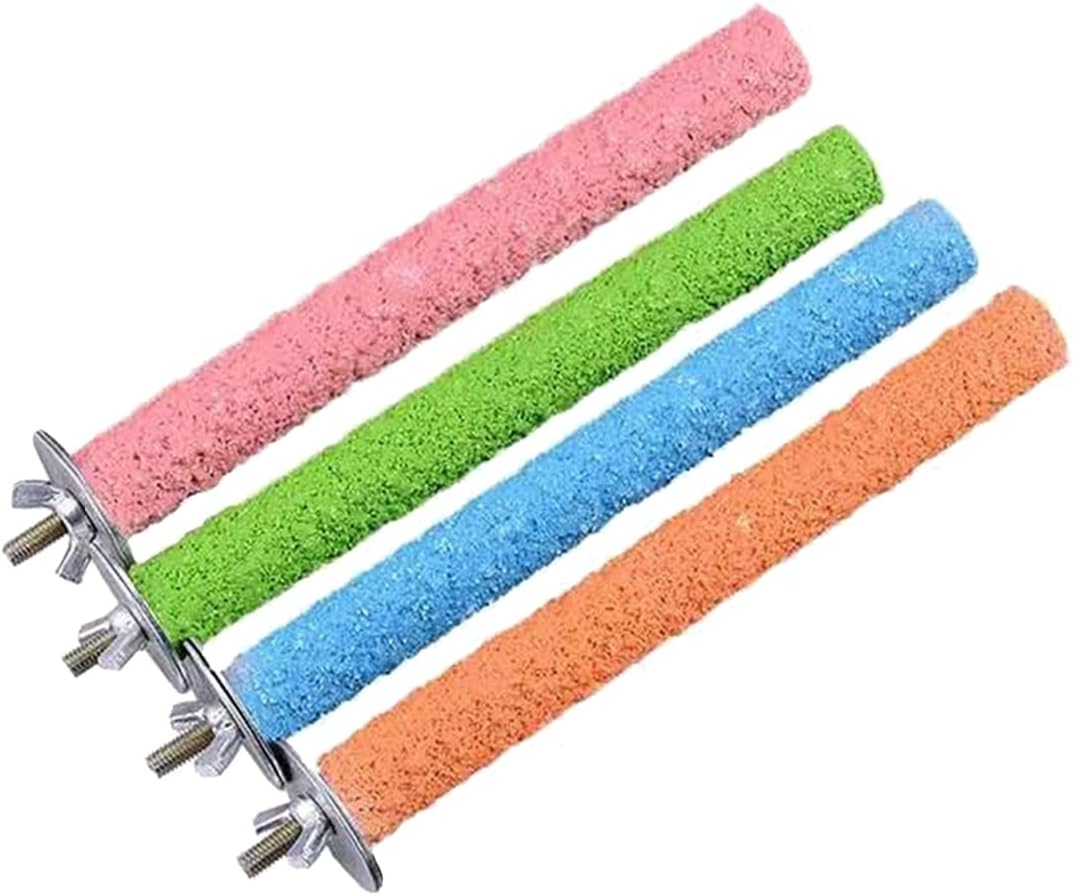
4PCS Wooden Bird Perch Stand Toys 7.9×0.8in for Parakeet Cage Accessories
Four wooden perches with a natural grip, and 0.8 inch is a sensible diameter for parakeet feet
No platform at all, so there is no flat spot for food, and wood wears down where a bird chews
Prices and availability may change.
Why bird cage vs bird carrier is the wrong question
The difference between bird cage and bird carrier is duration, not design. A cage is a habitat. It holds the bird overnight, it holds food and water, it holds the mess, and it has to survive a beak working the same bars for years. A carrier is a container. It holds a bird for the length of a car ride, a vet visit, or a move to the kitchen while you scrub the tray liner.
Because the jobs differ, the specs that matter differ too, and a feature that is a virtue in one is a hazard in the other. A tall cage with a swing mount near the roof is enrichment. A tall carrier with a swing mount is a bird that gets knocked around every time you brake. A wide food cup is convenient in a cage and a projectile in a carrier. A perch diameter that gives a parakeet something to grip is the same diameter that leaves it no room to turn in a small carrier.
So the honest answer to bird cage vs bird carrier is that you need both, and the real question is which one you buy first. If a bird is coming home this week, the cage comes first and the carrier can wait for the first vet visit. If the bird already lives with you and the only thing on the calendar is a road trip, the carrier is the purchase and the perch platforms below have nothing to do with it.
What a cage has to do that a carrier never will
A cage has to give a bird three things a carrier cannot: height to climb, width to move sideways, and a floor you can clean without dismantling the whole thing. That is why bar spacing, cage height, perch diameter, food cup size, and tray liner are cage problems, and why almost none of them show up on a carrier shopping list.
Bar spacing is the safety spec. Horizontal bars should be close enough that the bird cannot push its head through, and the right number depends on the species rather than on how big the cage looks. Cage height is the comfort spec, and it is the one people get backwards. Parakeets and cockatiels hop and shuffle sideways more than they climb, so a wide cage at moderate height beats a narrow tower, and a platform that spans the width gets used more than one bolted up near the roof.
Perch diameter is the health spec. A bird that stands on the same diameter every day puts pressure on the same spots on its feet, which is why a cage wants variety: a dowel, a branch, a flat platform. Food cup size is the practical spec, and the best cup is one the bird can perch on the rim of rather than reach into. Tray liner is the maintenance spec. If you cannot swap it in under a minute, you will swap it less often.
A carrier needs almost none of that. It needs a secure door, ventilation on more than one side, a perch low enough that the bird's head clears the roof, and nothing loose inside to shift when you turn a corner.
Perch diameter and platform shape: where these four picks split
Wire mesh and wood do different jobs, and the four options below split cleanly along that line. Wood gives grip: a 0.8 inch dowel is a sensible middle for parakeet feet, and wood is kinder than wire to the bottom of a foot that stands on it for hours. Wire gives you a flat, cleanable surface: food does not soak into it, droppings wipe off, and a bird can lie down on it in a way it cannot on a round dowel.
That last point matters more than it sounds, because foraging difficulty is set by the surface, not by the food. Drop a few seeds on a flat platform and a parakeet can see them, walk to them, and pick them up. Drop the same seeds into a deep cup and the bird has to lean in and dig. A platform turns a boring meal into ten minutes of work, which is the whole point of enrichment.
The trade-off is footprint. Every square inch a platform takes is a square inch of flight space gone, and in a small cage that is a real cost. The way to think about it: platforms are furniture, dowels are railings. You want at least one of each, and you want the platform sized to the bird rather than to the cage.
The four perch platforms, one at a time
Okllen Bird Perch Stand, Bird Cage Platform Wire Patio Sundeck Playground for Parrots Cockatiels and Small Birds, 12" Lx8 W. This is the biggest flat surface in the group by a wide margin, and size is the feature. Twelve by eight inches gives a cockatiel room to take a step or two, turn around, and eat off the surface instead of hanging off a dowel. It works as a feeding station, a sleeping spot for a bird that likes to lie flat, and a landing pad under the cage door. The cost is footprint: it takes a large share of the interior of a small cage, and the wire surface is less forgiving than wood for a bird that sits in one place all day. Pair it with a wooden perch and that concern goes away. Visit on Amazon
Bird Perch Platform Small Animals Perch Stand Rectangle Cage Accessory for Cockatiel Parrot (Brown). A solid rectangle is the middle ground between a wire deck and a dowel. It mounts flat, it holds a food cup without wobbling, and the brown finish disappears against a wood-toned cage. For a bird that wants one reliable spot near the door, this does the job with less visual bulk than the Okllen sundeck. The limitation is that you get one platform, so if you want a second rest stop at a different height you are buying twice. Visit on Amazon
2 Pack Stainless Steel Bird Perch Platform for Cage, 6.3 x 4 in Wire Mesh Resting Stand, for Conure Cockatiel Lovebird Small Parrot. Stainless steel is the material story here. It does not chip, it does not absorb anything, and it wipes clean with a damp cloth, which matters in a cage where a platform sits under a food cup. Two units in one box let you put one high and one low so the bird has a reason to move through the cage instead of parking in one corner. The catch is the size: 6.3 by 4 inches is a rest stop, not a room, and a cockatiel will drape off the edge. Best for lovebirds and budgies, or as a secondary perch in a large cage. Visit on Amazon
4PCS Wooden Bird Perch Stand Toys 7.9×0.8in for Parakeet Cage Accessories. Four dowels, one diameter, and a length that suits a parakeet cage. The 0.8 inch thickness is the sweet spot for small feet, and wood gives a grip that wire mesh cannot. This is the purchase that solves the railing half of a cage setup, and four perches let you place one at the food, one at the highest point, and two in between. What it does not give you is a platform, so there is still no flat surface for a food cup or for a bird that wants to lie down. Wood also wears where a bird chews, so expect to replace one eventually. Visit on Amazon
Bar spacing is non-negotiable
None of these platforms matter if the cage bars are wrong. Bar spacing decides whether a bird can get its head or a leg caught, and it also decides whether the mounting hardware on a platform will sit level. Most bolt-on platforms are built for horizontal bars with a fairly standard gap, and a cage with wide decorative bars can leave you with a platform that rattles, tilts, or will not mount at all.
Before you buy any platform, measure the gap between two bars at the height where you want to mount it, then measure the vertical distance from that bar to the next one down. Then check the bird. A platform that is fine for a lovebird can be a squeeze for a cockatiel, and a dowel that a budgie grips comfortably can be too thin for a conure. If the numbers are close, buy the two-pack so you have a spare if the first one does not sit right.
What the dimensions actually tell you
A 12 by 8 inch platform, a 6.3 by 4 inch platform, and a 7.9 inch dowel are three different answers to the same question, which is where the bird stands.
The 12 by 8 platform is for a bird that wants to be flat and level. The 6.3 by 4 platform is for a bird that wants a rest stop, not a room; two of them let you put one near the food and one near the top of the cage so the bird has a reason to move. The 7.9 inch dowel is for grip, and for the bird that sleeps on one foot at the highest point it can reach.
The mistake is buying only one shape. A cage furnished entirely with platforms is a cage with no grip, and a cage furnished entirely with dowels is a cage with no flat surface for food or for a bird that wants to lie down. Two dowels and one platform is a better use of the same money than four dowels or three platforms.
Should you buy the carrier first or the cage first?
If you are weighing a bird cage or bird carrier for one specific trip, buy the carrier and be done with it. Carrier size should be big enough that the bird can stand without crouching and small enough that it cannot build up speed when you brake, which usually means a carrier you would never use as a cage and a cage you would never use as a carrier.
The bird carrier vs bird cage comparison flips once you look at what the bird does in each one. In a carrier, the bird sits, balances, and waits. It does not forage, climb, or choose a perch. That means a carrier needs a low perch or a grippy floor, cross ventilation, and a latch a determined beak cannot open from the inside. It does not need a tray liner, a food cup, or a swing mount.
In a cage, the bird does all the things the carrier forbids, which is why the two purchases rarely compete for the same dollars. Most people who ask about a bird cage vs bird carrier are really asking whether they can skip the cage for a week. You cannot. A carrier is for hours, not days, and a bird that lives in one for a week will lose weight, lose sleep, and lose feathers.
What to add next
Once the cage has one platform and two perches, the next upgrades are cheap and they matter more than a bigger cage. A swing mount near the top gives a bird a place to sit and rock without taking floor space. A second food cup at platform height cuts down on the bird climbing down to eat. Spare tray liners mean you swap instead of scrub. A natural branch perch, if you can find one that has been cleaned and dried, adds a diameter the manufactured dowels cannot match.
What I would not do is fill the cage. Every platform, swing, and toy is an obstacle, and a parakeet needs a clear path from the food cup to the highest perch. Two platforms, three perches, and a swing is a full cage for a small bird. Add more only when you take something out, and let the bird tell you which surfaces it actually uses.