Every bird keeper eventually learns that the most-used object in the cage is the thing the bird stands on. This bird perch guide is about that object, and about why the wrong one turns up as sore feet, chewed baseboards, and a bird that will not come down off the cage top. A bird perch is not decoration. It is the surface a parrot, budgie, or cockatiel grips hundreds of times a day, and the material, the diameter, and the mount decide whether that grip is comfortable or quietly damaging.
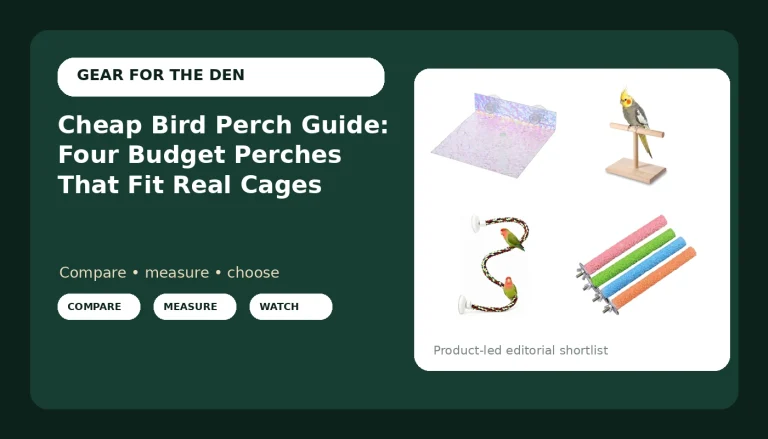
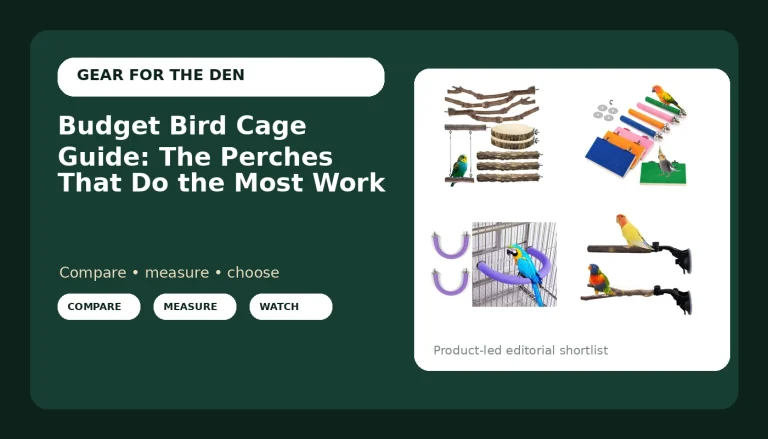
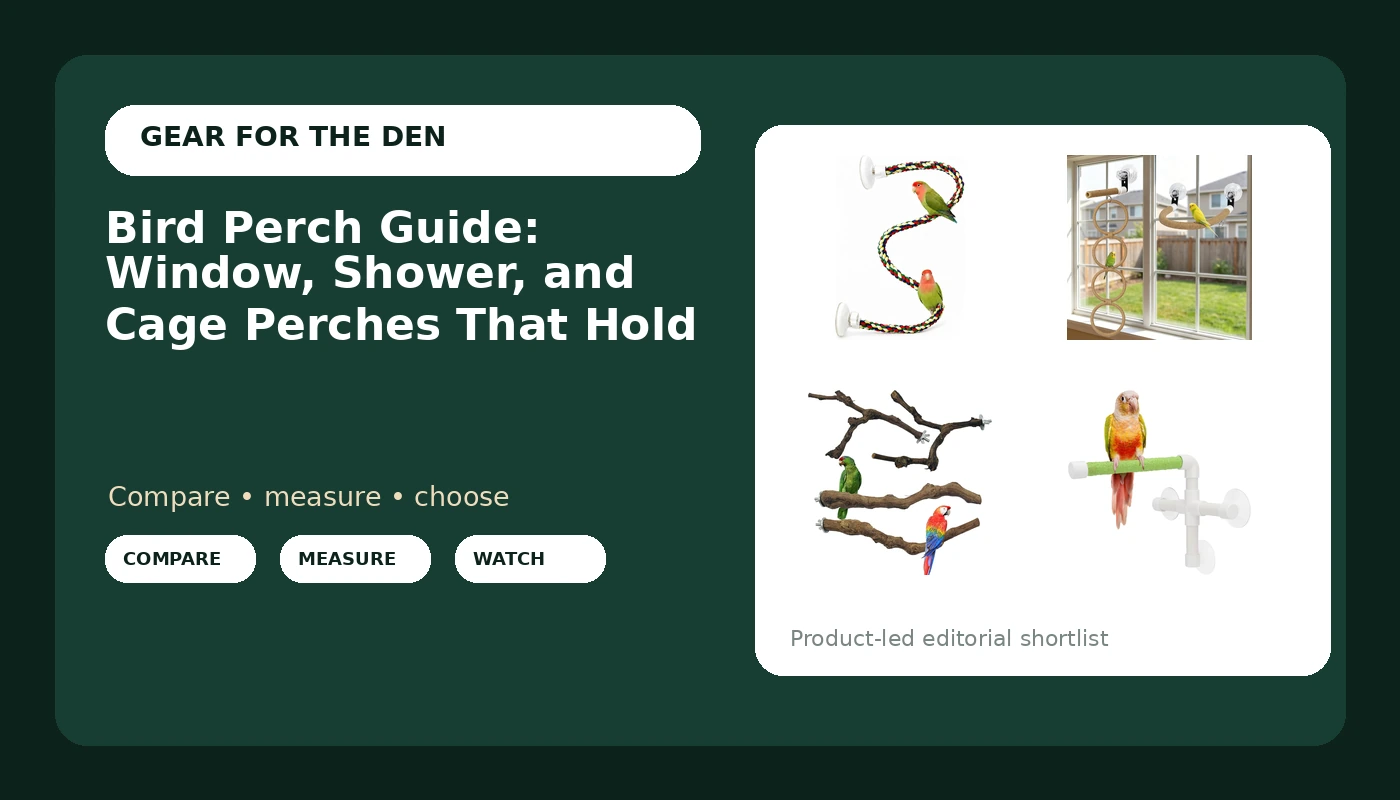
I compared four perches for this guide: two suction-cup window and bath models, one natural pole with a suction base, and a four-pack of grapevine sticks. Between them they cover the three jobs a perch actually does in a home, which are sleeping, sitting while out of the cage, and being taken apart piece by piece. What separates a good one from a bad one is not the price. It is whether the mount holds, whether the surface gives the toes something to close around, and whether you can clean it without a fight.
Best Overall: OOXYG Bird Rope Perch Stand with Strong Suction Cups for Window/Bath
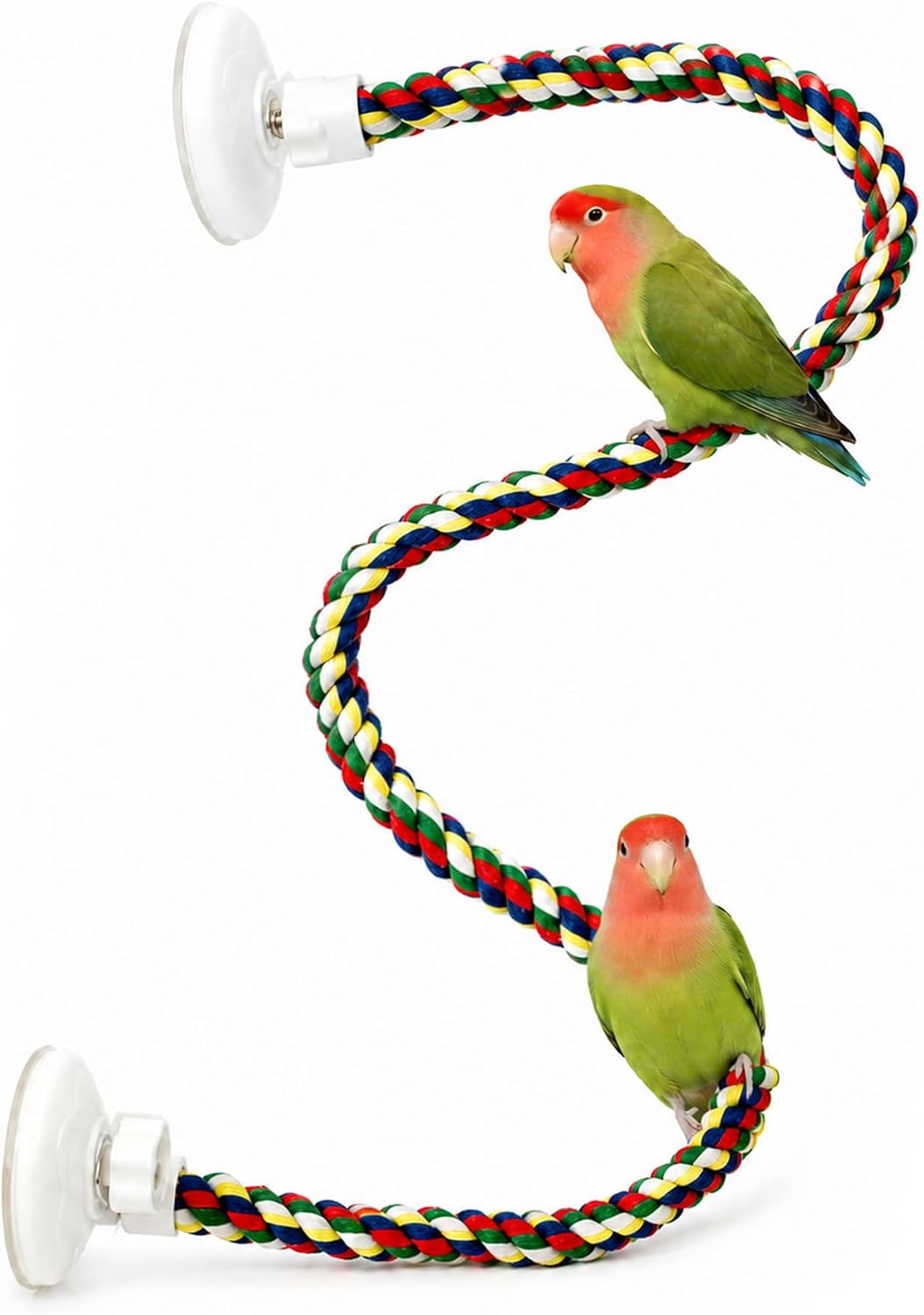
Rope solves the biggest problem with perches, which is that one fixed shape is wrong for a foot that changes as it grips. Braided rope gives a little under the toes, so the bird closes around it instead of balancing on top of it, and the uneven surface gives claws something to catch. That is the argument for this one, and it is why it takes the top spot in this bird perch guide.
The mount is the part that matters once the perch leaves the cage. Strong suction cups mean this one is built for glass and smooth tile, which is where most people actually want a perch: on a window so the bird gets light and something to watch, or on a shower wall so it can sit in the steam. Press it onto clean, dry glass and give it a few minutes before you let a bird near it. A cup that pops off with a bird on it is how you end up with a nervous parrot and a vet bill.
Where rope earns its keep is with birds that chew. A rope perch gets picked apart over months, and that is fine, because it keeps the beak busy and it is easy to replace. Check it every week for loose strands, and cut off anything that has frayed into a loop. A loop is the one thing on a rope perch that can catch a toe.
This is not the perch for a cage corner that has to survive a macaw for five years. It is the perch for the window, the shower, and the outside of the cage, and for those jobs it is the most useful item here. If your bird spends its day on a cage-mounted perch instead, the same rules apply: vary the diameter and keep it out of the flight path.
Best Value: JelaDynore Natural Perch Bird Stand Pole with Suction Cup for Parrot Budgie
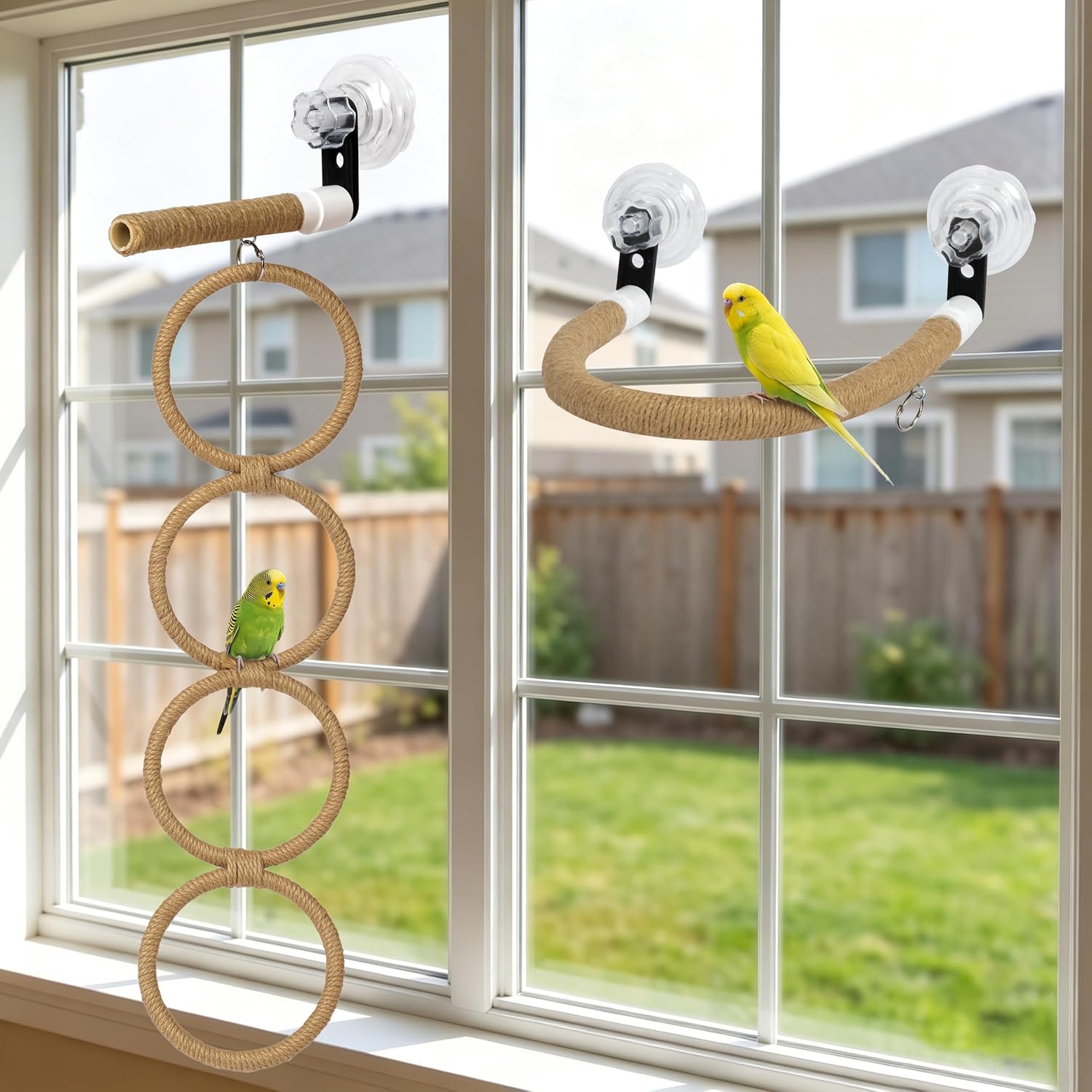
Natural wood is the other half of the answer. The JelaDynore is a natural pole on a suction cup base, which makes it the simplest version of the idea: a branch that sticks to glass.
Bark matters more than people expect. The smooth dowel that comes free with most cages is the worst perch you can give a bird, because it is one uniform diameter and a slick surface, and a foot that grips the same shape at the same angle all day is a foot that develops problems. Natural wood has texture and it changes thickness along its length, so the bird shifts its grip as it moves up and down. That is the whole reason a natural pole beats a plastic one, and it is why this is the value pick here.
For a budgie or a small parrot, a natural pole is a fine primary perch. Run a thumb along the whole length before you hang it and sand down anything sharp. Check the ends for splits, because a split end is where a toenail goes.
The suction base is the compromise. It is a single cup rather than a pair, so it wants a clean, flat surface and it wants to be checked. In a bathroom, heat and steam work against the seal, and a perch that slides down the tile at three in the morning is not a perch your bird will trust again. Press it on dry glass, wait, then hang it, and give it a nudge every few days.
How I tested
I judged every perch on the same four things: the mount, the grip, the cleaning, and what the surface looks like after a bird has lived on it.
The mount is the test that decides most of these. A perch that clamps to cage bars is easy, because the bars do the holding. A perch that lives on glass or tile is only as good as its suction cup, so I look at how the cup seats, whether there is a tab to release it without prying at the edge with a fingernail, and whether the surface it is meant for is actually smooth. Cups stick to glass and glazed tile. They do not stick to painted drywall, textured plastic, or anything with dust on it. That single fact explains half the complaints you see on this kind of product.
Grip comes down to perch diameter and texture together. A perch should let the foot wrap most of the way around, so the toes close instead of sitting flat. Too thin and the bird is gripping a wire. Too thick and the toes never close at all, which is how you get a bird that shuffles along the perch instead of perching on it. This is the number that matters most, and it is the one nobody puts on the box.
Cleaning is where rope and wood split. Wood can be scrubbed and dried. Rope has to dry all the way through or it stays damp in the middle, so a rope perch belongs somewhere with air moving, not sealed in a humid cage corner.
And none of these is a whole cage. A perch sits inside a system, and bar spacing and cage height, food cup size, and how often you change the tray liner all decide whether the bird actually uses the thing you hung.
Analysis and test results
Four perches, three different answers, and one clear split.
The two suction-cup models are for time outside the cage, and they differ in material rather than in mount. Rope gives under the toes, which suits a bird that likes to shift its weight and lean over the edge to watch the room. Natural wood holds its shape, which suits a bird that chews bark and wants a surface that does not move under it.
The grapevine set is the cage answer. Four sticks means you can put one high near a sleeping spot, one low near the food, and swap them when they get soiled instead of scrubbing the same perch forever.
Perch diameter is where most setups go wrong. A perch that is too thin for the bird is the equivalent of standing on a railing all day, and a perch that is too thick means the toes never close, which is how birds end up with pressure sores on the foot pad. There is no single correct bird perch for every bird, which is the part the packaging never admits. If you own one bird, buy one perch slightly thicker than the one you have and watch which one it picks. The bird will tell you.
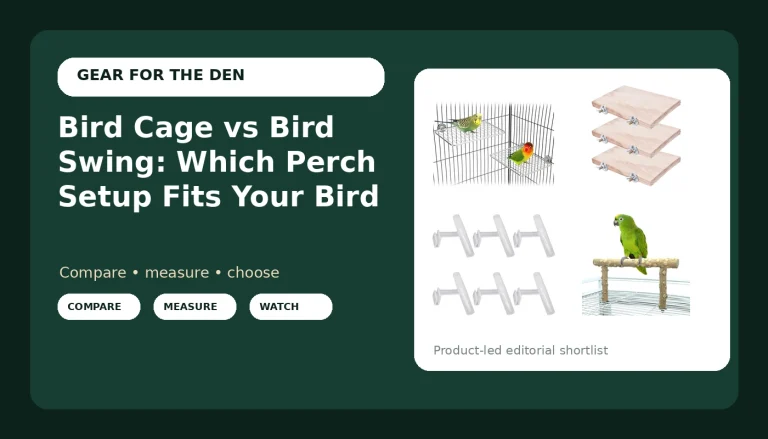
Placement matters as much as the perch. Put a perch high enough that the bird can sleep at cage height without its head touching the roof, and put another where it can reach a food cup without stretching. A swing mount is worth trying for a bird that likes to rock, but not for a bird that is unsteady on its feet, and not as the only place to sleep.
Foraging difficulty is the other lever. A perch that sits next to a puzzle feeder gets used far more than a perch in an empty corner, because the bird has a reason to be there.
Carrier size is the one people forget. A perch in a carrier needs to be low, short, and stable, because a bird that slides on the way to the vet arrives stressed and stays that way.
The Hypeety perch is the lightest of the four and the one that travels best. It is a perch toy rather than a furniture-grade perch, and that is the point: it goes on a window in a rental, on a shower wall, or in a second cage, and it does not ask for a permanent spot.
The bird perch comparison chart
This is the table I keep when I am picking a perch for a specific spot. Mount type decides where it can go, material decides how it feels under a foot, and the last column is the thing that will annoy you in a month.
| Perch | Mount | Material | Best for | Watch for |
|---|---|---|---|---|
OOXYG Bird Rope Perch Stand with Strong Suction Cups for Window/Bath | Strong suction cups | Braided rope | Window and shower time | Frayed loops, so check weekly |
JelaDynore Natural Perch Bird Stand Pole with Suction Cup for Parrot Budgie | Single suction cup base | Natural wood | Budgies and small parrots | Seal needs clean, dry glass |
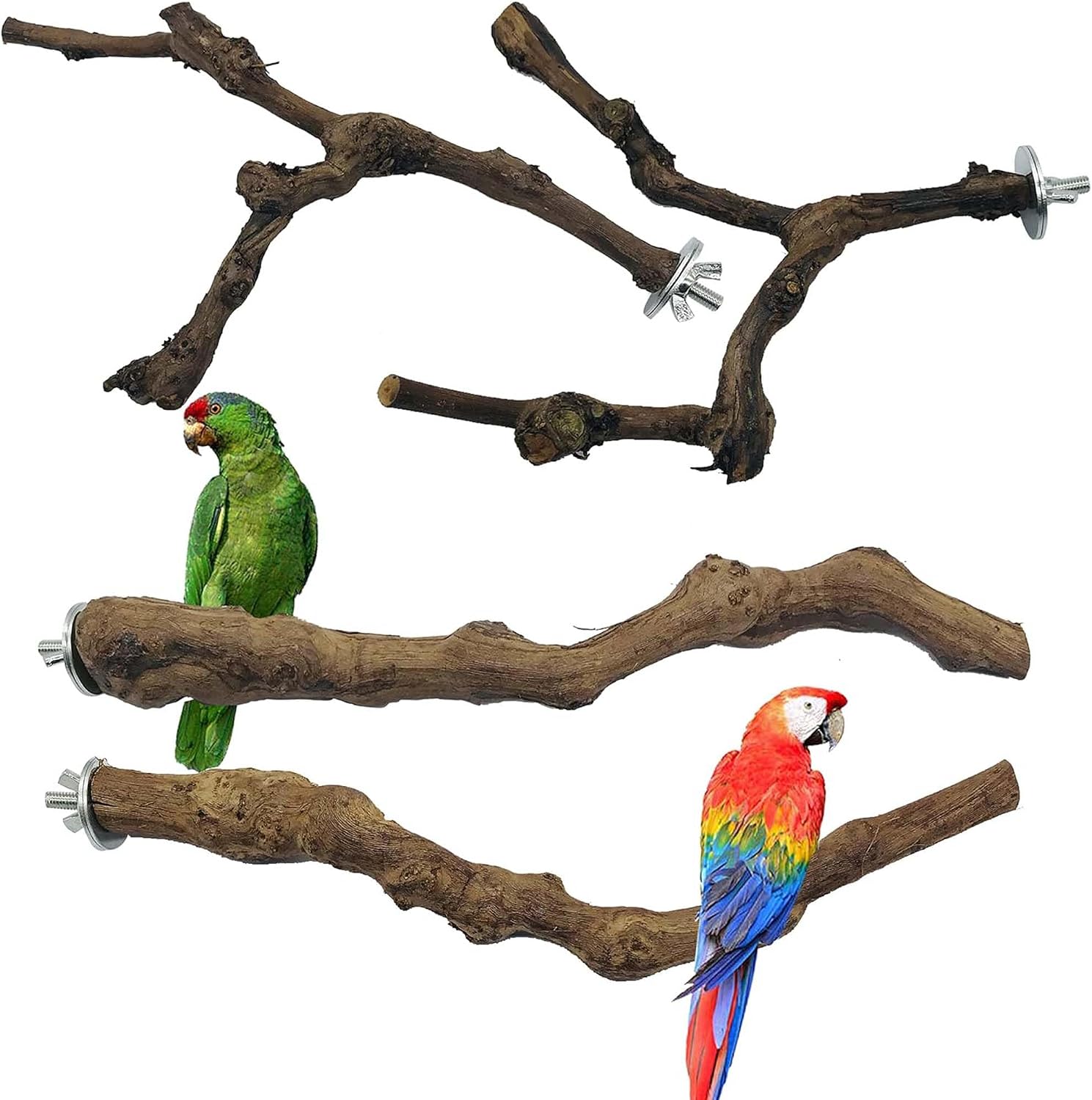 View on Amazon → Allazone 4PCS Bird Perch Natural Grape Stick Bird Standing Stick Grapevine | Cage mount | Natural grapevine | Cage variety and chewing | Bark sheds, so replace rather than scrub |
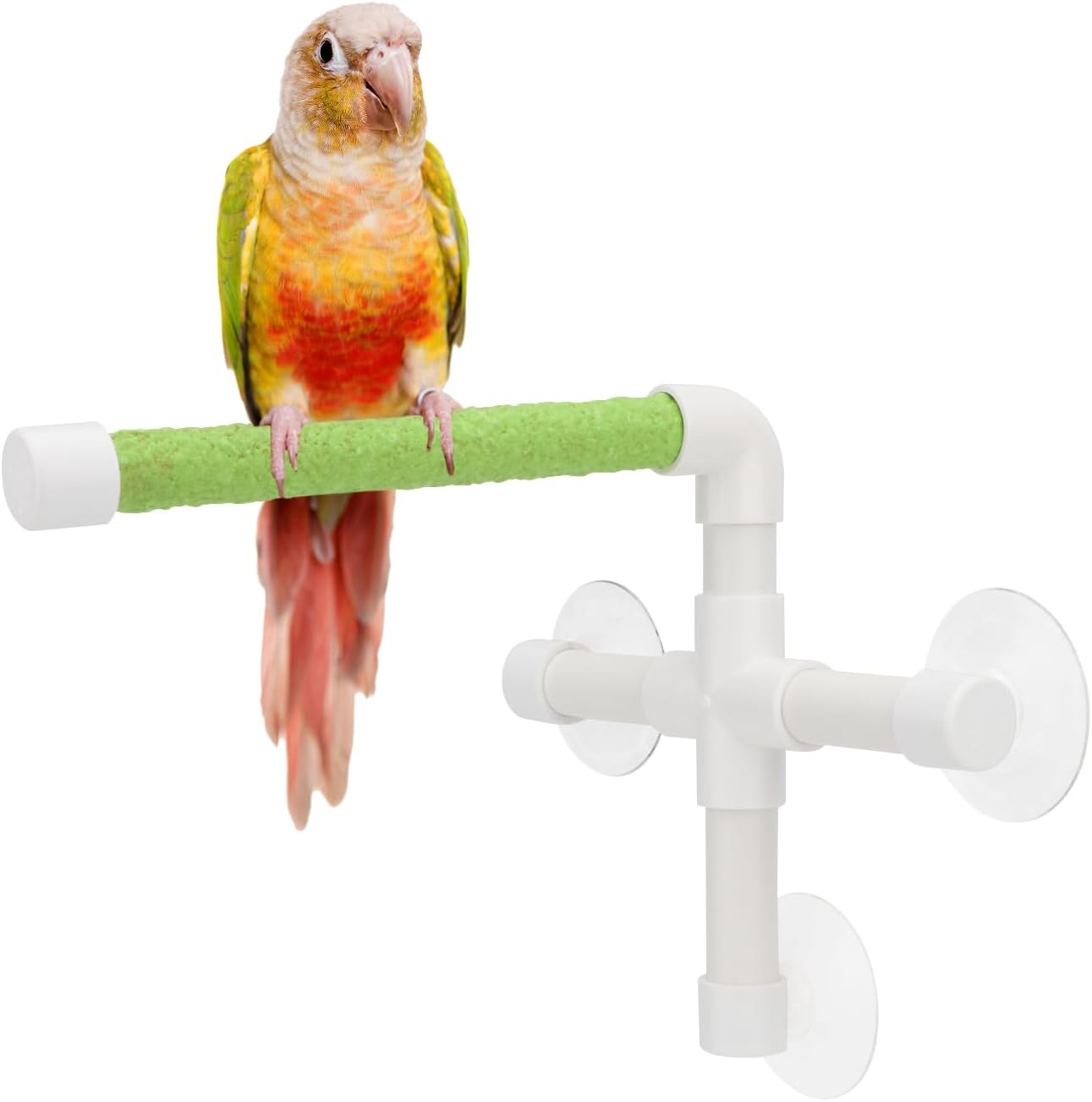 View on Amazon → Hypeety Portable Suction Cup Bird Window and Shower Perch Toy Parrot Stand | Suction cups | Not stated in the listing | Travel, bath, and second cages | Light, so recheck after every move |
Read the mount column first. If the perch is going on glass, you need a suction cup and a smooth surface. If it is going in a cage, you need a mount that matches the bar spacing, because a perch that wobbles between bars is worse than no perch at all.
Grapevine perches for grip and chewing
The Allazone four-pack is the one I would add to a cage that already has a dowel in it, because the fix for a bad perch is usually a second, different perch rather than a replacement.
Grapevine is irregular in a way that factory wood is not. The sticks vary in thickness along their length, the bark gives claws something to work against, and a bird that likes to strip bark will stay busy for weeks. That is foraging difficulty in its simplest form: the perch itself is the activity.
The practical advantage of a four-pack is rotation. When one stick gets dirty, you swap it out and clean the other one properly instead of wiping it down and putting it straight back. Bark that has been chewed loose should be brushed off, not left to collect droppings.
Two things to check before you hang them. Look for sharp nubs where a branch was cut, and look for any hardware that could work loose. Natural wood is not sterile and it is not uniform, which is exactly why birds like it and exactly why you should give each stick a look before it goes in the cage.
The travel and shower perch
The Hypeety perch answers a question the others do not: what do you do with the bird while you are in the shower, or while you are cleaning the cage, or while you are at a friend's house for the weekend?
It is a portable suction perch, so it is light and it moves. That is the whole appeal. Put it on the shower wall and a bird that likes steam will sit there and preen instead of screaming from the next room. Put it on a window in a hotel or a rental and the bird has a place to be that is not the top of a travel cage.
The trade is stability. Light perches move, and a perch that moves is one you have to check before you trust it with a bird on it. Press it on clean glass, give it a minute, and test it with your hand before the bird gets a turn.
It is not the perch you build a cage around. It is the perch you keep in a drawer for the days when the bird needs somewhere to be.
Should you buy the OOXYG Bird Rope Perch Stand with Strong Suction Cups for Window/Bath?
Yes, if the perch is going on glass. Rope is the most forgiving surface for a foot, the suction cups are made for a window or a shower wall, and the whole thing is easy to move when you want the bird somewhere else.
The limits are real. Rope wears, so you will be checking for loose strands, and it is not the perch that survives a large parrot for years. If your bird is a macaw or a cockatoo, this is a perch for supervised time, not a permanent cage fixture.
What it does better than anything else here is give a bird a place to be that is not inside the cage. A window perch in the morning light is the cheapest enrichment you can add to a bird's day, and this one does that job without asking for tools or cage space. Hang it where the bird can see you, check the cups, and let it sit.
Should you buy the JelaDynore Natural Perch Bird Stand Pole with Suction Cup for Parrot Budgie?
Yes, for a budgie, a cockatiel, or any small parrot that spends time on the outside of the cage. Natural wood gives the foot texture and variation, the suction base makes it easy to move, and it is the simplest way to add a second perch surface to a setup that only has a dowel.
Buy it if you want a perch that looks like a branch, because that is what it is, and skip it if you need something that holds a heavy bird or stays put for months without attention. A single suction cup is a single point of failure, so this is a perch you check.
For most small birds, the pair that works is a natural pole in the cage and a rope perch on the window. Between them you cover grip, chewing, and time out of the cage, which is most of what an ideal bird perch is supposed to do.