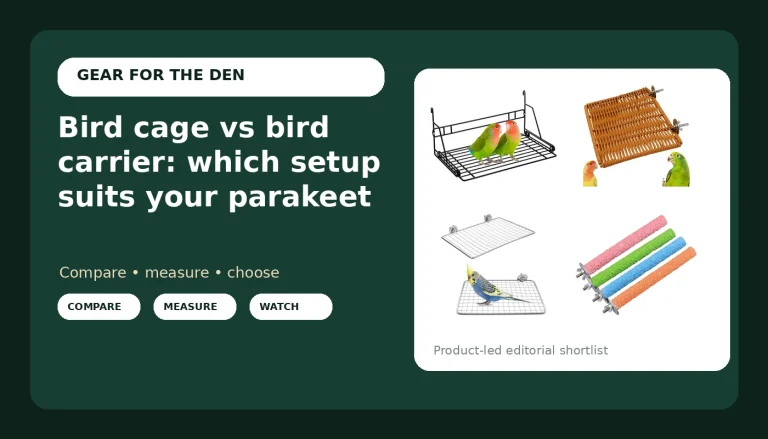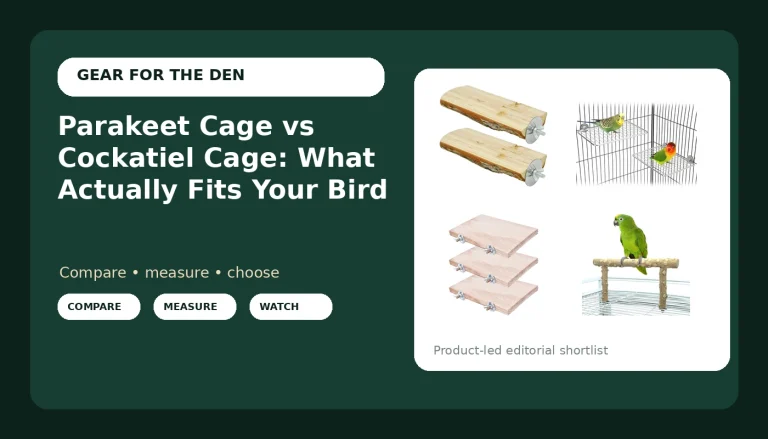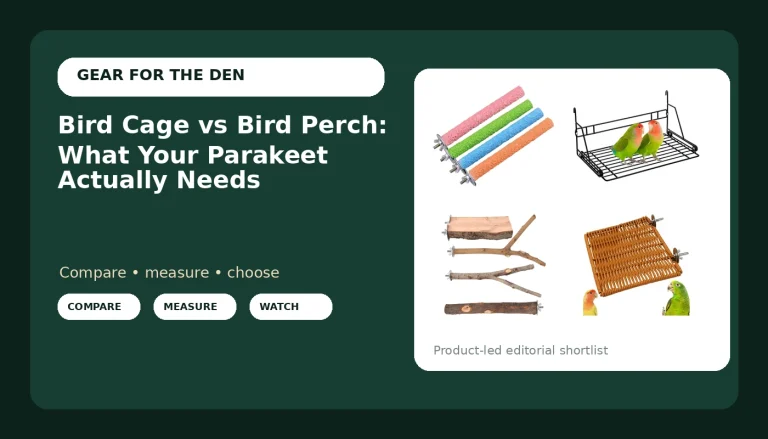
The bird cage vs bird swing question gets asked as if it were a choice between two pieces of furniture, but it is really a question about hours. Where does your bird spend the long stretch of the day when it is not eating, preening, or asleep? A cage is a fixed territory with walls, a floor, a tray liner, and a door. A swing is a moving perch that asks a bird to balance while it sits. Those are different jobs, and most birds need both done reasonably well rather than one done perfectly.
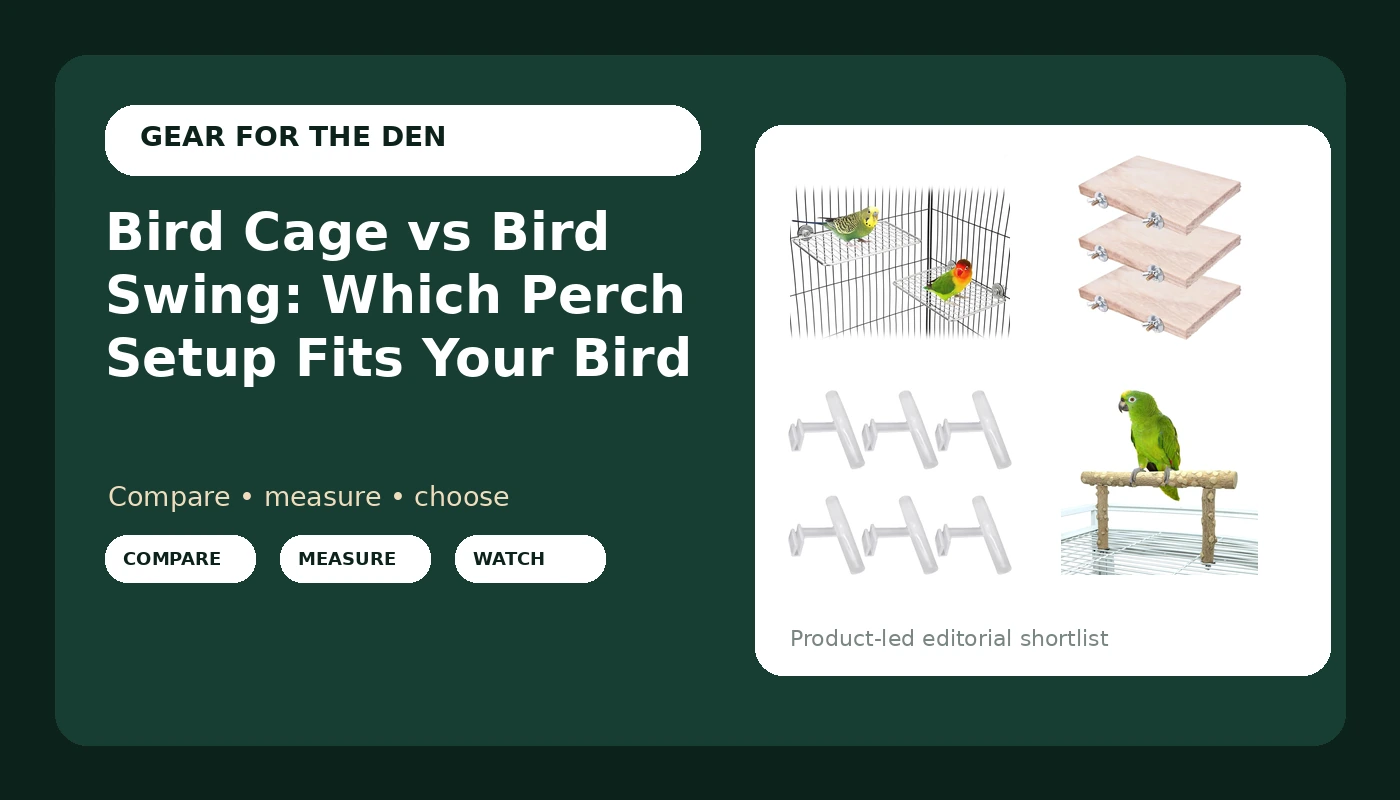
The four pieces of hardware below are the perch and platform options that decide which version of that setup actually works in a small apartment or a corner of a living room. None of them is a complete cage, and none is a swing in the classic sense, but together they cover the surfaces a bird stands on, which is the part of the bird cage vs bird swing decision you can solve with a shopping cart.
For most small parrots, the better default is a cage-mounted setup built around a flat platform, with one suspended or clip-on perch added for out-of-cage time, because a cage lets you control bar spacing, cage height, and where the mess lands. That holds for budgies, parakeets, and conures. It changes for larger birds, which need a wider perch diameter and heavier hardware than most starter kits include.
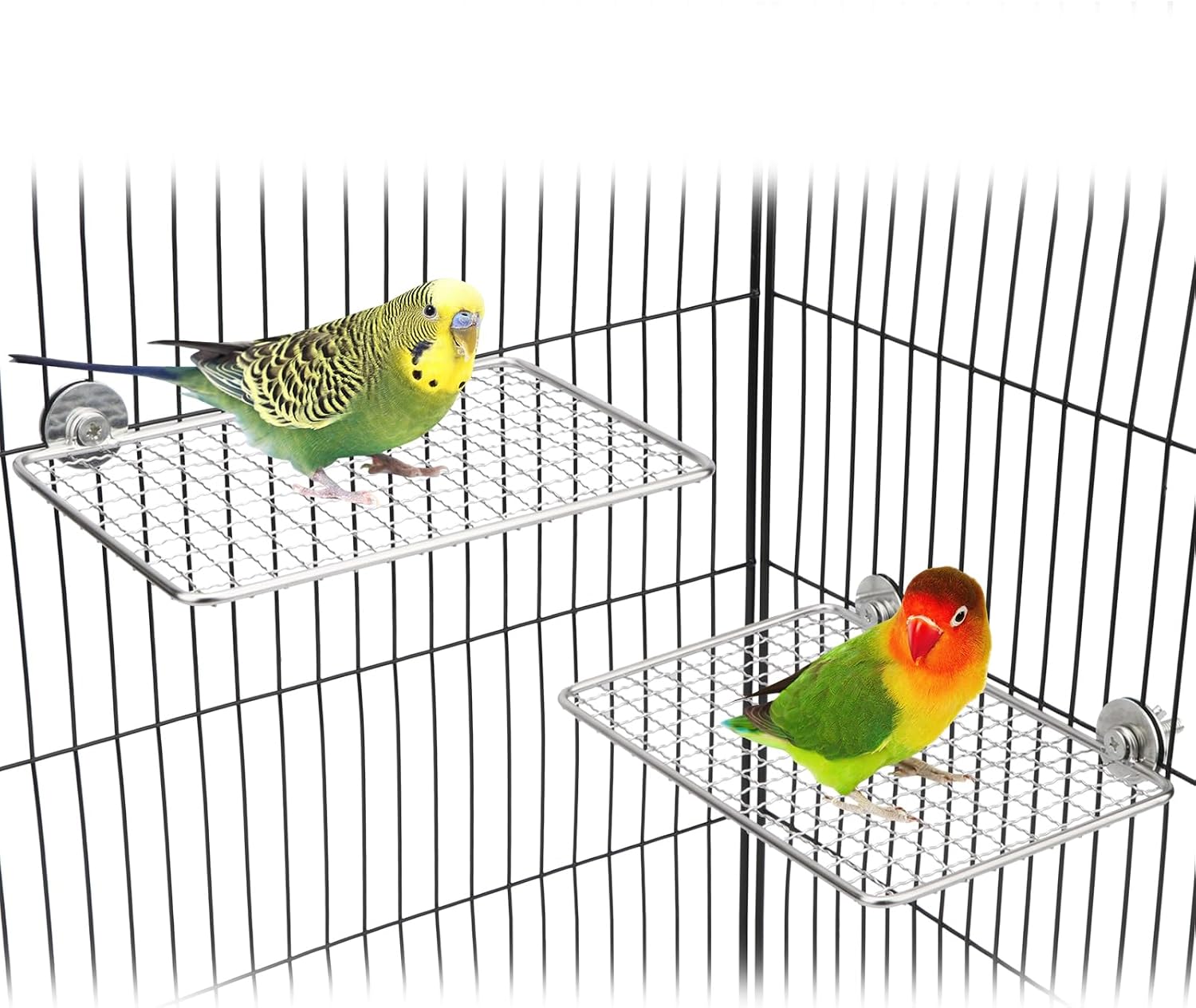
Hypeety Open-Grid Bird Perches for Cage Stainless Steel Flat Bird Platform
Flat stainless platform wipes clean and gives feet a rest from gripping dowels
A single flat surface offers less foot variation than a natural branch
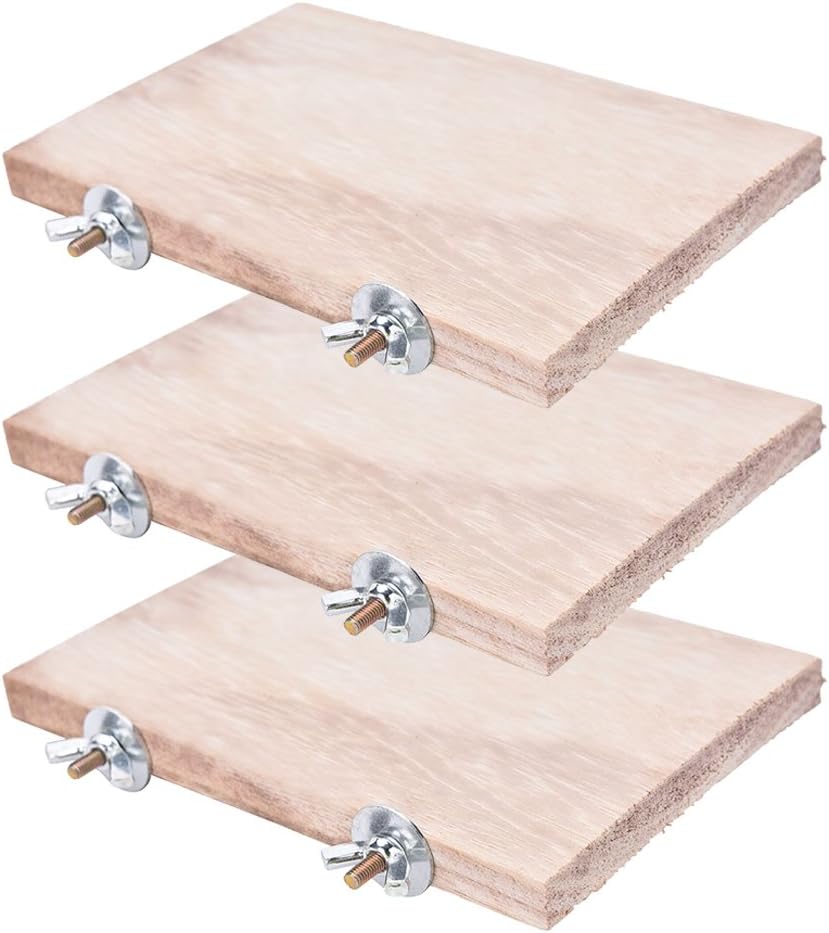
CoscosX 3Pcs Pet Parrot Bird Cage Perches Square Wooden Stand Platform Budgie Toys Bird Tree Perches for Parakeets
Three platforms in one box, so you can set low, middle, and high stations
Sized around budgie and parakeet dimensions, so larger birds outgrow them
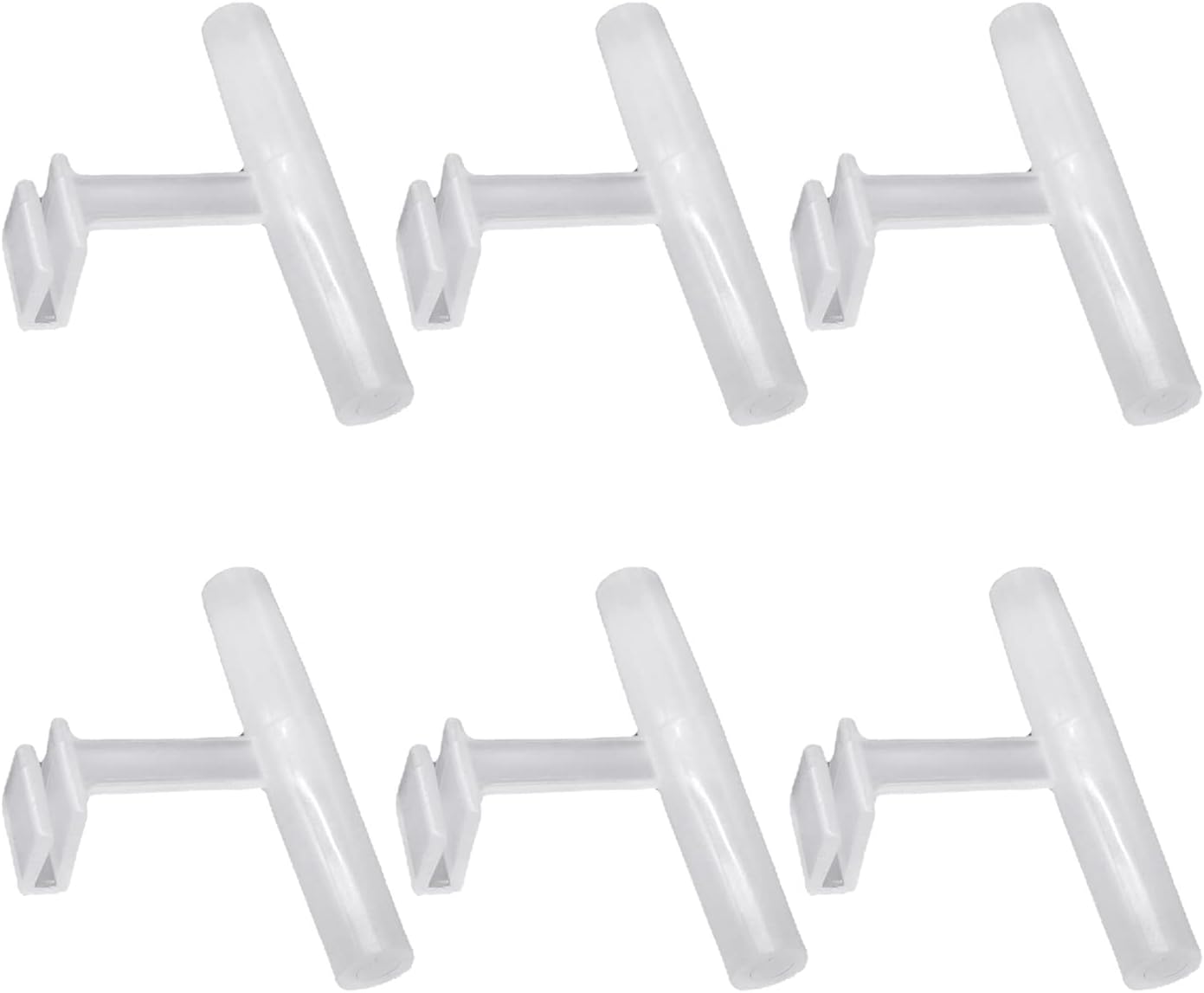
BOGEEL Bird Stand 6 Pieces Perches Clip to Window Feeders Training Tool Toy for Small Parrots Conures Cage Accessories
Clips move between cage, window, and table, and six pieces leave spares
A clip is only as steady as the frame it grabs, so thin feeders wobble
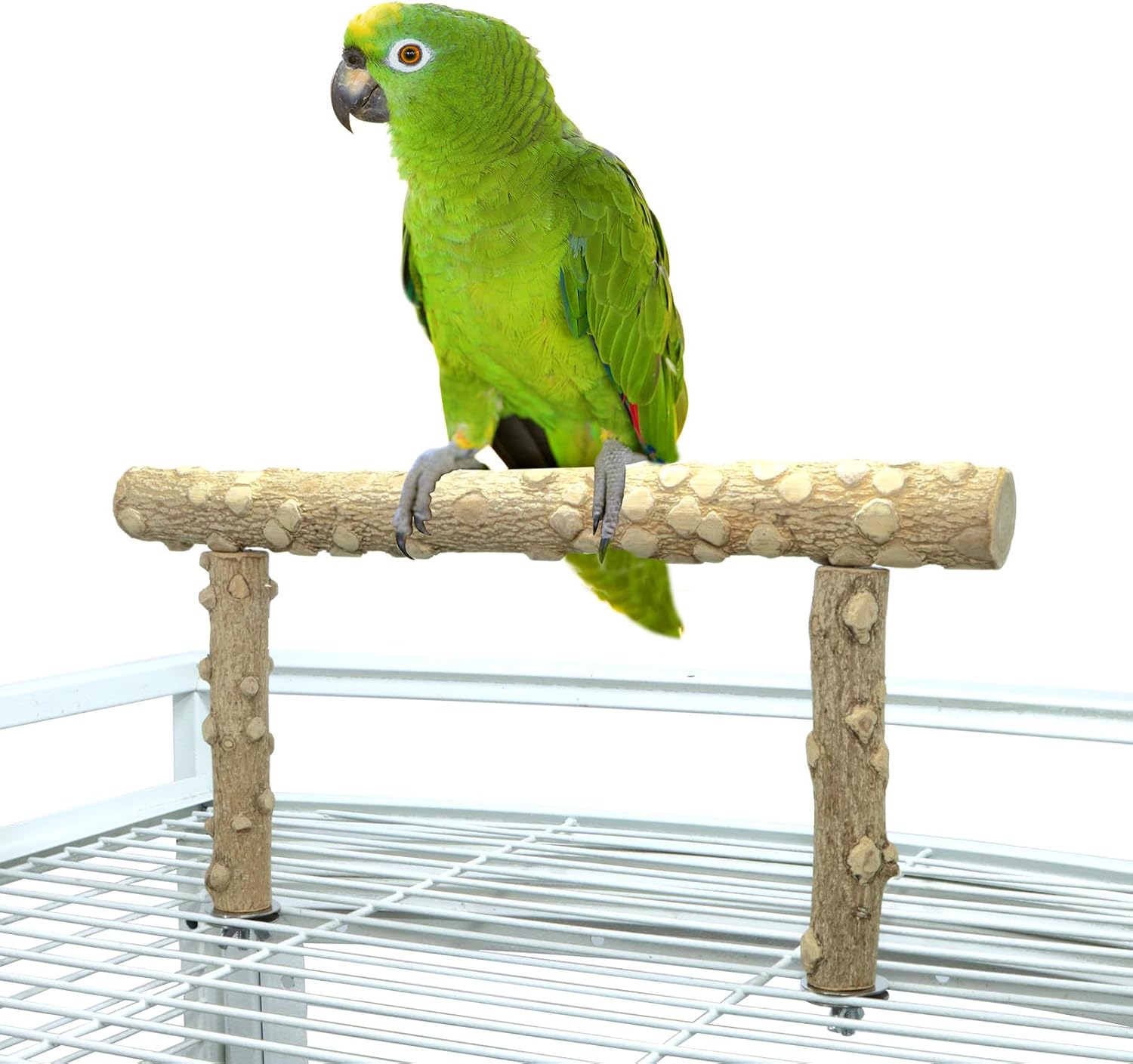
Bird Perch Stand,Natural Wood Cage Gym Toy Branch for Small Large Parrot
Varying branch thickness suits bigger feet and changes the grip angle
Irregular wood is harder to sanitize than steel or sealed wood
Prices and availability may change.
What the bird cage vs bird swing decision really comes down to
A cage solves containment. A swing solves motion. When people argue about a bird cage vs bird swing, they are usually arguing about which one keeps a bird busier, and the honest answer is that neither one does the job alone. A bird parked on a single dowel in a bare cage will sit still all day no matter how good the cage is. A bird given a swing but no cage has nowhere to retreat to, and birds that cannot retreat tend to get nippy.
The practical split looks like this. The cage is the home base. It holds the food cup, the water, the tray liner, and the sleeping perch, and it is the one piece of gear you can leave the house with. The swing, the window clip, and the branch are the enrichment layer. They add movement, they change the view, and they give a bird something to do with its feet besides wrapping them around a straight dowel.
If you are choosing between the two because of floor space, the cage wins by default, because a swing still needs a cage, a play stand, or a window frame to hang from. If you are choosing because your bird seems bored, the swing side of the argument wins, and the fix is usually more perches rather than a bigger cage.
How to judge perch gear before it goes in the cage
Before you compare setups, judge the hardware. Perch diameter is the first number to check. A perch that is too thin lets the toes wrap all the way around until they touch, which is how pressure sores start. A perch that is too thick forces the bird to grip with the tips of its toes only. The sweet spot is a perch the bird can hold with the foot slightly open, and for a budgie or parakeet that is a narrower diameter than a conure needs.
Then look at the mount. A swing mount that clips over a cage bar is only as good as the bar spacing it is clipping to. On wide spacing the clip rattles and the perch rocks. On narrow spacing it may not fit at all. The same logic applies to anything that clamps to a window feeder or a table edge: the clamp has to match the thickness it is gripping, or the whole perch tilts the moment the bird lands.
Cleaning is the third filter. Flat surfaces wipe down in seconds. Irregular natural wood does not, and that is the trade you accept for the foot exercise a branch provides. If you want the short version of this section, perch diameter, mount fit, and cleanability decide more than brand does.
One more thing worth checking before you order: the food cup size and the tray liner you already own. A perch that drops a bird directly over the cup means droppings in the food. A perch placed above a shallow tray means a weekly scrape instead of a daily wipe.
Cage-mounted perches: flat platforms and wooden stands
The Hypeety open-grid platform is the flat option here, and flat is the shape that makes a cage work. A stainless steel platform gives a bird somewhere to stand that is not a dowel, and because it is a flat grid rather than a branch, it wipes clean instead of trapping droppings in bark. That makes it the piece to put near the food cup, where a bird spends a lot of time standing still and where the tray liner below catches the fallout.
The CoscosX set takes the opposite approach: three square wooden stands you place at different heights so the bird has to move between them. Three platforms in one box is the useful part, because you can put one low near the food cup, one mid-cage, and one high near the sleeping spot without buying three separate items. The trade is size. These are built around budgie and parakeet dimensions, so a larger parrot will treat them as a step rather than a perch.
Height placement is what turns either one into a system. Put the lowest surface where a bird lands when it comes out of the food, the middle one where it turns around, and the highest one where it sleeps. If the cage is tall, that last one matters more than anything else in this article, because a bird that sleeps on a dowel near the top is a bird that spends eight hours a night on the wrong surface.
Window clips and natural branches for out-of-cage time
The BOGEEL six-piece set is the training-tool side of the category. Clips let you move a perch to a window feeder, a chair back, or the edge of a table so the bird is near you instead of in the next room. Six pieces means you can leave a couple permanently in the cage, keep one by the window, and still have spares for when a clip gets bent. The catch is that a clip-on perch is only stable if the thing it clips to is stable, so a thin window feeder frame will wobble.
The natural wood branch perch is the one that scales up. A branch with varying thickness does what a straight dowel cannot, because it changes the angle of the bird's feet as it walks and it gives a larger parrot something substantial to grip. Natural wood is also harder to sanitize than stainless steel, so it belongs in the rotation rather than as the only perch in the cage.
Between these two, the branch is the better everyday perch for a medium or large bird, and the clip-on set is the better tool for a small bird that needs to be somewhere other than its cage while you work. Neither replaces the cage platform, and neither is a full substitute for a swing, but both add the movement that a static cage lacks.
Bar spacing, perch diameter, and the numbers that matter
The numbers that decide whether a setup works are boring and easy to check. Bar spacing should be narrow enough that the bird cannot get its head through, which for small parrots usually means staying on the tight end of the range. Cage height matters less than people expect for a bird that mostly climbs, and more for a bird that likes to sit high and watch the room. Carrier size matters only on travel days, but on those days it matters more than everything else, because a carrier that is too small turns a vet visit into a wrestling match.
Perch diameter, as covered above, is the foot-health number. Food cup size is the mess number, since a cup that is too deep hides how much the bird is actually eating and a cup that is too shallow gets scattered across the room. Foraging difficulty is the boredom number, and it is the one most owners skip. A bird that has to work a little for food spends less time screaming.
The last number is swing mount clearance. If you hang anything from the cage ceiling, measure the distance from the mount to the nearest perch. Too little clearance and the bird cannot swing without hitting something, which turns a piece of enrichment into a hazard.
The difference between bird cage and bird swing in daily use
The difference between bird cage and bird swing setups shows up in the routine rather than in the shopping cart. A cage-based bird has a fixed place for food, water, and sleep, and the maintenance is predictable: swap the tray liner, wipe the platform, refill the cup. A swing-based bird has a moving perch and a changing view, and the maintenance cost is that you have to keep moving the perch, because a swing that stays in one spot for a month is just a perch.
Put the other way around, bird swing vs bird cage is a question about how much of the day a bird spends balancing versus how much it spends parked. Both are fine in the right amount. A bird that never has to balance ends up with weak feet. A bird that never gets to park gets stressed. Most healthy setups land in the middle, with the cage as the constant and two or three movable perches as the variable.
If you only have time for one maintenance habit, make it the rotation. Move a perch, wipe a platform, and check the mount every week, and the setup stays interesting without new purchases.
Do you need both a bird cage or bird swing setup?
For almost every parrot kept indoors, the answer is both, which is why framing it as bird cage or bird swing is a false choice. The cage is the floor plan. The perches are the furniture. You would not furnish a room with one chair, and a cage with one dowel is the same mistake.
The budget version is simple. One flat platform in the cage, one clip-on or branch perch outside it, and one spare so you can rotate while something dries. That is three items, and the four products above cover every one of those roles at prices that make rotating affordable rather than a project.
What to buy first
If you are starting from nothing, buy the flat platform first. It is the least glamorous purchase in this article and the one your bird will use every day, because a flat surface is where a bird stands while it eats and where it rests its feet between grips. Add the natural branch second, since it is the piece that gives a larger bird something to hold properly. Add the clip-on set third, for out-of-cage time, and the wooden multi-pack last, unless you are setting up a budgie cage, in which case the multi-pack moves to the front of the list.
Whichever order you pick, check the mount against your actual cage before you buy. Bar spacing, cage height, and the thickness of whatever you are clipping to are the three details that turn a good perch into a wobbly one.
What I'm watching next
The open-grid platform category is where I expect the most movement over the next year, because stainless steel solves the cleaning problem that natural wood cannot. The open question is whether flat platforms get wider adoption in cages built for larger parrots, where the market has mostly sold branches and dowels. If a flat platform shows up in a size that suits a conure or an African grey, that changes the recommendation for the bigger birds in this article, and I will update it here when that happens.