Dander is the dry, skin-borne material that rides along with loose fur, and it is the reason a cat can leave a gray film on a dark sofa without ever looking dirty. Most owners start searching for a cat brush for dander after they notice the dust more than the hair, and that instinct is close to correct: the tool that lifts loose undercoat also lifts much of the material that would otherwise settle into fabric. What the packaging rarely tells you is which tool fits your cat. Coat length, undercoat density, bristle type, and comb spacing all change how a brush behaves against skin, and a tool that feels gentle on one cat can be irritating on another.
Quick answer
Dander control is mostly a byproduct of removing loose undercoat consistently, not of any single miracle tool. For short and medium coats, a deshedding tool with a shallow, rounded deshedding edge used in light strokes does most of the work. For long coats, a comb with generous comb spacing moves through the coat without pulling. A rubber grooming mitt helps with surface material when glove fit suits your hand, and a roller adhesive sheet picks up what brushing leaves behind on furniture. There is no single ideal cat brush for dander that suits every coat, so match the tool to coat length first and to your cat's tolerance second.
Four useful options
| Model | Best fit | What stands out |
|---|---|---|
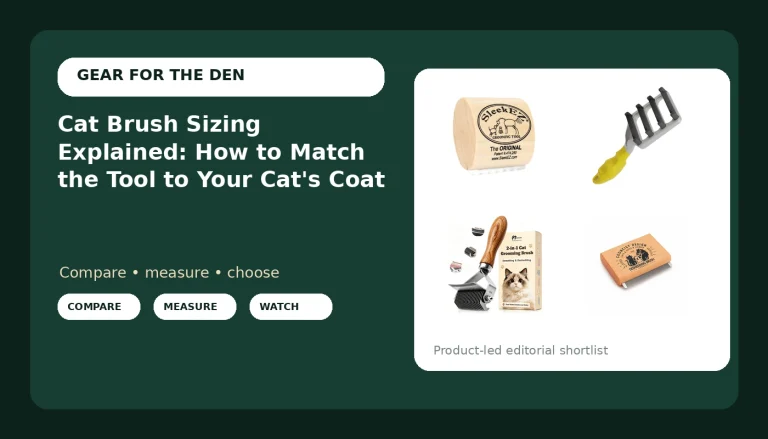
| SleekEZ Cat Brush for Shedding – Deshedding Brush for Cats – Patented Grooming Tool for Removing Loose Fur, Undercoat & Hair – Made in USA – Works on Short, Medium & Long Coats | Multi-cat homes with mixed coats | Listed for short, medium, and long coats, made in the USA |
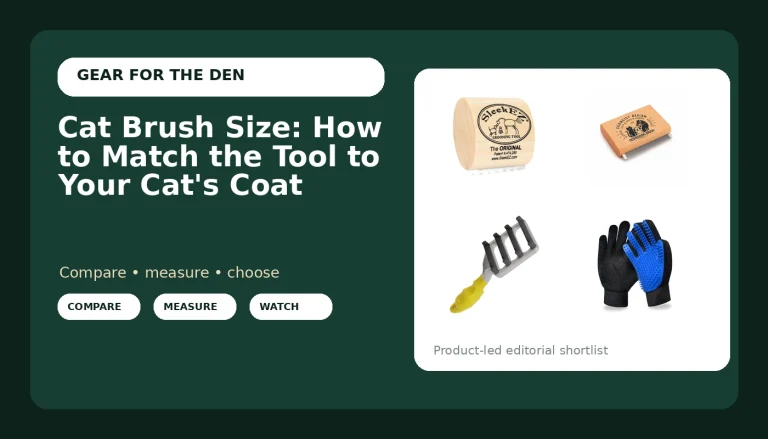
| FUR4 deShedding Cat Brush for Short Hair Cats, Pet Hair Brush with 4 Carbon Fiber Edges, deShedding Tool Removes Loose Fur, Gentle & Effective Cat Grooming Brush for Shedding | Short-haired cats | Four carbon fiber deshedding edges on one head |
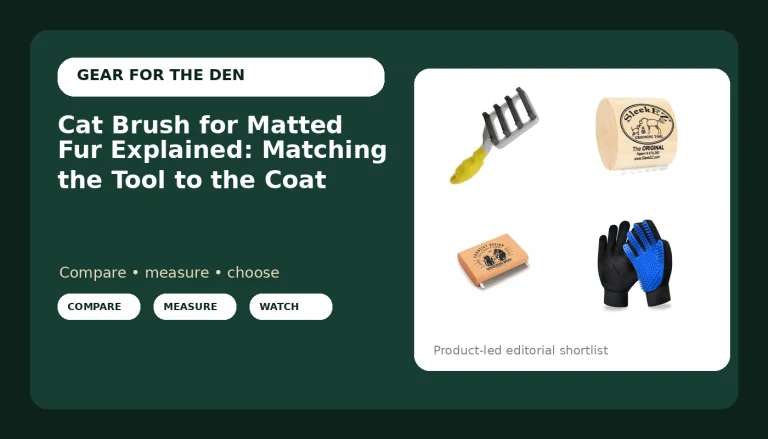
| Cat Brush for Long Haired Cats, 2-in-1 Dematting & Deshedding Comb | Long coats with tangles | Dematting and deshedding sides in one tool |
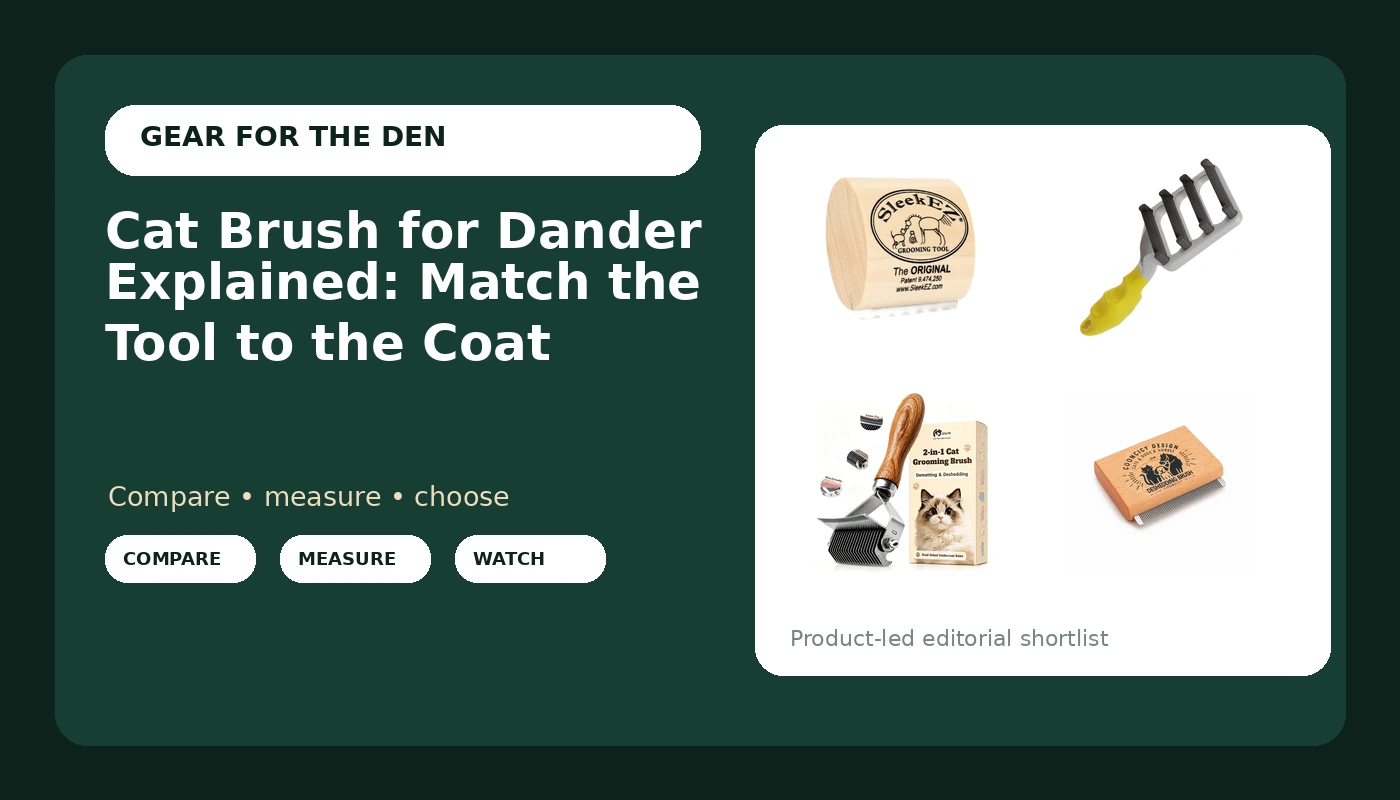
| Cooncicy Deshedding Brush for Cat & Small Pets | Cats and small pets, simple setups | Compact deshedding head sized for small animals |
All-round default: SleekEZ Cat Brush for Shedding
The appeal here is range. Because the manufacturer lists it for short, medium, and long coats, it is the one tool in this group that a multi-cat household can buy once and use on everyone, provided you adjust pressure. The trade-off is that a single fine edge gives you no choice of comb spacing. On a dense double coat you work in short passes and clear the edge often; on a thin coat you use almost no pressure at all. It is also a hand tool, so if your cat will not tolerate a brush on the body, no edge design will fix that. Start with the shoulders and the back, where most cats are least defensive, and keep sessions short.
Short-coat specialist: FUR4 deShedding Cat Brush for Short Hair Cats
Four edges on one head means each stroke covers more surface, which shortens the session, and shorter sessions are the main reason a cat keeps cooperating. The trade-off is specificity: this brush is sold for short hair cats, and on a long or heavily tangled coat multiple edges can catch rather than glide. If you keep a shorthair and a longhair, this is the tool for one of them, not both. Use light pressure, work with the coat rather than against it, and clear the edges between passes so loose fur does not pack in and drag across skin.
Long-coat option: Cat Brush for Long Haired Cats, 2-in-1 Dematting & Deshedding Comb
Long coats need comb spacing more than edge count, because a fine edge simply cannot travel through length without snagging. This tool gives you a comb side for working through the coat and a deshedding side for loose fur, which means fewer tools on the shelf. The trade-off is that a dematting blade is a more aggressive instrument than a plain deshedding edge, so it belongs only on loose tangles and never on a mat that sits tight against skin. Comb first, work in small sections, and stop if the coat starts pulling.
Simple option: Cooncicy Deshedding Brush for Cat & Small Pets
Not every cat needs a specialized tool. This is a straightforward deshedding brush sold for cats and small pets, which makes it a reasonable starting point if you are unsure how your cat will react to grooming at all. The trade-off is fewer refinements: no multi-edge head and no separate comb side, so it does the basic job and asks you to supply the technique. If a first brush gets ignored, rejected, or outgrown, you have learned that at the lowest possible cost.
Prices and availability may change. Product images, names, and retailer links are matched to verified listings. No current price, rating, stock status, or measured result is stated here without current evidence.
What makes a cat brush for dander effective
Dander is not dirt. It is a mix of dead skin cells, dried skin oils, and saliva proteins that cats deposit while grooming, and it clings to loose fur rather than floating free. That is why a tool that removes undercoat also removes a large share of the visible dust, and why a tool that only smooths the topcoat leaves the problem in place. Read this as a cat brush for dander explained by coat mechanics: the job is to reach loose material near the skin without scraping the skin itself.
Three design details matter most. The first is the deshedding edge, the row of fine teeth that actually catches loose undercoat. Edges that are shallow and rounded glide along the body; edges that are deep and sharp dig in, which is uncomfortable and can irritate skin that is already dry. The second is bristle type. Stiff metal teeth suit dense double coats, while softer bristles and rubber nubs suit thin or sensitive coats and are better at spreading natural oils across the surface. The third is comb spacing. Wide spacing lets a comb pass through long fur without snagging; narrow spacing catches more fine hair but stops dead at a tangle.
Grooming frequency matters more than any single feature. A cat brushed briefly every day or two sheds less loose material onto furniture than one brushed hard once a month. If your cat has a skin condition, a bald patch, or reacts with pain, that is a veterinary question rather than a gear question.
Matching the tool to coat length and undercoat
Coat length sets the basic category, but undercoat density decides how much work the tool has to do. A short, single coat needs very little; a dense double coat needs a tool that can pull volume without scraping skin. Between those extremes, you adjust pressure, session length, and how often you clear the tool.
- Identify coat length and undercoat. Run a hand against the grain. A thick second layer under the guard hairs means you need a deshedding edge, not just a bristle brush.
- Check the edge profile. A shallow, rounded deshedding edge with a guard, sometimes sold as a nail guard, limits how far the teeth travel toward skin.
- Match comb spacing to coat length. Narrow spacing for short coats, wider spacing for long coats and anything prone to tangles.
- Test on a small area first. Two or three light strokes on the shoulder or flank show whether your cat will tolerate the tool at all.
- Keep sessions short and clear the tool often. Fur packed into the teeth stops catching loose undercoat and starts dragging across skin instead.
A practical routine that keeps dander down
- Brush before you vacuum, not after, so the loose material lands where one pass can remove it.
- Work in the direction the coat grows and use almost no downward pressure on the belly and inner legs.
- Stop at the first sign of twitching, tail flicking, or flattened ears, and finish with a treat so the tool stays associated with something good.
- Bathe only when your cat's coat condition calls for it, since frequent bathing can dry skin and increase flaking; our notes on bathing cats without drying out their coat cover the trade-offs.
- Wipe hard surfaces and wash soft bedding weekly, and keep a roller adhesive sheet or damp cloth for the film that brushing loosens.
Which option should you choose?
Choose the SleekEZ Cat Brush for Shedding when you have more than one cat or a coat that falls between categories, because one tool is listed for short, medium, and long fur. Choose the FUR4 deShedding Cat Brush for Short Hair Cats when your cat wears a short, dense coat and you want several deshedding edges working in a single stroke. Choose the Cat Brush for Long Haired Cats, 2-in-1 Dematting & Deshedding Comb when coat length and tangles are the main problem. Choose the Cooncicy Deshedding Brush for Cat & Small Pets when you want a simple deshedding head for a cat or a small pet and do not need extra attachments.
Finding the correct cat brush for dander is a matter of fit rather than price. The tool that matches coat length, undercoat density, and your cat's tolerance will do more than an expensive tool used twice. No brush removes all dander, and none substitutes for veterinary care when flaking comes with itching, hair loss, or skin changes.
The bottom line
Dander and shedding are the same problem seen from two angles: loose undercoat carries the dry skin material that ends up on your furniture. The most useful step is a tool whose deshedding edge matches your cat's coat, used briefly and often rather than rarely and hard. For mixed households the SleekEZ tool is the broadest single choice, the FUR4 brush targets short coats, the 2-in-1 comb handles long fur and tangles, and the Cooncicy brush covers simple setups for cats and small pets. Pair whichever you pick with a grooming mitt for surface work, a roller for fabric, and a routine your cat will actually sit through.