Cat brushes are sold by the shape of their head, not by the size of the cat they are meant for, and that is how a decent tool ends up forgotten in a drawer. Cat brush sizing is the practice of matching a tool's working width, edge geometry, and tooth or bristle spacing to your cat's coat length and body size instead of buying whichever listing has the most convincing photos. A head that is too wide for a small cat skips across the flanks and snags near the belly, while a comb spaced for a long coat glides through a short, dense one and lifts almost nothing. This cat brush sizing explained guide covers what those measurements actually mean, how the coat changes the answer, and which tools fit each job.
Quick answer
The correct cat brush sizing starts with the coat, not with the cat's weight. A short, dense coat responds well to a deshedding edge with closely spaced teeth worked in short strokes. A medium coat, or a home with several coat types, is served by a general deshedding tool with a moderate head width, because it covers more of the body per pass. A long coat needs a comb with wider tooth spacing first, so you can find mats while they are still small, and a deshedding pass only after the coat is clear. If your cat is small, senior, or easily startled, favor a narrower head you can steer with one hand over a wide blade that covers more ground per stroke. No single tool is the best choice across every coat, which is why the ideal cat brush sizing answer changes from one cat to the next.
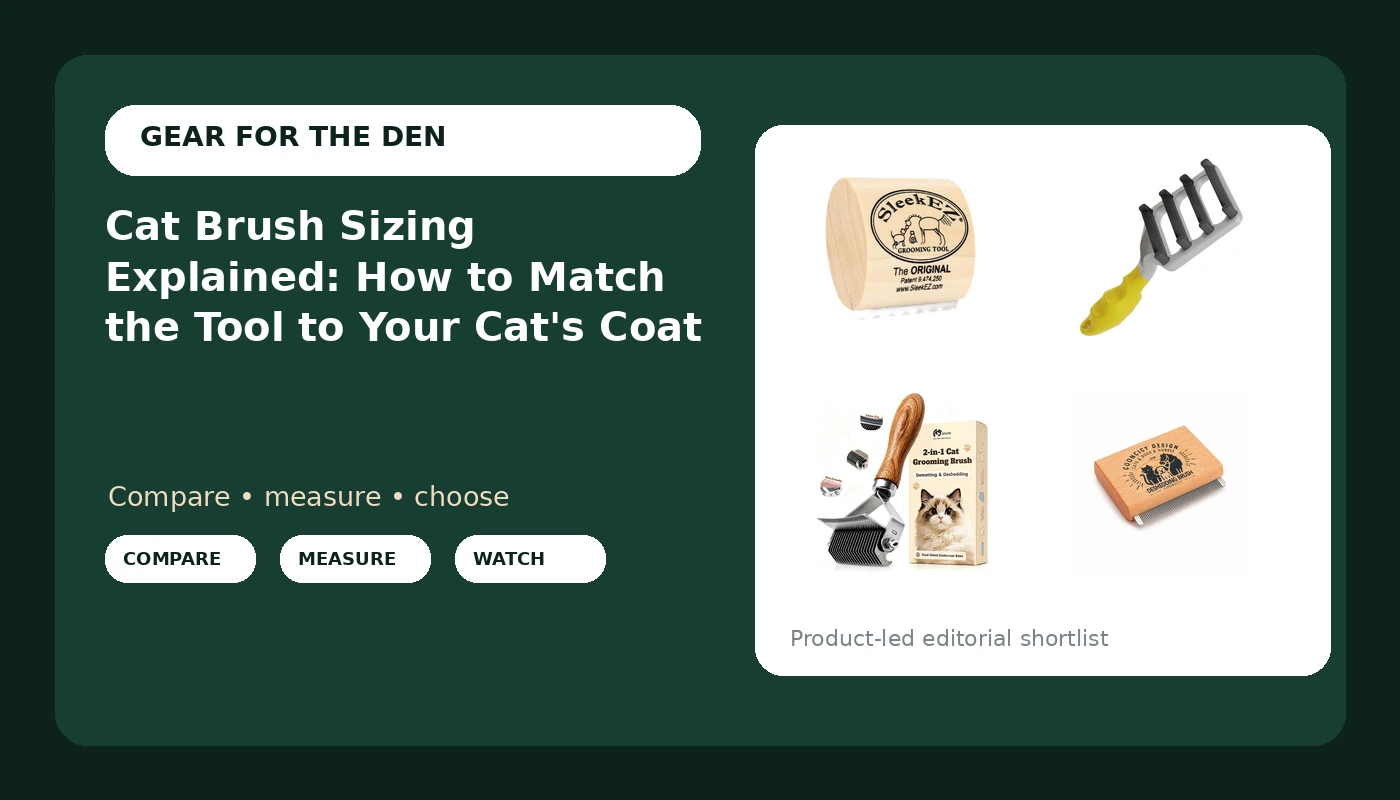
Four useful options
| Model | Best fit | What stands out |
|---|---|---|
| SleekEZ Cat Brush for Shedding | Short, medium, and long coats in one tool | Patented deshedding design made in the USA |
| FUR4 deShedding Cat Brush for Short Hair Cats | Short, dense coats | Four carbon fiber deshedding edges |
| Cat Brush for Long Haired Cats, 2-in-1 Dematting & Deshedding Comb | Long coats with tangles | Two-sided head that demats and desheds |
| Cooncicy Deshedding Brush for Cat & Small Pets | A first deshedding tool for cats and small pets | Simple single-purpose deshedding head |
All-coat generalist: SleekEZ Cat Brush for Shedding
The appeal of an all-coat tool is that it removes one decision from the shelf. If you have a short-haired cat and a medium-haired cat, or if you are not sure what your cat's coat will do in winter, a general deshedding head covers the widest range of situations. The trade-off is specialization: a tool listed for short, medium, and long coats cannot carry the very fine tooth spacing that a short coat rewards or the wide spacing a long coat needs, so it sits in the middle. Used with light pressure and short strokes that follow the direction of the coat, it is a sensible first purchase for a household that does not want to build a drawer full of brushes.
Short-coat specialist: FUR4 deShedding Cat Brush for Short Hair Cats
Short coats look simple, but a dense short coat holds a surprising amount of loose undercoat close to the skin, and that is exactly where a soft bristle brush stops being useful. A deshedding edge with tight spacing reaches that loose fur and draws it out instead of polishing the top layer. This brush is aimed at that job, and the four carbon fiber edges are the reason its spacing is finer than a general purpose head. The trade-off is the mirror image of an all-coat tool: it is designed for short fur, so it is not the right head for a long coat with mats, and it should not be pressed hard against the skin or dragged across tangles. Fine spacing plus light pressure is the whole technique.
Long-coat two-in-one: Cat Brush for Long Haired Cats, 2-in-1 Dematting & Deshedding Comb
Long coats fail in a different way. Fur mats near the armpits, behind the front legs, and along the belly long before anything shows on the back, and a deshedding edge pulled through a mat does not remove the mat, it tightens it. That is why the long-coat tool carries two working sides: wider spacing on the dematting side to open tangles, and a deshedding side to clear loose fur once the coat is free. Work in small sections and stop when the comb catches, because the goal of the first pass is to separate hair, not to pull it out. If a mat has tightened against the skin, that is a job for a groomer or blunt-tipped scissors rather than any brush.
Simple starter tool: Cooncicy Deshedding Brush for Cat & Small Pets
Not every home needs a grooming drawer. If you have one cat with a straightforward coat, or a small pet that sheds, a single deshedding brush covers the routine. This brush is listed as a deshedding brush for cats and small pets, and it is a single-purpose head rather than a two-in-one comb, which keeps the decision simple for a first purchase. The trade-off is the same one that comes with any specialized tool: it does one job well, so a long coat with mats, or a coat that needs wider tooth spacing, will still want the comb above. Buy it when you want one simple tool to start the habit and you are prepared to add a comb later if the coat asks for it.
Prices and availability may change. Product images, names, and retailer links are matched to verified listings. No current price, rating, stock status, or measured result is stated here without current evidence.
What cat brush sizing actually measures
The word sizing is slightly misleading, because almost no cat brush is sold in numbered sizes. What changes from tool to tool is the contact area and the way it meets the hair. Four variables do most of the work:
- Working width. How much coat the head touches in one stroke. A wide head is efficient on a big, calm cat; a narrow head is easier to steer around the belly and legs of a smaller or wrigglier one.
- Comb spacing. How far apart the teeth sit. Tight spacing grabs fine, dense undercoat. Wide spacing passes through longer hair without yanking it.
- Edge or bristle type. A deshedding edge scrapes loose fur from the undercoat. A wire slicker lifts and separates. A bristle brush mostly smooths the surface. Picking the wrong bristle type is the most common reason a new brush seems to do nothing.
- Reach and grip. Head shape, handle length, and how the tool sits in your hand decide whether you can work the flanks and tail base without awkward angles.
Two related categories are sized on different terms. A grooming glove is chosen by glove fit and by the spacing of its rubber nubs rather than by head width, and a roller adhesive is chosen by how much lint it lifts per sheet. Neither replaces a deshedding tool, but both belong in a grooming drawer that actually gets used.
How coat length changes cat brush sizing
Coat length is the first filter, and it is easier to read than most owners expect. Run a hand along the back, then the flanks, then the belly. If loose fur comes away in your fingers, you are dealing with a double coat that will reward a deshedding edge. If your hand slides smoothly and nothing lifts, a soft bristle type is enough for surface work and a deshedding tool can wait.
From there, the categories are practical rather than technical:
- Short single coats are usually the easiest. Fine, closely spaced teeth work quickly and a short session every few days keeps up with shedding.
- Short double coats are the ones that surprise people. The top coat looks neat while the undercoat keeps loading up, so tight comb spacing does more than a surface brush.
- Medium and semi-long coats sit in the middle and are the reason a general deshedding head earns its place. It handles the back and flanks, and you can add a comb for the ruff and tail.
- Long coats need wide spacing first. Open the coat with the dematting side, then deshed, then finish with a wipe down or a roller adhesive for the fur you brought to the surface.
- Read the coat before the label. Check the back, flanks, and belly with your hand and note where fur releases easily.
- Pick the tool family by coat length. Tight spacing for short and double coats, a moderate general head for medium coats, wide spacing plus a dematting side for long coats.
- Match the head to the cat. A small, senior, or nervous cat gets a narrower working width that you can control with one hand.
- Test on a small area with light pressure, then judge the spacing. If the tool skips, it is too wide for that coat. If it drags and your cat flinches, shorten the stroke and ease off.
- Set a rhythm and finish with cleanup. Short sessions once or twice a week in shedding season, with a roller adhesive nearby for furniture.
Running a grooming session that respects the coat
- Keep sessions short and stop while your cat is still relaxed. Two calm minutes beat ten tense ones.
- Never pull a deshedding edge through a mat. Open tangles with a wide-toothed dematting side first, or leave them for a groomer.
- Check the skin as you go. Redness or flinching means the pressure or the spacing is wrong for that area.
- Handle claws as a separate job with a clipper that has a nail guard you trust, and keep the brush for the coat only.
- Work in a fixed order on long coats: armpits and belly first, then the back and tail, so you find mats before they tighten.
- Clear hair from the head after every session, and store the tool so the teeth or edges do not bend against anything heavy.
Which option should you choose?
Choose the SleekEZ Cat Brush for Shedding when your household has more than one coat type, or when you want a single deshedding tool listed for short, medium, and long coats. Choose the FUR4 deShedding Cat Brush for Short Hair Cats when your cat has a short, dense coat that holds undercoat close to the skin and you want finer spacing than a general head provides. Choose the Cat Brush for Long Haired Cats, 2-in-1 Dematting & Deshedding Comb when the coat is long enough to tangle, so you can open mats and clear loose fur with one handle. Choose the Cooncicy Deshedding Brush for Cat & Small Pets when you want one simple deshedding head for a cat or small pet and do not need a second grooming side.
The caveat is that the ideal cat brush sizing for one cat can be wrong for another, and it can even change for the same cat. Coat condition shifts with season, age, diet, and health, so a tool that worked in January may feel too fine in July. Treat the first purchase as a starting point and adjust once you have seen how much fur actually comes out.
The bottom line
Cat brush sizing comes down to three questions asked in order: how long is the coat, how dense is the undercoat, and how big or how patient is the cat. Coat length decides spacing, density decides whether you need a deshedding edge or a surface brush, and the cat decides how wide a head you can realistically control. A general deshedding tool covers the most homes, a short-coat specialist gets the most out of dense short fur, a two-in-one comb is the practical answer for long coats, and a simple single-purpose brush is enough for a cat or small pet with an uncomplicated coat. Check current Amazon price on the option that matches your cat's coat, and keep sessions short enough that grooming stays a routine rather than a wrestling match.