A kitten's coat is not a scaled-down adult coat. The soft fuzz a kitten carries through its first few months has a different structure from the denser undercoat and the longer guard hairs it will grow later, and that difference is the main reason a cat brush for kittens should be chosen on different criteria than a tool bought for a grown cat. The most common first purchase is a deshedding blade, because deshedding is what adult-cat owners talk about, and it is often the wrong place to start: a young kitten has little undercoat for an edge to catch, so the teeth ride close to the skin and the kitten learns to associate grooming with a scratch. Coat length, bristle type, and comb spacing decide more here than brand loyalty does, and this breakdown works through those variables before it looks at four specific tools.
Quick answer
For a kitten under roughly six months, the sensible starting point is a gentle tool with soft bristles or fine, closely spaced teeth, used in short sessions with no pulling against the grain. A deshedding edge is built around loose undercoat fur, and a young kitten usually has very little of that yet, so it tends to be a tool you grow into rather than begin with. There is no single ideal cat brush for kittens for every household, because the answer follows coat length, how dense the adult coat is likely to be, and how much handling the kitten currently accepts. A glove-style tool suits short, frequent sessions on short coats. A curved deshedding edge becomes useful once the adult undercoat arrives. A fine-edge tool built for short hair fits cats that never develop a heavy undercoat.
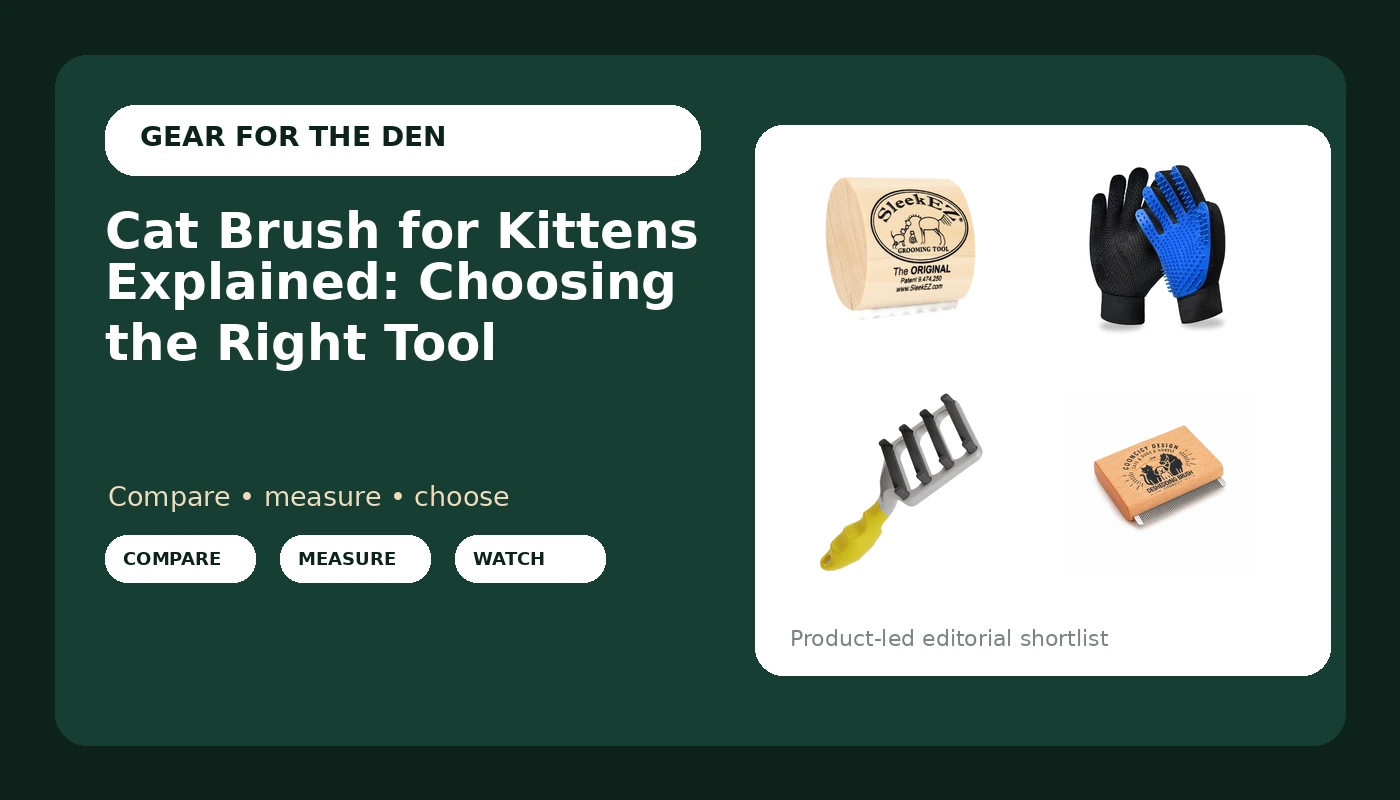
4 useful options
| Model | Best fit | What stands out |
|---|---|---|
| SleekEZ Cat Brush for Shedding – Deshedding Brush for Cats – Patented Grooming Tool for Removing Loose Fur, Undercoat & Hair – Made in USA – Works on Short, Medium & Long Coats | Kittens and cats whose adult coat length is still unknown | A patented grooming tool made in the USA, described as working on short, medium, and long coats |
| GJEASE Cat Grooming Glove Brush 2-Pack, Pet Hair Remover Tool | Short, frequent sessions with kittens that dislike a handled brush | Two glove brushes in one pack, worn on the hand rather than gripped in it |
| FUR4 deShedding Cat Brush for Short Hair Cats, Pet Hair Brush with 4 Carbon Fiber Edges, deShedding Tool Removes Loose Fur, Gentle & Effective Cat Grooming Brush for Shedding | Short-haired cats and kittens that will stay short-coated | Four carbon fiber edges positioned for short-hair deshedding |
| Cooncicy Deshedding Brush for Cat & Small Pets | A low-cost first tool, and homes with small pets as well as cats | Designed for cats and small pets rather than a single species |
The multi-coat option: SleekEZ Cat Brush for Shedding
The appeal of a tool rated across all three coat lengths is that you do not have to guess what your kitten will grow into. A short-haired kitten and a long-haired kitten look similar at eight weeks, and coat length only becomes obvious as the adult coat comes in. Buying one general-purpose edge means you are not repurchasing in six months if the coat turns out heavier than expected. The trade-off is in the word deshedding. A curved edge is more assertive than a soft bristle brush, so on a kitten younger than about six months treat it as something to introduce later, with light strokes in the direction the coat grows and sessions measured in seconds rather than minutes. The patented and made-in-USA points are manufacturer statements rather than measured results.
The hands-on option: GJEASE Cat Grooming Glove Brush
Glove fit is the whole point of this format. Many kittens accept a flat hand before they accept a handle, so a glove lets you build the grooming habit while the kitten still thinks it is being petted. Because the working surface sits in your palm, you also have more control over pressure: you can stop the moment the kitten tenses, which is how a grooming routine survives to adulthood. The limitation is depth. A glove lifts loose surface fur and does little about compacted undercoat, so it is best understood as a daily maintenance tool for short coats and a trust-building tool for young kittens, with a comb or edge handling the deeper work later. Two gloves also let you keep one in the room where the cat actually sits, which matters more than most people expect. A sticky roller adhesive sheet or a damp hand cleans the collected hair off the palm between passes.
The short-coat option: FUR4 deShedding Cat Brush
Short coats are their own problem. The fur sits close to the body, so a tool has to reach loose hair without digging, and wide-spaced teeth or deep blades tend to pass straight over it. An edge format built around short hair addresses that by keeping the working surface flat and shallow. This is the option to consider when you already know the answer to the coat-length question, whether because the kitten is a breed that stays short-coated or because the adult coat has come in and it is clearly short. It is the most specialized pick of the four and the least useful if your kitten turns out to be a semi-longhair, so it rewards a decision made after the coat matures rather than before it. The carbon fiber edge material and the gentle-and-effective phrasing come from the listing.
The low-cost starter: Cooncicy Deshedding Brush
The case for starting low cost is simple: you do not yet know whether your kitten will tolerate a handled deshedding tool, and a tool that gets used twice and then lives in a drawer is worse value than a cheap one that becomes a habit. The cross-species listing also suits homes where a rabbit or a small dog shares the brushing routine. The trade-off is that fewer claims are made about this brush than about the others, so its value depends entirely on handling and fit in your hand rather than on described features. If your kitten is older and clearly carrying a heavy undercoat, the general-purpose and short-coat options above make a more specific case than a broad-brush starter tool does.
Prices and availability may change. Product images, names, and retailer links are matched to verified listings. No current price, rating, stock status, or measured result is stated here without current evidence.
Cat brush for kittens explained: what changes as the coat matures
Kittens are not born with the coat they will keep. The first coat is soft, short, and light, with little insulating undercoat, which is why a kitten that barely sheds at ten weeks can drop fur everywhere at eight months. The undercoat thickens as the kitten grows, and the adult coat usually finishes coming in somewhere between six and twelve months, later in large breeds and longhairs. Until that happens, the correct cat brush for kittens is a gentle one, because the job is habit-building and light removal rather than serious deshedding.
Coat length decides the working format. Short coats hold loose fur close to the body and respond to a flat edge or a rubber surface that grips hair without raking. Medium and long coats need a tool that reaches through the outer layer, usually a slicker or a comb, plus attention to the belly, armpits, and britches where mats form first. For a longhair kitten, comb spacing matters as much as bristle type: fine teeth pull on dense fur, so a comb with wider spacing gets through without snagging, with a finer comb reserved for the face, paws, and tail.
Bristle type and edge geometry carry the rest of the decision. Soft bristles and fine teeth suit sensitive skin and early sessions. A deshedding edge is designed to reach loose undercoat hair and should be used with light pressure. Some tools include a guard that limits how deep the working surface can go, the same idea as a nail guard on a pair of claw clippers, and those limits are worth having on a tool used around a small animal. Finally, cleanup matters: a roller adhesive sheet or a bowl of warm water with a little dish soap keeps collected hair from ending up back on the sofa.
For seasonal timing, see cat shedding season basics.
Matching a tool to a kitten coat: five steps
- Identify coat length once the adult coat is in, or estimate it from the breed if you are buying earlier. Short, medium, and long coats point to different working surfaces.
- Check undercoat density by running a fine comb gently along the back. Fur that fills the teeth quickly means a deshedding edge will earn its place; a nearly clean comb means surface tools are enough.
- Test tolerance with a flat hand before you spend anything. A kitten that allows stroking along the spine and tail is ready for a glove or soft brush; one that flinches needs shorter sessions first.
- Match bristle type to the coat: soft bristle or fine comb for a young kitten, rubber or glove surface for short adult coats, slicker or comb for medium and long coats, and a deshedding edge for loose undercoat once it exists.
- Reassess every few months. A tool that was too aggressive at four months is often exactly right at ten, so keep both a soft brush and an edge tool on hand rather than committing to one.
Grooming a kitten without building a fight
- Keep sessions under two minutes at first and end while the kitten is still relaxed, not when it starts to struggle.
- Brush in the direction the coat grows, and let the tool do the work rather than pressing down for a cleaner pass.
- Pair grooming with something the kitten already likes, such as a treat or a chin scratch, so the brush predicts a good outcome.
- Work in the same place each time, ideally somewhere the cat already settles, rather than chasing it around the room.
- Stop immediately if the skin reddens or the kitten flinches, and give the area a day before trying again with a softer tool.
Which option should you choose?
Choose the SleekEZ Cat Brush for Shedding – Deshedding Brush for Cats – Patented Grooming Tool for Removing Loose Fur, Undercoat & Hair – Made in USA – Works on Short, Medium & Long Coats when you do not yet know your kitten's adult coat length and would rather buy one tool that covers short, medium, and long hair. Choose the GJEASE Cat Grooming Glove Brush 2-Pack, Pet Hair Remover Tool when your kitten dislikes handles and you want grooming to feel like petting, especially on a short coat. Choose the FUR4 deShedding Cat Brush for Short Hair Cats, Pet Hair Brush with 4 Carbon Fiber Edges, deShedding Tool Removes Loose Fur, Gentle & Effective Cat Grooming Brush for Shedding when you already know the cat is short-coated and want a tool built around that one job. Choose the Cooncicy Deshedding Brush for Cat & Small Pets when you want an inexpensive first tool or you groom small pets alongside the cat.
This article works from manufacturer listings and general grooming practice. It makes no claim about measured performance on any individual cat, and no product here is presented as the safest or the best, because coat, temperament, and handling vary too much for that distinction to hold.
The bottom line
A kitten does not need a serious deshedding tool on day one. It needs short, calm sessions with something gentle, and a plan for the tool it will need once the adult coat arrives. Start with a glove or a soft brush if the kitten is young and wary, keep a general-purpose edge tool for the mixed-coat question, and only specialize toward a short-coat edge once you know what you are actually grooming. Check current Amazon price on any of these before you commit, and remember that the tool matters less than whether the kitten lets you use it twice a week.