The cat brush vs cat grooming wipes question shows up every shedding season, and the honest answer starts with what each tool physically touches. A brush reaches the undercoat, lifts loose fur before it lands on the couch, and does the heavy work on a double coat. A wipe cleans the surface of the coat, handles dander, drool, and litter dust, and never reaches the layer where shedding begins. Get that distinction straight and the rest of the decision comes down to coat length, budget, and how much handling your cat will tolerate.
For most cats, a brush is the tool that earns its place first, and the SleekEZ Cat Brush for Shedding is the one to start with, because it is sold for short, medium, and long coats instead of one coat length. Wipes are a supplement, not a replacement. Everything below explains where that holds up and where it does not.
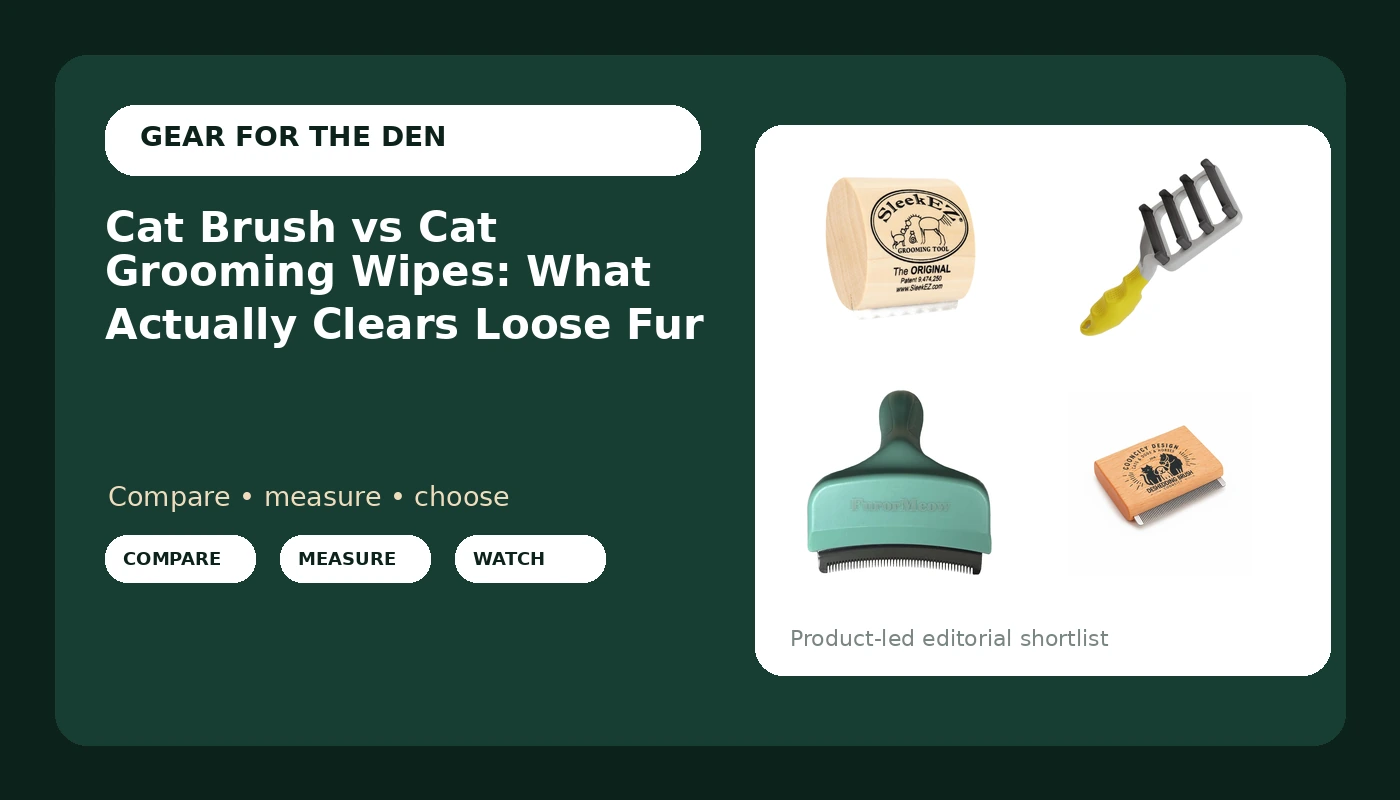
Here is how the four brushes in this comparison line up on the things that matter: reach, coat fit, and price.
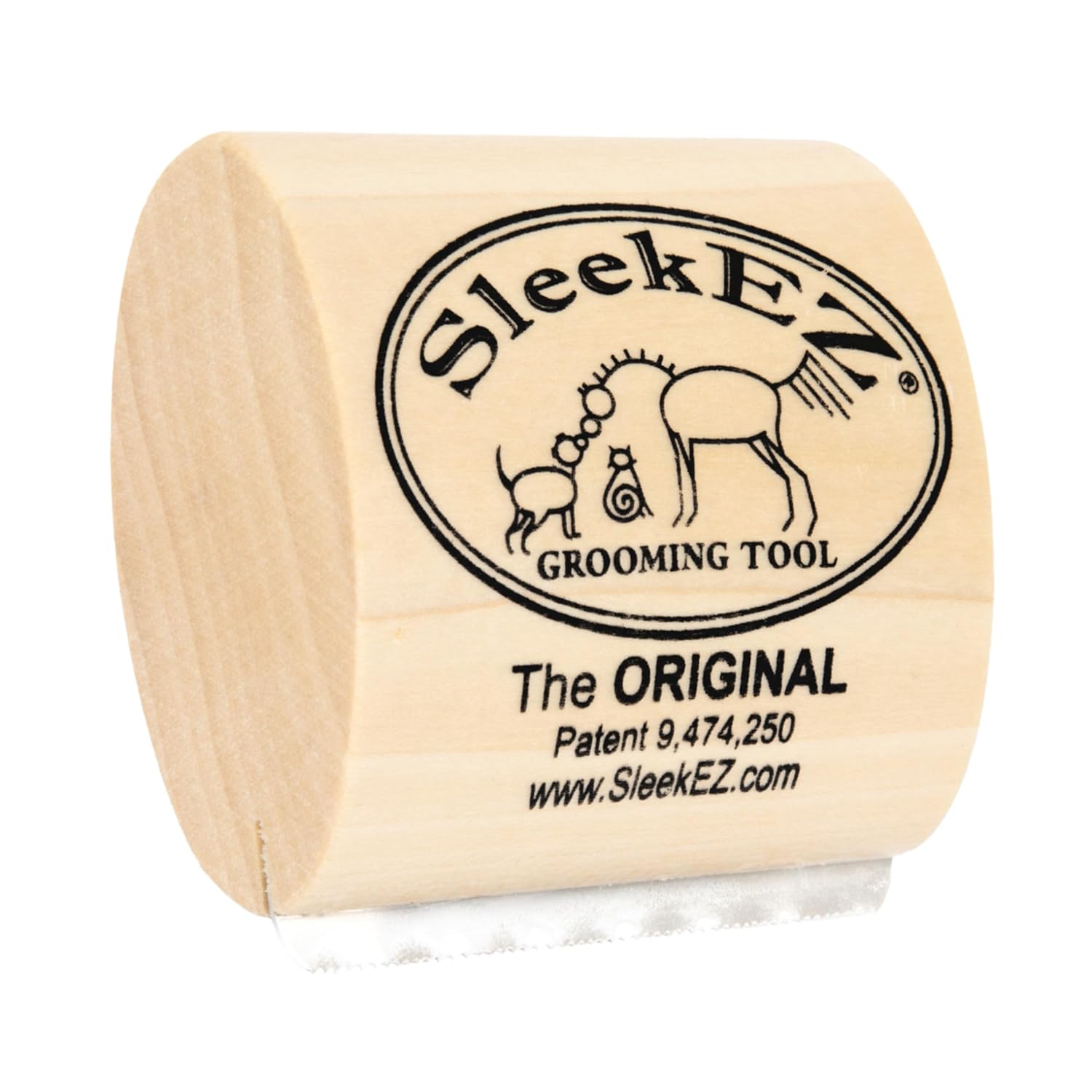
SleekEZ Cat Brush for Shedding
Sold for short, medium, and long coats, so it covers the widest range of cats in this group
Single blade format, so it is not the tool for faces, paws, or tight tangles
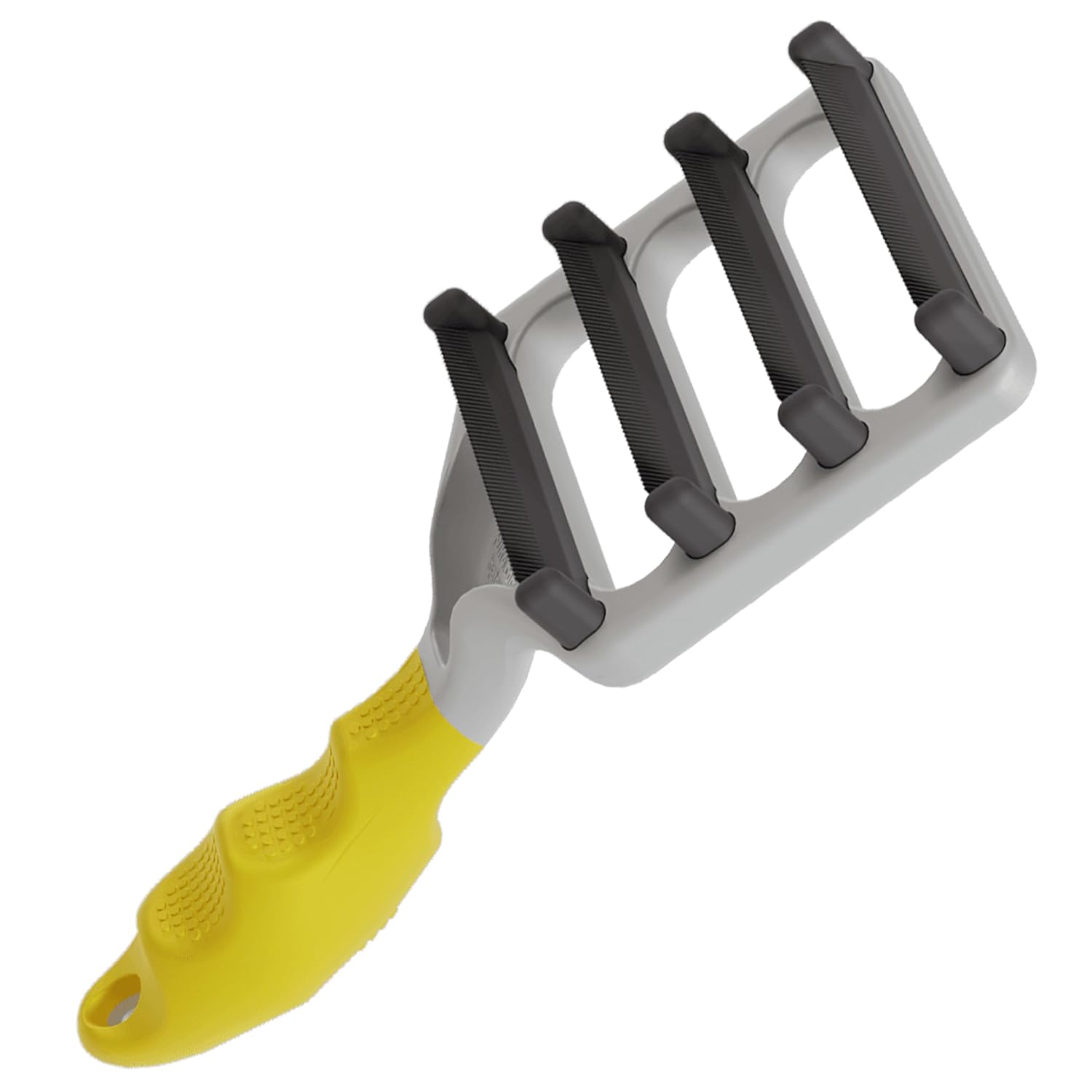
FUR4 deShedding Cat Brush for Short Hair Cats
Four carbon fiber edges mean more contact per pass on short, dense coats
Highest price here and built specifically for short hair
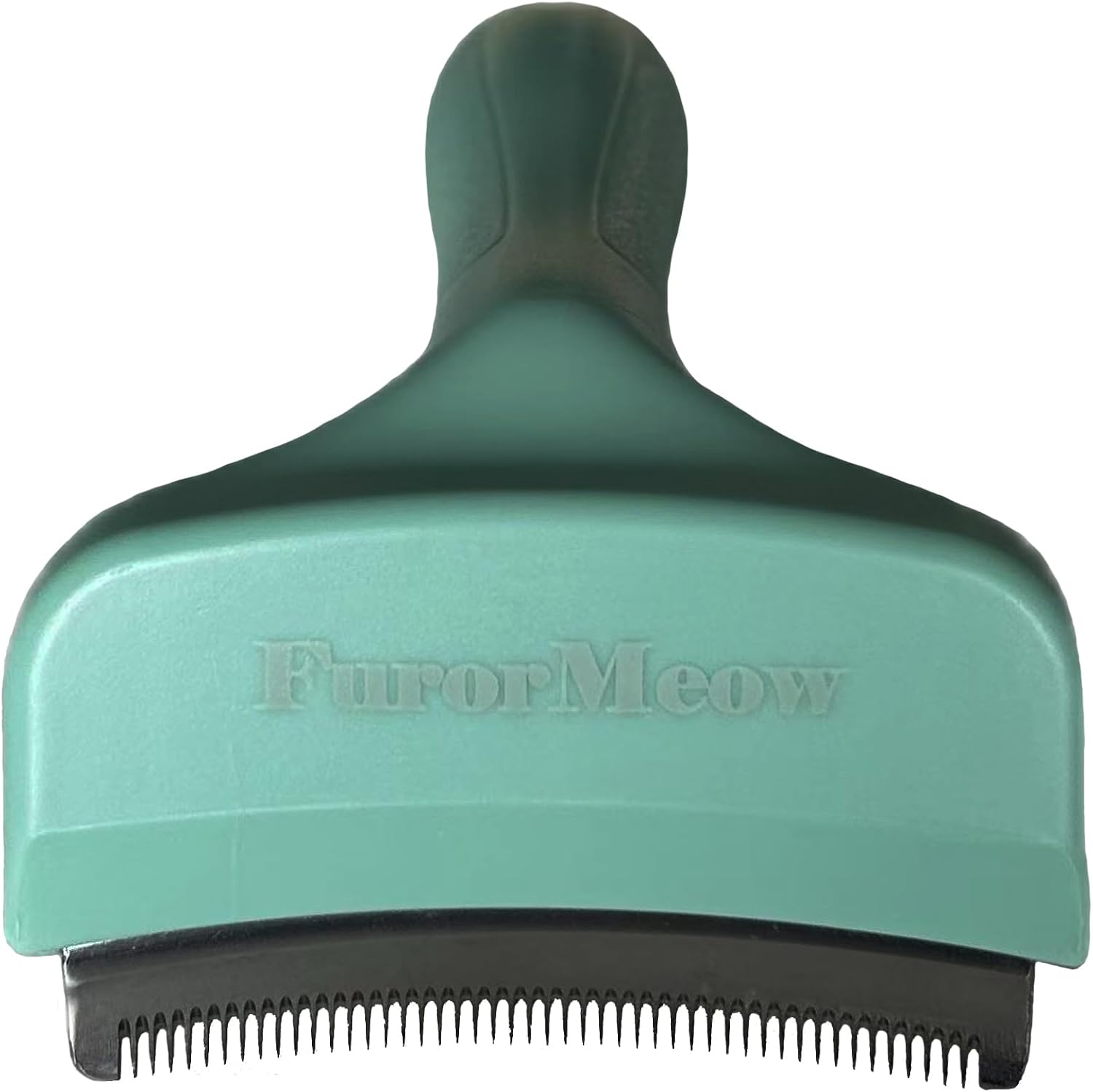
FurorMeow Pet Deshedding Tool with Curve Blade
Curved blade follows the body, tight V-shaped teeth collect fine hair, small size suits kittens
Tight teeth drag if you rush through a long or very dense coat
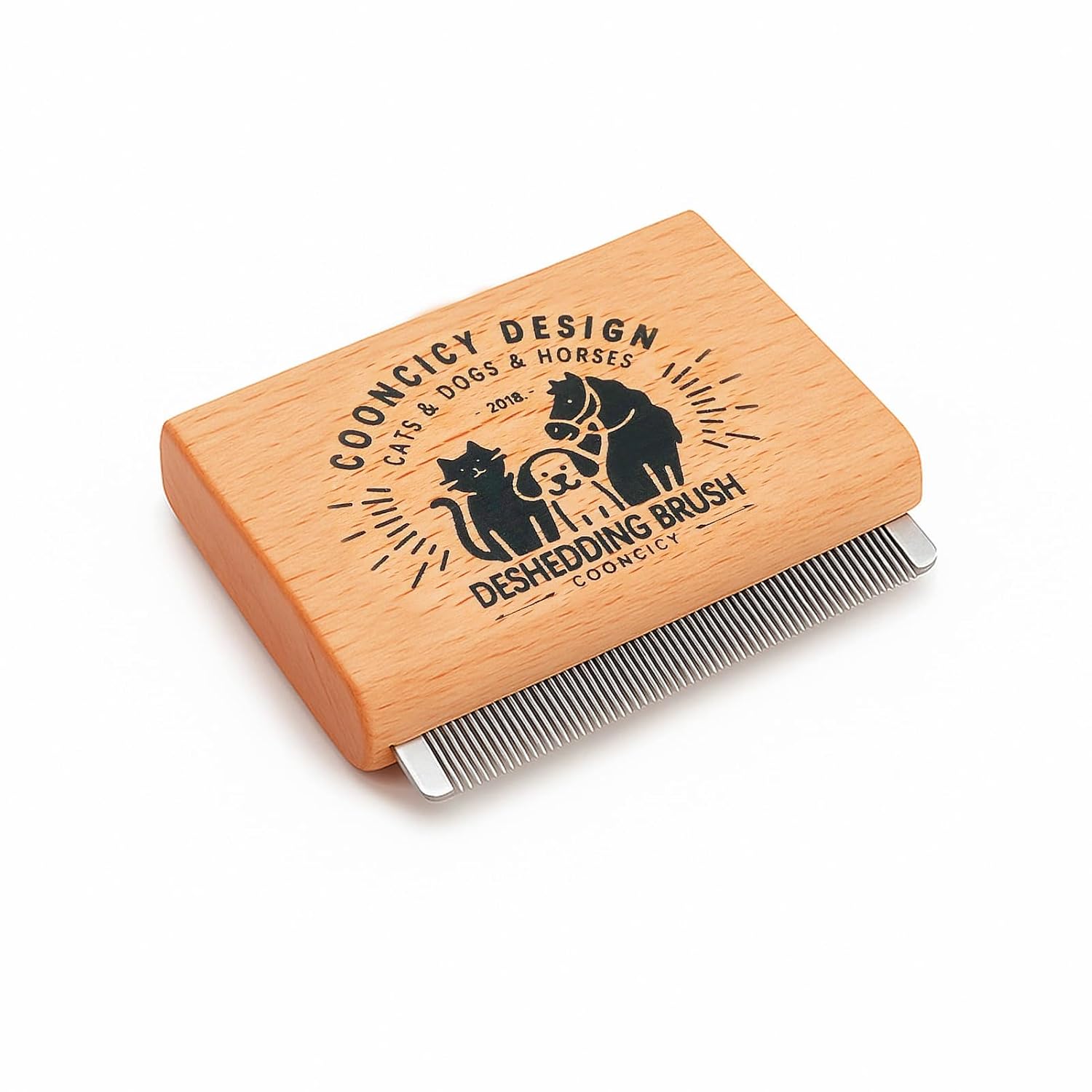
Cooncicy Deshedding Brush for Cat & Small Pets
Lowest entry price of the four, sold for cats and small pets
Least specialized option, with the fewest details about coat fit
Prices and availability may change.
The real cat brush vs cat grooming wipes question
The difference between cat brush and cat grooming wipes is not quality, and it is not price. It is reach. A deshedding edge or a row of teeth is built to comb down through the topcoat and pull out the loose hair sitting in the undercoat before it ends up on your furniture. A wipe is a damp cloth. It removes what is already sitting on the surface: dander, dust, saliva, and the fine haze of hair that clings to a cat's back after a nap.
That is why the two tools keep showing up in the same routine. One prevents fur from landing on the couch. The other handles the film that builds up on the coat between baths, which matters more for cats that cannot be bathed at all.
If you have ever watched a cat lick a paw and wipe its own face, you have watched the logic behind a grooming wipe in miniature. Cats already clean the surface of their own coats. What they cannot reach is the undercoat, and that is exactly the job a brush exists to do.
What a brush actually does to a coat
Every deshedding tool in this comparison is a variation on one idea: get teeth or a blade under the topcoat, catch the loose hair, and pull it out before it migrates to your sofa. What changes from tool to tool is the bristle type, the comb spacing, and how aggressive the deshedding edge is.
Comb spacing matters more than most shoppers expect. Tight teeth, like the V-shaped teeth on the FurorMeow tool, catch fine, short hair and give you a lot of control on a small cat or a kitten. Wider spacing and a curved blade move through a denser coat without dragging, which is why blade-style tools tend to suit medium and long coats better than a fine-toothed comb does.
Coat length is the other variable. A short, dense coat sheds fine hair that felts into upholstery. A long coat sheds longer strands that wrap around furniture legs and form tangles behind the front legs and under the belly. A tool sold as suitable across short, medium, and long coats is doing more work than a tool built for one coat length, though it will usually be less specialized at each extreme.
One caution applies to every tool here. A deshedding edge is not a mat splitter. If the coat has tight mats, brushing over them pulls skin and hurts. Work around mats, or deal with them first with a comb and blunt scissors. And if your session also includes a claw trim, do the claws last, because a nail guard and a brush are competing for the same short window of patience.
What grooming wipes actually do
Grooming wipes are a surface tool, and they are good at three things: removing dander and loose surface hair, cleaning the rear end of a long-haired cat, and refreshing the coat of a cat that cannot be bathed. They do not reduce shedding, because shedding happens at the follicle and in the undercoat, and a wipe never gets there.
They are also the tool that works on cats that will not tolerate a brush. Plenty of cats accept a warm wipe along the back and flanks long before they accept teeth anywhere near their skin. For a nervous rescue or a senior cat with thin skin, that alone can make wipes the more realistic choice for daily handling.
Where wipes fall short is volume. A wipe picks up a thin film of hair. A brush pulls out a cloud of it. If your problem is a gray haze on every dark surface in the house, wipes will not solve it, no matter how many you go through in a week.
Where wipes beat a brush
The cat grooming wipes vs cat brush argument usually starts with a cat that hates being brushed, and that is a legitimate reason to keep wipes on the shelf. Faces, ears, and paws are wipe territory. So is the rear end of a long-haired cat, the coat of a kitten that is still learning to be handled, and the fur of a senior cat whose skin has thinned with age.
Wipes also handle the aftermath of topical flea treatment, when the coat needs to stay dry around the application site but the rest of the cat still needs attention. A wipe lets you work around the treated spot without washing anything off.
Two other tools belong in this conversation. A grooming glove with a rubberized palm sits between a brush and a wipe: the glove fit lets you pet the cat while you pull surface hair, which is the least confrontational way to remove loose fur, though a glove still does not reach the undercoat the way a blade does. For hair that has already landed on the couch, a roller adhesive brush does more in ten seconds than any cat-side tool will, and it does not require your cat's cooperation at all.
The four brushes here, and the cat each one suits
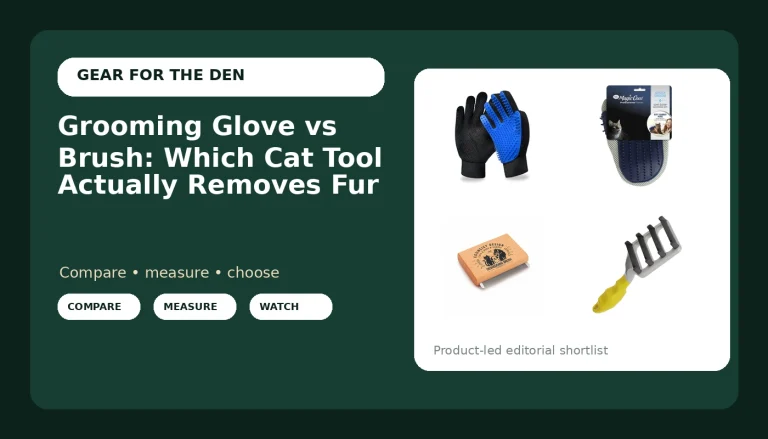
SleekEZ Cat Brush for Shedding is sold as a patented grooming tool for removing loose fur, undercoat, and hair, made in the USA, and rated by the maker for short, medium, and long coats. That range is why it is the default pick in this group: it is the only tool here that covers all three coat lengths rather than one. The single-blade format is simple to use and easy to clean, and it is the shape most people picture when they picture a deshedding brush. Its limit is precision, since a blade that works across every coat length is not the tool for faces, paws, or tight tangles. Visit on Amazon
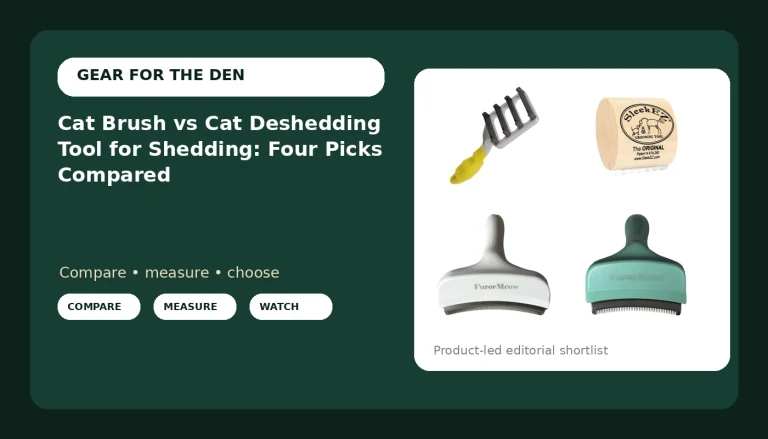
FUR4 deShedding Cat Brush for Short Hair Cats is built around four carbon fiber edges and aimed squarely at short hair cats. Four edges mean more contact per pass than a single blade, which is the design argument for short, dense coats that shed fine hair. It is the most expensive tool in this group, and its short-hair focus is a real limitation: if your cat carries a long coat, this is not the tool for it, no matter how well the edges are made. Visit on Amazon
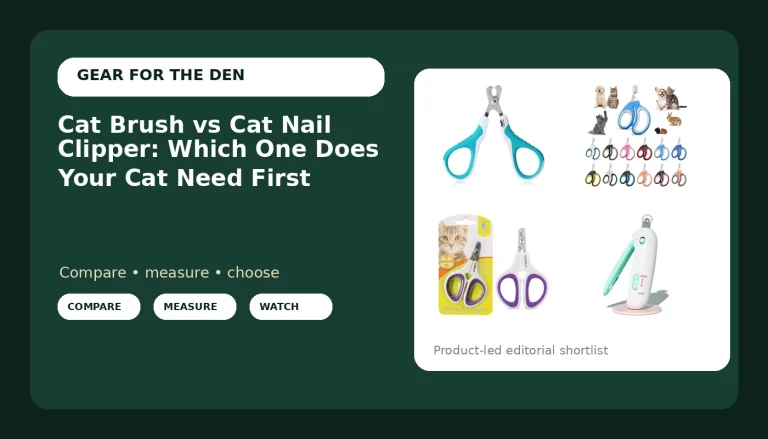
FurorMeow Pet Deshedding Tool with Curve Blade uses a curved blade with tight V-shaped teeth, sized small and sold for both cats and dogs. The curve follows the body instead of fighting it, and the tight teeth are good at collecting fine, short hair. Tight teeth also mean slower strokes, since pulling too fast through a dense or long coat makes the tool drag. The small size makes it a good match for kittens and smaller cats, and less of a match for a big, heavy-coated adult. Visit on Amazon
Cooncicy Deshedding Brush for Cat & Small Pets is the budget entry, sold for cats and small pets. There is less specification to work with than the other three, which is normal at this price. As a first brush for a kitten or a small pet, or as a second tool for a room where you want a cheap brush within reach, it makes sense. As the only brush for a heavy-shedding long-haired adult, it is a gamble. Visit on Amazon
Trade-offs nobody mentions
Over-brushing is a real problem, and it is the mistake new cat owners make most often. Pressing a deshedding edge hard against the skin and going over the same spot ten times irritates the coat and teaches the cat that grooming hurts. Short sessions, light pressure, and stopping while the cat is still relaxed will get you further than a marathon session ever will.
Wipes have their own failure mode. Used daily on the same patch of skin, a damp wipe can dry out the coat and leave it dull. Once or twice a week is plenty for most cats, and a wipe is not a substitute for a bath when a cat has gotten into something greasy.
The price ladder in this comparison spans a wide range, from the cheapest brush here to the most expensive, and price does not map neatly onto shedding performance. What it maps onto is specialization. A short-hair tool costs more because it is engineered for one coat type, not because it will outperform a general-purpose blade on a long-haired cat. Check current Amazon price on each before you commit, because these numbers move.
None of these tools replaces a vet. If a cat is shedding far more than usual, developing bald patches, or scratching constantly, the problem is under the skin, not on it.
How to use both in one routine
The workable routine is boring, which is why it works. Brush two or three times a week for five minutes, using whichever tool matches your cat's coat length, and follow with a wipe on the back and flanks if the coat looks dull or dusty. Keep a roller adhesive brush near the couch for the hair that gets past you anyway.
Watch for the two-minute warning. Most cats will tolerate a brush for a couple of minutes before the tail starts flicking. Stop at the flick, hand out a treat, and come back tomorrow. A cat that associates the brush with a short, predictable session will let you work longer within a month.
For a cat that will not accept a brush at all, start with the grooming glove and wipes, and introduce the blade later, one stroke at a time, after a meal. That path is slower, but it is the one that ends with a cat that actually gets brushed.
The short answer
If you are choosing between a cat brush or cat grooming wipes, buy the brush first and add wipes second. Shedding is an undercoat problem, and only a brush reaches the undercoat. Wipes earn their place as a surface tool for faces, paws, kittens, seniors, and cats that will not sit still for a blade.
Within this group, the SleekEZ Cat Brush for Shedding is the safest first purchase because it is sold for short, medium, and long coats, which means it keeps working if you add a second cat with a different coat length. If you have a short-haired cat and want the most specialized tool here, the FUR4 is the one built for that coat. If you want to spend as little as possible to find out whether your cat tolerates brushing at all, the Cooncicy is the low-risk experiment, and the FurorMeow is the middle ground for kittens and smaller cats. Whichever you pick, the cat brush vs cat grooming wipes decision is not really a rivalry. It is a division of labor.