A hairball on the carpet is usually the first sign that a cat is swallowing more loose fur than its digestive tract wants to move along. The question most owners end up asking is whether a deshedding tool is genuinely useful or just another grooming gadget. It is useful, but in a specific and limited way: a deshedding tool removes loose undercoat hair before your cat's tongue ever reaches it, which lowers the volume of fur swallowed during everyday grooming. It does not break down a hairball that has already formed, and it does not replace diet, hydration, or a vet visit when a cat is retching repeatedly. What follows is the cat deshedding tool for hairballs explained in plain terms: what the tool actually does, how comb spacing and coat length change the result, and how four currently listed options differ from one another.
Quick answer
A cat deshedding tool for hairballs works by pulling loose undercoat fur out of the coat before the cat grooms it off and swallows it. The tool is not a treatment for hairballs; it is a way to reduce how much fur reaches the stomach in the first place. Three things decide whether a given tool helps: a deshedding edge that reaches the undercoat instead of gliding across the topcoat, comb spacing that matches your cat's coat length, and a handle you can hold steady without pressing hard against the skin. Short and medium coats usually do well with a compact curved blade and tight teeth, while long coats generally need wider spacing or a two-in-one comb that handles mats before they tighten. None of this replaces veterinary care if a cat is gagging, losing weight, or vomiting frequently.
Four useful options
| Model | Best fit | What stands out |
|---|---|---|
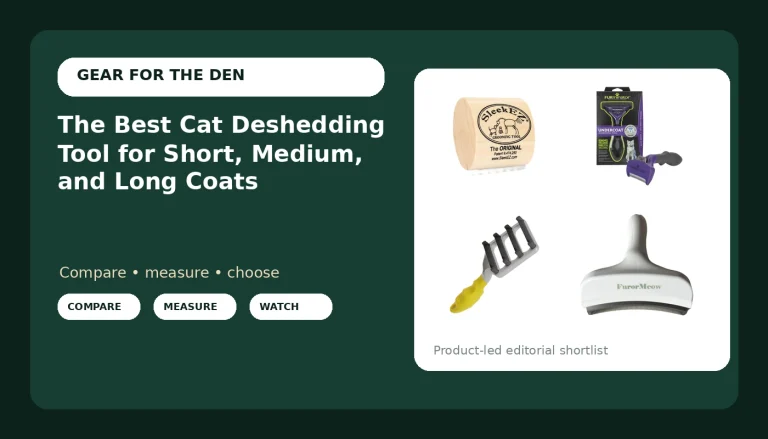
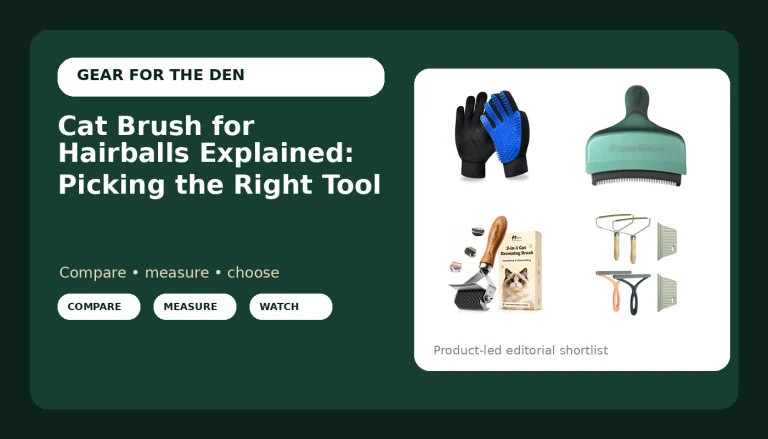
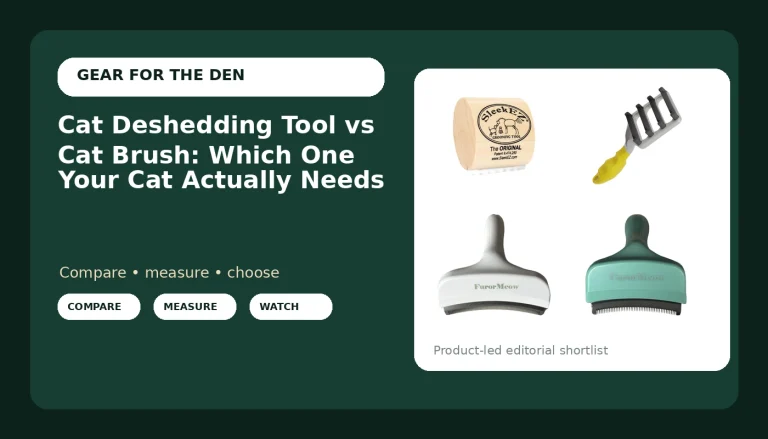
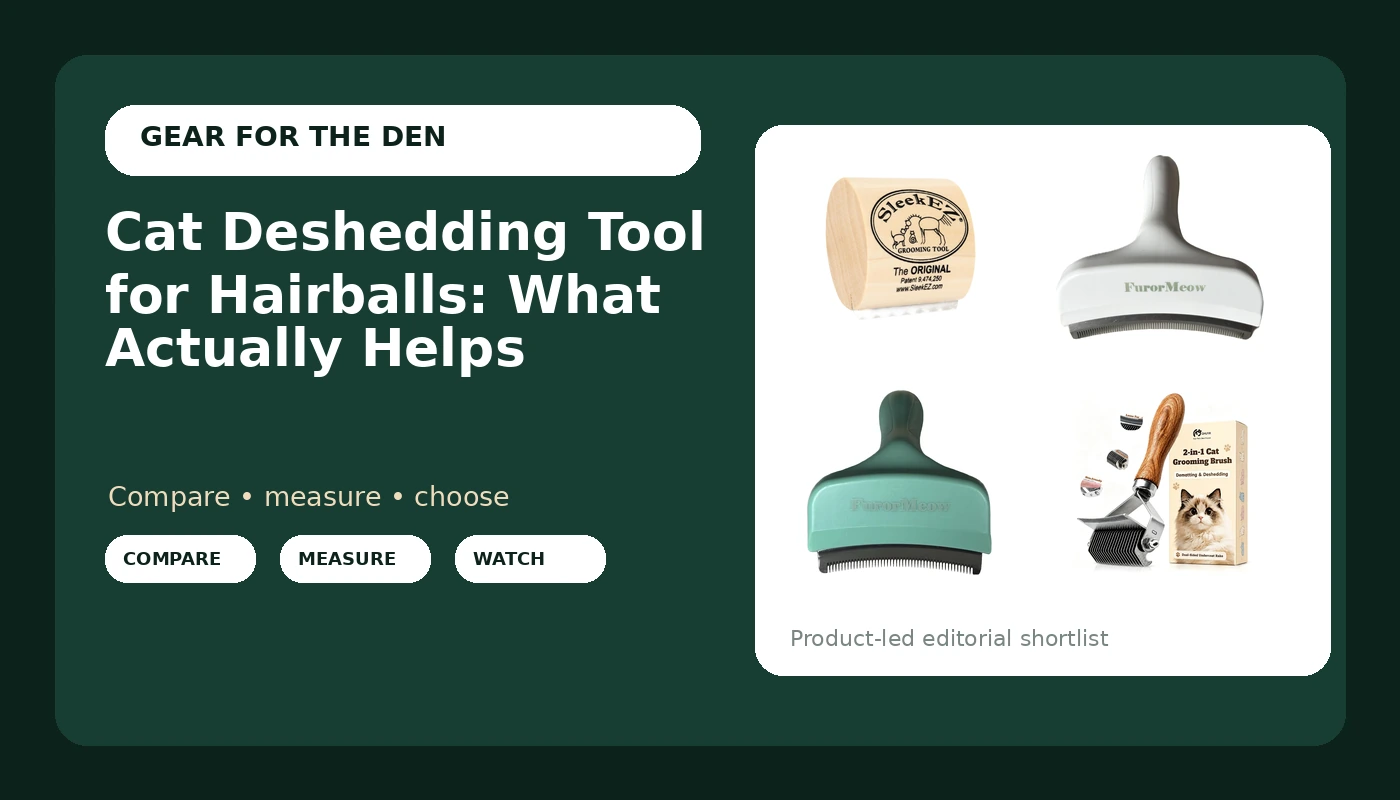
| SleekEZ Cat Brush for Shedding – Deshedding Brush for Cats – Patented Grooming Tool for Removing Loose Fur, Undercoat & Hair – Made in USA – Works on Short, Medium & Long Coats | One tool for a mixed household | Patented design made in the USA, listed for loose fur, undercoat, and hair on short, medium, and long coats |
| FurorMeow Pet Deshedding Tool with Curve Blade, Cat Grooming Brush, Tight V-shaped Teeth Shedding Comb for Cats and Dogs (White, Large) | Larger cats and thicker coats | Curve blade with tight V-shaped teeth in a large size, listed for cats and dogs |
| FurorMeow Pet Deshedding Tool with Curve Blade, Cat Grooming Brush, Tight V-shaped Teeth Shedding Comb for Cats and Dogs (Green, Small) | Kittens, small cats, and detail work | The same curved blade and tight V-shaped teeth in a small size |
| Cat Brush for Long Haired Cats, 2-in-1 Dematting & Deshedding Comb | Long coats that mat | Two working sides, dematting and deshedding, in one comb |
The everyday option: SleekEZ Cat Brush for Shedding – Deshedding Brush for Cats – Patented Grooming Tool for Removing Loose Fur, Undercoat & Hair – Made in USA – Works on Short, Medium & Long Coats
The appeal here is coverage. One tool that is listed for short, medium, and long coats means a household with a shorthair and a fluffy mixed breed does not need two separate combs. The trade-off is that a single blade width is a compromise: it is neither as nimble as a small curved comb around the shoulders and chest, nor as wide as a large blade for covering a big cat's back in fewer strokes. If you own one cat with a medium coat, that compromise rarely matters.
The large curved-blade option: FurorMeow Pet Deshedding Tool with Curve Blade, Cat Grooming Brush, Tight V-shaped Teeth Shedding Comb for Cats and Dogs (White, Large)
The curved blade is the feature worth understanding. A flat blade makes contact at one angle; a curved edge can follow the rounded contours of a cat's flank and hindquarters with less wrist work, which helps if your cat tolerates only short sessions. The tight V-shaped teeth are aimed at lifting loose undercoat rather than raking the topcoat. Because this is the large version, it covers more area per stroke, which suits bigger cats and thick winter coats. The same size that saves time on a large cat can feel bulky on a small one.
The small curved-blade option: FurorMeow Pet Deshedding Tool with Curve Blade, Cat Grooming Brush, Tight V-shaped Teeth Shedding Comb for Cats and Dogs (Green, Small)
Small blades earn their place on cats that dislike grooming. A shorter head is easier to steer around the chest, front legs, and the base of the tail, and it lets you stop instantly if your cat tenses up. The cost is time: you make more passes to cover the same area, so a full deshedding session takes longer. For kittens, petite adults, or a cat that will sit still for only two minutes at a stretch, that trade is usually worth it.
The long-coat option: Cat Brush for Long Haired Cats, 2-in-1 Dematting & Deshedding Comb
Long coats are a different job, and this is the tool in this group aimed squarely at them. Dense undercoat in a long coat traps shed hair instead of releasing it, so mats form close to the skin and loose fur stays buried. Working the dematting side first, gently and in small sections, then switching to the deshedding side lets you break up tangles before you pull undercoat through. If your cat's coat already has tight mats, do not force a comb through them; see how to handle mats on a long-haired cat before you start.
Prices and availability may change. Product images, names, and retailer links are matched to verified listings. No current price, rating, stock status, or measured result is stated here without current evidence.
How a cat deshedding tool for hairballs actually works
A cat's tongue is covered in tiny backward-facing hooks that comb through the coat with every grooming pass. Loose hair catches on those hooks and gets swallowed. Most of it travels through the digestive tract without incident, but some fur stays in the stomach, clumps together, and either comes back up as a hairball or sits there. That is why the useful intervention is upstream: remove loose fur from the coat and less of it ends up in the cat.
The mechanism of a deshedding tool is simple. Its edge sits below the topcoat and above the skin, catching the dead undercoat that has already separated from the follicle but has not yet fallen out or been licked away. Bristle type and edge geometry determine whether that actually happens. Fine, closely set teeth lift undercoat; stiff, widely spaced teeth on a brush mostly move surface hair around. Coat length then decides how deep the tool can reach without snagging, which is why the same blade that works on a shorthair can stall in a long coat.
Two details keep a session safe. The first is pressure: the tool should glide, not scrape, and the edge should never dig into skin. Some designs include a guard or blunted edge to make that easier. The second is duration. Short, frequent sessions remove more undercoat over a season than one long session that leaves your cat unwilling to be handled for a week.
It is worth knowing what a deshedding tool is not. It will not replace hydration, fiber, or a vet's opinion if hairballs are frequent. It is also not the only tool in the box: a deshedding glove suits cats that panic at a blade, a roller adhesive handles the fur that already landed on the couch, and a plain metal comb is the cheapest way to check for mats before you reach for anything with an edge.
Matching the tool to coat length, comb spacing, and temperament
The most common mistake is buying for the fur you see rather than the coat you have to work through. A short, dense coat releases undercoat easily and tolerates tight comb spacing. A long, silky coat needs wider spacing so the teeth do not drag, and it usually needs a dematting step first. Temperament decides size: a small head is slower but more forgiving on a nervous cat.
- Identify the coat: short, medium, or long, and whether the undercoat feels dense when you part the fur down the spine.
- Check comb spacing against coat length. Tight V-shaped teeth for short and medium coats, wider spacing for long coats.
- Start with a five minute session on the back and flanks, working in the direction the hair grows.
- Watch the skin after every pass. Persistent pinkness, bald patches, or flinching means you are pressing too hard or using the wrong tool.
- Clean the tool when you finish and store it out of reach, since a handle with fur on it is a chew toy to some cats.
Practical habits that cut down swallowed fur
Grooming is only part of the routine. These habits make the tool work better and reduce how much loose hair your cat finds on its own.
- Groom before the shed peaks. Spring and early autumn are when undercoat release accelerates, so a session every few days during those weeks catches more fur than a weekly pass year round.
- Keep sessions short and predictable. Two to five minutes in the same spot at the same time of day builds tolerance, and a calm cat lets you reach the undercoat instead of the surface.
- Sweep the environment too. A roller adhesive on bedding, cat trees, and upholstery removes fur your cat would otherwise re-ingest while napping and grooming.
- Offer water and a consistent diet. Hydration and steady nutrition support normal digestion, which matters more than any single grooming tool when hairballs are frequent.
- Track how often it happens. Occasional hairballs after a heavy shed are one thing; repeated retching, appetite loss, or weight change calls for a vet rather than a new brush.
Which option should you choose?
Choose the SleekEZ Cat Brush for Shedding – Deshedding Brush for Cats – Patented Grooming Tool for Removing Loose Fur, Undercoat & Hair – Made in USA – Works on Short, Medium & Long Coats when you have more than one coat type in the house and want a single tool that is listed for short, medium, and long fur. Choose the FurorMeow Pet Deshedding Tool with Curve Blade, Cat Grooming Brush, Tight V-shaped Teeth Shedding Comb for Cats and Dogs (White, Large) when you have a large cat, a thick undercoat, or a dog that sheds alongside the cat, and you want the curve blade covering more area per stroke. Choose the FurorMeow Pet Deshedding Tool with Curve Blade, Cat Grooming Brush, Tight V-shaped Teeth Shedding Comb for Cats and Dogs (Green, Small) when your cat is small, young, or impatient, and you need control in tight areas more than speed. Choose the Cat Brush for Long Haired Cats, 2-in-1 Dematting & Deshedding Comb when the coat is long enough to mat and you want the dematting and deshedding steps handled by one comb.
There is no single ideal cat deshedding tool for hairballs for every household, and no tool removes every loose hair. The correct cat deshedding tool for hairballs is the one matched to your cat's coat length and patience, used often enough to matter, and used gently enough that your cat keeps cooperating.
One caveat: these tools are described here by their listings, not by measurements taken in a test setting. Blade performance depends on how you use it, your cat's coat, and how much undercoat is ready to release. Nothing in this guide diagnoses or treats a medical problem, and frequent hairballs are a reason to call a veterinarian rather than to buy another brush.
The bottom line
A deshedding tool earns its place in a hairball routine by removing loose undercoat before your cat swallows it. For most households the practical choice comes down to size and coat: a versatile all-coat brush if you own mixed coat types, a large curved blade for bigger cats and heavy undercoat, a small curved blade for nervous or petite cats, and a two-in-one comb if the coat is long enough to tangle. Pair whichever you pick with short, regular sessions, a clean environment, and steady hydration, and you will pull far more fur out of the coat than out of the carpet. If hairballs keep coming, talk to your vet.