Kittens rarely arrive with a serious shedding problem. Their adult coat is still filling in, and the loose fur left behind after a grooming session is usually modest compared with what a mature cat drops. That is exactly why the tool you choose now matters. A kitten that learns to sit through two quiet minutes of grooming on the back and belly is far easier to live with at three years old, when the undercoat gets serious and fur starts turning up on every dark surface in the house. Working out which cat deshedding tool for kittens suits your situation comes down to three things: how fine the coat is, how closely the teeth or edges are spaced, and how much control you have over the tool while a small, wriggly animal decides whether it approves.
Quick answer
For most kittens, a tool with fine, closely spaced teeth or a soft deshedding edge is a better starting point than a wide-toothed blade, because kitten coats are fine and kitten skin is thin. Here is the cat deshedding tool for kittens explained in plain terms: pick the gentlest edge that still reaches the undercoat, use it for two or three minutes at a time, and stop while the kitten is still relaxed. Coat length, not age, is the deciding factor. A short coat needs different comb spacing than a long one, and a tool built for one can feel wrong on the other.
Four useful options
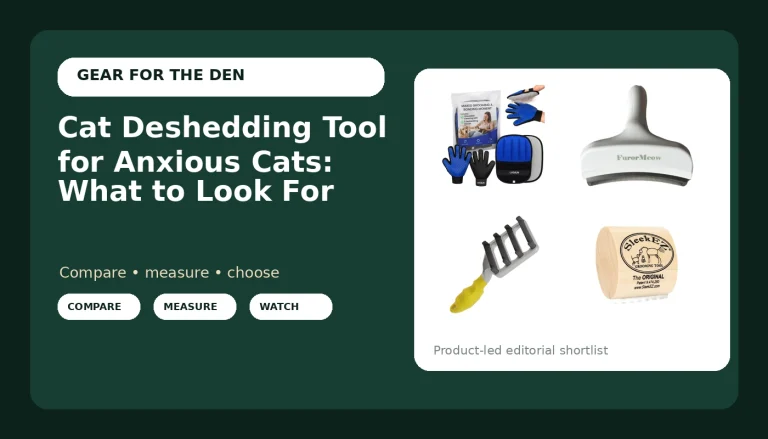
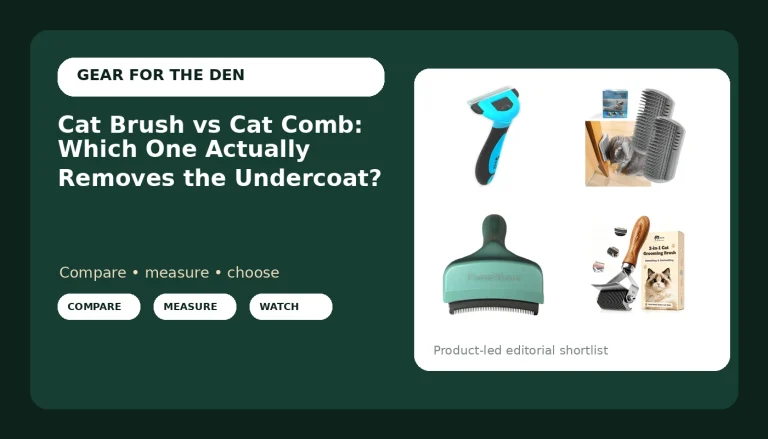
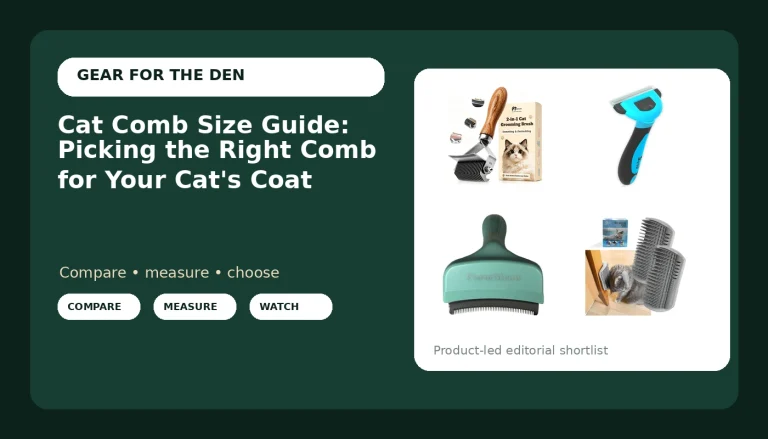
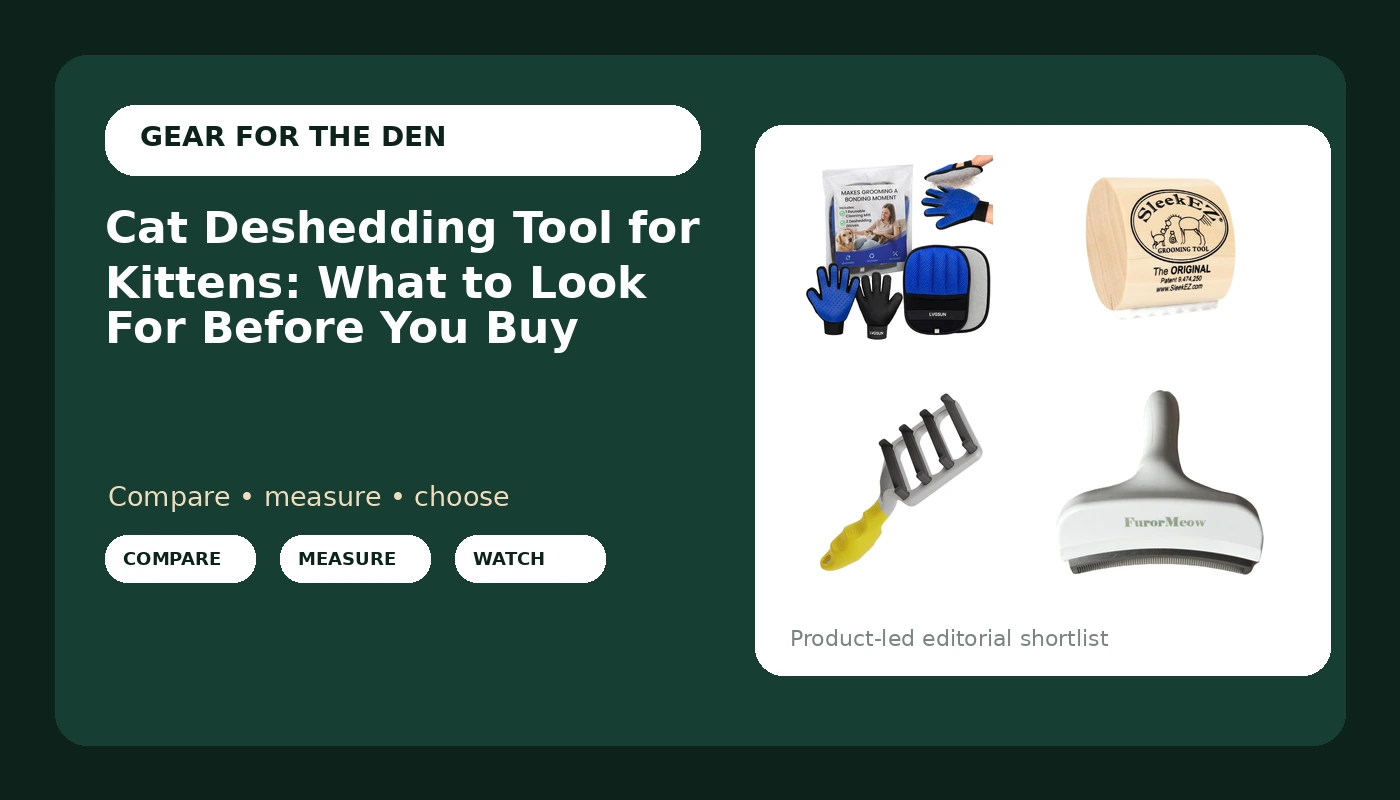
These four tools cover the main formats you are likely to compare: a hand-worn grooming surface, a blade-style brush, a short-hair brush with carbon fiber edges, and a curved comb with tight V-shaped teeth.
| Model | Best fit | What stands out |
|---|---|---|
| Cat Grooming Kit for Shedding, Deshedding Gloves + Self-Cleaning Mitt | Kittens that dislike a handled brush | Hand-worn grooming surface plus a mitt described as self-cleaning |
| SleekEZ Cat Brush for Shedding – Deshedding Brush for Cats – Patented Grooming Tool for Removing Loose Fur, Undercoat & Hair – Made in USA – Works on Short, Medium & Long Coats | Mixed and long coats | Patented blade-style tool listed for short, medium, and long coats |
| FUR4 deShedding Cat Brush for Short Hair Cats, Pet Hair Brush with 4 Carbon Fiber Edges, deShedding Tool Removes Loose Fur, Gentle & Effective Cat Grooming Brush for Shedding | Short, dense coats | Four carbon fiber deshedding edges |
| FurorMeow Pet Deshedding Tool with Curve Blade, Cat Grooming Brush, Tight V-shaped Teeth Shedding Comb for Cats and Dogs (White, Large) | Tight undercoat and finishing passes | Curved blade with tight V-shaped teeth |
Hands-on starter: Cat Grooming Kit for Shedding, Deshedding Gloves + Self-Cleaning Mitt
The case for a glove over a brush is control. A glove puts the deshedding surface directly against your palm, so you feel the coat through your fingers and can lift off the moment the kitten tenses. Glove fit matters more with a young cat than with an adult, because a kitten's ribs and spine sit close under a thin layer of fur and a long handle gives you less feedback. The trade-off is reach. Gloves pick up surface fur and loose hair from the topcoat very well, but they do not dig into a dense undercoat the way a blade or a tight-toothed comb does. Treat a glove as the tool that builds tolerance first, and expect to add a blade or comb later once the adult coat arrives.
All-coat blade brush: SleekEZ Cat Brush for Shedding – Deshedding Brush for Cats – Patented Grooming Tool for Removing Loose Fur, Undercoat & Hair – Made in USA – Works on Short, Medium & Long Coats
A blade-style tool works differently from a brush. Instead of bristles, it uses a fine metal edge that runs along the coat and lifts loose fur and undercoat out of the way. That makes it efficient on a cat that sheds heavily, and it is the format most people picture when they search for a deshedding tool. The trade-off is pressure. A blade edge pressed too hard on thin kitten skin will scratch, and a kitten that gets scratched once will remember. Use very light strokes in the direction the fur grows, keep sessions short, and check the skin after each pass. A tool listed for every coat length is a reasonable single purchase if you would rather not own several, and it is the easiest of these four to grow into as a kitten turns into an adult with a heavier coat.
Short-coat brush: FUR4 deShedding Cat Brush for Short Hair Cats, Pet Hair Brush with 4 Carbon Fiber Edges, deShedding Tool Removes Loose Fur, Gentle & Effective Cat Grooming Brush for Shedding
Short coats shed differently from long ones. The hairs are shorter and denser, they sit close to the body, and a lot of the loose fur stays trapped against the skin rather than hanging in tufts you can see. That is why a tool built specifically for short hair tends to use a tighter working surface rather than long, widely spaced teeth. The bristle type and the number of edges matter here: multiple fine edges can cover more of the coat in one pass than a single row of teeth. The trade-off is that a short-coat tool has less to grab on a long, silky coat, so it is not the tool to buy if your kitten is heading toward a fluffy adult coat. If you can already see skin when you part the fur, this family of tool is the one that matches.
Tight-tooth finishing comb: FurorMeow Pet Deshedding Tool with Curve Blade, Cat Grooming Brush, Tight V-shaped Teeth Shedding Comb for Cats and Dogs (White, Large)
Tight V-shaped teeth are the detail worth understanding. Narrow gaps between teeth catch fine, dense fur that wider combs slide straight past, which is useful on a coat that has already packed down or on a cat whose undercoat sits tightly against the skin. The curve lets the blade follow the rounded shape of a cat's shoulder and flank instead of catching on the edges of the body. Because this one is offered in a large size and is listed for dogs as well, it is a sensible buy if you have both animals in the house. On a kitten, that size means you should use a lighter hand and shorter strokes than you would on an adult dog, and you should let the teeth do the work rather than pressing down.
Prices and availability may change. Product images, names, and retailer links are matched to verified listings. No current price, rating, stock status, or measured result is stated here without current evidence.
What a cat deshedding tool for kittens actually needs
A kitten coat is not a small version of an adult coat. The fur is finer, the skin is thinner, and the undercoat that causes most shedding complaints has not fully developed yet. What you are really shopping for at this stage is a tool the kitten will tolerate, so the grooming habit is in place before the shedding gets heavy.
Three features do most of the work:
- Comb spacing. Closely spaced teeth or a fine deshedding edge collect thin kitten fur. Wide spacing passes straight over it and leaves the loose hair where it was.
- Edge or bristle type. A soft edge or short bristles are less likely to scratch than a stiff metal rake. When a listing mentions a nail guard or a rounded safety edge, that detail is aimed at keeping the working surface off the skin.
- Size and shape. A small head is easier to steer around a kitten's chest, legs, and tail base than a wide one.
Coat length decides the rest. If you can see the skin when you part the fur, the coat is short and a short-hair tool is the right family. If the fur forms a soft layer that stands away from the body, plan for a blade or comb that reaches deeper. If you are not sure what your kitten will grow into, our guide to building a grooming routine for a long-haired cat walks through the tools a fluffy adult coat eventually demands.
Matching the tool to coat length and temperament
Two kittens of the same age can need completely different tools. A shorthair with a dense, flat coat collects loose fur close to the skin and responds well to a brush with several fine edges working at once. A longhair holds shed fur inside the coat, where it forms tangles before it ever reaches your floor, and needs a tool that can get under the topcoat without pulling. Temperament splits the same way. A bold kitten will sit for a blade; a nervous one does better with a glove that lets you work in short bursts and back off quickly.
Whatever you choose, the routine matters more than the tool. A five-step approach:
- Start when the kitten is sleepy, after a meal or a play session, rather than when it is wound up.
- Let the kitten sniff the tool and rub against it before you use it, and reward calm behaviour.
- Work in one direction, following the coat, on the back and shoulders first.
- Keep the first sessions to two or three minutes, then stop while the kitten is still comfortable.
- Add the chest, belly, and tail base only once the back is accepted without a struggle.
Repeat every few days. Frequency, not force, is what turns a kitten into a cat that sits still for grooming.
Practical guidance for the first months
- Keep sessions short and finish before the kitten's patience runs out. A good two-minute session beats a bad ten-minute one.
- Use light pressure on the blade or comb. You are collecting loose fur, not scraping the skin.
- Check the skin after grooming for redness or marks, and stop using any tool that leaves them.
- Clean the tool after each use. Fur packed between teeth stops the edges working on the next pass.
- Keep a roller adhesive or lint roller by the door for the fur that reaches the furniture anyway, and brush the cat rather than the couch.
Which option should you choose?
Choose the Cat Grooming Kit for Shedding, Deshedding Gloves + Self-Cleaning Mitt when your kitten is young, nervous, or simply will not hold still for a handled brush. Choose the SleekEZ Cat Brush for Shedding when you want one blade-style tool to cover a coat that could end up short, medium, or long. Choose the FUR4 deShedding Cat Brush for Short Hair Cats when the coat is clearly short and dense. Choose the FurorMeow Pet Deshedding Tool with Curve Blade when you are dealing with a tight undercoat, need a finishing pass, or want one tool that also suits a dog in the same house.
None of these tools is a substitute for knowing your cat's coat. A tool that works well on one kitten can be the wrong shape or the wrong spacing for another, and the only reliable test is a short, supervised session. The product details above come from the listings; no independent measurement of how much fur each tool removes is claimed here.
The bottom line
There is no single ideal cat deshedding tool for kittens, and any answer that skips coat length is skipping the part that matters. Matching the correct cat deshedding tool for kittens to the fur in front of you means starting gentle, watching how the skin and the coat respond, and adjusting from there. A glove-style kit builds tolerance in a nervous kitten, a blade-style brush handles a range of coat lengths, a short-hair brush with fine edges suits a dense flat coat, and a curved comb with tight teeth reaches the undercoat when nothing else will. Buy for the coat your kitten is growing into, use it for a few calm minutes at a time, and shedding stays a manageable chore rather than a daily fight.