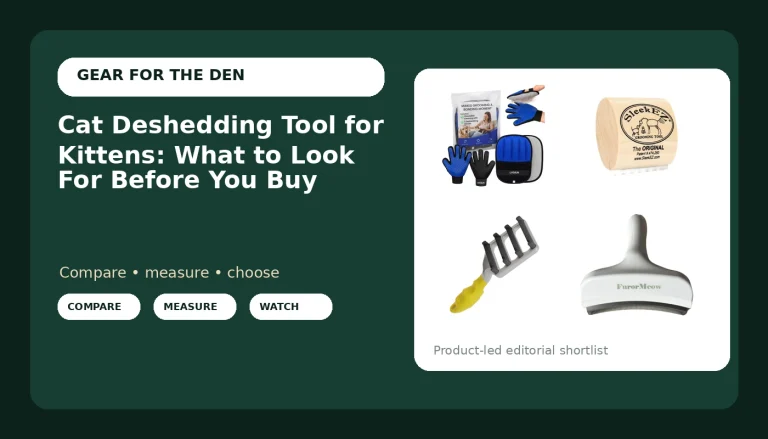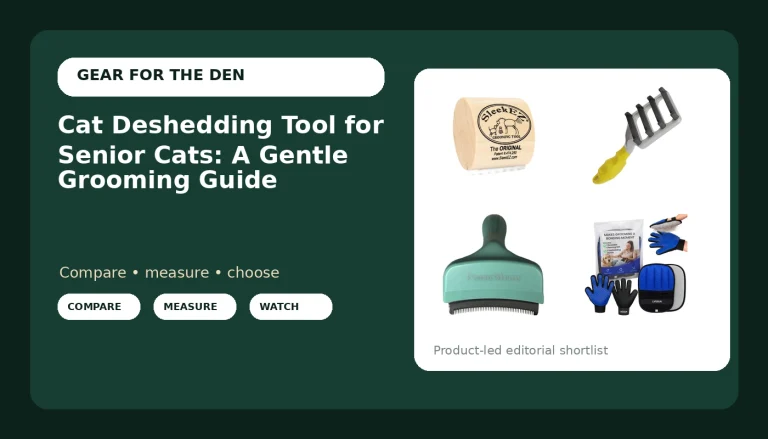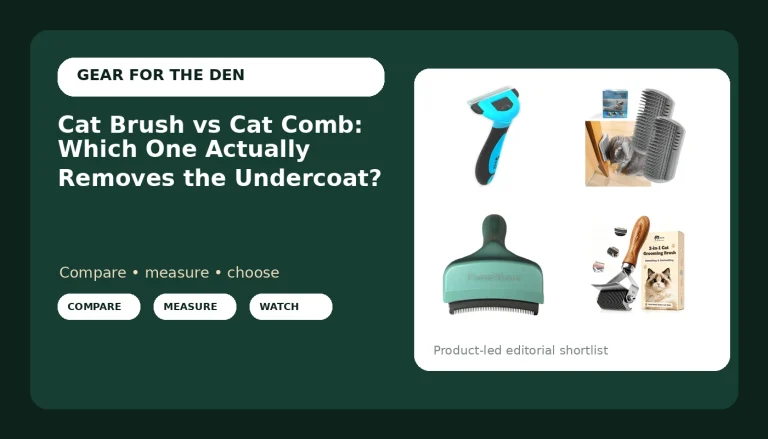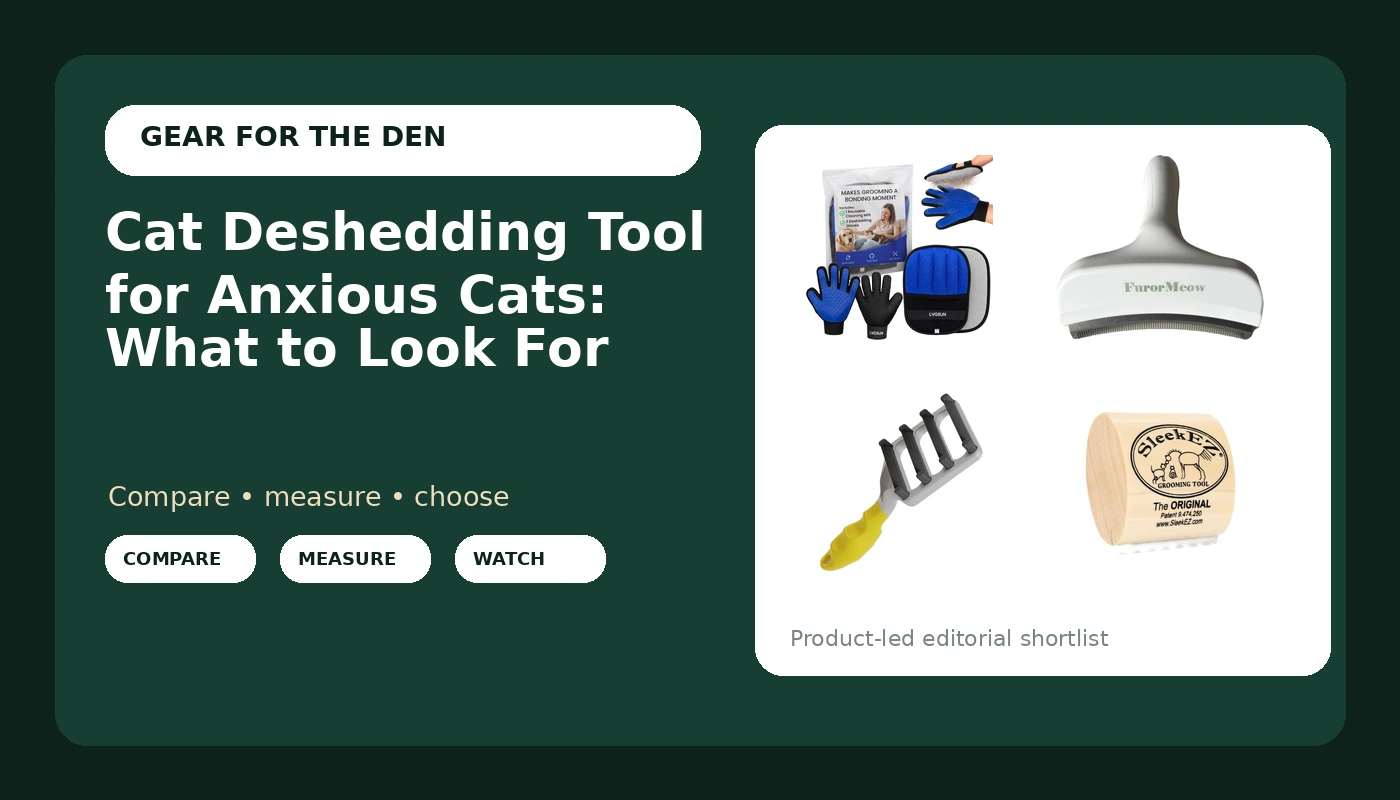
Cat hair ends up on the sofa, the rug, and your good black trousers, and a cat that flinches at the first stroke turns a simple chore into a slow negotiation. If you are shopping for a cat deshedding tool for anxious cats, the tool itself is only half of the decision. The other half is how your cat reacts to the shape, the sound, and the pressure of whatever ends up in your hand. This guide covers what separates a tool a nervous cat will tolerate from one that sends it straight under the bed, then compares four options that suit different coats and different temperaments.
Quick answer
The cat deshedding tool for anxious cats explained in one line: the right choice is the tool your cat will let you use for short, calm sessions, not the one with the most aggressive edge. Nervous cats tend to do better with a shallow deshedding edge, wider comb spacing, and a handle you can hold lightly rather than grip. Start on the shoulder, work in a few strokes, and stop while the cat is still relaxed. Sessions should feel like training, not like a full grooming appointment.
4 useful options
| Model | Best fit | What stands out |
|---|---|---|
| Cat Grooming Kit for Shedding, Deshedding Gloves + Self-Cleaning Mitt | Cats that dislike rigid tools | Deshedding gloves plus a self-cleaning mitt in one kit |
| FurorMeow Pet Deshedding Tool with Curve Blade, Cat Grooming Brush, Tight V-shaped Teeth Shedding Comb for Cats and Dogs (White, Large) | Dense undercoat on cats and dogs | Curve blade with tight V-shaped teeth |
| FUR4 deShedding Cat Brush for Short Hair Cats, Pet Hair Brush with 4 Carbon Fiber Edges, deShedding Tool Removes Loose Fur, Gentle & Effective Cat Grooming Brush for Shedding | Short, close-lying coats | Four carbon fiber deshedding edges |
| SleekEZ Cat Brush for Shedding – Deshedding Brush for Cats – Patented Grooming Tool for Removing Loose Fur, Undercoat & Hair – Made in USA – Works on Short, Medium & Long Coats | Short, medium, and long coats | Patented blade tool made in the USA |
The glove option: Cat Grooming Kit for Shedding, Deshedding Gloves + Self-Cleaning Mitt
The trade-off with gloves is reach. They lift surface fur and loose hair well, but they are not the tool for working a stubborn undercoat on a thick-coated cat. Glove fit also matters: a glove that bunches and drags is exactly the sensation that makes a nervous cat leave the room. Wash and dry the gloves fully between sessions, because a glove that still smells like the last grooming attempt is a smaller version of the same problem.
The comb-style option: FurorMeow Pet Deshedding Tool with Curve Blade, Cat Grooming Brush, Tight V-shaped Teeth Shedding Comb for Cats and Dogs (White, Large)
Tight comb spacing is a double edge. It grabs more loose undercoat per pass, so you finish faster, but it also holds the coat a little longer on the way through. On an anxious cat that is a good reason to work in very short strokes along the back and sides, keep the blade almost flat to the skin, and stop at the first tail flick. This is the option for a cat with a genuinely dense undercoat rather than a thin, close coat.
The short-coat specialist: FUR4 deShedding Cat Brush for Short Hair Cats, Pet Hair Brush with 4 Carbon Fiber Edges, deShedding Tool Removes Loose Fur, Gentle & Effective Cat Grooming Brush for Shedding
Because it is aimed at short coats, this is not the tool to buy for a long-haired cat, where fur mats and needs a different approach. Carbon fiber edges give a different feel from a steel blade, and some cats accept that texture more readily than metal. Keep the strokes short and follow the direction of the coat, and clear trapped hair from the edges between passes so the tool keeps working rather than dragging.
The all-coat option: SleekEZ Cat Brush for Shedding – Deshedding Brush for Cats – Patented Grooming Tool for Removing Loose Fur, Undercoat & Hair – Made in USA – Works on Short, Medium & Long Coats
A blade edge rewards a light touch. Angle it too steeply and it scrapes; press too hard and even a tolerant cat will object. For an anxious cat, the first sessions with any blade tool should be almost weightless, just enough contact to collect the loosest surface fur. The payoff is range: one tool that a short-coated cat and a long-coated cat can both use, provided you adjust pressure and stroke length to each coat.
Prices and availability may change. Product images, names, and retailer links are matched to verified listings. No current price, rating, stock status, or measured result is stated here without current evidence.
How to choose a cat deshedding tool for anxious cats
The geometry of a grooming tool matters more than the marketing copy on the box, and for an anxious cat it matters more than the brand name. Three parts of the tool do most of the work. The first is the deshedding edge. A shallow, rounded edge skims the surface of the coat and collects loose fur without reaching for the skin. A deeper blade pulls at the undercoat in a single pass, which is efficient on a dense coat and uncomfortable on a nervous cat. If your cat has never been groomed, start shallow.
The second is comb spacing. Wide teeth glide through the coat with less resistance and let you keep the tool moving. Tight teeth grab more fur per stroke but hold the coat a little longer, so they demand a lighter hand and shorter strokes. On a thick double coat, tight spacing is often the point. On a thin coat, it is usually overkill.
The third is bristle type. Soft bristles finish the coat and spread natural oils, but they do not reach the undercoat. Metal blades and carbon fiber edges are the tools that actually remove loose fur. Many cats tolerate a soft brush and reject a metal one, which is why the sensible approach is to keep both on hand and use the soft brush to warm the cat up.
Then match the tool to coat length. Short coats need less aggressive edges and shorter sessions. Medium coats sit in the middle. Long coats need a tool that will not snag, and a plan for mats that a deshedding tool should never be asked to cut through. Handle shape and glove fit matter as well: a handle you can hold with two fingers lets you release pressure the instant the cat shifts its weight. If you are also grooming an older cat, the handling advice in our guide to cat grooming tools for senior cats is worth reading before you buy.
Finally, drop the idea that there is a single ideal cat deshedding tool for anxious cats. Temperament varies from cat to cat and from day to day. The tool that works on a calm cat may be the wrong one for yours, and the honest answer is to start with the least aggressive option that will still remove fur.
What anxious cats actually react to
Anxious cats rarely object to the idea of being groomed. They object to specific sensations, and once you know which ones, the tool choice gets easier.
Pressure is the first. A tool that presses into the skin feels like a claw, and a cat that expects a claw will react to it. This is why light, short strokes beat long, firm ones even when the tool itself is capable of more.
Tugging is the second. A tool that catches on a tangle, or on a patch of dense undercoat, pulls the skin and ends the session. Comb spacing and edge depth determine how much tug the tool produces, and a cat with a sensitive coat will notice the difference immediately.
Sound is the third and the most underestimated. Some tools click or scrape against the coat, and a cat that is already alert will track that noise even when the touch itself is fine. If your cat's ears swivel toward the tool rather than your hand, sound is part of the problem.
Restraint is the fourth. A cat held in place learns that grooming is a trap. A cat that can walk away and come back learns the opposite, and it will often stay longer once it trusts that leaving is allowed.
Watch the small signals rather than waiting for the swat. A tail that starts flicking, ears that flatten, a ripple along the back, or a sudden stare at the door all arrive before the paw does. Those are the moments to stop, not push through.
Movement speed matters too. Slow strokes are less startling than fast ones, even though short strokes are better for the undercoat. The compromise is to alternate: a few gentle passes, then a pause, then a few more. A nail guard on some tools, or simply rounded tooth tips, keeps the deshedding edge from digging into skin and cuts the chance of a sudden pinch. If your cat has never been brushed at all, treat the first week as touch practice. Fur removal can wait.
A five-step introduction that works for most nervous cats
- Leave the tool on the floor near your cat's usual resting spot for a day so it stops being a strange object.
- Start on the shoulder and the side of the neck, where most cats accept contact most easily, and use two or three strokes only.
- Stop before the cat asks you to stop, then offer a treat so the session ends on a good note.
- Add the back and flanks over several short sessions, and leave the belly and tail base until the cat is completely relaxed.
- Put the tool away after each session rather than leaving it out, so it stays linked to the treat and not to the room.
Practical guidance for calmer sessions
- Groom when your cat is already settled, after a meal or during a quiet nap window, rather than when it is wound up and looking for entertainment.
- Keep early sessions under five minutes, and end sooner if your cat is watching the tool instead of relaxing into it.
- Use a roller adhesive or a damp rubber glove on the furniture, so loose fur does not tempt you into brushing for another ten minutes.
- Clear trapped fur from the deshedding edge and check comb spacing before each session, because a clogged tool drags and a dragging tool gets refused.
- Match the tool to coat length rather than to the season, and keep a soft brush nearby for the days when your cat will only tolerate a light touch.
Which option should you choose?
Choose the Cat Grooming Kit for Shedding, Deshedding Gloves + Self-Cleaning Mitt when your cat dislikes rigid tools and you want your own hand to set the pressure. Choose the FurorMeow Pet Deshedding Tool with Curve Blade, Cat Grooming Brush, Tight V-shaped Teeth Shedding Comb for Cats and Dogs (White, Large) when your cat has a dense undercoat that needs tight teeth and a curved blade. Choose the FUR4 deShedding Cat Brush for Short Hair Cats, Pet Hair Brush with 4 Carbon Fiber Edges, deShedding Tool Removes Loose Fur, Gentle & Effective Cat Grooming Brush for Shedding when your cat has a short, close-lying coat and you want a tool built for exactly that. Choose the SleekEZ Cat Brush for Shedding – Deshedding Brush for Cats – Patented Grooming Tool for Removing Loose Fur, Undercoat & Hair – Made in USA – Works on Short, Medium & Long Coats when you have cats with different coat lengths and want one tool that covers short, medium, and long fur.
None of this replaces knowing your own cat. A tool that suits one anxious cat may be too much for another, and the right answer is often the one that lets you stop early. There is no single correct cat deshedding tool for anxious cats, only a tool that matches your cat's coat and its tolerance on the day.
The bottom line
The short version for a cat deshedding tool for anxious cats: match the edge and the comb spacing to your cat's coat, keep the pressure light, and treat every session as something you can end early. Gloves suit cats that flinch at rigid tools, a curved comb suits dense undercoats, a carbon fiber brush suits short coats, and a patented blade tool covers the widest range of coat lengths. Buy the one that fits your cat's coat and your own patience, and let the first few weeks be about trust rather than volume.