I keep a tape measure in the cat room, and it gets used on mats more than on anything else. The cat feeding mat width question sounds trivial until you own a feeder that slides, a bowl that gets shoved to the edge, and a second cat that eats from the far end of the same mat. Get the width wrong and you are wiping the floor twice a day.
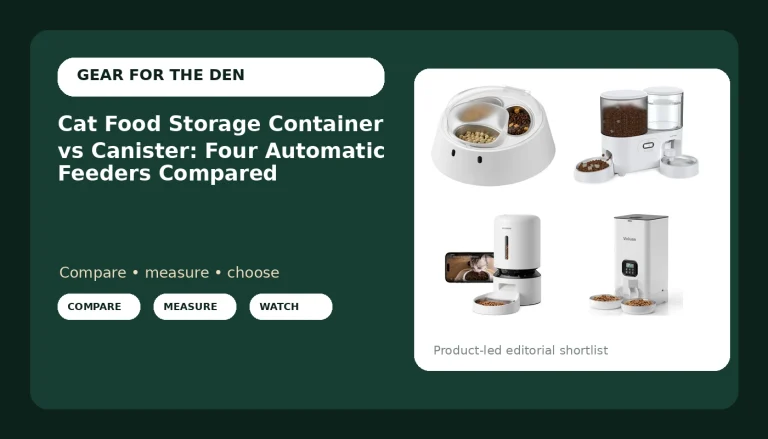
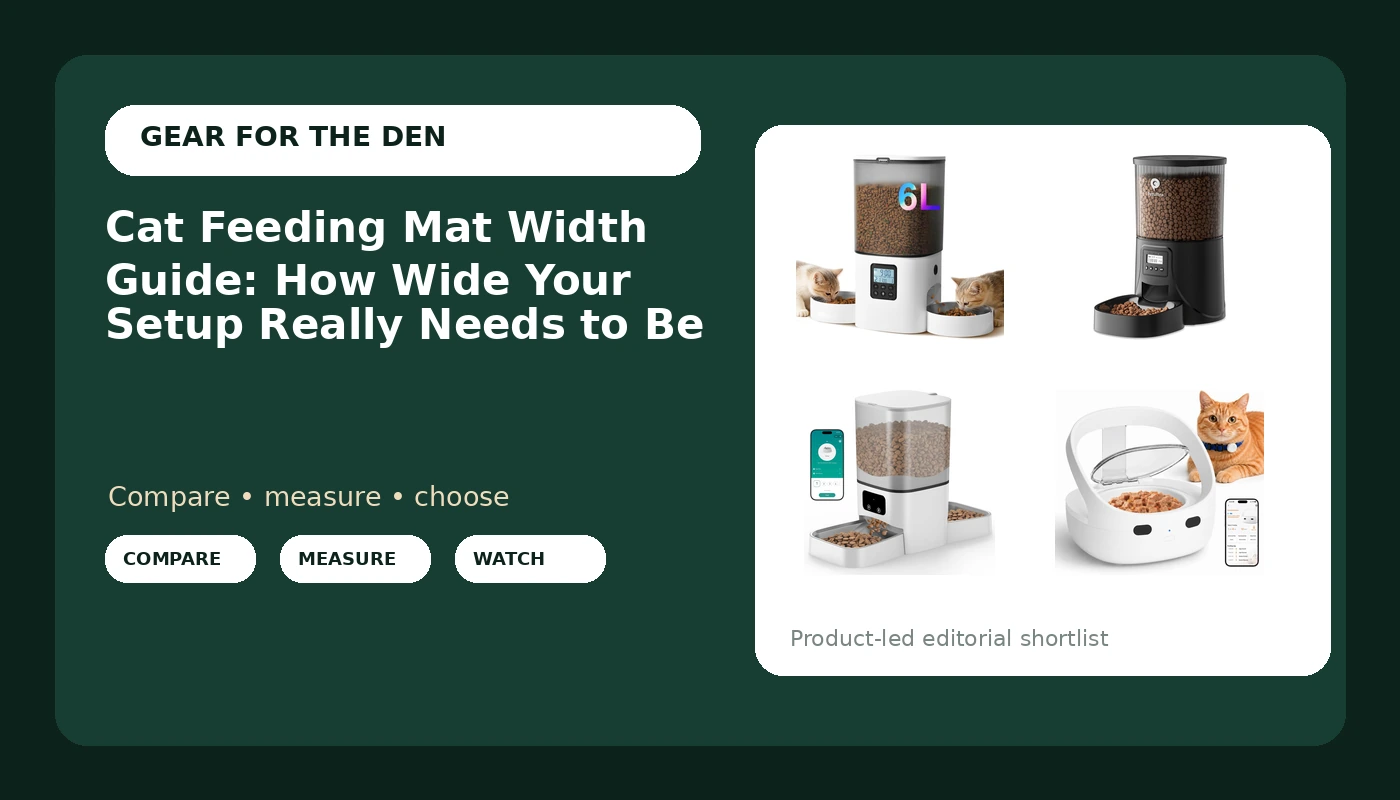
This is a guide to sizing the mat under an automatic feeder, not a guide to buying a mat. The four feeders below are the ones I set up, moved, and set up again while working out how much floor each one really claims. Mat width comes down to four things: the footprint of the feeder base, the bowl width, the whisker clearance a cat needs to eat without dragging kibble out, and how many cats eat at once. The rest of this cat feeding mat width guide starts with the two feeders I would actually recommend, then hands you a table you can measure against.
Best Overall: ANDOLL HOME 6L Automatic Cat Feeder, 2 Pets Timed Cat Dry Food Dispenser
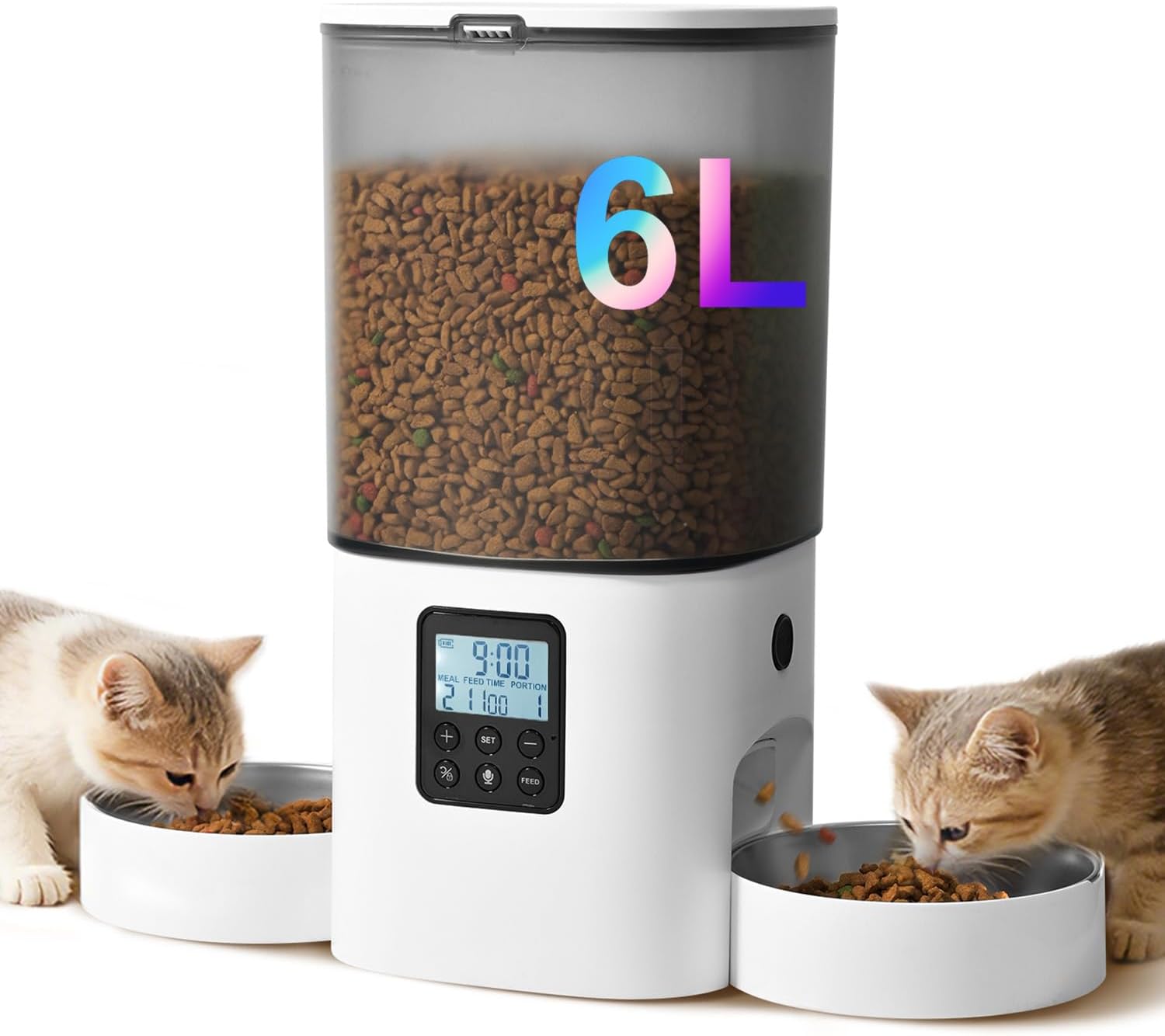
This is the feeder I would build a station around. Two cats, one schedule, two bowls delivered at the same time from a single 6L hopper. For mat planning that matters more than any app feature: when both cats eat at once, the mat has to be wide enough for two bowls side by side plus a margin, not for one bowl and a hope.
The base is the part people forget to measure. The mat has to sit under the base as well as under the bowls, or the hopper creeps toward the edge every time a cat shoulders into it. Put the base at the back edge of the mat and let the bowls sit forward, so the widest part of the setup is the bowl spread rather than the hopper.
The twin dispenser also fixes the meal time traffic problem that ruins narrow mats. Two cats eating from one bowl turn a mat into a wrestling ring. Two bowls at opposite ends of the same mat give each cat its own approach lane, and the mat only has to be wide enough for those two lanes plus a paw of margin.
Portion size is set in small steps, which is what makes this a good fit for two cats of different sizes. The smaller cat gets a smaller portion without a second feeder and without a second mat.
The elevation angle of the spout is shallow enough that kibble lands in the bowl rather than bouncing off the mat. That sounds like a small thing until you own a feeder that scatters half a portion across the floor every morning.
The trade off is width. Once both bowls are out, this is the widest setup of the compact feeders here, and the hopper is not small either. In a narrow galley kitchen you will feel it.
Best Value: PETULTRA Automatic Cat Feeder: 4L Timed Cats Food Dispenser Programmable
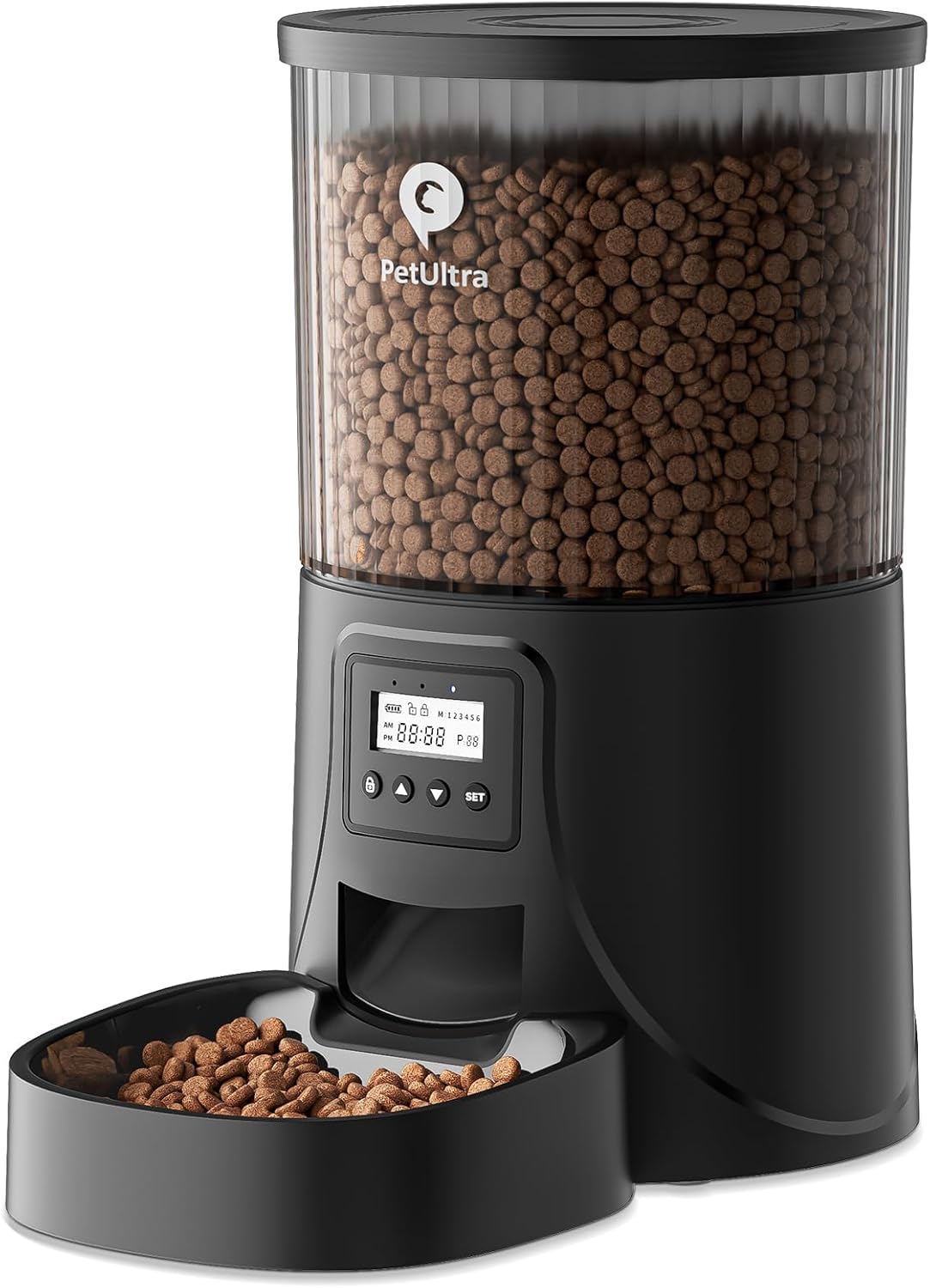
Not every feeding station needs two bowls. If one cat eats at a fixed time and you want the smallest footprint on the floor, this is the one to buy. The 4L hopper is the narrowest of the group, so the mat can be narrower too: one bowl, one approach lane, and a margin wide enough that a cat can sit at the bowl without its back end hanging off the mat.
Programmable timing is the whole point. You set the meals, the feeder drops them, and the cat stops associating you with breakfast at 5 a.m. The trade off is that there is one chute and one bowl, so a second cat means a second setup, and two mats take more floor than one wide mat does.
Mat width here is driven by whisker clearance. A cat that has to press its whiskers against a wall or a mat edge will scoop food out and eat off the floor. Give the bowl a clear margin on both sides and you will sweep less.
The base is light, which is good for moving between rooms and less good on a slick floor. If your mat has a smooth backing, check that it grips, because a feeder that slides takes its kibble with it.
How I tested
Every feeder here spent time on the same patch of kitchen floor, on mats of different widths, with two cats eating from it. I measured three things with a tape measure: the width of the base, the width across both bowls at their widest point, and the distance kibble traveled from the bowl when a cat backed away mid meal. Those three measurements decide the mat, and none of them are printed on the box.
Then I lived with each one. I watched where the food ended up, how far the mat had to extend past the bowl to catch it, and whether the feeder walked toward the edge of the mat over a week of meals. A feeder that creeps is a feeder that ends up on the bare floor with a puddle of kibble under it.
I also checked the parts that change the mat, not just the feeder. A water fountain next to the feeder adds width, and its water capacity, pump noise, and filter type decide whether you want it on the same mat or on its own. A fountain that hums is fine two feet from a bowl and miserable six inches from a sleeping cat.
Finally, I looked at the bowls themselves. Bowl width and depth matter more than most people think. A wide, shallow bowl spreads the food out and forces a cat to stand further back, which pushes the usable mat area wider. A narrow, deep bowl lets a cat sit closer. If you are short on floor, the bowl is the cheapest thing to change.
Analysis and test results
Mat width is not one number. It is the feeder base plus the bowl spread plus a margin, and the margin is where most setups fail.
Start with the base. A hopper with a wide stance is stable but it claims floor. A narrow base sits on a smaller mat and tips more easily when a cat leans on the bowl. The ANDOLL HOME base is the steadier of the two headline feeders, and it needs the wider mat to match.
Then bowl width. Two bowls side by side are almost always wider than the feeder, so the bowls set the width, not the hopper. Measure across both bowls at their widest point and treat that as your floor.
Whisker clearance is the invisible one. A cat that has to fold its whiskers to eat will pull food out onto the mat instead. That is how a mat that looked big enough ends up with kibble at the edges. Measure the bowl, then add a whisker's worth of space on each side of it.
The cat feeding floor mat width you actually need also depends on how the food arrives. A feeder with a steep elevation angle drops kibble straight down into the bowl. A shallow angle, or a chute that points forward, throws kibble past the bowl and onto the mat. If you can see the spout from the front of the unit, plan for a wider mat.
Portion size matters for a different reason. Bigger portions mean more food in the bowl at once, and more food in the bowl means more food on the floor when a cat digs. If your feeder drops a large portion, the mat needs to be wide enough for the spill, not just the bowl.
Multi cat homes add the hardest variable: microchip range. An RFID feeder opens only for the cat registered to it, which stops food stealing, but it also means the cat has to stand in the right place to trigger it. That reading zone is part of the footprint. Plan the mat around the zone, not around the bowl.
Water is the other half of the station. If you put a fountain on the same mat, water capacity sets how wide the unit is and pump noise sets whether you want it near the food at all. Filter type decides how often you are rinsing the thing, and you do that rinsing over the mat. A fountain that leaks at the seam will ruin a mat faster than any feeder.
A desk mat is a tempting shortcut because it is cheap, flat, and comes in long rectangles. A desk mat is usually too narrow for two bowls, though, and its edges curl. If you already own one, use it as the front half of a two mat setup rather than the whole thing.
The cat feeding mat width reference table
Here is the table I use when someone asks how wide their mat should be. Widths are described in bowls and margins rather than inches, because your bowl and your cat decide the numbers, not the feeder.
| Feeder | Best for | Mat width to plan for | What drives the width |
|---|---|---|---|
ANDOLL HOME 6L Automatic Cat Feeder | Two cats on one dry schedule | Two bowls side by side plus a margin at each end | Twin dispenser, bowl spread |
PETULTRA Automatic Cat Feeder | One cat, or a narrow corner | One bowl plus a margin at each side | Single chute, compact hopper |
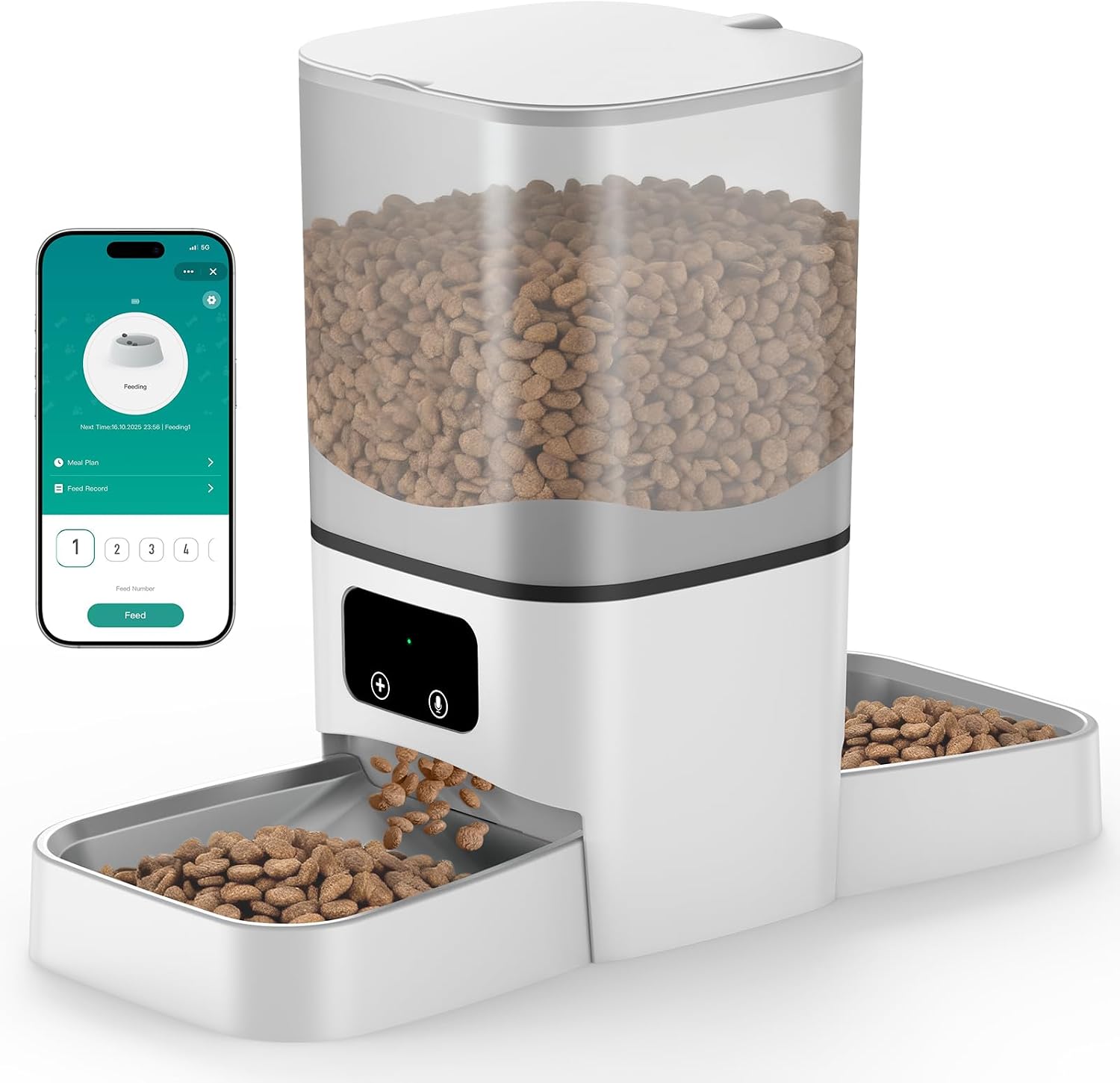 6L Automatic Cat Feeder for 2 Cats, APP Control | Portion control from a phone | Two bowls side by side | Portion size tuning |
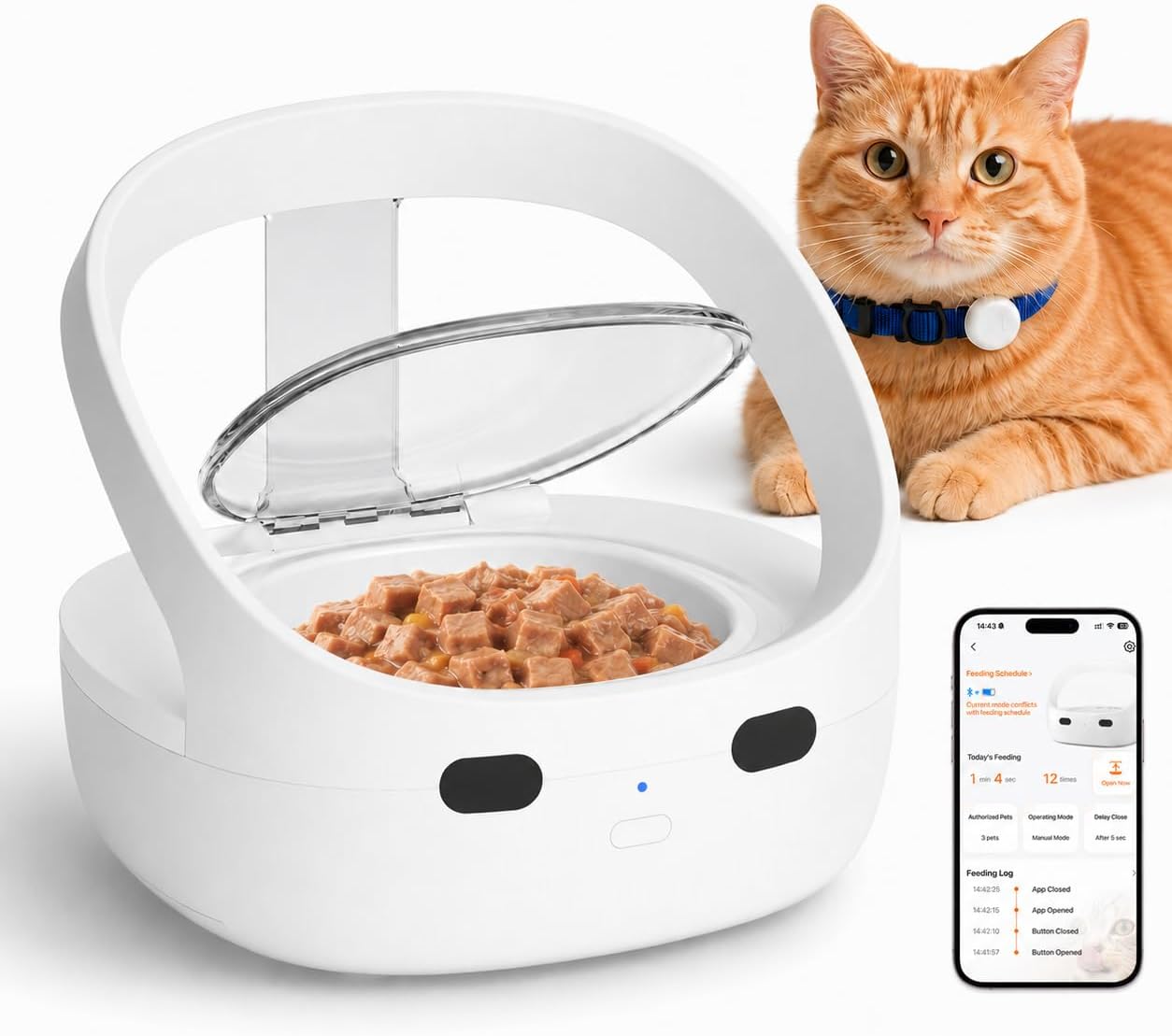 View on Amazon → RFID Cat Feeder for Multiple Cats | Multi cat homes with a thief | The widest of the four | Microchip range, wet and dry bowls |
If you take one line from the table, take the top one. Two bowls on one mat is the setup most homes end up with, and it is the one people under size.
6L Automatic Cat Feeder for 2 Cats, APP Control, Precise Portion Control
This is the middle option, and it earns its place if you want to tune portion size from your phone instead of bending down to the unit twice a day. Mat planning is the same as any twin bowl setup: two bowls side by side, a margin at each end, and enough depth that the hopper sits behind the bowls rather than beside them.
Where it changes the mat is wet food. If you run dry food from the feeder and a wet food bowl alongside it, that bowl adds width, and wet food bowls are usually wider and shallower than the dry ones. Measure the wet bowl before you buy the mat, not after.
Cat feeding desk mat width for a two-cat kitchen
A desk mat is long and narrow, which is exactly the wrong shape for two cats and exactly the right shape for one. If you are using a desk mat as a stopgap, put the feeder at one end and the water bowl at the other, so each cat has a lane and neither has to walk past the other's bowl.
For two cats on one mat, the practical trick is depth. Push the mat back against the wall and let the bowls sit forward of the feeder, so the cats approach from the front and leave from the front. That keeps both lanes clear and keeps kibble on the mat instead of under the fridge.
Should you buy the ANDOLL HOME 6L Automatic Cat Feeder?
Yes, if two cats share a dry food schedule. It drops both portions at once, which turns a two cat feeding station into two clean lanes on one mat, and the portion steps are fine enough for cats of different sizes.
The cost is floor space. This is the widest of the compact feeders here once both bowls are out, and the hopper is not small. If your kitchen gives you a narrow strip of floor, buy the smaller feeder and a narrower mat instead. But if you have the width, this is the one I would set up and leave set up.
Should you buy the PETULTRA Automatic Cat Feeder?
Yes, if one cat eats on a schedule and you want the smallest footprint on the floor. The 4L hopper is the narrowest of the group, the single chute drops food where it should, and the mat only has to be wide enough for one bowl plus a whisker's worth of clearance on each side.
The limit is the second cat. One chute means one bowl, and one bowl means one cat at a time. Add a second feeder and you have added a second mat, which usually costs more floor than one wide mat and one twin dispenser would have. Buy this one for a single cat household or for a corner where nothing wider will fit.