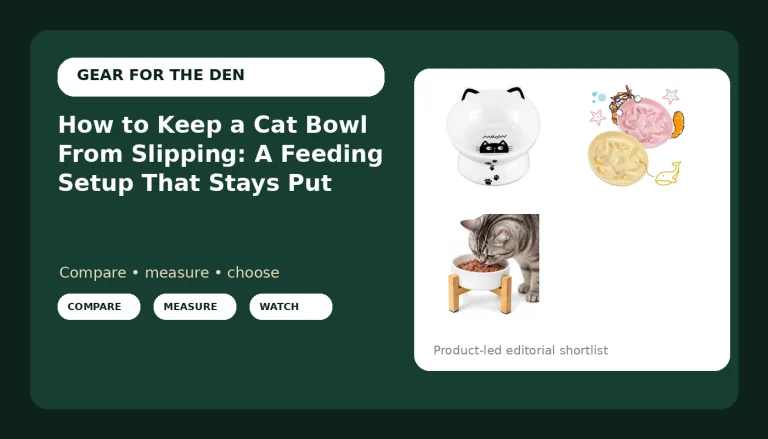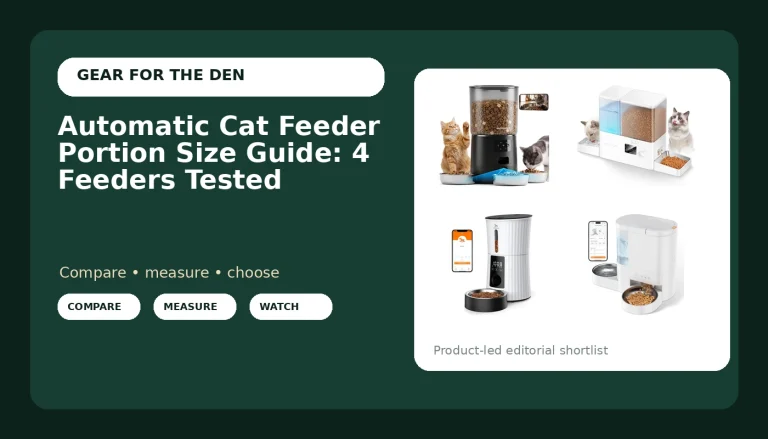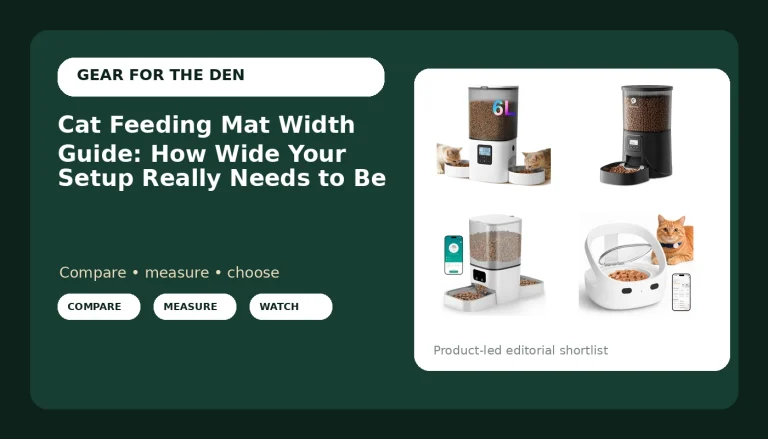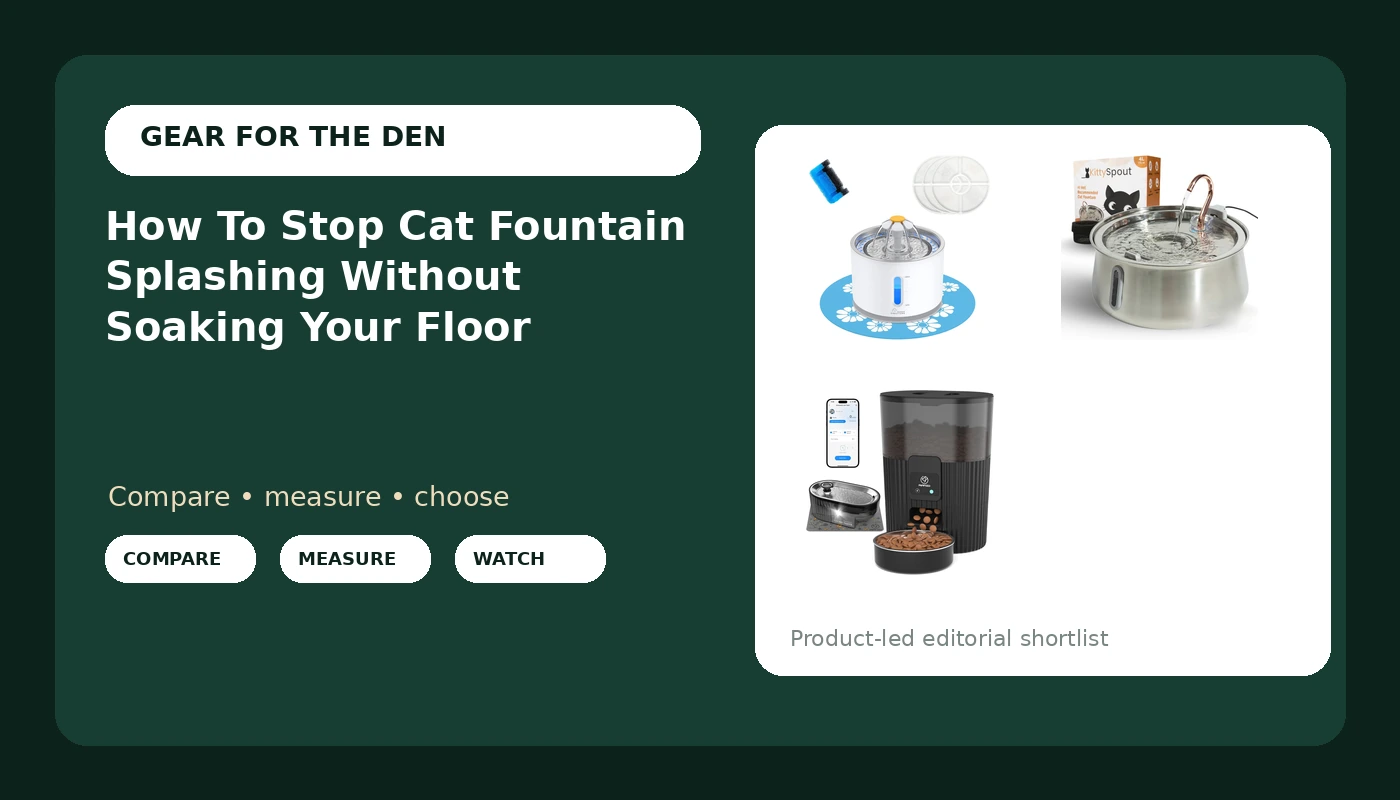
Most cats that splash a fountain are not broken, bored, or trying to redecorate your kitchen floor. They are telling you something about the water. Learning how to stop cat fountain splashing starts with accepting an uncomfortable idea: the fountain, not the cat, is usually the thing that needs adjusting.
A fountain throws water for four reasons. The water level drops low enough that the pump starts pulling air. The stream is aimed past the basin. The drinking surface is too narrow for the cat's whiskers, so the cat paws at the water instead of lapping it. Or the pump vibrates against a hard floor and the whole unit walks itself sideways until the stream lands on the tile. Fix those four and the puddle usually stops within a day.
I run two fountains in a house with cats who drink like they are being timed, and I have wiped up enough splashed water to know which fixes actually hold. The gear below is what I keep in rotation, and the steps after it are the order I work through when a fountain starts throwing water.
Why you should trust me
I have kept a circulating fountain running in this house for years, through kittens, a senior cat whose bloodwork is worth watching, and one cat who treated the pump housing like a toy. I have replaced more pumps and filters than I care to count, and I have learned which failures show up as noise, which show up as slime, and which show up as a wet floor at seven in the morning.
I do not run a lab. What I do is live with the equipment, clean it on a schedule, and pay attention to what changes when I move a fountain, refill it, or swap a filter. That is the experience behind the steps below, and it is why the first answer to a splashing fountain is almost never "buy a new one."
How I picked and how I tested
Everything here had to pass the same short list. I looked at bowl width and the shape of the drinking surface, because a narrow basin is the most common reason a cat paws at water instead of drinking from it. I looked at water capacity, because a fountain that runs low between refills is a fountain that gets loud and messy. I listened to pump noise at a full reservoir and again at a half-empty one, since the difference between those two moments tells you more about a pump than any spec sheet. I looked at filter type, because some filters are cheap and easy to rinse and some are proprietary and annoying. And I checked whether the parts that touch water come apart for cleaning, because a fountain you dread cleaning becomes a science experiment.
For the smart set, I also looked at how the food side and the water side work together, since portion size and timed meals change how frantically a cat drinks.
I ran each unit on the same tile floor in the same corner of the kitchen, with a mat underneath, and watched where the water actually landed after a full day. The test that matters is boring. Fill it, walk away, come back, and see whether the floor is wet.
If you want the short version of how to prevent cat fountain splashing, it is this: get the drinking surface right before you touch a single setting.
The gear that helps stop cat fountain splashing
You cannot troubleshoot a fountain that is fundamentally the wrong shape for your cat. Start with the right basin, then work the steps below.
Budget pick: Wonder Creature Cat Water Fountain Stainless Steel Lid 81oz/2.4L-3 Filters
Budget pick
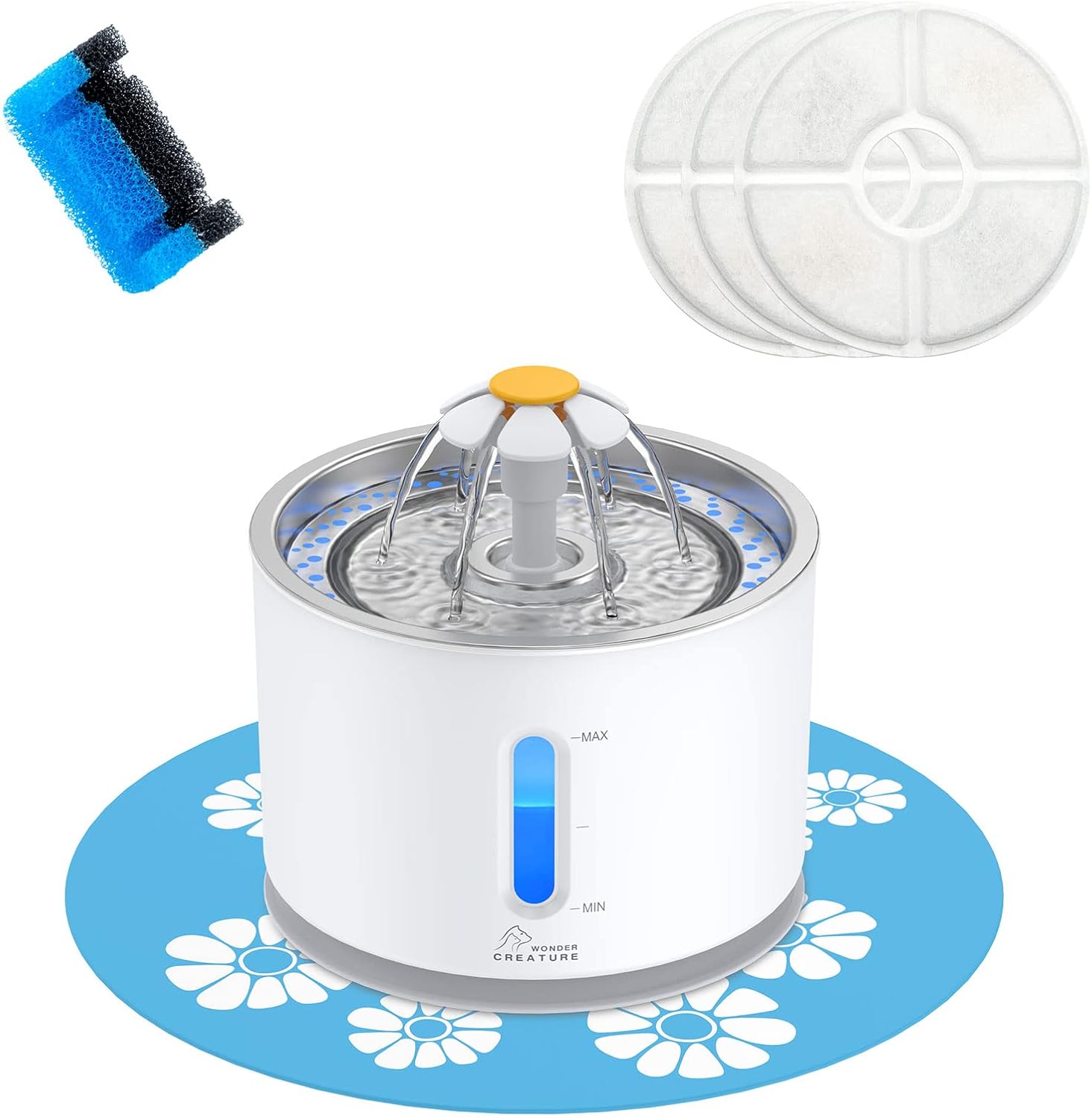
Wonder Creature Cat Water Fountain Stainless Steel Lid 81oz/2.4L-3 Filters
This is the one I point people to first. The stainless steel lid gives you a wide, flat drinking surface with real whisker clearance, and the 81oz water capacity holds a level long enough to keep the pump quiet between refills. Three filters come in the box, so you are not hunting for the right filter type before the first change. Check current Amazon price.
The steel lid matters more than it sounds. Plastic tops scratch, hold onto oils, and develop that slippery film that makes cats paw at the surface instead of drinking. A smooth steel lid wipes clean in seconds, and a clean lid is a lid a cat will use.
Flaws but not dealbreakers: The body below the lid is plastic, and the pump is a small one, so if you let the reservoir drop past the minimum line it gets noisy before it gets dry. Top it off every couple of days and it stays quiet.
Homes with one or two cats, and a cat that has already decided the bathroom sink is the best water in the house, will do well here.
Our pick: KittySpout Stainless Steel Cat Water Fountain Automatic Drinking Fountain, Quiet Circulating Water Bowl, Dishwasher Safe, Indoor Pet Fountain for Hydrated Healthy Cats (Stainless Steel, 4L Corded)
Our pick
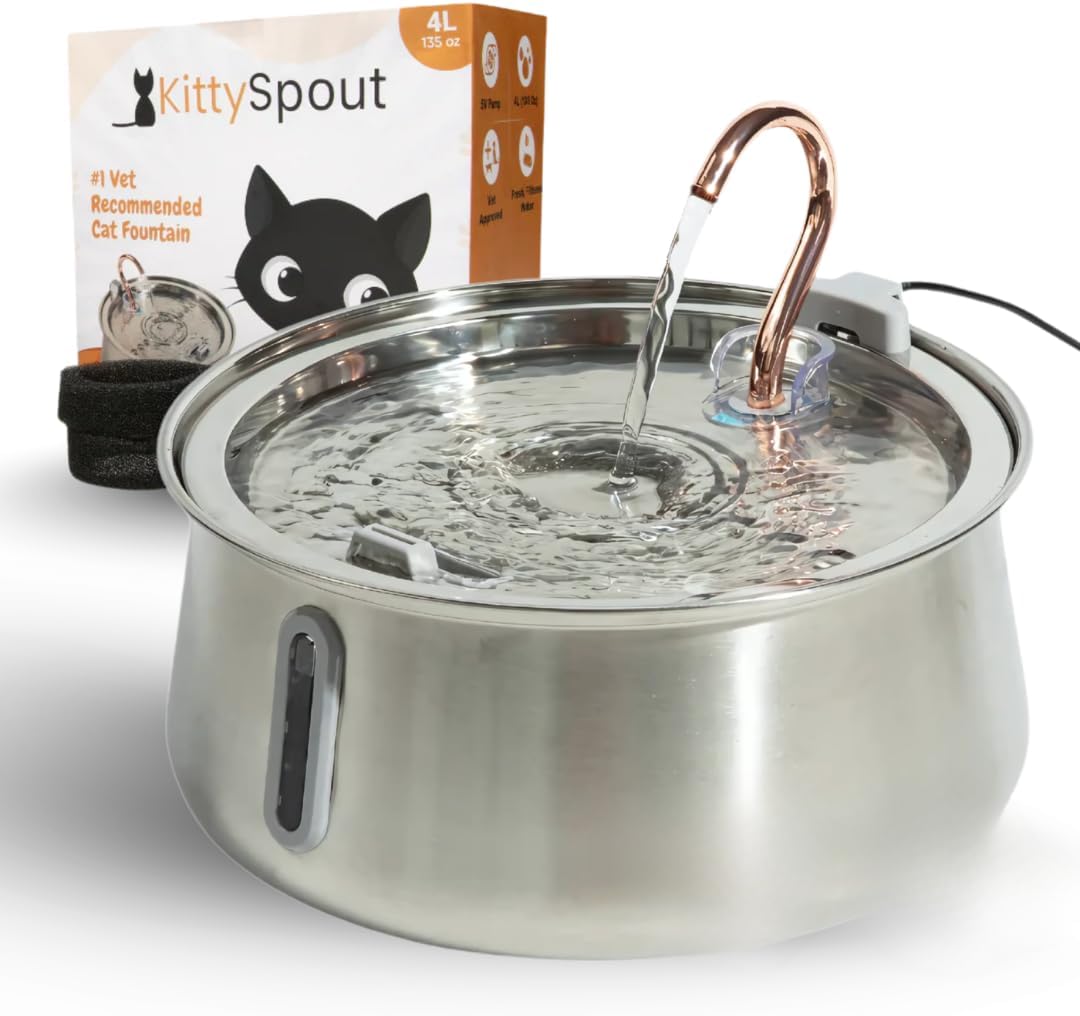
KittySpout Stainless Steel Cat Water Fountain Automatic Drinking Fountain, Quiet Circulating Water Bowl, Dishwasher Safe, Indoor Pet Fountain for Hydrated Healthy Cats (Stainless Steel, 4L Corded)
The 4L water capacity is the reason this is my pick. A big reservoir means the level stays high for days, and a high level is the single best defense against pump noise, which is the noise that usually precedes a mess. The pump is genuinely quiet when it is submerged properly, and the whole thing is built so the water moves without a tall spout throwing a stream across the room. Check current Amazon price.
Dishwasher safe is the feature I did not appreciate until I owned it. A fountain that comes apart and goes in the dishwasher gets cleaned weekly instead of monthly, and a clean fountain has clear channels, a free-spinning impeller, and a stream that goes where it is supposed to.
Flaws but not dealbreakers: It is corded, so you need an outlet within reach, and the cord is the one part you cannot rinse. A drip loop near the plug keeps water away from the socket.
Anyone with two or three cats, or one cat who drinks a lot, should start here.
Upgrade pick: PAPIFEED Automatic Cat Feeder and Water Fountain Stainless Steel, Auto Cat Food & Water Dispenser, Quiet Pet Drinking Fountain with LED, Timed Cat Feeder with App, 10 Meals/Day, Smart Cat Feeder Set
Upgrade pick
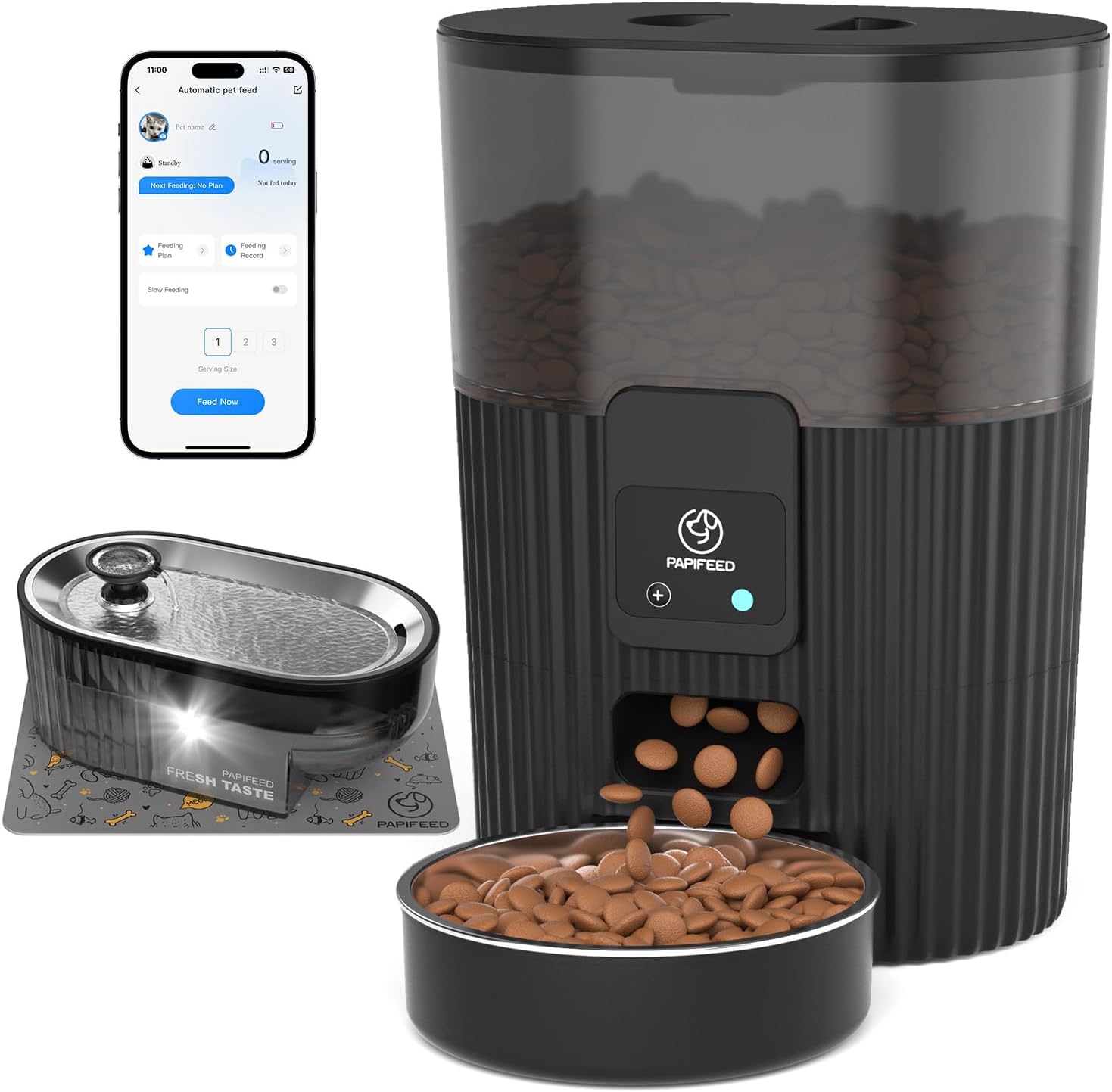
PAPIFEED Automatic Cat Feeder and Water Fountain Stainless Steel, Auto Cat Food & Water Dispenser, Quiet Pet Drinking Fountain with LED, Timed Cat Feeder with App, 10 Meals/Day, Smart Cat Feeder Set
This is the pick for the cat whose splashing is really about food. A cat that is hungry drinks fast and paws at water, and the feeder side of this set lets you split the day into smaller meals so the cat stops treating the fountain like a toy between them. The app scheduling covers up to ten meals a day, and the stainless steel water side keeps the drinking surface smooth. The LED makes it easy to see at a glance that both sides are working. Check current Amazon price.
The portion size control is the part that actually changes behavior. Small, frequent meals flatten the hungry hours, and a cat that is not frantic about food tends to drink calmly instead of attacking the water.
Flaws but not dealbreakers: It is a set, so you are committing to the app and to two devices that need cleaning and power. If you only need water, the two fountains above are simpler.
Multi-cat homes and anyone who works long days away from the house will get the most out of this.
The workflow that fixes a splashing fountain
Work these in order. Most people jump straight to step three and wonder why nothing changed.
Step one: Find out where the water is actually landing. Put a dry towel under and around the fountain, then check it in an hour. Water pooled in front of the spout means the stream is aimed wrong. Water behind or beside the unit means the pump is vibrating and the fountain is walking. Water fanned out in a wide circle means the cat is pawing, not drinking. Those are three different problems and they have three different fixes.
Step two: Fill it to the line and keep it there. The fastest way to prevent cat fountain splashing is to keep the reservoir high. When the level drops, the pump sucks air, the flow becomes uneven, and the stream starts spitting. A fountain with a generous water capacity buys you slack here. Mark the fill line with a piece of tape if the reservoir is hard to read, and top it off on a schedule instead of waiting for the noise.
Step three: Turn the flow down and re-aim the spout. Most pumps have a dial or slider. Start at the lowest setting that still moves the water, then raise it only if the cat ignores the fountain. If the spout can be rotated, angle it so the stream falls straight into the basin instead of hitting the side wall, which is what sends a sheet of water over the edge. A gentle stream in the middle of the bowl is the goal.
Step four: Check whisker clearance and bowl width. Cats have whiskers that are sensitive to pressure, and a narrow bowl means the sides touch them on every lap. That is when a cat starts scooping water out with a paw instead of drinking. To stop cat fountain splashing at the source, you need a drinking surface wide enough that the cat's whole muzzle clears the rim, and shallow enough that the cat can see the water move. A wide stainless lid does this better than a deep plastic basin.
Step five: Match the filter type and keep the pump clean. A clogged filter or a slimy impeller makes the pump work harder, and a struggling pump pushes water unevenly, which sprays sideways. Rinse the filter every week and replace it on the schedule the maker gives you, and pull the impeller cover off once a month to wipe the film off the magnet. That one habit fixes more splashing than any accessory.
Step six: Set the elevation angle. A fountain on the floor throws its stream a longer distance before it lands, so any overshoot travels further. Raising the unit a few inches, on a low stand or a sturdy box, shortens the fall and tightens the splash radius. Keep the top of the fountain below the cat's chin when the cat is standing, so the cat can drink without reaching up.
Step seven: Split the meals. If the splashing happens right before dinner, food is the trigger. Use a timed feeder to break the day into smaller portions, so the cat is not arriving at the fountain hungry and agitated. Portion size matters more than total volume here. Three or four small meals beat one big one for a cat who drinks like a vacuum.
Step eight: Contain what is left. No fountain is perfectly dry. A mat with a raised lip under the unit catches the stray drops, and a second water bowl in another room gives the cat a calm option that is not next to the food. Accept that a cat will still flick water sometimes, and judge the setup by whether the floor is wet or merely damp.
The competition and why it lost
The classic plastic fountain with a flower-shaped spout is the reason a lot of people search for a fix in the first place. The petals look charming, but the spout sits high and the stream lands off center, which throws water over the rim every time the pump surges. It also scratches, and scratched plastic grows biofilm that cats can smell.
Gravity waterers are quiet because they have no pump, but they are still open bowls, so a pawing cat can empty one onto the floor in an afternoon. They also hold still water, and a lot of cats refuse still water entirely, which is a different problem than splashing.
Microchip feeders solve a real problem in multi-cat homes, but the bowl inside is usually narrow, so a cat with sensitive whiskers paws at the food and then goes looking for the fountain to play in. A generous microchip range on the feeder only helps if the bowl itself gives the cat room.
Ceramic bowls look good and clean up well, but they are heavy, breakable, and still just bowls. They do not circulate water, so a cat that only drinks from moving water will ignore them and go back to knocking the fountain around.
None of these are bad products. They are just the wrong tool for a cat that splashes, and swapping one for another without changing the water level, the flow, or the bowl width gets you the same puddle in a new shape. If your cat is drinking too little rather than too much, that is a separate problem and getting a cat to drink more water covers it.
What this all costs
The budget fountain is the cheapest way into this, and it comes with three filters, so your first month of filter changes is already paid for. The larger stainless fountain costs more up front and less over time, because a bigger reservoir means fewer refills, a quieter pump, and less chance that you let the level drop. The feeder and fountain set is the biggest single purchase of the three, and it is the one that solves a behavior problem rather than a hardware problem.
Recurring costs are filters and electricity. Filters are the item people forget. A filter costs a few dollars, needs rinsing weekly, and needs replacing every few weeks depending on how many cats you have and how much hair lands in the water. Skip it and you will pay for it in pump noise and splashing instead. A fountain pump draws very little power, so the electricity is not worth thinking about.
Add a mat with a lip if you do not own one, and budget for a replacement pump eventually, because every pump in every fountain eventually gets noisy. Check current Amazon price on all three units before you decide, since the gap between them is smaller than the gap in what they actually do for you.
The math is simple. The steps are the work. Fill the reservoir, drop the flow, widen the drinking surface, and clean the impeller. Do those four things and the towel under the fountain stays dry.
That is the job. Your cat was never the problem.