The cat food storage container vs food bag question sounds like a small one until you are standing in a kitchen at 6 a.m. with a scoop in one hand and a bag that refuses to stay rolled shut in the other. Most feeding complaints are not really about the food. They are about air, light, moisture, and how far a cat has to reach to eat or drink. So this comparison covers both halves of the station: the storage side, where the kibble lives, and the bowls and fountains that actually deliver it. Gear for the Den runs on one rule for gear like this: say what a product does, name the maintenance it costs you, and leave the adjectives in the listing.
A note on scope before the table. There is no storage container in this comparison, because the four products here are the serving side of the station. Storage is a decision you make with the bag already in your hand rather than a product you pick from a list, so the question gets argued out below in prose. What follows compares three water fountains and one set of elevated food bowls on the specs that change daily life, then spells out where each one loses.
For most homes the best combination is a sealed container for the dry food plus a stainless steel fountain for the water. Of the four picks below, the 74 ounce stainless fountain is the value option, the 3.2L fountain is the capacity option, the filterless wireless unit is the low-maintenance option, and the ceramic elevated bowls are the piece people forget to budget for.
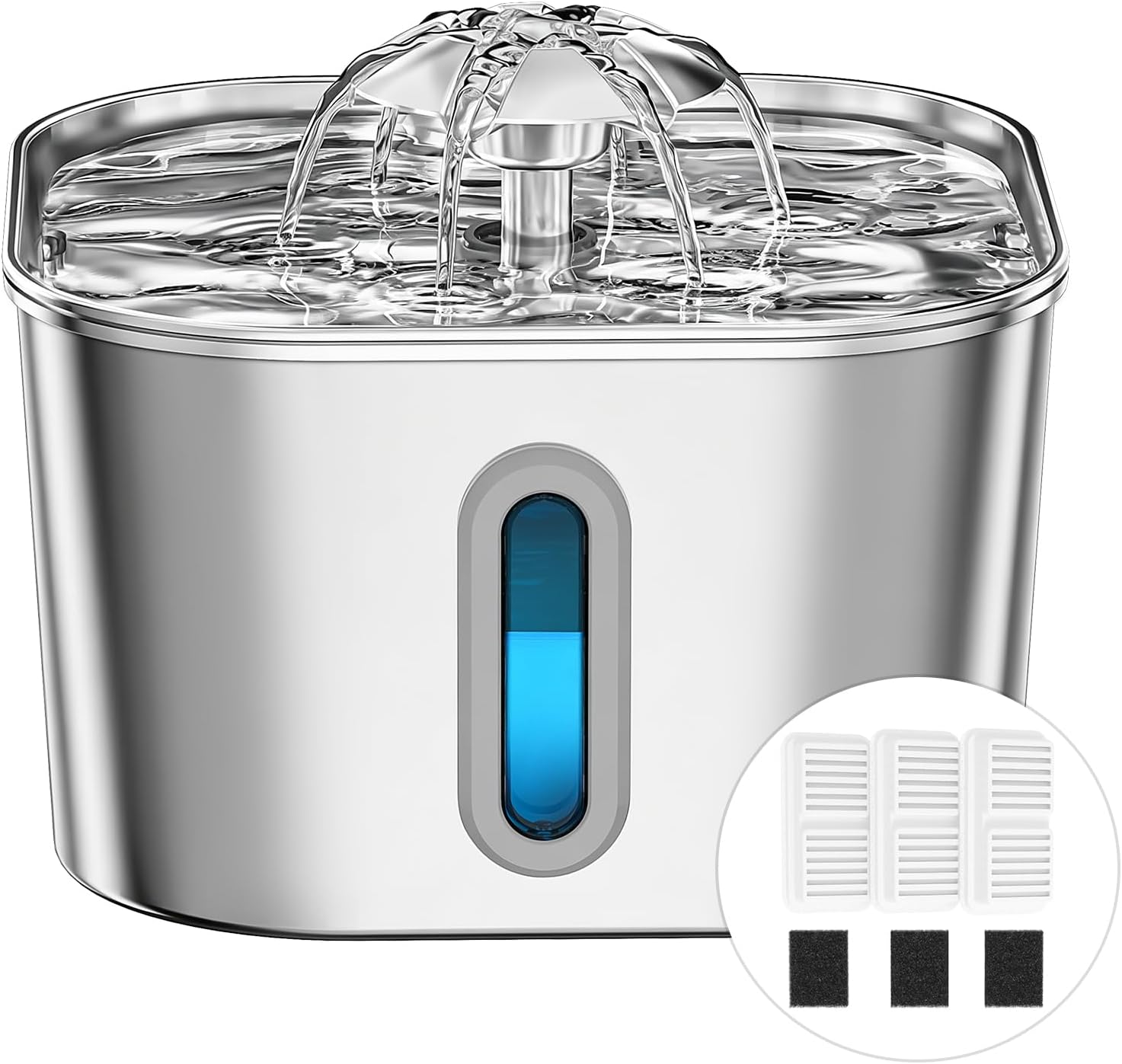
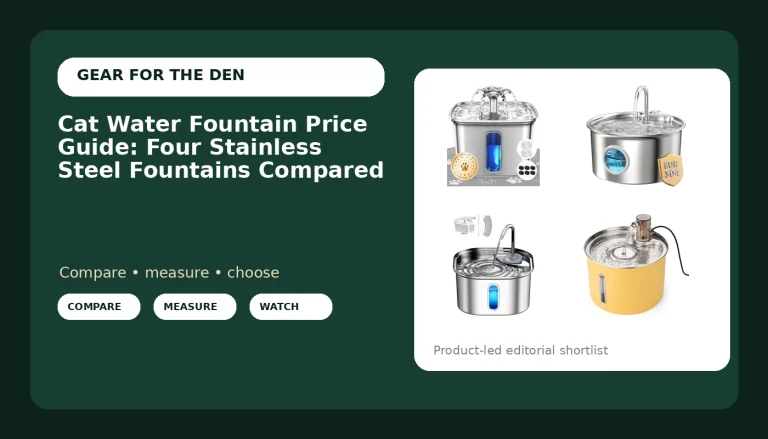
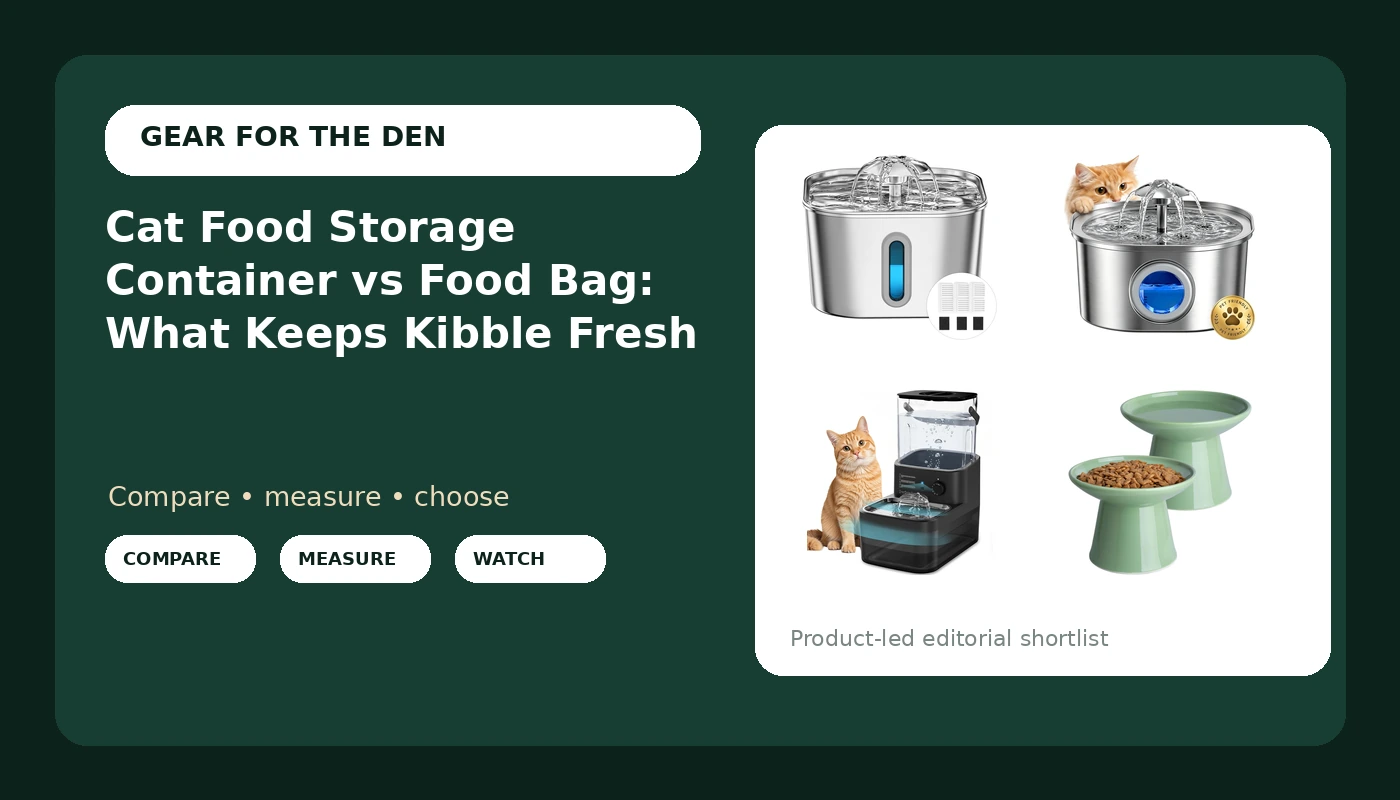
Cat Water Fountain Stainless Steel 74oz/2.2L with 3 Filters & 3 Sponges
Stainless drinking surface, and the box ships with 3 filters and 3 sponges so consumables are covered up front
Smallest water capacity of the three fountains; filters become a recurring purchase
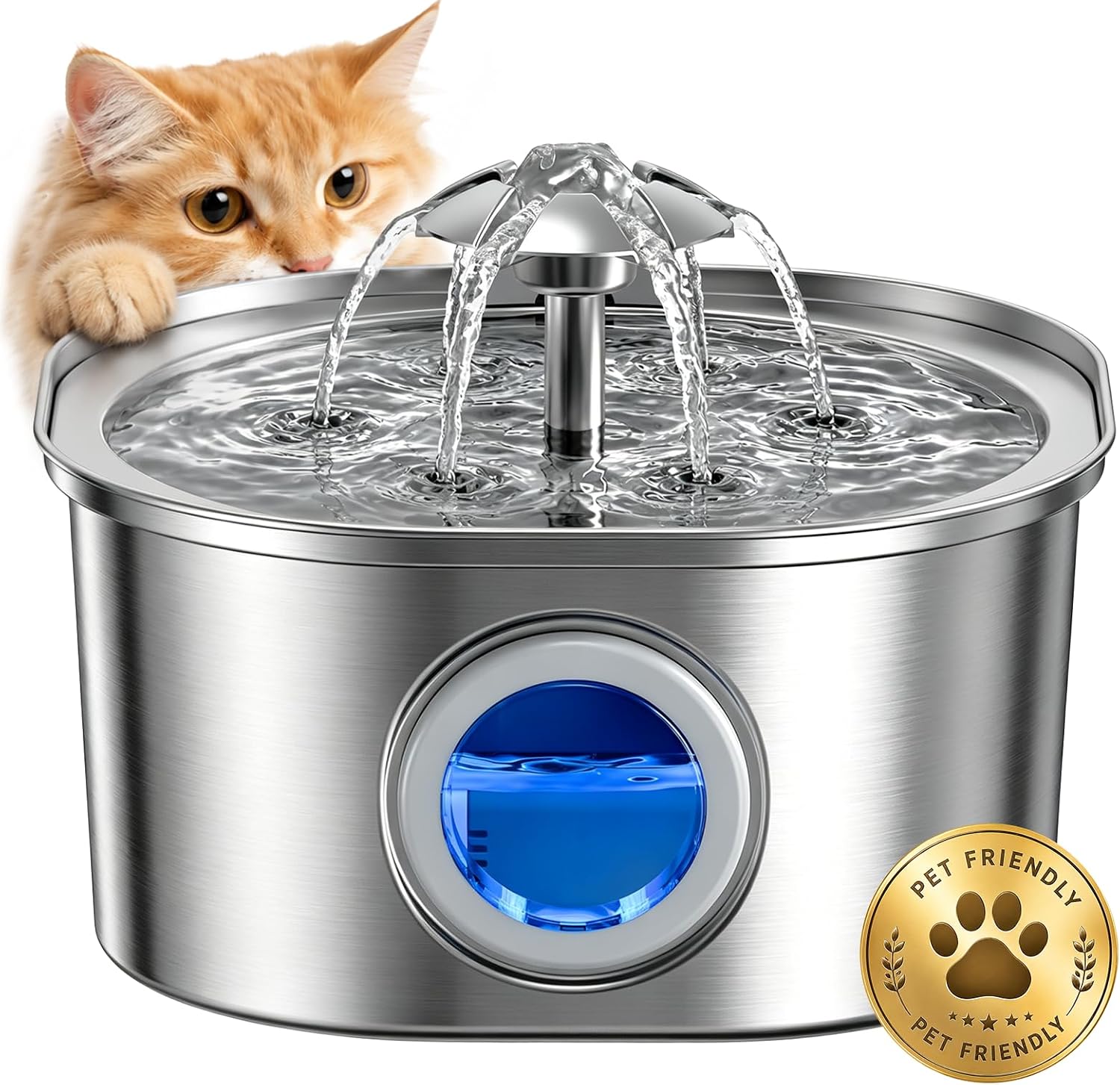
PEKTACO Cat Water Fountain, 3.2L Stainless Steel Pet Fountain, 1 Filter
Largest stainless reservoir here, so fewer refills in a multi-cat house
Only one filter in the box; replacement cost starts sooner
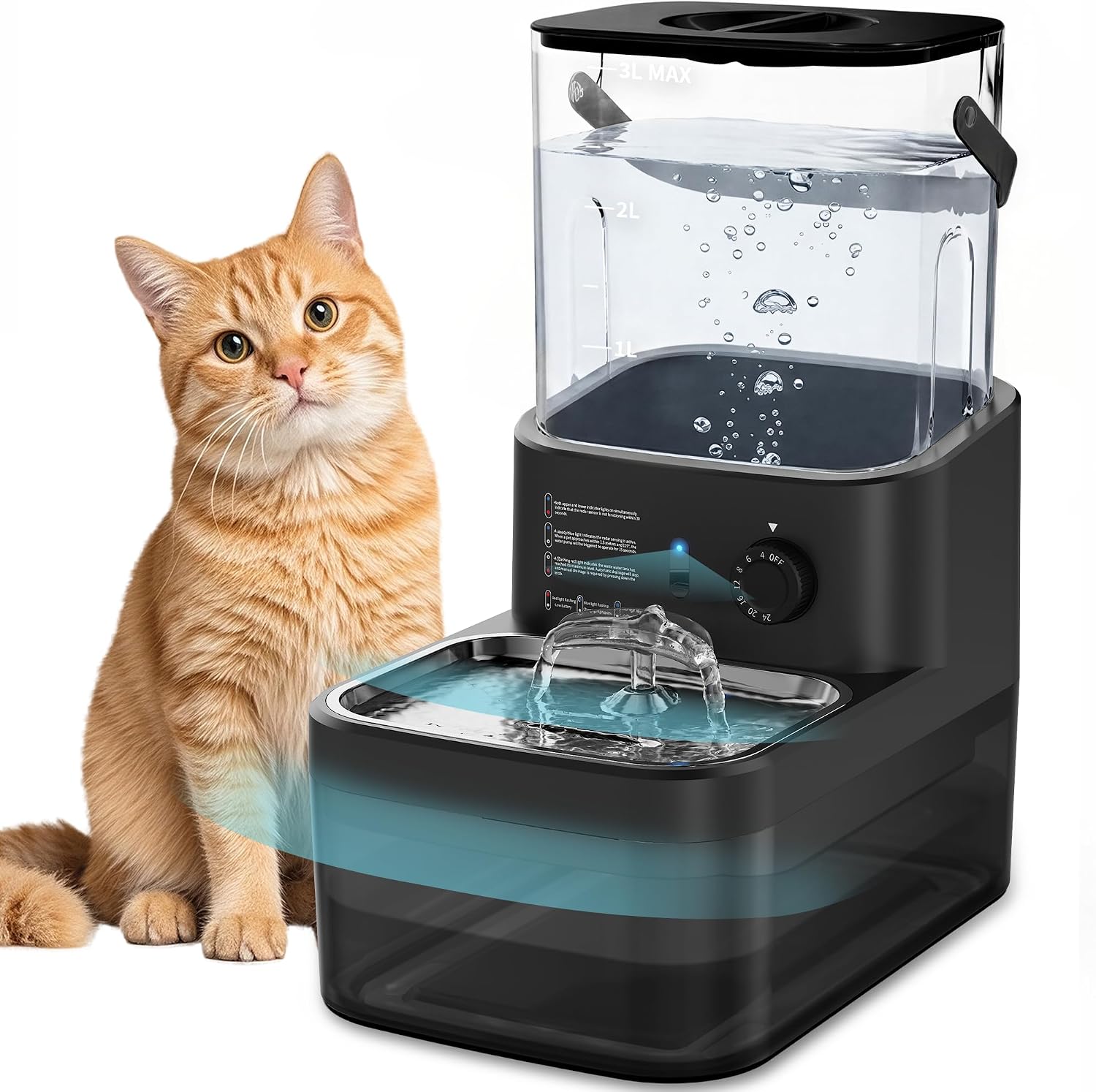
3L Filterless Cat Water Fountain, Wireless, Wastewater Separation, Black
No filters to buy, no cord to route, and wastewater separation keeps runoff out of the drinking basin
Highest price of the four, and filterless means more frequent rinsing
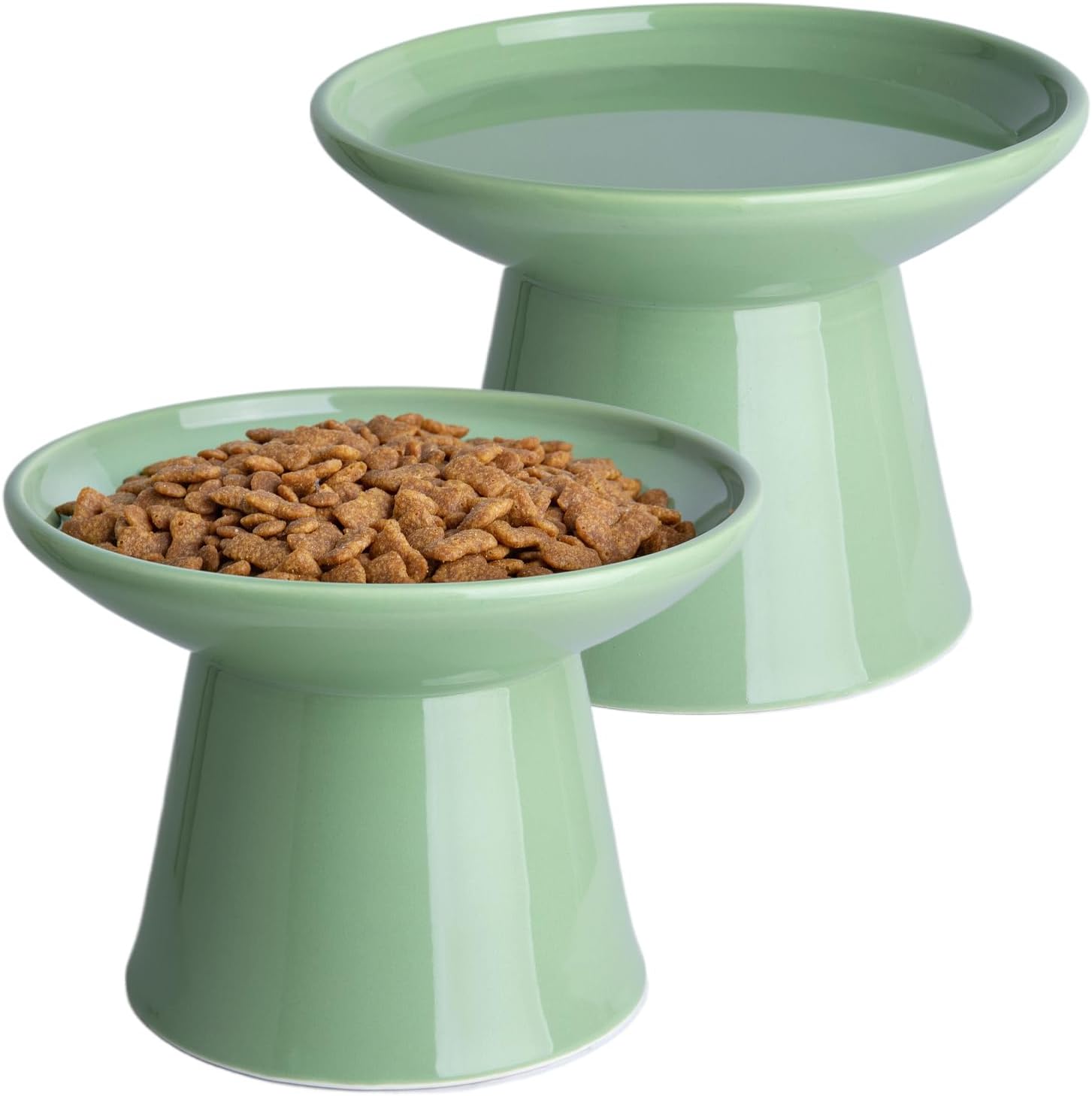
KITCHENLESTAR Ceramic Elevated Cat Food Bowls, 6.2" Wide, 2-Pack, Green
6.2 inch width gives whisker clearance, elevated eating angle, ceramic stays put
No water capacity at all; ceramic is less forgiving if it hits tile
Prices and availability may change.
Cat Food Storage Container vs Food Bag: The Short Answer
The practical difference between cat food storage container and food bag comes down to three things: air, light, and access. A bag is engineered for shipping and warehouse shelf life, not for daily scooping on a counter. It slumps, the press seal gives out after a few weeks, and every opening pushes fresh oxygen across the kibble. A rigid container holds its shape, seals against moisture and pantry moths, and lets you scoop with one hand while the other hand holds a cat off the counter.
What a container does not do is keep food fresh forever. Kibble starts oxidizing the moment the bag is opened, and the fats that make it palatable go stale on roughly the same schedule whether they sit in a bin or in the original packaging. A container buys tidiness, pest resistance, and a predictable scoop, not extra months of freshness. If a five pound bag lasts your cat six weeks, a container is the obvious call. If you buy twenty pound bags for one cat, keep the bag's own seal and a clip, and split the surplus into smaller airtight portions so you are not opening the big container twice a day.
There is also a maintenance cost the listing photos never show. Containers need washing, because the oils in dry food coat the walls and turn. Stainless steel and ceramic rinse clean and stay neutral. Cheap plastic holds odor, and a container that smells like old fat is a container your cat will walk away from. That material difference matters more than lid geometry.
What these four picks are actually competing on
Four products, three jobs: holding the food, serving the food, and serving the water. The specs that change daily life are short. Water capacity decides how often you refill, which matters more in a multi-cat house than any feature list suggests. Filter type decides what you keep buying for as long as you own the fountain. Pump noise decides whether the fountain stays in the kitchen or gets moved to a hallway where nobody hears it. On the food side, bowl width and whisker clearance decide whether eating is comfortable, elevation angle decides the neck position, and portion size decides how often you are standing at the counter with a scoop.
One thing worth naming: none of these four use a microchip range to open a lid. That is a separate category of feeder with its own price bracket, and it is the right answer if one cat steals another cat's food. Everything here is manual, which is part of why the prices stay where they are.
Water capacity and filter type: the three fountains
Cat Water Fountain Stainless Steel 74oz/2.2L with 3 Filters & 3 Sponges. This is the entry point, and it is a sensible one. The drinking surface is stainless steel, which is the part that matters most, because it does not hold the biofilm and odor that plastic does and it is the surface a cat's chin touches every time it drinks. The 74 ounce reservoir works out to roughly 2.2 liters, enough for one cat for a couple of days and not enough for three cats over a weekend. The bundle is where the value sits: three filters and three sponges in the box means you are not buying consumables in the first month. Check current Amazon price
Where it loses: capacity. With two cats, or if you travel, you will top it up more often than the other two fountains here, and the filter type is a subscription you have signed up for whether you meant to or not. Budget for replacements and the price advantage narrows.
PEKTACO Cat Water Fountain, 3.2L Stainless Steel Pet Fountain, 1 Filter. This is the same idea with a bigger tank. At 3.2 liters it holds roughly a liter more than the 74 ounce unit, which is the difference between refilling every other day and refilling twice a week in a two-cat house. Stainless steel again, so the same argument about the drinking surface applies. Check current Amazon price
Where it loses: the box includes a single filter. You are buying replacements sooner than with the bundle above, and a fountain's running cost is really the filter cost, not the purchase price. If you would rather not think about filters at all, keep reading.
3L Filterless Cat Water Fountain, Wireless, Wastewater Separation, Black. This one solves the two loudest complaints about fountains: filters and cords. There is no filter to buy, which means no recurring cost and no filter to forget. It is wireless, so it does not need to sit near an outlet, and you can put it where the cat actually drinks instead of where the wall is. Wastewater separation means the water that has already run over the pump, picking up hair and debris, is kept apart from the water sitting in the drinking basin, so your cat is not lapping at recirculated runoff. Capacity is 3 liters, which lands it between the other two. Check current Amazon price
Where it loses: price and upkeep. It is the most expensive product in this comparison by a wide margin, and filterless does not mean maintenance free. Nothing is trapping fine debris, so the basin gets rinsed more often, not less. You are trading money and weekly rinsing for the absence of a filter subscription and the absence of a cord.
Pump noise deserves an honest note. None of these listings publish a decibel figure, so I am not going to invent one. If a fountain's hum bothers you at night, buy from a listing with a straightforward return window, because a fountain that gets unplugged is just a bowl with extra steps.
Bowl width, whisker clearance, and elevation angle: the ceramic pair
KITCHENLESTAR Ceramic Elevated Cat Food Bowls, 6.2" Wide, 2-Pack, Green. Bowls are the least glamorous purchase in a feeding setup and the one cats notice most. Bowl width matters because of whisker clearance: a cat's whiskers are sensitive enough that a narrow bowl presses them flat against the rim with every bite, and some cats will eat less rather than put up with it. At 6.2 inches wide, these leave room around the muzzle. Elevation angle is the other half of the job. Raising the bowl puts the neck in a straighter line, which is easier for older cats and for cats that eat fast and then bring it back up. Ceramic is heavier than plastic, so the bowl stays where you put it instead of skating across the floor, and it does not hold the oils and odor that plastic can. Check current Amazon price
Where it loses: it holds no water, so it does not replace a fountain, and ceramic is less forgiving than stainless when it lands on tile. It also comes only as a two-pack, which is a win for a two-cat house or for anyone splitting a wet bowl and a dry bowl, and a waste for anyone who already has one bowl they like.
Portion size and storage: where the food actually lives
Whether you keep a cat food storage container or food bag on the counter, the food still has to land somewhere, and that is where bowl width and portion size start doing the work. A 2-pack lets you separate wet and dry instead of stacking both in one bowl, which makes portion size easier to eyeball and leftovers easier to toss. If you free-feed dry food, the fountain matters more than the bowl, because cats on dry diets drink noticeably more and a still bowl of stale water is the least appealing thing in the house. Related reading: how much water a cat should drink.
This is also where storage and feeding connect in a way that is easy to get wrong. People buy a big container, pour in a twenty pound bag, then open it four times a day, which is exactly the oxygen exposure the bag's seal was preventing. Smaller airtight portions inside one sealed container beat one giant bin. If you are weighing the difference between cat food storage container and food bag for a single cat, the honest answer is that the container wins on tidiness and pest control and roughly ties on freshness.
Where each pick loses
The food bag vs cat food storage container argument is the cheapest decision in this whole setup, and it is the one people agonize over longest. Everything else here costs more and matters more. Rank the losses plainly. The 74 ounce fountain loses on capacity and commits you to filters. The 3.2L loses on filter supply, because one filter in the box is a short runway. The filterless wireless fountain loses on price and on rinsing frequency. The ceramic bowls lose on scope, since they hold no water, and on durability, since ceramic chips.
The cat food storage container vs food bag call, by contrast, has no wrong answer that costs you much. A container is a kitchen upgrade. A fountain is a cat upgrade. That asymmetry should drive the order you spend in.
None of these four are bad versions of their category, and that is the point. The real decision is which recurring annoyance you can live with: refilling a small reservoir, rebuying filters, rinsing a basin with no filter in it, or washing bowls by hand. Match the annoyance to your actual week and the choice mostly makes itself.
Should you buy the fountain or the bowls first?
Water first, almost always. Cats on dry food run chronically low on water, and a cat that drinks more from a moving source is a cat with less urinary risk. If your cat currently drinks from a tap or a bowl that gets topped up once a day, the fountain is the upgrade that changes health outcomes, not just convenience. Start with the 74 ounce stainless unit if you have one cat and want to test the whole idea cheaply, or the 3.2L if you have two cats and would rather not refill every other day. If filters are the part you know you will neglect, the filterless wireless unit is worth the extra money.
Bowls second, and only if the current bowl is narrow, plastic, or sitting on the floor. Whisker clearance and elevation angle are comfort upgrades, and comfortable cats eat more consistently. The ceramic pair is the right buy for a two-cat house or for anyone splitting wet and dry.
Storage last. A container is a kitchen upgrade, not a cat upgrade, and it is the easiest of the three to get right on a budget.
What to watch as these get updated
Fountain listings change filters, bundle counts, and pump designs more often than any other kind of cat gear, which is why the filter type matters more than the brand name printed on the box. If you buy the bundle, note which filter it uses before you run out, because a fountain with no filter in the house is a fountain that gets shelved.
Two things to verify on the product page before you buy anything here: whether replacement filters are sold in multi-packs, and how long the return window runs. Those two facts tell you more about the real cost of ownership than any headline price does.