Cat Food Storage Guide: Bowls, Fountains, and Feeders That Keep It Fresh
A practical cat food storage guide: what keeps wet food fresh for days, what keeps water clean, and what a multi-cat house actually needs.
I have fed cats in the same kitchen for a long time, and the older I get the more convinced I am that a cat food storage guide is really three guides stacked on top of each other: keeping wet food from turning, keeping water from going flat and scummy, and keeping one cat from eating everybody else's dinner. The gear in this category looks like feeding equipment. Most of it is storage equipment with a bowl attached.
That distinction matters, because the failure is almost never the cat. It is the food. A half can of pate sitting at room temperature, a fountain that has stopped moving water, a bowl so deep the cat has to mash its face into the sides to reach the last ounce. Fix those three things and most of what gets called picky eating disappears. The four products below each solve a different piece of it, and none of them is a gadget you will use twice and forget. For the water side of the same problem, the fountain cleaning routine is worth reading before you buy anything.
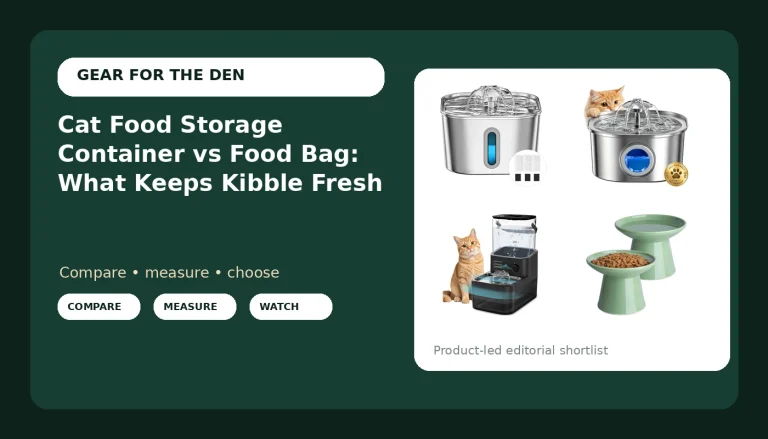
Best Overall: Automatic Cat Feeder Wet Food, Semiconductor Cooling & Heating 3 Days Fresh
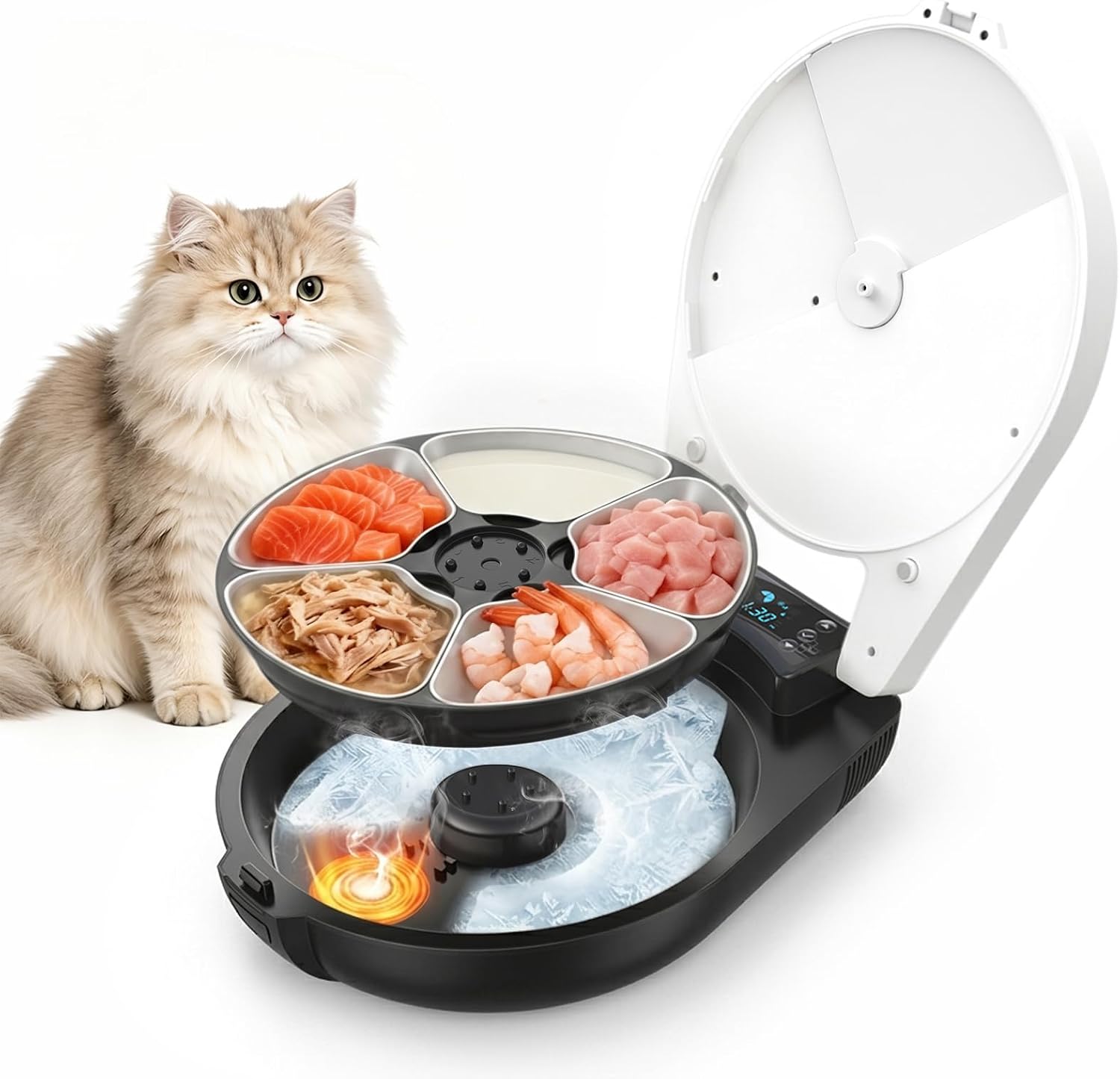
This is the closest thing to a refrigerator for a single serving of wet food, and it is the reason this article exists. The unit uses semiconductor cooling to hold an opened portion cold, and the same hardware can heat instead, which matters more than people expect. Chilled food loses most of its aroma, and aroma is what gets a cat to eat. A lot of cats turn their nose up at food straight from the fridge not because it tastes bad but because they cannot smell it.
The claim on the box is three days of freshness, and that lines up with how wet food storage actually works: once a can is open, the clock starts, and the only variable you control is temperature. A feeder like this lets you split one can across several small meals instead of scraping half of it into the trash because the cat walked away at minute twelve. If you have ever stood at the counter dividing a can into two halves and hoping, this is the product that ends that routine.
Portion size is where machines in this class live or die. A feeder that cannot deliver a small enough portion is an expensive way to waste food, and one that cannot hold enough is just a snack dispenser. The tray here is built around single-serve wet portions, the size a cat actually eats in one sitting, and the food stays covered between meals instead of drying into a crust at the edges. That crust is the reason so many cats reject leftovers, and it has nothing to do with the food being cold.
Cleaning is the part the listing photos skip. Anything that touches wet food needs a tray you can lift out and wash daily, because a cold, sealed, unwashed tray is a science experiment with a lid on it. Check that before you buy any automatic feeder, including this one. A machine you dread cleaning is a machine that ends up in a cabinet by month two.
This is the most expensive item in this guide by a wide margin (Check current Amazon price), and it is also the only one that changes how often you handle food. If your cat eats wet food twice a day, this is the piece of cat food storage gear that pays you back in time rather than in counter space. It also means you can leave the house for a long afternoon without rushing back for a feeding, which is worth more than the spec sheet suggests.
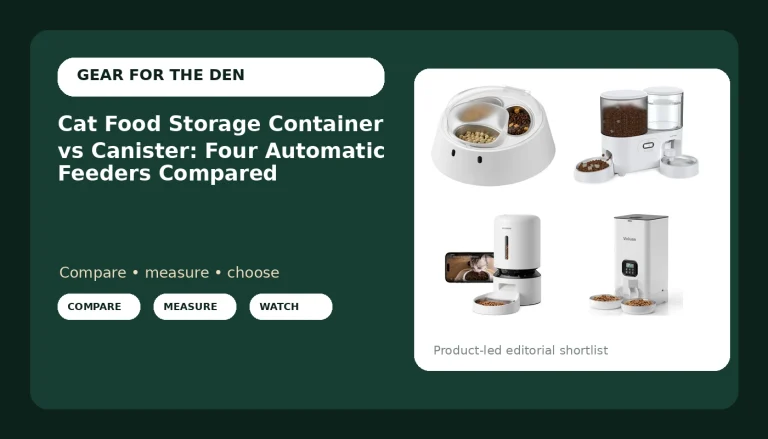
Best Value: Lusifaco Shallow Wide Elevated Cat Bowls Whisker Fatigue (White, Set of 2)
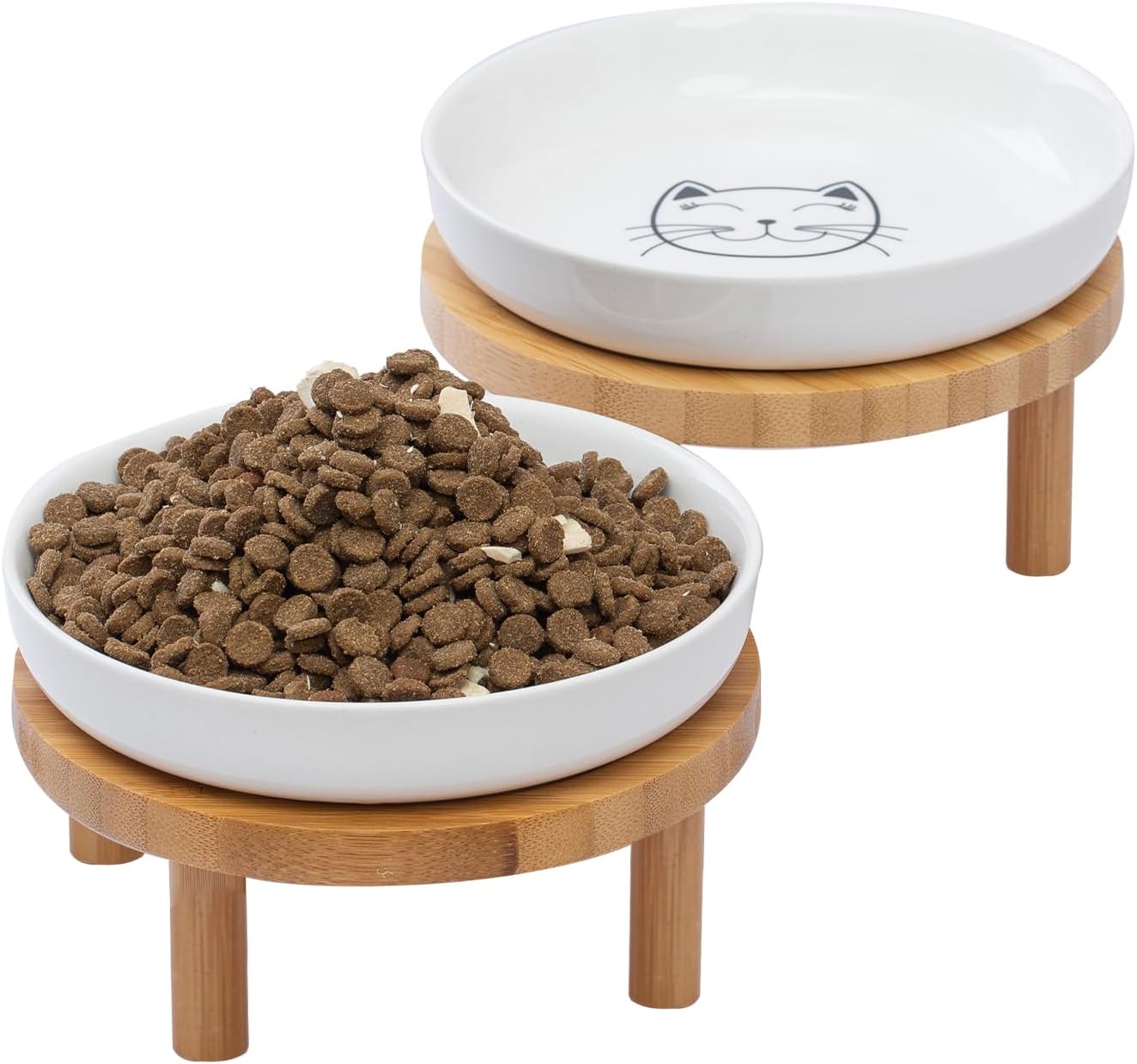
Whisker fatigue sounds like an invented problem until you watch a cat eat. Whiskers are sensitive enough to register airflow, so every time they drag along the inside of a deep bowl the cat gets a signal it did not ask for. What you see at home looks like picky eating: a few bites, a step back, a few more bites, and eventually food scattered three feet from the bowl. The cat is not being difficult. It is being poked in the face for twenty minutes.
Bowl width and whisker clearance are the two numbers that matter and the two that listings hide. A shallow, wide bowl lets a cat eat with its face level instead of buried, and the elevation angle finishes the job: raising the bowl a few inches takes pressure off the neck and shoulders, which is worth thinking about long before a cat is old. Senior cats are just the ones who complain first.
This is a set of two, which means one can be in the sink while the other is in use, and the white finish makes it obvious when something needs washing. There is no single ideal cat food storage setup for every household, but there is a correct cat food storage order of operations: keep wet food cold, keep water moving, and keep the bowl itself out of the cat's way. Most people get the third one wrong for years.
At Check current Amazon price for the pair, this is the cheapest change in this guide and, for a lot of cats, the one that shows up at dinner on the first night. It will not store anything. It will make the eating part easier, which is the part that happens twice a day.
How I tested
Every product here gets judged on the same short list, because the marketing copy never answers the questions that matter at home.
- Does the food or water stay in the state it started in? Cold stays cold, moving water keeps moving, dry food stays dry.
- Can I lift out the part that touches food and wash it without tools?
- Does it make noise at two in the morning? A fountain that gurgles like a toilet is a fountain that gets unplugged.
- Does it hold enough for the cats in the house without taking over the counter?
- What happens when the power blinks, or when a filter runs two weeks past due?
I also pay attention to the boring specs. Whether a bowl's width genuinely clears a cat's whiskers, or whether the rim is narrow enough to press on them with every bite. Whether a feeder's portion size is small enough for a cat that eats ten small meals a day rather than two big ones. Whether an access-controlled feeder's microchip range reaches a tag from a normal approach angle instead of demanding that the cat press its nose against the unit. Those details decide whether a product gets used or gets stored in a closet, and they are the details no listing photograph shows you.
Analysis and test results
Temperature is the whole ballgame with wet food. Above refrigeration range, an opened can is a bacterial playground, and no amount of it still smells fine changes the math. That is why the cooling feeder in this guide sits in a different class from a bowl with a lid on it: a lid slows drying, it does not slow spoilage. Those are two different problems and only one of them is cosmetic.
Water is a separate problem entirely. Cats descend from desert hunters and drink less than they should, which is why moving water gets their attention in a way a still bowl never does. Water capacity decides how often you refill. Pump noise and filter type decide whether you keep the thing plugged in past the first week. A stainless steel drinking surface also stays cleaner than plastic, which scratches and holds biofilm in a way that is genuinely hard to scrub out, no matter what brush you buy.
Portion size and access control matter most in a multi-cat house. If one cat is on a diet and another grazes all day, an open bowl becomes a buffet for the wrong cat, and you spend the rest of the year guessing who ate what. That is where RFID access control earns its price: it gives each cat its own station and sends the thief away hungry. Microchip range is the number to check, because a feeder that only reads a tag from an inch away is a feeder your cat will quit on inside a week.
Elevation angle and bowl width are the quiet specs. Nobody buys a bowl for ergonomics, and then a fifteen-year-old cat starts eating sideways because reaching the floor hurts. A shallow bowl set a few inches up fixes a problem you did not know you had, and it costs less than a vet visit to ask about it.
Cat food storage reference table
Here is the short version, with the four products sorted by what they are actually for. Prices move constantly, so trust the listing rather than a blog post written last month.
| Product | Best for | What matters | Price |
|---|---|---|---|
Automatic Cat Feeder Wet Food, Semiconductor Cooling & Heating 3 Days Fresh | Wet food on a schedule | Cooling and heating, three-day freshness, single-serve portions | Check current Amazon price |
Lusifaco Shallow Wide Elevated Cat Bowls Whisker Fatigue (White, Set of 2) | Whisker-friendly eating | Shallow width, elevated angle, set of two | Check current Amazon price |
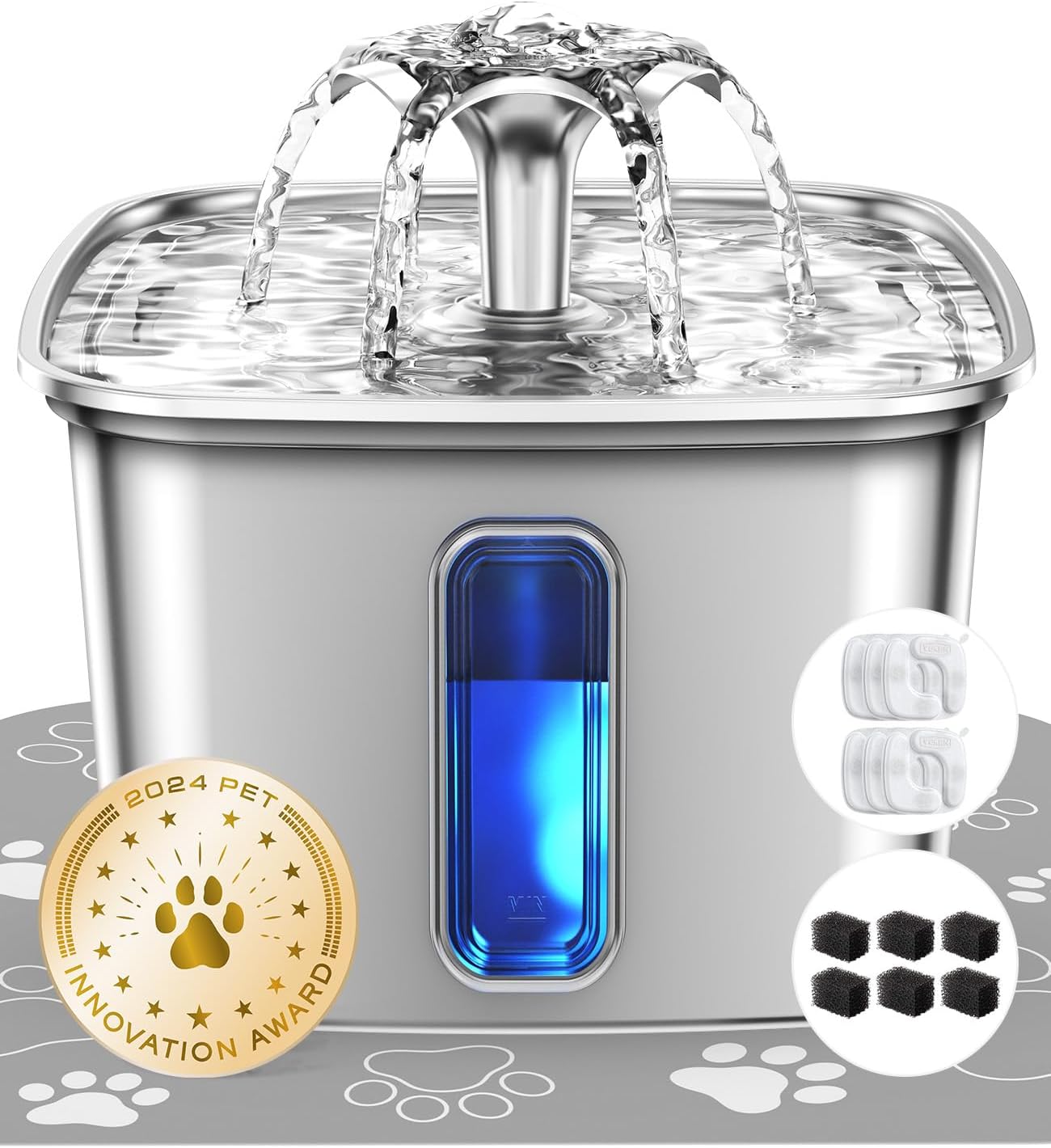 Veken Innovation Award Winner Stainless Steel Cat Water Fountain, 108oz, C1 | Moving water | 108oz capacity, stainless steel surface, filter upkeep | Check current Amazon price |
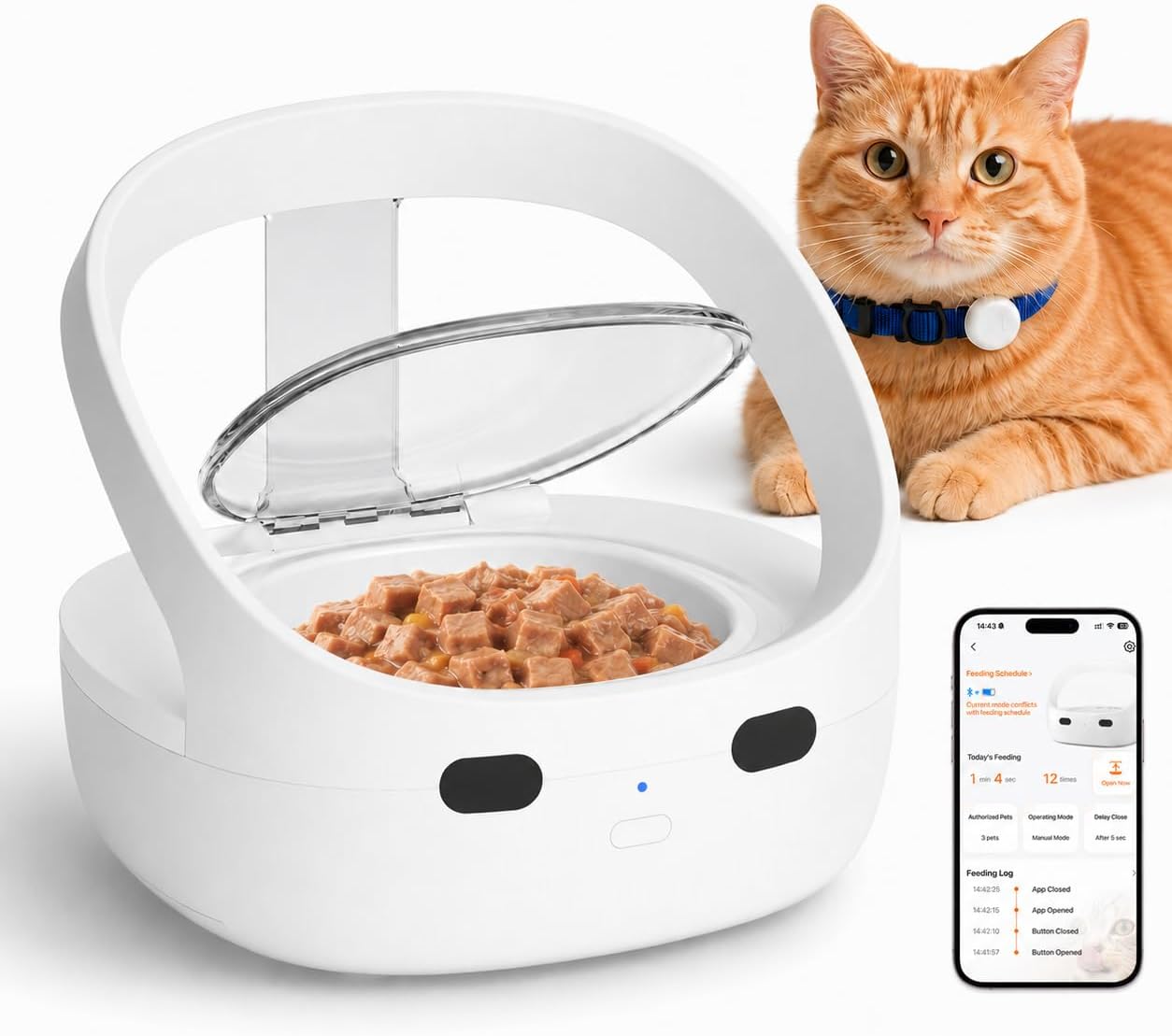 RFID Cat Feeder for Multiple Cats, Stops Food Stealing, Wet & Dry Food | Multi-cat households | RFID access, wet and dry food, adjustable portions | Check current Amazon price |
The order matters more than the brand. Cold first, moving water second, whisker clearance third, and access control only if you have a thief in the house.
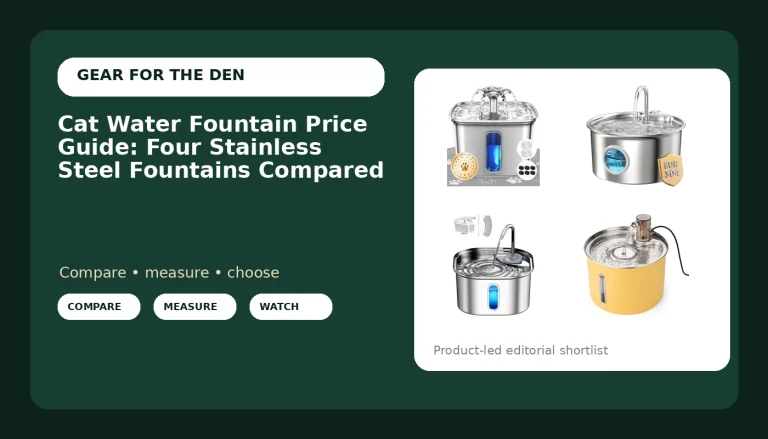
Veken Innovation Award Winner Stainless Steel Cat Water Fountain, 108oz, C1
Water capacity is the reason this fountain is on the list. 108 ounces is a genuinely large reservoir, which for one or two cats means refilling every few days instead of twice a day, and fewer refills means more water in the cat. Stainless steel at the drinking surface is the other half of the argument: plastic bowls and plastic fountain tops scratch, and scratched plastic holds onto the biofilm that makes water taste stale.
Two things decide whether you keep it running. Pump noise is the first, because a fountain that hums through the night ends up unplugged, and an unplugged fountain is just an expensive bowl. Filter type is the second. Filters are a subscription, and the cheaper ones need changing more often than the listing admits, so price the replacements before you commit to the machine rather than after.
Cleaning is not optional. Every fountain, this one included, needs the pump pulled apart and the impeller wiped every couple of weeks, or the flow drops to a trickle and the cat goes back to drinking out of the sink.
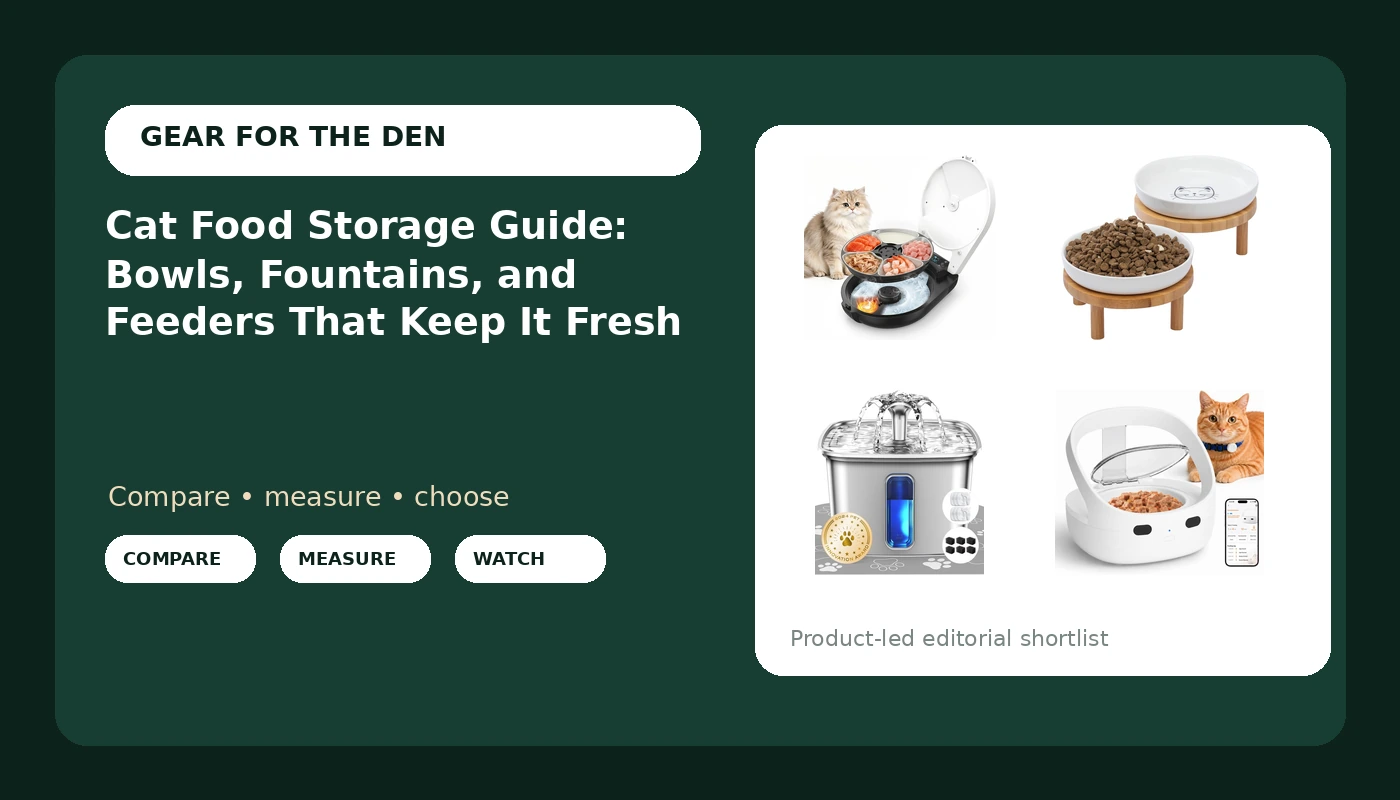
RFID Cat Feeder for Multiple Cats, Stops Food Stealing, Wet & Dry Food
Food stealing is the problem nobody warns you about until you have two cats and one of them is a grazer. A single bowl in a multi-cat house means the fastest eater sets the schedule, and the slow cat gets whatever is left. This feeder solves it by giving each cat its own station and opening only for the cat that belongs there.
The spec to compare is microchip range. A short read distance forces the cat to stand in one exact spot, which most cats tolerate for about a week before they start eating somewhere else. Wet and dry food both work here, which matters if you split feeding between a can in the morning and kibble at night, and portion size should be adjustable enough that a dieting cat is not sharing a portion with a cat twice its weight.
It is not cheap and it is not necessary in a one-cat house. In a two or three cat house with a thief, it is the difference between knowing what each cat ate and guessing every single day.
Should you buy the Automatic Cat Feeder Wet Food?
Yes, if your cat eats wet food on any kind of schedule and you are tired of throwing away half a can. The cooling and heating cycle is the whole feature, and the three-day freshness claim is the reason to pay for it instead of buying another set of bowls. Split a can into small servings, let the machine hold them, and stop planning your day around a cat's lunch.
It is expensive, it takes up counter space, and it needs a tray washed daily. If your cat eats dry food only, skip it. If your cat eats wet food twice a day and you work outside the house, this is the one product in the category that gives you your evenings back.
Should you buy the Lusifaco Shallow Wide Elevated Cat Bowls?
Yes, and it is the easiest yes in this guide. It costs less than a bag of good kibble (Check current Amazon price), it comes as a pair, and it addresses the two things most bowls get wrong: width and height. A cat that has been eating off the floor from a deep cereal bowl is not being difficult. It is being uncomfortable, and it has been telling you that for months.
The catch is that a wide, shallow bowl is not a storage container. It will not keep wet food fresh for three days and it will not stop a second cat from finishing the first cat's dinner. It is a better place to eat, not a better place to keep. Buy it for the eating, and buy something else for the storage.