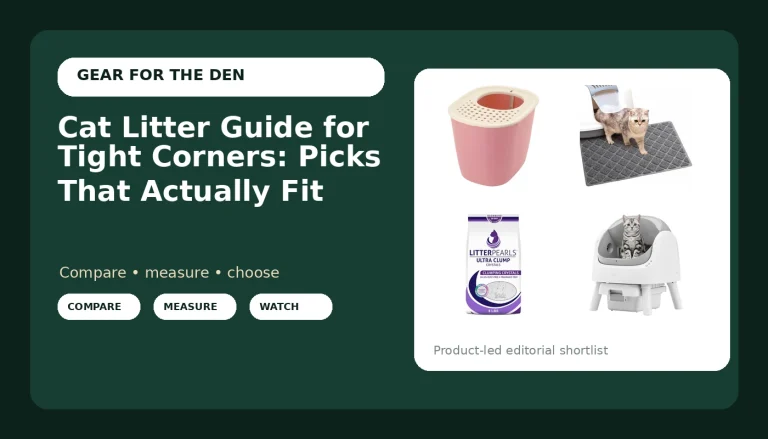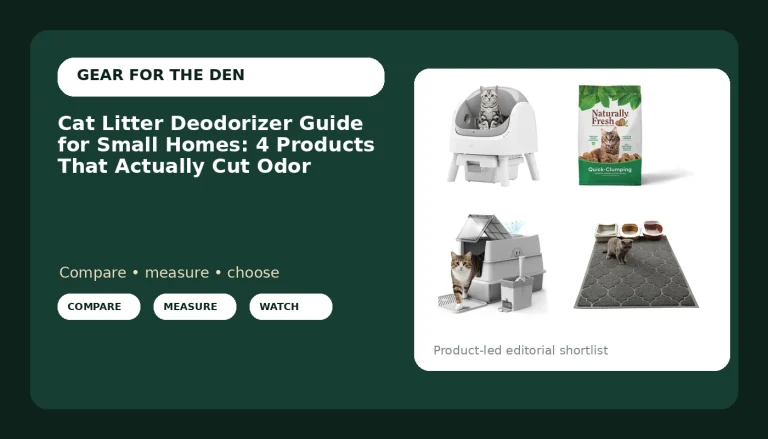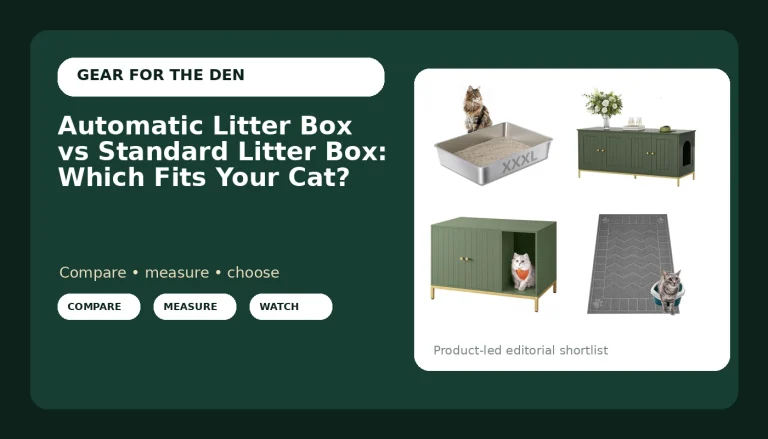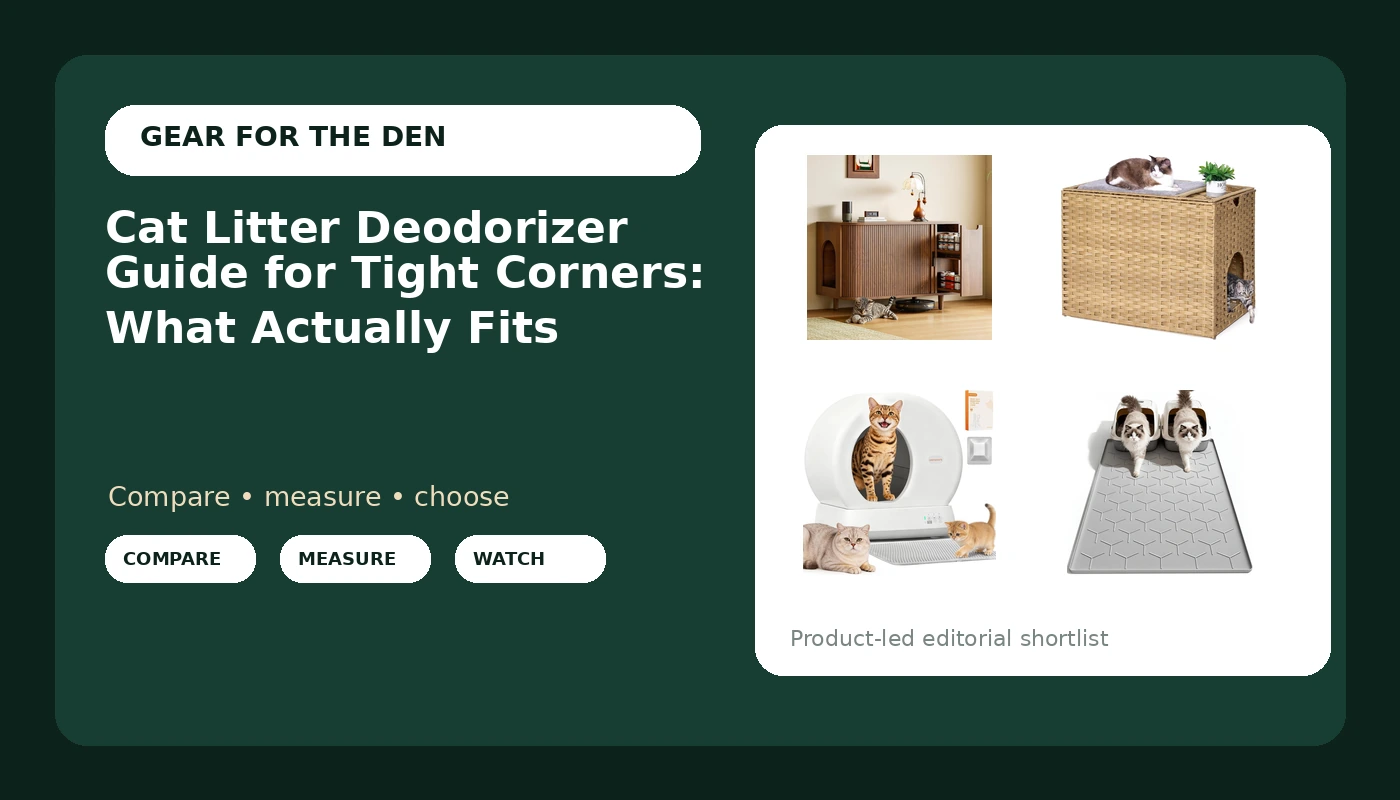
I did not set out to write a cat litter deodorizer guide for tight corners. I set out to stop smelling a litter box from my own couch. The corner between my den wall and the bookshelf is about as awkward as a corner gets: deep enough for a pan, too shallow for a swinging door, and close enough to the sofa that every scoop throws dust into the room. Scented litter did nothing. A plug-in did less. What finally worked was fixing the setup itself: box size, entry height, litter depth, and a mat that catches what the cat kicks out.
Four products do the work on this page. Two enclosures hide the pan and turn dead corner space into furniture. One silicone mat handles the exit path, which is where most odor problems actually start. One self-cleaning box takes the scooping out of your hands entirely. Every pick is judged on the same three questions: does it fit a corner, does it contain odor, and does it hold up to a real cat with real habits. If you have ever searched for a cat litter deodorizer guide for tight corner spaces at midnight with a guest asleep on the couch, you already know why this matters.
Best Overall: IRONCK Cat Litter Box Enclosure with Sliding Tambour Door, Wooden Litter Box Enclosure Furniture with 2-Layer Drawer, Hidden Cat House, Side End Table for Living Room, Brown
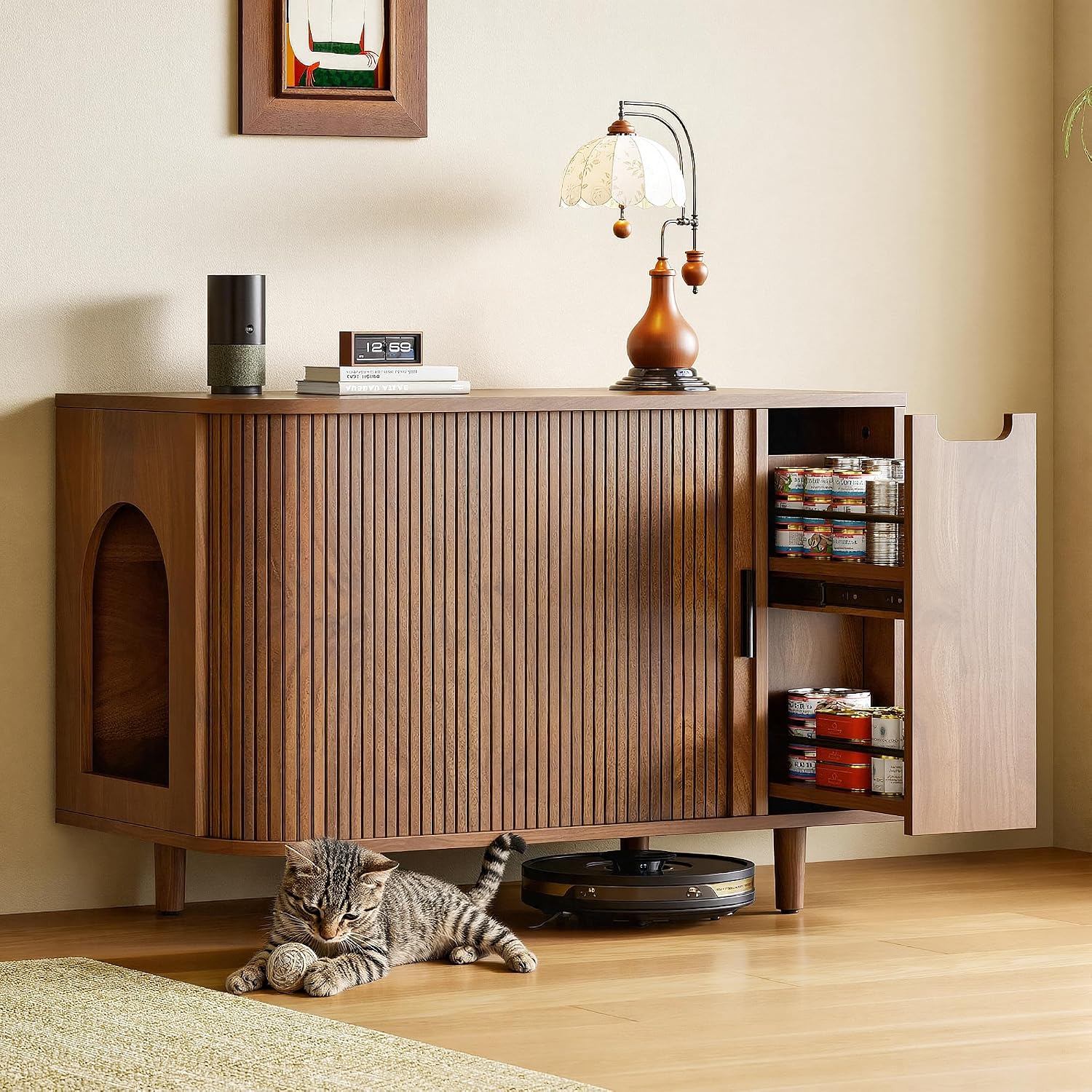
The reason this cabinet wins a tight corner is the door. A sliding tambour door rolls sideways and tucks into the body of the unit, so it needs almost no clearance in front of the box. In a corner, that clearance is the thing you do not have. You roll it open, scoop, roll it shut, and the box reads as a small end table instead of a litter box.
The two-layer drawer is the other half of the argument. Scoop, bags, and a spare liner live inside the cabinet instead of on the floor beside it, which matters when the only floor beside the box is a walkway. The brown finish sits next to a wood bookshelf without announcing itself as pet gear, and the flat top holds a lamp or a stack of paperbacks.
What to check before you buy: box size and litter depth. An enclosure only helps if the pan inside is big enough for your cat to turn around, and if you can still pour litter to a depth your cat likes without the pan scraping the cabinet ceiling. Entry height matters too, since this cabinet sits at furniture height, and a cat with arthritis may need a ramp or a lower setup. If you want the reasoning behind that, my notes on how litter depth changes scooping cover it.
Litter choice does the rest. Clumping speed and odor control are the two variables you control inside a closed cabinet, and a fast-clumping clay litter does more for a tight corner than a scented litter that adds perfume to a smell.
Best Value: Large Cat Litter Box Enclosure, Hidden Litter Box Furniture with Litter Mat
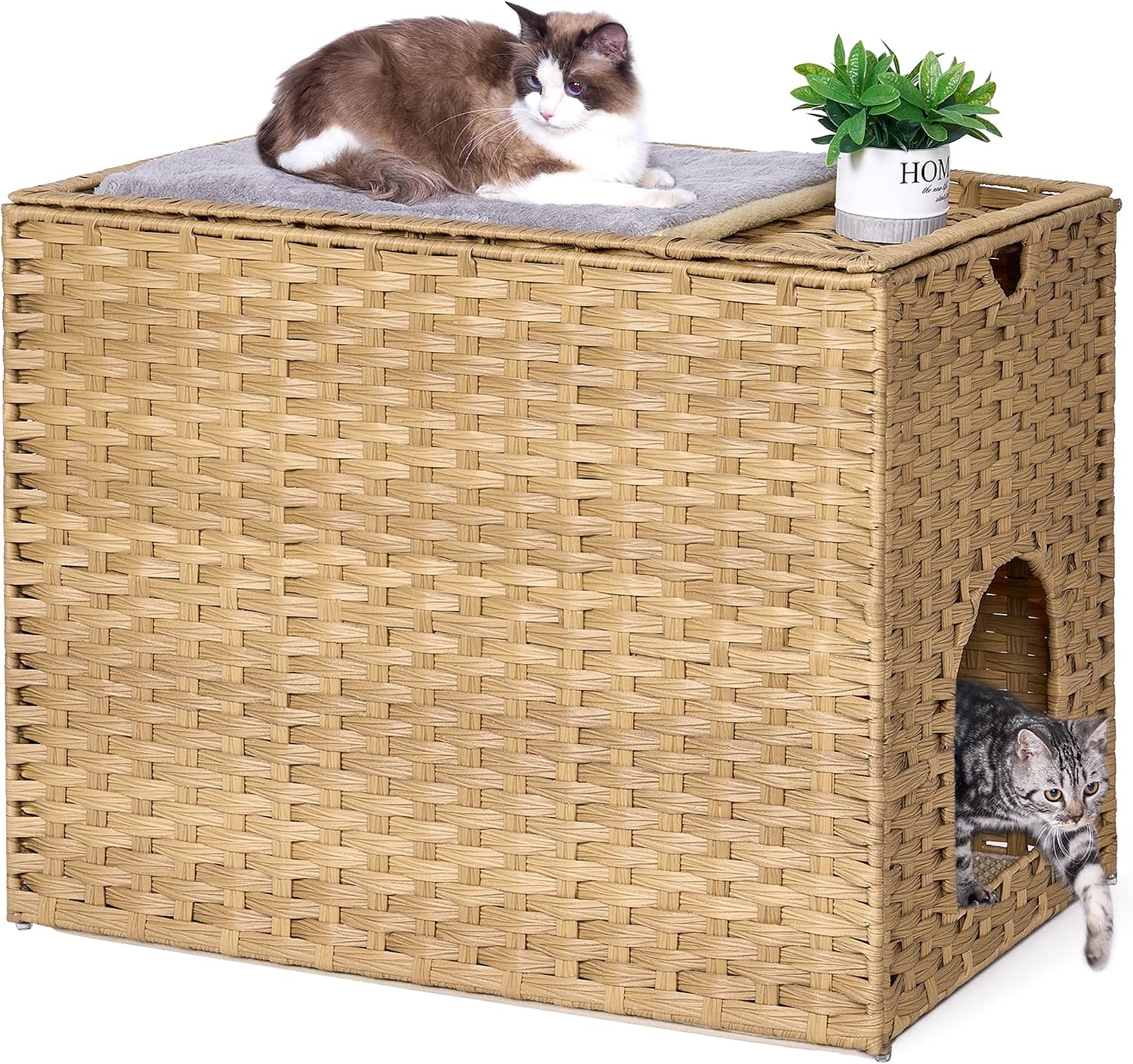
This is the enclosure I point people to when the corner is tight and the budget is tighter. You get the two things you actually need in one purchase: a cabinet that hides the pan and a mat that catches what the cat tracks out. Buying the mat separately is easy to forget, and a bare floor in front of a hidden box is where odor control quietly fails, because scattered litter holds urine smell longer than most people expect.
The trade-off is door style and drawer space. There is no tambour here, so think about how the door opens relative to your wall and your walkway before you commit. You also get less storage than the IRONCK, so if you like keeping a scoop, a litter bag, and a dustpan in one place, the extra drawer earns its keep.
Where it wins is simplicity. A smaller footprint, straightforward assembly, and an included mat mean one box, one delivery, one setup. For a hallway corner, a bathroom nook, or a rental where you cannot drill into anything, this is the sensible pick. Pair it with a fast-clumping litter, scoop twice a day, and the odor math works out.
How I tested
Every setup here is judged on the same checklist, and the checklist is about the corner as much as it is about the box.
First, box size against the corner. I want a pan big enough that the cat can turn around without stepping in what it just did, and a cabinet small enough that the corner still works as a corner. That is a two measurement job: the pan, then the space.
Second, entry height. A hidden box raises the opening. A young cat does not care. A senior cat does, and so does a cat back from the vet. If the entry sits close to stair height, budget for a ramp.
Third, litter depth. Too shallow and urine reaches the floor of the pan. Too deep and cats dig litter over the edge. The depth you want depends on the litter, because a fast-clumping litter lets you run a thinner bed.
Fourth, airflow and odor control. An enclosure traps smell as well as sight. A closed cabinet or a covered pan needs a scoop schedule, not a scent. I judge odor by nose, on the second day, which is when most setups give themselves away.
Fifth, mat texture. A good mat is the difference between litter staying at the box and litter traveling to your bed. Silicone grips better than flat fabric, and it rinses clean instead of holding smell.
Analysis and test results
Here is what four setups actually tell you when you put them side by side.
Enclosures trade airflow for containment. That is the deal you make when you hide a box in a corner. Containment wins on odor control in a small room, because smell inside a closed cabinet has to travel through a door gap instead of drifting across your sofa. It loses on airflow, which is why litter depth and scoop frequency matter more inside a cabinet than beside an open pan. Run a thinner bed of fast-clumping litter, scoop twice a day, and the trade pays off.
Door geometry decides whether a corner works. A sliding tambour door needs almost no space in front of the box. A hinged door needs a full swing. In a tight corner, that single difference decides whether you can open the box without dragging it into the room. If your corner is angled rather than square, the same logic applies, which is why I wrote this as a cat litter deodorizer guide for tight angled corners as much as a square one.
Entry height is the spec people forget. A cabinet raises the opening, and a raised opening is fine for a young cat and a real obstacle for an older one. If your cat is a senior, plan for a ramp or a step, and keep the pan shallow enough that the cat does not have to climb.
Mats are the cheapest odor fix. Mat texture matters more than size, but size matters in front of a hidden box, because cats exit a cabinet with speed. Silicone beats fabric because it rinses clean instead of holding smell in the weave.
Self-cleaning units move the work, not the responsibility. Sensor range and waste drawer capacity decide whether the machine helps or becomes one more thing to clean. A self-cleaning box running a slow-clumping litter is worse than a plain pan.
And there is no single ideal cat litter deodorizer guide for tight corners, because the right answer depends on your clearance, your cat's age, and who is home at noon. The honest answer in any cat litter deodorizer guide for tight corners is the same: fix the setup, then stop buying scent.
Cat litter deodorizer guide for tight corners: the reference table
This table is the short version of everything above. It is organized by setup, not by ranking, because the right pick depends on your corner and your cat.
| Setup | What it is | Where it fits | What to check |
|---|---|---|---|
IRONCK Cat Litter Box Enclosure with Sliding Tambour Door | Wood enclosure with a rolling tambour door and a two-layer drawer | The tightest true corner, because the door needs no swing clearance | Box size, litter depth, and whether your cat handles furniture-height entry |
Large Cat Litter Box Enclosure, Hidden Litter Box Furniture with Litter Mat | Enclosure with a mat included | Hallway corners, bathroom nooks, rentals | How the door opens against the wall, and whether the included mat covers your exit path |
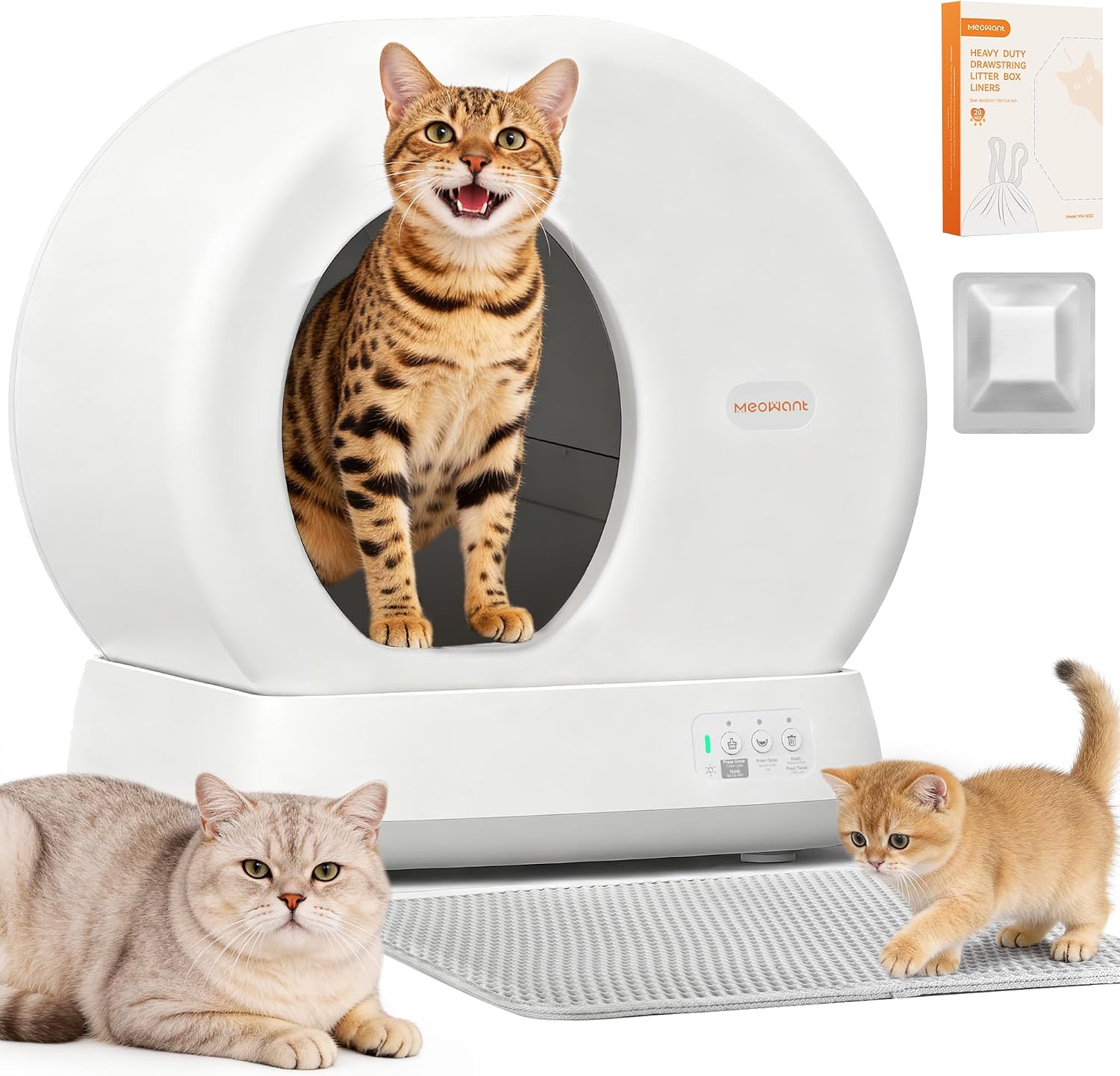 Meowant Self Cleaning Cat Litter Box Safety Sensors, APP Control, Large Space | Self-cleaning box with app control and safety sensors | Homes where nobody is around to scoop at midday | Sensor range, the waste drawer routine, and the litter it accepts |
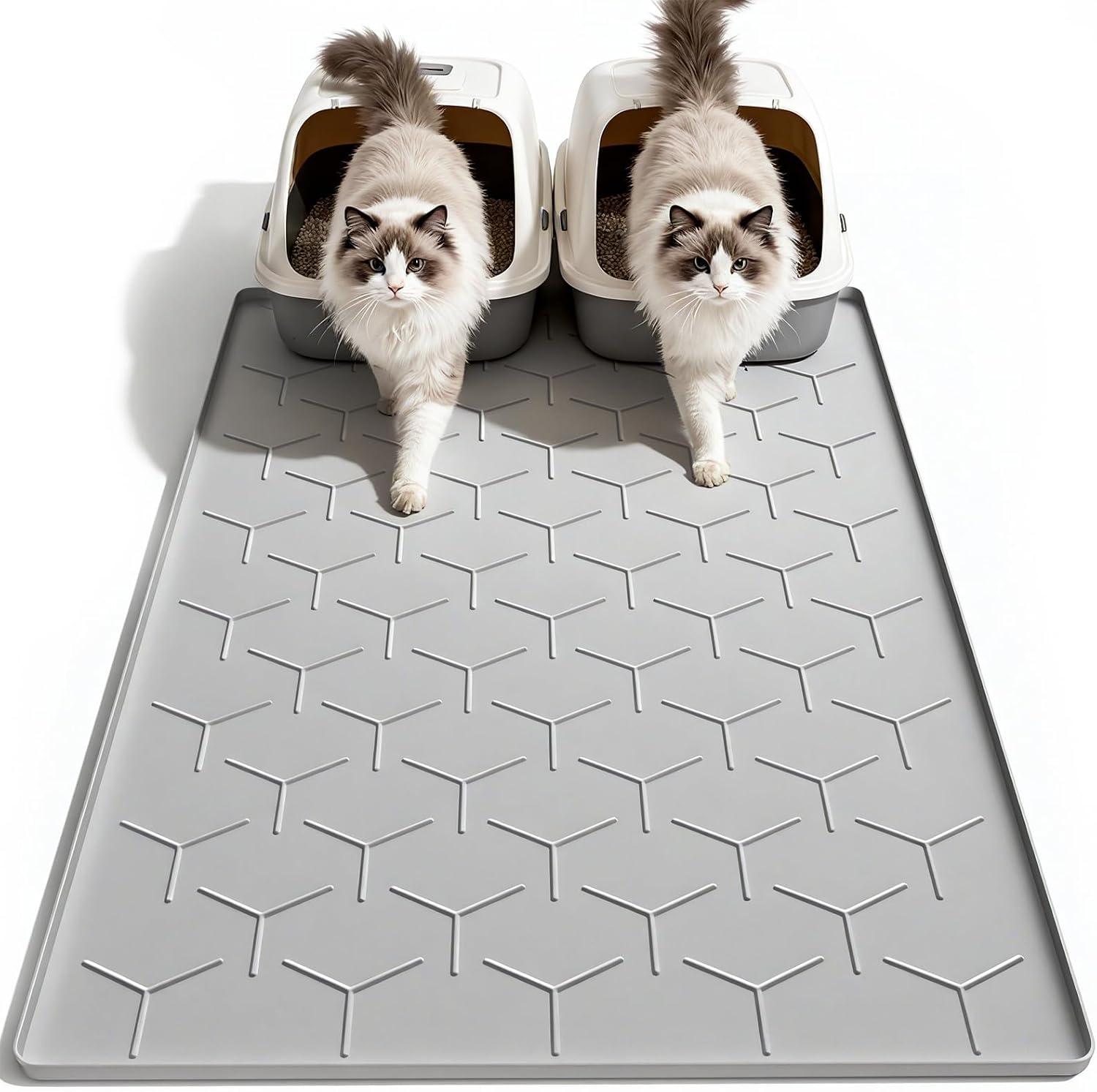 Garoopion Silicone Cat Litter Mat Large 40" X 28", Easy to Clean, Gray | Large silicone tracking mat | In front of any of the boxes above | Mat texture, and how often you rinse it |
Read the table as a fit chart, not a ranking. The two enclosures solve the same problem with different door geometry and different storage. The mat and the self-cleaning box solve the two failure points an enclosure cannot: the exit path and the scoop schedule.
Meowant Self Cleaning Cat Litter Box Safety Sensors, APP Control, Large Space
If nobody is home at noon, the scoop schedule is the first thing to slip, and a corner box with a missed scoop is a box you can smell from the doorway. This one automates that. App control lets you see what is happening while you are at work, and the safety sensors matter in a small home with a curious cat or a dog that investigates anything new. The large interior space helps with box size, the one spec people underestimate when they shrink a box to fit a corner.
The honest caveats: a self-cleaning box wants a litter that clumps fast and hard, because soft clumps break apart in the mechanism. Clumping speed is not a marketing detail here, it is a maintenance schedule. Check the waste drawer routine too, since the drawer is what you empty instead of a pan, and the interval depends on your cat. Keep entry height in mind as well: a tall unit in a tight corner still needs clearance in front of it.
Garoopion Silicone Cat Litter Mat Large 40" X 28", Easy to Clean, Gray
Most people buy a deodorizer when the real problem is tracking. Litter that leaves the box carries urine and ammonia with it, and it lands on carpet, where it keeps working on your nose for days. A mat is the cheapest fix on this page and the one I would buy first.
This one is silicone, which matters for mat texture. Silicone grips litter instead of letting it roll, and it rinses under a tap instead of holding smell in fabric. The 40 by 28 inch size covers the exit path in front of a cabinet box, which is where a cat launches out of a hidden pan.
The caveat is that a mat is not a deodorizer, however it is marketed. It reduces what leaves the box. It does not neutralize what is inside it. Pair it with a fast-clumping litter, scoop daily, and the corner stops announcing itself. Lay it in front of whichever enclosure you pick, shake it out, then rinse it.
Should you buy the IRONCK Cat Litter Box Enclosure with Sliding Tambour Door, Wooden Litter Box Enclosure Furniture with 2-Layer Drawer, Hidden Cat House, Side End Table for Living Room, Brown?
Yes, if your corner is a real corner and you want the box to read as furniture. The tambour door is the reason: it solves the clearance problem that makes most enclosures useless in a tight corner, and the drawer keeps the scoop and the bags out of sight. It is also the pick that looks the most deliberate in a living room, which matters if the box sits anywhere near where you sit.
Two things to settle first. Measure the corner and the pan, because box size is the one number that cannot be adjusted after delivery. Then think about your cat's age, because a furniture-height entry is fine for some cats and a daily struggle for others.
If your corner leaves no room for a swing and your cat is a senior, look at the value pick or a lower setup instead. Otherwise, this is the one I would build a den corner around.
Should you buy the Large Cat Litter Box Enclosure, Hidden Litter Box Furniture with Litter Mat?
Yes, if you want the enclosure and the mat handled in one purchase and you are working with a smaller budget than the IRONCK. It does the two jobs that matter most in a small room: it hides the pan, and it catches the litter that would otherwise end up in your carpet.
Be honest about the door. If your corner leaves no room for a swing, this cabinet will frustrate you every morning. And if you keep a lot of supplies at the box, the smaller storage will show up as clutter within a week.
For a hallway nook, a bathroom, or a first apartment, it is the sensible buy. Add a fast-clumping litter and a daily scoop, and a tight corner stops being a smell you notice.