Cat Litter Guide for Tight Corners: Picks That Actually Fit
A cat litter guide for tight corners: which box, litter, and mat fit a narrow nook without scattering litter across the floor.
A corner nook looks like the obvious place for a litter box until you actually put one there. Then you find out that a hooded box with a swinging flap needs clearance a corner does not have, that a long mat curls up the baseboard, and that a shallow pan leaves a cat aiming over the rim. This cat litter guide for tight corners starts with the space rather than the product, because box size and entry height decide more than any feature on a label. Get those two wrong and the best-reviewed box on the shelf still ends up shoved into the hallway.
The four pieces below are what I would put in a narrow nook: an enclosed top entry box, a trapping mat that stays flat, an unscented crystal litter, and an automatic box for anyone who would rather not scoop. Most advice on a cat litter guide for tight corner spaces skips the mat, which is a mistake, because a corner is exactly where tracked litter piles up and where you smell the box first. If the walls are crowded or the corner is angled, the same logic holds. Only the clearances get tighter.
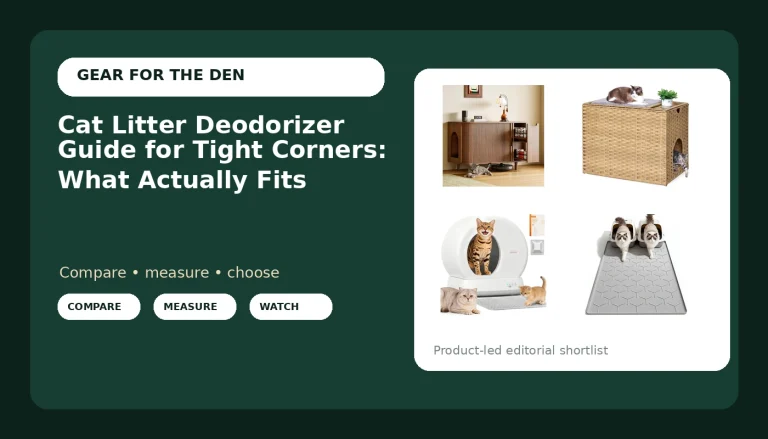
Best Overall: Richell PAW TRAX Top Entry Cat Litter Box, Hooded Cat Litter Pan, Enclosed Litter Box, Salmon Pink
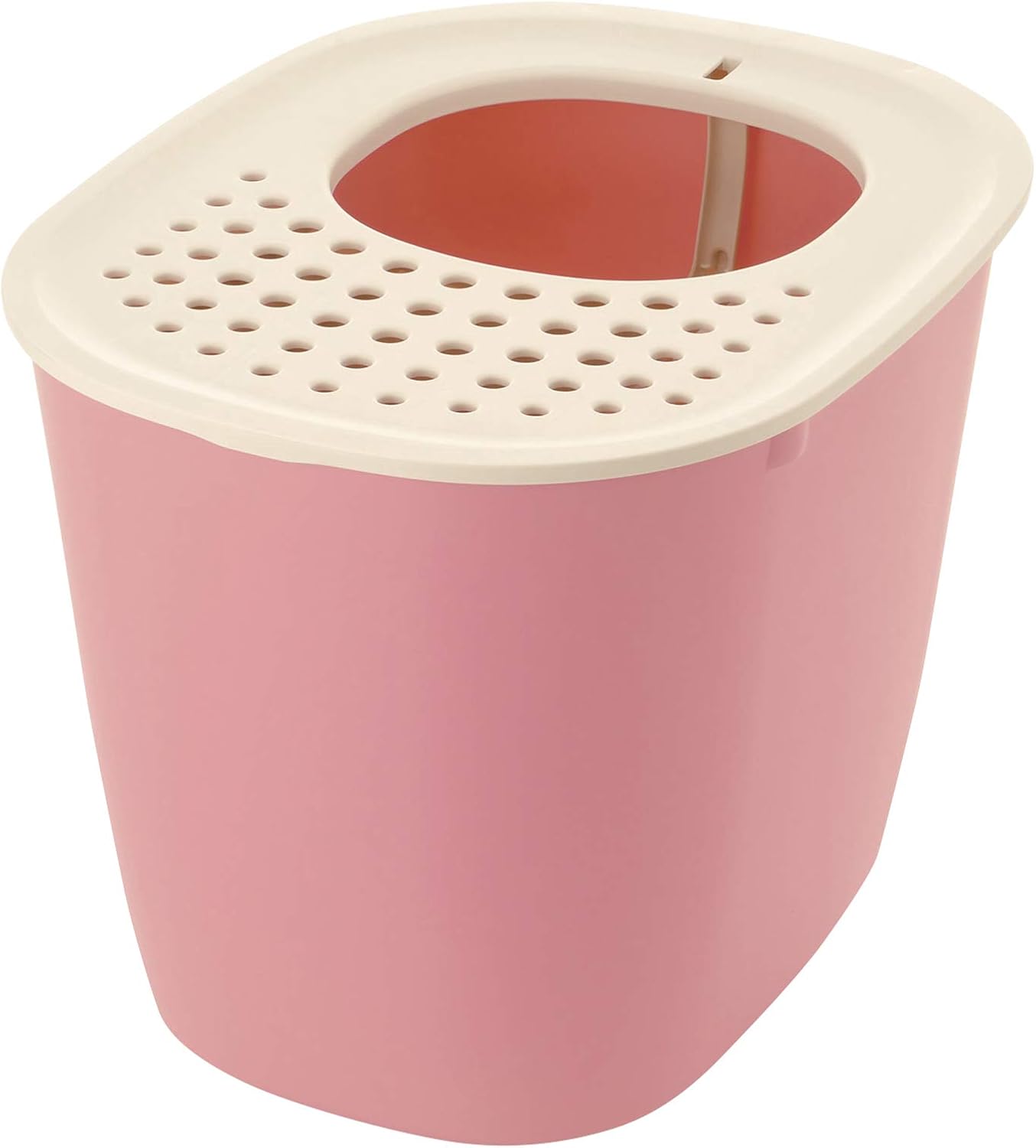
A corner is a bad place for a litter box for one reason: doors. A hooded box with a swinging flap needs clearance in front of it, and a corner rarely gives you that. The Richell PAW TRAX removes the door from the equation. The cat enters from the top, drops into the pan, and the enclosed walls do the containing. Nothing swings, nothing catches on the baseboard, and the box can sit flush against two walls.
Top entry also does quiet work on tracking. Litter that would be kicked out of an open pan falls back through the opening instead of landing on the floor, and the hood holds odor in a way an open pan cannot. In a small room, that difference is the whole ballgame.
The trade-off is entry height. A top entry box asks the cat to jump or climb, and the enclosed walls mean a kitten, a senior cat, or a cat with sore joints may simply refuse it. If your cat is older, put a step beside the box or choose a low-entry pan instead. This is the one product here that depends entirely on the cat rather than the room.
Litter depth matters too. Crystal and clumping litters both need enough depth to form a solid clump, but overfilling an enclosed box means more litter to track and more weight to haul out on cleaning day. Fill it, level it, and top it up rather than dumping in a whole bag at once.
The salmon pink finish is not a neutral, so if the corner is visible from the living room, know that going in. Otherwise this is the box I would put in a tight corner first: box size stays compact, the walls contain the mess, and there is no door to fight with.
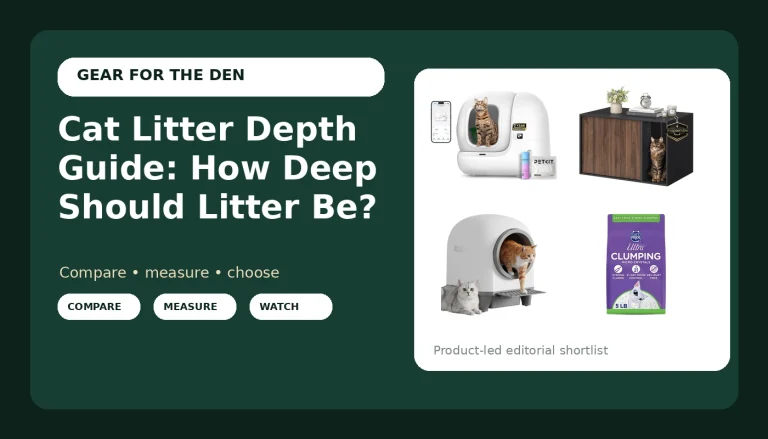
Best Value: Cat Litter Box Mat,23 x 14 In,Trapping Mat Premium Durable PVC Pad,Grey
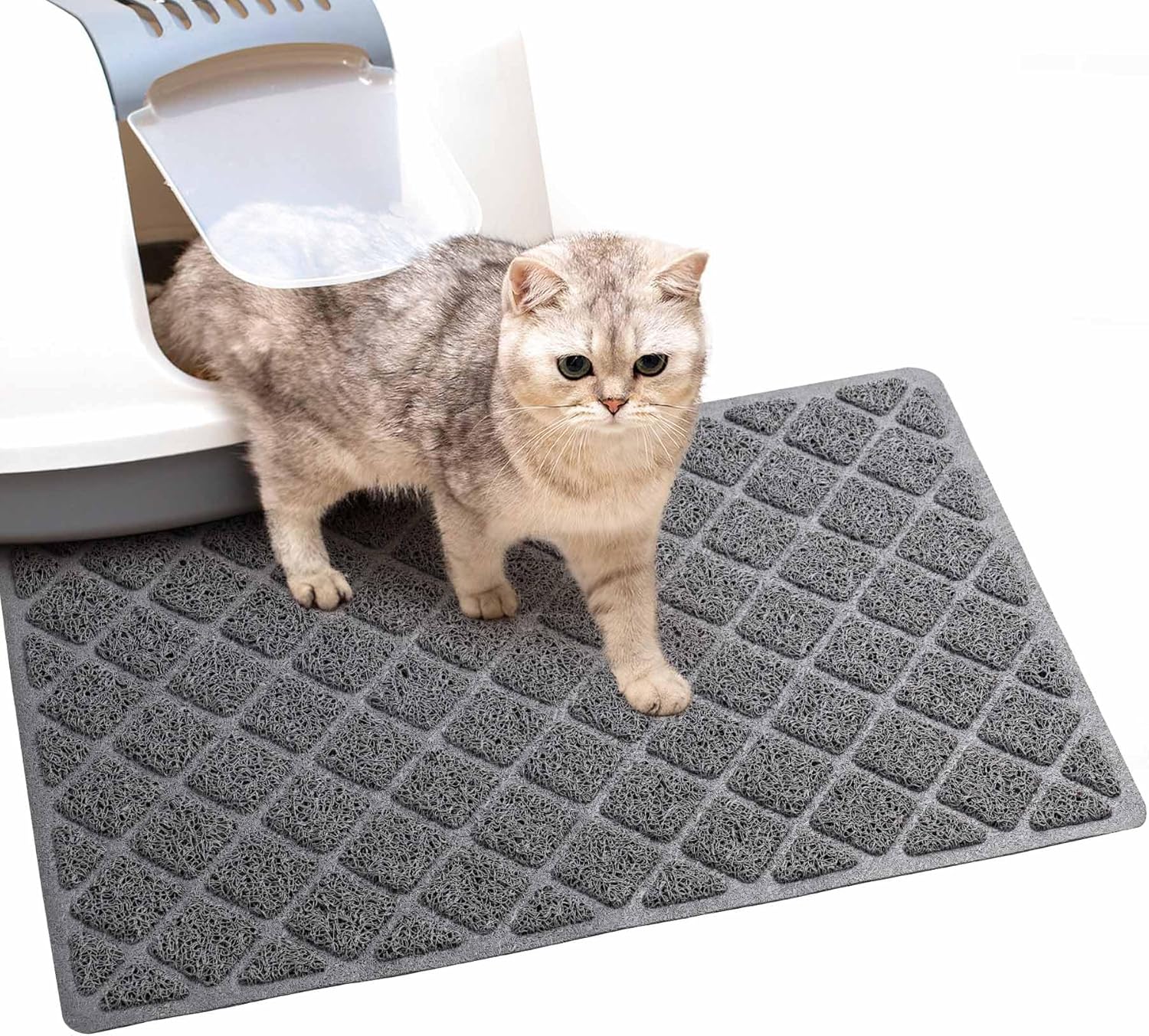
Every corner setup needs a mat, and this is the one I would buy without overthinking it. A trapping mat is not glamorous. It is the thing that stops a tight corner from turning into a litter beach, and it costs less than a bag of litter.
Mat texture is the entire point. A flat PVC pad with a textured surface gives tracked granules somewhere to fall out of the cat's paws, and the 23 x 14 inch size covers an exit path without running halfway across the room. Grey hides the crumbs between shakes, which matters more than it sounds like it should when the box sits in a corner you walk past every day.
The pad lies flat, and that is the failure point for fabric mats. Soft mats bunch under a door, curl at the baseboard, and hold odor in the fibers over time. PVC wipes clean and rinses in a sink. Shake it out over the trash every few days, rinse it monthly, and it will outlast several boxes of litter.
Two things to get right. First, the mat goes on the exit path, not under the box, so it catches litter on the way out rather than holding the box off the floor. Second, a mat only helps if the litter is not being flung, so pair it with a box that has walls. An ideal cat litter guide for tight corners would spend its budget here before anything else.
How I tested
Every corner setup gets the same sequence, and it is the sequence I used to sort these four products.
Start with box size and clearance. Measure the wall run, then subtract the baseboard and anything that opens into that space. A box that technically fits but blocks a closet door is not a fit.
Then entry height. Watch the cat use it. A box the cat approaches and then walks away from is the wrong box, no matter how neatly it tucks into the corner.
Litter depth and clumping speed come next. Fill to the level the litter maker recommends, then check a clump a few hours later. A clump that breaks apart when you scoop means the litter is too shallow or the litter itself is weak.
Odor control is the one that cannot be faked. I check the room, not the box. If you can smell the box from the doorway of a small room, the setup has failed, and no amount of baking soda on top will fix it.
Mat texture gets its own check, because tracking is what people actually complain about. A good mat catches granules in the first step or two off the box. A bad one lets the cat walk litter across the room and hides the evidence under the sofa.
For automatic boxes I add two more checks: sensor range and waste drawer. The sensor needs to see the cat before the box cycles, every single time, and the drawer needs to be big enough that you are not emptying it every other day. A box that cycles while a cat is still inside is a safety problem, not a convenience.
Finally, I look at the corner a week later. If litter is piled against the wall, if the mat has curled, or if the box has been avoided, the setup needs a change. That last look is the one that matters most.
Analysis and test results
The four products here are not competing with each other so much as covering four different jobs, and that is the honest answer to a cat litter guide for tight angled corners: no single product solves a corner on its own.
Take the box first. The Richell top entry wins on clearance because there is no door to swing, and it wins on scatter because the walls are high on all sides. What it does not do is forgive a cat who cannot jump. Entry height is the hardest constraint in a tight corner, because a low pan that fits the space is useless if your cat is a senior who needs to walk in.
Crystal litter is a good match for a small space for one reason: odor control. Crystal litters dry waste rather than burying it in a clump, and an unscented version keeps the corner from smelling like a candle shop on top of everything else. Clumping speed matters less with crystals than with clay, but litter depth still matters. Too shallow and the crystals cannot do their job. Too deep and you are hauling more weight to the trash.
The mat is the piece people skip and then complain about. Mat texture separates a pad that catches granules from a pad that just moves them around. A flat PVC pad on the exit path, shaken out every few days, keeps a corner from looking like the floor of a pet store.
The automatic box is the wildcard. An open-top design is genuinely easier to place against a wall than a hooded box, because there is no lid to lift and no door to clear, and the waste drawer means fewer trips with a scoop. The catch is that automatic boxes need power and a bit more floor space than a plain pan, and a corner often has neither. Sensor range is the feature to care about most. The box has to know the cat is inside before it cycles, and the safety protection has to work every time, not most of the time.
Put together, the pattern is simple. Choose the box for the cat and the room, choose the litter for odor and tracking, add the mat, and only then decide whether an automatic box is worth the outlet and the footprint. The corner does not care what you spent. It only cares whether the pieces fit.
The cat litter guide for tight corners fit table
Here is how the four pieces sort out. Treat these as roles rather than measurements, and check your own corner before you order: wall run, baseboard depth, door swing, and outlet.
| Product | Entry style | Job in a tight corner | Litter format | Price |
|---|---|---|---|---|
Richell PAW TRAX Top Entry Cat Litter Box | Top entry, enclosed | The box when there is no room for a door swing | Any clumping litter | Check current Amazon price |
Cat Litter Box Mat, 23 x 14 in, Grey | Flat trapping pad | Catches tracked litter on the exit path | Not a litter | Check current Amazon price |
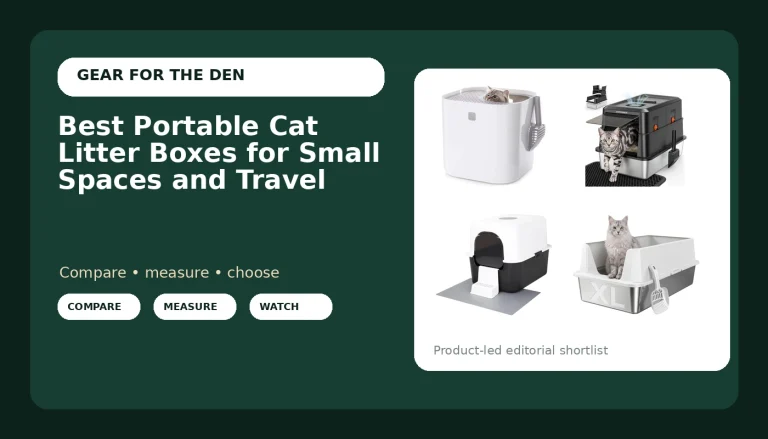
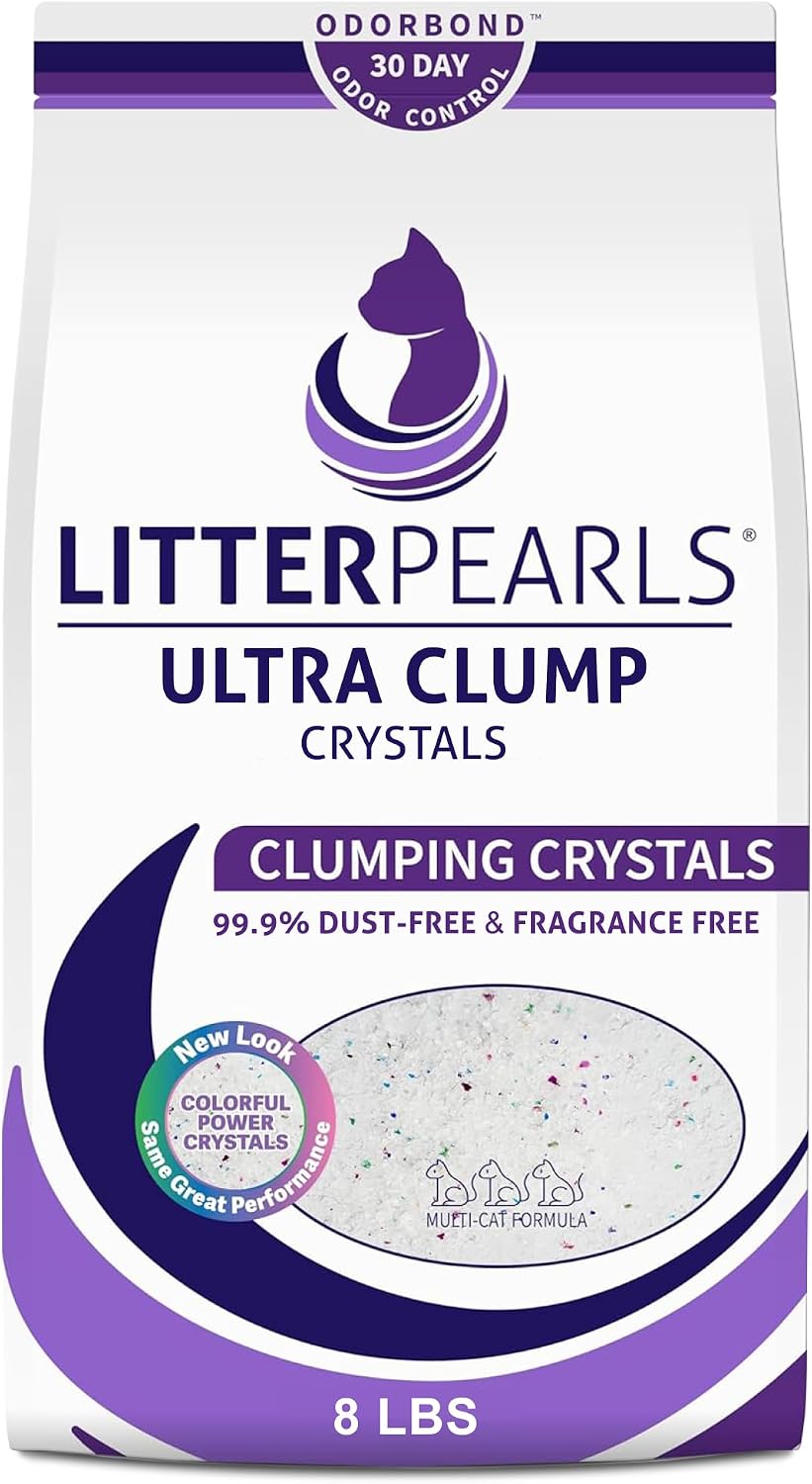 Litter Pearls Ultra Clump Unscented Crystal Clumping Cat Litter, 8 lb | Not applicable | Low-dust, unscented litter for a small room | Crystal clumping | View on Amazon → |
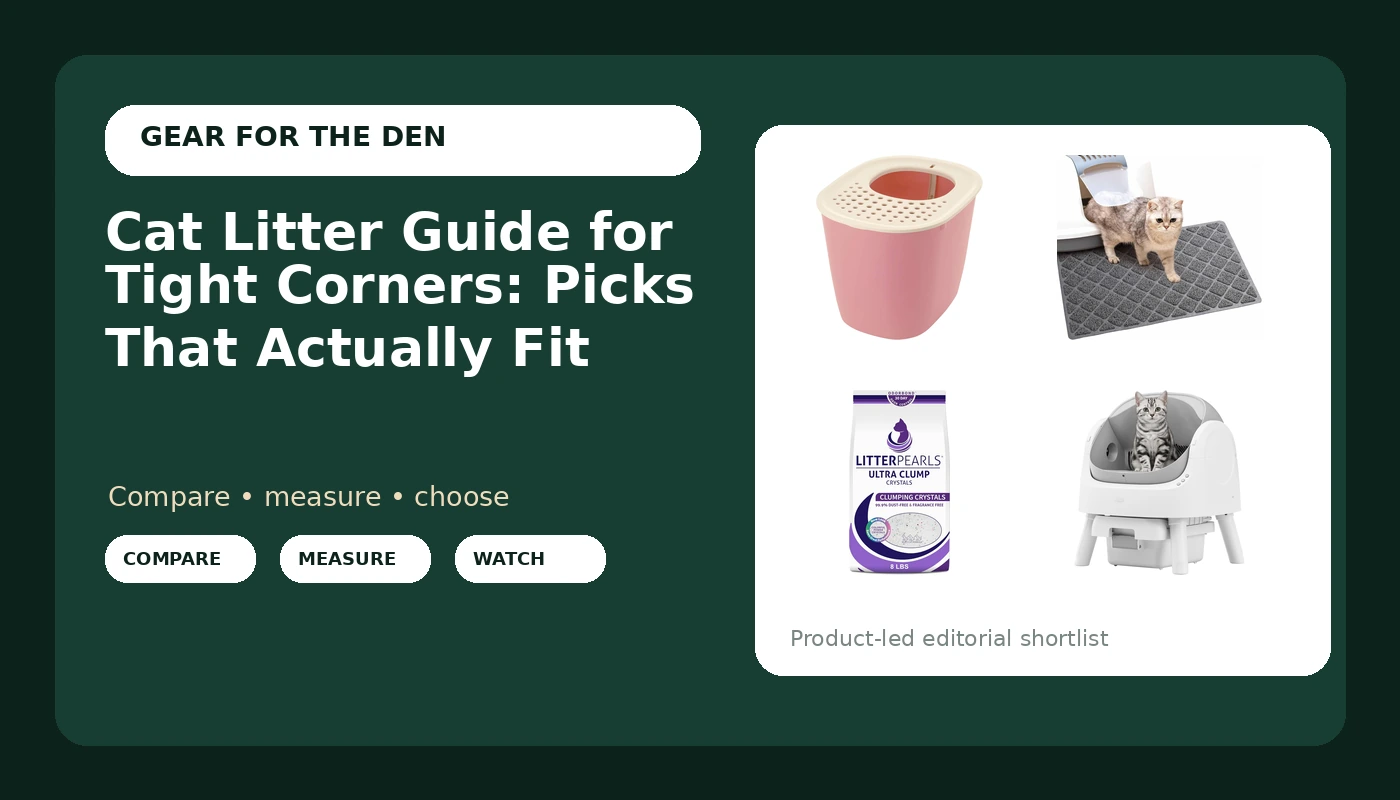
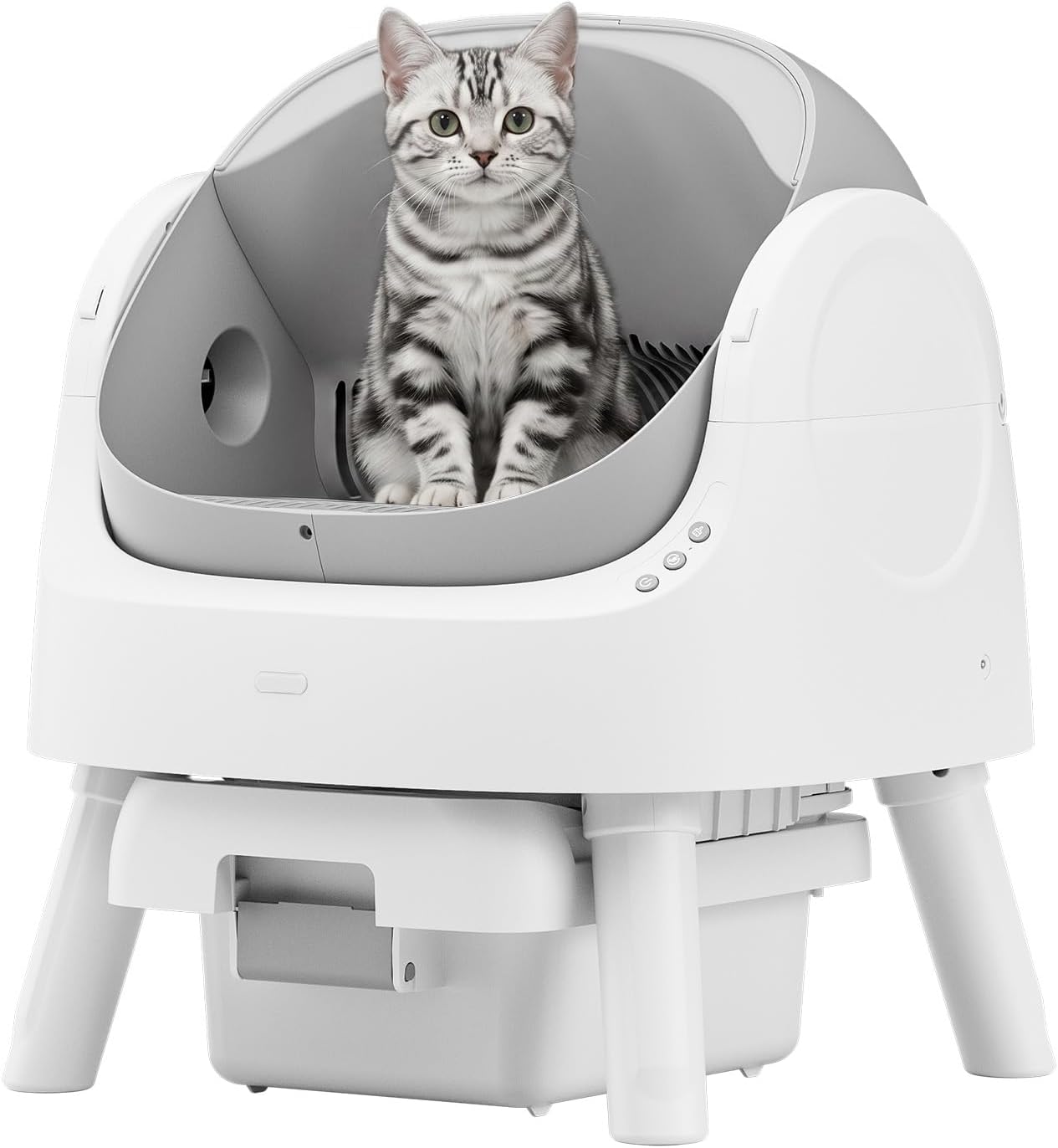 Self Cleaning Cat Litter Box, Automatic, Open Top | Open top, automatic | Multi-cat homes where nobody wants to scoop | Any clumping litter | View on Amazon → |
One note on the table. The box and the mat are the two pieces that decide whether a corner works, because they are the ones touching the room. The litter and the automatic box are the pieces you can change later without moving anything.
Self-cleaning cat litter boxes in a tight corner
The automatic box here is open top, and that is the right shape for a corner. There is no lid to lift, no hood to bump into a wall, and nothing that needs clearance on the hinge side. It also handles multiple cats, which is where an automatic box earns its keep, since the cycle runs after each visit instead of waiting for you to get home.
The practical limits are power and footprint. You need an outlet near the corner, and you need to measure before you commit, because these units take up more floor than a plain pan. The waste drawer is the other thing to think about. A drawer that fills in two days in a three-cat house is not a convenience, it is a chore with extra steps.
Sensor range is where I would spend my attention. The box has to detect a cat inside the drum before the rake moves, and the integrated safety protection is only as good as that detection. In a corner, where the box may be tucked partly behind a chair or a door, think about whether the sensor has a clear view of the approach.
Crystal clumping litter in a tight corner
In a cat litter guide for tight corners, litter choice comes down to two things: odor control and tracking. The Litter Pearls Ultra Clump is an unscented crystal clumping litter in an 8 lb bag, and the unscented part matters more in a small room than most people expect. Scented litter competes with the smell instead of removing it, and in a corner the two odors just stack.
Crystal litter is a reasonable pick for a tight space because it is typically low dust and the granules are large enough that the mat has something to catch. Clumping speed is steady rather than instant, so give the box a few hours between scooping and expect the clumps to hold together when you lift them.
Litter depth is the lever you control. Fill the pan to a workable level, level it out, and top it up rather than dumping in a fresh layer on top of old litter. Crystal litter also lasts differently than clay, so judge it by how the box smells and how the clumps hold, not by the calendar.
Should you buy the Richell PAW TRAX Top Entry Cat Litter Box?
Yes, if your cat will jump in from above. That is the whole argument of this cat litter guide for tight corners in one sentence: the box has to suit the cat first and the corner second. If your cat is young and mobile, top entry gives you a box that sits flush against two walls, contains scatter, and holds odor better than an open pan.
If your cat is a senior, a kitten, or nursing a sore leg, this is the wrong box and no amount of clever placement will fix it. Put a step next to it or choose a low-entry pan instead.
Should you buy the Cat Litter Box Mat?
Yes. It is the cheapest piece of the setup and the one you will notice every day. A flat PVC trapping pad on the exit path catches the granules that would otherwise end up ground into the carpet, and it wipes clean instead of holding odor the way fabric does.
The only reason to skip it is if your cat refuses to walk on a textured surface, which is rare. If that happens, try a smooth mat and accept a little more sweeping. For everyone else, buy the mat, shake it out twice a week, and the corner stays a corner instead of becoming a litter tray.