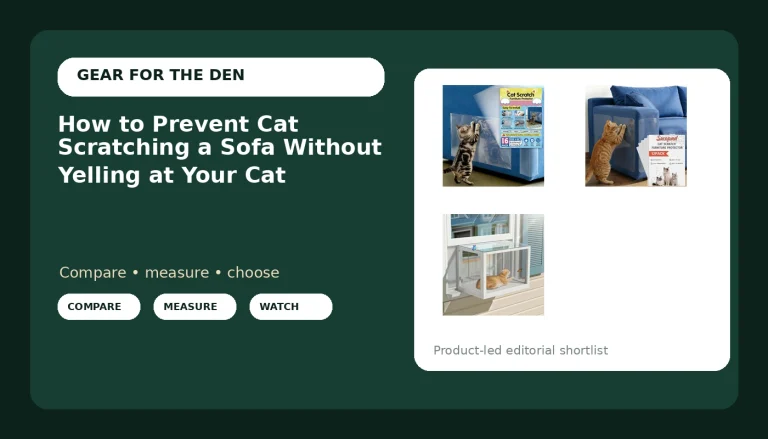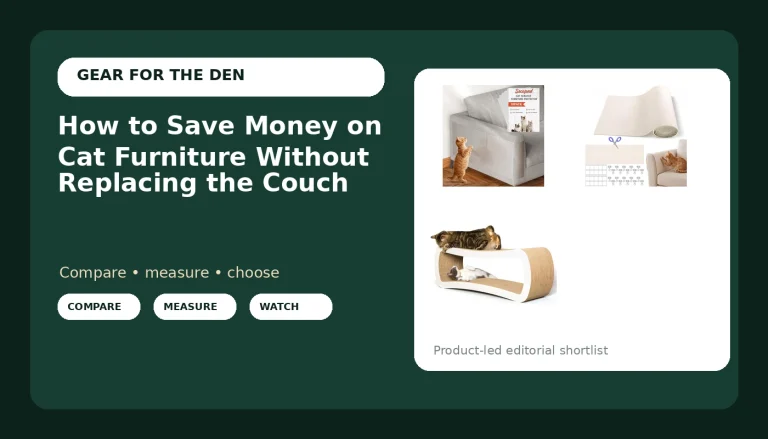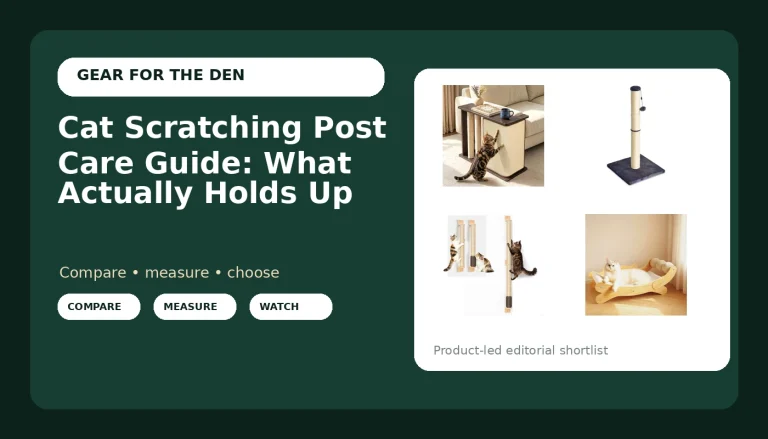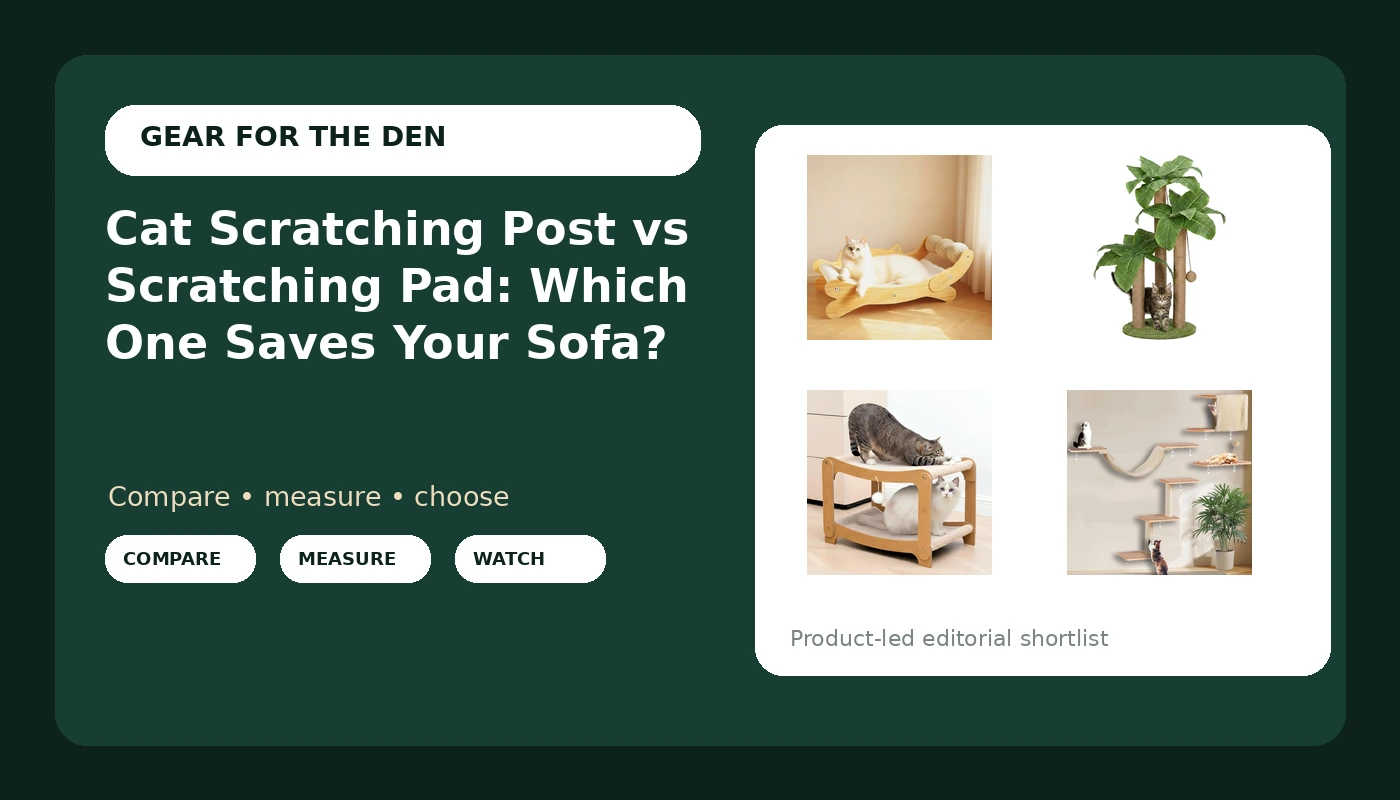
Somewhere around the third shredded sofa arm, every cat owner searches the same question: which one actually stops the damage? The cat scratching post vs scratching pad debate usually gets framed as a personality test for your cat, and that framing is mostly wrong. Both formats do the same job, which is giving a cat a legal place to file its claws, and the real differences come down to geometry, stability, and how much floor space you are willing to surrender. Get those three right and the shredded sofa arm stops being a weekly event.
The short answer for most homes: start with a tall, heavy sisal post that does not move, then add a flat pad next to the piece of furniture your cat already attacks. Posts let a cat stretch to full height, which is what most indoor cats want. Pads cover the horizontal diggers and the cats that refuse to use anything that rocks. The four setups below cover the full range, from a low two level scratcher bed to a wall mounted system, and each one solves a slightly different problem.
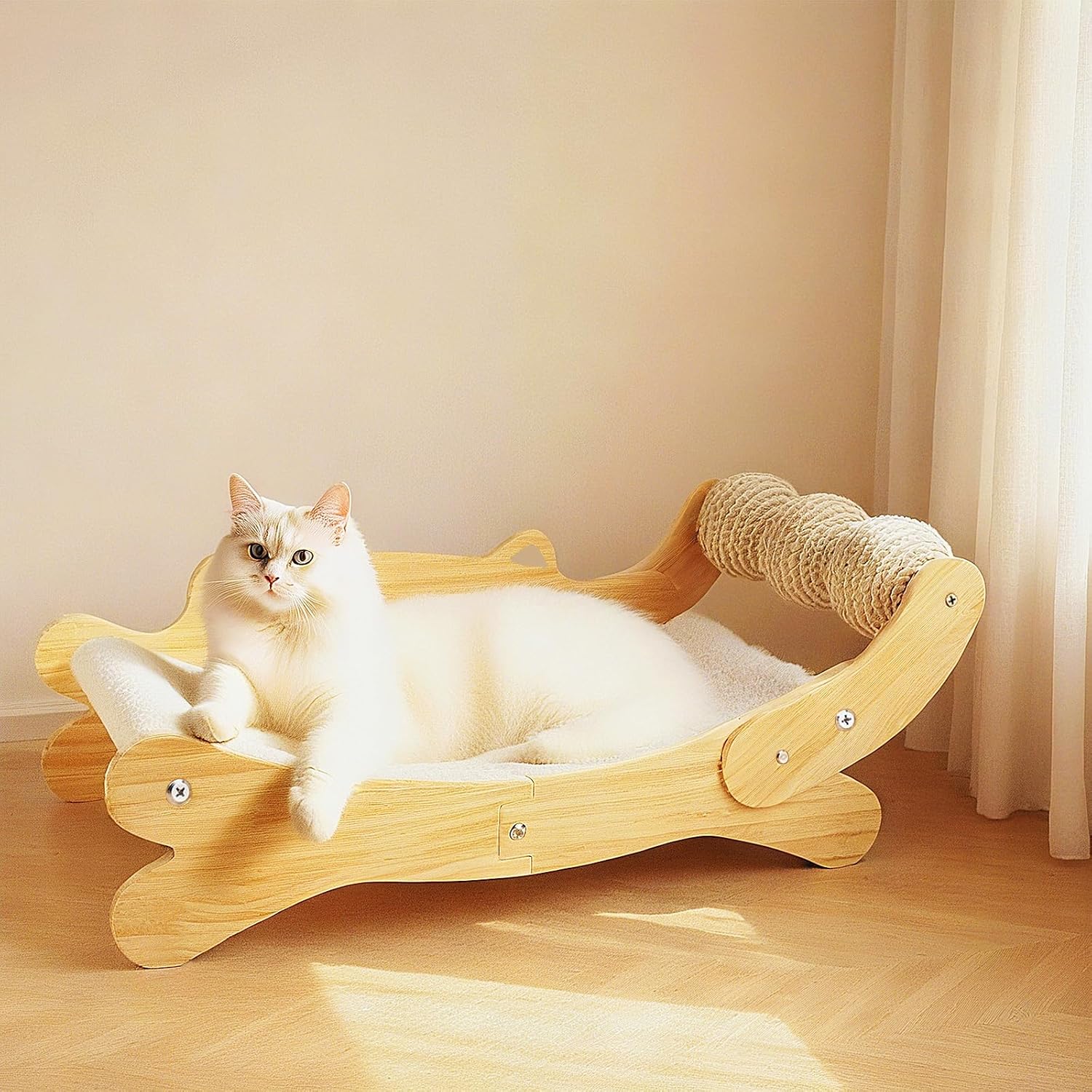
ERGTFVN Cat Scratcher Bed
Cheapest route to a stable low platform that doubles as a sleeping spot for a large cat
No vertical stretch, so it cannot replace a post
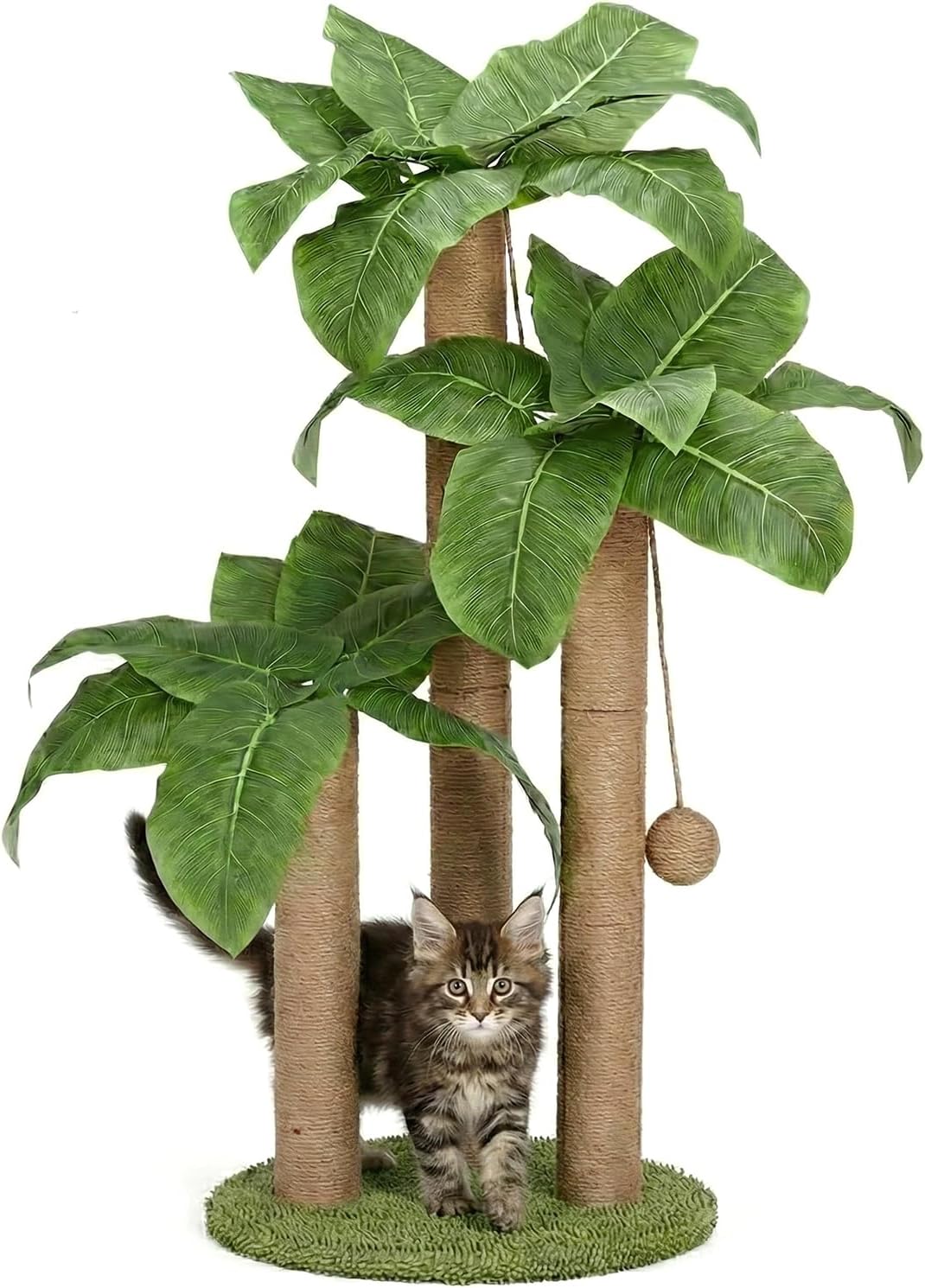
LEMONDA 31.5Inch Cat Scratching Post
Full height stretch, three poles, and dangling balls that keep a young cat near the post
Small top perch, and a tall post is a lever that needs a stable base
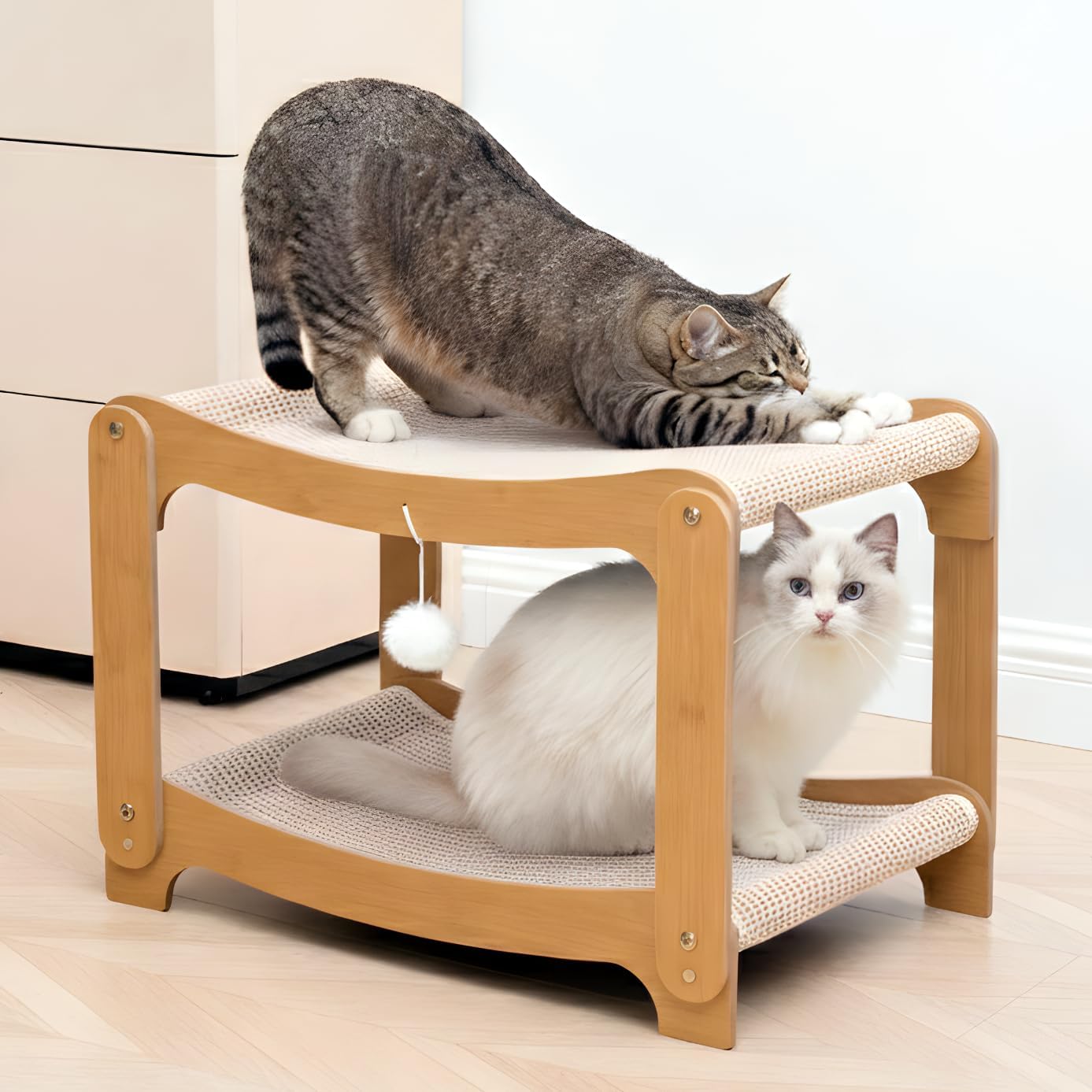
AIXINPET Two-Level Sisal Cat Scratcher Bed
Pad and hammock on a wooden frame, so nothing slides and two cats can share it
Still a low platform, so no full body pull
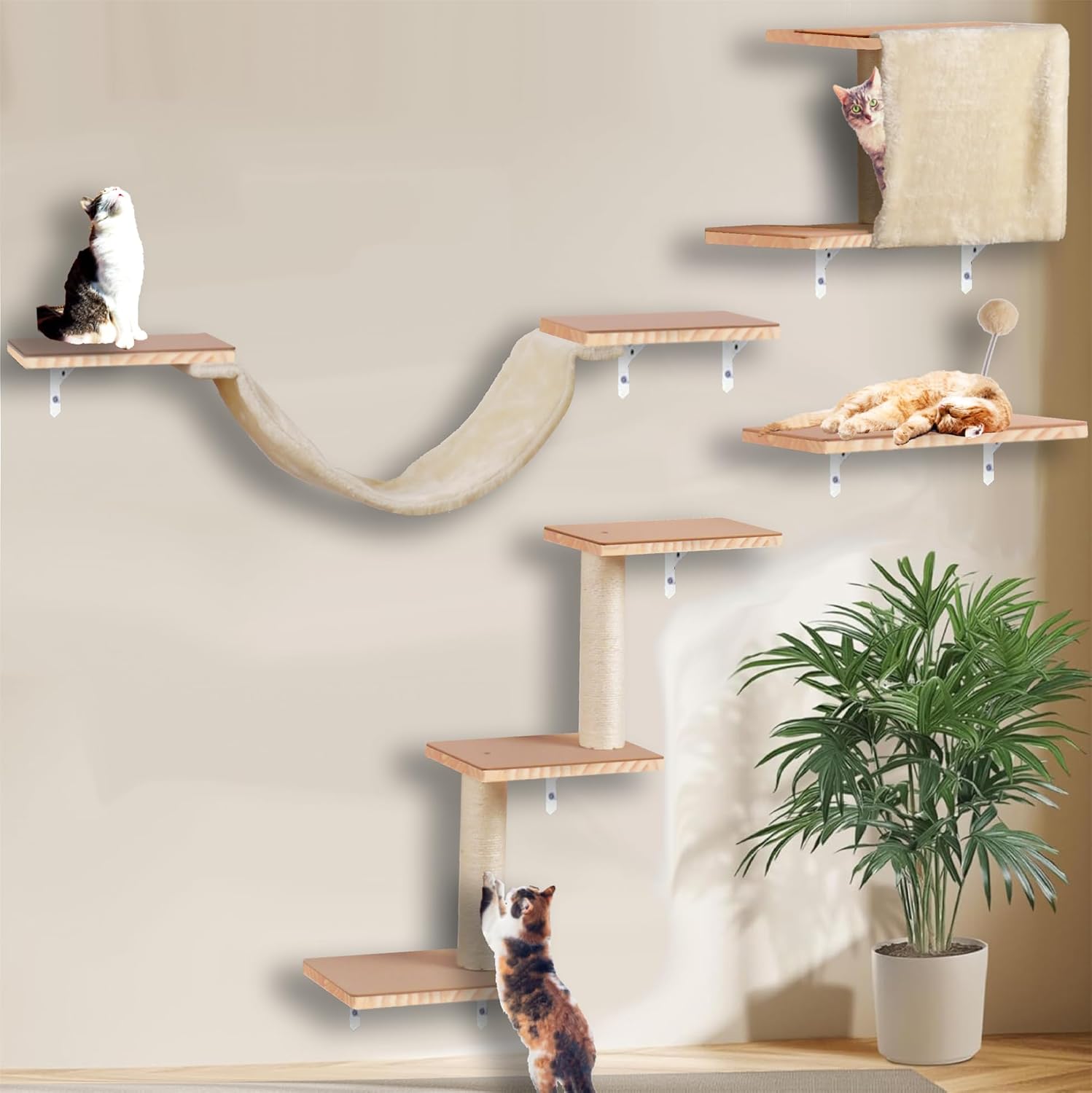
Solid Wood Cat Wall Shelves
House, bed, hammock, and a sisal wrapped ladder with zero floor space used
Highest price here, needs proper anchors, and it does not move with you
Prices and availability may change.
The real difference in cat scratching post vs scratching pad
The difference between cat scratching post and scratching pad is not about which material cats prefer. Sisal rope, corrugated cardboard, and carpet all get used when they are mounted the right way, and all three get ignored when they are not. The difference is the angle of the scratch and how much resistance the surface pushes back with.
A post is a vertical target. A cat stands, hooks its claws near the top of the wrap, and pulls down through the length of its body. That stretch is the part owners underestimate, because a post shorter than your cat's reach gets used at half effort or not at all. A cat that cannot stretch on a post will go find a door frame that lets it.
A pad is a horizontal or angled target. It suits cats that dig in with both front paws while crouched or lying down, and it suits small apartments because it takes up floor space without taking up height. The trade off is the stretch. A pad gives a cat the grip, the noise, and the satisfaction of tearing something up, but it never gives the full body pull a tall post does.
Flip the search around to scratching pad vs cat scratching post and the answer barely changes. Most cats will use both when both are available, and a cat that ignores a tall post while shredding the carpet is usually telling you the post moves. Stability beats material, and material beats price, which is the opposite of how most shopping lists are ordered.
How to judge a scratching setup before you buy
Every product in this comparison can be judged on the same short list, and none of it is marketing copy. If you only check two things, check the anchor type and the height of the highest scratching surface.
Platform height decides whether a product is a real post or a knee high compromise. If the top of the wrapped surface sits below your cat's nose when it stands on its hind legs, expect the cat to look elsewhere.
Post diameter matters most for large cats. A thin pole flexes under weight, and flex reads as instability. A wider wrapped pole feels solid, holds more sisal, and takes longer to shred.
Anchor type is the most predictive spec on the page. A wide flat base, a weighted platform, or a proper wall anchor all work. A narrow pedestal on a smooth floor does not, no matter how good the sisal is. On hardwood or tile, put a rug or a non slip mat under anything freestanding.
Weight limit tells you how much cat the frame was built for. In a multi cat home, treat the published number as a ceiling for one cat at a time rather than a household total, because two cats landing on the same top platform is how frames fail.
Perch width decides whether a product doubles as a bed. Cats sleep where they scratch, so a top platform too small to lie on turns a two purpose purchase into a one purpose purchase.
Shelf depth matters on wall mounted pieces, where a shallow shelf gives a cat nowhere to turn around. A cat that has to back down a wall ladder will stop using it.
Hammock fabric is usually the first thing to fail on a combo unit. A replaceable or washable cover keeps a favorite bed in service, while a stretched out cover that cannot be removed turns it into an avoided one.
Carrier size only enters the picture if you move often or travel with your cat. A flat pad slides into a bag or a car trunk. A wall mounted system does not come with you.
Flat pads and low platforms
Flat pads and low platforms are where most cat owners start, and two of the four products here sit in that class.
The AIXINPET two level sisal scratcher bed is the more deliberate of the two. It pairs a scratch pad with a hammock bed on a wooden frame, so there is one surface for digging and one for sleeping. The frame is the reason it belongs in this comparison at all: loose cardboard pads slide across the floor and get abandoned, while a frame that holds the pad in place keeps it where the cat left it. Two levels also means two cats can use it without competing for the same surface, which matters in a household with more than one cat.
The ERGTFVN cat scratcher bed takes the same idea in a different direction. It is built around a hammock on a natural wood frame and pitched at large cats, so the weight limit and the base are doing more work here than the sisal surface is. That is the right trade for a big cat in a small room: a low piece that does not tip, doubles as a bed, and sits under a window instead of in the middle of the floor. What it will not do is give a cat a full vertical stretch.
Neither of these replaces a tall post. They are the second purchase, the one that covers the spot your cat already attacks and gives it somewhere to sleep that is not your bed. If you can only buy one thing this month, buy the post. If you can buy two, buy the post and one of these.
Tall posts and trees
Height is the reason the LEMONDA 31.5 inch cat scratching tree is the closest thing in this batch to a default recommendation. Thirty one and a half inches of wrapped pole gives an average adult cat a full stretch, and three separate poles mean a cat can work around the tree instead of queueing for one surface. The two dangling balls add a play element, which matters because scratching and playing often happen in the same minute for a young cat, and a toy that keeps a cat near the post is a toy that gets the post used.
The trade off is the top. A tree with a small upper perch is a scratching post first and a bed second, so a cat that insists on napping on top of its furniture will go back to the couch. If your cat is a top of the tower sleeper, pair this with a hammock bed rather than expecting the tree to do both jobs.
The other thing to plan for with any tall post is the base. A 31.5 inch post is a lever, and a cat pulling down on the top of a lever puts real force into the bottom of it. That is why anchor type beats every other spec on a piece this height. Wide base, non slip feet, or a wall strap, and it stays put. A narrow base on tile, and you will be standing it back up twice a week until you stop bothering.
Wall mounted scratching systems
Wall mounted systems are the answer for apartments with no floor left, and the solid wood cat wall shelves in this batch are the most expensive item here by a wide margin. What that money buys is vertical territory: a house, a bed, a hammock, and a sisal wrapped ladder, all mounted off the floor.
Two things decide whether a wall system works. The first is the anchor type. A wall shelf that pulls out of drywall is a vet bill, so studs or proper toggle anchors are not optional, and shelf depth has to be enough for a cat to stand, turn, and lie down. The second is the layout. A ladder that leads nowhere gets used once. A ladder that leads to a house and a bed becomes a route, and routes get used every day.
This is also the only option here that takes the scratching problem off the floor entirely, which is the real selling point if you have a dog that eats cat toys, a toddler, or a robot vacuum that relocates small objects. The cost is commitment. You drill holes, you plan heights around your cat's jump, and you do not take it with you when you move. For a renter who relocates every year, a freestanding post plus a pad is the better spend.
What the specs say about daily use
The number that predicts daily use is not price. It is the height of the highest scratching surface, followed closely by whether the base moves when a cat pulls on it. A 31.5 inch post that stays still gets used more than a taller post that wobbles, and both get used more than a beautiful low platform a cat has to crouch on.
The second pattern is that cats use what is near where they already scratch. A post in a back bedroom is a post that gets ignored, while a pad beside the couch gets destroyed in a good way. Placement is free, and it does more for your furniture than any upgrade you can buy.
The third pattern is that combo units live and die on their soft parts. A hammock fabric that sags, a pad that slides, or a cover that cannot be washed will retire a product that is otherwise fine. When two setups cost about the same, put the money on the one with replaceable parts.
If you are working through the cat scratching post vs scratching pad question in a multi cat household, the math changes again. Two cats need two surfaces at different heights, not one bigger surface, because the cat at the bottom of the pecking order is the one that gets pushed off. Two separate pieces remove the guarding problem entirely, and our multi cat household setup guide covers the rest of the layout.
Should you buy a pad before a post?
Only if your cat already scratches flat surfaces. Watch where the damage is happening. Claw marks on the side of a sofa, the corner of a door frame, or the edge of a bookshelf are vertical scratches, and they point to a post. Claw marks on carpet, a rug, or the top of an ottoman are horizontal scratches, and they point to a pad. Buying the wrong format is the most common reason a new scratcher gets ignored in week one.
If you are choosing a cat scratching post or scratching pad for one cat in a small apartment, start with the post and put a cheap flat pad beside the furniture that is already taking damage. That combination covers both angles for roughly the price of one mid range tree, and it lets you learn which surface your cat prefers before you spend on a wall system.
The one case for buying a pad first is a senior cat or a cat with limited mobility. A low platform is easier to reach than a tall post, and a hammock bed gives a cat somewhere warm to sleep that is off cold floors. In that situation the ERGTFVN bed is the sensible starting point, and the tall post becomes the optional upgrade rather than the other way around.
What to check before you check out
Before you order anything, measure the wall or floor space you are actually willing to give up, then measure your cat. A post shorter than your cat's standing reach will be ignored, and a wall system that needs studs in a spot where you have none will sit in its box.
Then check three things on the listing: the anchor type, the weight limit, and whether the soft parts are replaceable. Those three specs decide how long the product lasts, and everything else is decoration.
Finally, plan the first week. Put the new scratcher next to the thing your cat is already destroying, rub it with a little catnip if your cat responds to catnip, and reward the cat for using it. A scratcher is not a purchase that fixes the behavior on its own. It is a better option than your couch, and it only wins if the cat finds it before the couch does.
The cat scratching post vs scratching pad decision gets easier once you stop treating it as a choice between two products. It is a choice between two angles, and most homes need both. Buy the post first, add the pad second, and mount the wall system last if you still have floor space you would rather have back.