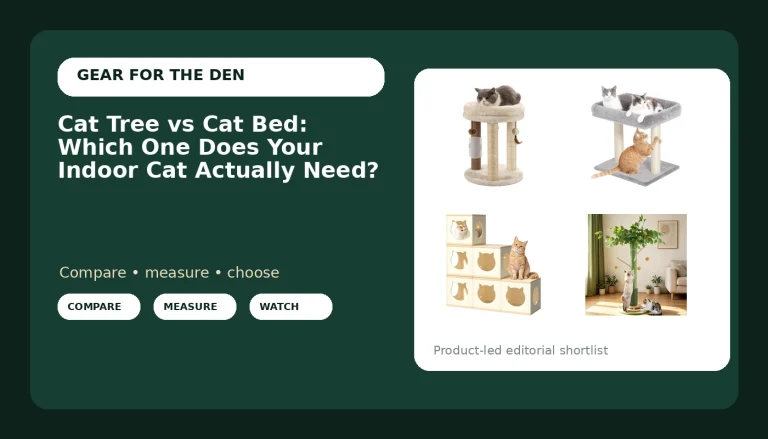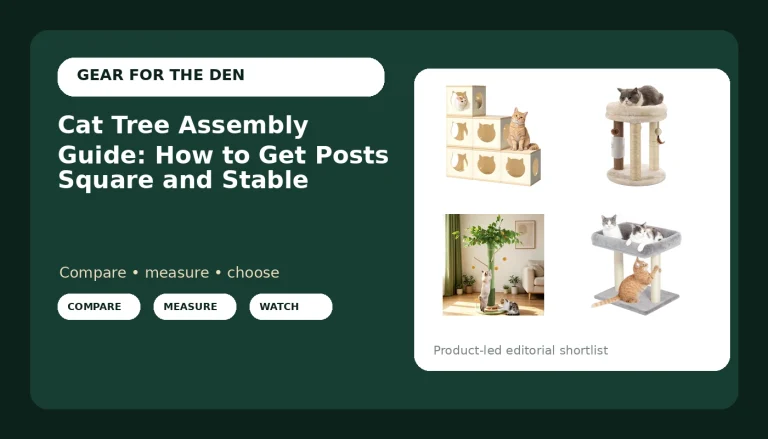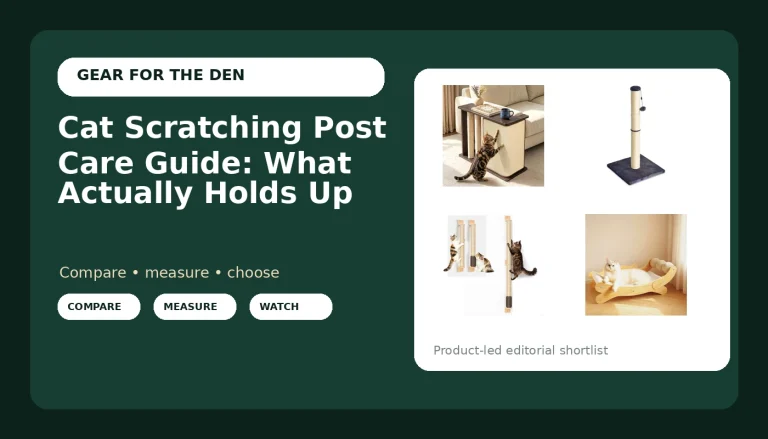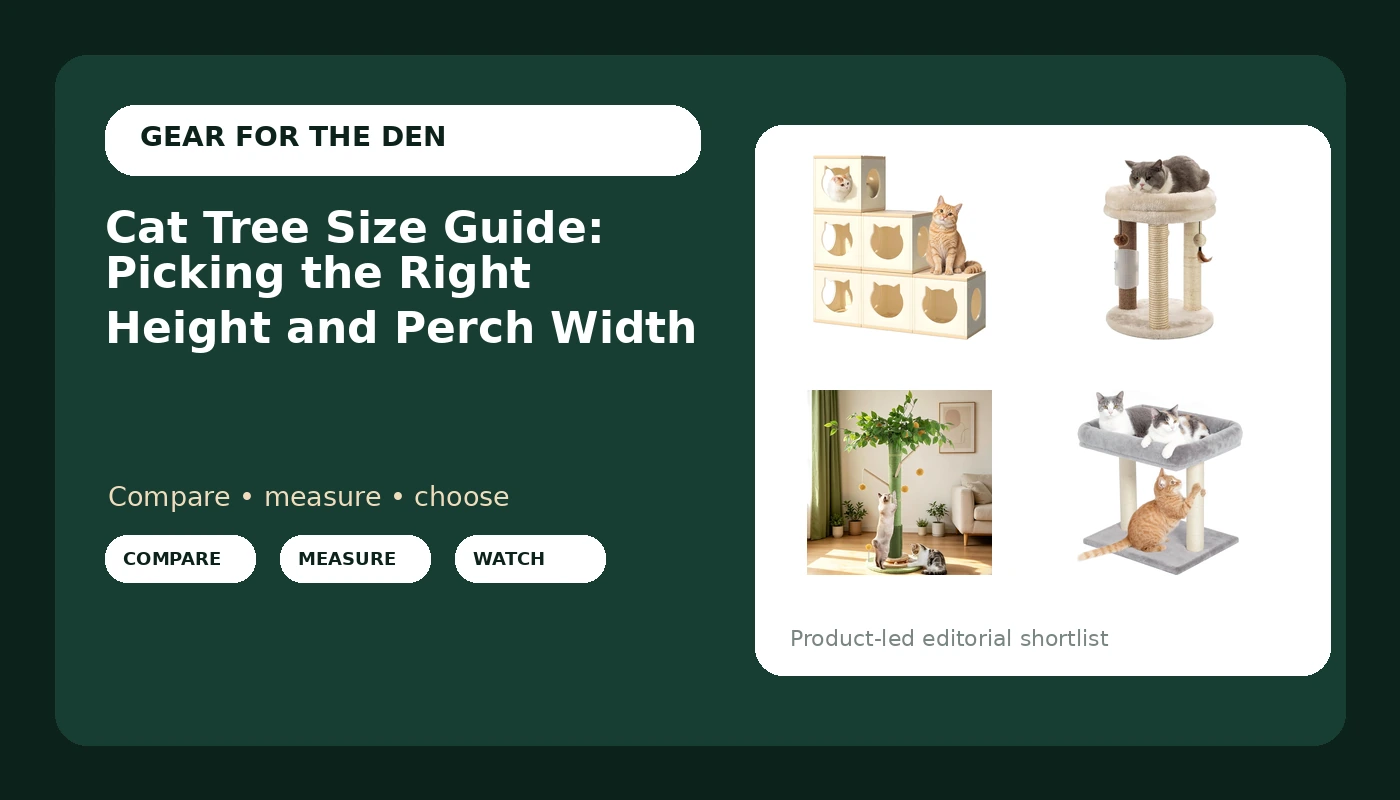
Cat Tree Size Guide: Picking the Right Height and Perch Width
A cat tree size guide from a reviewer who measures platform height, shelf depth, and perch width before buying. Four picks, no fluff.
Most people shop for a cat tree the way they shop for a bookshelf: find the tallest one that fits the budget and hope it works. That is why so many towers end up holding laundry. A cat tree size guide should start with the animal instead. You need the standing reach of your cat, the width of the surface it will actually lie on, and an honest answer about how much floor you are willing to give up to a base plate.
I keep a tape measure in the drawer next to the treat tin for exactly this reason. When I compare cat trees I look at platform height, post diameter, shelf depth, weight limit, anchor type, perch width, and the fabric on any hammock, because those seven details decide whether the thing gets used every day or becomes a coat rack. This cat tree size guide walks through four very different configurations and tells you which one fits which cat, and it starts from the assumption that the cat will ignore anything that wobbles, no matter how good the listing photo looks.
Best Overall: 6-Cube Stackable Cat Tree Tower
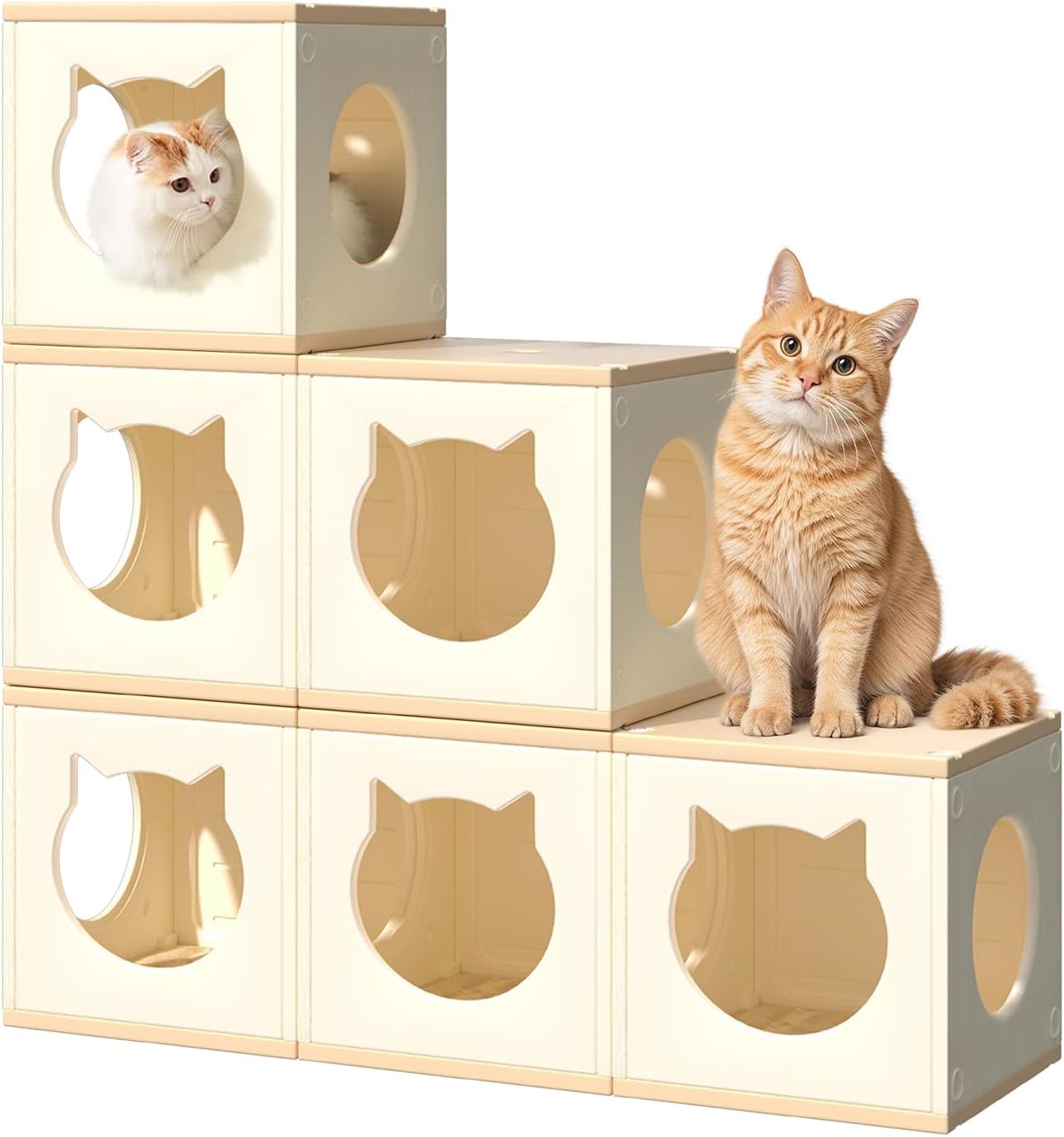
This is the pick when the honest answer to how big is it depends on the week. The tower is built from cube modules, so the platform height and the floor footprint are things you set rather than things you accept. Six cubes and a plastic tunnel can run along a wall as a low line for a nervous cat, or stack into a taller climb for a confident one.
Modular sizing solves the problem that turns most cat trees into a bad purchase. The cat grows, the apartment changes, and a fixed tower stops fitting either one. With cubes you can pull a level off when a senior cat stops jumping and add one when a kitten starts launching off the couch. The tunnel gives a route through the middle of the structure instead of around it, which matters in a multi-cat home where one cat likes to ambush another at the top of the stairs.
Two numbers to check before you order. First, the weight limit for each cube, especially if you have a large breed or two cats who claim the same level. Second, the anchor type. A stackable tower is only as stable as the way you fix it, and once you go above the height of a cat's shoulder, a wall anchor or a genuinely wide base stops being optional.
The cube format also lets you spread the footprint out instead of building up, which is the trick for a rental with walls you cannot drill. For a cat that likes to be high and a household that keeps rearranging the living room, this is the most flexible shape here. It is also the largest commitment in both money and floor space, so it rewards a slow setup rather than a single afternoon of stacking.
Best Value: MECOOL 4in1 Small Cat Tree
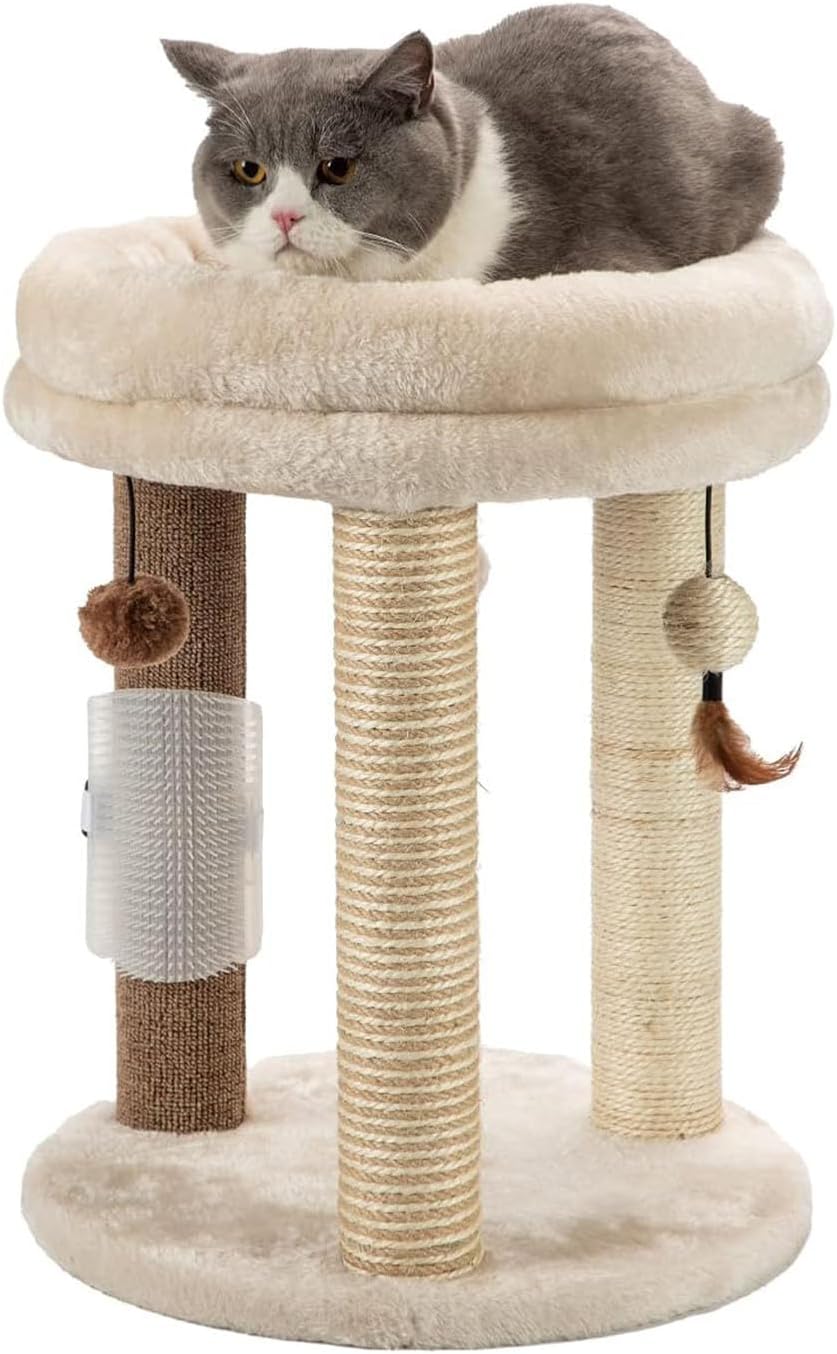
The MECOOL 4in1 is the smallest thing on this list that still counts as a tree: a scratching post, a tower, a soft bed, sisal and jute posts, three hanging ball toys, and a massage brush in one unit. For the money it covers the two jobs that matter most in a small room, scratching and sleeping, without asking for a wall or a corner of the sofa.
Small does not mean careless, but it does mean you check two things. The perch width on the bed is the first, because a bed that suits a kitten can look like a joke to a full-grown cat hanging over both edges. The post diameter is the second. Sisal wrapped around a thin post is fine for a young cat, but a heavier cat needs enough circumference to get a real grip and a full stretch out of it.
This is the tree I would put in a bedroom, a studio, or a home office where the cat spends the day near you. It is also a sensible first tree for a kitten, provided you accept that you will be shopping for a bigger one in about a year. That is a normal progression, not a mistake, and the small tree keeps its job as the low perch once the tall one arrives.
If you are weighing a small tower against a plain scratching post, the deciding factor is whether your cat sleeps on raised surfaces at all. A cat that naps on the back of the couch will use the bed. A cat that naps under it will not, and you should spend the money on sisal instead.
How I tested
I evaluate cat trees the same way every time, with a tape measure and a kitchen scale rather than a spec sheet.
Platform height gets measured from the floor to the top surface a cat stands on, not to the tip of the post, because that is the number that decides whether a cat can stretch. Shelf depth and perch width get measured at the narrowest point of the sleeping surface, since that is where a cat slides off. Post diameter gets measured around the sisal, not around the tube underneath it.
Then the stability pass. I push the top of the tree sideways the way a cat lands on it and watch the base. A tall tree on a small base is a tipping hazard no matter how good the carpet looks, and the anchor type is what closes the gap. I also compare the claimed weight limit against the thickness of the platforms, because a thin shelf with a generous limit is a shelf that bows.
Last, the wear items. Hammock fabric and sisal age differently, and a hammock that sags is a hammock a cat quits. I look for a tight weave, a scratching surface that can be flipped or replaced, and toys that can be re-hung rather than chewed off in a week. Size gets a cat onto the tree. Wear decides whether the tree is still there in two years.
Analysis and test results
There is no single ideal cat tree size, only one that matches the cat in front of you. Sizing a cat tree follows the same logic as sizing a carrier. A carrier size that leaves no headroom is a carrier the cat fights you about, and a tree with no stretch room above the top perch gets the same treatment. Height is the dimension people obsess over, but the working dimension is the distance from the floor to the highest surface the cat will actually stand on, plus the clearance above it.
For most adult cats the vertical scratch is the part of the tree that earns its keep. That is what makes the 46 inch post a real size class rather than a budget compromise: it is tall enough for an adult cat to reach up, grab, and pull, which is the behaviour that keeps claws off your sofa. It gives up platforms and a bed to get there, and for a lot of cats that trade is worth making.
Cube towers invert the question. Height is adjustable, so size becomes a footprint problem, and the answer depends on your room and how many cats share it. The 19 inch perch is the size people skip and the one that gets the most use in a house with kittens or older cats, because a short hop onto a low platform is a jump a cat will still make at fourteen.
Weight limit and anchor type decide whether any of this survives contact with a cat. A tree that wobbles gets abandoned faster than a tree that is too small, because cats will not use a perch that moves under them. If you cannot anchor to a wall, buy the widest base you can live with and keep the top perch below the height where a landing cat can tip it.
The right cat tree size for a multi-cat home is usually not one big tree. It is two or three surfaces at different platform heights, so a shy cat can be high without being next to the confident one. Stackable cubes make that easy to arrange. A single tall post and a low perch set a few feet apart do the same job for less money, and they are easier to move when you vacuum.
The cat tree size reference table
Use this as a filter, not a verdict. Find the row that matches your cat's energy and your room, then check the last column before you buy. The listed sizes come straight from the product listings; the measurements you take at home are the ones that decide it.
| Product | Listed size | Shape | Best for | Check first |
|---|---|---|---|---|
6-Cube Stackable Cat Tree Tower | Six cube modules plus a plastic tunnel | Modular cube tower | Multi-cat homes, wall layouts | Weight limit per cube and anchor type |
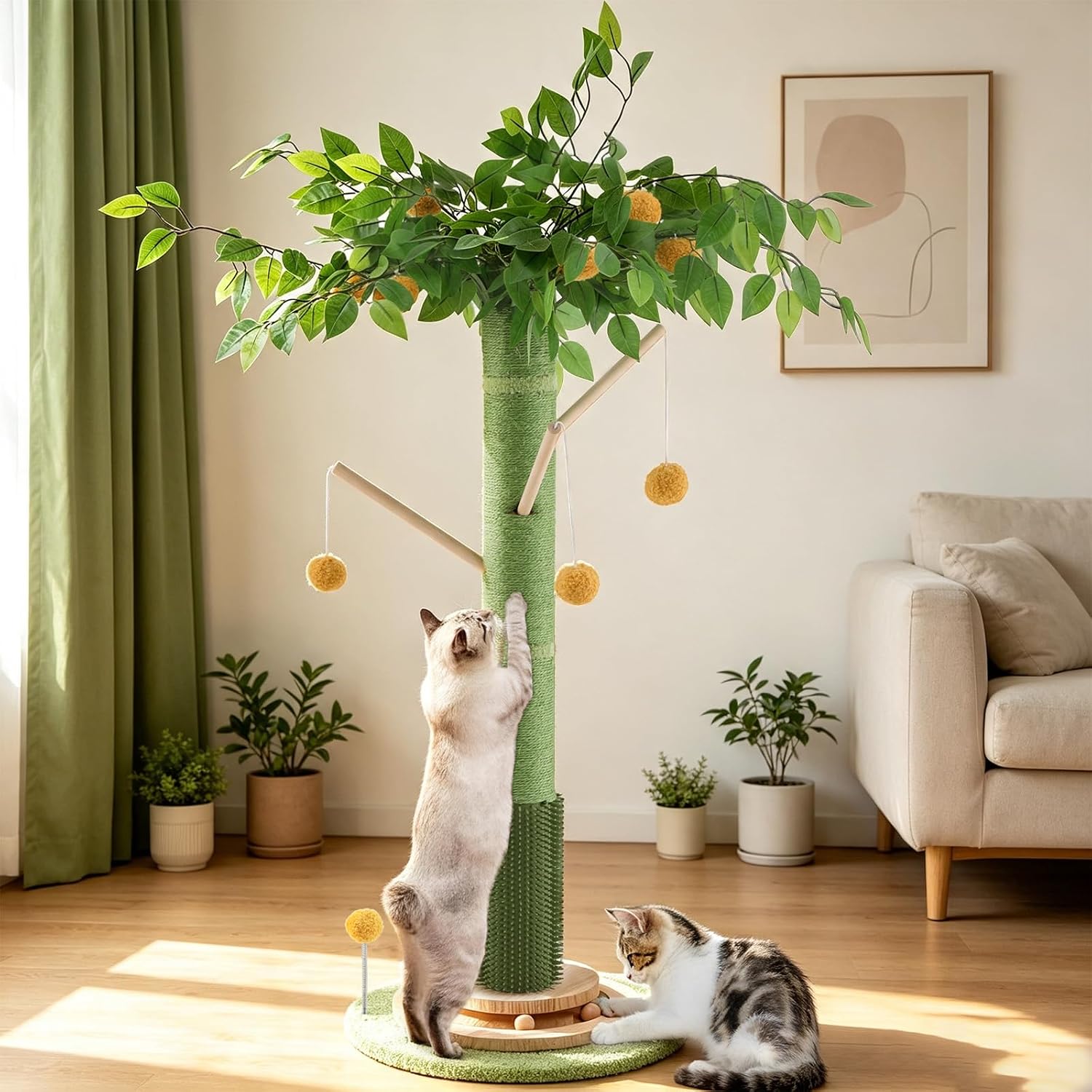 View on Amazon → 46" Tall Cat Scratching Post | 46 inches tall | Single vertical post | Adult cats that stretch to scratch | Post diameter and base footprint |
MECOOL 4in1 Small Cat Tree | Small 4-in-1 with bed, posts and toys | Compact tower with bed | One cat in a small room | Perch width and shelf depth |
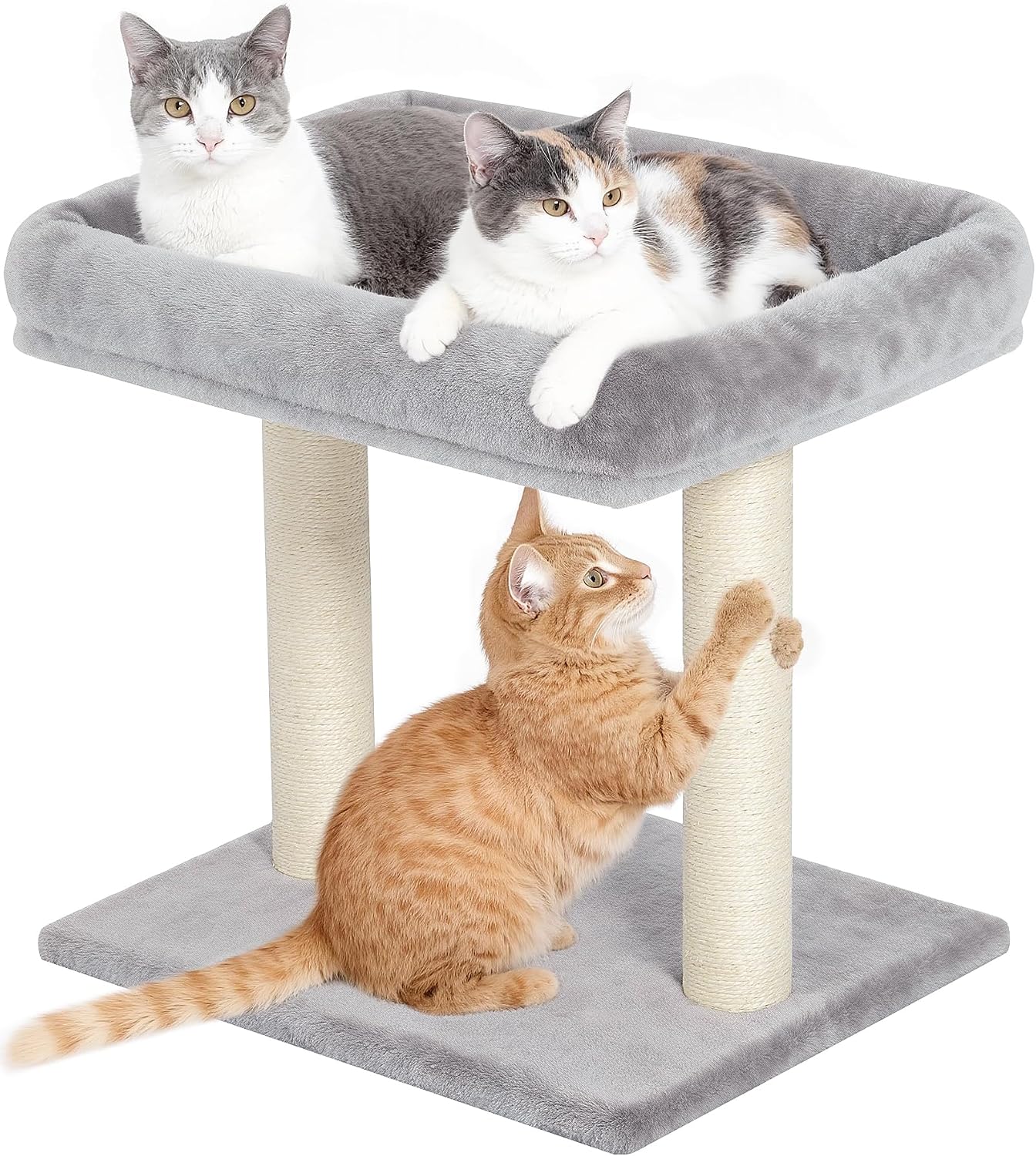 View on Amazon → 19" Small Cat Tree with Perch | 19 inches tall | Low perch tower | Kittens, seniors, shy cats | Platform height against standing reach |
The pattern in the table is simple. As listed height goes up, the number of things you have to check goes up with it, because a taller tree has more leverage on its base and more surfaces to size correctly. The two small options are forgiving. The cube tower is flexible but needs a plan. The tall post is one decision: diameter and base.
When height beats shelf depth
The 46 inch post is the shape to buy when your cat scratches the arm of the couch at shoulder height and ignores every flat pad you have put on the floor. It is a single vertical surface with a small footprint, no platforms to dust, and enough height for a full stretch. It takes up less floor than any tower here, which makes it the pick for a hallway, a landing, or the narrow strip beside a desk.
What it does not do is give a cat somewhere to sleep up high, and it will not settle a household with two cats who both want the top spot. Buy it as the scratching solution and pair it with a perch if your cat also likes to be off the ground.
When low is the right call
The 19 inch tree with a perch is the one people walk past, and it is the right answer more often than the size chart suggests. Kittens, senior cats, cats recovering from a vet visit, and shy cats who dislike height all use a low platform they can reach in one easy hop. It is the correct cat tree size for a cat that has stopped jumping onto the counter, and put by a window or in the room where the cat already naps, it gets used within a day.
The limit is obvious: a large cat on a 19 inch perch may have nowhere to put its tail. Check the perch width first, and if the cat is over twelve pounds, step up to the compact tower instead.
Should you buy the 6-Cube Stackable Cat Tree Tower?
Yes, if you have more than one cat, or a room whose layout changes with the seasons. The cube format is the only one here that lets you change platform height and footprint after the fact, and the tunnel adds a second route that keeps a multi-cat household calm.
It is also the most expensive and the largest thing on this list, so it is not the right first tree for a single kitten in a studio. Think about the anchor type before the box arrives, and take the weight limit per cube seriously if you have a big cat. Set it up low, watch how your cats use it, then build up. That is the whole advantage of the design, so use it.
Should you buy the MECOOL 4in1 Small Cat Tree?
Yes, if you have one cat and a small footprint to fill. You get scratching, a bed, hanging toys, and a massage brush in one unit, and it fits in a corner without a wall anchor. For the price it is the easiest way to give a cat its own furniture instead of sharing yours.
The caveat is size. The bed is a kitten bed and a small adult bed, not a Maine Coon bed, so measure your cat nose to tail and check the post diameter before you order. If your cat is still growing, expect to buy a second, larger tree later and treat this one as the low perch it will become. That is still a good deal.