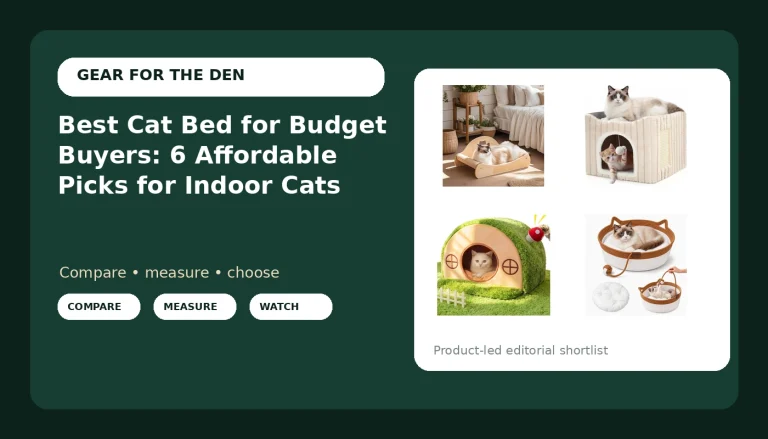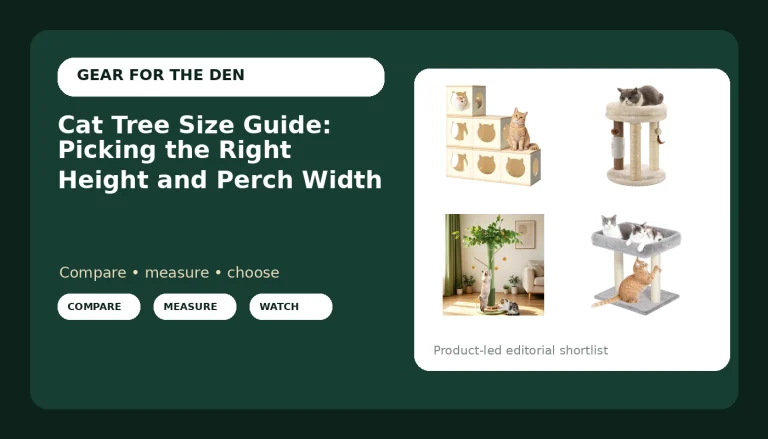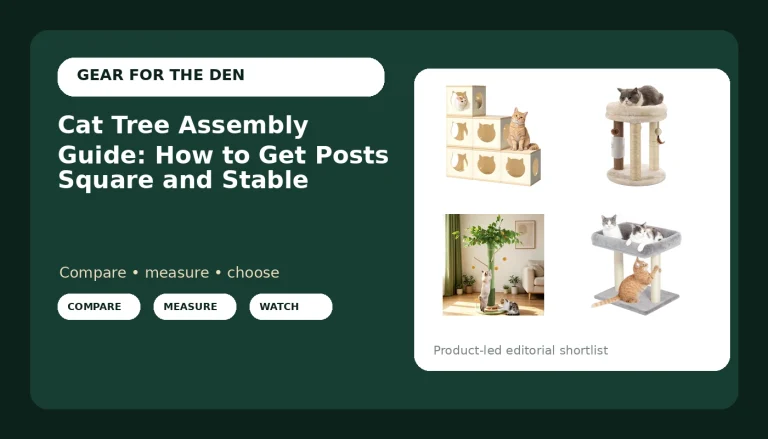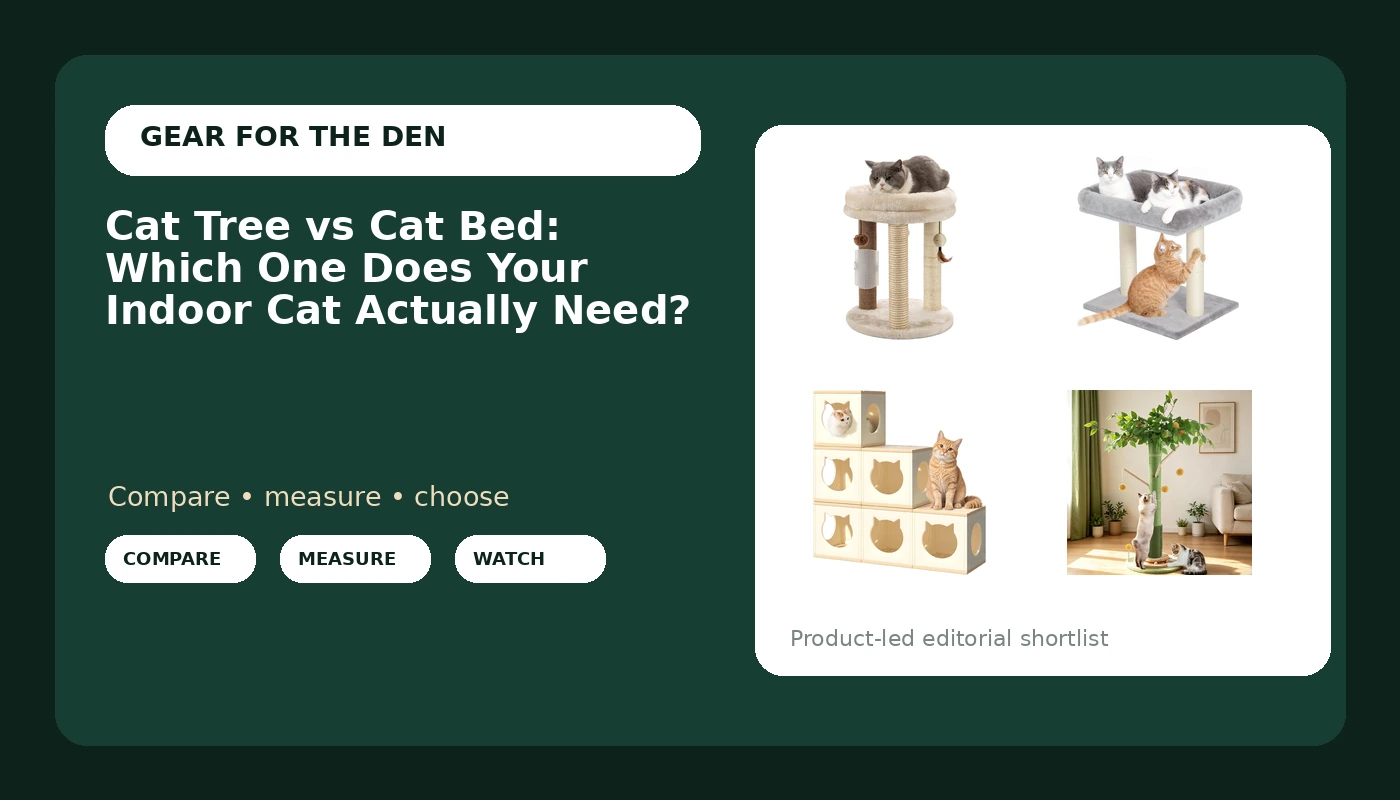
The cat tree vs cat bed question lands in my inbox most weeks, and it almost always arrives as a false choice. A cat tree is vertical territory: something to scratch, climb, and survey the room from. A cat bed is a sleeping surface: something soft that holds warmth and scent. Most indoor cats want both, but they rarely need both on day one, and the order you buy them in matters more than the brand you pick.
I have watched cats ignore a new bed for three weeks and then sleep in the cardboard box it shipped in. That is the whole problem in one sentence. Cats choose surfaces by height, warmth, sightlines, and smell, not by what the listing photo promises. So instead of debating the cat bed vs cat tree point in the abstract, it helps to look at what each object actually does in a room.
The best first purchase for most indoor cats in 2026 is a cat tree with a built-in bed platform, because it covers scratching, climbing, and sleeping in a single footprint. Add a standalone cat bed later, once your cat has shown you where it already likes to sleep.
The four cat trees below are the ones I would compare first if you are leaning toward the vertical option. They range from a 19 inch starter tree to a cube tower that costs more than most cat furniture budgets. Prices on cat furniture move around constantly, so I do not quote them here; every row links to the current listing.
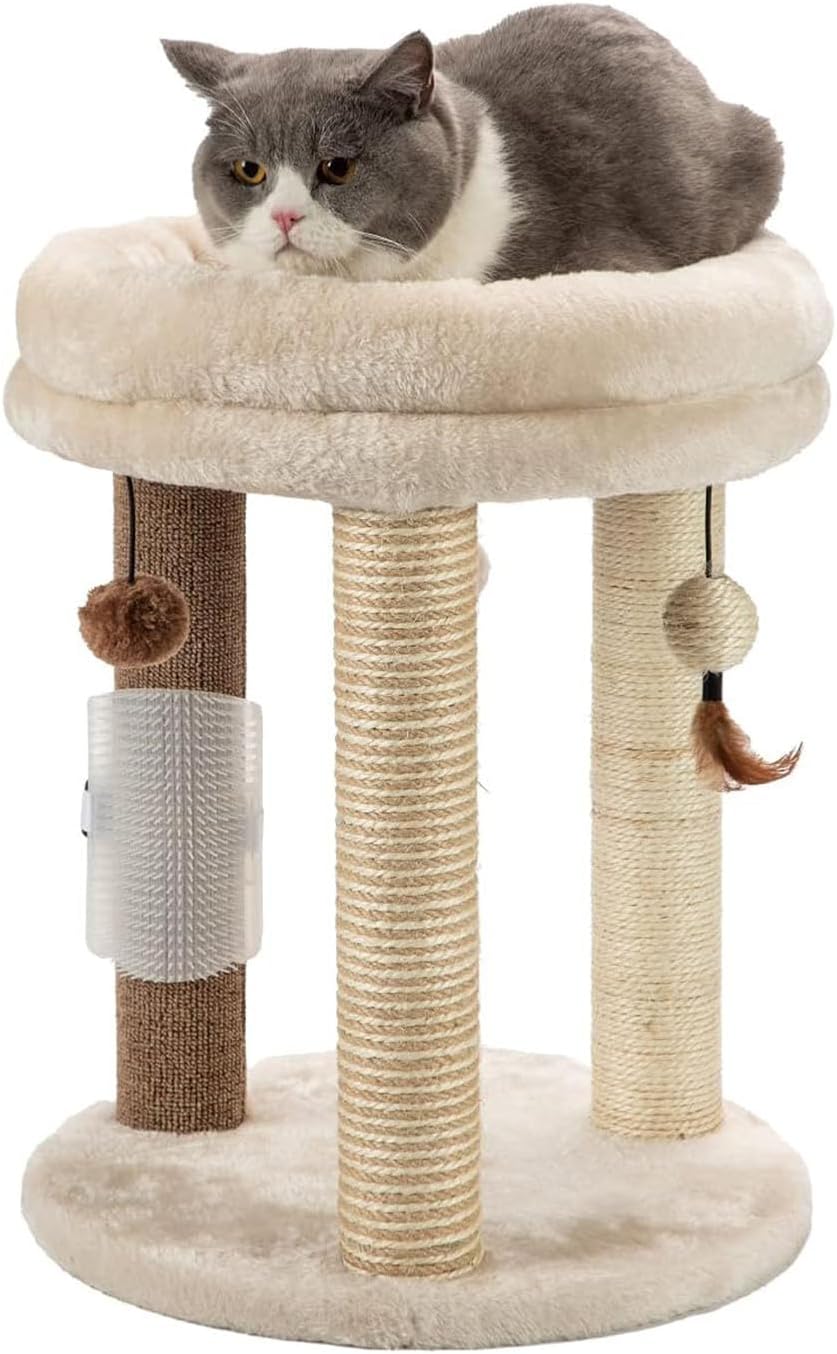
MECOOL 4in1 Small Cat Tree
Covers scratching, perching, and sleeping in one purchase, with a soft bed, jute and sisal posts, hanging toys, and a massage brush
Built as a small tree, so the platforms suit a kitten or average cat rather than a large one
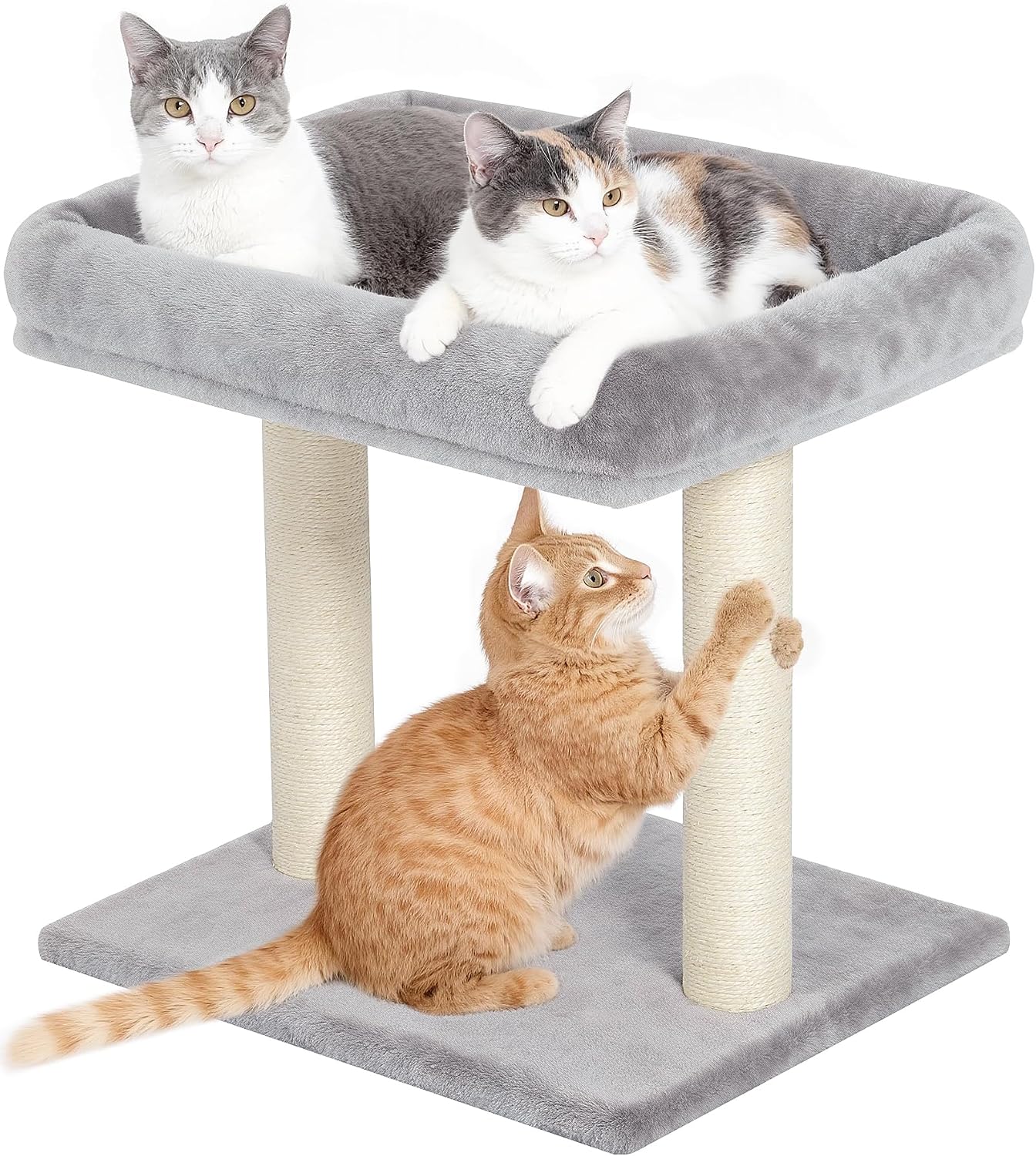
KinoTail 19" Small Cat Tree with Perch
Simplest and cheapest way to give a cat a dedicated perch and post, and it fits a tight corner
19 inches is below eye level for most adults, and there is no bed platform, so a bed is still a separate buy
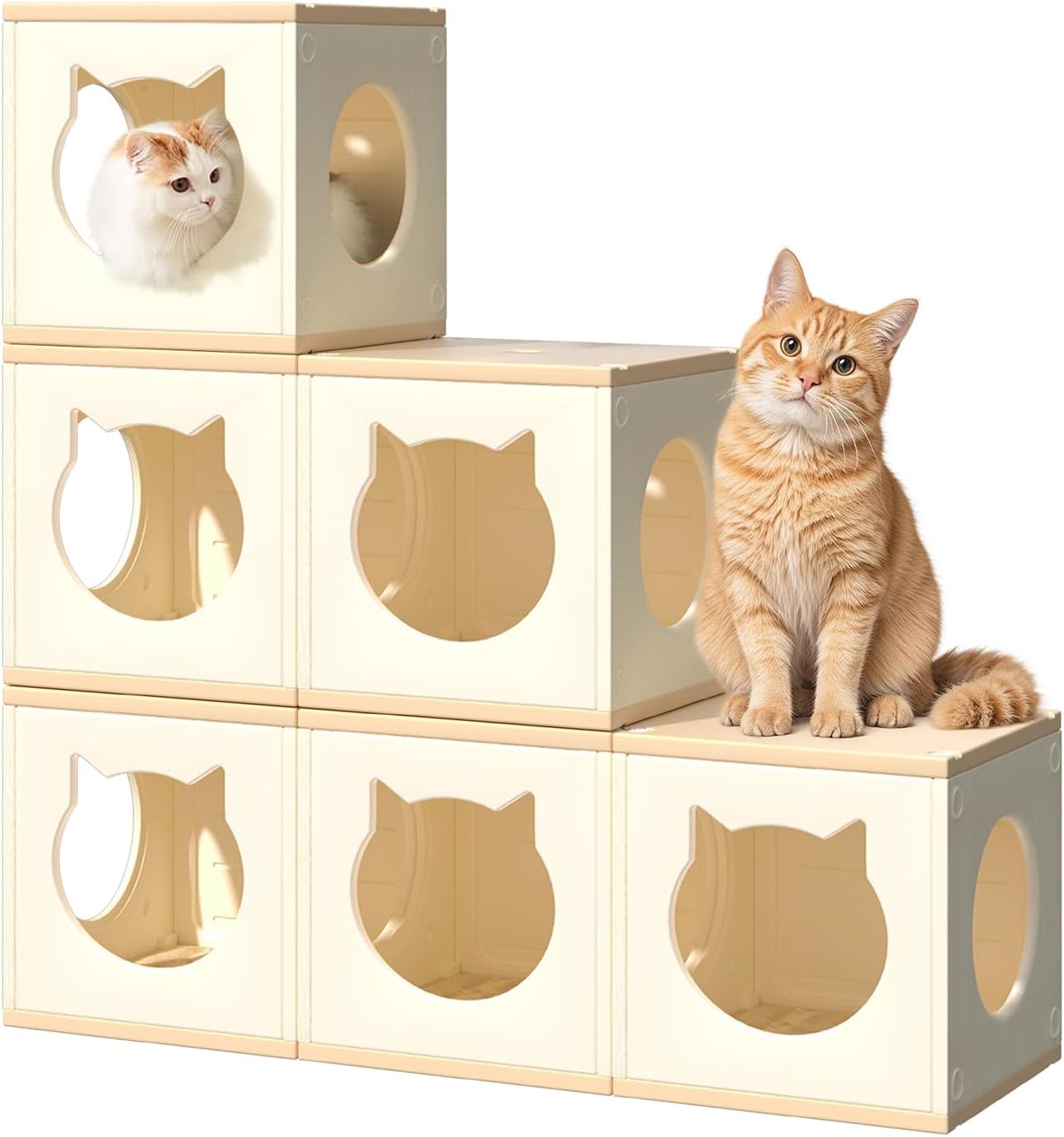
6-Cube Stackable Cat Tree Tower
Six stackable cubes plus a plastic tunnel, rearrangeable as a tower, a run, or a low wall, and the strongest pick for multi-cat homes
By far the most expensive, the largest footprint, and the most assembly of the four
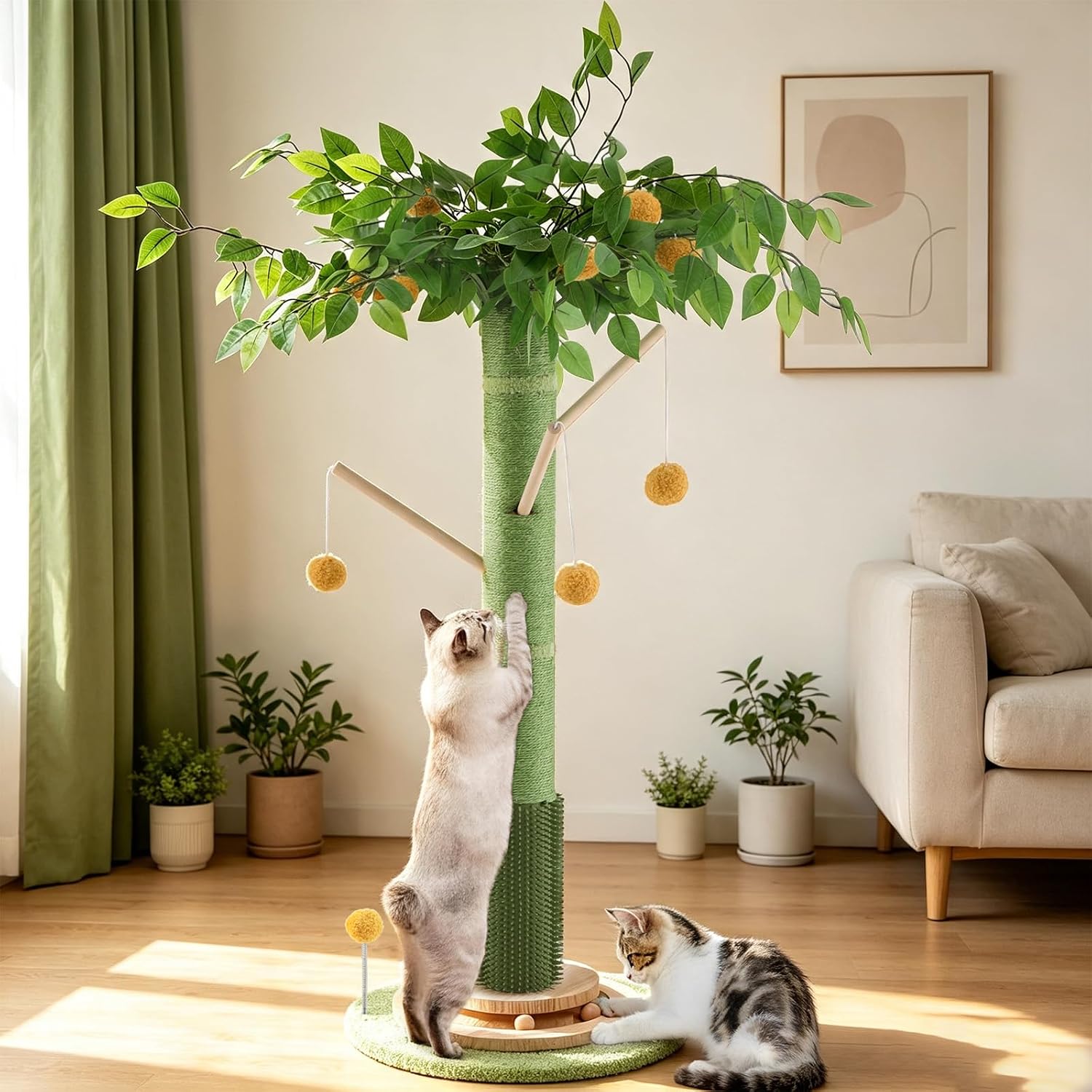
46" Tall Cat Scratching Post
Natural sisal at a height that lets an adult cat stretch to full length, which short posts never do
No perch, no bed, no hideout, and a post this tall needs a stable base or an anchor
Prices and availability may change.
Why the cat tree vs cat bed framing gets it backwards
The difference between cat tree and cat bed is functional, not aesthetic. A bed satisfies one behavior, rest. A tree satisfies three or four at once, depending on how it is built. Scratching is the big one. Cats scratch to shed the outer husk of each claw, to stretch the spine and shoulders, and to leave both a visual mark and a scent mark at the edge of their territory. A bed does none of that, which is why a nicer bed never fixes the sofa-scratching problem.
There is also a territory argument that matters more in a multi-cat home. Vertical space lets a cat be in the room without being in the traffic, and that lowers the low-grade tension that turns into guarding, spraying, or ambushing. In a house with two or more cats, a tree is closer to infrastructure than furniture.
Where the framing goes wrong is assuming the choice is permanent. A tree is the better first purchase for a healthy adult cat with claws. A bed is the better first purchase for a senior cat who no longer jumps onto the windowsill, or for a household where the cat already sleeps on the sofa and just needs one designated spot that is not your pillow. Both are correct answers to different questions, and the cat, not the listing page, is the one who decides.
What a cat tree gives your cat that a bed cannot
Scratching surface. Inspect this first. Look for a post wrapped in sisal rather than carpet, because sisal shreds in strands instead of matting into a felted mess. Post diameter matters more than total height here. A post thin enough to flex under a good stretch will not get used, no matter how tall the tree is.
Climbing and elevation. Platform height is the spec that decides whether a tree gets used or ignored. A tree that tops out at knee height rarely becomes a favorite, while one that puts a cat at window height or at the level of a bookshelf usually does. Height is also what makes a small apartment tree feel bigger than it is.
Perch width and shelf depth. A perch a cat cannot turn around on is a perch a cat visits once. Wider is better for big cats, and a deeper shelf gives a cat something to brace against when it lands. If a listing never states perch width, that is a signal the maker did not think about it.
An anchor point. Cats launch off furniture at speed. A tree that rocks when a cat lands on it gets abandoned, and a tree that tips is a hazard. Anchor type matters: a wall strap is the most secure option, a weighted base is the most convenient, and a bare flat base on carpet is the one I would skip in a house with a leaping cat.
A built-in bed. This is the bridge between the two products. A soft bed platform at the top of a tree covers sleeping and climbing in one footprint, which is exactly why this category exists and why it is usually the smarter first buy.
What a cat bed gives you that a tree cannot
Warmth and containment. Cats seek heat and small enclosed spaces, especially when something in the house changes. A bed with raised sides or a hooded shape gives a cat somewhere to curl and hide, and a tree platform rarely does that. This is the one job a bed does better than anything else.
Hammock fabric and washability. A hammock style bed, or a bed with a removable, machine washable cover, is far easier to keep clean than a carpeted tree platform. Cat beds collect hair the way trees collect hair, but only one of them goes in the washing machine.
Senior and mobility-limited cats. If your cat has stopped jumping onto the couch, a tree with a high platform is decoration. A low, flat bed with a shallow lip is something an older cat can walk into. This is the clearest case where the bed wins outright.
Small spaces and travel. In a studio apartment, a bed can tuck under a desk or beside a radiator where a tree cannot go. A bed also packs flat. If you travel with your cat, sort out carrier size before you shop for a bed, because the carrier is the thing that keeps a car ride calm.
Price of entry. A bed is a cheap experiment. A tree is a commitment in money, floor space, and assembly time, which is the whole reason it makes sense to think about order of purchase rather than a single winner.
How I judge cat furniture before recommending it
Since I cannot put every tree in your living room, I judge them the way you should: by the specs that decide whether a cat will actually use the thing, and by how honest the listing is about them.
- Platform height and perch width: if neither is listed, assume the top perch fits a kitten.
- Post diameter and material: sisal over carpet, and a post thick enough not to flex.
- Shelf depth: deep enough for a cat to lie flat, not just sit.
- Weight limit: the number that tells you whether a heavy cat is safe on the top platform.
- Anchor type: wall strap, weighted base, or nothing. Nothing is an answer too.
- Assembly and footprint: measure the floor space before you buy, not after the box arrives.
A tree that publishes all six of those is usually built by a company that expects repeat customers. A tree that publishes none of them is a gamble on a photo. It is also worth reading the negative reviews first, because complaints about wobble, missing hardware, and chemical smell repeat across brands and tell you more than the five star ones do.
The four cat trees in this comparison
These four span the range from a starter piece to a full cat wall, and each one solves a different version of the same problem.
MECOOL 4in1 Small Cat Tree. This is the only one of the four that arrives with a soft bed platform built in, and it also bundles jute and sisal posts, three hanging ball toys, and a massage brush. If you want to find out whether your cat will use a tree at all, this is the lowest-commitment way to test it, because it covers scratching, perching, and sleeping without a second purchase. The trade-off is size. It is a small tree, so the platforms suit a kitten or an average cat, and a big cat will spill over the edges. Visit on Amazon
KinoTail 19" Small Cat Tree. The simplest and cheapest of the group: a single perch on a scratching post. For a kitten or a cat that already uses a post, that is enough furniture to matter, and it fits in a corner. It is also short at 19 inches, so it will not satisfy a cat that wants to be above eye level, and with no bed platform you are still buying a bed separately. Visit on Amazon
46" Tall Cat Scratching Post. Forty six inches of natural sisal, aimed at adult cats. This is the pick when the problem is scratching and stretching rather than sleeping. A tall post lets a cat stretch to full length, which shorter posts do not, and natural sisal is the material most cats prefer. What it does not give you is a perch, a bed, or a hideout, and a post this tall needs a stable base or a wall anchor to earn its place. Visit on Amazon
6-Cube Stackable Cat Tree Tower. A different kind of object. Six stackable cubes with a plastic tunnel, which you can arrange as a tower, a run, or a low wall. In a multi-cat home, or for a cat that already loves boxes and tunnels, this is the most interesting option on the list. It is also by far the most expensive, the largest footprint, and the one with the most assembly, so it only makes sense if you have the floor space and you already know your cat likes enclosed spaces. Visit on Amazon
Trade-offs that decide it: platform height, footprint, and anchoring
Three specs decide whether a cat tree works in your home, and none of them are the ones the photos lead with.
Platform height against your ceiling and your cat's habits. Measure the tallest platform against the spot you plan to put it. A tree that puts a cat at the window line gets used; a tree that towers over a doorway gets ignored because the cat has nowhere to look. In a small apartment, a mid height tree beside a window beats a tall tree in a hallway.
Footprint against your floor. A tree occupies floor space forever, unlike a bed you can slide under a sofa. The cube tower and the tall post sit at opposite ends of that trade: one is a piece of furniture you build around, the other is a vertical object you tuck into a corner. Shelf depth and perch width matter here too, because a deep perch on a narrow base is a tipping risk.
Anchor type and weight limit. These two specs are the safety section, and they are the ones people skip. Check the weight limit against your heaviest cat, and check the anchor type before assembly day. A wall strap needs a stud or a proper anchor. A weighted base needs to be genuinely heavy. If a listing claims stability without mentioning either, treat the top platform as a kitten perch.
The last trade-off is honesty about your own cat. A cat that ignores every box you buy will not change its mind because a tree has six cubes. Start smaller than you think you need, and upgrade when the cat tells you it wants more.
Cat tree or cat bed first?
If you are still weighing a cat tree or cat bed as your next purchase, these rules cover most households.
- Kitten or healthy adult cat with claws: tree first, ideally one with a bed platform. Scratching and climbing are the behaviors that damage your furniture, and a bed does not address either.
- Senior cat, or any cat that has stopped jumping: bed first, low and easy to step into. A tall tree is wasted money for a cat that will not climb it.
- Studio or small apartment: bed first, then the smallest tree that reaches window height. The KinoTail and the MECOOL are the two on this list that fit that brief.
- Two or more cats: tree first, and prioritize vertical space and a second perch over a bigger bed. Multiple cats need escape routes more than they need one large sleeping surface.
- Cat that already sleeps on your bed or sofa: buy the bed, because you already know where the cat sleeps. Put the tree next to the window and let the cat find it.
Buying both is the normal outcome, and there is nothing wrong with that. The point of the cat tree vs cat bed comparison is sequencing, not exclusion: solve the behavior that is costing you the most first, and let the second purchase wait until you have watched your cat for a couple of weeks.
What I'm watching next
Two things are changing in cat furniture right now, and both are worth waiting for if you are not in a hurry. The first is washable covers on tree platforms and bed inserts, which is the biggest quality of life upgrade for anyone with a long haired cat. The second is modular, wall mounted systems that turn a corner into a climbing route instead of one object in the middle of the room. Neither is cheap yet.
For now, the practical version of the cat tree vs cat bed argument is simple. Buy the tree if your cat scratches and climbs. Buy the bed if your cat sleeps and hides. Buy the one that matches the behavior you actually see, and you will spend less than the person who guessed.