If you have ever searched for dog bowl materials explained, you are probably trying to match a bowl to your dog's habits, your floor, and your cleaning routine. The material affects how a bowl feels, how it ages, whether it slides, and how easy it is to keep clean. This guide covers dog bowl materials without hype, using four products that cover travel, floor protection, daily stainless steel feeding, and slow feeding. You will also see how bowl capacity, feeding height, and water capacity fit into the decision.
Quick answer
Match the material to the job rather than chasing a single perfect bowl. Stainless steel is a common choice for everyday food and water because it is durable and often dishwasher safe. A collapsible bowl is the practical pick for walks and hikes. An absorbent mat protects the floor under a water bowl. A slow feeder with slow feed ridges helps when a dog eats too quickly. Check the non slip base, the bowl capacity, and whether the bowl is dishwasher safe before you buy.
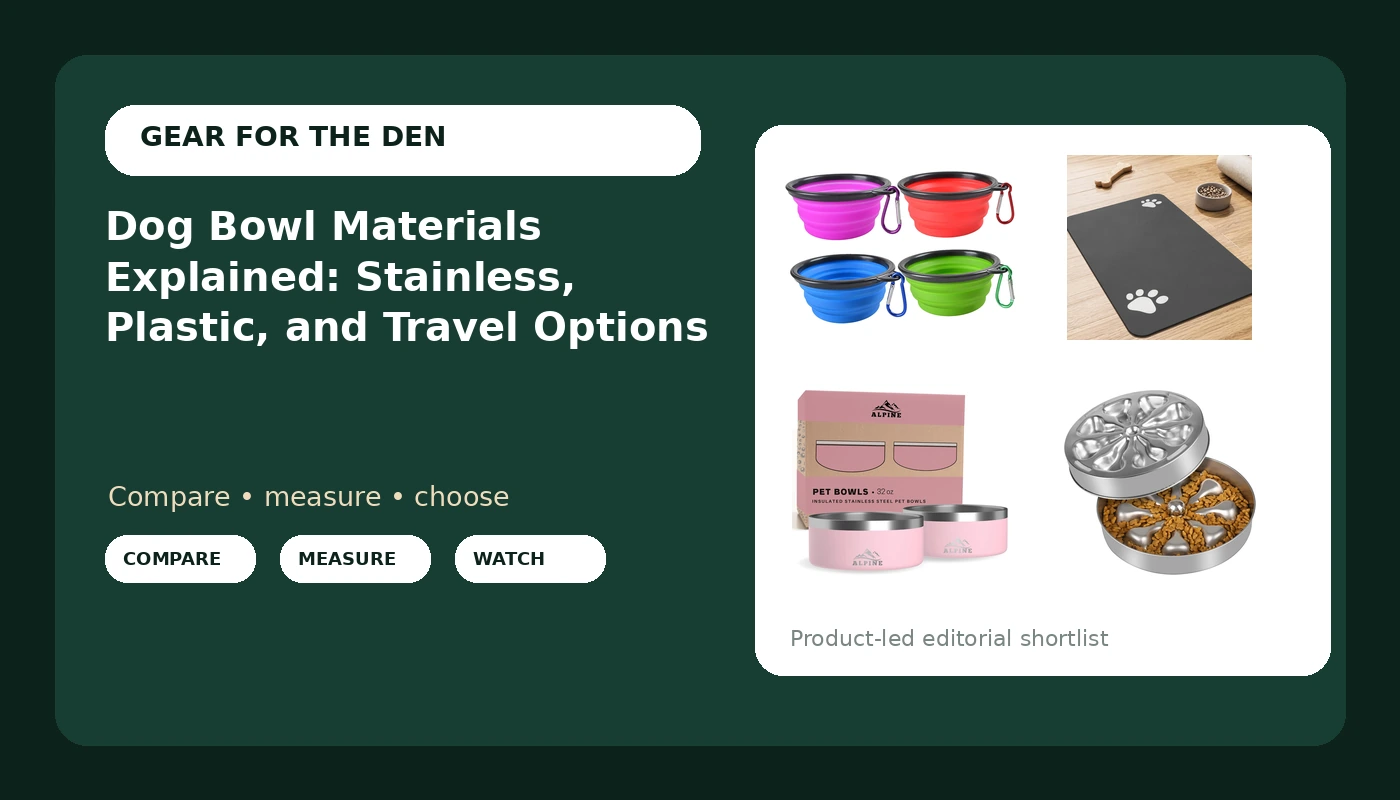
Dog bowl materials: four useful options
| Model | Best fit | What stands out |
|---|---|---|
| Collapsible Dog Bowls – 4 Pack, Portable Travel Water and Food Bowl with Carabiner Clip for Dogs and Cats – Ideal for Walking, Traveling, and Hiking | Travel, walking, hiking | Four pack with carabiner clip and collapsible design |
| PADOOR Pet Feeding Mat-Absorbent Dog Mat for Food and Water Bowl-No Stains Easy Clean Dog Food Mat-Quick Dry Water Dispenser-Puppy Supplies Accessories | Floor protection under bowls | Absorbent, quick dry, easy clean mat |
| Alpine Set of 2 Stainless Steel Dog Bowls, Non Slip, Metal Pet Bowl for Food and Water, Double Walled Insulated, Rustproof, Dishwasher Safe- 32 Ounces- Pink (AB) | Daily food and water at home | Stainless steel, double walled insulated, non slip, dishwasher safe, 32 ounces |
| Oiwliur Slow Feeder Dog Bowls, Stainless Steel Non-Slip Metal Bowl for Slow Feeding, 5 Cups Large Capacity, Double-Sided Design for Dry, Wet, or Raw Food, Ideal for Small, Medium, Large Dogs | Fast eaters and larger meals | Stainless steel, non slip, slow feed design, 5 cups capacity, double-sided |
Travel and hydration: Collapsible Dog Bowls – 4 Pack, Portable Travel Water and Food Bowl with Carabiner Clip for Dogs and Cats – Ideal for Walking, Traveling, and Hiking
The trade-off is that a soft collapsible bowl is not a substitute for a weighted stainless bowl at home. It can tip more easily on uneven ground, and it holds its shape best when filled and set down carefully. For a dog that gulps water, a collapsible bowl may also need to be refilled more often, which is where water capacity matters. Still, for hiking and travel, the packability is the point.
Floor protection: PADOOR Pet Feeding Mat-Absorbent Dog Mat for Food and Water Bowl-No Stains Easy Clean Dog Food Mat-Quick Dry Water Dispenser-Puppy Supplies Accessories
A mat does not change the bowl material, but it changes the feeding surface. If you have hardwood, laminate, or tile, an absorbent mat can reduce standing water and make cleanup faster. The trade-off is that mats need their own cleaning routine, especially if the dog is a messy drinker. A mat with a non slip base can also keep the bowl from sliding, though the bowl itself should still have a stable base.
Daily feeding: Alpine Set of 2 Stainless Steel Dog Bowls, Non Slip, Metal Pet Bowl for Food and Water, Double Walled Insulated, Rustproof, Dishwasher Safe- 32 Ounces- Pink (AB)
Stainless steel is popular because it does not hold odors the way some porous materials can, and it is often dishwasher safe. The double wall construction adds a layer of insulation, which can slow temperature changes in water compared with a single wall bowl. The trade-off is weight and cost: a stainless set is heavier than a collapsible bowl and usually costs more. For a dog that eats at home twice a day, that trade-off is often reasonable.
Slow feeding: Oiwliur Slow Feeder Dog Bowls, Stainless Steel Non-Slip Metal Bowl for Slow Feeding, 5 Cups Large Capacity, Double-Sided Design for Dry, Wet, or Raw Food, Ideal for Small, Medium, Large Dogs
A slow feeder is not about material alone. The design changes how quickly a meal disappears, and that can matter for dogs that gulp food and then seem uncomfortable. The trade-off is cleaning: ridges and pockets can trap residue, so check whether the bowl is dishwasher safe or needs a brush. A 5 cup capacity also takes up more floor space than a standard bowl, which is worth measuring before you buy.
Prices and availability may change. Product images, names, and retailer links are matched to verified listings. No current price, rating, stock status, or measured result is stated here without current evidence.
How material affects cleaning and odor
Material choice shows up most in cleaning. Stainless steel is generally non porous, so it tends to release food and water residue with a normal wash. Many stainless bowls are dishwasher safe, which simplifies a daily routine. Plastic bowls are lighter and often cheaper, but they can scratch over time. Scratches can trap oils and odors, and some dogs may chew or mouth plastic. Ceramic bowls are heavier and can be more stable, but they can chip if dropped. Silicone and collapsible bowls are flexible and packable, but they may need hand washing and can hold onto smells if not dried fully.
An airtight seal is not a feature of a standard bowl, but it matters for food storage containers and for water fountains. If you use a fountain, the filter cartridge and the seal around the lid are the parts to check on a schedule. A non slip base is another practical detail: it keeps the bowl in place on smooth floors and reduces the chance of a tipped water bowl. Some shoppers look for dog bowl desk materials because they feed a small dog on a desk or counter, while others look for dog bowl floor materials because the bowl sits on hardwood or tile. Both searches point to the same practical question: what happens where the bowl meets the surface.
Capacity, height, and water needs
Bowl capacity should match the meal, not the dog's breed label. A bowl that is too small means refills; one that is too large can make a small dog stretch or step into the bowl. Feeding height matters for large dogs and for dogs with mobility issues. A raised bowl can reduce neck strain for some dogs, but it is not automatically better for every dog, and sudden changes in feeding height are worth discussing with a veterinarian if your dog has a medical condition. Water capacity matters more in hot weather, during travel, or in a multi pet home. Slow feed ridges change how fast a meal is eaten, but they also make the bowl harder to clean, so check whether the design is dishwasher safe or needs a brush. Use the following steps to compare options.
- Measure a normal meal and choose a bowl capacity with a little headroom.
- Watch your dog eat and drink to see whether sliding, splashing, or gulping is the real problem.
- Match the material to the cleaning routine: dishwasher safe stainless for daily use, collapsible for travel, absorbent mat for floor protection.
- Check the base. A non slip base helps on tile and hardwood, but it is not a substitute for a bowl that fits the space.
- Recheck water capacity and feeding height as your dog grows, ages, or changes activity level.
Practical guidance for a feeding station
- Feed on a surface that is easy to wipe, and use a desk mat or a dedicated absorbent mat if the bowl sits on a desk, counter, or raised platform.
- Keep a spare collapsible bowl in the car or hiking bag so water capacity is not limited by one bowl.
- Separate food and water bowls enough that a spilled water bowl does not soak dry food.
- Wash bowls regularly, and follow the manufacturer's care instructions for dishwasher safe claims.
- For fast eaters, try a slow feeder with slow feed ridges before changing the food itself.
- If you use a water fountain, clean the filter cartridge area and check the airtight seal on any food storage bin.
Which option should you choose?
Choose the Collapsible Dog Bowls – 4 Pack, Portable Travel Water and Food Bowl with Carabiner Clip for Dogs and Cats – Ideal for Walking, Traveling, and Hiking when you need a packable water or food bowl for walks, travel, or hiking. Choose the PADOOR Pet Feeding Mat-Absorbent Dog Mat for Food and Water Bowl-No Stains Easy Clean Dog Food Mat-Quick Dry Water Dispenser-Puppy Supplies Accessories when the main problem is splashes, drips, or floor stains under the bowls. Choose the Alpine Set of 2 Stainless Steel Dog Bowls, Non Slip, Metal Pet Bowl for Food and Water, Double Walled Insulated, Rustproof, Dishwasher Safe- 32 Ounces- Pink (AB) when you want a matched stainless steel set for daily food and water at home. Choose the Oiwliur Slow Feeder Dog Bowls, Stainless Steel Non-Slip Metal Bowl for Slow Feeding, 5 Cups Large Capacity, Double-Sided Design for Dry, Wet, or Raw Food, Ideal for Small, Medium, Large Dogs when your dog eats too quickly and you want a slow feeder with stainless steel construction.
This guide does not claim that one material is safest or best for every dog. Material preferences vary, and a veterinarian or veterinary behaviorist is the right source for medical or behavioral feeding concerns. The product details above come from the listings, not from laboratory testing or long term ownership.
The bottom line
Dog bowl materials are a practical choice, not a status symbol. Stainless steel remains a sensible default for daily meals because it is durable and often dishwasher safe. A collapsible bowl covers travel, an absorbent mat protects the floor, and a slow feeder addresses fast eating. Check bowl capacity, water capacity, feeding height, and the non slip base against your own setup, then pick the option that solves the problem you actually have. For a full setup, see how to set up a dog feeding station.