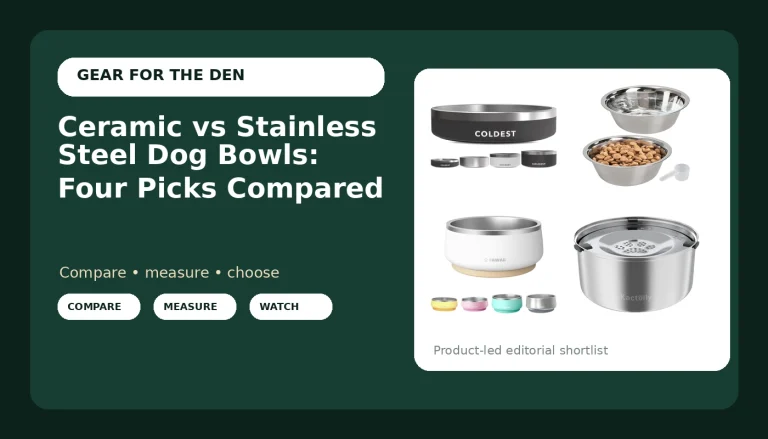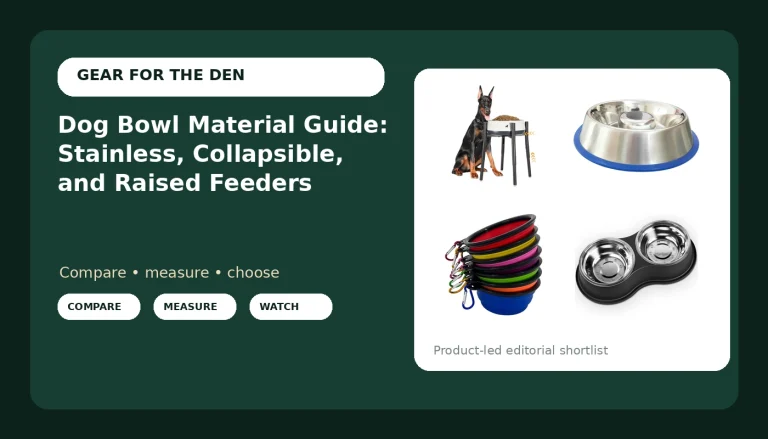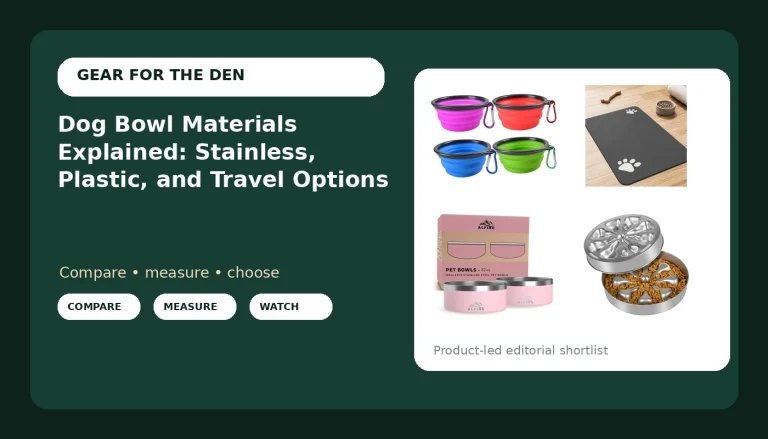
Most people make the stainless steel vs plastic dog bowls call in about four seconds, standing in an aisle with a plastic bowl in one hand and a metal one in the other. It deserves more than four seconds. The material decides how the bowl smells after a week, whether it survives a teething puppy, and how often you end up scrubbing film out of scratches you cannot see. Plastic is not automatically the wrong answer, but it is the answer that asks more of you in maintenance, and it is the one that fails loudest when a dog decides the bowl is also a toy.
The short answer: stainless steel is the better default for food and for everyday water, and the four bowls below show what that looks like across four different jobs, from a six cup food set to an eight liter fountain. The rest of this article covers the trade-offs those four picks make, and the cases where plastic still earns its place on the floor.
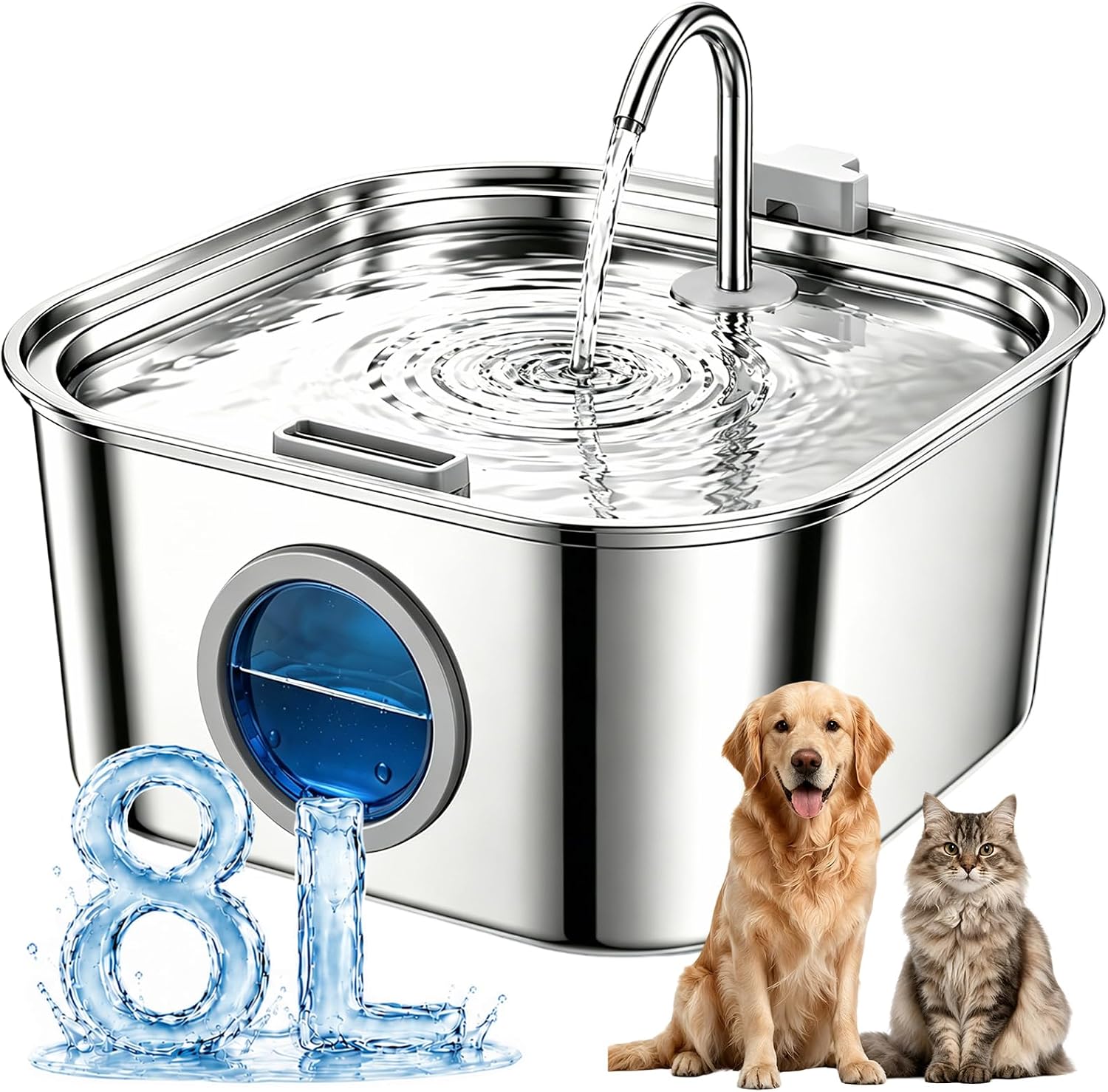
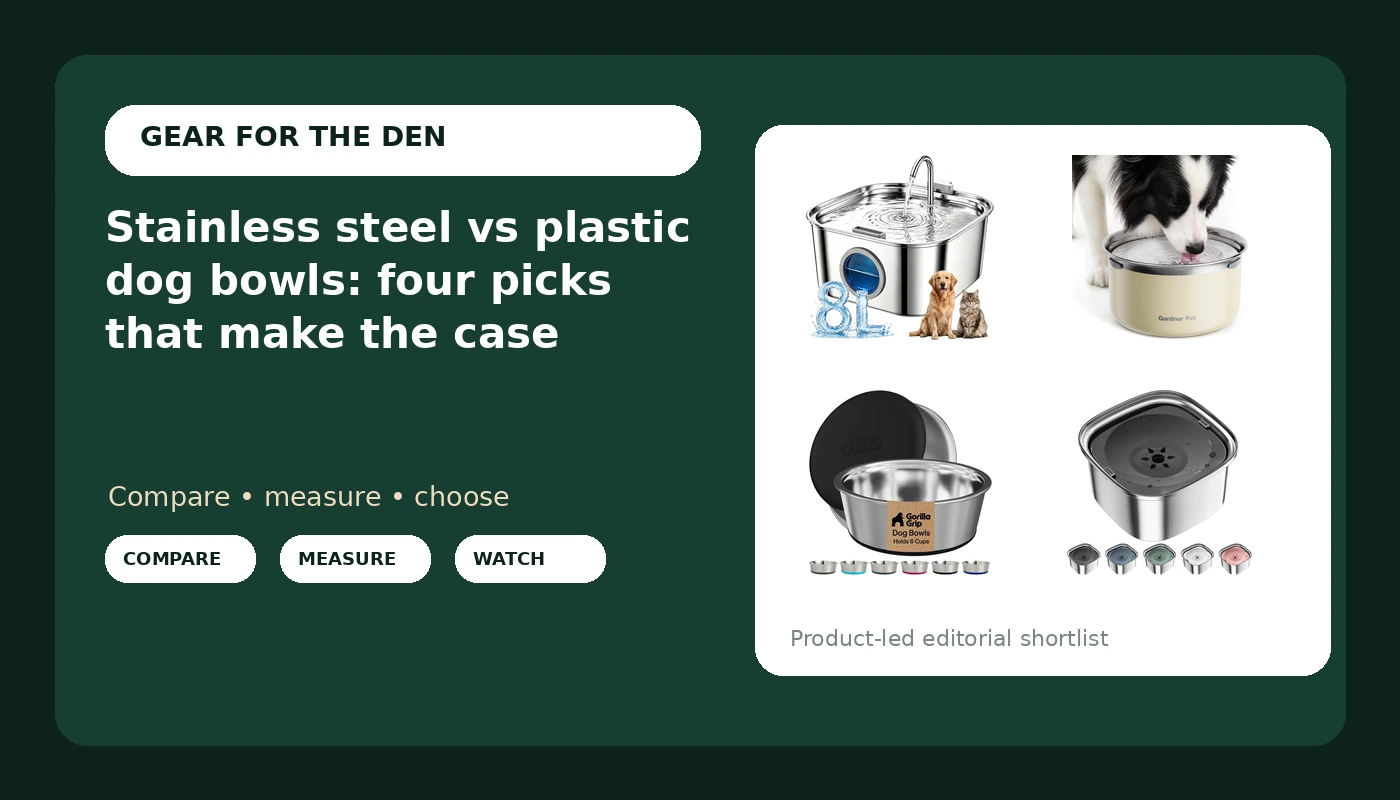
Dog Water Fountain for Large Dogs, 8L/270oz Stainless Steel Dog Bowl
Largest water capacity here at 8L/270oz, so a multi-dog house refills far less often
Moving water means pump cleaning and filter cartridges a plain bowl never asks for
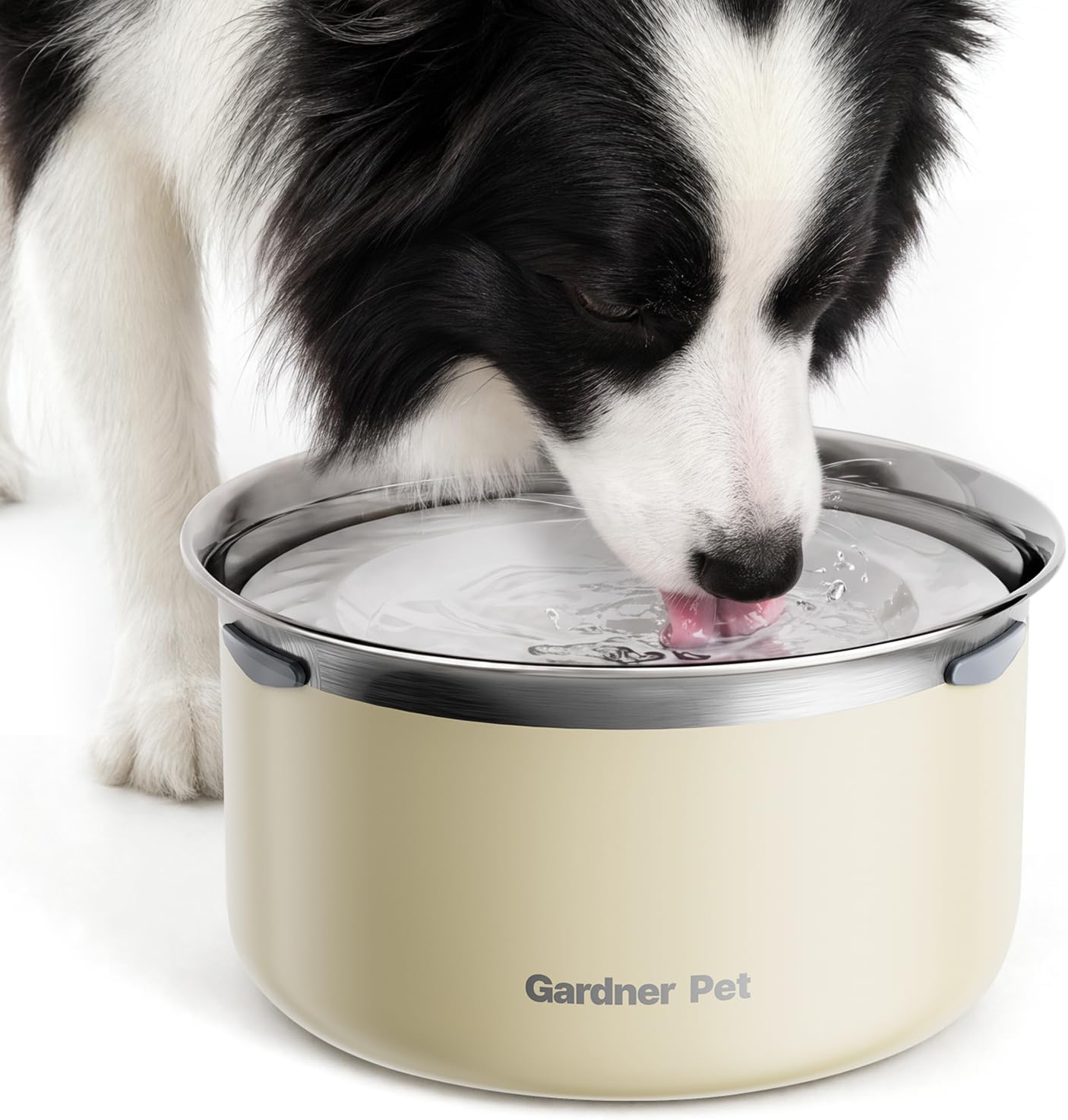
Gardner Pet Dog Bowls 1 Gallon (3.85L) Stainless Steel Dog Water Bowl
A gallon of still water with nothing to plug in, break, or replace
No no-spill or slow drinking design to slow a gulper, and heavy to lift when full
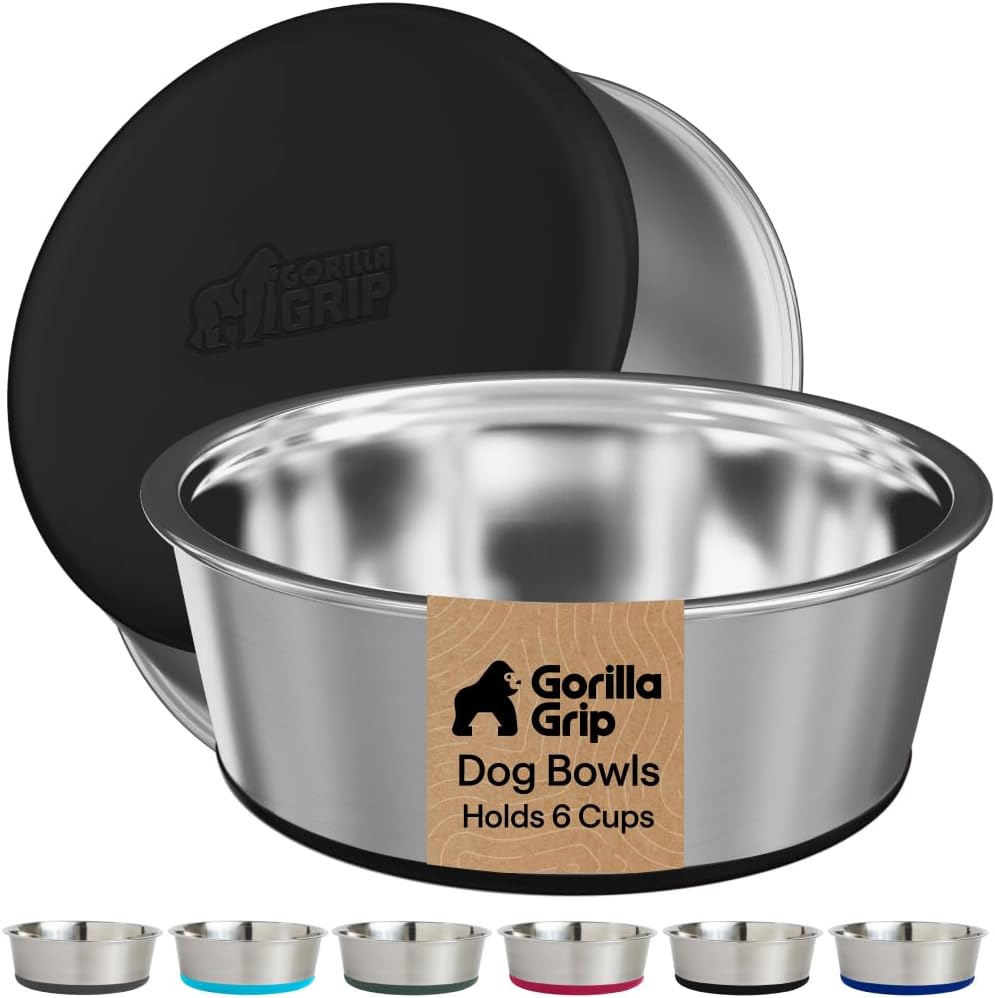
GORILLA GRIP Dog Bowl Set, Food Grade 304 Stainless Steel, 6 Cup, Black
Food grade 304 stainless in a 6 cup set built to stay put
Six cups is a meal, not a day of water for a large dog
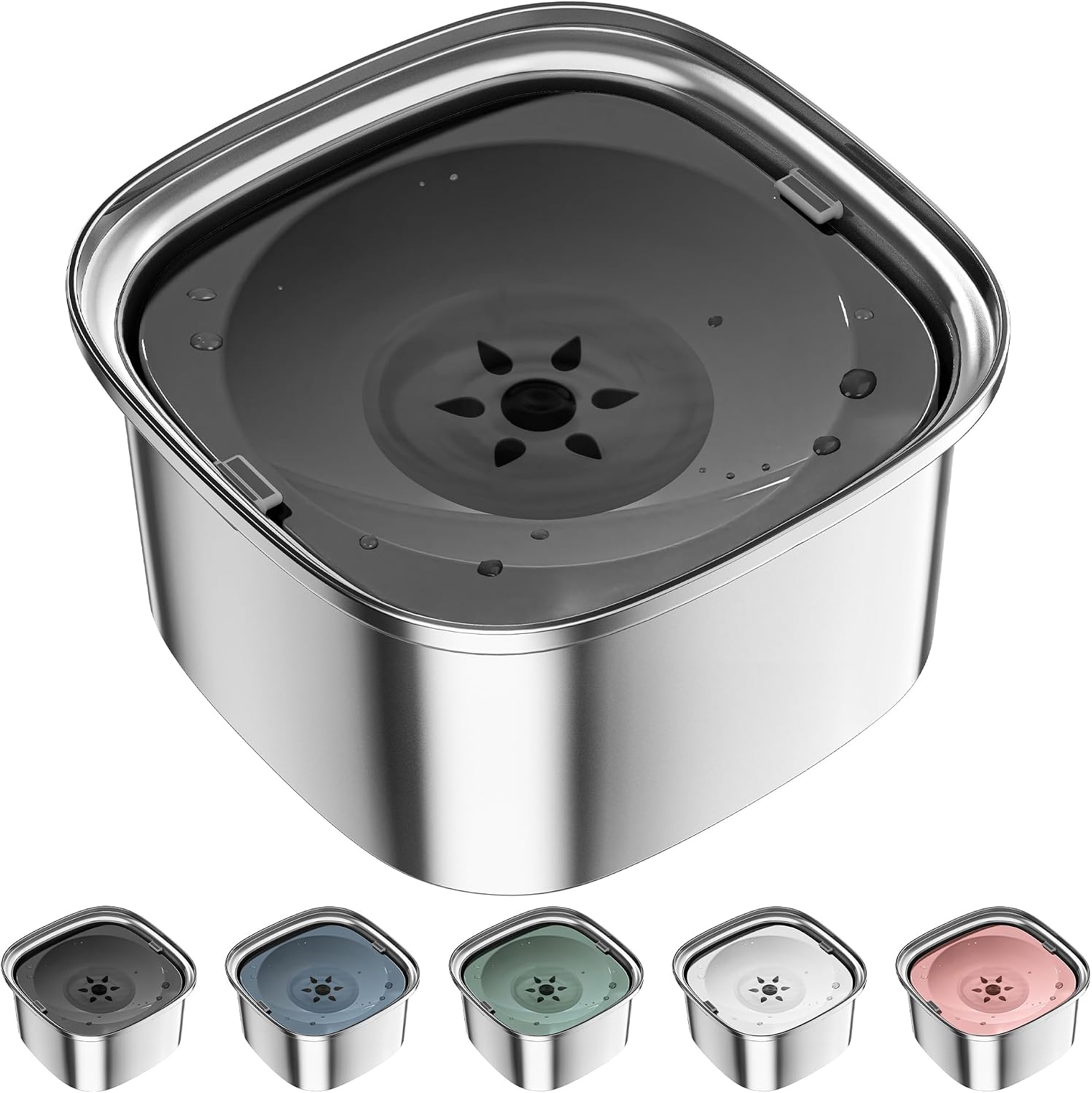
UPSKY 3L Stainless Steel Dog Water Bowl, No-Spill Slow Drinking Feeder
No-spill slow drinking shape in a 3L bowl that discourages gulping
Smallest water capacity of the three water options here
Prices and availability may change.
What stainless steel vs plastic dog bowls actually changes
The practical difference between stainless steel and plastic dog bowls comes down to what happens to the surface after a hundred meals. Plastic is softer than metal, so every kibble crunch and every tongue scrape leaves a microscopic groove. Those grooves hold fat, saliva, and bacteria, and they do not come out in a normal wash. A scratched plastic bowl can smell sour even when it looks clean, which is why so many owners replace plastic every few months without quite knowing why.
Stainless steel is harder, smoother, and non-porous. Food and water sit on the surface rather than in it, and a bowl that is genuinely dishwasher safe comes out of a hot cycle with nothing left to feed a biofilm. Stainless also does not hold odor the way plastic does, which matters most with wet food and with water bowls that sit in a warm room all day.
Plastic also ages in ways you can see. A bowl that goes through the dishwasher over and over goes chalky and dull, and a bowl left on a sunny patio can warp enough that it no longer sits flat. Stainless does not care about heat, sun, or soap.
The second difference is mechanical. A determined chewer can crack or shred a plastic bowl, and the edges it leaves behind are sharp. Stainless dents, but it does not fragment. That is the reason shelters and vet clinics run stainless: it survives being dropped, stepped on, and chewed, and it can be sanitized between animals.
The third difference is weight and stability. Stainless bowls are heavier, and a heavier bowl sitting on a non slip base stays put while a dog eats. Light plastic slides across tile, tips at the rim, and turns mealtime into a chase.
Where the stainless advantage shows up in food bowls
Food is where the stainless steel vs plastic dog bowls argument is easiest to settle, and the Gorilla Grip Dog Bowl Set is the straightforward pick on this list. Its name carries the two specs that matter: food grade 304 stainless steel and a 6 cup capacity. 304 is the alloy you want in a bowl that holds food, because it resists corrosion and does not react with anything in a normal dog diet. Six cups is a solid single meal size for a medium or large dog, and generous for a small one.
The grip part of the name is doing real work too. Food bowls get pushed, licked, and nosed around the floor, and this set is built to stay where you put it. If your dog eats like the bowl owes him money, a base that resists sliding is worth more than a prettier finish. Visit on Amazon
The trade-off is honest: six cups is a meal, not a day of water, and a food set is not the tool for a dog that drains a bowl while you are at work. That is a job for the water bowls below. Wet food is the hardest test of any bowl, since it leaves fat behind, and fat is what turns into a film on a scratched surface. A smooth 304 bowl gives that film nowhere to live.
Water capacity is the number that separates these three
Water is where the specs separate quickly. The UPSKY 3L Stainless Steel Dog Water Bowl holds about three liters. The Gardner Pet Dog Bowls hold one gallon, roughly 3.85 liters. The Dog Water Fountain for Large Dogs holds 8 liters, or 270 ounces. For one small dog, three liters is already a full day with room to spare. For two large dogs in a warm house, eight liters is the difference between a refill and an emergency. Visit on Amazon
Water capacity matters more than most owners expect because dogs drink in bursts. A dog that has been running will empty a shallow bowl in one long session, and a bowl that runs dry mid-day teaches a dog to drink from the toilet or the plant saucer. If you are away for nine hours, size the bowl for the hottest day of the year rather than the average one.
Weight is the other half of that. A full gallon of water is heavy, and a bowl that is hard to lift without sloshing ends up half filled, which defeats the point of buying the bigger size.
Feeding height is the spec people confuse with capacity. A large or senior dog that eats off the floor puts extra weight on the front legs and neck, and a raised stand changes that angle without changing how much the bowl holds. Solve the height question with the stand and the capacity question with the bowl.
Slow feed ridges, no-spill rims, and drinking speed
The stainless steel vs plastic dog bowls question gets more interesting once you look at how fast the water disappears. Some dogs gulp, and gulping is how a bowl ends up flooded across the kitchen floor. The UPSKY bowl is built as a no-spill slow drinking feeder, which means the shape is meant to slow the dog down rather than simply hold volume. The same idea shows up on the food side as slow feed ridges: raised patterns that force a dog to work around them instead of inhaling a meal. Visit on Amazon
If your dog eats too fast and then vomits, slow feed ridges are the first thing to try, and they are far more common in plastic and silicone designs than in stainless. That is a genuine point in plastic's favor, and it is why some owners keep one plastic slow feeder for meals and stainless for water.
For water, a no-spill rim or a slow drinking insert helps with a dog that laps hard enough to splash. It does not fix a dog that tips the bowl over, which is why base grip matters as much as the rim.
Fountains, filter cartridges, and the cost of moving water
The fountain is the one product here that changes the category. Moving water gets some dogs drinking more, which is a real benefit for dogs prone to urinary problems, and an 8 liter reservoir means far fewer refills than any bowl on this list. It is the obvious pick for a multi-dog house or a large breed that empties everything else. Visit on Amazon
It also adds maintenance a plain bowl never asks for. A fountain pushes water through a filter cartridge, and that cartridge is a recurring purchase and a recurring cleaning task. Pumps need to be pulled apart and rinsed, and a fountain that is neglected gets slimy faster than a bowl does. If you will not clean it on schedule, buy the gallon bowl instead and save yourself the project.
Noise is the last thing to know about. A pump running with a low reservoir will hum or gurgle, and that sound is a request for a top-up, not a defect.
Airtight seals, dishwasher safe claims, and cleaning reality
Two labels deserve scrutiny. The first is dishwasher safe. Stainless bowls that carry the claim can go through a hot cycle, which is the fastest way to deal with fat and bacteria. Plastic that claims the same thing often survives the cycle but dulls, warps, or crazes over time, and those cracks are where odor starts.
The second is airtight seal, which shows up on food storage containers and on fountain lids. An airtight seal keeps kibble fresh and keeps a fountain from leaking at the seam, but it also means more crevices to clean. Rubber gaskets trap food and grow film if you skip them, so a bowl or a fountain with a seal needs a full teardown, not just a rinse.
The simplest cleaning routine still belongs to a plain stainless bowl: hot water, soap, dishwasher, done. That is the routine you are buying when you choose metal, and it is the routine that keeps a bowl in service for years instead of months.
Where plastic still makes sense
Plastic is not a bad material. It is a cheap material with a short service life, and sometimes that is exactly what you need. It wins on price, on weight for travel, and on shapes that are hard to stamp in metal, like slow feed ridges and puzzle bowls. For a puppy that is still chewing everything, a cheap plastic bowl you replace in three months is a defensible choice, and for a dog that eats on the road, a light plastic bowl in a bag is easier to carry than steel.
What plastic should not be is the permanent water bowl in a house where nobody wants to scrub. Once the surface is scratched, it is a sponge, and no amount of washing fixes a sponge. If you run a plastic dog bowls vs stainless steel cost comparison, plastic wins the first month and loses the first year.
That is why, if you are choosing stainless steel or plastic dog bowls for a dog that will be with you for another decade, metal is the better buy. Spend the difference on food.
Do you need a fountain, a gallon bowl, or a simple dish?
Match the bowl to the job rather than to the dog's size alone.
A single dog that drinks normally, with someone home during the day: the six cup set plus a three liter bowl covers food and water with almost no maintenance.
Two dogs, one large breed, or long days alone: the one gallon bowl is the low-effort upgrade, and it has nothing to plug in.
A dog that ignores still water, a multi-dog house, or a dog with a vet recommendation to drink more: the fountain earns its cleaning overhead.
A gulper that floods the floor: the no-spill slow drinking bowl, plus a mat underneath for whatever gets past it.
What to check before you buy
Check the metal grade first. Food grade 304 stainless is the standard to look for, and it is the reason the Gorilla Grip set leads the food category here.
Check capacity against your longest day rather than your average one, and remember that bowl capacity and water capacity are two different jobs with two different numbers.
Check the base. A non slip base matters more than finish or color, because a bowl that slides is a bowl that gets tipped.
Check the cleaning path. Dishwasher safe stainless is the easiest routine you can buy, and anything with a gasket or a filter cartridge needs a schedule you will actually keep.
Check feeding height if your dog is large or senior. A raised bowl is easier on the neck and the joints, and the stand does more for that than the bowl does. Then pick the material you can live with, which for most homes is stainless. That is the whole stainless steel vs plastic dog bowls calculation in one line: choose the surface you can clean, in the size you will actually fill.