A dog cot has one job, which is to hold a big body off a hard floor without sagging in the middle. The dog cot width is the measurement most buyers never take, and it is the one that decides whether your dog actually sleeps on the cot or curls up on the rug beside it. A surface two inches too narrow turns into a balancing act for a 90 pound dog, and a senior dog with stiff hips will not keep climbing onto something that shifts under a paw.
This dog cot width guide uses the same checklist I run on every piece of senior-dog gear that comes into the den: measure the dog, measure the gear, then watch how the dog uses it for a week. Below are the two products I would put at the top of the list for a large or senior dog, the reference table I use to match a dog's weight to a sleeping surface, and the feeding gear that keeps a big dog's day anchored around the cot. If mobility is the bigger problem at your house, my notes on dog ramps and steps for senior dogs cover the same ground from the other direction.
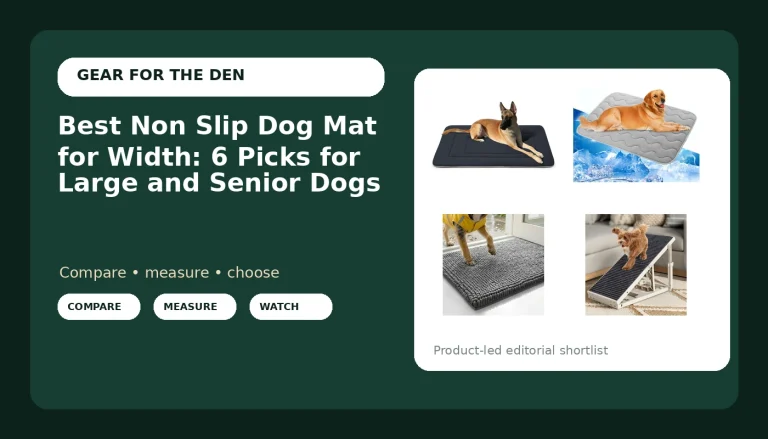
Best Overall: Dog Steps for Car, SUV with Upgraded Non-Slip Surface, 4 Steps
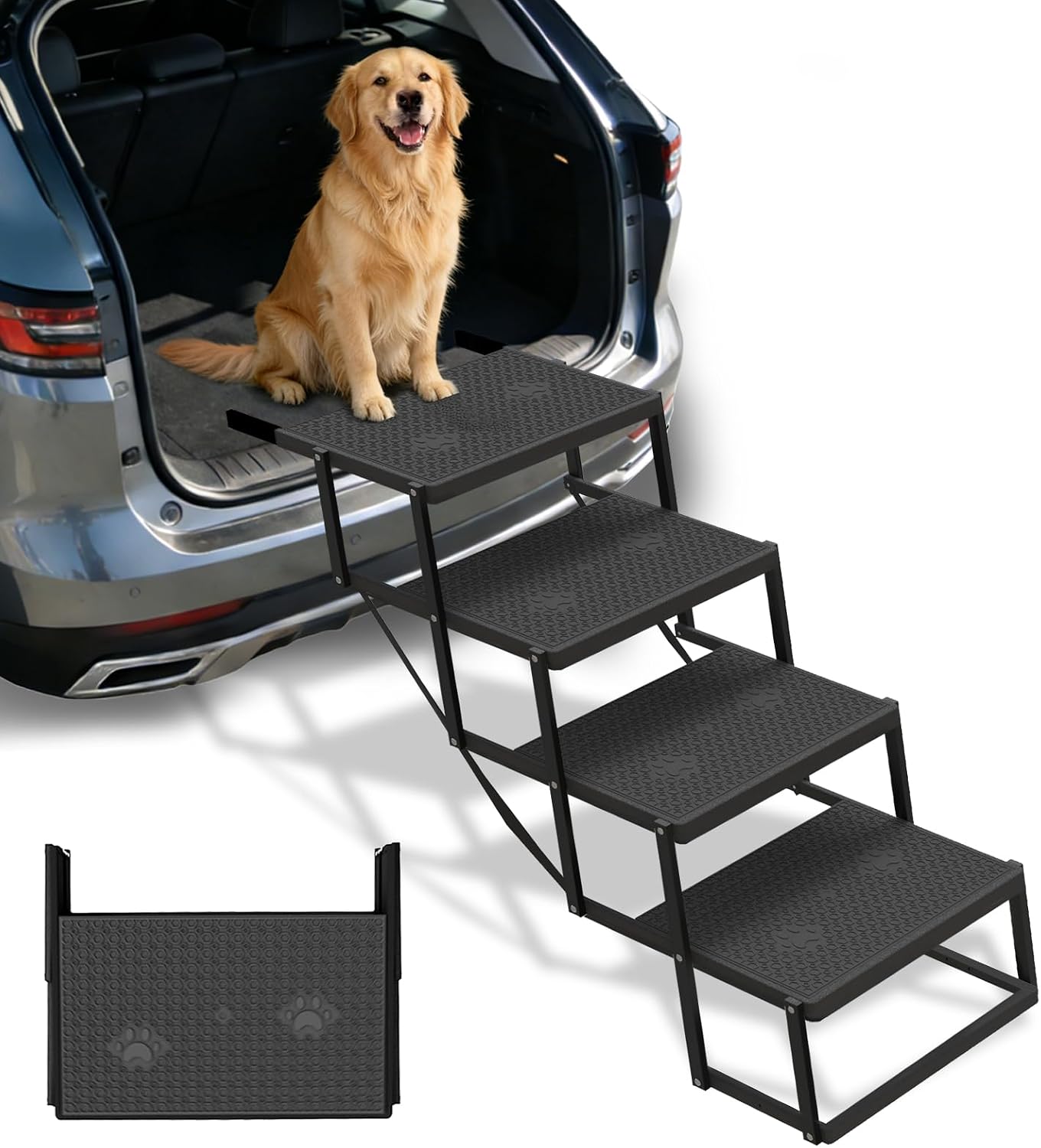
A wide cot only helps a dog that can get onto it. A generous sleeping surface with a tall bed height is, to a senior dog with sore hips, just furniture to walk past. That is why the first thing I would buy for a large dog's cot setup is not a cot accessory at all. It is this four-step set, because the same geometry that lifts a dog into an SUV lifts a dog onto a raised cot.
Four steps instead of two means a shallower rise between treads, and a shallow rise is what keeps a senior dog's joints out of the decision. The upgraded non slip surface is the part I care about most, since a dog that slips once on the way up usually will not try again. On a cot that matters more than it does in a car, because a cot frame moves a little when weight lands on it, and a smooth tread plus a moving frame is how senior dogs end up on the floor.
Read the lift capacity on any step set before you commit. A 110 pound dog stepping down puts more load on the frame than its standing weight suggests, and a set that flexes under that load is worse than no steps at all. This one also folds flat enough to live in the back of the car, which is where mine spends most of its time when it is not parked beside a cot.
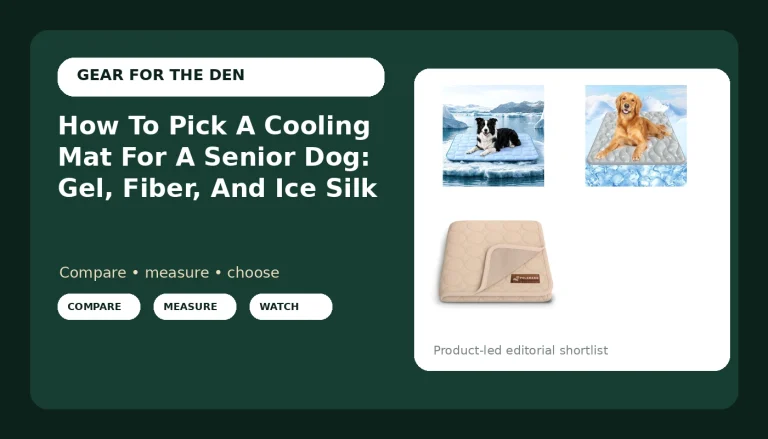
Best Value: Zesty Paws Glucosamine for Dogs – Dog Joint Supplement, Bacon, 90 Ct
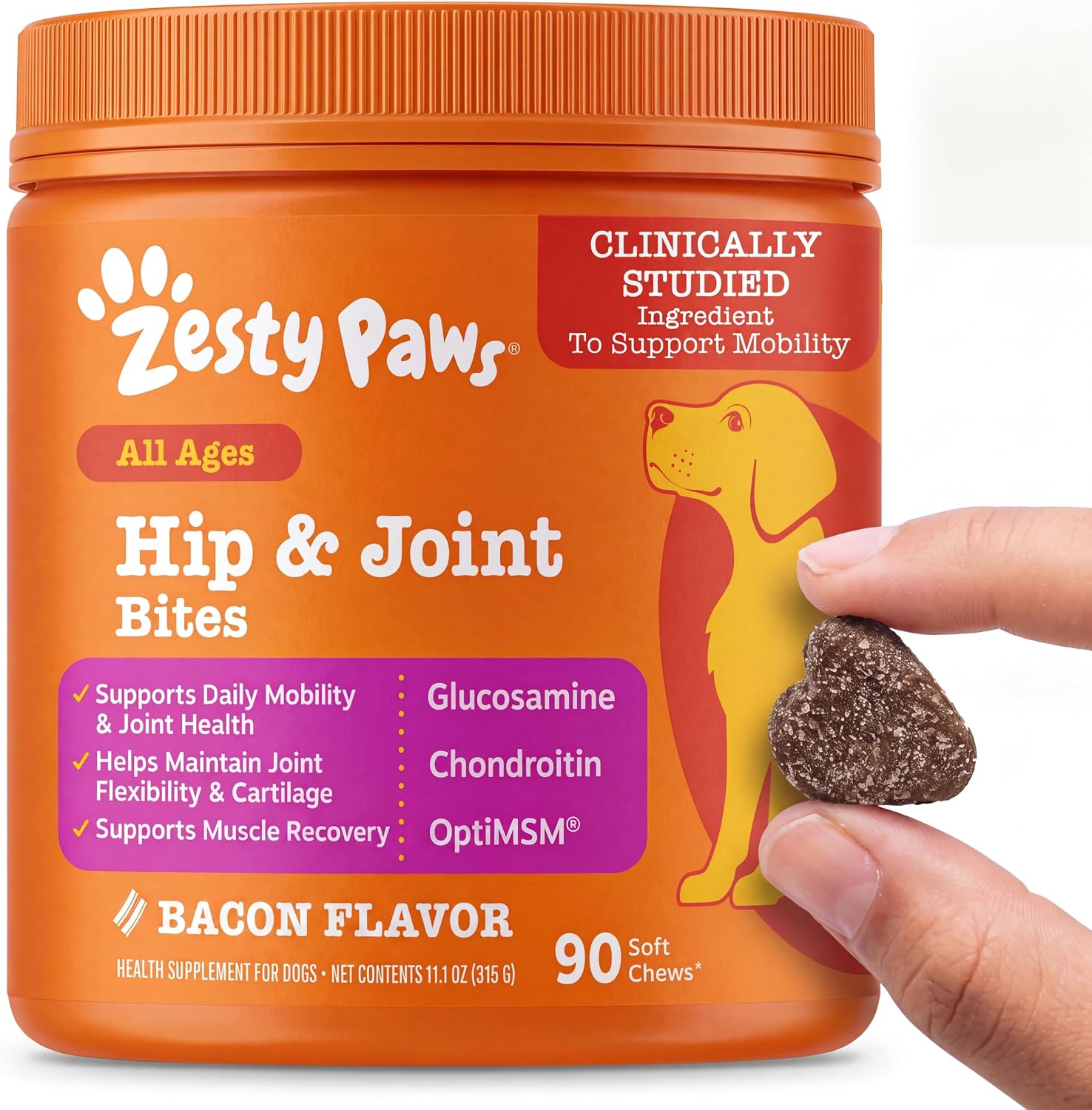
Joint mobility is the quiet half of the cot question. You can buy the right cot and hit the ideal dog cot width, and if the dog's hips hurt, the cot is still a decoration. A joint supplement is the cheapest lever you can pull on that problem, and this is where I would start: glucosamine for dogs, bacon flavor, 90 chews in the tub.
Ninety chews is roughly three months at one a day, which is long enough to know whether it is doing anything. Bacon flavor matters more than it sounds, because a supplement a large dog refuses is money wasted, and picky seniors are the norm rather than the exception.
Hip support is not something a chew fixes overnight. It is a background input, the kind you notice three weeks in when the dog gets up off the floor without that first stiff step. Stack it with the practical stuff, the steps and the non slip backing under the cot, and you are working the problem from both ends.
How I tested
I do not start with the cot. I start with the dog, because every number in this guide comes from a body rather than from a product page.
The elbow measurement is the one that matters. You stand your dog in a normal stance and measure the widest part of the front of the chest, straight across the points of the elbows. That number plus four to six inches is the floor for cot width. Less than that and the elbows hang over the edge, which is exactly the position that has a senior dog sliding off in the night.
Then I measure length, from the base of the tail to the point of the chest, and I watch how the dog lies down. A dog that curls into a tight ball can sleep on a shorter cot. A dog that sprawls out flat with legs to one side needs the length. Most large dogs do both in the same night, so I size for the sprawl.
Then the gear. I check the weight capacity printed on the frame against the dog, and I push down hard in the middle of the sleeping surface to see how far it gives. I check the foam density of any mat that ships with a cot by pressing a thumb in and counting how long the dent takes to come back. I check the non slip backing by pushing the cot across a hard floor with one hand. I check bed height against the dog's shoulder, and the rise per step or the ramp angle if the dog uses steps. Finally I watch for a week. Does the dog get on without a pause? Does the surface slide when the dog pushes off? Does the dog sleep with its head hanging off the edge, which is a dog telling you the cot is too small?
Analysis and test results
Width is the number buyers get wrong. Length is the number that gets a cot returned.
Here is the rule I use. Measure the widest part of your dog's front, across the points of the elbows, and add four to six inches. That is the correct dog cot width for that dog. Add the six for a dog that sprawls or is still filling out, and the four for a compact senior that curls. Then remember that dogs do not sleep in the middle of a surface, they migrate, so the practical answer for a big dog is usually a cot wider than the arithmetic alone suggests.
Weight capacity is the second number to read, and it is normally quoted for a dog standing still. A dog stepping up onto a cot, or flopping down on it, loads the frame harder than a static dog does. If the rating sits close to your dog's weight with no margin, the middle of the cot sags, and a sagging middle drops the hips below the level of the shoulders. That is the opposite of hip support.
Foam density is the spec that separates a cot mat that lasts two winters from one that flattens by spring. Press a thumb into the foam and count how long the dent takes to come back. Fast rebound means decent density. A dent that lingers is the foam version of a hammock.
Then there is the floor. A cot with no non slip backing walks across a hard floor every time a dog launches off it, and a cot that moves is a cot a senior dog stops trusting. Bed height and ramp angle are the last two variables, and they trade against each other. A low cot is easy to step onto and hard for a big dog to rise from. A tall cot keeps a large dog off cold floors and out of drafts, but it needs either steps with a shallow rise or a ramp long enough that the angle stays gentle. A steep ramp is a slide with a friendly name.
For joint mobility the math is simple: every extra inch of bed height is another inch of load on the hips, twice a day. That is why the gear around the cot matters as much as the cot itself. If you are choosing between a cot and an orthopedic bed, the best orthopedic dog beds for large breeds comparison is the place to start.
The dog cot width reference table
This is the table I keep in my notes, and it is the same one I hand to friends who ask what size cot to buy for a big dog. Widths assume a dog that sleeps with its legs out to one side. If your dog curls tight, you can drop one size. If two large dogs share one cot, buy two cots.
| Dog weight | Cot width | Cot length | Notes |
|---|---|---|---|
| 40 to 60 lb | 26 to 30 in | 36 to 42 in | Minimum for a sprawler |
| 60 to 80 lb | 30 to 34 in | 42 to 48 in | Elbows fully supported |
| 80 to 100 lb | 34 to 38 in | 48 to 52 in | Check weight capacity with margin |
| 100 to 130 lb | 38 to 44 in | 52 to 60 in | Frame flex is the deciding factor |
| Two large dogs | 48 in and up | 48 in and up | Two cots beat one wide cot |
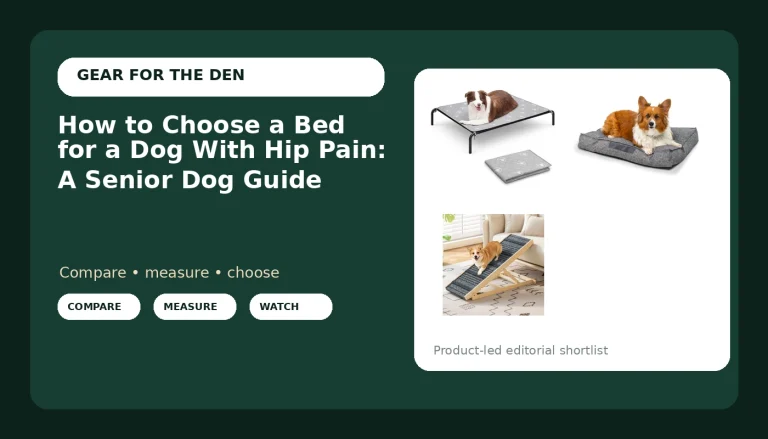
 WOOF Walkabout Dog Puzzle Slow Feeder Toy for Dogs 40 lbs & Up | See product | See product | Not a cot |
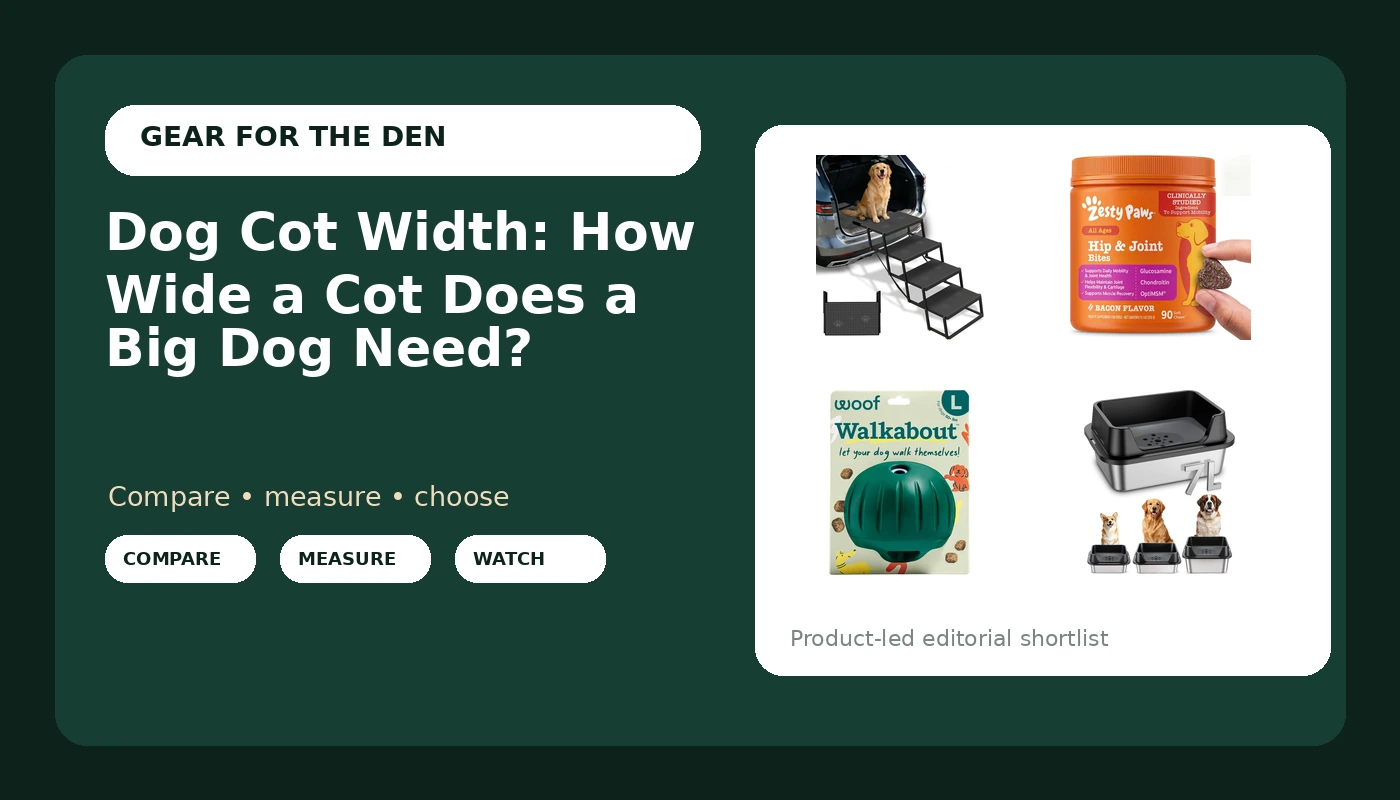
 Patidofy 7L No Spill Dog Water Bowl with Splash Guard & Slow Drink Disk | See product | See product | Not a cot |
The key is the elbows. Almost every cot returned as too small was bought on length and lost on width, and the dog that refuses to use it is telling you which measurement you missed.
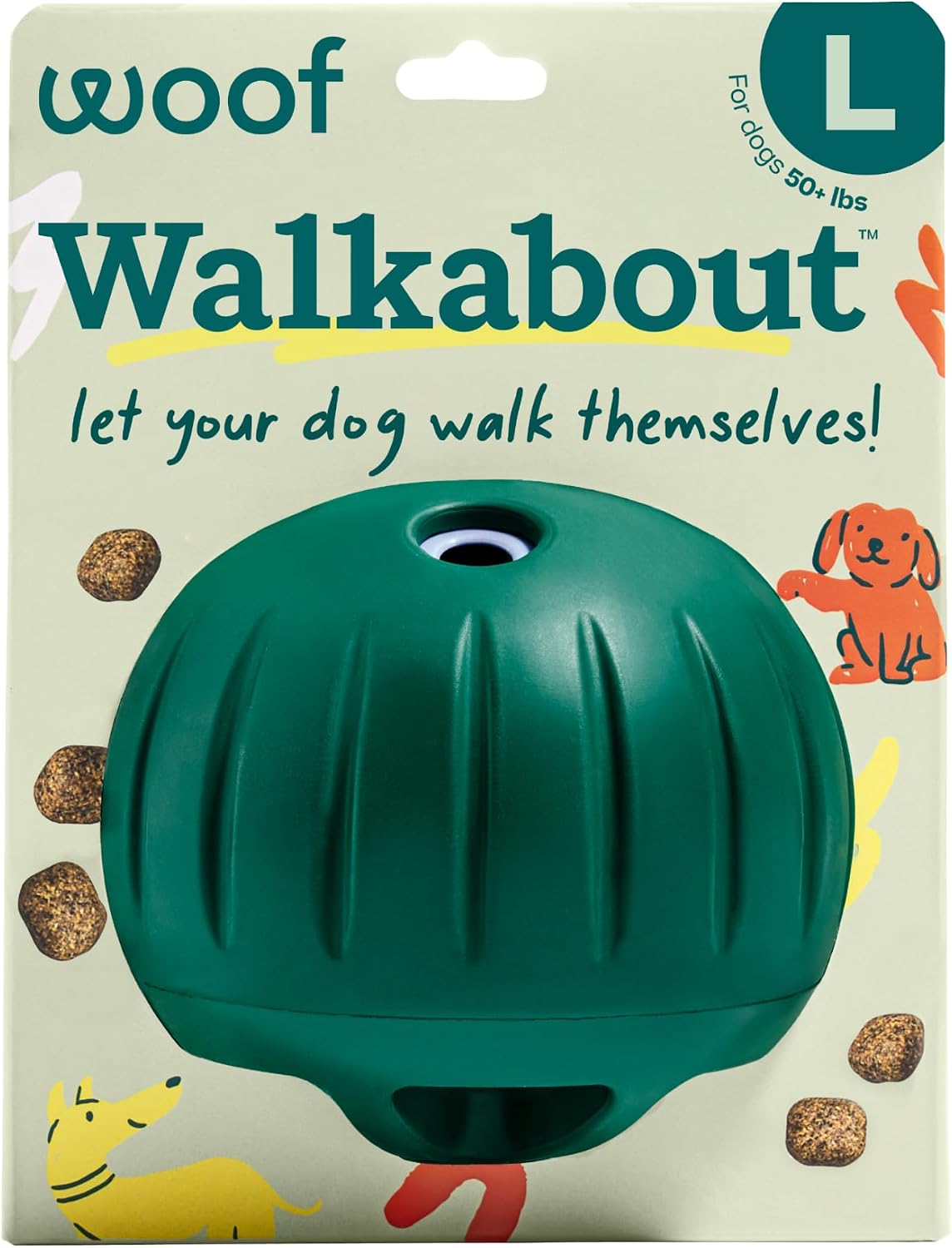
WOOF Walkabout Dog Puzzle Slow Feeder Toy for Dogs 40 lbs & Up
A cot is where a big dog spends the day, which means it is also where the food bowl ends up. If your dog inhales dinner in ninety seconds and then lies down on a full stomach, you get the evening pace-and-whine routine that no cot width can fix. This puzzle slow feeder is rated for dogs 40 pounds and up, which puts it in the right bracket for the dogs this guide is about.
The puzzle format slows the meal by making the dog work the kibble out of the toy instead of hoovering it out of a bowl. For a senior dog that is a small amount of standing and thinking before the nap, which is a fair trade, and it gives the dog something to do on the floor beside the cot instead of pacing the room while you work.
It is not a cot and it will not solve a sizing problem. What it does is keep a large dog's routine anchored in the same corner of the room as the cot, which matters more than it sounds once the dog is older and the routine is the thing holding the day together.
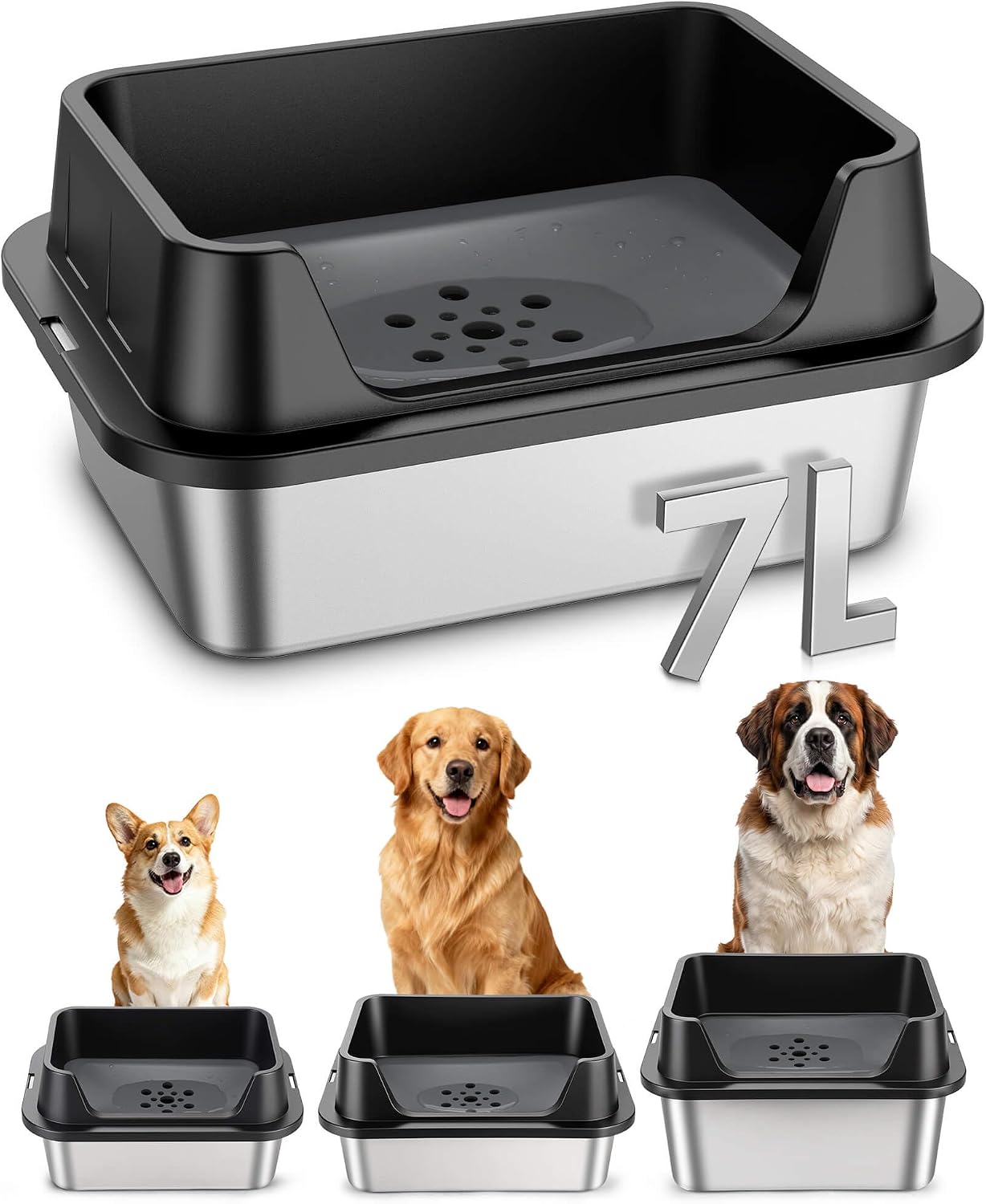
Patidofy 7L No Spill Dog Water Bowl with Splash Guard & Slow Drink Disk
Water is the other half of that corner. This bowl holds 7 liters, a sensible size for a large dog, and it ships with a splash guard and a slow drink disk. The splash guard is the part I care about when the cot sits on a hard floor, because a big dog climbing off a cot and straight into a bowl sends water everywhere, and water plus a non slip backing that has lost its grip is a bad combination.
The slow drink disk slows the intake, which is worth having for a dog that drinks too fast after a meal. Seven liters also means fewer refills, and for anyone living with a senior dog, fewer trips to the bowl is a real quality of life item for the human as much as the dog.
Put the bowl at the end of the cot rather than in the middle of the path between the cot and the door, so a dog stepping off does not have to navigate around it.
Should you buy Dog Steps for Car, SUV with Upgraded Non-Slip Surface, 4 Steps?
Yes, if the cot you are considering has a tall bed height. Four steps, a shallow rise, and a non slip tread are the three things that make a raised surface usable for a senior dog, and this set has all three. It also earns its place in the car, so it is not a purchase that sits in a closet between cot naps.
Skip it if your dog still hops onto the sofa without a pause and the cot you are buying sits low. Put that money into width instead. The test is simple: stand your dog next to the cot and watch. If the dog hesitates, this is the difference between a cot that gets used and a cot that gets ignored.
Should you buy Zesty Paws Glucosamine for Dogs – Dog Joint Supplement, Bacon, 90 Ct?
Yes, if you have a senior dog that is slow to rise and you want a low cost way to work on joint mobility and hip support. Ninety chews, bacon flavor, and a format most large dogs take without a fight. It is not a substitute for your vet's advice, and it is not a fix for a cot that is too narrow or too tall.
If your dog already takes a joint supplement that works, do not stack a second one blindly. Keep what works and spend the difference on the cot. The supplement supports the dog. The cot and the steps decide whether the dog actually uses it.