
I put off buying mobility gear for two years because I kept telling myself my dog was just slowing down. Then she started stopping halfway up the back steps and staring at me until I came to get her, and the question stopped being whether I needed help and became which kind of help. The dog stairs vs dog lift harness for senior dogs debate is the one I kept circling, because both promise the same outcome: fewer painful trips up the same four steps, without turning the living room into a construction site.
What finally settled it was realizing the two products answer different questions. Stairs ask whether your dog can still do the motion on her own. A harness asks whether you are willing to be part of the motion. Both are honest answers, and neither is right for every house.
For most senior dogs with rear-end weakness, a rear support lift harness is the better first purchase, because it travels with you and helps on stairs, in the car, and at the vet, while a set of stairs only helps at one address. The catch is that a harness only works when you are there to take the weight, and only if the fit is right.
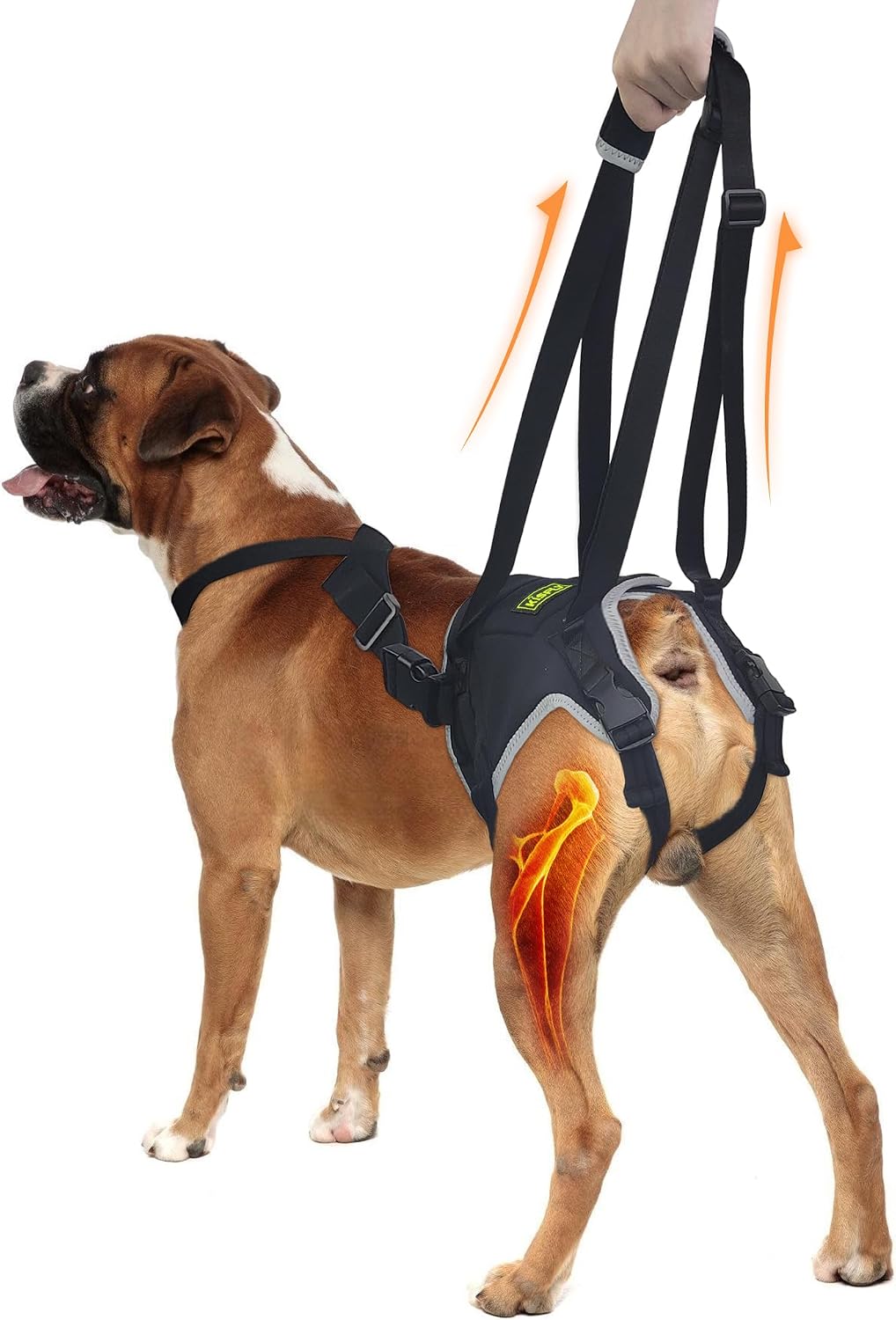
KISFLY Dog Lift Harness for Medium Dogs, Hind Leg Assistance
Simplest shape of the four for a medium dog who still walks, with rear-only lift that is quick to fit
Nothing under the chest, so downhill and car loading still land on your arms
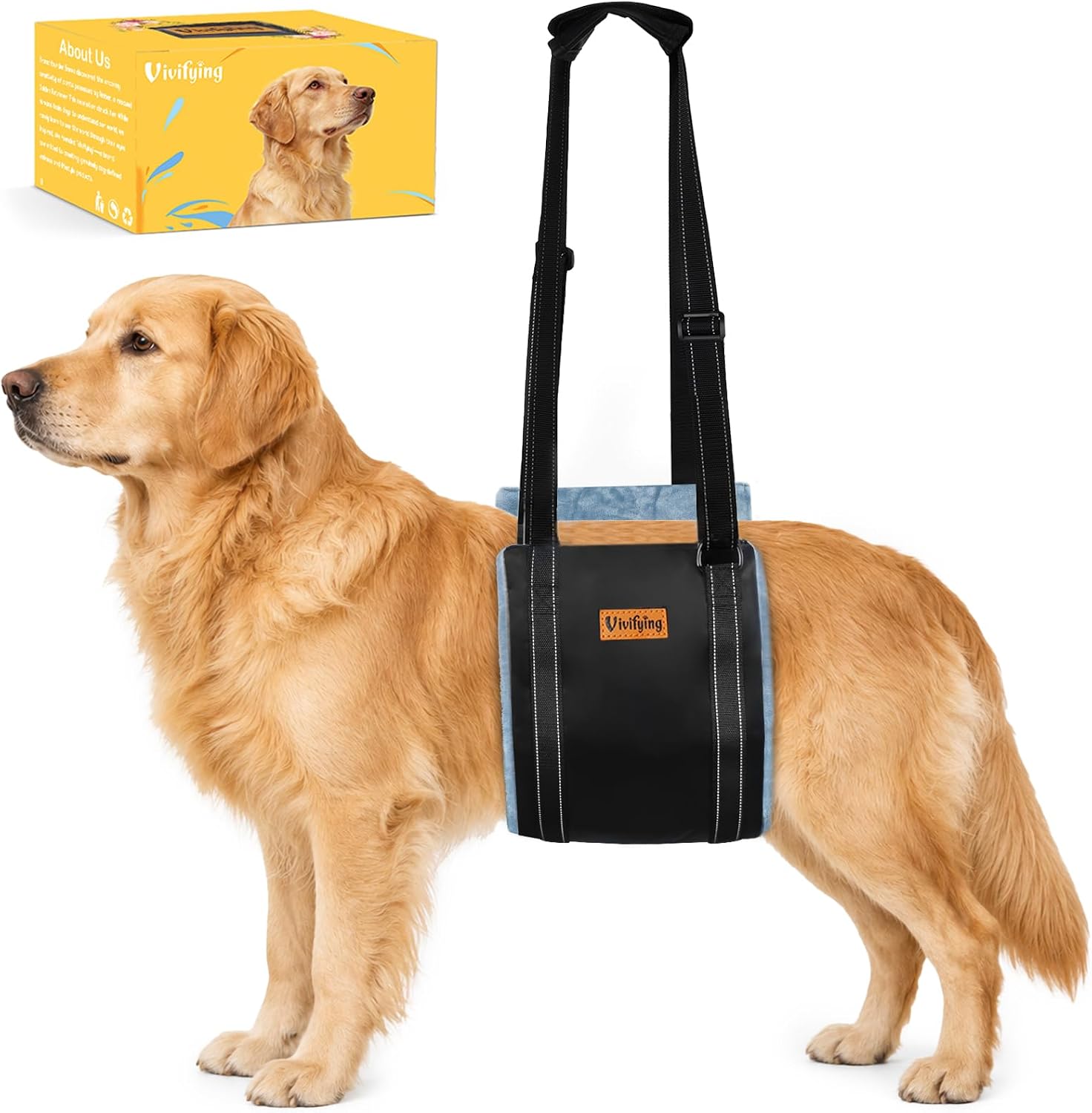
Vivifying Dog Lift Harness for Large Dogs, Flannel Rear Support Sling, L
Flannel lining and a large-dog cut suit a dog who flinches at stiff webbing
A soft sling gives you less control of a heavy dog than a wider, stiffer one
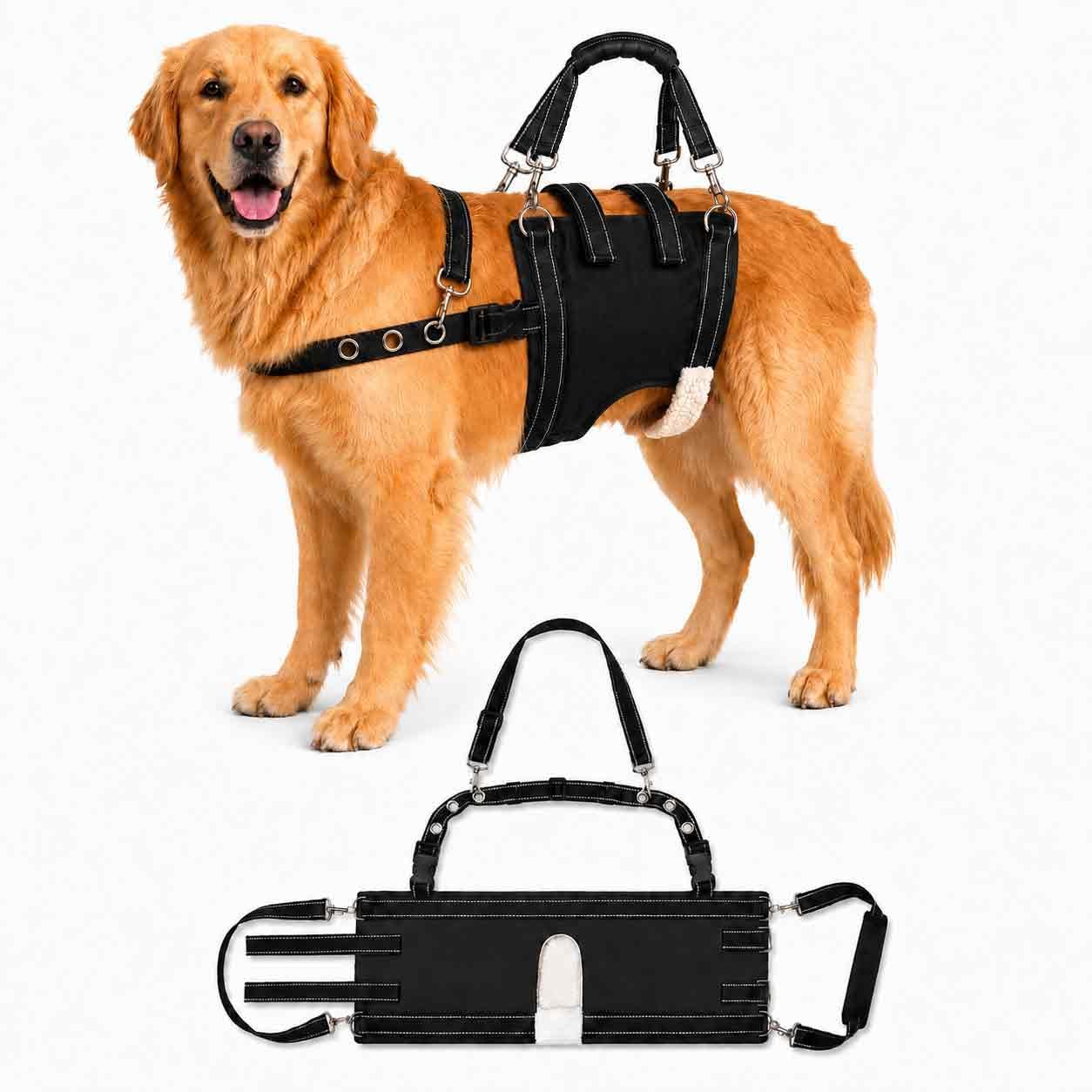
Dog Lift Harness for Large Dogs, Rear Leg Support Sling with Chest Strap
Chest strap spreads the load and stops the sling creeping forward on a deep chest
More webbing to adjust, which is hard on a dog who will not stand still
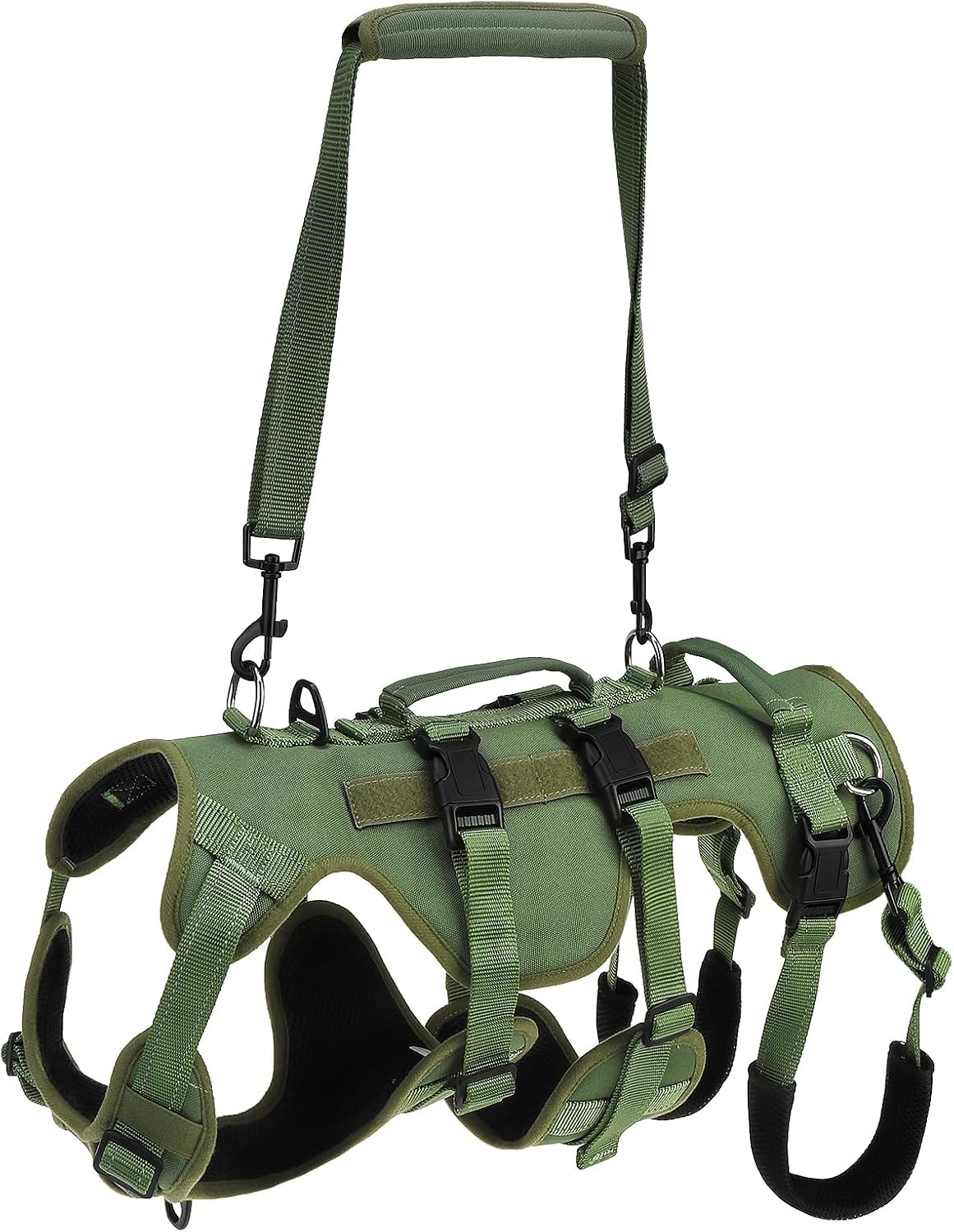
PUPTECK Dog Lift Harness for Medium Large Dogs, Mobility Assistance Harness
Widest size window here, and a walking-harness shape that can stay on for a whole outing
Lifts less precisely at the hip than a purpose-built rear sling
Prices and availability may change.
How I judge a lift harness for a senior dog
Four things matter more than anything printed on the box.
The first is where the strap lands. A rear sling has to sit under the belly, ahead of the hip, so the lift runs through the pelvis instead of the soft flank. That is the entire point of hip support: you are holding a joint, not squeezing an abdomen.
The second is the handle. You will use it dozens of times a day, usually one-handed, often with a leash in the other hand. A handle that is too short forces you to bend at the waist. A handle that sits too far back puts the load in your wrist, and your wrist will file a complaint by the second week.
The third is weight capacity against your dog's real weight, and against your own strength. A large-dog harness rated far above your dog is not automatically better, because wide straps bunch under a medium frame and rub where the leg meets the body. Lift capacity is a two-body number: the dog plus whatever your arm can hold for the length of a staircase.
The fourth is how fast it goes on. A dog who is already down on the floor will not stand politely while you thread three straps. Anything you cannot put on in about fifteen seconds is gear you will quietly stop using by week three.
Measure before you order. Run a tape around the belly just behind the ribs, then measure from the front of the chest to the point of the hip. Those two numbers tell you more than the size letter on the label, and they tell you whether the handle will sit where your hand naturally falls.
dog stairs vs dog lift harness for senior dogs: where the split really is
The difference between dog stairs and dog lift harness for senior dogs comes down to who does the work. Stairs let the dog do all of it on a gentler slope. A harness has you do part of it.
Stairs are furniture. They live at one threshold: the couch, the bed, the car door. If your dog spends the day alone and the couch is her spot, stairs are the only option that works while you are at work. Check step height, foam density, and non slip backing before anything else. Dense foam holds its shape under a heavy dog. Cheap foam compresses into a ramp with a lip at the top, which is worse than no stairs at all.
A harness is a tool you both wear. It goes to the vet, into the car, up the porch steps, and across a slippery lobby floor. It also asks something of you every single time. If you travel, if your dog's bad days come and go, or if the weakness shows up in more than one place, that portability is the deciding factor.
This is the part of the dog lift harness for senior dogs vs dog stairs comparison that people get backwards. They buy the harness, use it twice, and leave it on a hook because it is one more thing to remember at 6 a.m. Or they buy stairs and discover the dog will not use them without a treat trail. Neither product operates itself, and the one that fits your routine is the one that gets used.
Whether you choose dog stairs or dog lift harness for senior dogs, budget a week of practice and a pocket of treats. Gear that is not introduced slowly gets refused, and a refused harness is a very expensive hook ornament.
The four harnesses and who each one suits
KISFLY Dog Lift Harness for Medium Dogs, Hind Leg Assistance is the plain option for a medium dog who still walks and only needs help at the rear. The shape is simple, which matters when your dog is tired and you are in a hurry. It is not the pick for a dog who also needs chest support on the way down a slope, because there is nothing there to carry that load.
Vivifying Dog Lift Harness for Large Dogs, Flannel Rear Support Sling, L leans on comfort. A flannel rear support sling is the least intimidating thing you can put on a dog who flinches at hardware, and the large-dog cut leaves room across the chest. The trade-off is structure. A soft sling gives you less control of a heavy dog than a wider, stiffer one, and your forearm learns that on the third trip of the morning.
Dog Lift Harness for Large Dogs, Rear Leg Support Sling with Chest Strap adds a chest strap to a rear sling, which spreads the load and keeps the sling from creeping forward on a deep-chested dog. That second contact point is genuine hip support mid-step. It is also more webbing to fit correctly, and a sore dog will not stand still for a long adjustment session.
PUPTECK Dog Lift Harness for Medium Large Dogs, Mobility Assistance Harness covers the widest size window of the four and behaves like a walking harness with a lift handle rather than a dedicated sling. That makes it the easiest to leave on for a whole outing. The trade-off is directness. A general mobility harness lifts less precisely at the hip than a purpose-built rear sling, so it suits a dog who needs steadying more than a dog who needs carrying.
Where stairs still earn their place
If your dog can still climb but pays for it afterward, stairs are the gentler fix. A low rise, dense foam, and a non slip backing turn a jump into a walk. Step height is the number to check against your dog's leg length: if she has to hop from one step to the next, the stairs are too tall. Bed height matters for the same reason. Three tall steps up to a high bed is a different job than two shallow steps onto a low couch.
Stairs also help when you are not home, which no harness can do, and they keep the dog using her own muscles. That second part is not small. Joint mobility in a senior dog is use-it-or-lose-it, and a harness that does all the lifting quietly takes over work the dog could still do. For mild weakness, the best setup is often stairs at the couch and a harness for the car and the vet.
If the hard part is the vehicle, a ramp usually beats both, and ramp angle matters more than length. A shallow, walkable angle gets used; a short steep one gets refused.
That is the dog stairs vs dog lift harness for senior dogs question in miniature, and it is why I stopped looking for a single winner.
What neither option fixes
Neither one replaces a diagnosis. If your dog cannot bear weight on a rear leg, is dragging a paw, or has stopped eating, that is a vet conversation, not a shopping decision. Stairs and slings manage a mechanical problem. They do not treat the cause.
Neither one works without consistency. A harness used only on bad days never becomes routine, and stairs that migrate around the house never become familiar.
And neither one lasts forever. Slings wear where the handle meets the webbing, and foam compresses with use. Check the stitching and the foam every few months, and retire anything that has gone soft or frayed.
One more thing worth saying plainly: a harness does not make a dog stronger. It buys comfort on the days that hurt and keeps a dog doing the small daily things that keep her moving. That is the whole job.
Should you buy both?
Often, yes, and for different reasons than you would expect. The two products cover different hours of the day. Stairs cover the hours when nobody is watching. A harness covers the outings, the vet visits, and the days when the back end simply will not cooperate.
The version I would build first is a harness plus one set of stairs at the piece of furniture your dog uses most. That combination handles the couch, the car, and the clinic without asking you to buy a second staircase for a house with three thresholds. Add a second set later if your dog starts eyeing the bed again.
Keep both in the same place, so a bad day does not turn into a search party. Gear you have to hunt for is gear you will skip at 6 a.m., and the point of all of this is to make the helpful option the easy one.
Bottom line
The dog stairs vs dog lift harness for senior dogs decision usually comes down to where the weakness shows up. If it shows up in more than one place, if you travel, or if the car is the hard part, buy the harness first. If it shows up at one piece of furniture and your dog spends part of the day alone, buy the stairs first.
For a medium dog who still walks and needs rear help, the KISFLY hind leg assistance harness is the least fuss. For a large dog who needs the most support and the widest size range, the PUPTECK mobility assistance harness is the easier daily wear. If your dog has a deep chest and slips forward in a plain sling, the rear leg support sling with chest strap is the fit that stays put, and the Vivifying flannel sling is the gentlest introduction for a dog who hates straps.
Fit whichever you choose before you need it, practice on a good day, and let your dog tell you which one she will actually wear.