Cats are built to eat low and swallow level. The neck drops, the head goes down, and the food travels downhill instead of back up the throat. That single piece of anatomy is the entire reason the elevated cat bowl vs raised feeder question keeps coming up, and it is also why the two terms get used as if they describe the same object when they do not.
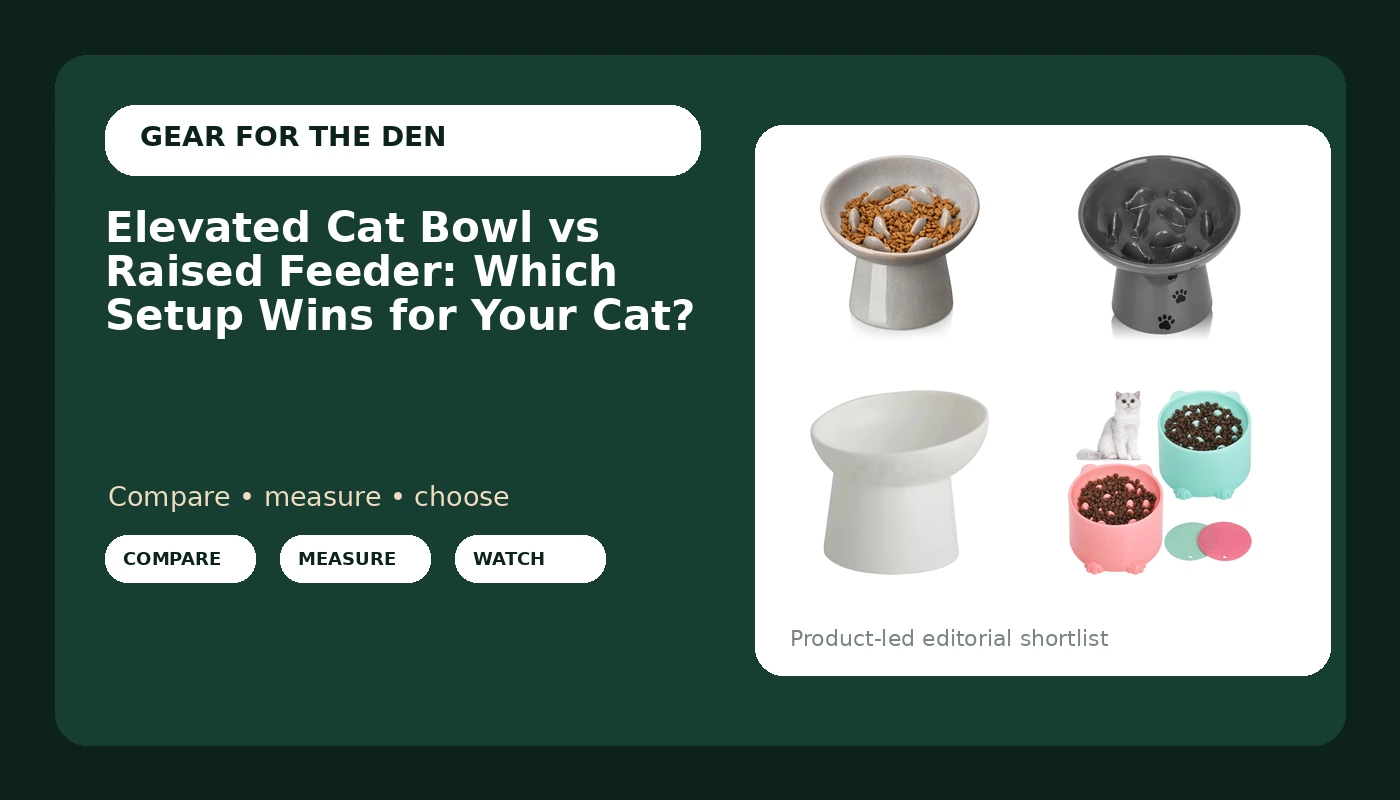
For most indoor cats in this comparison, the vancasso Ceramic Slow Feeder Cat Bowl is the pick, because it puts a slow-feeding maze inside a genuinely raised ceramic body. The Y YHY ceramic slow feeder is the runner-up for cats that bolt their food and bring it back up. The TranRantic two-piece raised set is the value option for households feeding two cats. The KITCHENLESTAR set is the only tilted option here, and for some cats tilt matters more than height.
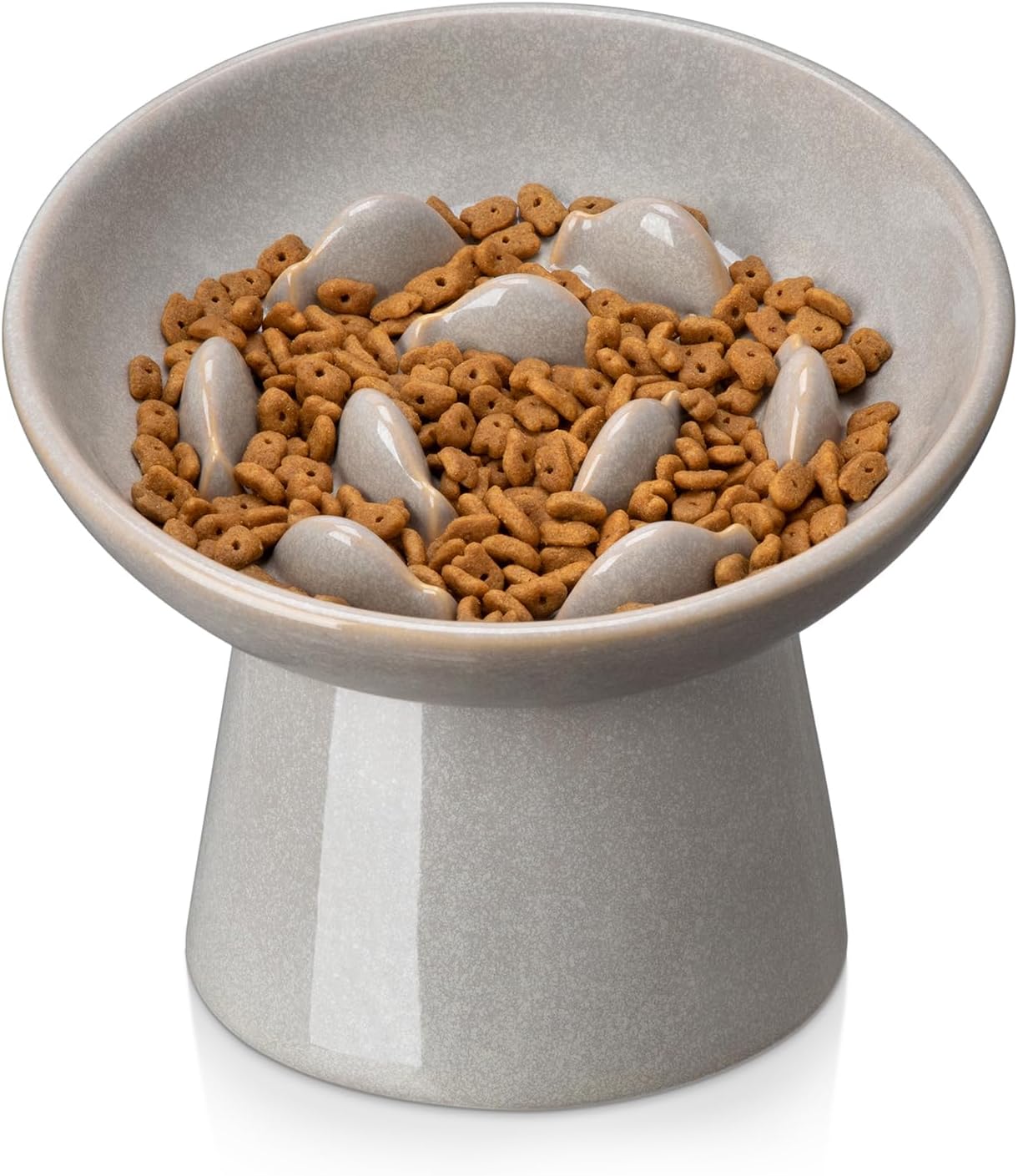
vancasso Ceramic Slow Feeder Cat Bowl
Widest ceramic maze of the four at 6.25 inches, ceramic body stays planted, anti-vomiting design for cats that bolt
Heaviest to lift and rinse, and a maze is real work with wet food
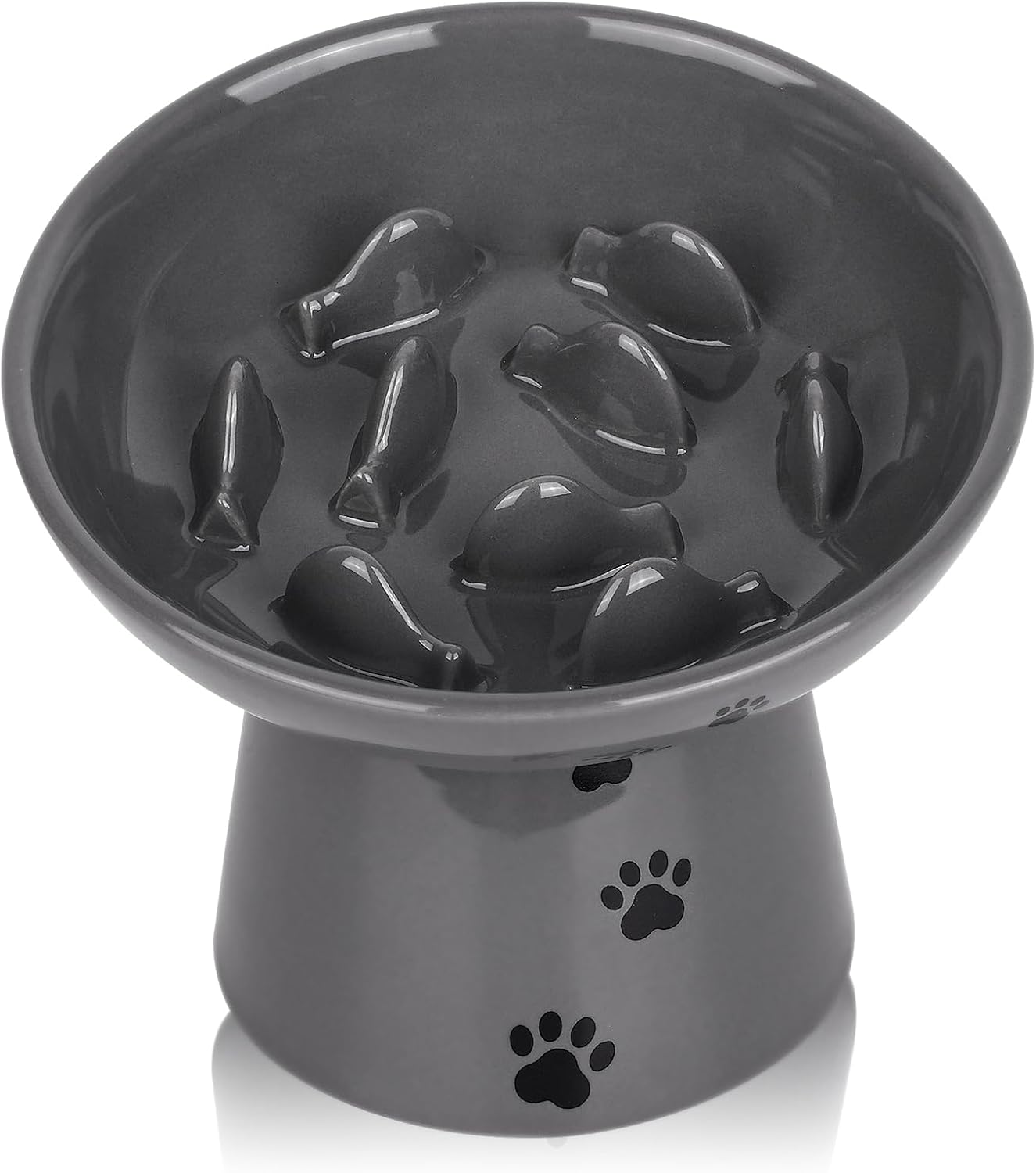
Y YHY Slow Feeder Cat Bowl
Six-inch ceramic maze, same slow-feeding job in a tighter footprint
Narrower than the vancasso, maze corners need a brush, one color only
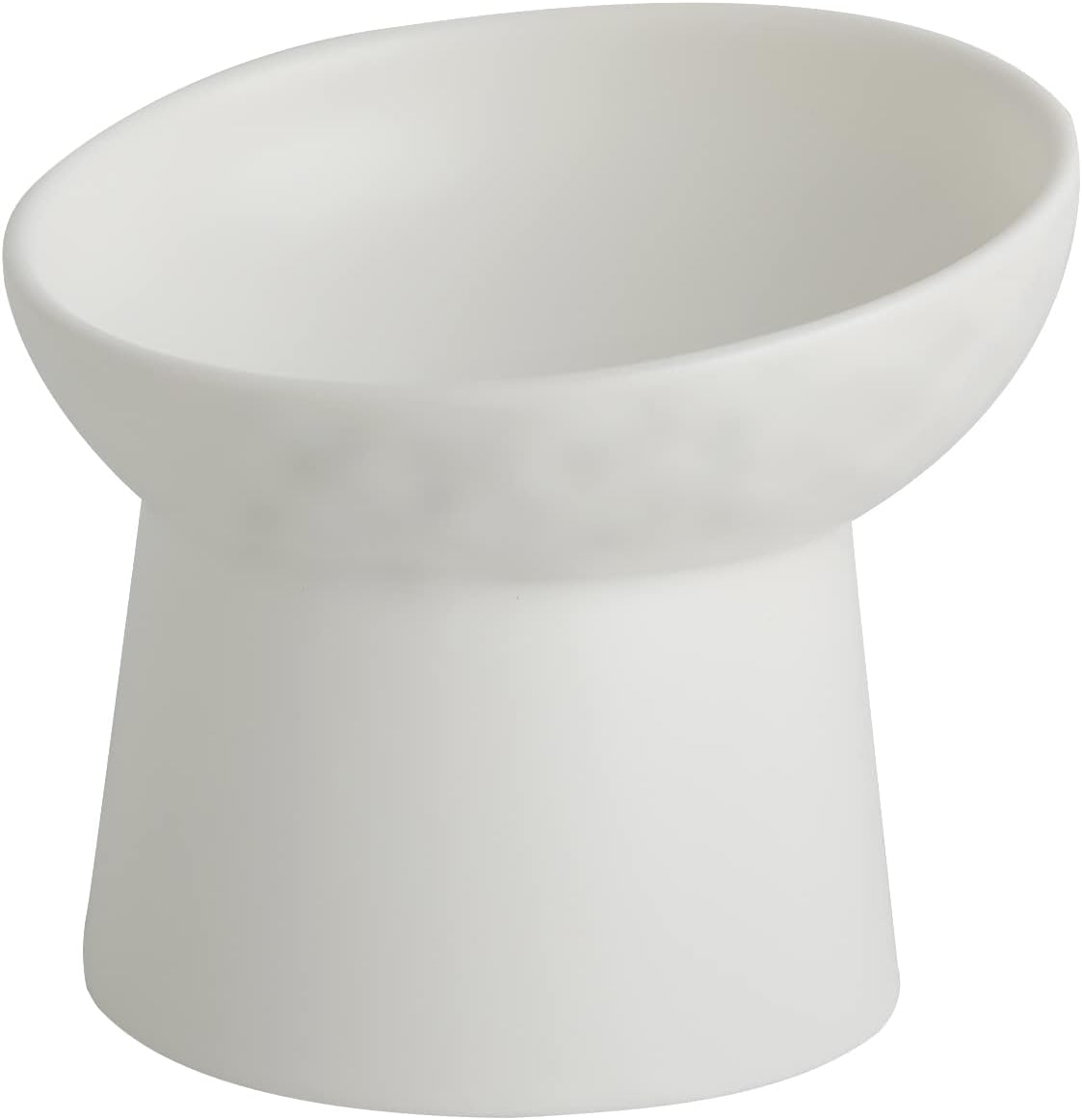
KITCHENLESTAR Elevated Cat Bowls, 15° Tilted Ceramic Set
Only tilted design here, shallow whisker-friendly porcelain, food and water in one set
5.2 inches wide, not a slow feeder, tilt pools wet food at the low edge
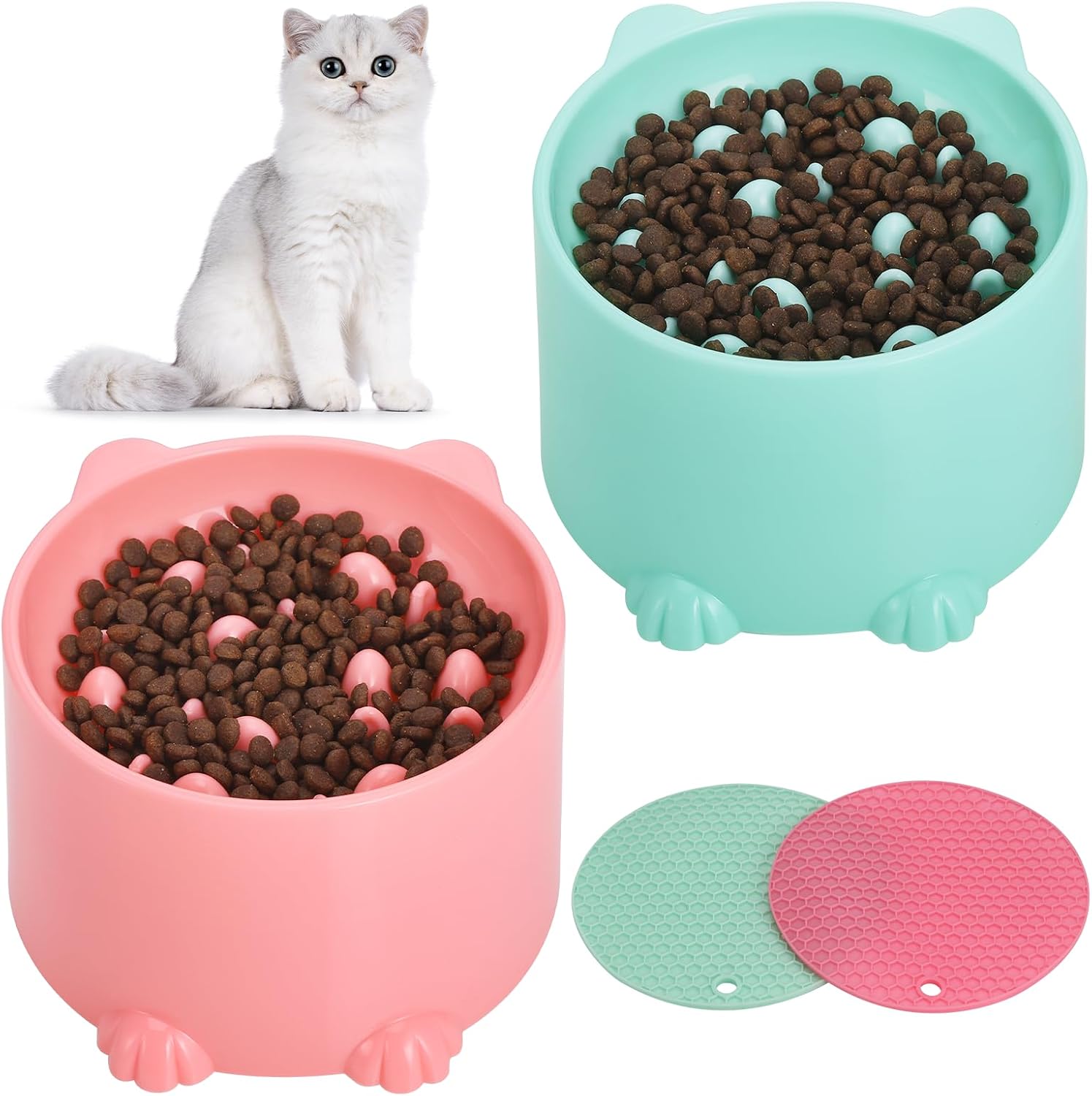
TranRantic 2 Pcs Raised Slow Feeder Cat Bowl
Two bowls plus an anti-skid mat in one set, easy pick for two-cat homes
Plastic scratches and holds residue, light enough to shift when a cat digs in
Prices and availability may change.
What elevated cat bowl vs raised feeder actually means
A raised feeder is a stand. It is usually wood, metal, or molded plastic, it holds ordinary bowls at whatever height the stand was built for, and the bowls themselves are nothing special. An elevated cat bowl has the height built into the bowl: a pedestal base fused to the dish, sometimes tilted, sometimes not. Both raise the rim off the floor. Only one of them lets you change the height later.
That is the practical difference between elevated cat bowl and raised feeder, and it matters because most cats do not need a dramatic lift. A cat eating comfortably has its head roughly level with its shoulders, maybe slightly above, with the neck straight rather than craned down or stretched up. For an average adult cat that usually works out to a rim a few inches off the floor. Go higher than that and a cat starts reaching upward, which is its own kind of strain.
None of the four bowls in this comparison is an adjustable stand. All four are self-elevating designs with fixed pedestal bases, which is worth knowing before you buy one expecting to tune the height. If adjustability is what you want, you are shopping for a raised feeder with interchangeable legs, not for an elevated bowl.
The word "elevated" is also unregulated in listings. A bowl with a two-inch lip can call itself elevated. So the elevated cat bowl vs raised feeder question is never really about the label. It is about how high the rim sits and whether your cat can reach it without craning.
How I judge a feeding setup
Four things decide whether a bowl earns counter space in a cat household: stability, rim geometry, material, and how miserable it is to clean.
Stability first. A cat that hooks a paw over the rim to drag food out will tip a light bowl, and a tipped bowl of wet food is a floor project. Wider bases and heavier bodies win here. The raised feeder vs elevated cat bowl distinction matters most at this point, because a stand with a broad footprint resists tipping in a way a narrow pedestal cannot, while a heavy ceramic pedestal bowl resists tipping through mass instead.
Rim geometry is next. Height and tilt are the two variables, and they solve different problems. Height takes strain off the neck and the wrists. Tilt brings the food toward the cat without asking the cat to lift its head, which is why tilted designs show up in households with senior cats and cats with arthritis.
Material is the third. Then cleaning, which is where slow feeders live or die. A maze with tight corners and a rough glaze will hold wet food residue, and a bowl that smells faintly of last night's dinner is a bowl a cat will walk away from. Dishwasher safe matters more than most listings admit.
Ceramic, porcelain, and plastic
Three of the four bowls here are ceramic or porcelain. One is plastic. That split drives most of the day-to-day differences.
Ceramic and porcelain are heavy, which is the point: the bowl stays where you put it, and the weight keeps the whole thing from skating across tile when a cat digs in. They also hold temperature longer, so a portion of wet food does not go warm quite as fast, and they do not scratch into the microscopic grooves that trap oils and bacteria. The trade-off is obvious the first time you drop one in the sink. Ceramic chips, ceramic is heavy to lift one-handed, and a chipped rim is a cut waiting to happen.
Plastic is light, cheap, and forgiving when a cat knocks it off a counter. It is also the material most associated with feline chin acne, because plastic scratches over time and those scratches hold residue that a normal wash does not clear. That does not make every plastic bowl a problem. It does mean a plastic bowl earns its place by being replaced when the surface goes dull and scratched rather than being scrubbed forever.
Whisker clearance and bowl width
Bowl width is the spec nobody prints on the front of the box and the one cats notice most. Whiskers are sensitive enough that a cat forced to press them flat against the inside of a deep, narrow dish will eat less, eat faster, or scoop food onto the floor to eat it away from the bowl. That is whisker fatigue, and it is a real reason cats walk away from a full bowl.
Width helps. A 6-inch or 6.25-inch dish gives whiskers room to spread, and the two ceramic slow feeders here sit in that range. The tilted KITCHENLESTAR set is narrower at 5.2 inches but is built specifically around whisker clearance, with a shallow profile and a rim that flares rather than rises.
The wrinkle with slow feeders is that width is not the whole story. A maze divides a wide bowl into narrow channels, so a cat with a broad muzzle or a flat face can end up with the same cramped feeling a small bowl creates. Watch your cat eat for two minutes before you decide a maze is a good idea. If the muzzle clears the ridges without pressing, you are fine.
Slow feeders and the anti-vomiting claim
Three of these four bowls are slow feeders, and all three carry the same anti-vomiting language. The mechanism is not complicated: ridges, channels, or a spiral force the cat to take smaller amounts per bite, which means less swallowed air, which means a smaller chance of the food coming back up ten minutes later.
It works for the right cat. A cat that inhales a portion in ninety seconds and then regurgitates on the rug is exactly the cat a slow feeder bowl is designed for, and the change is often visible within a few meals. It does not work for every cat. Some cats solve a maze bowl by eating with a paw, which is slower but messier, and some simply give up and wait for something better.
The other cost is cleaning. Dry food in a maze is a shake-and-rinse job. Wet food in a maze is a small archaeological dig, and a bowl that takes three minutes to clean is a bowl that gets used less. If your cat eats wet food exclusively, weigh how much you care about the anti-vomiting benefit against how much you enjoy scrubbing ridges at seven in the morning.
Tilt, elevation angle, and portion size
Elevation angle is the least understood spec on this list. A 15° tilt, which is what the KITCHENLESTAR set uses, does not raise the food very much. What it does is present the food toward the cat so the head does not have to drop as far and the throat stays straighter during the swallow. For a cat with a stiff neck, that is the difference between eating comfortably and eating reluctantly.
Tilt has a downside with wet food: gravity works on the food too, and a tilted bowl collects a puddle at the low edge. Some cats like that. Some cats refuse to eat from the shallow end. It is a small thing that becomes a large thing if your cat is picky.
Portion size is the other half of the maze question. A slow feeder that holds too little means constant refills, and one that holds too much defeats the purpose because the cat can still take enormous bites from a full surface. The useful measure is how much of a normal portion the bowl holds without packing the channels to the rim. If you free-feed dry food, whether you want an elevated cat bowl or raised feeder with a big capacity changes which of these four makes sense.
Water capacity, fountains, and what this table cannot cover
This comparison is about food bowls, and water is a different problem with different specs. Water capacity is the number that matters if you leave water out all day, and it is the reason a lot of households end up adding a fountain alongside a bowl rather than replacing one.
If you do go looking at fountains, two specs decide whether your cat uses it. Pump noise is the first: a fountain that hums audibly in a quiet room can keep a nervous cat away from the water entirely. Filter type is the second, because carbon and foam filters are not interchangeable and the wrong one means you are cleaning the pump more often than you planned. And if you are comparing automatic feeders rather than bowls, microchip range is the spec that decides whether the lid opens for the right cat and stays shut for the one stealing from the other's portion.
None of the four bowls here is a fountain or a microchip feeder. They are food dishes, and the honest framing is that they solve the eating half of the problem and none of the drinking half.
Which one to buy
If your cat eats fast and vomits afterward, start with the vancasso Ceramic Slow Feeder Cat Bowl. It is the widest of the ceramic mazes at 6.25 inches, the ceramic body stays put, and the anti-vomiting design is the reason it exists. Check the vancasso slow feeder on Amazon.
If you want the same job done in a slightly smaller footprint, the Y YHY ceramic slow feeder is the alternative. Six inches across, gray, ceramic, and the same anti-vomiting approach in a package that fits tighter cabinet space. Check the Y YHY slow feeder on Amazon.
If you feed two cats and want to keep the cost down, the TranRantic two-piece raised set gives you two plastic slow feeders and an anti-skid mat in one purchase. Plastic means replacing them when they scratch, but for a multi-cat household where bowls get knocked around anyway, that is not a bad trade. Check the TranRantic raised set on Amazon.
If your cat is a senior, or you have watched it struggle to reach a low bowl, the KITCHENLESTAR tilted set is the one to look at. The 15° tilt, the whisker-friendly shallow profile, and the porcelain body are aimed at exactly that cat. Check the KITCHENLESTAR tilted set on Amazon.
Before any of them, do one thing: measure. Put a bowl on the floor, watch your cat eat, and note where the chin sits relative to the shoulders. That single observation tells you more about the elevated cat bowl vs raised feeder choice than any spec sheet, including this one.