Most people who start with a fish bowl do it for the same two reasons: the bowl costs less than a tank, and nobody at the store mentions that a bowl comes with a maintenance schedule instead of a filter. Then week three arrives, the water clouds up, the fish stops eating, and the hobby ends. The fish bowl vs small aquarium for beginners question is not really about glass shape. It is about whether you are buying a system or a container.
The pattern is consistent. Beginners who stay in the hobby are the ones who started with ten gallons instead of two, because volume forgives mistakes. Ammonia spikes dilute. Temperature swings slow down. There is finally room for filter media and a heater.
The short answer: buy the ten-gallon tank, add a filter and a 50-watt heater, and leave the bowl on the shelf. The difference between fish bowl and small aquarium for beginners is not decoration; it is the equipment list that a real tank makes possible.
Everything below compares the four pieces of gear that decide how a first small tank goes: the tank itself, two 50-watt heaters, and the light that turns a glass box into a planted setup.
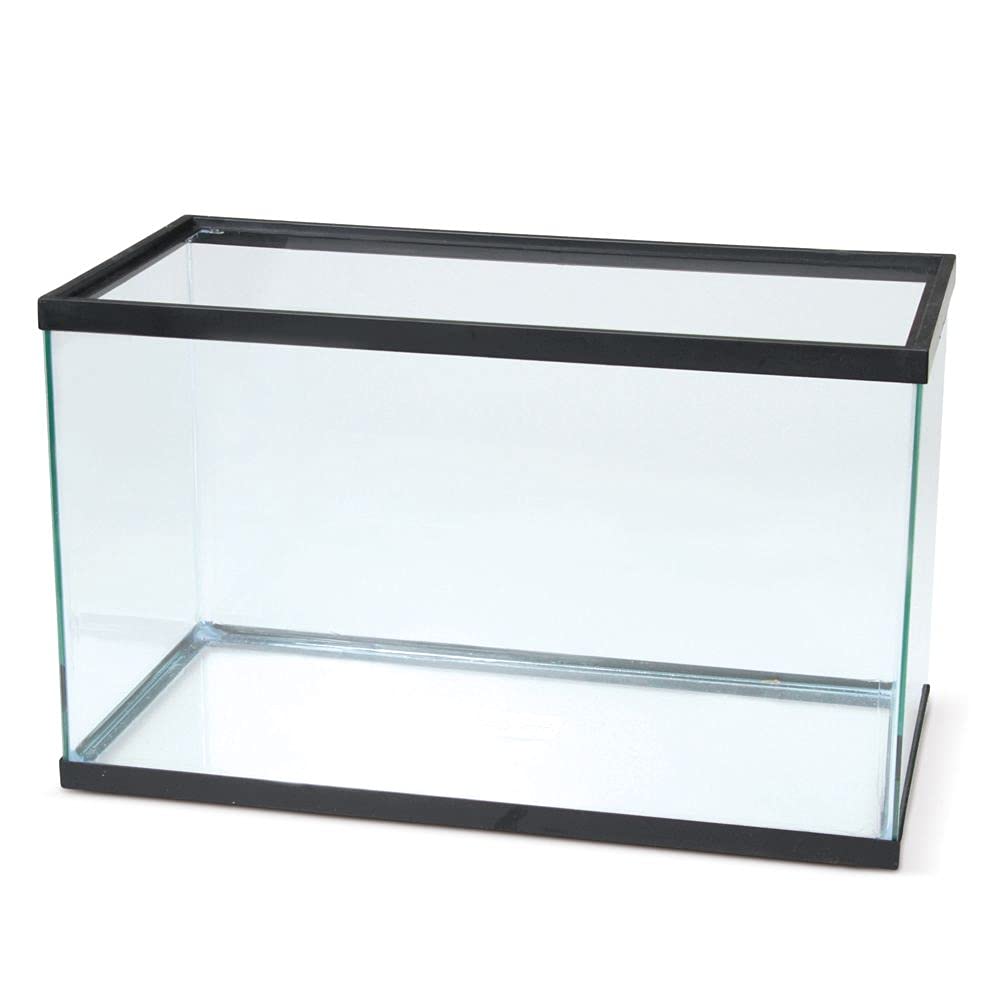
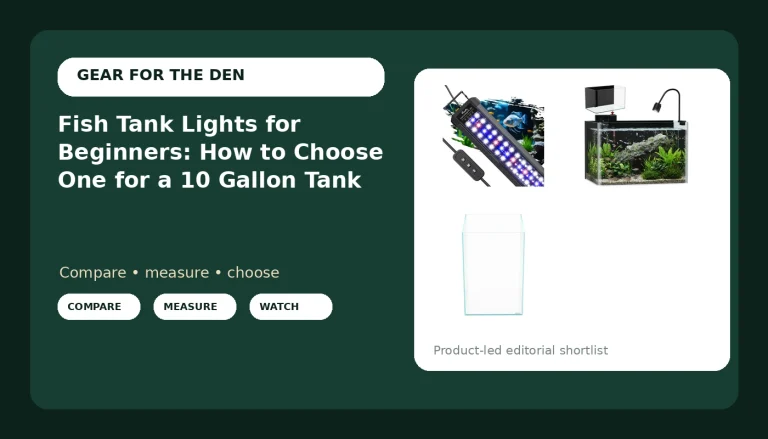
Aquarium Tank, Glass, 10 Gal
Ten gallons is the smallest volume that behaves like a real system, with room for a filter, a heater, and a stable cycle
Heavy once filled, needs a level stand, and arrives with no lid, filter, or light
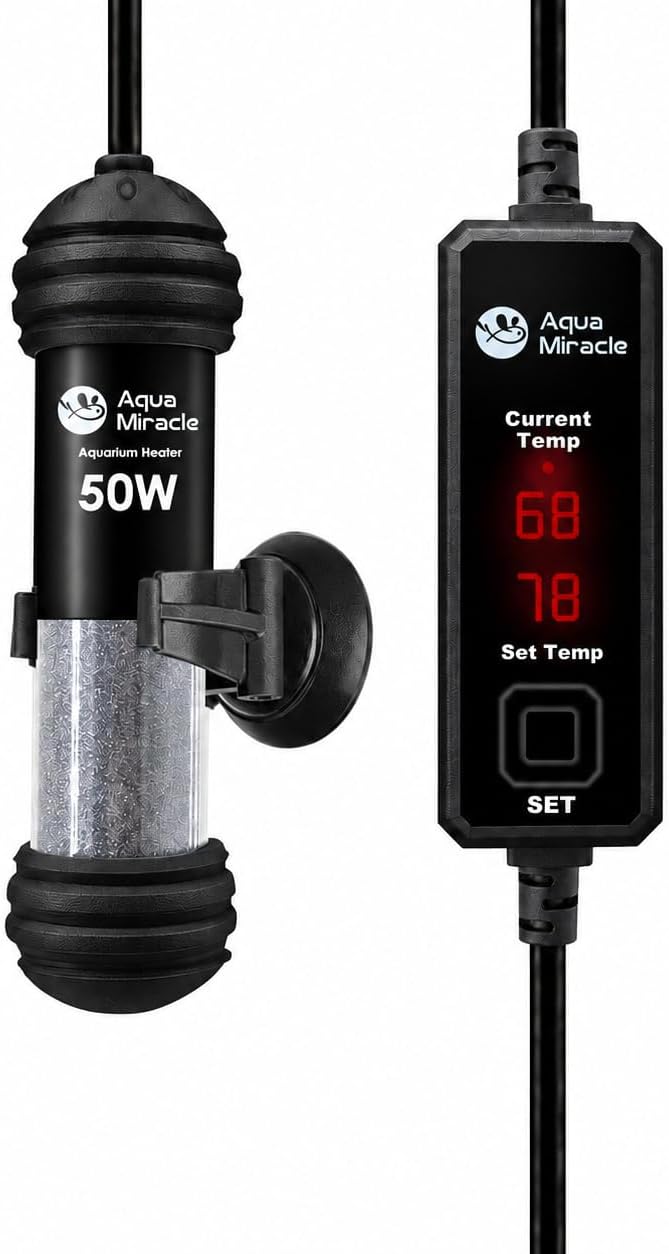
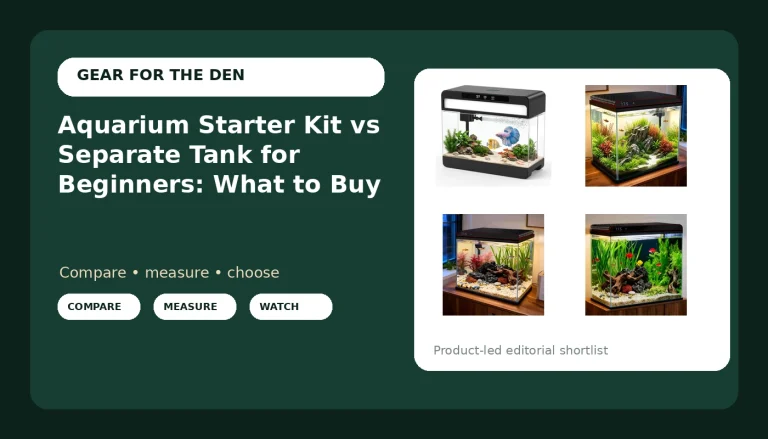
AquaMiracle 50W Small Aquarium Heater Dual LED Display for 5-10 Gal Tanks
The dual LED display makes the set and current temperature readable at a glance, sized for 5-10 gallon tanks
Priced for the display, and there is no reason to pay for one if the heater hides behind a hood
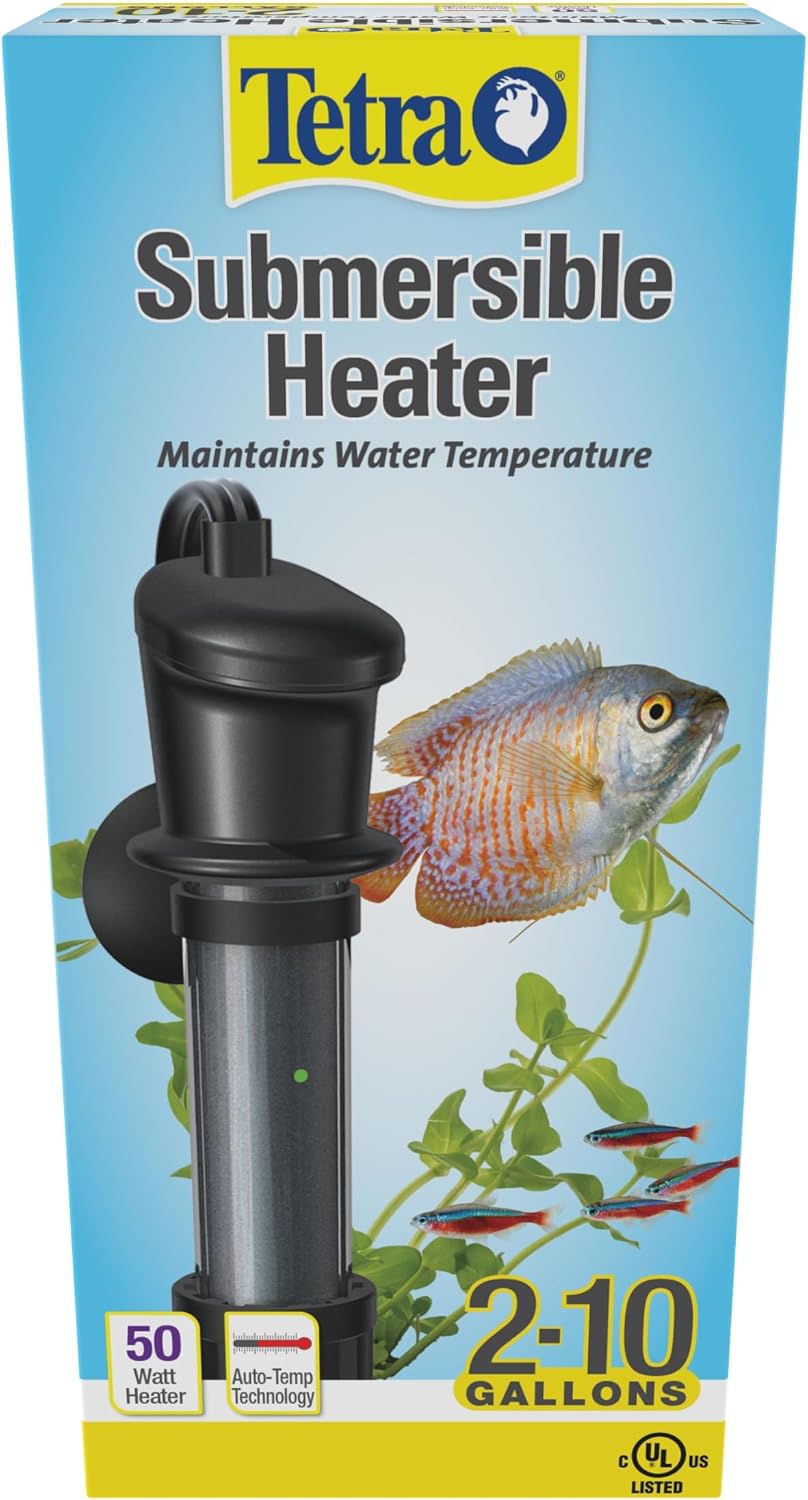
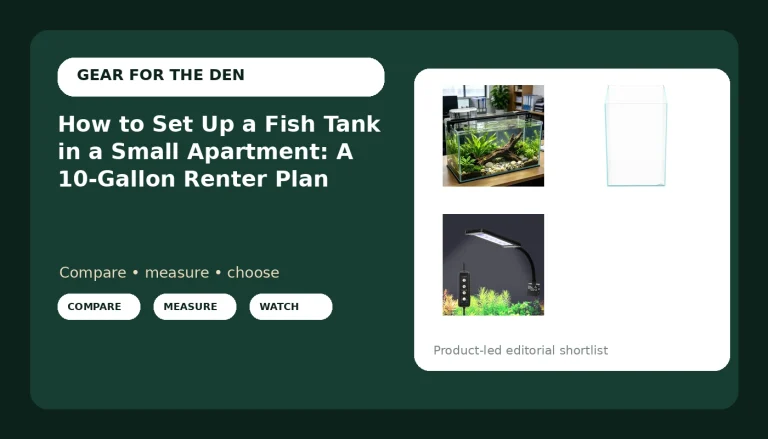
Tetra HT Submersible Aquarium Heater With Electronic Thermostat, 50-Watt, 2-10 Gallon
Electronic thermostat and a 2-10 gallon range that also covers a quarantine or starter tank
Plain to look at, and the indicator tells you less at a glance than a display
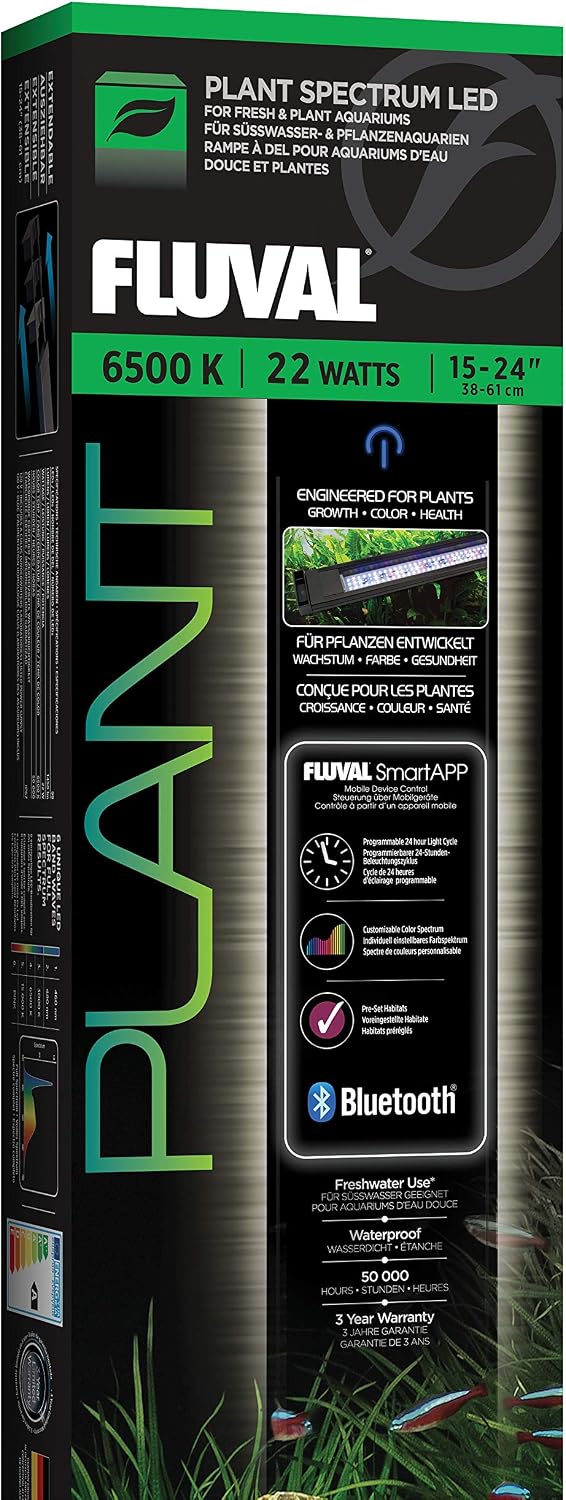
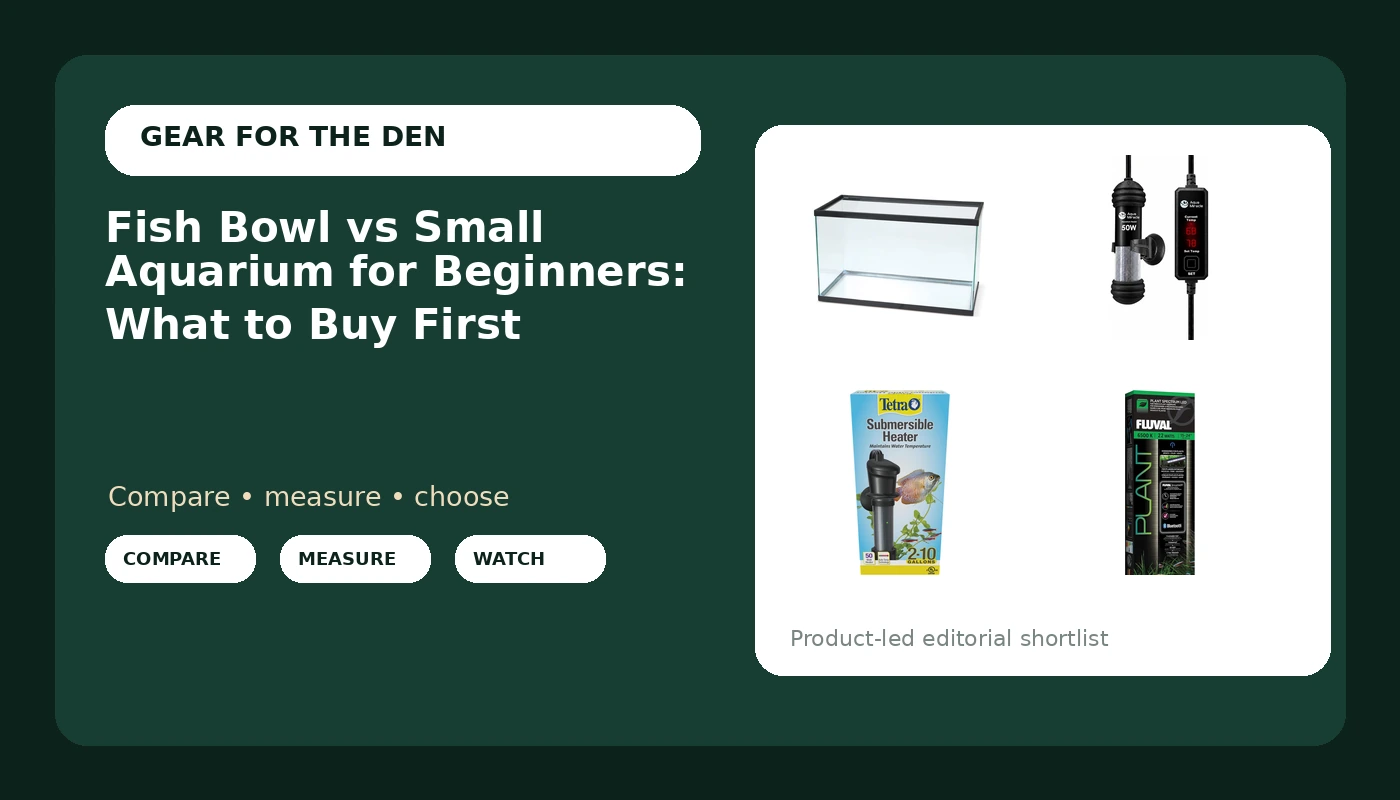
Fluval Plant 3.0 LED Planted Aquarium Lighting, 22 Watts, 15-24 Inches
A 22-watt fixture sized for 15-24 inches, which covers a standard ten-gallon and makes live plants realistic
The biggest single purchase in a beginner build, and it replaces a hood rather than fitting under one
Prices and availability may change.
What actually changes: fish bowl vs small aquarium for beginners
A bowl is a container. A small aquarium is a system, and the difference shows up in five places.
Filtration. A bowl has no filter, so waste stays in the water until you remove it by hand. A ten-gallon tank takes a small hang-on-back or sponge filter, which means filter media, a sponge, ceramic rings, or floss, holds the bacteria that convert ammonia into something less toxic. That colony is the entire hobby.
Heating. Bowls are usually unheated, and a two-gallon volume tracks room temperature closely. A ten-gallon tank holds a 50-watt heater and stays near its set point, which matters for anything beyond the hardiest fish.
Cycle time. Every new tank goes through a nitrogen cycle, and it takes weeks, not days. Larger volumes move through it more predictably and crash less often afterward. That is the single biggest reason to start bigger.
Hood fit and evaporation. A bowl is open. A ten-gallon tank accepts a hood or a glass top, which cuts evaporation and keeps dust and cats out of the water.
Stocking room. In ten gallons you can keep a small group of community fish, or a single betta with a couple of tank mates. In a bowl you keep one fish, and usually not for long.
None of this is about looks. If you want the appearance of a bowl, you can get close with a rimless tank and a sponge filter. What you cannot do is make two gallons behave like ten.
How I compare this gear
This comparison is built from published specifications and fit rather than bench testing, because at this end of the hobby almost everything that matters is documented: wattage, footprint, and what a given tank will accept. Four questions decide whether a piece of gear earns a place in a beginner build.
Does it fit the tank? A light rated for 15 to 24 inches covers the length of a standard ten-gallon. A 50-watt heater rated for 2 to 10 gallons is the right size for a ten. Fit is measurable, so it is where the comparison starts.
Does it do a job the tank cannot do without it? A filter and a heater are not upgrades, they are requirements. A plant light is optional until you add live plants, and then it stops being optional.
Does it add a failure point? Every extra display, cord, and controller is one more thing to check and one more thing to fail while you are at work. Simple gear fails less, and in a ten-gallon tank a single failure can be fatal.
Does it leave room in the budget for the rest of the equipment list? A first tank also needs a stand, a filter, a heater, a test kit, a siphon, dechlorinator, and a lid. Spending the whole budget on a light is how beginners end up with a bright, beautiful, uncycled tank.
The four products above are not a complete build. They are the three decisions that shape one: which tank, which heater, and whether to light it properly.
Tank volume and stand load
A ten-gallon tank is the smallest volume that behaves like an aquarium instead of a science experiment. It is also the first size where stand load becomes a real question, and where the difference between a counter and a bookshelf matters.
Water runs about 8.3 pounds per gallon, so ten gallons of water is roughly 83 pounds before you add glass, substrate, rock, and a filter. Most filled ten-gallon setups land somewhere around 100 to 115 pounds. That is fine on a kitchen counter, a dresser made of real wood, or a purpose-built stand. It is not fine on a particleboard shelf, a floating wall shelf, or a windowsill that gets direct sun all afternoon.
Two checks before you commit to a spot. Level, because a tank that rocks will eventually leak, and thirty seconds with a bubble level saves a floor. Access, because you need room above the tank for a light and for your forearm. You will reach into that tank at least once a week, and a tank wedged under a shelf turns a ten-minute water change into a chore you skip.
The glass ten-gallon (Visit on Amazon) is the anchor of the build. It is the least exciting purchase on the list and the one that decides everything else, from heater wattage to hood fit.
Heater wattage: two 50-watt options
The common rule of thumb is about five watts per gallon in a normal room, which puts a ten-gallon tank at 50 watts. Both heaters here are 50-watt units rated for that size, so the choice comes down to how you want to set and read the temperature.
The Tetra HT Submersible (Visit on Amazon) is a 50-watt heater with an electronic thermostat, rated for 2 to 10 gallon tanks. The wide range makes it the more flexible of the two: it covers a small quarantine tank as easily as the main ten, and if you move up a size later it still has headroom on paper. It is also the plainer option, with an indicator rather than a readout, and a set-and-forget feel.
The AquaMiracle 50W (Visit on Amazon) is built for 5 to 10 gallon tanks and carries a dual LED display. The display is the entire argument for it. In a small tank the heater is usually tucked behind plants or a filter, and being able to read the set temperature and the current temperature without crouching with a separate thermometer is a real quality of life improvement. If you have ever spent five minutes deciding whether a heater dial moved a quarter turn, you know what that is worth.
Two cautions apply to both. Heater wattage ratings assume a normal room temperature, so a tank in a cold basement or beside a drafty window needs more headroom, not less. And buy a heater you can unplug without moving the tank, because every heater eventually fails, and one stuck in the on position can push a small tank past what its fish tolerate.
Do you need a plant light on a ten-gallon?
The Fluval Plant 3.0 LED (Visit on Amazon) is a 22-watt planted aquarium light sized for 15 to 24 inch tanks, which covers the length of a standard ten-gallon. It is the one piece of gear here that most beginners do not need on day one, and the one they end up buying in month three anyway.
The honest breakdown goes like this. If you are keeping a betta with a fake plant and a piece of driftwood, the stock light in a hood kit is enough, and this fixture is money that would do more good in a better filter or a test kit. If you want live plants, especially anything with color or a carpeting habit, then light stops being optional, and a 22-watt fixture over a ten-gallon is a sensible amount of light for low to medium demand plants.
The trade-off is that this is a fixture, not a hood. It sits above an open tank, so you lose the evaporation benefit of a glass top and you will top off more often. In exchange, the tank looks dramatically better, and a tank you like looking at is a tank you maintain. That is not a small thing over a year.
One warning worth repeating: more light plus no plants plus no fertilizer equals algae. If you buy the light, buy plants on the same trip. A timer also stops being optional once the light is on the tank, because eight hours of light is a planted tank and twelve hours is an algae farm.
Cycle time, filter media, and the first month
Cycle time decides whether a beginner stays in the hobby, and it is the number nobody mentions at the register.
A new tank needs roughly four to six weeks to grow enough bacteria to process the waste fish produce. During that window ammonia and nitrite rise and fall, and a fish-in cycle means daily water changes. Larger volumes dilute the spikes and give you more slack. A bowl has no filter media to colonize in the first place, so the cycle never really finishes; you are the filter, and you are slower and less consistent than a sponge.
For a ten-gallon build, a simple sponge filter or a small hang-on-back with ceramic rings and floss is plenty. Rinse the media in old tank water, never under the tap, and never replace all of it at once. That single habit prevents more beginner crashes than any product on this list.
A test kit is the other half of the picture. Without one you are guessing, and guessing is how beginners kill fish. Budget for the kit before you budget for decorations, and check it weekly for the first two months.
Hood fit, substrate depth, and the details that trip people up
Two small decisions cause a surprising share of beginner problems.
Hood fit. If you buy a hood or a glass top, measure the tank's outside dimensions rather than trusting the gallon rating. Ten-gallon tanks vary in length and width between manufacturers, and a lid that is half an inch short leaves a gap that a betta will eventually find. If you go with the Fluval light instead, you are running open-top, which means more evaporation and a tank that a cat can reach.
Substrate depth. An inch to an inch and a half is plenty for a beginner tank with gravel and easy plants. Two to three inches is what rooted plants want, and it adds to the stand load. Going deeper than three inches without a plan is asking for trouble, because deep substrate in a small tank can turn anaerobic and release gas when you disturb it.
The rest of the equipment list is unglamorous and non-negotiable: a gravel siphon, a bucket that is only ever used for the tank, a thermometer, dechlorinator, and a timer for the light. None of it costs much, and all of it matters more than which brand of glass you bought.
Trade-offs: what each path actually costs you
Compare the two paths honestly and the bowl wins exactly one category: it is cheaper on day one. That is the entire list.
The bowl path gets you a container with no filter, no heater, and no room for either. You get a shorter equipment list, and in exchange you get daily or near-daily water changes, temperature swings that follow the room, and a fish that lives a fraction of its potential lifespan. Anyone weighing a small aquarium for beginners vs fish bowl setup is really weighing weekly maintenance with a filter against daily maintenance without one.
The small aquarium path costs more up front and less per week. A ten-gallon tank, a filter, a 50-watt heater, a lid, and a test kit is a real purchase, and after the cycle it runs itself between weekly water changes. You also get options: live plants, a small community of fish, and a light you can upgrade later without rebuilding anything.
There is a middle ground worth naming, because a lot of people land there. A five-gallon tank with a sponge filter and a 50-watt heater rated down to five gallons is more forgiving than a bowl and cheaper than a ten. It is also less stable than a ten, and it fills up fast once a heater and a filter are inside it. If the choice is a fish bowl or small aquarium for beginners, the answer is the small aquarium. The only open question is how small you are willing to go.
What to buy first for a beginner ten-gallon
For a first freshwater tank, buy in this order: tank, filter, heater, lid, test kit, then light. The ten-gallon glass tank is the foundation, and it is the piece worth getting right, because every other purchase is sized to it. A 50-watt heater comes next, and the two options here are a straight trade between a simple electronic thermostat with a wide 2 to 10 gallon range and a dual LED display that makes the temperature readable at a glance. The plant light comes last, and only if live plants are part of the plan.
That order matters more than any individual product. Beginners who buy the light first and the filter last end up with a bright, algae-covered tank and no bacteria. Beginners who buy volume and filtration first end up with fish that live long enough to justify a second, larger tank.
If you want the short version: skip the bowl, buy the ten, heat it with 50 watts, and put the rest of the budget into a filter and a test kit. That is the whole answer to the fish bowl vs small aquarium for beginners question, and it has not changed in decades.