Getting the fish tank heater size right is the difference between a tank that holds a steady 78°F and one that swings four degrees every time the furnace kicks on. Most people buy the heater with the best reviews, drop it in the water, and then wonder why their betta is clamped and hiding behind the filter. Wattage is the spec that actually matters, and it depends on three things: tank volume, how cold the room gets in January, and whether the tank runs with a lid.
I keep a few small tanks in a room that drops into the low 60s in winter, so I have learned this the hard way. What follows is the fish tank heater size guide I wish someone had handed me years ago: match the heater wattage to the gallons, then check that the heater fits the tank, the filter flow, and the hood. Get those three right and the rest of your equipment list stops fighting you.
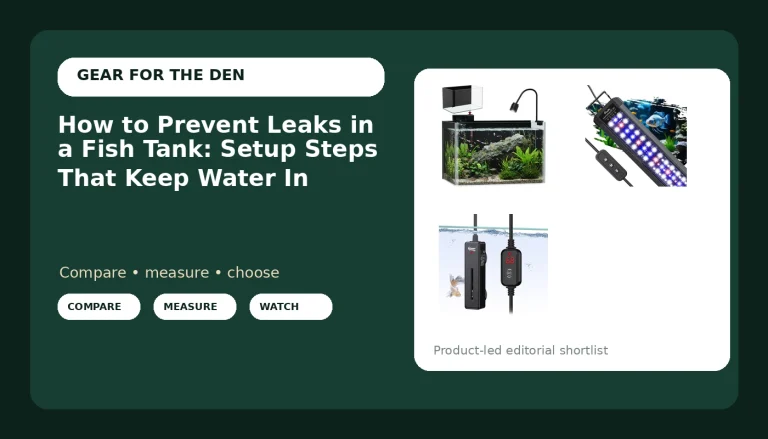
Best Overall: HITOP Mini Submersible Aquarium Heater -50W
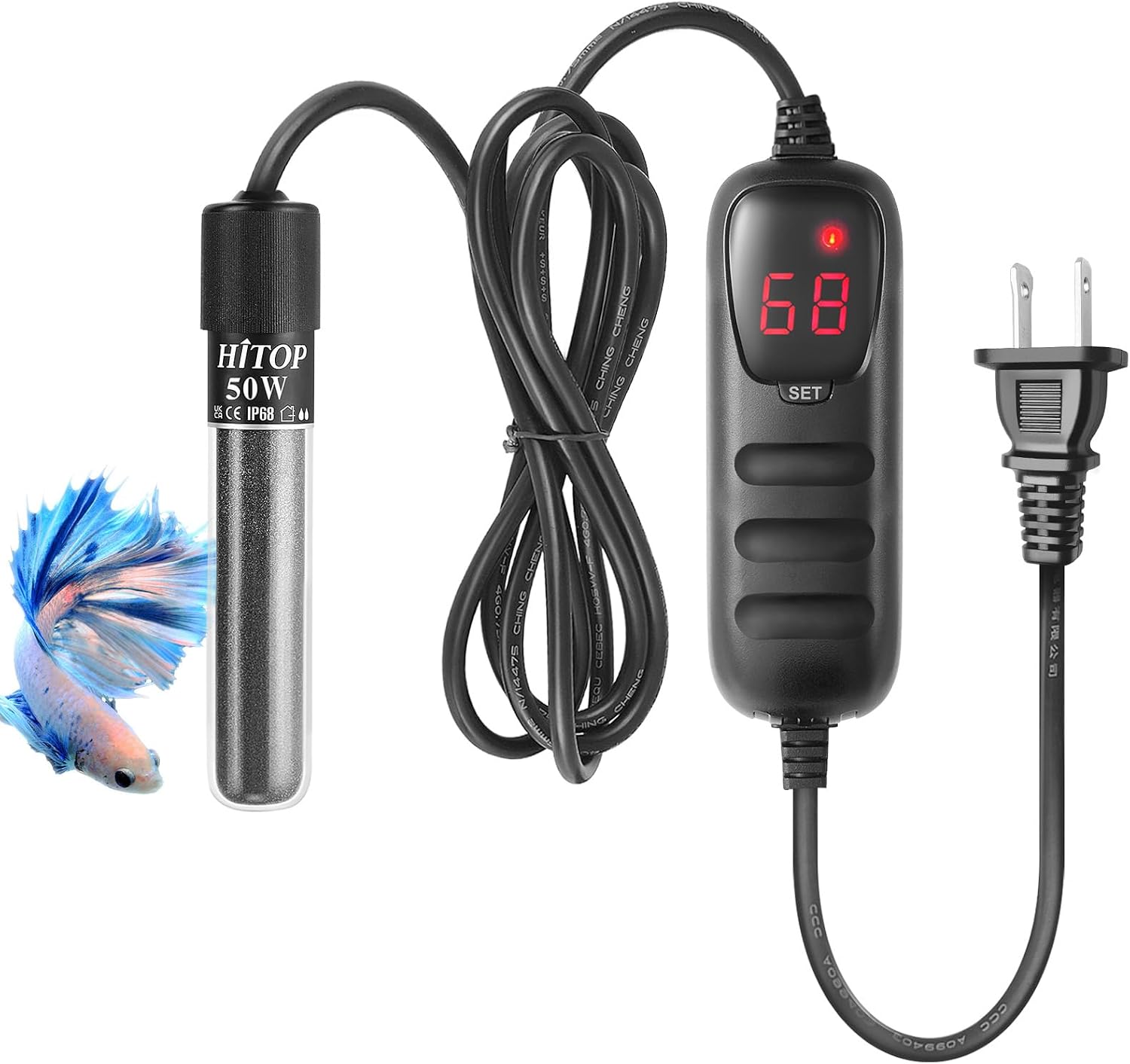
This is the heater I would put on a 10 gallon tank in a normal living room, and the one I would hand a beginner. Fifty watts is the number you want for that size when the room sits in the high 60s, and the mini body disappears behind a sponge filter or a clump of hornwort instead of hanging off the back glass like a broom handle.
The digital temperature controller is what earns it the top spot. A knob gives you a range; a controller gives you a set point you can read at a glance. On a betta tank sitting on a desk, that difference is the whole game, because you notice a drift before the fish do.
Because it is built for saltwater and fresh water alike, and it is listed for turtle tanks too, it covers the odd setups that show up in a den: a single fancy goldfish in a 10 gallon, a handful of shrimp and snails in a planted cube, a hatchling turtle in a grow-out tank. The submersible body sits low in the water, which matters in a shallow tank where a full size heater would poke above the waterline and shut itself off.
What it is not is a one-size answer. Fifty watts will not hold a 40 gallon breeder at temperature in a 62°F basement, and no amount of good design changes that math. Size the wattage to the gallons first, then choose the heater. If your math lands on 50W, this is the one.
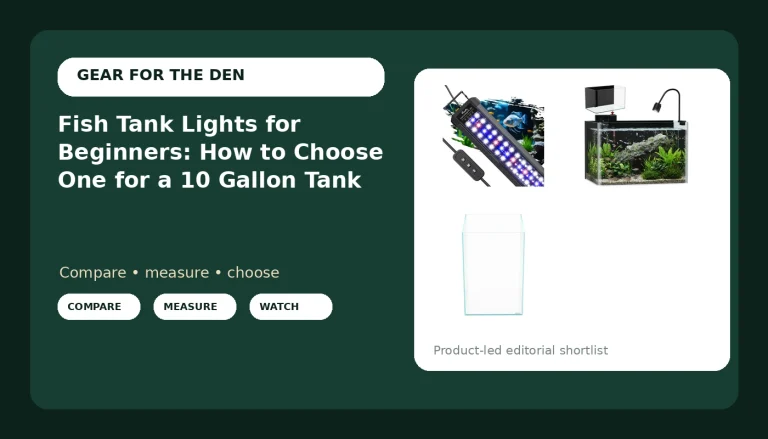
Best Value: HiTauing Aquarium Heater 25W/50W/100W/200W/300W
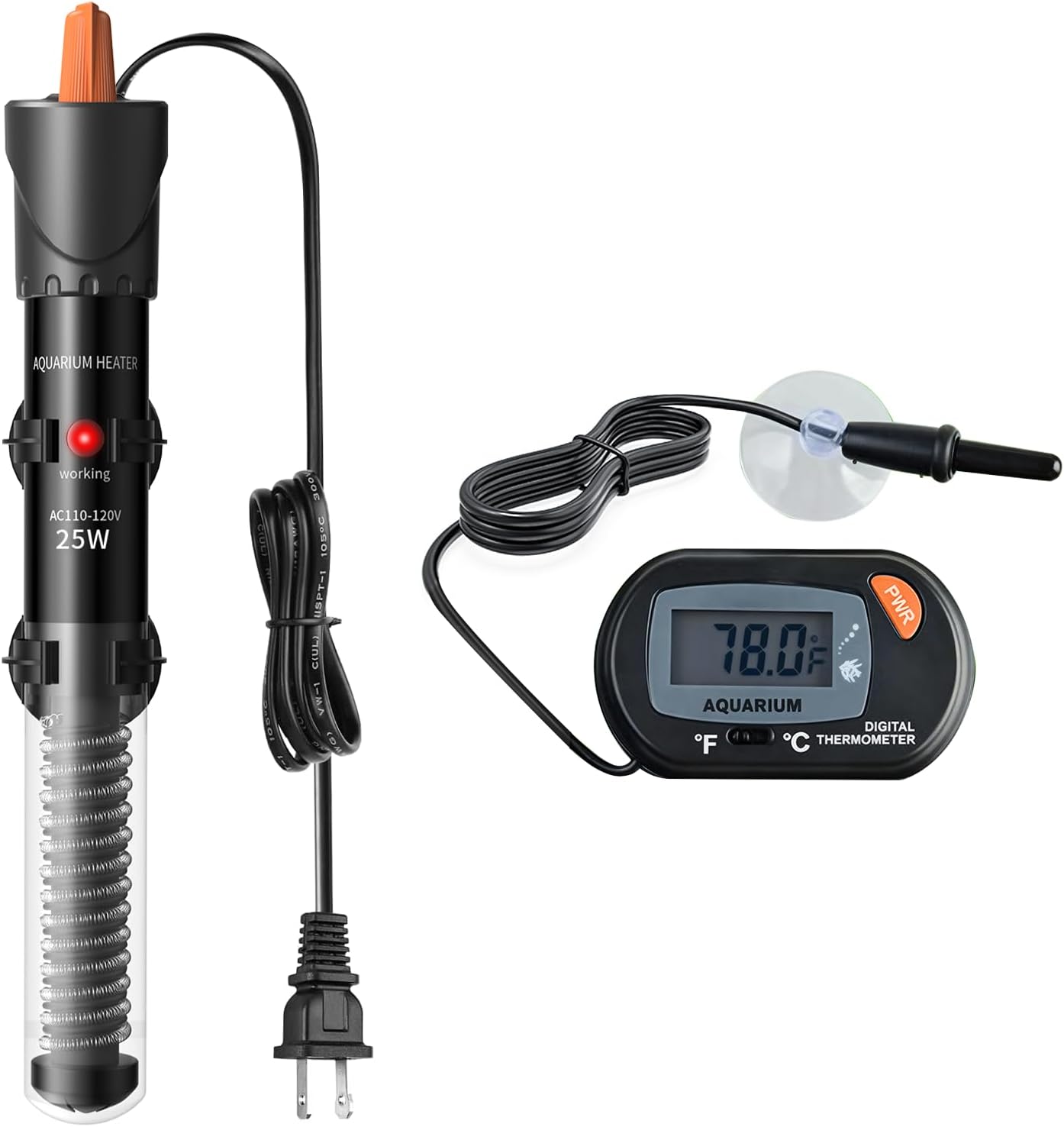
This is the heater I point people to when the budget is tight or the tank is an odd size. It comes in five wattages, 25 through 300, so you can match the number to your gallons instead of settling for whatever is on the shelf. That range alone makes it the easiest heater here to size correctly.
The control is an adjustable knob rather than a digital panel, and it ships with a digital thermometer so the knob gets a second opinion. I like that pairing for a first tank. You set the knob, read the thermometer at the far end of the tank, and nudge. Once you know where your tank's happy spot sits on the dial, you stop thinking about it.
It is submersible and rated for freshwater and saltwater, and it is listed for betta and turtle tanks. For a 5 gallon betta setup the 25W is the right call. For a 20 gallon long in a cool room the 100W is. The build is simpler than the HITOP and the knob is less precise than a set point, but the price gap is real and the sizing range is wider.
If you run two tanks of different sizes, buy two of these in the right wattages rather than one big heater you move around. A heater that is oversized for a small tank is not safer. It is a faster way to cook a fish when the thermostat sticks.
How I tested
I size heaters the same way every time, and none of it is glamorous. First I measure actual water volume rather than the number printed on the tank. Substrate depth and hardscape eat real gallons, so a 10 gallon with two inches of gravel and a piece of driftwood may be holding closer to eight. Less water heats faster and cools faster, which changes the answer before you have even looked at a heater.
Next I take the coldest room temperature that tank will see in winter and subtract it from the target. Tropical fish want 76 to 78°F, bettas want about 78, and goldfish are happier at 68 to 72. The gap between room and target is what you are paying for.
Then I check the hood. A tank with a tight lid holds heat; an open rimless cube dumps it straight into the room, so the same volume needs more wattage under an open top than under glass. Hood fit is not a detail you can skip past.
Then I watch cycle time. A heater that runs constantly and never clicks off is undersized for the job, and one that clicks on and off every thirty seconds is oversized for the volume it sits in. The ideal fish tank heater size is the one that holds the set point with the least work.
Finally I check physical fit: cord length, suction cups, and whether the body blocks the filter intake or crowds the filter media. A perfectly sized heater that does not fit the tank is not sized correctly at all.
Analysis and test results
The sizing rule most people repeat is three to five watts per gallon, and it is a decent starting point as long as you remember what it assumes. It assumes a room in the high 60s, a covered tank, and a target in the upper 70s. Change any one of those and the rule needs adjusting.
Cold rooms are the big one. A 10 gallon tank in a 70°F room needs roughly 50W. The same tank in a 62°F basement needs closer to 100W, because the heater is fighting an eight degree gap instead of a four degree one. That is why two people with identical tanks get different answers, and why the question of what wattage suits a 10 gallon has no single answer.
Lids matter more than most people expect. An open top plus surface agitation from a filter or an air stone is a heat pump pointed at your living room. If your tank is open and your room is cool, size up.
Big tanks are the other trap. Past about 40 gallons, one large heater is a single point of failure. Two smaller heaters set to the same temperature share the load, run less often, and if one dies you still have half the heat instead of none. For a 55 or 75 gallon, two 200W units beat one 300W every time.
Placement is free and people still get it wrong. Put the heater near the filter outflow so warmed water moves into the tank instead of pooling around the tube. In a tank with a lot of substrate depth or a heavy stand load of rock, water volume drops again, so check the correct fish tank heater size against what is actually in the tank, not what the box promised.
One more thing the rule of thumb hides: wattage ratings assume the heater is running at full tilt. A 50W heater holding a 5 gallon tank is barely working. The same 50W heater in a 20 gallon is running flat out all winter, and that is how heaters die early.
The fish tank heater size reference table
This is the table I keep taped inside the cabinet. It assumes a target of 78°F for tropical fish and a covered tank. If your tank is open, or your fish are goldfish at 70°F, adjust from here rather than starting over.
| Tank volume | Room 68-72°F | Room 60-67°F | Notes |
|---|---|---|---|
| 1-5 gallons | 25W | 50W | Betta and shrimp cubes |
| 10 gallons | 50W | 75-100W | The most common tank size |
| 20 gallons | 75-100W | 150W | Two 50W also work |
| 29-30 gallons | 100-150W | 200W | Watch hood fit |
| 40 gallons | 150-200W | 300W or two 150W | Redundancy starts here |
| 55 gallons | 200-300W | Two 200W | Never one heater |
HITOP Mini Submersible Aquarium Heater -50W | 50W | Undersized | Best for 5-10 gallons |
HiTauing Aquarium Heater | 25-100W | 100-300W | Five wattages to choose from |
Read the table down the middle column first, then check the right column before you buy. If your room gets cold and you are near a boundary, round up to the next wattage rather than down. An oversized heater on a working thermostat is a smaller problem than an undersized heater in February.
The 10 gallon tank that makes the math easy
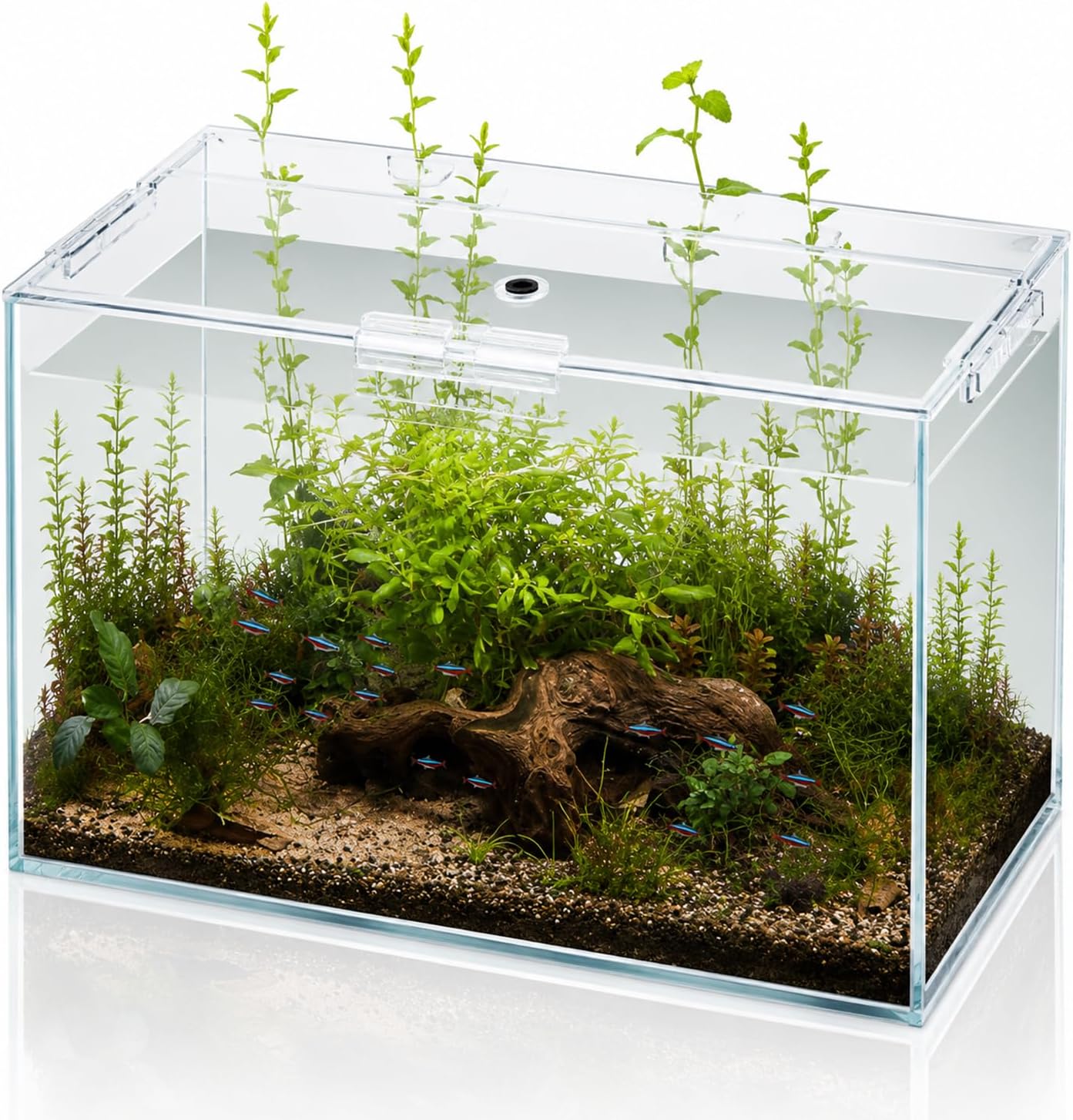
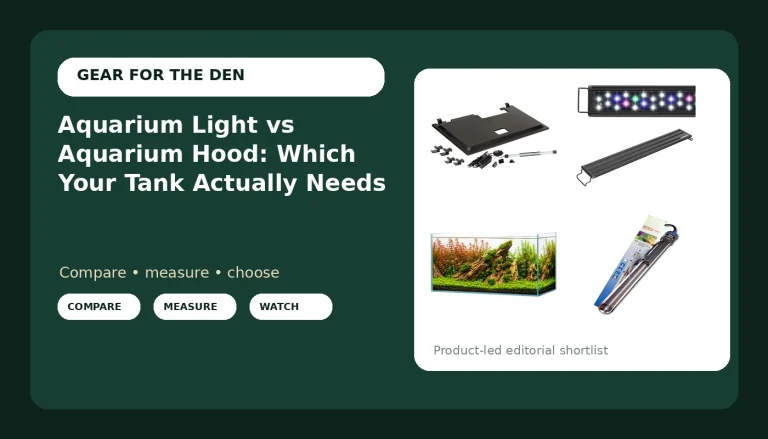
A 10 gallon is the size where heater math stops being guesswork, and this rimless low iron cube is a good example of why. It is an open-back lid design in ultra clear glass, sized for a betta, a few goldfish fry, snails, shrimp, or a planted scape. An open top means more evaporation and more heat loss, so budget for the cool-room column in the table above rather than the warm-room one, and top off with dechlorinated water more often than you would with a covered tank.
Low iron glass is worth mentioning on a small tank because it does not tint the water green the way ordinary glass does, which matters when the whole point is watching a single betta. Pair it with a 50W heater in a normal room and a 100W if the room runs cold, and check the hood fit before you commit to a lid.
Lighting a small tank without adding heat
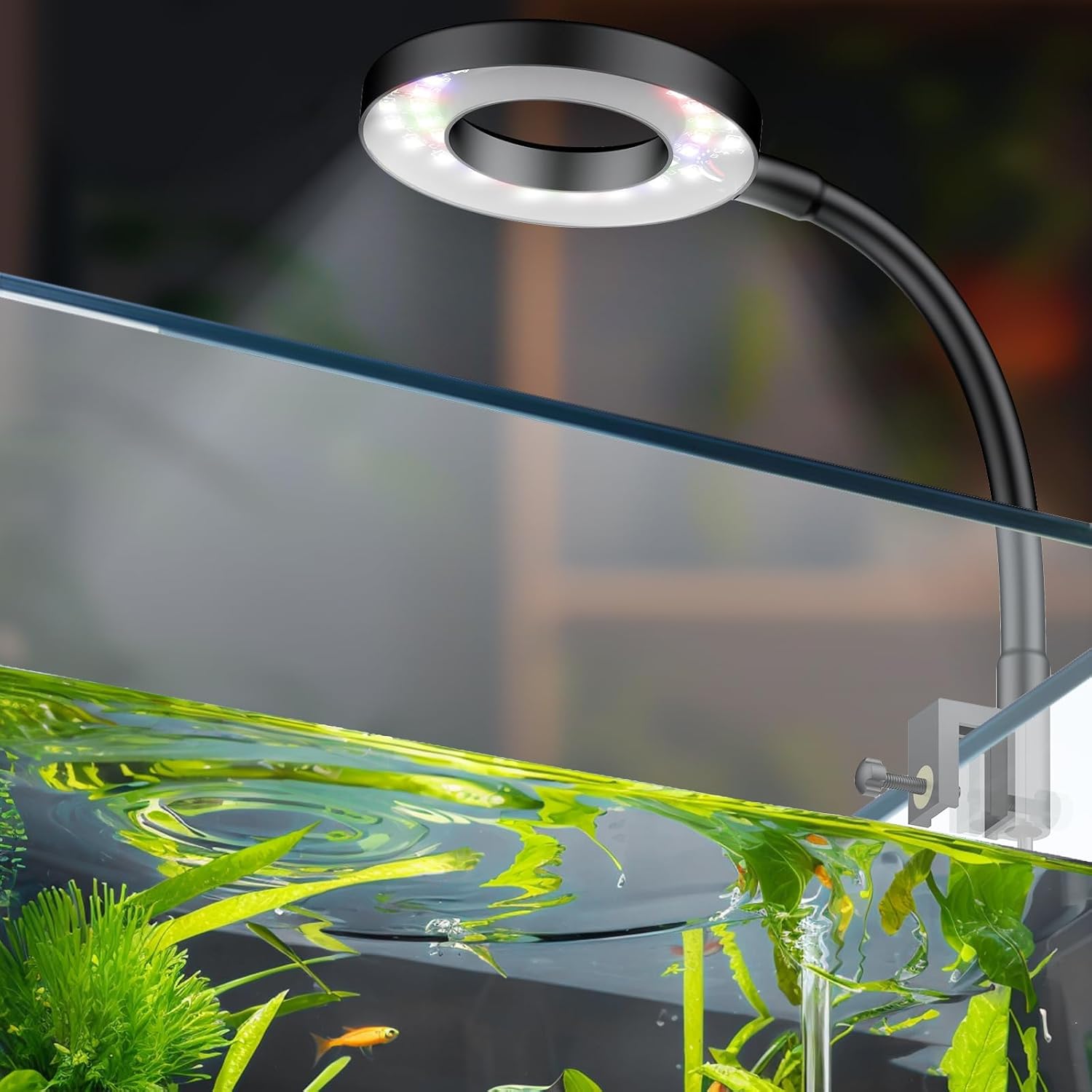
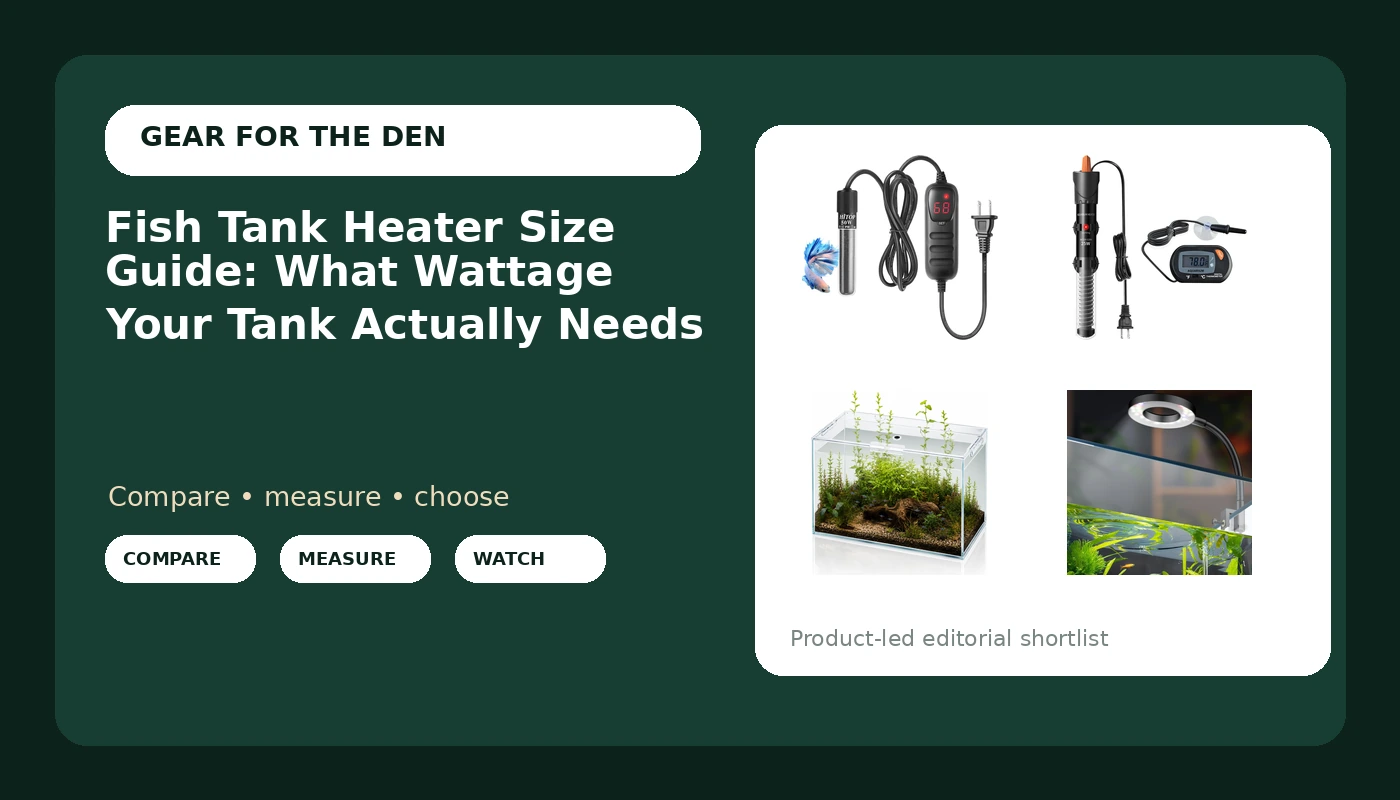
A clip on LED is the right answer for a 1 to 5 gallon tank, and this one is 6W, dimmable, and full spectrum with white, blue, red, and green channels plus a timer. It clips on and the arm moves, so you can aim it where the plants actually are. Note that the adapter is not included, so plan for a USB power source.
The reason a light belongs in a heater article is heat. Any light you hang over a small tank adds warmth, and a 5 gallon with a hot light and a 50W heater in a warm room will run above target. A dimmable light lets you turn intensity down on a July afternoon instead of unplugging the heater. Set the timer, keep the intensity low, and let the heater do the temperature work.
Should you buy the HITOP Mini Submersible Aquarium Heater?
Yes, for tanks in the 5 to 10 gallon range in a normal room. The digital controller is the reason. You set a number, you read a number, and you notice a problem before it becomes a sick fish. The mini body fits shallow and rimless tanks where a full size heater would stick out of the water, and the freshwater and saltwater rating covers the odd setups people actually keep.
Skip it if your tank is bigger than 10 gallons or your room drops below 65°F in winter. In those cases 50W is not enough, and buying two of these costs more than one correctly sized heater. Size first, then buy.
Should you buy the HiTauing Aquarium Heater?
Yes, if you want the widest sizing range for the least money, or if you are setting up a 5 gallon betta tank and want a 25W heater rather than a 50W unit that cycles hard. The knob and the included thermometer are a good pairing for a first tank, and the five wattages mean you can match the correct fish tank heater size instead of rounding up to the next thing on the shelf.
The trade off is precision. A knob is not a set point, so you will be checking the thermometer for the first week or two. If that sounds like a hassle and your tank is 10 gallons or under, pay a little more for the digital controller. Either way, start with the tank volume and the room temperature, and the fish tank heater size question answers itself.