The first tank I set up in my den was a 10 gallon rimless cube on a shelf that was never rated for water, and I spent three weekends arguing with myself about the aquarium light vs aquarium hood question before I bought anything. That is the whole decision in one line: a hood is a lid with a light built into it, and a light is lighting with no lid at all. Choose wrong and you either trap humidity under a cover your fish do not need, or you spend the next year skimming cat hair off the surface with a net.
For most small freshwater tanks in a room with pets or kids, a hood wins, because it covers the tank and lights it in a single purchase. For a rimless tank with live plants, a separate full spectrum light wins, because the output is better and the open top is the whole point. The rest of this article is about why that split exists, which side of it your tank lands on, and what else belongs on the equipment list once the top of the tank is settled.
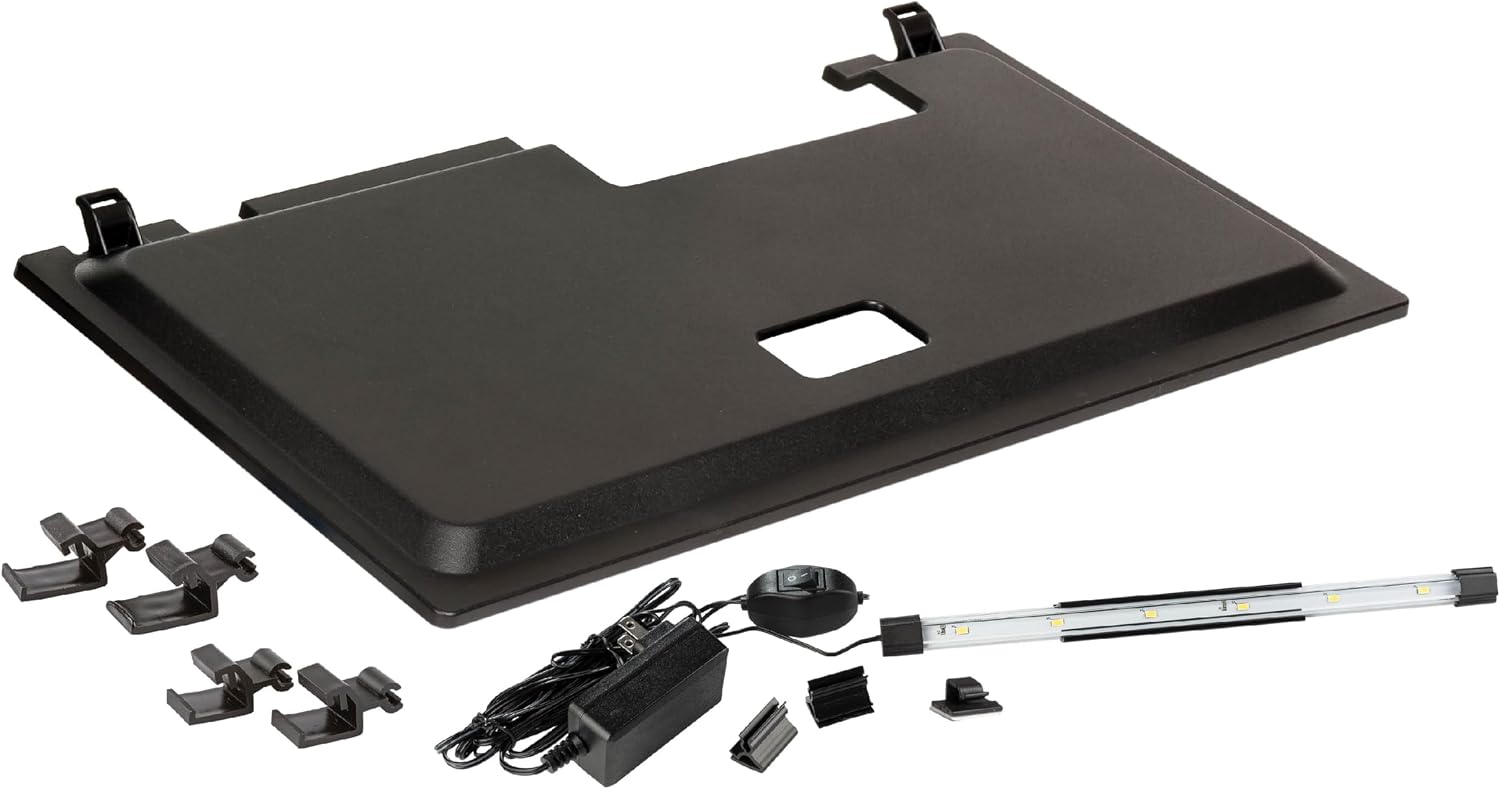
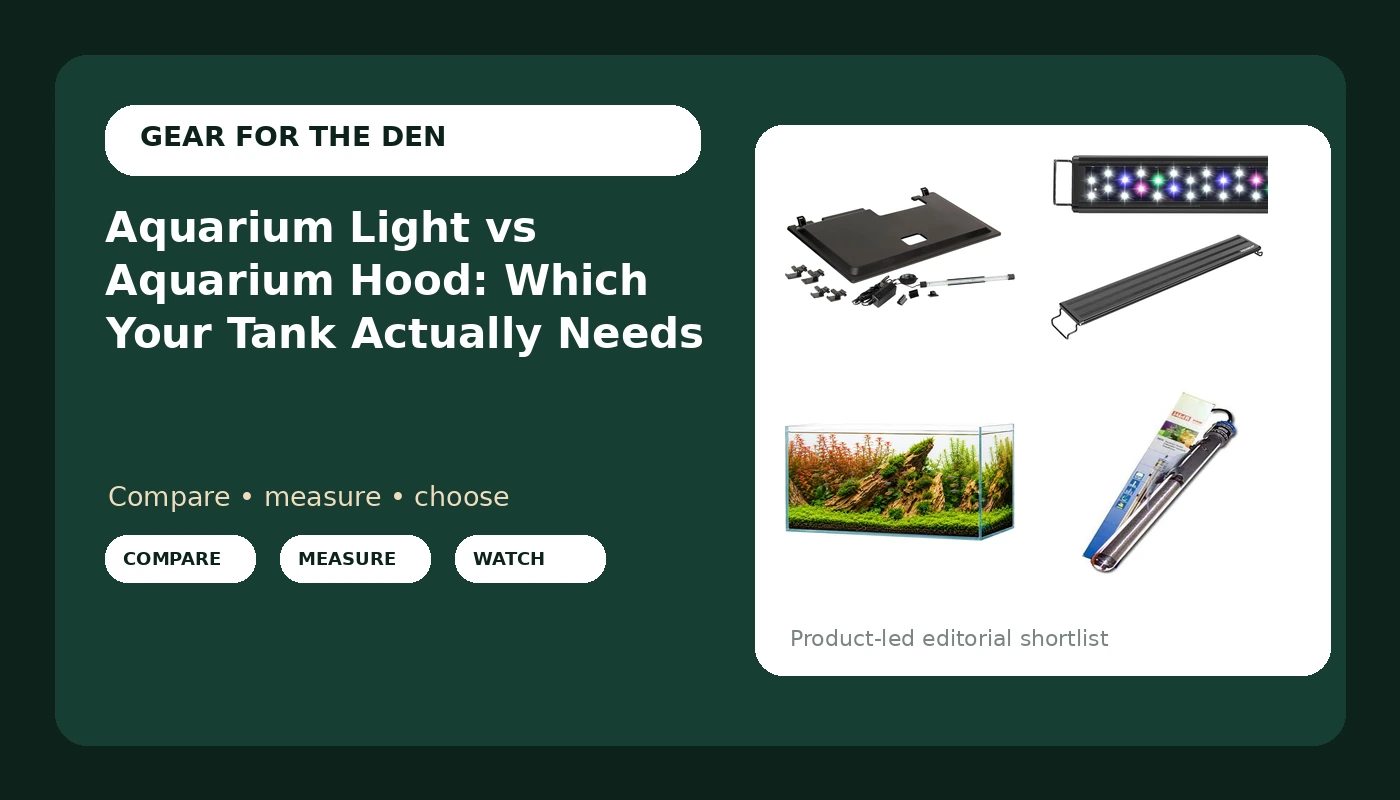
Tetra LED Aquarium Hood 20 in x 10 in
Covers a 20 by 10 inch opening and lights it with one part, low profile, slows evaporation, keeps jumpers in
Fixed footprint, modest output, not enough for a planted tank
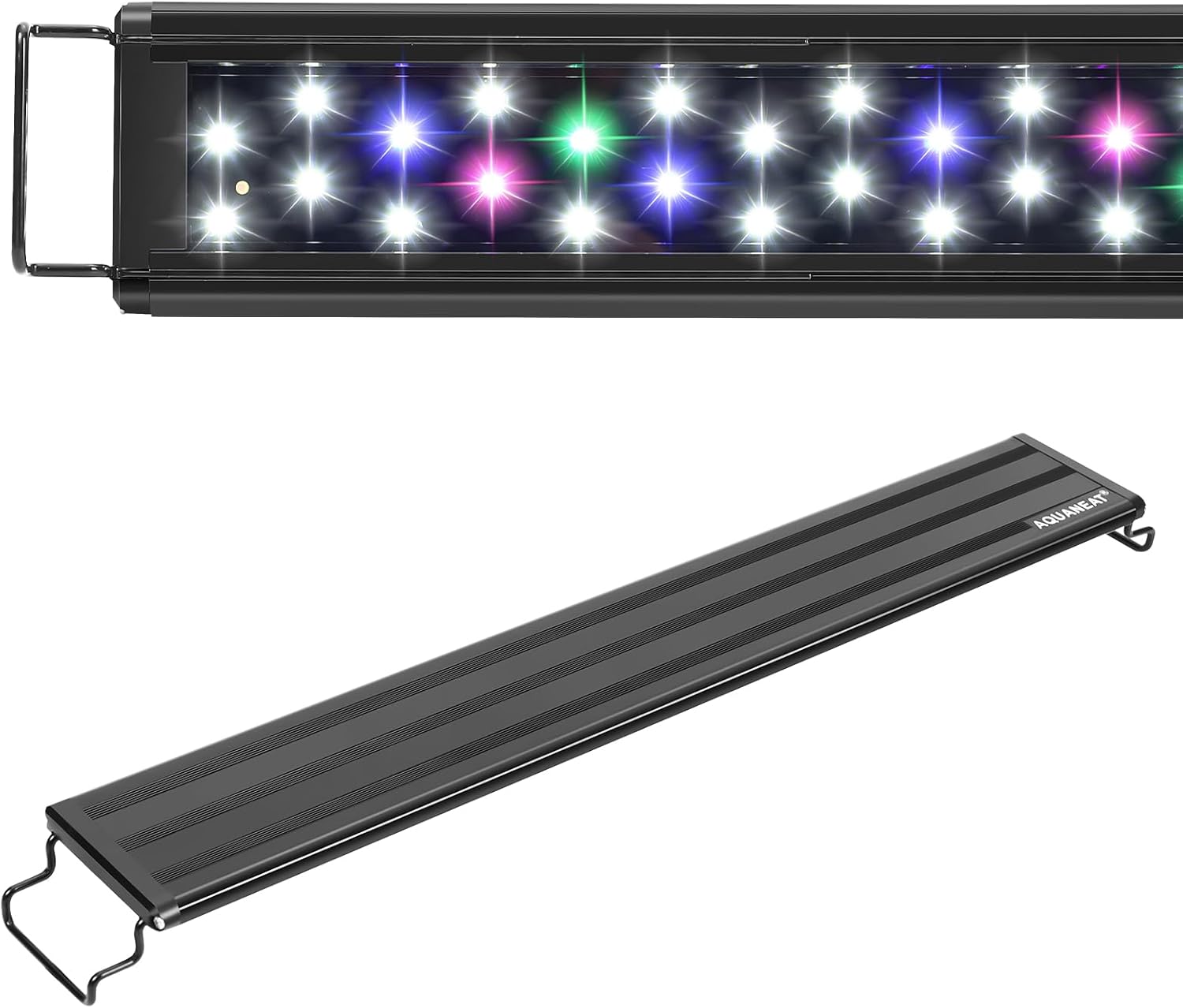
AQUANEAT LED Aquarium Light Full Spectrum for 48 Inch to 54 Inch Fish Tank Light Fresh Water
Full spectrum output for plants, legs extend across 48 to 54 inches, bright for the footprint
A light only, so the top stays open, no help with jumpers or evaporation, far too long for a small tank
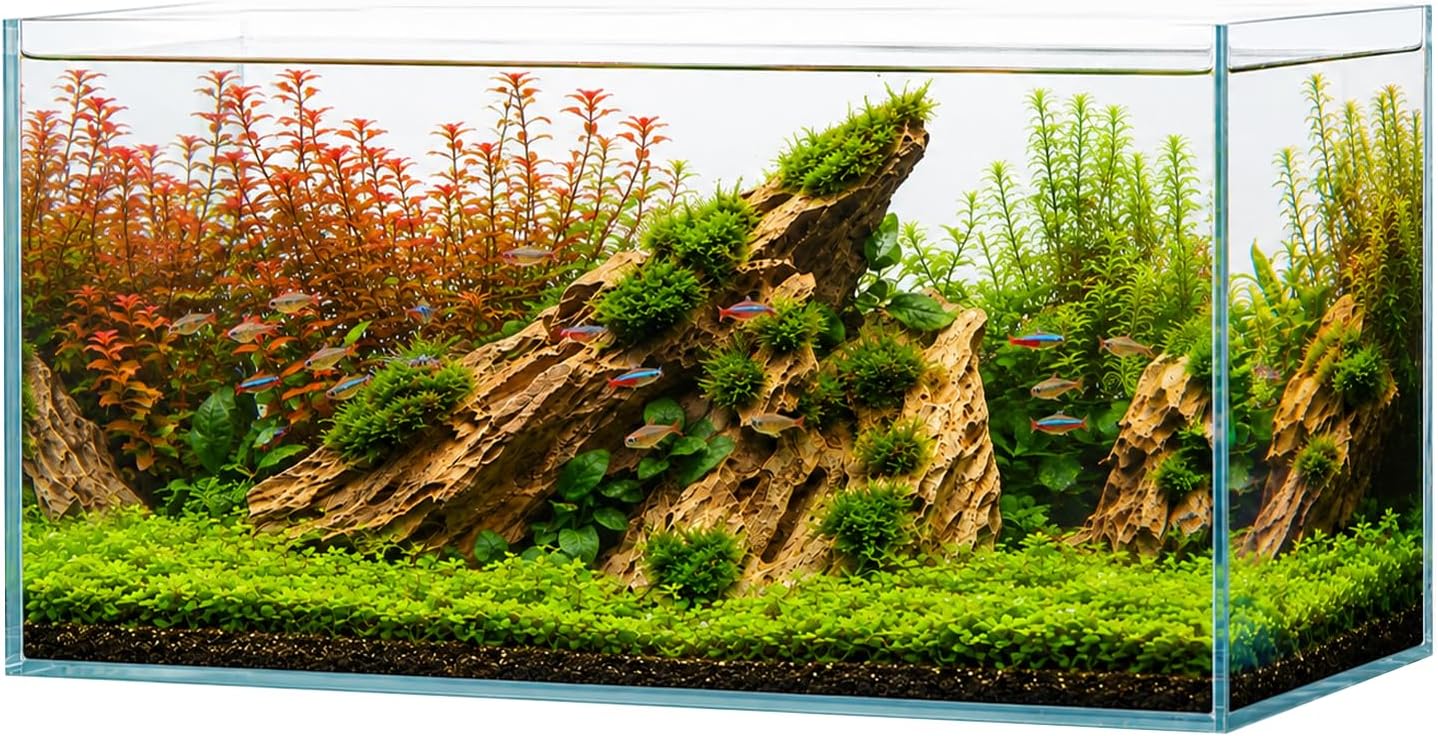
Hjarta 10 Gallons Fish Tank, Ultra-Clear Rimless Aquarium
Ultra clear glass and a rimless top that looks like a display rather than a box
Ships with no lid, so the light or hood decision lands on you on day one
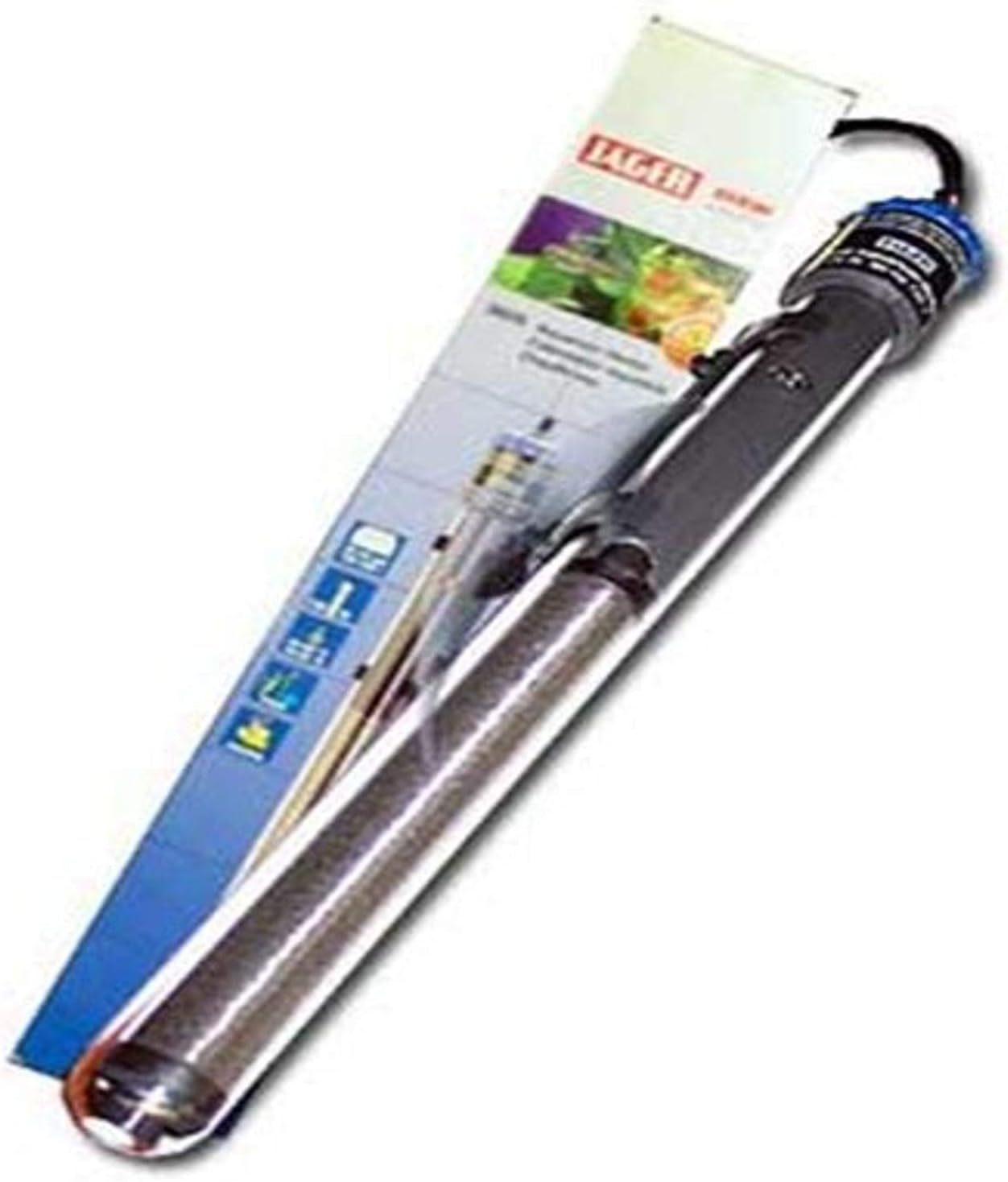
EHEIM Jager Aquarium Thermostat Heater 50W, Black
Thermostat control, compact body, the heater most small tank keepers end up with
50W suits small volumes only, and it answers none of the covering questions
Prices and availability may change.
How I judge a hood or a light
Four things decide it for me, and none of them is a marketing claim. First, does the product cover or illuminate the actual opening of my tank, measured rim to rim rather than taken from the tank's advertised size. A 20 inch hood on a 20 inch tank with a thick plastic rim may not seat the way the product photo suggests. Second, can I get into the tank without dismantling anything. A hood with a hinged feeding door is a different daily experience from one I have to lift off and set on the floor every time I want to drop in a wafer. Third, does it fight the rest of the setup for room at the back of the tank, where the filter intake, the heater, and the cord bundle all live. Fourth, how does it behave in a house with a cat who treats the tank as a water bowl.
I also check whether the part can be replaced on its own. Hoods fail at the hinge and the power brick. Lights fail at the driver. Either way, a part you can swap beats a part you have to replace entirely, and that is worth more on a ten gallon tank than any feature on the box.
What I do not weigh: wattage claims with no coverage spec, "professional grade" stickers, and app control on a light for a small tank. Coverage, service access, and how the part works with everything else are the things I can check before I buy and confirm after.
What the aquarium light vs aquarium hood choice really comes down to
A hood is a molded cover with LEDs built into the underside. It usually matches a standard footprint, 20 by 10 inches, 24 by 12, 30 by 12, and it rests on the rim of the tank. It hides the water surface, it slows evaporation, and it keeps fish from jumping out. Most hoods include a feeding door and a cutout or a gap at the back for a filter and a heater cord.
A light is an LED bar or strip with legs, brackets, or a hanging kit. It sits above the water and lights the tank, and that is the entire job. Nothing covers the opening. Your heater still needs somewhere to hang, your filter still needs to return water to the tank, and anything that jumps, jumps out.
That is the honest answer to the aquarium light vs aquarium hood question. One product is a cover that happens to light the tank. The other is a light that happens to leave the tank open. Lighting quality matters, but it is secondary to which of those two things you want sitting over your water.
The other thing worth saying up front: this is not a lighting quality contest. A hood and a light are not competing on the same axis. You are choosing between two shapes of the same solution, and the winner depends on the tank, the room, and who else lives in the house.
The difference between aquarium light and aquarium hood in daily use
The difference between aquarium light and aquarium hood shows up in small chores rather than in specs. With a hood, topping off means lifting a lid or flipping a door, and water loss is slower, often a quarter inch a week on a covered ten gallon. The inside of the cover collects condensation you wipe down when you do a water change, and the cover hides the water line so the tank always looks full.
With an open light, evaporation is faster and every top off is a reminder that the water line is visible on the glass. Feeding is the other daily difference. A hood with a feeding door takes two seconds and keeps the room out. A light with nothing under it takes one second, and your cat gets the same one second of access to the water. Neither is wrong. They are just different mornings.
Hood fit, evaporation, and the household
Hood fit is where most first-time buyers get burned. Tank dimensions are nominal. A tank sold as 20 inches long can measure 20 and a quarter across the rim, and a hood built for a 20 by 10 opening will sit proud on one side or leave a gap on the other. Measure the opening, not the box. If your filter hangs on the back glass, check whether the hood has a cutout wide enough for the intake tube, because a hood that pinches the filter is a hood you will return.
Evaporation is the quieter argument for a cover. Less evaporation means less top-off water, less mineral crust on the glass, and a steadier water line. In a ten gallon tank, a gallon is ten percent of the volume, so a week of uncovered evaporation is not a cosmetic problem, it is a chemistry problem.
Lights, spectrum, and plants
If you keep live plants, the light stops being optional and becomes the most important purchase on the list. Full spectrum output gives plants the wavelengths they use, and coverage matters as much as intensity. A bar that lights the middle of a 48 inch tank and leaves the ends dim grows plants in the middle and algae at the edges.
That is the case the AQUANEAT LED Aquarium Light Full Spectrum makes for itself, with legs that extend across a 48 to 54 inch tank rather than locking you into one footprint. It is a light, not a cover, so you are still solving the open top separately, and on a tank that long you should plan on a mesh lid if you keep anything that jumps.
Hood lighting is usually enough for low light plants like anubias, java fern, and moss, and not enough for a carpet. If your plant list is ambitious, you are buying a light and then solving the cover problem on its own.
Heater wattage, tank volume, and the rest of the equipment list
Once the top of the tank is sorted, everything under it matters just as much. Heater wattage should be sized to tank volume. A 50W unit like the EHEIM Jager Aquarium Thermostat Heater is built for small tanks, not for a 55 gallon. Oversized heaters do not heat faster in any useful way; they simply fail harder when a thermostat sticks. Undersized heaters run constantly in a cold room and never quite hold the temperature you set.
Filter media is the other quiet variable. A filter rated for your tank volume, filled with the media it was designed around, does more for water quality than any add-on you can buy later. I would rather run a modest filter with fresh media than a big one stuffed with the wrong cartridges because the box promised clearer water.
Substrate depth, cycle time, and stand load
Three numbers have nothing to do with lighting and everything to do with whether the tank works. Substrate depth of about two inches gives rooted plants something to hold and gives bacteria a surface, but every inch is weight. A ten gallon tank with glass, water, substrate, and a hood runs well past a hundred pounds, and that is stand load. It is why the rimless tank in this comparison belongs on furniture rated for the weight, not on a particle board shelf from a big box store.
Cycle time is the last thing to plan for. A new tank takes weeks to cycle before it is safe for fish, and no hood or light changes that. The cover decision can wait until the tank is wet. The cycle cannot.
The aquarium hood vs aquarium light trade-off, side by side
The aquarium hood vs aquarium light trade-off is really about what you give up on each side. A hood gives you one purchase, a tidy top, slower evaporation, and jump protection. In exchange you give up output and choice, you lose the open rimless look, and you take on a lid you lift every time you feed or trim a plant. A light gives you better output, easier plant growth, and a cleaner look from across the room. In exchange you give up the cover, which means faster top-offs, a wider range of escape routes for jumpers, and one more problem to solve if you own a cat.
There is no version of this where you get both for free. Every rimless tank owner I know ends up with a light plus a mesh lid, which is the two purchase version of the same answer.
My rule of thumb after four tanks: if the tank has a rim, cover it. If the tank is rimless, light it and plan the lid separately. The rimless look is worth the extra top-off water, and the covered tank is worth the lost view of the surface.
Should you buy both, or pick one?
If you are deciding between an aquarium light or aquarium hood for a standard tank with a plastic rim, buy the hood. It solves two problems with one part, and the tank looks finished the day you set it up. Pair it with a heater sized to the tank and a filter rated for the volume, and the top of the tank stops being a project.
If you own the Hjarta 10 Gallons Fish Tank, Ultra-Clear Rimless Aquarium, the hood is off the table, because a rimless tank has no rim for a hood to sit on. You are buying a light, and if you keep jumpers, a mesh lid as well. You can Visit on Amazon to look at the tank itself, or compare the light and the hood directly in the table above.
What I am setting up next
Next on my bench is a 20 long with a low profile hood, a 50W heater, and a sponge filter, mostly because I want to watch how a covered tank handles evaporation through a dry winter with the heat running. After that comes a planted 48 inch tank where the AQUANEAT light gets its turn, paired with a mesh lid, because I have lost one too many fish to an open top. The hood versus light question never really goes away. It just moves to the next tank.